Smash, slash, and smother

Mike Trout, Brandon Drury

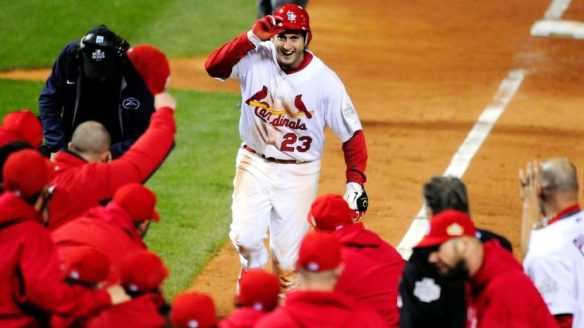
Trout accepts congrats from Drury after his leadoff blast in the third—unaware that Drury would hit the next pitch out and Matt Thaiss would hit the next pitch after that out, opening the thirteen-run third-inning carnage against the Rockies Saturday night.

Saturday night was one night the Angels could well afford Shohei Ohtani having an off night. One RBI single in seven plate appearances might be cause for small alarm ordinarily. But who the hell needed Ohtani, on a night that the Angels dropped a 25-1 avalanche atop the walking-wounded Rockies in Coors Field?

The Rockies went into the game knowing they’ll miss right fielder Charlie Blackmon another few weeks, hitting the injured list with a broken right hand, after he tried playing through it following the hand having been hit by a pitch in Kansas City. They were already missing Kris Bryant with a heel injury. Not to mention three key starting pitchers including Germán Márquez and Antonio Senzatela.

But nobody saw Saturday’s kind disaster coming when the Angels opened a 2-0 lead after two full innings.

They spent the second inning nailing a pair of back-to-back base hits before Rockies starter Chase Anderson plunked Angels right fielder Mickey Moniak on 0-2 to load the pads, and David Fletcher slashed a two-run single on the first pitch—all with nobody out.

Anderson looked rehorsed after he induced a double play grounder and caught Ohtani himself looking at a full-count third strike. You’ll find fewer more grave instances of looks being deceiving than what the Angels did to him in the top of the third.

It only began with future Hall of Famer Mike Trout leading off by hitting a 1-0 pitch over the center field fence, then with Brandon Drury hitting Anderson’s very next pitch over the left center field fence, and then with Matt Thaiss hitting Anderson’s very next pitch over the right field fence.

Three pitches. Three thumps. To think the fun was just beginning for an Angels team whose past few seasons have been anything but in the end.

Not even the most cynical observer of the thin-aired yard known as Coors Field expected what happened after Thaiss completed his circuit around the bases, and after Anderson walked a man, induced a force out at second, surrendered a base hit, and induced a pop out around the infield:

* Taylor Ward singling home new Angel toy Eduardo Escobar, acquired from the Mets a day or so earlier and going 2-for-4 in his Angels premiere.

* Ohtani singling Moniak home and sending Anderson out of the game in favour of Matt Carasiti.

* Trout walking to re-load the pads.

* Drury sending a two-run single up the pipe.

* Thaiss walking to re-set first and second.

* Hunter Renfroe yanking a bases-clearing double, one of his team-leading five hits on the night.

* Esobar singling Renfroe home.

* Moniak sending a two-run homer over the right center field fence.

The third-inning carnage ended only when Carasiti got Fletcher to ground out right back to the mound. And wouldn’t you know that at least one Twitter twit harrumphed about the injustice of it all after Moniak connected: “21st-century MLB, taken to its most absurd extreme. This is one example of why I can’t get that excited about homers, anymore.”

Not even over three straight to open an inning in which only five of the thirteen runs scoring in the frame scored by way of home runs and half the hits were singles? Not even over five runs scoring off singles and three off a double? Not even ten of the thirteen Angel runs of the inning coming home with two outs?

You want to harrumph about something, harrumph about why the Rockies were caught woefully unprepared and left two relievers in to take fifteen for the team. Not just the six Carasiti surrendered of his own as well as adding two to Anderson’s jacket, but poor Nick Davis starting in the top of the fourth.

The Angels slapped him silly for eight runs on seven hits including back-to-back one-out RBI singles followed by an RBI double, another bases-loading walk, a two-run double, and Fletcher hitting a three-run homer. Then Davis got Ward to ground out and struck Ohtani out swinging to stop that inning’s carnage.

Davis survived a pair of two-out singles in the fifth. I confess—I couldn’t resist tweeting at that point: “With apologies to the Roaring Twenties, after five it’s Angels 23, Rockies skiddoo.”

The Rockies’ righthander wasn’t quite so lucky in the sixth, but he might have felt just a small hand of fortune: the worst the Angels did to him in that inning was a double (Moniak) and a single (Fletcher) to open the inning with first and third, before the Angels’ 24th run scored on a force out at second.

That would be the same way the Angels got their 25th and final run of the night two innings later, with Karl Kauffmann on the mound for the Rockies. The only thing spoiling the Angels’ smothering shutout would be Rockies center fielder Brenton Doyle leading the bottom of the eighth off with a 1-0 drive over the center field fence off Angels reliever Kolton Ingram.

Just days earlier, the Angels were humiliated by back-to-back shutouts courtesy of the Dodgers. Now, they ended Saturday night setting a franchise record for runs in a single game—a franchise record they broke by one, having scored 24 against the  Blue Jays in an August 1979 game. They also became the first in Show in the modern era to score twenty or more runs in a two-inning span.

All that on a night when the only Angels not to get any hits were one pinch hitter and two mid-to-late game insertions. And, when they secured themselves in second place in the American League West—six games behind the division-leading Rangers.

“Today,” said Moniak postgame, “was just one of those days, where everyone was feeling good and we were getting the right pitches to hit.” That may yet qualify as the understatement of the season.

Danny Young, RIP: The hard climb and fall

Danny Young

It took Danny Young just over a decade to make the Show, and a shoulder injury following a harsh cup of coffee to return home.

The 21st Century’s first official grand slam wasn’t hit in the United States. The Mets and the Cubs opened the 2000 season on 30 March in Japan’s Tokyo Dome. The game went to an eleventh inning, and Cubs manager Don Baylor sent a longtime minor leaguer named Danny Young to the mound to pitch the top half.

The first student from Woodbury, Tennessee’s Cannon High School to make the Show in the first place, Young started auspiciously enough, getting two quick outs on a grounder to shortstop by Robin Ventura and a pop fly around the infield by Derek Bell. Then he surrendered a base hit to Todd Zeile before walking the bases loaded by way of Rey Ordóñez and Melvin Mora.

Mets manager Bobby Valentine sent Benny Agbayani out to pinch hit for relief pitcher Dennis Cook. Young’s first pitch to him missed for ball one. Agbayani hammered the lefthander’s second pitch over the center field fence. After Jay Payton’s followup double, Young escaped when Edgardo Alfonso flied out to center field.

“Even though I gave up a grand slam, I still looked around and it’s like, ‘That’s Mark Grace right there. I’ve got Sammy Sosa in the outfield’,” said Young—found dead at home at 51 Sunday—to Fox Sports. “They patted me on the back and let me know it was going to be all right. I had a lot of the guys come to me and say, ‘Welcome to the big leagues.’ They were like, ‘Things like this happen.’ I should have gotten out of the inning. It was just nerves and knowing within myself that something was wrong.”

It took Young long enough to get to the Show in the first place. Drafted by the Astros at nineteen in 1990, he played for nine minor league teams affiliated to three major league franchises over the decade to follow before he finally made the Cubs after the turn of the century. He never complained about being drafted in the 83rd round, either.

“If I was a first-rounder,” he once told Fox Sports writer Sam Gardner, “I might not have made it, because I had a thirst and a hunger to make it because of where I was drafted. If they’d have set a million dollars down in my hand at that time, there’s no telling where I would have ended up. So maybe that was just meant to be my turn.”

He simply didn’t expect to be on the wrong side of history when he finally got his turn in a Cub uniform in Tokyo.

He knew he’d had control issues from the outset—in his first minor league season he struck 41 batters out in 32.2 innings, but he also walked 39—but he also knew he could learn plenty enough about the game he loved but knew too little about. “I struggled just because it was a new process for me,” he told Gardner. “I still had this fear of making a mistake and the coaches just thought, at the time, ‘This guy is just having a hard time picking this stuff up’.”

Before they released him to be picked up by the Pirates organisation, the Astros even tried as radical a class as they could think of: they hired Hall of Fame pitcher Sandy Koufax, then working free-lance as a roving pitching instructor, to work with Young and with a kid named Billy Wagner in spring 1994.

Young had absolutely no idea who his new teacher was.

“Then I come to find out a couple years later,” Young said, “and people are looking at me like, ‘Dude do you know who you were with?’ I just didn’t know baseball, but they didn’t know that I didn’t know baseball. I just went out there and pitched.” Ever the gentleman, Koufax gave Young a signed ball that Young kept in a clear ceramic ball on a pedestal in his home.

“[I]t was overwhelmingly mind-blowing, the things that he knew about the directional part of pitching that I didn’t really grasp at first,” Young told Gardner of his Hall of Fame teacher. “And as I went along, it got better. I was a late bloomer, so I didn’t really understand the concepts that he was teaching me, but he taught me to find a comfort zone and how to tune out the crowd and what’s going on around me.”

The Pirates, too, remained as patient as possible as Young continued to struggle finding the comfort zone Koufax preached. As in the Astros organisation, Young tried everything he could think of, from changing deliveries and arm angles to changing speeds and back. Only when the Cubs picked him in the 1997 Rule 5 draft did Young begin to smell something close enough to success, or at least real major league potential.

He moved up the chain until he made the team in spring 2000. After Agbayani’s Tokyo blast, the Cubs returned Stateside and Young got into the next three straight games against the Cardinals. The first outing: two walks in two-thirds of an inning but no runs allowed. The second: a two-out double by Fernando Tatis, Sr. but another scoreless escape. Maybe Young was getting it at last.

The third: disaster—a pair of two-out walks, leaving a mess for his relief Brian Williams to clean up in the fourth inning, a mess that continued with a bases-loaded walk, a grand slam by J.D. Drew, and three runs charged to Young that he wasn’t on the mound to surrender himself.

The Cubs sent him back to Iowa after that. Young continued struggling until he finally spoke up further about an issue he’d felt in Tokyo, when he first mentioned to Mark Grace—after a pickoff throw that bounced to first—that he felt something wrong with his shoulder. It turned out his rotator cuff required major surgery, the first of five on the shoulder.

After 2000, Young retired from the game he’d never really had the chance to learn even rudimentarily in a Woodbury where baseball wasn’t exactly a well-taught sport. At least, not until Young returned home to spend the rest of his life raising his family and teaching and coaching the game to local kids.

“I played tee-ball, played Babe Ruth, played Dixie Youth Baseball and high school, but there was no real coaching,” he told Gardner. “And for the [coaches], that was no fault of their own. We hauled hay, we fished, we did whatever we did, and then we went out on the field and had fun. We had teams, but it wasn’t competitive. I mean, I ended up being a right-handed hitter because none of the coaches knew how to teach me how to hit left-handed.”

If only the Danny Young who went home to teach the game on his native ground had been available to the Danny Young who originally caught the Astros’ eyes, however deep in that 1999 draft. He might have had more to show for his long slog to the Show, and in the Show itself.

He never struck a major league hitter out, he walked six, he surrendered five hits, but he kept a big league attitude. For himself, and for his wife, Sarah, their six children, and their two grandchildren. The battler who surrendered this century’s first major league grand slam should only know peace and fulfillment in the Elysian Fields to which he was taken—cause unknown at this writing—too soon.

On Freese and perspective

David Freese

David Freese comes down the third base line after sending the 2011 World Series to a seventh game with a leadoff blast in the Game Six bottom of the eleventh.

If there’s one sub-pastime that animates baseball faithful almost as much as the game itself, it’s arguing. Especially about who belongs in the national Hall of Fame, and who doesn’t. Now you’re about to ponder a twist you probably never thought you’d have to consider.

You may never hear of any Hall of Famer declining the honour because he felt honestly that his career really didn’t justify it. But now there’s David Freese, the biggest of the big from the 2011 World Series, who’s turning down his election to the Cardinals’ team Hall of Fame because he feels his career doesn’t justify it.

The Cardinals aren’t the only team whose greatest moments were often written by others than their national Hall of Fame legends. But I’d be willing to bet they’re the only one who’ve just had one of those authors turn their own team Hall of Fame down. If I’m wrong, I’d be glad to know whom else.

This is a team who’s had enough big moments to stock a warehouse. Including, but not limited to, Hall of Famer Grover Cleveland Alexander (who was or wasn’t hung over) fanning Hall of Famer Tony Lazzeri with the bases loaded in the 1926 World Series, an inning before the Redbirds threw Babe Ruth out stealing to end it—with Hall of Famer Lou Gehrig on deck while Bob Meusel was at the plate.

There was Hall of Famer Enos Slaughter’s mad dash home in the 1946 World Series. There was Hall of Famer Bob Gibson’s perseverance in Game Seven of the 1964 World Series, then busting Hall of Famer Sandy Koufax’s single Series game strikeout record in 1968. There was Jack (The Ripper) Clark’s monstrous three-run homer to snatch a pennant from the Dodgers who were an out away from forcing a seventh 1985 National League Championship Series game.

There was Hall of Famer-in-waiting Albert Pujols’s glandular home run off Brad Lidge that only staved off the Cardinals’ elimination in the 2005 NLCS; and, his three bombs in 2011 World Series Game Three—starting in the sixth inning, finishing in a kind of reverse cycle. (A three-run shot, a two-run shot, and a solo shot.)

And, almost superceding the entire foregoing, Freese in Game Six of that Series. You had to have some kind of mojo working to supercede all that. Freese had it that night. When he hit a game-tying, opposite-field triple with the Cardinals down to their final strike in the ninth; then—in the bottom of the eleventh—sent the Series to a seventh game (which his team also won) by hitting a full-count, leadoff homer straight over the center field fence.

It added the World Series MVP to a trophy case that already included Freese’s being named the 2011 NLCS MVP as well. He’d done bloody well splendid for a kid who’d grown up a Cardinals fan, gave up on the game before college, but took it up again to become the Padre for whom the Cardinals traded aged Jim Edmonds only because they needed a third baseman with a little pop in their minor league system.

Then he earned the starting 2011 third base job, missed time early when hit on the hand by a pitch, and returned to play out the season with a Cardinals team that more or less backed into the postseason when the Braves collapsed as the Cardinals managed to reheat just enough.

“[S]ure, he might trade his career for a Hall of Fame career, but then again he might not,” wrote The Athletic‘s Joe Posnanski in 2020, recounting his own sixty top baseball moments. “There are 270 players in the Baseball Hall of Fame. There is only one player who grew up in St. Louis and got to live the dream again and again for the team he grew up loving. I suspect David Freese is pretty happy with how it turned out.”

Freese’s happiness has been won hard enough. He’s spent a lifetime battling clinical depression, including a lapse into alcoholism as a way to battle it. He kept quiet about that battle until well after he’d left the Cardinals: he didn’t take it to the public until eight months after he married Mairin O’Leary and—after two seasons as an Angel—had become a Pirate.

David and Mairin Freese

Freese with his wife, Mairin. They met and married after he left St. Louis and began putting his inner burdens—including the outsized weight of the hometown sports hero—in their proper places.

“It’s been fifteen-plus years of, ‘I can’t believe I’m still here’,” Freese told USA Today‘s Bob Nightengale then. “You win the World Series in your hometown, and you become this guy in a city that loves Cardinal baseball, and sometimes it’s the last guy you want to be. So you start building this façade, trying to be something I was not. And the whole time, I was scared to death what was going to happen to me after baseball.

” . . . Who knows where I was headed, but as long as I was here, I had so many friends here, I wasn’t good at just saying no. I wanted to please people, make everyone happy, and that became impossible.”

He came to his hard-earned inner peace only after the Cardinals traded him away. (Then-manager Mike Matheny told him candidly it might be the only way he could begin remaking himself.) He had one or two more moments in the postseason sun, as a Dodger in 2018. He hit a pair of leadoff bombs—in Game Six of that NLCS and in Game Five of a World Series the Dodgers lost in five to a Boston Rogue Sox team of replay room reconnassance rapscallions.

Then, he retired after the 2019 season. Long after he’d begun enjoying life outside baseball, including learning the piano and becoming an avid traveler with his wife and two young sons. “Freese no longer saw his stupefying 2011 postseason as a cross to bear from behind the wall of depression,” I wrote in 2020.

He looked forward to taking his . . . son to a live Cardinals game in due course. Not to mention showing the little boy what Daddy delivered in Game Six. And all that postseason, including a still-record fifty total bases and 21 runs batted in.

. . . The guy who made St. Louis baseball the happiest place on earth in 2011 fought hard enough to get to happiness with how his baseball legacy turned out in the first place.

That’s the guy who took an honest look at his career and, still at peace and happiness with how it turned out, decided he was honoured that Cardinal fans voted him into the team’s Hall of Fame but that they gave the honour to the wrong player.

Lots of not-so-greats have come up bigger than their own selves in baseball’s biggest hours. Such men as Al Gionfriddo, Dusty Rhodes, Don Larsen, Moe Drabowsky, Al Weis, Donn Clendenon, Gene Tenace, Brian Doyle, Bucky [Bleeping] Dent, Dave Henderson, Mickey Hatcher, Sid Bream, Mark Lemke, Tony Womack, Edgar Renteria, Scott Spiezio, David Eckstein, Steve Pearce.

They don’t all get the chance to prove publicly that they were better men than their isolated moments at the top of baseball’s heap. This weekend, Freese struck a big blow for putting a brief spell of baseball greatness into the kind of perspective that comes only from a man who made himself greater than his signature professional achievement.

The Las Vegas Athletics of Oakland

Oakland Athletics

Will the owners do the right thing and block John Fisher’s final betrayal of the fan base he abused?

Now we know Nevada governor Joseph Lombardo lacks either a brain or a veto pen when he needs both. We’re about to discover—or rediscover, as the case probably is—whether major league baseball owners have brains and vetoes enough to do what Nevada’s legislature and governor couldn’t or wouldn’t do.

Lombardo signed off on the state pledge of $380 million tax dollars toward building the Las Vegas Athletics of Oakland a new playpen on the fabled Las Vegas Strip. That, as more than a few social media crawlers have snarked, makes Lombardo the rookie of the year. Not.

The only thing left to plunge the knife all the way into Oakland’s back are the owners. Are they willing to rubber-stamp A’s owner John Fisher and baseball commissioner Rob Manfred’s insistence on finishing Fisher’s betrayal of Oakland and, by the way, waiving the $1 billion dollar relocation fee the A’s would normally have to pay MLB to make the move?

You’d better not ask Manfred about that. All indications are that the commissioner has long surrendered Oakland as a lost cause without bothering himself to ponder that the cause wasn’t lost, it was discarded witlessly. And A’s fans smothered in frustration, rage, and sorrow alike have learned the hard way what Manfred thinks of them after all.

Almost 28,000 fans poured into RingCentral Coliseum Tuesday in a “reverse boycott” aimed at letting the world know the A’s atrocity wasn’t their doing. That they weren’t the ones who let the team and the ballpark—whose usefulness disappeared years if not decades before the A’s might—turn into the city dump.

Manfred himself didn’t see the game. He was occupied with dining with some of the owners after their week of meetings ended in New York. But he did see the game’s coverage. And it impressed him this much: “It’s great to see what is, this year, almost an average Major League Baseball crowd in the facility for one night. That’s a great thing.”

Was Commissioner Nero even mildly aware that Fisher reduced the A’s to rubble while trying and failing to strong-arm Oakland and its home Alameda County into handing the A’s a new home practically on the house? That Oakland called his bluff and compelled Fisher to think about sticking it to Las Vegas and its home Nevada?

“I think if you look at the A’s record over time and the economic circumstances, including the state of the stadium that they’ve operated in for a very long time, they had a very good record up through the pandemic,” he said.

Translation: Oakland wasn’t willing to just build Fisher a delicious real-estate development in Howard Terminal with a new ballpark thrown in for good measure. Except that that wasn’t the only option Fisher blew sky high. “Wasn’t Fisher committed to Fremont not that long ago?” asked The Athletic‘s Tim Kawakami—in April. “Then to San Jose? Then to rebuilding at the Coliseum? Then to the Laney College site? Then to Howard Terminal . . . ? This is the Death Lineup of squandered and blundering stadium efforts.”

Kawakami then was perversely optimistic that Fisher would fall on his face in Las Vegas and thus be compelled to sell the A’s if only because he wouldn’t be able to meet Manfred’s deadline of getting new digs by 2024 or else. Except that Fisher and Manfred and Fisher’s parrot David Kaval picked their Nevada marks well. Nevada’s cactus juice-for-brains lawmakers and governor fell for it hook, line, and stinker.

Oakland itself (the city, that is) isn’t entirely innocent. They were quite prepared to make $375 million worth of commitments to a new A’s stadium if only Fisher and Kaval left it at that. But no. Fisher and Kaval insisted on pushing the $12 billion Howard Terminal development project. That, said mayor Sheng Thao, turned the simple into the too-complex.

“There was a very concrete proposal under discussion,” Thao’s spokeswoman Julie Edwards said in a formal statement, “and Oakland had gone above and beyond to clear hurdles, including securing funding for infrastructure, providing an environmental review and working with other agencies to finalize proposals.

“The reality is the A’s ownership had insisted on a multibillion-dollar, 55-acre project that included a ballpark, residential, commercial and retail space. In Las Vegas, for whatever reason, they seem satisfied with a nine-acre leased ballpark on leased land. If they had proposed a similar project in Oakland, we feel confident a new ballpark would already be under construction.”

If you need me to explain why Fisher and Kaval are settling for just the ballpark in Las Vegas, remember my beach club in Antarctica? You can have it for a song now. Maybe just a short medley.

Thao’s statement said, essentially, spare us the crocodile tears, Mr. Commissioner. “I feel sorry for the fans in Oakland,” Manfred says.

I do not like this outcome. I understand why they feel the way they do. I think the real question is what is it that Oakland was prepared to do? There is no Oakland offer, OK? They never got to the point where they had a plan to build a stadium at any site. It’s not just John Fisher . . . The community has to provide support, and at some point you come to the realization that it’s just not going to happen.

“This,” tweeted retired (and one-time A’s) pitcher Brandon McCarthy, “is [fornicating] pathetic. How is this not disqualifying? This toad is the steward of a glorious sport, dripping with history and he feels entitled to mock fans who are making their voices heard as he sits by and caters to hiding billionaires?”

Why does Manfred think Oakland “has to support” a team reduced to pathos by its owner, in a ballpark allowed to become a dump for too many years, with its host city responsible for building a new ballpark and just handing it to the team on whatever terms the team demands—even and including a $12 billion development where the ballpark would have been oh-by-the-way?

All that was Fisher’s doing. He did his level best to make things unpalatable for A’s fans. Including but not limited to the abject gall of inflating prices after last year’s A’s finished 60-102; two years and more worth of shipping or letting walk any viable A’s players who now perform well for other teams; and, ten years worth of fielding baseball’s 26th highest payroll with only one postseason game win to show for it.

(For the curious, the win was Game Three of the 2000 American League division series against the Astros—when courageous Liam Hendricks was still an Athletic, and kept a late two-run lead intact pitching the final two innings to nail the game.)

“[T]he A’s could have made money in Oakland,” writes Mark Normandin in Baseball Prospectus, using Tuesday night’s “reverse boycott” game as a classic example, “but chose not to.”

They stopped trying a long time ago, and began to try even less after that. No matter how many executive fingers are pointed at the fans in Oakland for not attending games, it doesn’t change that there is money to be made if you simply give the fans a reason to give it to you. Nearly 28,000 people paid an average of $29 just to show up on TV and tell John Fisher he sucks and should sell the team; do you know how much more positive energy and money could be out there for the A’s if they had a team worth paying to see? This is a city that, after all the team has done to them, was still willing to give them hundreds of millions in taxpayer funds to stick around even longer!

All that stands in the way of the A’s hosing Las Vegas and the entire state of Nevada now are the owners. (You think $380 million tax dollars is a fortune? Just wait until the almost-inevitable cost overruns begin to make themselves manifest. Three guesses whom the A’s and MLB will try to stick with those bills.)

I say again: I’d love nothing more than major league baseball in Las Vegas. But not like that. Not by way of a taxpayer hosing. Not a team whose often colourful history was betrayed by an owner who treated the team and its fans who’ve loved them like nuisances. I don’t want major league baseball in Vegas that badly. I’m perfectly happy having the Triple-A Aviators.

An optimist may now be described as someone who thinks enough owners will a) wake up and decide, after all, that there’s something transparently stupid about billionaires unwilling to build their teams’ own digs without a taxpayer soak; and, b) show enough spine, accordingly, to stand athwart Fisher (and Manfred, their hired hand, after all), yelling “Stop!”

Keep your veto pen wet, Gov. Lombardo

Once the Athletics’ uniform insignia, this now represents what John Fisher has made of the A’s. And, what Nevada’s cactus-juice-for-brains lawmakers approved for taxpayer financing to move to Las Vegas. It’s your move, Gov. Lombardo.

Let’s put it this way, as Deadspin‘s invaluable Sam Fels has, in more words than I’m about to sketch: Nevada, you’re being had. You have better odds playing for the Megamillions slot jackpot ($14 million) won two months ago by a man in a Reno casino than you have that the Oakland Athletics will make it worth soaking your taxpayers for $350 million plus to build it when they may not come the way the A’s think.

Fels wrote before the state Assembly gave its blessing toward enabling A’s owner John Fisher and his enabler, baseball commissioner Rob Manfred, to count on that minimum $350 million tax soak to build a ballpark on the Las Vegas Strip that isn’t liable to draw anywhere near what Fisher and Manfred think it will. The Assembly approved it a day after the state Senate signed off on it eyes wide shut.

Newly-minted Nevada governor Joseph Lombardo is expected to sign it all. Before he does, you wish he’d read Fels’s warning. Not only are the A’s moving from a large market they threw under the proverbial bus, when they couldn’t shove their once-planned Howard Terminal project of mass real estate investment with a ballpark thrown in for good measure down Oakland’s throat, but they’re planning to build the smallest ballpark in the Show.

Fels warns properly that the A’s may be counting on most of Las Vegas, if not most of Nevada, having just as much cactus juice for brains as their state legislature and, apparently, their governor. The forthcoming ballpark, as planned now, and as Fisher and Manfred want you to believe, means 27,000 tickets sold per game, which is ninety percent capacity for 81 home games. Not so fast, Fels hollers: Nobody sells that much per game all home season long.

You know who doesn’t sell 90 percent of their seats on average? The Dodgers (86 percent). You know who else didn’t? The Best Fans In Baseball, Cardinals (87 percent). Neither did the Yankees (also 87 percent). Are we really supposed to believe that the A’s, run by the duopoly of knuckleheadedness that is John Fisher and David Kaval, are going to produce a team that’s going to draw 90 percent capacity through July in the desert?

Fisher, Kaval, and Manfred say of course you’re supposed to believe it. They’re a trio of Mad Hatters. Except that the Mad Hatter was unapologetically honest about inviting you to come have some tea because he had no tea. The disingenuity from which Fisher, Kaval, and Manfred spring is enough to make smarmy politicians the essence of candor.

Maybe the lawmakers should have asked a major league ballplayer who just so happens to be native to Las Vegas. He grew up the son of a Yankee fan and with friends who became Braves fans (thanks to superstation TBS); Dodger or Padre fans (since each team is a mere four and a half hour reach from Vegas by car); or, Cub or White Sox fans, thanks to lots of Chicago people moving to Vegas over three decades prior to his 1992 birth.

“Are they really going to sell out for a Yankees game on a Friday night?” asks Bryce Harper, now a Phillie for life and hoping to keep things that way. “Is it going to happen? I don’t know. I have no idea. I don’t think anybody knows . . . Do you think people are going to drop the Cubs or the White Sox to be A’s fans? There’s no way. No chance. But that five- or six-year-old, in the next ten years, they could grow up A’s fans. In ten years, you could have a lot of fans.”

Depending, of course, on one small detail nobody’s convinced the A’s can tend so long as Fisher ownes the club and Kaval is his trained parrot. “You can’t have (out-of-state) fans having to push this team,” Harper goes on. “You can’t have that. You need a fan base. They’re going to have to build a fan base, big time . . .”

They’re going to have to build behind a player. Who is that player going to be? Because it has to start next year . . . If they go to Vegas next year, you have to be able to go, ‘We’re going to get this player. We’re going to spend $300 million on him. And this is what it’s going to be.’ And he’s your guy. You have to build around that player. But it has to be a dude. It can’t be a middle-of-the-road guy. It has to be a dude. And it should be two.

Some people seem to think that if the NHL’s Golden Knights could thrive in Las Vegas—not to mention win a Stanley Cup Tuesday night, the second-fastest Cup win for an expansion team in NHL history—there’s hope for the A’s. Uhhhhh, not so fast, folks.

The Knights were born as an NHL franchise in 2017. In what’s surely one of the most grotesque cases of timing in this century’s sports history, great misfortune led to unforeseen reward. The Mandalay Bay atrocity of that year brought the best out in the newborn Knights, whose organisation from the front office to the men on the ice dove headfirst into helping a shattered city rehorse, financially and spiritually.

That cemented the Knights in turn as a “Vegas Born” city favourite. So did smart administration and solid play enable reaching the Stanley Cup final in their newborn season. The A’s won’t be Vegas born, they’ll be Vegas imported. (A joke since I moved to Las Vegas in 2007: if you’ve lived here seven years, you’re considered a native.) And it’ll be like importing pestilence, not princeliness.

When the Dodgers and the Giants went west for 1958, Los Angeles and San Francisco at least had the pleasure of welcoming teams whose owners believed in true competition and were recent World Series winners. (The Giants in 1954; the Dodgers, 1955.) When the A’s move a little ways east, unless Lombardo gets whacked with a wake-up stick, Las Vegas may have the dubious pleasure of welcoming what was once just the team’s uniform breast insignia: a white elephant.

(Harper: “I don’t think they should use the A’s name. I really don’t. I don’t think it’s fair to anybody in Oakland for that to happen. I really don’t. I think they should rebrand it. That’s my own personal opinion. Maybe people in Vegas might think differently. They might love the Las Vegas A’s name. You already have the [WNBA’s] Aces and they’re really good. You’re not going to take a New York Yankees fan and change them into an A’s fan overnight.”)

RingCentral Coliseum reverse boycott night.

Part of the scene from Tuesday night’s “reverse boycott” at RingCentral Coliseum. “Vegas Beware,” indeed!

On the same night the Knights secured the Stanley Cup by flattening the battered Florida Panthers, 9-3, in the finals’ Game Five, frustrated A’s fans in Oakland turned out large enough for a “reverse boycott.” Perfect timing: The A’s won (beware the shock factor) their seventh straight game. (“Break up the A’s!” became an immediate punch line.) The day after, of course, they reverted to their 19-51 form losing to the Rays.

“It was never going to stop the [relocation] process,” writes The Athletic‘s Tim Kawakami of the “reverse boycott,” never mind fans hoisting their now-customary banners demanding Fisher either sell the team or pay for his own relocation fully. “But the sights, sounds and emotional flavor of that 27,000-plus crowd were all indelible and important.”

MLB owners will not be persuaded by it, of course. They see the free win in Las Vegas, and they’re going to take it. But sometimes civic defiance just needs to happen. Sometimes the moral moment lingers even in the wake of a larger loss. Maybe especially then.

. . .This is a bad deal for Las Vegas, not only because of potential shortfalls that Fisher isn’t required to cover but also because I’ve not seen any deal language about who’s paying for overruns—which isn’t the only thing about this deal that seems to be unsettled. Do you trust Fisher in a $1.5 billion deal with tons of gray area? I wouldn’t.

. . . Oh, man, the final few months of this season are going to be brutal at the Coliseum, and possibly through next season, which is when the lease expires. I expect Fisher and Kaval to come up with a plan to play their home games somewhere in Nevada next season. But the most likely options are the minor-league stadiums in Las Vegas and Reno, and I can see the players union not being in love with those scenarios.

So there will be a lot of bumpiness in the coming weeks, months and years, to be sure. But soon, it’s likely to be all Nevada’s headache, not Oakland’s anymore. And Fisher will still be Manfred’s headache, too. That’s not going away. Manfred got one problem solved Wednesday, but he gave up a lot for it—that is, if you consider legacy, honor and moral standing important.

Legacy? Manfred’s legacy is liable to be trying to fix what wasn’t broken; ignoring what was and might remain broken; surrendering to the attention-deficit fan rather than enhancing the fan who knows baseball is a thinking person’s game requiring patience and the long view; and, now, enabling a billionaire who trainwrecked a colourfully-historic team and a fan base that loves them to move it out of town and jam too much of the cost down another town’s throat.

“This thing has the potential to be an absolute disaster,” Fels writes, “that will rob a passionate baseball city that’s been [screwed] over repeatedly of its team to give a team to a market that likely won’t want it after too long. But hey, Rob Manfred’s happy as long as Fisher didn’t have to pay for a stadium himself.”

Look. We in Las Vegas would love major league baseball. We’ve made the minor-league Aviators either the Pacific Coast League’s top draw or near enough to it since their lovely little ballpark was built and opened. And we know the only way the Show would work would be in a ballpark with any kind of retractable roof. The summer game would be played dry roasted otherwise. (The average Vegas temperature between the final third of June and the end of August: about 101 degrees. The known highs: As high as 120.)

But I think we in Las Vegas, and in Carson City, should have told Manfred, Fisher, and Kaval, “Halt right there,” when they decided they were going to abandon their Oakland loyalists—after abusing them no end—to come our way and stick us with a bigger bill for a bigger deception than they think they can deliver.

Manfred has spoken lovingly about expanding the Show to two more teams. That’s what Las Vegas should have had if he was that bent on planting a major league team here. Gov. Lombardo should awaken himself, be certain his veto pen has a full tank of ink, and tell Manfred, Fisher, and Kaval: If you want us to come, you build it and you pay for it.