Sale, no sale

2019-01-20 earlaverilljoerudi

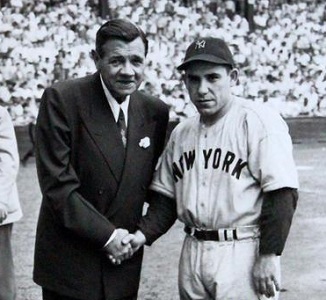
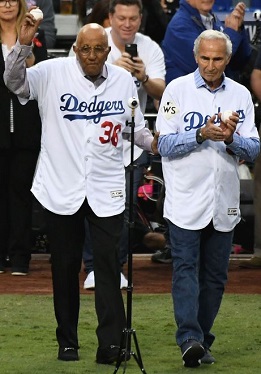
Judge Landis was ignored when he suggested Earl Averill (left) should get a piece of his sale price; Bowie Kuhn voided the sale of Joe Rudi (right) and two teammates. Baseball might have been a little different if Landis was heeded and Kuhn wasn’t ignorant.

One commissioner’s ignored suggestion and a future commissioner’s foolish ruling, both involving player sales, might have made major differences if each went the other way. Especially on the pressures brought into the game in the years after the reserve era ended with the Andy Messersmith-Dave McNally ruling of 1975.

In 1928, Earl Averill of the Pacific Coast League’s San Francisco Seals caught the eye of the Indians. The Indians bought Averill from the Seals for a reported $50,000, with the apparent proviso that Averill wouldn’t have to report to the Tribe until after the PCL pennant race was over. A quiet man whose passions included animals and flowers, the future Hall of Famer was also savvy enough to flinch when he read about the sale in a newspaper article.

As Bill James exhumed for The New Bill James Historical Baseball Abstract in 2001, Averill asked how much of the sale price he could expect to receive. James didn’t say whether the Seals laughed their fool heads off, but he did say the answer was nothing. If that was the case, Averill decided he wasn’t going anywhere, never mind that both the Seals and the Indians tried to talk him into deciding otherwise.

That debate reached the eyes and ears of Kenesaw Mountain Landis, baseball’s autocratic first commissioner. Landis may have been foolish administering justice more rough than just over baseball’s former gambling scandals. He was utterly stupid in his de facto upholding of baseball’s colour line. (He never formally or officially rejected black players in the major leagues, but no team dared to sign one so long as he ran the Show.) But Landis was absolutely visionary when it came to his reaction to the Averill sale.

The commissioner actually agreed with Averill. He actually thought Averill’s demand for a piece of the sale price was reasonable. As James phrased it, Landis suggested “that baseball should adopt some sort of legislation by which, whenever a player was sold, the player himself would get a cut of the proceeds.” James merely said the idea went nowhere; one can imagine too readily the owners of the time asking what was in Landis’s tea in that moment because they wanted to get loaded, too.

But Landis’s suggestion also never crossed the mind of future commissioner Bowie Kuhn, in 1976, when Kuhn allowed his distaste, shall we say, for Athletics owner Charlie Finley, to get in the way of sound judgment and, concurrently, put an unnecessary virus into baseball’s financial body.

Like his fellow owners of the time Finley quaked over the Messersmith ruling. Unlike many of his fellow owners, Finley operated the A’s by the proverbial seat of his pants, even if he shared with them a passion for operating as cheaply as he could get away with doing. But he also saw a way to balance his own financial scale in Messersmith’s immediate wake.

Over sixty players would face their first free agency after Messersmith won the end of reserve clause abuse. Finley traded two of them before the 1976 season began, outfielder and future Hall of Famer Reggie Jackson and pitcher Ken Holtzman, to the Orioles, for outfielder Don Baylor and pitcher Mike Torrez. Three more of Finley’s free agents-to-be—outfielder Joe Rudi, pitchers Vida Blue and future Hall of Famer Rollie Fingers—refused to sign 1976 contracts, and Finley renewed the three under the maximum allowable twenty percent pay cut each.

Rudi, Blue, and Fingers refused to sign deals lacking their biggest known demand: the no-trade/no-cut clause whose rejection by the Dodgers instigated Messersmith into pitching without a 1975 contract in the first place. And the Oakland trio knew the manipulative Finley only too well. As Rudi was eventually quoted as having told the incoming Baylor, “Any time you hear him clearing his throat, he’s lying.”

Finally, Finley shifted gears from trade talk to sale talk. In addition to Rudi-Blue-Fingers, Finley brought third baseman Sal Bando to the sales floor, the price $500,000. The Red Sox struck first. They wanted Rudi and Fingers, even though they also needed a lefthanded starting pitcher like Blue more than they needed an outfielder or relief pitcher. The Yankees swung into the store next, ready to bring Blue right to the checkout line.

That jolted the Red Sox. Knowing Kuhn wasn’t George Steinbrenner’s biggest fan, either, they feared Kuhn would void their purchases if the Yankees were seen just in the store’s neighbourhood. They even lured the Tigers, who’d shown prior interest in Blue, back to the sales floor. (Get that sonofabitch away from the Yankees, one published account quoted Red Sox general manager Dick O’Connell as telling Tigers GM Jim Campbell.) And the Tigers were ready to pay the same million for Blue that the Yankees were ready to spend.

One day later, the Yankees raised by $500,000. And as the rest of baseball realised Finley wasn’t kidding about his intended fire sale, the Rangers jumped in offering $1 million for Baylor, while Bill Veeck—who’d re-purchased the White Sox—asked about buying Bando. All this and more reached Kuhn about Finley’s Supermarket as he sat in Comiskey Park watching the White Sox host the Orioles.

Kuhn was anything but amused, and Finley, likewise unamused, told Kuhn it was none of his bloody business; since when did commissioners poke their noses into player transactions? Finley was probably as unaware of Landis’s earlier thoughts regarding Averill as he was too well aware of a previous A’s owner, Connie Mack, breaking up powerhouse teams twice with fire sales because he was cash strapped.

But according to John Helyar in Lords of the Realm: The Real History of Baseball, Dodgers owner Walter O’Malley (whose team’s fractured negotiation with Messersmith led to the end of the reserve clause abuse in the first place) told Kuhn that if Finley could consummate the sales, the end of the reserve era now meant pennant races could be decided in June. You could buy the pennant at the checkout counter! Don’t let it happen, Bowie! This is baseball, not the A&P! 

That was from the owner who bought longtime Giants mound menace Sal Maglie from the Indians in May 1956, thus helping to make the final Brooklyn Dodgers pennant possible, while Kuhn was a young lawyer working for the New York firm Willkie, Farr & Gallagher—whose clients included the National League.

Kuhn voided the Rudi-Blue-Fingers sales. He couldn’t “persuade himself” that buying the three Oakland stars was “anything but devastating to baseball’s reputation for integrity and to public confidence in the game, even though I can well understand that their motive is a good faith effort to strengthen their clubs.” Any player who dealt with any front office duplicities in reserve-era contract negotiations, as well as any of the very few genuinely honourable owners*, had to have laughed his fool head off right then and there.

It got even better. Lenny Bruce schpritzing at Carnegie Hall couldn’t have topped Kuhn from that point:

If such transactions now and in the future were permitted, the door would be opened wide to the buying success of the more affluent clubs, public suspicion would be aroused, traditional and sound methods of player development and acquisition would be undermined, and our efforts to preserve the competitive balance would be gravely impaired.

God rest his soul in peace, but the only thing gravely impaired in that moment was Kuhn’s thinking. That, James wrote, “was an ignorant, bone-headed, destructive policy which had no foundation in anything except that Kuhn hated Charlie Finley and saw that he could drive Finley out of the game by denying him the right to sell his [star] players.”

What Kuhn should have done, if he had been thinking about the best interests of the game, is adopt the Landis policy: rule that players could be sold for whatever they would bring, but 30% of the money had to go to the players. Had he done that, the effect would have been to allow the rich teams to acquire more of the best players, as they do now. But this policy would have allowed the rich teams to strengthen themselves without inflating the salary structure, and would have allowed the weaker teams, the Montreal-type teams, to remain financially competitive by profiting from developing young players.

If you think Rudi, Fingers, or Blue would have objected to pocketing $300,000 each as their cut of those sale prices, I have a cheap old ballpark to sell you—on Coogan’s Bluff. Finley might have squawked over getting only $2.1 million for only as long as it took him to put it in the bank.

If Kuhn was smart enough to apply the Landis suggestion, there might have been instances of a sold player pocketing more as his cut of his sale price than he earned in salary the same year. Joe Rudi earned $84,000 in 1975 and, after that twenty percent pay cut, $67,200 in 1976, but thirty percent of his intended sale price would have put almost as much money in his pocket at once as he asked for over three years before the sale proposal.**

Who’s to say those owners not as financially endowed (or daring) as Steinbrenner wouldn’t have been able otherwise to lure some of the choice free agents Steinbrenner could lure, or offer competitive signing bonuses to prime draft picks, if they could have continued player sales? Who knows how much less the salary structure might have inflated in due course, if Kuhn hadn’t voided the Rudi-Fingers-Blue sales while imposing a concurrent cap of $400,000 on straight cash deals, meaning teams in need couldn’t sell their stars for big money while keeping their bargains on the sales floor for comparative pocket change?

We’ll never know for sure, but we do know how things turned out for Averill. His impasse was resolved when the Indians paid him both a $5,000 bonus and a salary somewhat higher than the normal major league rookie salary of the time, and he went to Cleveland to begin the Hall of Fame career compromised when a back injury in a 1937 game wrecked his formidable swing.

Averill was elected to the Hall of Fame in 1975. He looked only slightly less foolish criticising the Hall for his not being elected sooner, as he did in his inauguration speech, than Kuhn looked placing a chance to stick it to Finley over the good of the game.

————————————————————————

* Phillies owner Bob Carpenter was one such owner, if you take the word of his Hall of Fame pitcher Jim Bunning. When Carpenter tried to talk Bunning—the Phillies’ player representative and one of the players union’s committee who recruited Marvin Miller as their executive director—out of hiring Miller in the first place, Bunning gave Carpenter a testimonial right to his face.

“If you were the owner and I was the player representative, we wouldn’t need Marvin Miller,” Bunning said. “But you don’t own all the other teams and I’m not the player representative on all the other teams . . . If I had a dispute with you, I wouldn’t worry. We’d solve it. Not everybody has that kind of relationship, though.”

** With free agency on his horizon, Joe Rudi wanted $375,000 over three years to stay in Oakland. Sidebar: He was the one player among the big three in Finley’s intended fire sale who actually reported to his new club, even being fitted for a Red Sox uniform, right before Bowie Kuhn voided the three sales.

When Rudi hit free agency after the 1976 season, he signed a five-year, $2.09 million deal with the Angels. After an injury-plagued four seasons in Anaheim, the Angels traded Rudi and pitcher Frank Tanana to . . . the Red Sox, in the deal making an Angel of outfielder Fred Lynn.

Rudi finished the deal with another injury-riddled season in Boston and became a free agent, signing with . . . the A’s, now owned by Walter Haas. He played 1982 with the A’s, who released him in late October. Career over. But not before ending it with a bang; Rudi hit a two-run homer off Kansas City’s Larry Gura in his final major league at-bat.

A Washington writer bats for Bowie

2019-01-19 micahbowie

Micah Bowie on the mound for the Nationals.

Someone in the mainstream sports press, as opposed to just one obscure blog writer like me, has taken up Micah Bowie’s battle. Thom Loverro, of the Washington Times, was able to talk to the former pitcher for the Nationals and four other clubs for a profile on Bowie’s battle to get help from the Major League Baseball Players Association to stay alive in the first place.

I wrote about Bowie earlier this month. Not long after I published my piece, Douglas Gladstone, the journalist who’s taken up the cause of 1947-1979 players aced out of a pension plan change and thus denied even small pension dollars, and who’s also taken up Bowie’s battle for help from his union and other baseball assistance sources, provided me Bowie’s telephone number.

But I couldn’t bring myself to dial it. I admit it. It may sound foolish now but I remain haunted by the boyhood experience of trying to talk to a father dying of lung cancer. There were too many days when just saying hello to him when I came home from school and hearing him strain further and further to reply were too much. I couldn’t tell anyone I feared I might be the one responsible for the final outcome that finally happened in June 1966.

Somehow, Loverro had the guts I lost and called Bowie. And it turned out that I had nothing to fear, after all. Bowie is on 24/7 oxygen; as Lovarro describes it from Bowie’s own words, “the levels he needs per minute now are hospice-level care to help his lungs, severely damaged from back surgery he had that went wrong to relieve pain from baseball injuries he suffered.” But the former pitcher could talk. And, did.

Bowie’s pitching related injuries included elbow, hip, shoulder, and groin injuries; I was unaware at the time I wrote that the ruptured diaphragm he has since suffered traces to a back surgery gone wrong, a surgery he underwent to relieve as much as possible of the pain those injuries inflicted on him.

“The pitching had really taken its toll on my lumbar,” Bowie was able to tell Navarro. “Once I got done with baseball, and the pain became unbearable and unmanageable, we had a spinal cord stimulator put in in August 2016 to help with the pain and to try to get me ready for some fusions that were necessary because of baseball. Not long after we had some complications from the surgery the battery bounced around, created some damage. I ended up with both lungs being damaged and my diaphragm being ruptured. I’ve had multiple surgeries to try to correct that damage.”

Bowie hoped to convince the players’ union to vest his medical disability benefit far sooner than the age-62 vesting age. Lacking the full four years’ major league service time, Bowie told Loverro, he applied based on his back issues tying directly to his major league injuries. He and his family started a lengthy appeals process after the union first turned him down, and they were denied again. The benefit would equal $5,000 a month.

“I called the union,” Bowie told Loverro. “I talked to a member of the pension committee, one of the guys who had declined my benefits, and he informed me he didn’t even read my case. He just read from the attorney for the pension plan that they could deny it, so without looking at my stuff they just denied me. I said how in the world can you deny me and not read my appeal. I haven’t gotten anywhere with the union or any pension committee members since that point. It is very disheartening to know this. Because I played major league baseball, I am going to bankrupt my family with the injuries it has left me. That’s not right.”

I noted when writing of Bowie earlier that the players’ union had no problem granting an early disability vesting to one-time Oakland Athletics pitcher Mike Norris, who underwent spinal surgery in 1999 to correct cervical myelopathy, and asked for and received an early vesting of his $89,000 annual family disability benefit a decade after his surgery.

Unlike Bowie, Norris wasn’t in palliative care, said Gladstone, who added that he couldn’t fathom why the players’ union agreed to vest Norris early but not Bowie.

Loverro writes that Bowie has had to sell off assets and make other somewhat radical changes just to try keeping up with his medical expenses. Medical malpractise? “Texas malpractice laws have a cap on damages that can be awarded,” Loverro writes,  “and Bowie said that cap would have been lower than the costs of him pursuing a lawsuit. The union somehow reversing their decision may be his only hope to keep him from losing everything — including his life.”

“We’ve done a lot to try to keep me alive as we navigate through the medical system,” Bowie told him. “Unless the situation changes dramatically, it bankrupts my family for me to live. That’s very hard for me to say publicly.”

Having seen a harrowing YouTube video of him in his struggle, I couldn’t bring myself to call him. Every time I picked up my phone to dial his number, I could see only my father, in his oxygen tent, struggling for whatever breath was left to him, remembering my own anxiety not to tax him further (and we’d had a difficult enough relationship before his illness as it was), and despite the removal of five decades and almost three years I thought only that I couldn’t tax Bowie that way.

That was hard enough for me to admit publicly. (Well, as publicly as this still-obscure journal might be.) But I’m glad that somebody had the guts to call him and sorry that I didn’t. I hope someone in the players’ union has the guts to reverse their refusal and give Bowie and the family who love him the relief they deserve.

Out to Launch

2019-01-18 rogermarishankaaron

Roger Maris and Hank Aaron–both broke ruthsrecords; neither cared how the ball left the yard as long as it did leave the yard.

One of the more scurrilous arguments I can remember from the 1961 hunt to break ruthsrecord (so help me, that’s how they pronounced it then) involved Roger Maris’s “legitimacy.” Not just over whether a “true Yankee” should be “allowed” to break the single-season home run record (like the import from the Red Sox who set it in the first place) but whether Maris was a “legitimate” power hitter.

The big beef was over Maris’s kind of power hitting. He looked like a muscular ex-Marine, but he hit booming line drives into the seats instead of the parabolic punts for which Babe Ruth and, in due course, Mickey Mantle and Willie Mays were renowned in his time, and for which sluggers to come (Harmon Killebrew, Frank Howard, Dick Allen, Dave Kingman, Mike Schmidt, Darryl Strawberry, and company) would be held in awe likewise.

Joe DiMaggio once said hitting the other way wasn’t real hitting. The power argument is somewhat similar, and just as foolish. There were even those who thought Hank Aaron was an illegitimate successor to Ruth on the all-time home run list because a) he never put up a Huge Season; and, b) Aaron, more or less like Maris, hit the high line drive far more often than he hit the big, jaw-dropping, neighbourhood-threatening, ICBM-like launch.

The man’s lifetime averages per 162 games show that just about every season Aaron played was a Big Season. He averaged 37 home runs, 113 runs batted in, 185 hits, 31 doubles, 107 runs scored, and a mere 68 strikeouts per 162 games. (That, by the way, folks, is eighteen less than the Babe.) In other words, Hank Aaron’s average season was anyone else’s career year.

Maris wasn’t that kind of great except for the three Yankee seasons in which it looked like he was coming into his own on his own terms, including the year he broke ruthsrecord. (Whatever else you’ve heard or read, the real reason for Maris’s post-1962 decline was injuries.) But he had that one thing in common with Aaron, and people were actually foolish enough to hold it against him, too. As if it mattered more how the ball flew over the fence than that it flew there at all.

They used to accuse Maris of taking advantage of Yankee Stadium’s fabled short right field porch. As if they expected a lefthanded hitter with any kind of power not to. As if they forgot (assuming they knew) that Yankee Stadium was designed and built specifically to accommodate Ruth’s own lefthanded power. The stadium argument recessed occasionally during the more frequent argument over the Marisian liner versus the Mantlesque punt.

Which would be, today, the so-called launch angle argument. The passel of hitters checking in at the plate looking for something at which to swing on an uppercut before looking for something to hit at all. The passel of hitters that includes plenty with power enough who seem to think, without being able to say it that way, that they’re supposed to be Mantle and not Maris. Mays, not Aaron.

In today’s game Roger Maris and especially Hank Aaron would be the poster children for arguing against the launch angle, and they’d have the statistical evidence to back it up. Even passing Ruth on the all-time home run list, Aaron didn’t swing with a swooping uppercut, and the ball didn’t fly as if aiming for the Delta Quadrant.

And, as put by Chili Davis, former outfielder, former Cubs hitting coach, hired for the same job by the Mets practically before he’d had time to chill after the Cubs executed him, “certain players . . . are going to have to make some adjustments because the game has changed and pitchers are pitching them differently. They’re not pitching to launch angles and fly balls and all that anymore. They’re pitching away from that.”

Whatever you thought about Bryce Harper’s peculiar walk year, when he spent most of the first half looking completely unable to hit though ironically producing big enough when he did hit one, the real key to the turnaround that began shortly before the All-Star break was Harper returning to the batting style that first established him. He forgot about launch angles, with which he became pre-occupied coming out of spring training, and remembered about making contact, any kind of contact.

Harper’s first half slash line was .214/.365/.468. His second half: .300/.434/.538. His first half batting average on balls in play: .226. His second half: .378. He hit eleven home runs in the second half compared to 23 in the first half, but it’s probably very fair to suggest that if he hadn’t become a little enamoured of launch angles coming out of spring training he might well have hit the same number of home runs on the season (34) but he’d have been a lot more comfortable and productive all around at the plate.

Davis comes up again because of John Harper’s report that his execution as the Cubs’ hitting coach may have been instigated by the team’s two top stars, first baseman Anthony Rizzo and third baseman Kris Bryant. Harper says Cubs president Theo Epstein had no intention of pinking Davis until Rizzo and Bryant put the squeeze on. “He caved,” one unidentified source said of Epstein. “He’s not happy about it. He thinks it’s BS that the players complained about Chili, but he wasn’t going to stick with his hitting coach just to make a point.”

Davis admitted he had a tough time connecting with some of the younger Cub hitters, including Rizzo and Bryant, without mentioning them by name. And the Cubs’ bats went quiet enough in the second half to force them into a 163rd game just to make the wild card game, and to show nothing in those two games but two runs scored in 22 innings in their own hitter-Friendly Confines.

Rizzo is known to be his own hitting coach regardless of who actually has the job, a near fanatic about refining his plate approach on his own. Bryant, however, is known to be obsessed with launch angling, something instilled in him early by the private hitting instructor who also happens to be his father. Rizzo started 2018 moderately before finding a groove around May; Bryant battled against a combination of shoulder trouble and pitchers figuring out he was so locked into launch angling that he was meat against rising pitches, likely to either strike out or hit catchable flies.

Davis wasn’t the only hitting coach who couldn’t get it into his charges’ thick skulls that launch angling doesn’t work for everyone swinging a bat. Dave Magadan—former sweet-swinging infielder turned hitting coach—has a new job because of it. The Diamondbacks, like many teams who can’t figure out why the bats turned to papier mache, made Magadan a 2018 scapegoat. The Rockies snapped him up post haste.

“I never want guys hitting the ball on the ground, especially to the pull side,” Magadan tells Harper. “I want them driving the ball into the gaps. But to just want to hit the ball in the air … if you’re not [Aaron] Judge or [Giancarlo] Stanton or J.D. Martinez, you’re just going to fly out a lot to the big part of the ballpark when pitchers with velocity and high spin rates are pitching up in the zone. I had a guy last year who tried to be J.D. Martinez, and we finally had to have an intervention with him. It wasn’t until he was sent back to Triple-A that he realized it didn’t work for him, and he got back to hitting line drives.”

Bryce Harper didn’t have to go to Triple-A to fix himself last year, but Magadan’s point is taken well. And Magadan respects Davis, with whom he worked in the Red Sox organisation when Epstein still ran their show. “We’ve talked a lot about hitting,” the former Met infielder says. “He knows the swing and he knows the psychology of players, so I was surprised to hear about some of the stuff in Chicago, but sometimes you just don’t connect with players. I see him doing great things in New York.”

There will always be hitters who can send satellites into orbit at the plate. There will always be hitters who don’t have to launch satellites to leave the yard. (There’s also at least one Mike Trout, who does it both ways; some of his home runs cruise into the seats on a high line, and some blast off as if it’s destination Milky Way.) Things probably haven’t been helped when you turn on the television to watch a game and the broadcast graphics people start hanging up the launch angles of every ball hit over the fence.

When Maris was put through the psychological wringer chasing Ruth’s single-season home run record, the criticism that seems to have stung the least was how he cleared the fences. It may have bothered him that Joe and Jane Fan considered him an interloper. (Yankee fans and otherwise; stories abounded about fan abuse Maris incurred on the road that season, too.) It may have haunted him that he had reason to suspect his own team would have preferred Mantle and not himself chase and break ruthsrecord.

But he knew in his heart of hearts that he didn’t have to hit the ball into earth orbit to hit for power. He had 133 home runs in three seasons, including the record-breaking 61 in ’61, to prove it. He respected and admired Mantle without thinking he had to do what he couldn’t do. Aaron surely had his baseball models, too, but he, too, never seemed to care how the ball flew out as long as it flew out at all.

Imagine Maris and Aaron in today’s game with Davis or Magadan as their hitting coaches. (The late Marvin Miller once asked rhetorically if a visitor could imagine Sandy Koufax as a free agent. Now, imagine Maris [before the injury bug] or Aaron likewise.) Imagine Davis or Magadan showing the rest of the team’s hitters Maris or Aaron and saying, “These guys don’t give a damn about launch angles, and they’re hitting damn well while still hitting home runs like it’s going out of style. What does that tell you?”

Now, imagine today’s hitters looking at Davis or Magadan after that exhibition, by the two men who broke ruthsrecords, and saying, as the phrases went once upon a time, “Who are these fools and what planet were they exiled from?” But where will those fools  turn when they exile themselves so deep into the tank they’ll need an elevator to return?

Eli Grba, RIP: Fallen and resurrected

2019-01-16 eligrbaangels

Eli Grba, the first Angel . . . (Photo courtesy of the Society for American Baseball Research.)

No less than Casey Stengel himself suggested the newborn major league Los Angeles Angels help themselves when the Yankees made Eli Grba available in baseball’s first expansion draft. Stengel liked the bespectacled righthander’s  potential even if, in his final seasons managing the team, he couldn’t always swing Grba into the Yankee rotation, and Grba’s record to date mixed between starting and the bullpen was inconsistent.

The National League expanded a year later, with Stengel on tap as the manager of the incoming Mets, and with the first pick of that expansion draft the Mets picked Giants catcher Hobie Landrith. “You hafta have a catcher,” Stengel said of the pick, “or else you’ll have a lot of passed balls.” So the Ol’ Perfesser had a hand in a battery being picked to open each league’s first expansions.

Grba, who died at 84 Monday following a three-month battle with pancreatic cancer, started and won the Angels’ first regular season game, a 7-2 complete-game triumph over the Baltimore Orioles. The game featured future Hall of Famers Brooks Robinson and Hoyt Wilhelm and the Angels drawing first blood with back-to-back home runs from Ted Kluszewski (drafted from the White Sox) and Bob Cerv (drafted like Grba from the Yankees) in the top of the first off Orioles starter Milt Pappas.

The Angels weren’t even close to finished. They battered Pappas and his relief John Papa before Wes Stock, Billy Hoeft, and Wilhelm settled them down, including an RBI single from pint-sized outfielder Albie Pearson (a draft from the Orioles) and a three-run homer from Kluszewski in the second, putting them up 7-0. (Kluszewski and Pearson roomed on the road, with the 6’2″ muscular Kluszewski telling the 5’5″ Pearson, “I get the bed and you get the dresser drawer.”)

The only runs the Orioles could pry out of Grba that day were Jim Gentile scoring on a fielding and throwing error on the same two-out infield play in the second, and Jackie Brandt scoring on an infield error in the third.

Grba, who’d won six of ten decisions with the 1960 Yankees, finished a six-hitter and provided immediate fodder for headline writers who couldn’t resist having mad fun with his missing-vowel surname (pronounced like the baby food brand) in the times to come. (GRBA PTCHS 4-HTTR was typical.) The bad news was that his triumph was the only win on a 1-7 existence-opening Angels road trip that was further compromised by eight rainouts. It took the 1962 Mets losing the first nine straight of their existence a year later to erase that, sort of.

A big righthander himself, Grba would stand after the Angels’ first two seasons as their all-time winner (19) and all-time loser (22). The further bad news was that in 1962 he’d be lost in the glittery shuffle of rookies Bo Belinsky and Dean Chance—both of whom took a little too readily to the lifestyle of the Hollywood demimonde, Belinsky especially, and both of whom led the pitching staff much of the season while they were at it, sparking the outside possibility of the Angels reaching the World Series.

It didn’t happen. Belinsky opened the season 7-1—including five straight wins to open with the fifth being his once-fabled no-hitter—but finished 10-11 with a 3.56 ERA. Chance led the starters with 14 wins and a 2.96 ERA. Grba found himself back in the same pattern he’d experienced with the Yankees, shuttling between starting and relieving, and finished with eight wins, nine losses, and a 4.54 ERA despite the advent of a pitching-rich baseball era and the Angels playing their home games in Dodger Stadium. (The Angels weren’t exactly buddies with the Dodgers, so much not that their broadcasters called the park Chavez Ravine at owner Gene Autry’s insistence.)

The Angels finished third in the American League in 1962, still a staggering season for an expansion team. They were hit even harder when 40-year-old reliever Art Fowler took a line drive in his face during pre-game practise and starter Ken McBride went down with a cracked rib, and a six-game losing streak in September erased their faint pennant hope.

An only child whose mother raised him alone in Chicago after his father abandoned her when their son was still a small boy, Grba was first a Red Sox discovery until they dealt him to the Yankees in March 1957. The kid who’d grown up a White Sox fan was less than thrilled: “The Yankees would come in and beat us all the time.” His Yankee spell was delayed when the Army drafted him; he was discharged in time for spring training 1959.

05angels.0409.kjs

To hell and back, Grba tosses out a gold-covered baseball as a ceremonial first pitch for the Angels’ fiftieth Opening Day.

Grba was the Angels’ starting pitcher on Opening Day their first two seasons. In May 1963, after marrying and buying his home, Grba was sent to the minors. “I don’t understand,” he’d say, “how a guy can be good enough to pitch the opening game two years in a row and then isn’t even good enough to pitch in the bullpen.” They sent him to Honolulu, the same minor league team where they exiled Belinsky after a terrible 1963 start.

That was after the Angels unloaded another former Yankee, former relief star Ryne Duren, after Duren’s already hard drinking began to spiral out of control when his marriage collapsed and his infant son unexpectedly died. Duren would drink himself out of baseball (as a Senator, he once had to be talked off a bridge in a suicide bid by manager Gil Hodges) but sober up by 1968. He’d be only the first of a few Angels having to go there.

Grba was a competitor to a fault, his signature moment sometimes thought to be the day he pitched in Yankee Stadium for the first time as an Angel, surrendered home runs in consecutive at-bats to Hall of Famer Mickey Mantle, and circled the mound screaming insults at Mantle as the latter rounded the bases.

But like Duren and Belinsky, Grba developed too much taste for alcohol. He admitted it began affecting his pitching as soon as 1963. Unlike Belinsky, who’d revive his career a few times in Hawaii, Grba became a minor league traveler until his drinking got far enough out of hand to force him out of baseball. “My priorities,” Grba would remember, “were all gone. [Hall of Fame pitcher] Bob Lemon saw me one day and said, ‘I’ve never seen a pitcher lose his stuff as fast as you did’.”

Grba lost his stuff and, in due course, three marriages, before he hit rock bottom in 1981, after several equally failed rehab attempts. This time Grba lived and worked at an El Monte, California detox center, after more than a decade bounding between jobs and between southern California and his native Chicago. Sneaking back to his room in the wee small hours one night, he lost his balance and—depending upon which account you believe—he hit the floor or fell through a window. Whichever it was, Grba finally quit drinking.

He got help from an unlikely source, according to Los Angeles magazine: Bo Belinsky.  The rakish lefthander was once the toast of baseball thanks to patronage from fading but still influential columnist Walter Winchell after his no-hitter and five-game career-opening winning streak. But the Angels suspended him in August 1964, despite what looked a solid season in the making, after a hotel room brawl with veteran sportswriter Braven Dyer.

Belinsky’s career careened off the rails after his trade to the Phillies near the end of 1964 and ended after too much back-and-forth to the minors in 1970. Already a heavy drinker, Belinsky also became amphetamine addict while he was at it, the latter something he’d admit years later that he picked up in the Phillies’ bullpen. “I’d occasionally used greenies, amphetamines, as a starter, but in Philadelphia they had red juice,” Belinsky would remember, “and when I got into the bullpen, I started getting loaded every day, because as a reliever, you never know when you might have to play. This chemical started coming into my life. I thought I could handle it, because I was strong and still had that phony smile. But something was happening to my system.”

When Belinsky’s second marriage collapsed in 1981, he began his own battle to get and stay sober, including membership in Alcoholics Anonymous. In line with A.A.’s twelfth-step principle, carrying its message to fellow alcoholics, Belinsky reached out to Grba after learning of his former teammate’s struggle. “Bo and I had never been that close,” Grba told Los Angeles. “He was too Hollywood. But he came and got me and took me to an AA meeting. I was nervous, but Bo said, ‘Don’t worry, Eli, they’re all drunks just like you and me’.”

Grba stayed sober the rest of his life. So did Belinsky, after a few ups and downs in the 1980s including a suicide attempt of his own, before staying clean and working first as a Hawaii alcohol counselor and, later, a public relations executive for a Las Vegas automotive concern, before his death at 64 of complications from bladder cancer in 2001. So did Duren, who became an addiction counselor after his 1968 cleanup, working for various agencies and groups until his death at 81 in 2011.

Getting and staying sober brought Grba back to baseball. He became a minor league pitching coach and manager, a pitching coach again, and a scout, including in the Phillies’ system thanks to being clean and sober still when he re-connected with another Angels teammate, Lee Thomas, then the Phillies’ general manager.

Grba retired in 1997 and moved with his fourth wife, Regina, to Alabama. He also re-connected with his children, including son Nicholas, now a retired Air Force staff sergeant; and, Stacy, his daughter who also served with the Air Force. In 2016, Grba co-wrote his memoir, Baseball’s Fallen Angel. “The way I was drinking it is amazing I can remember anything,” he told an interviewer while promoting the book. “I had six alcoholic seizures and six DUIs. How I never killed myself I’ll never know.”

When the Angels celebrated their fiftieth anniversary as a major league franchise in 2011, Grba was invited to the ceremonies and to throw out a ceremonial first pitch. That day opens Grba’s memoir, co-written with Douglas Williams, a harrowing account of a haunted man who’d sent himself to hell and back.

“At that game Eli realized so many of his former teammates are no longer with us and I know he wondered why God left him here after he had lived so hard with his alcohol problem,” Williams said later. “Then he realized that maybe he was still here so he could tell his story and warn others of the pitfalls he fell into.”

“What I think about sometimes is about how I messed it up,” Grba told the Orange County Register of his self-shattered career and his three broken marriages. “Baseball has been a secondary thought to me ever since I got sober, I didn’t leave the Angels the way I wanted. It’s nice to be recognized as the first, nice to be remembered, and it’s an honor.”

Grba threw a perfect strike for that ceremonial first pitch. It was nothing compared to the perfect strike he threw for himself, his children, and his grandchildren, after he sobered up to stay.

Mel Stottlemyre, RIP: Quietly monumental

2019-01-14 melstottlemyre

Mel Stottlemyre, the best pitcher of the Yankees’ lost decade, later a World Series-winning pitching coach.

When the 1964 Yankees won what turned out to be the last pennant of the old guard, it wasn’t pretty. First-year manager Yogi Berra was the unsuspecting victim of backstabbing abetted by first-year general manager Ralph Houk. Age and injury began catching up to the team. Their sale to CBS rocked baseball controversially. And Berra was saddled especially by an unreliable bullpen.

With Hall of Famer Whitey Ford beginning to experience elbow discomfort and Jim Bouton suffering an unexpected tired arm in the first half, lefthander Al Downing putting up a solid season wasn’t quite enough even if he would lead the American League in strikeouts. (He also led in walks, unfortunately.) Over Houk’s objection, still-co-owner Dan Topping made two moves before turning it over to the Tiffany Network.

He ordered the call-up, from the Richmond farm, of a kid named Mel Stottlemyre, who’d grown up a Yankee fan despite living cross continent. His mild manner was probably the only thing mild about him. On the mound, the Missouri-born Pacific Northwesterner proved something else immediately. So did Pedro Ramos, a journeyman righthander who joined the Yankees that September’s beginning.

Stottlemyre would win nine of twelve starting decisions down the stretch including a five-start winning streak and two shutouts. Ramos down the stretch gave Berra and the Yankees the bullpen stopper they were missing since Steve Hamilton’s early-season success dissipated.

The Yankees won the pennant at almost the final minute. Their Series opponents, the Cardinals, won their pennant a little bit later than that. The Phillies’ infamous collapse threatened to send the National League to a three-way pennant tie before the Cardinals survived against the hapless Mets on a final weekend during which the Reds bumped the Phillies off once and for all.

Stottlemyre—who died Sunday at 77, after a long battle with multiple myeloma—went on to beat Bob Gibson handily in Game Two of the World Series. He faced Gibson in Game Five and came out in a 2-0 hole (the Yankees would go on to lose); he faced Gibson again in Game Seven and was done in in the fourth, when rookie infielder Phil Linz couldn’t avoid a takeout slide on what might have been an inning-ending double play, turning instead into a Cardinals three-run inning en route the 7-5 final for the Redbirds.

“Tim McCarver hit a grounder to Joe Pepitone at first,” Stottlemyre would remember. “Pepi made a good throw to second but the runner took Phil Linz out and he made a wide throw back to first. I came over and dove for the ball and landed on my right shoulder. Fortunately I wasn’t injured.”

That wouldn’t happen for another decade. In the interim, Stottlemyre—whose money pitch was a filthy hard sinker—became the best pitcher on a Yankee club entering its lost decade. Ford’s elbow turned into his nightmare and the end of his career soon enough. Bouton developed serious arm trouble, enough to reduce him to a marginal relief pitcher. Downing proved talented, inconsistent, and injury plagued. The team’s other stars (Hall of Famer Mickey Mantle plus Roger Maris, Tony Kubek, and Elston Howard) surrendered to age, injury, or both. And except for pitchers Fritz Peterson and Stan Bahnsen, plus reliable (and underrated) outfielder Roy White, the parched farm produced journeymen at best.

And Stottlemyre, who’d become a three-time 20+ game winner in his career, suffered the 1966 indignity of losing 20 games despite pitching to his normal capability and making his second straight All-Star team while the Yankees finished dead last for the first time since 1912. He suffered his highest ERA ever with a lower fielding-independent pitching rate (ERA minus defense) that was around his career norm; twelve of his 20 losses came when the Yankees gave him two or less runs to work with. He had four no-decision starts in which he pitched well enough to win, surrendering three earned runs or less; in ten of his losses he pitched well enough to win along the same criteria.

Stottlemyre would have more individual moments, including the staggering inside-the-park grand slam he hit to beat the Red Sox in 1965. “I didn’t slide in at the plate so much as I collapsed,” he remembered. When the pitcher who surrendered it to him, Bill Monbouquette, became a Yankee in 1967, Stottlemyre relished needling him about it. He had it listed in the 1967 Yankee yearbook as his greatest baseball thrill.

By the 1970s, he was accompanied by Peterson and then Bahnsen as the core of a promising new Yankee staff. It lasted only long enough for Bahnsen, the 1968 AL Rookie of the Year, to be traded after the 1971 season; and, for Peterson and fellow pitcher Mike Kekich to swap families notoriously in spring 1973, prompting the eventual trades of both.

Stottlemyre and his wife, Jean, were close to both pitchers and their wives and couldn’t figure how the deal could have been done without them figuring something was up. Not until the day Kekich, according to Stottlemyre, called to ask if he’d heard about the trade. Knowing both Peterson and Kekich were first class pranksters, the Stottlemyres first thought it was one of their gags.

It turned out to be nothing compared to how Stottlemyre’s career ended. After George Steinbrenner bought the Yankees in 1973, and Stottlemyre landed himself an $87,500 salary for 1974 following his first-ever contract holdout, he felt something pop in his shoulder that June. What popped was his rotator cuff. Season over. The following spring, after an off day fishing in the Everglades, Stottlemyre got a call to meet general manager Gabe Paul. Released. The day before his $30,000 severance would vest.

Stottlemyre fumed and went home to Issaquah, Washington, twenty minutes outside Seattle. But after a spell as a pitching coach in the Mariners’ system before joining the Mets as their pitching coach for their mid-1980s glory seasons, he worked two years for the Astros in the same job. Then, of all things, the Yankees wanted him back. To become Joe Torre’s pitching coach in 1996.

“I made a lot of statements about [Steinbrenner] that I had to eat twenty years later,” said Stottlemyre, who felt that despite Steinbrenner’s then-suspension The Boss could have intervened quietly but firmly in how his original release was handled. “When they decided they wanted me to come back to be Joe’s pitching coach, George called me himself and apologised. That really meant something.”

He added four Yankee World Series rings to the one he won with the 1986 Mets. Then Steinbrenner angered him again, this time after the Angels beat the Yankees in the 2005 American League division series and Steinbrenner congratulated Angels manager Mike Scioscia—whose team had been the only one to beat Torre’s Yankees consistently over the years, in regular season as well as postseason play—but said nothing for Torre.

2019-01-14 melstottlemyremonumentpark

Stottlemyre with his Monument Park plaque, 2015.

The usually mild Stottlemyre hit the ceiling. “To congratulate the other manager and not congratulate your own, after what he’s done this year, I laughed,” he said later. He laughed, and he quit. Except for a one-season return engagement as the Mariners’ pitching coach in 2008, Stottlemyre called it a career.

In the interim, Stottlemyre had suffered great sorrow when his youngest son, Jason, died of leukemia at age 11; and, great pride, when his other two sons, Todd and Mel, Jr., became second-generation major league pitchers. Todd’s career outlasted his father’s by three seasons but earned him only half the wins above replacement-level his father earned; Mel, Jr.’s major league career lasted one season.

Stottlemyre himself thought he had his cancer beaten once, in 2001, after chemotherapy and stem-cell treatment appeared to knock it out of his park. Remembering Jason’s battle decades earlier kept him strong, as did his involvement with the Multiple Myeloma Research Foundation. Reminded then that he had more hair on his head than he had before his chemo, Stottlemyre laughed. “Everybody’s mentioned that to me,” he replied, “although I don’t recommend what I had to go through to do it.”

Ten years after he left the Yankees for the final time, Stottlemyre was stunned to be invited to Old-Timer’s Day 2015 . . . where his entry into the Yankees’ fabled Monument Park was unveiled. There was probably nobody more shocked over it than Stottlemyre himself, who felt that as a pitcher he’d represented an era the Yankees and their fans would prefer to forget.

“If I never get to come to another Old Timers Day,” he told the Yankee Stadium crowd, “I will take these memories and I’ll start another baseball club, coaching up there, wherever they need me.”

Once upon a time, Stottlemyre’s uniform number—30, which hasn’t been retired yet (it was seen last on the back of now ex-Yankee reliever David Robertson)—was also a journalist’s code at the end of a good piece of copy. He wasn’t always good copy during his career, other than pitching and winning. But men who beat Bob Gibson in even one World Series game draw almost as much attention and respect as men who live well and battle more insidious foes with his kind of silent courage.