What a difference one series makes

Chicago Cubs versus San Francisco Giants

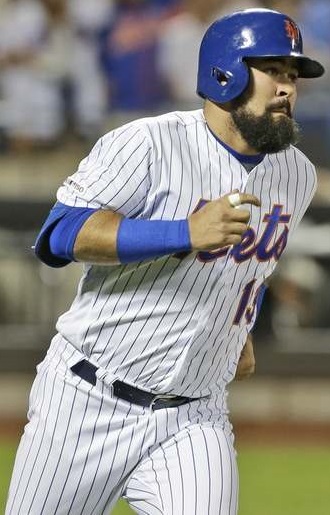
Pablo Sandoval ends Tuesday night’s game with an opposite-field bomb to win the Giants’ sixteenth of nineteen in July so far.

One month ago every smart dollar was ready to go down on Madison Bumgarner spending the stretch drive in a different uniform. And, every dumb dollar, including numerous held by the Mets themselves, was going down on the Mets clinging to Berra’s Law. (It ain’t over until it’s over.)

That was before the Giants—almost twenty games out of first in the National League West and not even a blip on the wild card radar, both as of the end of May—found ways to spend all July thus far winning sixteen of nineteen, and Bumgarner, with a 2.00 ERA from 25 June through this morning, became Bumgarner again. Somehow.

And, before they took three out of four from the Mets in AT&T Park last weekend, with all three wins coming in the bottom of the extra innings. Including the sixteen-inning series opener in which Mets uber-rookie Pete Alonso hit one through the hovering seagulls into the left field seats in the top of the sixteenth, but Mets reliever Chris Mazza couldn’t buy an out if he’d paid triple its worth in the bottom.

Almost nobody but the Mets themselves thought a good showing in San Francisco would keep them within reach of even a National League wild card. But then almost nobody but the Giants themselves saw them entering July with anything more than an extremely outside prayer of living long enough to even think about such a reach.

The problem with Berra’s Law is that sometimes it’s over before you want, wish, or expect it to be. And if the Mets rudely interrupted the Giants with an 11-4 shellacking in the third game of the set, it proved to be more rude than disruptive and just a mere disruption of the nails being hammered into their 2019 coffin.

Before July it looked like the Giants weren’t going to give final-year manager Bruce Bochy his and their fondest wish of one more postseason visit. Helluva way to send into retirement the guy who piloted them to three World Series rings in a five-season string. Then came July, and before they took care of the Mets:

* They swept the Padres in three to open the month.

* They took two out of three from the Cardinals and from the Brewers in succession.

* They swept the Rockies in Colorado, including a series-opening, doubleheader-opening 19-2 nuking highlighted by Brandon Crawford’s 5-for-6 including eight runs batted in, including a mammoth three-run homer down the left field line in the middle of a five-run first.

* For good measure, they hosted the Cubs to win a series opener Tuesday night with their fourth walk-off win in six games—and, once again, in extra innings, when Pablo Sandoval checked in at the plate with one out in the bottom of the thirteenth, and Kung Fu Panda sliced one the other way just over the left field fence. The bad news: no seagulls were anywhere near in danger of a conk on the head en route.

“This is the best stretch I’ve ever been part of,” Bumgarner crowed after the 5-4 win. He has no idea. The last time the Giants won four walkoffs in six games? Their first year in San Francisco, 1958, and also during July while they were at it.

And as Jon Heyman—longtime CBS Sports writer turned proprietor of FanCred Sports, which grants me the honour of publishing my writings now and then—said in a Tuesday tweet, “Few see MadBum going anywhere now. Things can change in a hurry but this is typical from rival exec: ‘No way Giants can sell, they’re on fire’.”

The Giants would have to experience a Mets-like collapse for their incumbent streak to turn that swiftly into a pleasant but outlying 2019 memory. And the Mets were into that collapse long before the Giants hosted them so bitterly last weekend. Bitterly for the Mets, that is.

The Giants haven’t got even a small degree of the Mets’ issues. Not even if Bumgarner still can’t resist giving the other guys T-shirt troll material now and again. It’s actually beginning to look like Bochy will get one more postseason visit before he puts paid to his distinguished managing career. He’s the only skipper of the new century to have three World Series rings for his fingers.

For a team whose neophyte general manager entered spring training challenging the league, “Come and get us,” the Mets don’t have egg on their faces, they have omelettes. Brodie Van Wagenen thought he’d put together a team to strike fear into the hearts of his division and his league, and the only hearts into which the Mets struck any fear were the hearts filling Citi Field.

He watched and once in awhile tried meddling as one after another week there came one after another Mets crisis of dubious play, dubious tactics, dubious strategy, and dubious behaviour. He watched his inherited manager offer one after another mealymouthed explanation of all going wrong and still gave the man more votes of confidence in one season than most on-the-rocks managers get in five.

He watched a mostly solid group of starting pitchers left to the mercy of a mal-handled bullpen including and especially the live closer he’d brought aboard—accepting an aging second baseman whose Hall of Fame-looking years were too far in the rear view mirror to be visible without a telescope—in his most notable off-season deal. Now that deal looks like gravy for the Mariners and castor oil for the Mets.

Never mind that Robinson Cano, the aging second baseman in question, played almost entirely like an aging second baseman until Tuesday night. The terminal optimist says his three hefty bombs against the Padres means Cano finding some kind of revival. The terminal realist says it’s closer to the three Babe Ruth blasted in his sixth-to-last game as a weary Boston Brave. Ruth was 40 at that time. Cano is four years younger and looks almost as weary otherwise.

And because Van Wagenen fell for it when the Mariners insisted he take Cano and his albatross contract off their hands if they wanted Edwin Diaz that badly, it forced manager Mickey Callaway to install Cano at second base while sending a promising young second baseman, Jeff McNeil, to a couple of outfield stations and elsewhere around the infield when needed.

Van Wagenen should count his blessings that the shuffle didn’t affect McNeil at the plate. Every other Met watcher with even a single functioning brain cell still can’t fathom why Van Wagenen was that accepting of having Cano jammed down his throat when the Mets’ second baseman of the future was right there ready to make his bones.

With the bullpen dubiously built and more dubiously maintained, what a surprise Diaz went from shutdown to shattered, and what a surprise their apparent most reliable earlier-in-the-game reliever, Robert Gsellman, devolved into an inconsistent mess. (Or should that be Mess?)

When Van Wagenen reacted with nothing to the unconscionable attacks Callaway and his pitcher Jason Vargas unleashed postgame on a reporter doing nothing worse than his job, after yet another extremely questionable bullpen non-decision, you didn’t have to remind yourself that on other teams in other clubhouses that manager would have been executed and that pitcher would have been run out of town without the benefit of the proverbial rail.

Last year Nationals general manager Mike Rizzo may have jumped the gun a little too heavily when he ran relief pitcher Shawn Kelley out of town post haste, after a misunderstood mound incident during a blowout in which Kelley, not normally a mop-up man, was sent out to pitch late and surrendered a home run.

Rizzo thought Kelley tried showing up manager Dave Martinez with a gesture that most people including Kelley himself thought was Kelley looking for help with a pair of contradictory umpire instructions. Not to mention slamming his glove to the ground after the home run, as a lot of pitchers do in such situations. Rizzo didn’t even want to hear Kelley’s side of it when confronting the pitcher after the game. The next minute: Kelley was gone.

However wrong Rizzo was in not seeking Kelley’s side of the story, the general message was sent loud and clear: if you’re not with us, you’re out of here. Van Wagenen had far more reason to send that message to Callaway and Vargas and, by extension, to his team, than Rizzo did.

Van Vagenen is no Mike Rizzo. He’s almost equal to the indulgently ignorant parent whose idea of disciplining the child who just put his foot through the neighbour’s glass shower door is to remind the child that the door had no business being in the way of his foot. When Callaway and Vargas put their feet through the shower door glass, Van Wagenen basically told them the door was in the wrong place.

The real trouble is that the Mets’ lack of accountability goes all the way to the owner’s suite. Patriarch Fred Wilpon and his chief operating officer son Jeff keep hitting the snooze button. Van Wagenen’s fiddling while the Mets self-immolate makes Nero resemble Itzhak Perlman and the burning Roman Empire resemble the New York Philharmonic. And the cacophony is deafening.

This year’s Nats have had their hiccups, and second-year manager Martinez hasn’t yet rid himself entirely of the thoughts that he’s in over his head. But just like the Giants, sort of, the Nats two months ago were thought preparing to push the plunger on the season, maybe even putting Max Scherzer, their perennial Cy Young Award candidate, onto the 31 July deadline trading floor.

Just like the Mets, the Nats two months ago had a bullpen with so remarkable tendency to play with matches that there came legitimate fears over whether Sean Doolittle would need Rust-eze rubdowns every other day or night. They also looked rather like the Yankees in that a few too many key parts began spending time on the injured list, too. The M*A*S*Hington Nationals.

When they hit 19-31 at one point this year, even the redoubtable Thomas Boswell couldn’t stop believing Martinez was due for a necktie party. “But just as the Nats have saved their season, so their manager’s prospects have been revived, too,” Boswell wrote a week ago. “I may get my wish: a ‘sincere desire to be proved wrong.’ The Nats players sure think so.”

And lo! The Nats awoke this morning winners of 16 of their last 22. And they’ve danced their way right back to second place in the NL East, a mere five and a half behind the leaders out of Atlanta. It seemed only whipped cream and a cherry on top when Trea Turner hit for his second career cycle Tuesday night against the same Rockies the Giants bastinadoed before finishing off the Mets.

What the proving-to-be-rickety Phillies merely seemed to say they’d do this year, the Nats are doing at last. They’re winning, they’re playing firmly, they’re unapologetic about having a ball doing it, and they even survived the worst of their injuries and loss strings. “This guy understands the grind,” says veteran Nats catcher Kurt Suzuki of Martinez. “He kept us having fun.”

The Mets went to San Francisco riding an unlikely 5-1 string following the All-Star break. After San Francisco, they’re 2-3. Now it might be the Mets looking to sell (particularly pitchers Noah Syndergaard and Zack Wheeler, both of whom seem to have possible suitors for their remaining upsides despite their seasonal struggles) and the Giants looking to hold, or even look for a bargain on the sales floor.

And nobody seemed to know a thing about how the Mets could have kept having fun. The only fun seems to be when Alonso, McNeil, and Dom Smith are at the plate, or when Jacob deGrom is on the mound. And even they’re only human. Not even Hall of Famers can mash every time they swing the bat or strike out every hitter they face.

But the Mets’ issues run too far deeper. Their youthful core in the making, plus their stalwart deGrom, deserve better. Whether they get it is another question. They may only wish they were just the Giants now. Wishing they were the Nats is almost like a school crossing guard wishing he or she were a cop. Except they have better chances of making the wish come true.


Emotional dignity at the Hall of Fame

2019-07-22 BrandyHalladay

Brandy Halladay represented her Hall of Fame husband Roy with emotion and dignity Sunday afternoon. (Hall of Fame photo.)

Brandy Halladay wasn’t the first widow to speak for her husband at his Hall of Fame induction, as she did Sunday. Vicki Santo did likewise for her husband, third baseman Ron, seven years earlier. Dona Vera Clemente did it for her husband, right fielder Roberto, in 1973. One and all would surely have preferred their husbands accept their honours for themselves.

I don’t know if Mrs. Santo or Mrs. Clemente were present Sunday, and Ron Santo died after a lifetime battle with diabetes (even during his playing career) and before the honour overdue him was finally bestowed. But Mrs. Clemente might have empathised with Mrs. Halladay even if only for a brief spell. Both their husbands perished in airplane crashes. But the similarities ended there.

Roberto Clemente was killed in 1972, on a humanitarian flight he arranged in an ancient Douglas DC-4 to deliver supplies to earthquake-smashed Nicaragua. He’d been through his own buffetings as a young Puerto Rican proving himself a major league baseball master, and he’d achieved his own kind of comfort in his own skin.

Roy Halladay was killed in 2017, four years after his retirement, while enjoying his favourite relief. He’d proven himself as a major league pitcher but he turned out to be fighting a war within himself that no success on the mound, no amount of love from his wife, children, and family, could negotiate successfully. Comfort in his own skin proved too elusive a quarry.

On Sunday afternoon in Cooperstown, newly-inducted Hall of Famer Edgar Martinez remembered getting hooked on baseball watching Clemente and assorted World Series highlights on television. “All I wanted to do was play the game and like most kids in Puerto Rico, I wanted to be like Roberto Clemente,” said Martinez, the designated hitter who was a study in scholarship at the plate. “What a great example Roberto Clemente was to all of us in Puerto Rico. What an honor to have my plaque in the Hall alongside with his.”

His fellow newly inducted Hall of Famer, Mariano Rivera, once remembered of Martinez, “I couldn’t get him out. My God, he had my breakfast, lunch, and dinner.” But Rivera, the arguable greatest relief pitcher the game has ever seen, also has a direct connection to Halladay that now reposes in the Hall’s museum, after Mrs. Halladay donated a talisman her husband carried with him the rest of his life once he acquired it.

The talisman is a baseball on which Rivera allowed Halladay to trace the grip of his fabled cut fastball, the pitch that broke more bats than classic movie stars broke hearts, and handed to Halladay during the 2008 All-Star break, after Halladay approached Rivera at that break asking to learn the pitch.

The Mariano, who loved to teach as well as to pitch, and who’s remembered from his clubhouses and elsewhere around the game for a Sandy Koufax-like interest in pulling everybody no matter whom up with him, marked the ball with lines showing the grip and gave it to Halladay. Mrs. Halladay gave the ball to the Hall of Fame before the induction ceremony. It reposes with a small plaque describing its significance in a display between two of Halladay’s uniform jerseys, one Blue Jays and one Phillies.

Also before the induction ceremony, Sports Illustrated profiled her husband, revealing he’d learned two things from his father: how to pitch, and how to fly. As the magazine so soberly phrased it, “One gave his son life. The other killed him.” Both were delivered by a father perhaps too determined to shape a son whose talents included nullifying parental displeasure with wit.

It may have done something else. “I feel like my brother lost out on a lot of his childhood,” his sister, Heather, told SI writer Stephanie Apstein. “I don’t fault [our father] for it anymore, but I think that my brother could’ve been just as good without being pushed so much and having all that responsibility.”

To Harry Leroy Halladay, Jr., Apstein writes, the process was the reward. To his Hall of Fame son, the process only led there. Major difference.

Maybe that’s how Harry Leroy Halladay III excelled as a mound workhorse who eventually pitched a perfect game and a postseason no-hitter in the same season, win Cy Young Awards in each league, but also admit while querying the University of South Florida about auditing psychology classes, “I would, however, like to take some general psychology courses, because I feel the root of many athletes’ struggles is a warped or underdeveloped self worth and identity.”

2019-07-22 HallofFame2019

Left to right: Harold Baines, Lee Smith, Edgar Martinez, Mike Mussina, Mariano Rivera, and  Brandy Halladay for her late husband Roy. (Hall of Fame photo.)

He may have referred especially to himself. He was the son of a commercial pilot who’d once been an Air Force Thunderbird flier and who all but drilled him in the pitching and the flying arts. He refused to raise or coach his own two sons the way he’d been raised and coached. There’s a line between persistence and perpetual pushing, and the pitcher who once asked The Mariano for a cutter tutorial wouldn’t cross it.

When Halladay’s body was recovered from the crash of his Icon A5 airplane, the toxicology report showed that among the substances in his system (for some of which he could have been prosecuted had he lived) were a few associated with depression, including Prozac. Once, according to Apstein, he asked his sister whether he was lost or depressed. The sister replied, “I think it’s probably a little of both.”

And Halladay kept something else quiet for long enough: he was addicted to an anti-anxiety drug known commercially as Ativan. He finally advised his sister not to even think about accepting a prescription for it. “I think he felt like he needed to hide his mistakes because he didn’t want anyone to think he wasn’t as good as they thought he was,” she told Apstein. “He thought they wouldn’t understand that he was human. Just because you’re a good baseball player doesn’t mean you don’t make mistakes.”

Nobody in the stands at a game really knows what goes through the minds of the men who play the game, and everybody in the stands thinks they are or should be all alike, all mechanical, and all impervious to the flaws and buffeting that bring those who can’t play baseball professionally to the assorted racks of their regrets.

We watched Mariano Rivera, the elegant game-ending assassin; we watched Mike Mussina, the stoic-looking craftsman; we watched Edgar Martinez, the professor putting on a daily lecture in the batter’s box and practising what he preached; we watched Lee Smith, as bullish a bull as ever strode in from a bullpen; we watched Harold Baines, never spectacular but a quiet guy who was simply there with and for you. And we watched Roy Halladay, who dismantled hitters with deadly aplomb.

But we had no clue what animated or haunted these men. The Mariano—nicknamed “Mo” and “Sandman” in the game and on his plaque—kept an active faith in God and family; the Moose kept one foot planted firmly in his small-town root refusing to forget its value; Gar likewise kept one foot planted firmly in the Puerto Rican soil and mind that forged and supported him.

Lee Smith didn’t carry a nickname but, instead, a gratitude to a sibling who nurtured him and an awareness of what it meant to black children to see one of their own as a shutdown relief pitcher that was as calm as his presence on the mound wasn’t to many a hitter. Harold Baines also lacked a nickname, and he played the game the way he remembered his brickmason father supporting a family: “You work at it, you put your head down, you keep your mouth shut and work at your craft day in and day out.”

Roy Halladay pitched the way Baines played. He worked at it. He put his head down (or kept it up). He kept his mouth shut, most of the time. He worked at his craft day in and day out, from boyhood under the guidance of a perhaps too-overbearing father, too bent on turning his son into a pitcher and a pilot, until his shoulder finally told him it went to the enemy side.

He proved the most inwardly compromised of all six new Hall of Famers when baseball ended but the sky still seduced him. He’d been a solid husband, father, and friend seeking improvement as a man, peace in his inner being, desperate relief from his depression and the addiction it delivered. The one place above all where he found them if only for brief spells killed him.

When Brandy Halladay took the Cooperstown podium to speak on her husband’s behalf, in a speech that left few if any dry eyes including her own, she spoke for something more than a pitcher and his game, even as she thanked the living Hall of Famers present for being “such a good example” to her husband.

She spoke for a still-young man who lost his life looking for his freedom from an insidious inner condition that rudely and persistently interrupted the otherwise embracing husband, father, friend, student, man.

“I think that Roy would want everyone to know that people are not perfect,” said his widow, a woman whose pretty face is also as friendly looking as the day is long. “We are all imperfect and flawed in one way or another. We all struggle. But with hard work, humility, and dedication, imperfect people can still have perfect moments. Roy was blessed in his life and his career to have some perfect moments.”

The one man who couldn’t see the blessings for the curses was Roy Halladay himself.

The Angels can’t shoulder Harvey anymore

2019-07-20 MattHarvey

Shadows of the Knight: Matt Harvey, now designated for assignment, whose shoulder couldn’t convince his mind he’s not the Dark Knight anymore.

When you hear next of a pitcher taken out of action because of “shoulder fatigue,” your red flags should be waving as violently as if in a stiff wind. The odds are sadly good that it means thoracic outlet syndrome. For a pitcher, the odds are more sadly good that it means career badly compromised and, before very long, over.

And for a pitcher like Matt Harvey, who once looked as though he had a splendid chance of owning baseball, TOS means two seasons since in which he looked like anything but the Dark Knight he once was and still longs very badly to be. Despite his body telling him that it gave up that sword long enough ago.

At least one published report to my knowledge has cited the late Tyler Skaggs telling Harvey not to forget who he was: “You’re still the Dark Knight.” For a 30-year-old pitcher with a body trying to override his mind’s clinging to his past, it was just what Harvey wanted to hear and the last thing he needed to hear.

What Harvey needed most to hear and heed was that he might have rehabilitated his personality away from the New York demimonde to which he once gravitated like the proverbial moth to the flame, but he now had to align his remade self to pitching stuff that wasn’t a Dark Knight’s but could still get major league hitters out, if only he quit trying to pitch like 2013 because his 2019 body couldn’t do that.

And he also needed to hear and heed that his post-TOS surgery body stood a sadly excellent chance of not doing it unless he re-trained it to do it.

It’s entirely possible that either no one told Harvey, or Harvey couldn’t bear to hear, that the pitching prognosis for those undergoing TOS surgery, as he underwent in 2016, is a badly mixed one. But the pitching-challenged Angels, who need innings and lots of them from their starters, finally decided they don’t have time to see whether Harvey can continue re-training his body, his arm, and his pitching mind.

After he surrendered six runs (five earned) in six innings against the Astros during the week, the Angels surrendered, designating Harvey for assignment Friday. They took the flyer based on Harvey looking as though he had something new and developing positively during his spell with the Reds last year, but the Angels could no longer watch Harvey struggle in vain despite the occasional flash of what could be.

In human terms, it’s only too understandable that Harvey couldn’t accept he was no longer the Dark Knight. One minute, he’ll say, “Just have to kind of be smarter out there about what I can and can’t do right now.” But the next, he’ll say, “I tried to throw a 98 mph fastball on the outside corner.” That fastball hit 92 instead. And it was hit over the fence.

Joe and Jane Fan don’t always comprehend the war inside the mind of a baseball player who’d been to the mountaintop several times over—as Harvey was in 65 starts between 2012-2015, as a Met, with a 2.53 ERA over those starts—and has to learn that he may never again be anything like that dominator if he has a major league career left at all.

But if Harvey’s going to defy odds and remain any kind of major league pitcher, he’ll have to find a team in better position than the Angels to give him the chance. He may still have enough stuff to get major league hitters out, but he couldn’t stop taking the mound with the mindset that belonged to a pitcher he can’t be anymore and his command went missing and possibly kidnapped.

Coming off Tommy John surgery is one thing, and Harvey now admits he pushed himself too far, too fast after his recovery and return from that. But coming off TOS surgery—a far more invasive procedure, in which the shoulder is cut through to remove a rib—is something else.

As often as not it begins with “shoulder fatigue.” (Mets pitcher Zack Wheeler, formerly a trade candidate, was shut down with shoulder fatigue when the Mets hoped he’d start against the Twins as a likely trade-deadline showcase.) And, as often as not, it just might mean pitching career over.

If it was bad enough that Harvey pushed himself prematurely returning from Tommy John surgery, doing it in his return from TOS surgery may have been an exercise in futility. He isn’t the first pitcher to whom the condition and corrective surgery spells an end. Not even close. But he’s one of the saddest.

When Jay Jaffe (The Cooperstown Casebook) analysed TOS surgeries and aftermaths last year, after the Twins’ Phil Hughes (post-TOS surgery) was designated for assignment last year, he discovered 29 pitchers having suffered the condition and undergone the surgery with decidedly differing results.

Dodgers pitcher Bill Singer underwent the procedure in 1966 and enjoyed a long enough and solid enough career to follow. Astros pitcher J.R. Richard, a far superior talent, complained of shoulder fatigue in 1980, suffered his infamous stroke, underwent TOS surgery as part of his recovery, but never pitched major league baseball again. And boy, but didn’t he look like he was hitting the Hall of Fame track at last before he was taken down.

Among the 27 who were entered into a table examining their innings before and after the surgery, Jaffe found only five whose ERAs relative to their leagues dipped after the surgery: Aaron Cook, Matt Harrison (who underwent two TOSes, through both shoulders), Clayton Richard, Mike Foltynewicz, and Josh Beckett.

Beckett’s case may have been a little flukish: buffeted with assorted other injuries in the last few years of his career as it was, that righthander and former two-time World Series winner underwent TOS surgery in July 2013 after trying to rehab without it unsuccessfully. Returning in 2014, his velocity remained solid but his command went AWOL. Twenty 2014 starts and a hip injury later, Beckett retired.

Chris Carpenter was another top-of-the-line pitcher whose career went into the dumpster following TOS surgery. Like Beckett, he tried rehabbing without surgery. Until he couldn’t. His September 2012 return was thought miraculous, working seventeen innings that month and thirteen and two-thirds that postseason, but he looked nothing like the pitcher he formerly was. 2013: DL out of spring training, persistent discomfort in two minor league rehab starts, shut down for the season. Career over.

Kenny Rogers was one of the luckier ones. He underwent TOS surgery in 2001, at age 36 and with 2,049.1 innings on his arm. After TOS surgery: he pitched 1253.1 innings, and his ERAs relative to his league remained respectable enough. Not to mention that magnificent performance in the 2006 World Series. Jaffe says Rogers and Aaron Cook (256.1 innings pre-TOS; 1,150 innings post-TOS) are outliers: the median innings before TOS for the pitchers in question was 595 and after, 134.

Harvey before his TOS: 519.2. Harvey since: 306. He was under the median before the surgery and more than double it afterward, but that may be the end of the major league line for him. May. And, among the entire group of post-TOS pitchers Jaffe analysed last year, Harvey has the highest drop in effectiveness even accounting for the improvement he showed in Cincinnati in 2018.

And it’s wise to keep in mind how other injuries might have married to TOS when it comes to reviewing TOS pitchers’ performances pre- and post-TOS. Harvey, Carpenter, Nate Adcock, Carter Capps, Alex Cobb, Jaime Garcia, Luke Hochevar, Shaun Marcum, Vince Velasquez, and Drew VerHagen all underwent Tommy John surgery well before their TOS issues.

Only an extremely small number of the TOS pitchers experienced anything close to the highs Harvey once experienced. The rule, rather than the exception, is pitchers going from such highs to the kind of terrifying lows that now bring Harvey to the crossroads once again.

Call it a flaw in the contemporary baseball mindset if you must, but too many pitchers today still think that unless they’re blowing hitters apart it isn’t pitching. That’s what Dark Knights do. And when they’re not Dark Knights anymore, too many of them refuse to resign themselves. Even while they’re getting killed to death.

Harvey isn’t even close to the only athlete who couldn’t accept that his body went to the enemy side once too often. But is it worth putting up with the uninformed bleating, snarling, and insults from Joe and Jane Fan and a few hundred thousand talking heads to continue denying that your body demands a new way to approach your craft?

America’s called shot, fifty years later

2019-07-19 BuzzAldrinTugMcGraw

“When those astronauts landed on the moon, I knew we had a chance.”—Tug McGraw (right), Mets relief pitcher. (Left, of course, Buzz Aldrin on the moon, in the famous photograph taken by Neil Armstrong.

Writing once to commemorate Apollo 11, George F. Will couldn’t resist comparing John F. Kennedy’s kept promise to a baseball legend: It was like Babe Ruth’s ‘called shot’ in the 1932 World Series. America audaciously pointed its bat to the right field bleachers and then hit the ball to the spot.

Whether Ruth actually called the home run he blasted off Cubs pitcher Charlie Root is still open for debate. And it did take Ruth a lit-tle less time to hit the bomb than it took Neil Armstrong, Buzz Aldrin, and Michael Collins to hit Kennedy’s ball to the spot.  But let’s not get technical.

The bad news is that 20 July was the birth date of only one Hall of Famer (Heinie Manush) among 48 players to have been born on the date. The good news is at least two World Series champions (Mickey Stanley, 1968 Tigers; Bengie Molina, 2002 Angels) were. And when Armstrong took his small step for man and giant leap for mankind, it inspired the World Series champions to be the same year.

“When those astronauts landed on the moon,” said Mets relief pitcher Tug McGraw, “I knew we had a chance. Anything was possible.”

Alan B. Shepard, Jr. took America’s first suborbital space flight a year before the Mets played their maiden season. As portrayed in Tom Wolfe’s The Right Stuff, Shepard walked the line between inveterate joker and unflappable Navy commander. He was much like Original Mets manager Casey Stengel that way. Except that, by the time he launched, he didn’t have to ask NASA’s diligent calculators, physicists, aeronauticians, and biochemists any longer, “Can’t anybody here play this game?”

Wolfe portrayed with staggering accuracy and insouciant wit an American space program that began much like the Mets, the significant distinction being that the Mets might have been better off with monkeys doing men’s work even though they didn’t flub one rocket launch by blowing the top off like a champagne cork.

America’s space program required graduation from then-Senator Lyndon Johnson seriously considering professional acrobats and daredevil stunt people to pilot spacecraft to one Navy pilot (Armstrong) and one Air Force pilot (Aldrin) descending gently but firmly onto the moon, with a second Air Force pilot (Collins) piloting the command module around the moon.

Collins once admitted that in the event Armstrong and Aldrin died on the moon he’d return to earth as “a marked man for life.” He needn’t have worried. Baseball fans unfortunately treat actual or alleged game goats worse. Armstrong and Aldrin came through admirably and spared Collins any chance of becoming space travel’s Fred Merkle. He settled merely for being its Dick Stuart.

Stuart was a Pirate in 1960, a man blessed with preternatural long ball power and an equivalent talent for playing first base like a future 1962 Met, a talent that earned him the nickname Dr. Strangeglove. (Sidebar: Stuart did play for the Mets briefly during his career—in 1966, the year the Gemini space program concluded.)

Collins was preternaturally disposed against mistakes as he orbited the moon. Stuart—who’d promised to hit one out in the Series—went out on deck in the bottom of the ninth in Forbes Field in Game Seven of the 1960 World Series, with Ralph Terry on the mound for the Yankees and Bill Mazeroski leading off for the Pirates.

“I was gonna hit one,” Stuart said afterward. “Can I help it if Mazeroski got cute?”

A Met fan got cute in August 1969, when Armstrong, Aldrin, and Collins rode down New York’s Canyon of Heroes for a celebratory ticker-tape parade, hoisting the sign Collins claimed his favourite among the sea of signs: WE LOVE THE METS. BUT WE LOVE YOU MORE. SORRY, METS.

Until Apollo 11, 20 July was a kind of lukewarm date for significant history in terms of volume, anyway. St. Hormisdas was elected Pope to succeed Sympowerus (514); Henry I succeeded his father Robert II as king of the Franks (1031); Sitting Bull surrendered to federal troops (1881); Alice Mary Robertson became the first woman to preside over the House of Representatives’ floor (1921); and, the Indo-China Armistice created North and South Vietnam (1954).

Birthdays on 20 July are something else. Heinie Manush, Mickey Stanley, and Bengie Molina share a birthday with Alexander the Great, Pope Innocent IX, New York City mayor Robert Van Wyck (one of the city’s most notoriously suffocating expressways is named for him), the namesake father (and jurist during the last years of the old Russian Empire) of novelist Vladimir Nabokov, future Tigers owner Mike Ilitch, publisher and one-time Mets co-owner Nelson Doubleday, screen legend Natalie Wood, and rock star John Lodge (the Moody Blues).

On 20 July 1969, too, the late Jim Bouton was still a relief pitcher for the Seattle Pilots and still composing the diaries that would become Ball Four. His entry for 20 July, when the Pilots continued an extra-innings game suspended from the night before: Poor John Gelnar. The game was picked up today in the seventeenth inning and he promptly lost it. Then he lost the regular game, which is two in one day and not, under most circumstances, easy to do.

The Mets spent 20 July 1969 sweeping a doubleheader from the Montreal Expos. Their National League East rivals, the Cubs, swept one from the Phillies. The Astros, to whom Bouton would be traded in time to be part of their outlying spot in the NL West race, didn’t play. And it was baseball’s last round before that year’s All-Star break.

Unfortunately, the Mets were delayed at the Montreal airport for their flight back to New York. It enabled the players to watch Armstrong and Aldrin hit the moon on a television set in the airport bar. “[T]he irony wasn’t lost,” remembered outfielder Ron Swoboda. “I thought, We can’t get back from Montreal to New York, and here’s a guy stepping on the moon!

A day later, Bouton and his first wife asked the Korean orphan they adopted a year earlier if he’d like an American name, a subject they didn’t broach earlier for fear of adding to the boy’s burden adjusting to American parents in America. Knowing the boy’s friends had trouble pronouncing “Kyong Jo,” Bouton asked what about “David.”

The boy said, “Yeah.” “Okay,” said Pop, “we’ll call you David. You’ll be David Kyong Jo Bouton.” Right on cue, the lad ran out to holler to his neighbourhood buddies, “Hey, everybody, I’m David. I’m David!” Today David Bouton helps run Citigroup’s real estate financial group covering North America.

When the Beatles played their first concert at Shea Stadium, the longtime home of the Mets, before a mammoth, packed house, John Lennon is said to have commented after the evening ended, “We’ve been to the mountaintop. Where do we go from here?” Already having achieved a kind of immortality, the Beatles merely went from there to what an eventual fictitious toy astronaut described, to infinity and beyond.

When the 1969 Mets won their unlikely division, pennant, and World Series championships, they could ask, plausibly, “We’ve reached the Promised Land. Where do we go from here?” They went from there to a couple of pennant races, the death of a beloved manager, a few spells of futility and the occasional World Series appearance (including another claim on the Promised Land), and, alas, to today’s traveling circus.

When Armstrong and Aldrin landed on the moon, they, especially, could ask plausibly, “We’ve been to the moon. Where do we go from here?” Armstrong became a teacher, co-investigator of the Challenger tragedy, and a businessman; Aldrin, sadly, battled clinical depression and alcoholism before he sobered and, in due course, founded a company to develop re-usable rocket launchers. He also once settled the hash of a conspiracy theorist claiming the moon landings were faked and (with a Bible) poking him repeatedly by administering a right cross.

America sent a few more men (including Shepard himself, romping like a boy all over again with a makeshift lunar golf club) to the moon, ran eventual space shuttle missions to build the international space station among other projects, and has its eye on Mars and beyond at this writing. CBS turned out to be only half kidding when it scored a mid-1960s hit with My Favourite Martian.

Sometimes you can ponder that nothing we’ve done in space since equals Apollo 11 for the singular, permanent joy of having done what we promised to do, that was once unthinkable, and that hadn’t been done. Ever. But then nothing in baseball quite equals the singular, permanent joy of, say, the Mets conquering the game in 1969, the Phillies reaching the Promised Land for the first time ever in three long-distance tries, the Red Sox’s first return to the Promised Land since the end of World War I, the Cubs’ first return to the Promised Land since the Roosevelt Administration (Theodore’s), the Angels’ and the Astros’ first trips to the Promised Land ever.

Seven major league teams still have yet to win a World Series at all; another (the Indians) hasn’t won one since the Berlin Airlift. And two have been traded, the Astros going to the American League in exchange for the Brewers. So far, the American League has the better end of that deal.

The Dodgers haven’t won a Series since the day after the British tried to ban broadcast interviews with members of the Irish Republican Army. But right now their chances of returning to the Promised Land this year are the best they’ve been in a likely seventh consecutive season of winning the NL West.

Among the teams having yet to reach the Promised Land, one (the Nationals) plays in the nation’s capital, which once had a couple of baseball teams (both known as the Senators) that gave it a not always accurate image: “Washington: First in war, first in peace, and last in the American League.” Today, Nats fans can chant plausibly enough, “Washington: First in war, first in peace, and not yet beyond the NL East.”

Take heart, Nationals, Brewers, Indians, Mariners, Rangers, Rays, and Rockies fans. When those astronauts landed on the moon, and the 1969 Mets reached the Promised Land, they did indeed prove that anything was possible. For baseball teams, for America, and for mankind.

And it’s possible that Washington, Milwaukee, Cleveland, Seattle, Arlington, Tampa Bay, and Denver will deliver themselves to the Promised Land before America points her bat to the Martian right field bleachers. And hits the ball to the spot.

. . . but the little gulls understand

2019-07-19 AT&TParkSeagulls

A flock of seagulls over AT&T Park’s outfield, not unlike the one Pete Alonso of the Mets scattered in the sixteenth Thursday night.

A pair of National League also-rans meeting to start a four-game set in San Francisco. One managed by a three-time World Series-winning skipper, the other managed by a former pitching coach who’s caught too often unawares but still might break a record for in-season votes of confidence that make his team’s fan base anything but confident.

A pair of starting pitchers whose names appear as often in trade-deadline speculation as Harold Stassen used to run for the presidency. Backed by one bullpen that has three bulls whose names are sometimes whispered in trade talks and another backed by a group that plays with matches a little too often for its own good.

And, a marathon in which both sides’ pitching traded off otherwise lockdown work around twenty hits, ten for each side, with 32 strikeouts between them for fifteen innings, and a flock of seagulls flying above the left side of the AT&T Park outfield in circular patterns that looked taunting one minute and challenging the next.

Thus the Mets and the Giants Thursday night entering the sixteenth inning tied at one. Until Pete Alonso opened the top of the inning almost doing to a seagull with his bat what Hall of Fame pitcher Randy Johnson once actually did to a dove from the mound to break the tie at long enough last.

The Mets entered the bottom of the sixteenth with a 2-1 lead and exited with a 3-2 loss to the Giants in which Mets reliever Chris Mazza, who’d worked a spotless fifteenth, couldn’t get an out if he’d pre-ordered them on Amazon Prime Days just before the Mets hit the Bay Area.

Both teams all but emptied their bullpens, following seven strong innings from Mets starter Noah Syndergaard and nine from the Giants’ Madison Bumgarner, with the Mets’ pen of all people having a little bit of the better of things until the sixteenth. And that was after both Syndergaard and Bumgarner could swap a few jibes about how the single runs each surrendered might look almost like happy accidents in the box score.

Mets rookie Jeff McNeil scored in the top of the first—while Alonso himself dialed Area Code 6-4-3 with nobody out. Giants center fielder Kevin Pillar scored Pablo Sandoval with a sacrifice fly in the bottom of the fourth. And no matter what the Mets and the Giants threw at each other or swung against each other, nobody else came home until the sixteenth.

Bumgarner still felt his oats after the ninth, doing everything he could short of bringing Perry Mason in to plead his case to manager Bruce Bochy to go out for the tenth. “He lobbied, trust me, he did,” Bochy said after it finally ended. “In fact, I came in after the game, he’s still mad at me for not letting him go out there in the 10th.”

“I didn’t try to make it much of a conversation but he wasn’t having it,” the normally ornery Bumgarner said with a few chuckles punctuating his remarks. “Usually if I really want to I can get my way with him, but he wasn’t having it today. How many times do you get to go out for the tenth?”

He struck out six in nine to Syndergaard’s eight in seven. Then came the running of the bulls. The Mets’ pen—in order, Seth Lugo, Luis Avilan, Edwin Diaz, Jeurys Familia, Robert Gsellman (working two innings), and Justin Wilson—scattered three hits and three walks with a combined ten strikeouts (including Gsellman’s three) before manager Mickey Callaway sent Chris Mazza out for the fifteenth.

The Giants’ pen—in order, Will Smith (another trade deadline subject), Reyes Moronta, Tony Watson, Derek Holland, and Trevor Gott—was equally stingy until the sixteenth, scattering four hits and a walk while striking out a collective eight. (Including three each by Smith and Gott.)

Both the Mets and the Giants, riding concurrent hot or semi-hot streaks into Thursday night, might yet be pondering the reset buttons. But several players on both sides made themselves look a little more attractive to prospective contending suitors a fortnight before the new single trade deadline.

The men don’t know, but the little gulls understand.

Then Williams Jerez, who’d shaken off first and second in the top of the fifteenth, went to work in the top of the sixteenth. He had Alonso 0-2 with a foul. Then he hung a changeup, and Alonso hung it into the left field seats, missing one of the circling gulls by inches. Imagine the gulls as they scattered: Incoming! Hit the deck! There is no deck!

Jerez nailed a pair of back-to-back strikeouts before walking Amed Rosario, but he escaped when he picked Rosario off and got him thrown out for attempted grand theft. Then it was Mazza’s turn to work a second inning.

He got that turn because Callaway had no choice: he had nobody left in the pen, it wasn’t their fault the Mets were as futile in getting runs home until Alonso’s blast, and he didn’t want to burn a starting pitcher if he could help it. Callaway admitted after the game that if it went somehow to a seventh inning he would have sent left fielder J.D. Davis to the mound and pitcher Jacob deGrom out to play left field.

Thank God it didn’t quite come to that, except that the Giants made sure it wouldn’t get to that point off Mazza in the bottom of the sixteenth. It’s a luxury the Mets couldn’t have afforded unless they’d gotten more in their half than just Alonso’s almost-seagull shoot.

A leadoff double (Alex Dickerson), RBI double to re-tie (Brandon Crawford), a hit batsman (Austin Slater, who took over for Mike Yastrzemski in right field in the ninth), a bases-loading single (Pillar), and the Mets’ infield in to choke off the run that wouldn’t be choked off when Donovan Solano (who’d replaced Joe Panik at second in the tenth) sort of snuck a base hit into shallow right field.

“Syndergaard did a great job of pitching out of some jams early and their guys did too,” said Callaway after the game. “There were a lot of baserunners at third with less than two outs and nobody got in. It was a tough night to score runs.”

It was for fifteen innings, until the bases-loaded jam the Mets couldn’t escape the way they did in the fourth, when Pillar’s sacrifice fly began life as a potential bases-clearing hit until J.D. Davis ran it to the rear end of left field and made a leaping snatch.

But the Giants finally banked a win to be proud of and the Mets banked a loss they couldn’t really be ashamed of. Even the gulls looked as though they tried congratulating both sides when it finally ended.