Marvin Miller’s pension regret

2020-05-24 MarvinMiller

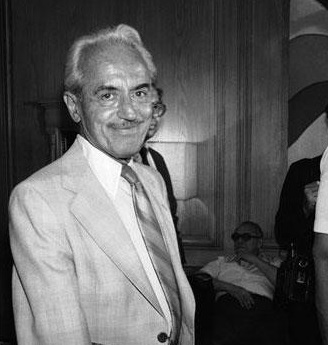
Marvin Miller lived to regret that short-career players pre-1980 were frozen out of that year’s pension plan re-alignment.

Forty years ago, the Major League Baseball Players association revamped the players’ pension plan dramatically enough. They changed the vesting eligibility from four years’ major league service time to 43 days for pensions and one day for health care benefits. But they excluded players with short careers prior to 1980—approximately 1,100 such players at the time, but just over 600 still living today.

Those players were loyal Players Association members who hit the ramparts and the pickets when called upon to help end the reserve era and usher in the era that has made more than a fair number of players wealthy beyond their childhood imaginations. The late Marvin Miller, elected to the Hall of Fame at last, is known to have told some of those players that not reviewing and revamping the 1980 pension realignment to include those players was his biggest regret.

They are men such as Bill Denehy, once a New York Mets pitcher (he shared a Topps rookie baseball card with Hall of Famer Tom Seaver in 1967) traded to the Washington Senators for manager Gil Hodges despite shoulder damage. Men such as David Clyde, the mishandled Texas Rangers phenom, pushed to start in the Show right out of his staggering high school career, but not sent to the minors for seasoning after that, as manager Whitey Herzog promised, before he was ruined by shoulder issues and gone.

Denehy played parts of three major league seasons in New York, Washington, and Detroit. Clyde’s career ended when he was 37 days short of qualifying for a pension under the old plan, after playing parts of five seasons with the Rangers and the Cleveland Indians. Theirs and their fellows’ battle for pension redress has been enunciated most prominently in Douglas J. Gladstone’s A Bitter Cup of Coffee.

“I don’t think any one of us are at a point where we’re asking for something that we haven’t earned,” Denehy told me in a telephone interview over a year ago. Thanks to multiple cortisone shots (possibly 57 in a 26-month span) to address a 1967 shoulder injury (about which the Mets conveniently failed to inform the Senators), Denehy eventually incurred eye issues that have left him legally blind today.

“You know, I don’t think they owe me because of all the cortisone shots that they gave me, I don’t think that they owe me for the tear that I had in my shoulder,” Denehy continued then. “All I’m asking for is what I earned, and that was the service time that I got in. If they do that, make me just a regular pension, I will continue to stay happy and promote this great game of baseball.”

“I guess what bothers me the most about it is, the Players Association—they loathe being called a union—didn’t hesitate one bit taking my dues when I was a major league player,” Clyde told me in a separate telephone interview last fall. “But as soon as you’re no longer a major league player, they basically don’t want to have anything to do with you.”

Clyde David 6218-89a_act_NBL

David Clyde, warming up on the sidelines for the Rangers.

The late Michael Weiner, who succeeded Donald Fehr as the players union’s executive director, managed to join then-commissioner Bud Selig in getting the frozen-out players some redress: in 2011, the pair got the frozen-out pre-1980 players $625 per quarter for every 43 days’ major league service time for up to four years. “It was a nice gesture on the part of Weiner and Selig who, undoubtedly also realized it could hardly make up for all those lost years in which the pre-1980 players got bupkis,” wrote longtime New York Daily News columnist Bill Madden in February.

But they can’t pass even that on to their loved ones upon their deaths. And, as Madden pointed out, they can’t buy into the players’ medical plan, which would help significantly enough for former short-career players now dealing with assorted serious health issues. In these days of the coronavirus pandemic, redressing that lack would have been even more significant.

Exactly why the short-career players pre-1980 were frozen out of the original pension re-alignment has never been made entirely clear. Denehy, Clyde, and other players known to have spoken on record have thought many in the union then believed that many if not most were mere September call-ups.

Denehy made each of his three major league teams directly out of spring training. Clyde, of course, was signed right out of high school with then-Rangers owner Bob Short hoping he’d goose the team’s sagging gate—which he did by winning his first two heavily hyped starts. Jim Qualls, a Chicago Cubs outfielder known best for breaking up Seaver’s perfect game bid with two outs in the ninth in 1969, made the Cubs out of spring training that season as an outfield reserve.

Another Cub, third baseman Carmen Fanzone, was once a July callup and made the Cubs as a reserve out of another spring training, but was blocked mostly by Hall of Fame third baseman Ron Santo before Santo’s departure in a crosstown trade to the White Sox. An Atlanta Braves pitcher, Gary Niebauer, also made the Braves out of spring training 1969 and 1970.

Clyde, Niebauer, and former longtime first baseman and coach Eddie Robinson—long key voices on behalf of short-career players within the Major League Baseball Players Alumni Association—were finally removed from the association’s pension services committee not too long ago.

“The problem is, because they’re not vested, the union has no obligation to do anything for pre-1980 players — and so they don’t — even though it currently has some $3.5 billion in the pension fund,” Madden wrote. The $625 payments come from the competitive balance tax, and Madden cited an unnamed MLB insider who said today’s players union executive director, former first baseman Tony Clark, “isn’t gonna have any appetite for siphoning money from his rank and file. That’s why he won’t even talk to these old players.”

Legally, of course, MLB and the players union aren’t obligated to lift a single finger now. The Denehys, Clydes, Niebauers, Robinsons, Quallses, and others believe it’s a moral and ethical question. They were there, too, surrendering pay and preparation time to fight with their fellow players for the same rights as any American worker at any level had—to negotiate job compensation and conditions on a fair and free job market within their industry.

You would think that Clark himself having been a player might be more inclined to find a way to bring further help and redress to those players who also helped pave the way for, among other things, the reported $22.3 million Clark earned in fifteen seasons as a power hitting but often injury-compromised first baseman.

You would think likewise that numerous former players long established in the sports media—Hall of Fame pitchers Dennis Eckersley and John Smoltz, 1986 World Series champion Mets Ron Darling (pitcher) and Keith Hernandez (first baseman), former outfielder Doug Glanville, former first baseman John Kruk, former shortstop/third baseman Alex Rodriguez, pitchers Mark Gubicza and Rick Sutcliffe, among others—might be more inclined likewise, if only to bring further attention to the issue.

Especially on behalf of disabusing the public’s prospective view that any former baseball player must be a wealthy former baseball player. Joe and Jane Fan today don’t always know or recall the pre-free agency era, when the owners misapplied the reserve clause to bind players for life or until traded or sold, and most players needed to work in the off-seasons to make ends meet or keep the ends within close sight of each other.

If Marvin Miller himself regretted not revisiting the 1980 pension re-alignment to do right by those players, it seems more than reasonable that the players union today, and those former players in strong enough positions to raise the issue, should think and re-think about the men whose playing careers might have been short but whose commitment to their fellow players was no less profound.

The pioneer Hall case of Tommy John

2020-05-23 TommyJohnLAD

Tommy John on the mound; as a Dodger, he asked Frank Jobe not just to think about but to perform,  for the first time, the  groundbreaking surgery that’s borne his name since.

To this day, my favourite Tommy John story involves a 24 August 1987 game in old Anaheim Stadium. John, a New York Yankee starter then, squared off against Hall of Fame starter Don Sutton for the California Angels. The eyes of just about everyone in the ballpark, the broadcast booths, and the press boxes were trained upon the evidence of things barely seen—like evidence itself.

Put it this way: Sutton was once a barely-apologetic ball doctor. “Sutton has set such a fine example of defiance,” Baltimore Orioles pitching coach Ray Miller once told Thomas Boswell, “that some day I expect to see a pitcher walk out to the mound with a utility belt on—you know, file, chisel, screwdriver, glue. He’ll throw a ball to the plate with bolts attached to it.”

In the same article (“Salvation by Salivation”), Boswell described John as “the elegant Rhett Butler of outlaws. In the fine Whitey Ford tradition of mudballers and scuffballers, the gentlemanly John can turn a tiny scratch into a double-play grounder.” John himself told Boswell he had four basic pitches “plus eight illegal ones.”

The Yankees’ mercurial (shall we say) owner, George Steinbrenner, watched that game from his Tampa home aboard the Yankees’ cable superstation. Despite the Yankees holding an early 1-0 lead, The Boss was unamused enough by what he saw from Sutton to call manager Lou Piniella in the Yankee dugout demanding he arrange for Sutton’s immediate frisk, arrest, arraignment, trial, conviction, and execution. Not necessarily in that order

“George,” Piniella replied, “do you know what the score is? If I get the umpires to check Sutton, don’t you know that the Angels are going to check TJ? They’ll both get kicked out. Whatever they’re doing, TJ is doing it better than Sutton. So let’s leave it alone.” Wise counsel. The Yankees went on to win, 3-2, though neither Sutton nor John got a decision in the game.

They did, however, provide the har-har postscript, enunciated by an unnamed scout cited in Bill Madden and Moss Klein’s Damned Yankees: “Tommy John against Don Sutton. If anyone can find one smooth ball from that game, he ought to send it to Cooperstown.”

Which is where a lot of people would like to send John. The Hall of Fame’s Golden Era Committee will consider John’s case again this fall, when they convene again to determine who was left out that shouldn’t have been left out, including the man for whom the White Sox once traded John to the Dodgers, Dick Allen. If the committee elects both, this may be the first time players traded for each other went to Cooperstown together.

On their playing records, Allen has an overwhelming if too often underappreciated case as a peak value Hall of Famer. John’s case isn’t that cut and dried—if you consider him strictly as a pitcher. But if you consider him as a pitcher and a baseball pioneer, John’s case becomes a lot more vivid.

As a pitcher, John was brainy and lived on excellent control and—once then-Dodgers pitching coach Red Adams caught hold of him and convinced him—a deadly sinkerball that didn’t travel fast but moved like a ballroom dancer in a lusty cha-cha-cha.

His pitching record shows a good pitcher who was occasionally terrific with slightly more than a quarter century’s worth of major league pitching on his resume. Old-schoolers love to point to his 288 lifetime pitching wins and remind you that there but for the grace of the surgery that bears his name went his shot at 300 wins and a guaranteed Hall of Fame election.

They also point to that 26-year resume, but the key is that it took John that long to reach 288 credited wins. Those who still hang on the pitching win at face value forget for a moment that, in John’s case, it averages out to eleven wins a season.

What about Nolan Ryan and the 27 years it took him to land 324 wins and his average twelve wins a year? you say? Well, what about all that black ink on Ryan’s resume, his strikeouts and no-hitters, all seven of them, especially? Unless you are Nolan Ryan or close enough, you’re not going to Cooperstown even by way of the traditionalist vote unless you can show—as Jacob deGrom did winning the National League’s last two Cy Young Awards—that those eleven wins don’t really reflect just how well you pitched.

By earned run average, fielding-independent pitching (FIP), walks and hits per inning pitched (WHIP), strikeouts per nine innings, walks per nine, home runs surrendered per nine, and strikeouts versus walks, this is Tommy John’s average season against Jacob deGrom’s pair of Cy Young Award seasons:

Pitcher ERA FIP WHIP K/9 BB/9 HR/9 K/BB
Tommy John 3.34 3.38 1.28 4.3 2.4 0.6 1.78
Jacob deGrom 2.05 2.32 0.94 11.2 1.9 0.6 5.82

Which man averaging eleven pitching wins a season is the better pitcher, then? (The one thing they have in common: both are impossible to hit out of the yard.)

John has been sent to Cooperstown, in a sense. He and Dr. Frank Jobe, the surgeon who performed the first ligament replacement surgery on the elbow whose owner gave the surgery its name, were honoured formally by the Hall of Fame in 2013. But Tommy John strictly as a pitcher isn’t a Hall of Famer no matter how close he got to credit for 300 wins. Tommy John as a pioneer, however, is something else entirely.

2020-05-23 TommyJohnCWS

Tommy John before the White Sox traded him to the Dodgers.

Argue all you wish that he was comparable to the man or woman who discovers they were the millionth or ten millionth customer at a tony restaurant or crossing a fabled bridge. There’s still something to be said for being in the right place at the right time.

Until the Dodgers decided they needed pitching help, and were willing to send Allen to the White Sox to get it, John held down a slot in the middle of a starting rotation respectably. He was an All-Star once, and he tied for the American League league in shutouts twice. The Dodgers got what they traded for until John’s left arm went dead in July 1974.

It was, indeed, John’s good fortune that Jobe was the Dodgers’ team physician. Jobe joined the team a few years earlier, under the wing of his boss at the Southwestern Orthopedic Medical Group, Robert Kerlan, and may actually have had ideas about elbow ligament replacements a few years before John offered him a test case at last. When rest and then a little therapy came up empty, John asked Jobe to try surgery.

Jobe’s idea about elbow ligament replacement emerged, according to numerous articles about the man, after he’d seen it succeed in finger movement procedures and thought somewhat logically that there was no reason why it couldn’t do likewise for an elbow. But the opportunity didn’t present itself until John took himself out of that July 1974 game in pain, and Jobe told him “there was a chance to put the elbow back together, but that it was going to take the rest of the season.”

“Let’s do it,” John said. “Those three words,” Jobe eventually said, “made baseball history.”

John spent all of 1975 rehabilitating the repaired elbow and thus walking into virgin territory. There was no map or chart to guide him. He was baseball’s Admiral Byrd, undertaking a polar expedition with no clue as to what awaited him in those frozen outbacks, or whether he’d even survive. Like Byrd, John did far better than he or anyone else expected.

This is Tommy John’s record before and after the surgery that wears his name forever:

Tommy John, career ERA FIP WHIP K/9 BB/9 HR/9 K/BB
Pre-Surgery (1963-74) 2.97 3.16 1.21 5.3 2.6 0.6 2.01
Post Surgery (1976-1989) 3.66 3.56 1.34 3.4 2.2 0.6 1.55

His gaudy-looking 2.97 ERA before the surgery masks that John never had the kind of peak numbers that make a peak-value Hall of Famer. He was 31 with all or parts of twelve seasons on his arm when he underwent the surgery; his return, including three 20+ win seasons out of the first five following the surgery, indicated an unexpected and brief peak.

Pre-surgery, he struck out two batters for every one he walked, and a 5.3 strikeout-per-nine rate isn’t that of a strikeout machine. John depended more on the glove men behind him than he did on his own pitching to get outs. You’d expect that of a brainy sinkerballer. Still, his ERA (considerably), his FIP (slightly), and his WHIP (slightly) were lower before the surgery.

Five times John’s FIP was -3.00, but only once after the surgery would he achieve that again. His ERA was under 2.00 only once in his career—in 1968, the vaunted Year of the Pitcher, when the American League’s ERA was 2.98, the White Sox team ERA was 2.75, and John tied with Gary Peters for the lowest FIP (2.83) on the staff.

When The Cooperstown Casebook author Jay Jaffe examined John last fall, taking a look at the coming Golden Era Committee ballot, he made an observation based on whether John would or could have achieved the 300-win milestone:

One can play “what if” and surmise that John might have gotten to 300 wins, and thus automatic enshrinement, had he not missed a year and a half due to his elbow injury, but it’s entirely possible that his elbow (or another body part) would have instead given way in his late 30s or early 40s, after he’d made a few million dollars in free agency, at an age when rehabbing might have seemed less appealing than when he was 31.

Indeed. Jaffe also reminded his readers that, for all his career longevity, John made only four All-Star teams in 26 seasons, never once led his league in a single pitching Triple Crown category, and never won the Cy Young Award. (He did finish second twice in Cy Young voting, but two second-place finishes in 26 seasons isn’t enough to push a pitcher into the fraternity of underrated Hall of Famers.)

If you can look at wins above a replacement-level player without wanting to throw things at your desk or screen, WAR doesn’t help John’s case. He has practically the same number of WAR (31.1) before the surgery as he earned (31.0) after it.

Baseball Reference defines a 5.0+ WAR season as All-Star caliber or better; John had four such seasons out of 26. Three of them posted before the surgery, and only one of them got him an All-Star selection. He had one after the surgery and wasn’t even a topic in the All-Star pickings that year. Tommy John made four All-Star teams but three weren’t the ones he should have made. Overall, he averaged 2.6 WAR per season before the surgery and 2.8 per season after it.

And what about the scuffballing? I don’t remember umpires accosting John on the mound too often over such accusations. John was suspect but almost never the subject of a warrant. His peers knew. Oriole pitcher Mike Flanagan showed Boswell a fresh ball, then used a broken-open coat hanger to put three identical scratches into the meat. “Tommy John could make this ball sing ‘The Star Spangled Banner’,” Flanagan cracked

But when Boswell wrote that John could take the tiniest scratch and get a double play grounder, it probably acknowledged in reality that John was brainy enough on the mound to grok the most obvious trick: take the ball returned to the mound after being in play, instead of being switched out promptly for a fresh ball, then spot the scuff or scratch and go for the gusto.

He probably didn’t have to do anything to the ball himself. Not like Ford with the rasp in his wedding ring and, later, his catcher Elston Howard scraping balls on his shin guard buckles before returning them to Ford. Not like Gaylord Perry with his actual or alleged K-Y jelly—and who’s to say that, half if not more of the time, Perry’s once-famous mound routine that only looked as though he was lubing up was just that, a look, meant to pay the bogeyman’s rent in the hitter’s head?

If Tommy John’s overall pitching record isn’t a Hall of Fame record by itself, you should know the reason he does belong in Cooperstown as well as I do. A good and sometimes terrific pitcher by himself doesn’t equal a Hall of Famer; a good and sometimes terrific pitcher before and after what was a career-ending injury, until Tommy John and Frank Jobe collaborated on maybe the single most radical orthopedic procedure in baseball history, does.

Nobody in his or her right mind might have expected him to last more than a few seasons after the operation, in that time and place, but John pitched fourteen years worth of major league baseball after returning, including in a few World Series, and for at least half of them he was still a solid middle-of-the-rotation starting pitcher.

It might be a simple quirk of fate or fortune that he got to be the first to undergo that operation, but it was up to him to show whether he could pitch at all after it, never mind fourteen seasons. He did, and he proved that a ruptured elbow ligament didn’t have to be a baseball death sentence. Even if not every pitcher who undergoes it does as even as he did after as before it.

Being “honoured” by the Hall in 2013 isn’t enough, either for John or for Jobe, the surgeon who took the shot when he asked for surgical relief in the first place. Their collaboration should earn both Tommy John and Frank Jobe full plaques in Cooperstown at last.

A Hall of Famer says beware bad looks through real concerns

2020-05-20 TomGlavine

Hall of Fame pitcher Tom Glavine—The Edmund Burke of the 1994-95 players’ strike hopes today’s players beware the bad looks even if their alarms about playing half a season are justified.

Hall of Fame pitcher Tom Glavine has learned many things over the years. Including that there come times when, even if you’re right, lots of people still think you’re wrong.

During the 1994-early 1995 players strike, Glavine couldn’t convince Joe and Jane Fan—well enough lubricated by a large enough, loud enough, pro-owners press—that the owners, trying to jam a salary cap down the throats of the players who’d already rejected it several times previously, really wanted to force the players to stop them before they over-spent, mis-spent, or mal-spent again.

Today, Glavine hopes to convince players to beware the bad look, even if they’re dead right, when they quake over the owners pushing to pay them according to a 50-50 revenue split if and when major league baseball returns this year, it’s not going to look good to an awful lot of people missing larger points—including the prospective health risks and whether sound precautions will be put in place for MLB to return.

It’ll be one thing if the return is hampered over genuine health concerns that the players haven’t been shy about expressing. It’ll be something else, Glavine fears, if it comes down to financial issues—even if the players are right to holler foul after the owners first agreed to pay their 2020 salaries on a pro-rated basis, before trying for the 50-50 revenue split that could cost both sides money but the owners considerably less.

“If it were to come down to an economic issue and that’s the reason baseball didn’t come back,” says Glavine—one of the most visible and more thoughtful players’ spokesmen during the 1994-95 strike—to the Atlanta Journal-Constitution, “you’re looking at a situation similar to the strike of ’94 and ’95 as far as fans are concerned. Even if players were 100% justified in what they were complaining about, they’re still going to look bad.”

At least as bad as Rays pitcher Blake Snell looked last week, when the lefthander said, “For me to take a pay cut is not happening because the risk is through the roof. I’ve got to get my money. I’m not playing unless I get mine, OK? And that’s just the way it is for me.” It was one thing for Snell to express concern for the health risk but something else to look as though his health depended entirely upon his income.

Even if the Washington Post‘s invaluable baseball columnist Thomas Boswell could and did write, the same day, that the owners first proposed the half-season to begin in July “provided that the players agree to a percentage-of-the-revenue deal on salaries that would be exactly the kind of de facto salary cap they have rejected in every labour negotiation I have covered since the 1970s. Very amusing, owners. What, you thought the players wouldn’t notice?”

It wasn’t only the players who noticed, either. It may be a bad enough look when Blake Snell says the risk isn’t worth it if he takes a pay cut to assume it. It’s just as bad if not worse when the owners one minute enunciate genuine alarms over the health risks with the coronavirus still on the loose but the next minute remind us that, to them, the common good of the game equals too little more than making money for it and them, and not necessarily in that order.

Glavine in 1994-95 wasn’t even close to Snell’s shoot-from-the-lip style of talker. He was thoughtful, articulate, and becalmed, enunciating the players’ positions with the tone of a parliamentary debator. It wasn’t his fault that it fell on blind eyes, deaf ears, and pre-conditioned minds.

The lefthander who pitched his way to the Hall of Fame with smarts, control, and a corner-dominating changeup, behaved as the epitome of professionalism even in the face of mal-informed opposition.

Glavine now admits he made one major mistake during the strike: making himself accessible to a fault. “[It] was a miscalculation on my part,” he tells the Journal-Constitution. “I just felt like if I did an interview on the radio or TV, if I had five or 10 minutes, I could make somebody understand what was going on and come to our side. That just wasn’t going to happen.”

Boswell saw and raised last week:

[Owners and players] face a choice that is not a choice at all. They can fight, waste time and end up with zero games and $0.00 in total revenue for the year, as opposed to the $10.7 billion they split up last year. Or they can figure out how to play those 78 (or whatever) regular season games, plus a postseason with as many as 14 teams and additional TV revenue. Then they probably end up with nearly $4 billion this year. That’s a lot better than $0.00.

So if it turns out that the coronavirus recedes enough in the next 50 days while safety measures and testing reach a point where a half-season could be played but isn’t because of bickering, I will be fascinated to see how anyone explains that to fans.

Still, you get the salary-cap animus. MLB is the one American team sport without a salary cap but with the greatest diversity of World Series champions since its disgraceful reserve era ended of any American team sports.

Those of us old enough to remember and with brains enough to know better when the owners screamed ending the reserve era meant ending “competitive balance” scoffed then. (And, pointed to all those “competitively balanced” decades when it seemed the World Series wasn’t a World Series without the Yankees in it or winning it) should scoff now at the owners’ bid to end-run their way to a de facto salary cap. But . . .

“So how could you frame a deal that would not set a salary cap precedent?” Boswell asked, then answered. “Maybe the owners say: ‘We’re going to get killed. We can pay you one-third of your 2020 salaries if you will play one-half of the season, plus a slightly expanded postseason.’ Then you negotiate from there.”

And you don’t step too far in front too often to negotiate in public, whether you’re an owner or a player. The looks are going to be terrible. Maybe not as terrible as a Donald Trump tweetstorm that in saner times would go innuendo and out the other, but terrible enough.

Glavine learned the hard way once upon a time, and he was probably the Edmund Burke of the players’ side during that 1994-95 strike. What Samuel Johnson observed of Burke could be said unapologetically about Glavine: “He chose his side like a fanatic and defended it like a gentleman.”

He knows that having our normal back would include having the games we love back, even as he knows concurrently that athletes have every right to fear for theirs or their families’ health. He doesn’t have to say that the owners should have the same concerns for the other staffers, front office and ballpark alike, who help the games play.

“For me here now, Georgia is open to some degree,” says Glavine, a New England native who’s made Georgia and Florida his home since his playing days. “I can choose what I want to do. I can choose how much I want to expose myself. When you’re starting to get on planes and travel as a sport, you’ve lost control over that. Now you’re trusting in everybody else providing an environment for you that is safe.

“If I was playing today, I wouldn’t say, ‘Hell no, I’m not playing’,” he continues. “But of course, I’d have a concern that once you step out that door and you go back into that world, there’s a chance you’re bringing something home to your family. It’s 100 percent fair for players, coaches, everybody to be concerned about that.”

Most of the players who’ve spoken out about the matter have been prudent enough to speak health first, pelf and anything else later. They’re not wrong to fear the owners reneging on a deal they thought they had, in the middle of figuring out how to play through and around the still-too-real health risk.

Just make the points without being dismissive, smug, or tunnel-visioned, and let the owners hang themselves if it comes to that. Anything beyond, and Joe and Jane Fan aren’t going to bother about the nuances when they have no MLB to see even on television.

Glavine does because he’s been there/done that, as a player and now as a fan who admits he missed the NHL postseason as much as he’s missing baseball, both as a fan and as a Braves television analyst.

“It’s part of the routine, it’s nice to do what you do all day, eat dinner and then sit down and watch some kind of game,” he says. “Not having games to watch has been hard. But, you know, we’ll get through it.”

Glavine himself helped take the sting out of the 1994-95 strike by throwing the clinching shutout in the only World Series championship (1995) won by those dominating Braves teams of the 1990s and early Aughts.

Someone will take the sting out of 2020’s coronavirus-lost baseball, too, in due course. Whether it’s in 2020 or, worst-case scenario, in 2021. Someone always does.

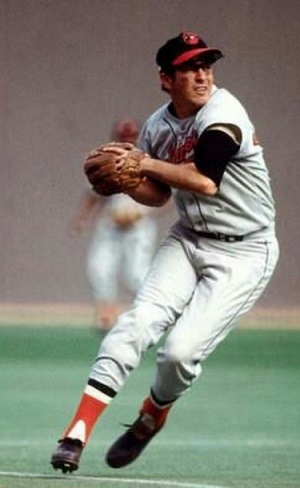
Happy birthday, Hoover

2020-05-18 BrooksRobinson

“I’m beginning to see [him] in my sleep. I’m afraid that if I drop this paper plate he’ll pick it up on one hop and throw me out at first.”—Sparky Anderson, on Brooks Robinson.

You think of the damnedest things during a quarantine/shutdown. Especially on the 83rd birthday of a fellow who was nicknamed after a vacuum cleaner for the way he played third base.

“I’m beginning to see [him] in my sleep,” lamented Cincinnati Reds manager Sparky Anderson during the 1970 World Series, as Brooks Robinson got into the thick of the acrobatic thievery he committed against the Reds. “I’m afraid that if I drop this paper plate he’ll pick it up on one hop and throw me out at first.”

“If he wanted the car that badly,” said Robinson’s fellow Hall of Famer Johnny Bench, himself robbed of three hits in broad daylight, of what Sport magazine handed Robinson as the Series’ most valuable player, “we’d have given it to him.”

Robinson’s career-long acrobatics got him nicknamed The Hoover. He’d have gone down as the greatest ever to play the position if fellow Hall of Famer Mike Schmidt hadn’t come along to combine breathtaking power, equally breathtaking plate patience (though Phillies fans roasted him for years over how many walks he’d take if need be), and elegant third base sweeping and cleaning.

The only nickname ever applied to Schmidt, alas, was “Schmitty,” about as pedestrian a nickname as you could bestow upon a man whose home runs have been described as conversation pieces and whose defense was a murderous balance between elegance and Robinson-like grand theft.

“Schmidt . . . was not meant to comb gray hairs,” wrote Thomas Boswell when Schmidt retired on Memorial Day 1989, tearfully admitting he couldn’t play the game like Mike Schmidt any longer, despite being the National League’s RBI leader in the moment. “From him, we only expected the sublime. He looked like some huge, graceful shortstop misplaced at third base. When he came to bat, the huge number 20 on his back might have stood for the number of rows he intended to hit the ball into the bleachers.”

If we’re looking to apply vacuum cleaner names to great defenders, maybe Schmidt should have been called the Electrolux, fabled at once for its rather elegant look, quiet power, and all-in-one attachments. And maybe the following should have been handed to these gentlemen who were case studies at their positions:

The Swivel-Top. (General Electric’s canister of the early 1950s that the company said gave you “reach easy” cleaning: who else but Willie Mays?)
The Electrikbroom. (Keith Hernandez.)
The Convertible. (Bill Mazeroski.)
The Hoover Junior. (Mark Belanger, who played shortstop next to Robinson at third for almost two decades.)
The Aero-Dyne. (A sleek Hoover tank model of the late 1940s-early 1950s. Ozzie Smith.)
The Roto-Matic. (Clete Boyer, who was an acrobat at third base but couldn’t hit with a hangar door.)
The Premier. (Johnny Bench.)
The Celebrity. (Derek Jeter, who’s actually somewhat overrated as a defensive shortstop even with his collection of highlight-reel plays.)
The Air-Way. (Nomar Garciaparra, before the injury bug stung repeatedly.)
The Compact. (Roberto Alomar.)
The Kirby. (What else, for who else? Kirby Puckett.)
Eureka! (Ken Griffey, Jr.)
The Courier. (A short-lived 1960s machine by Sunbeam that looked as though someone had the clever idea of sticking vacuum cleaner works into a Samsonite hard-shell suitcase. So who should get it? Andruw Jones, who traveled and delivered incomparably in center field for years before his staggering decline phase.)
The Roomba. (Matt Chapman.)
The Wind Tunnel. (Lorenzo Cain.)
The Shark. (Nolan Arenado.)

Don’t be too quick to lament the absence of Graig Nettles on the foregoing list. (If you don’t think he should have been considered in the first place, you were probably under sedation through a few World Series.) There isn’t a vacuum cleaner on the planet with a name that could possibly replace Puff the Magic Dragon.

Except that Nettles acquired the nickname not because of his way with making baseballs disappear into outs from third base but because of the way he made himself disappear after launching practical jokes. If only he could have made himself invisible just before reaching, diving, ranging, or angling for a batted ball and then re-appear just after throwing on to first. The Hoover beating, sweeping, and cleaning couldn’t compete with that if he tried.

On the other hand, there were Dick (Dr. Strangeglove) Stuart and Marvelous Marv Throneberry. First basemen both. The type who caused their own teams to keep the crash carts on red alert. Stuart once got a standing ovation for catching a hot dog wrapper floating down from the stands and not dropping it. Throneberry inspired Jimmy Breslin himself to write that having him at first base for your team was like having Willie Sutton working at your bank.

Bless them both, but Stuart and Throneberry married to vacuum cleaners would probably be the blower ports.

. . . and, who will be COVID-19’s Piazza?

2020-05-14 MikePiazza911

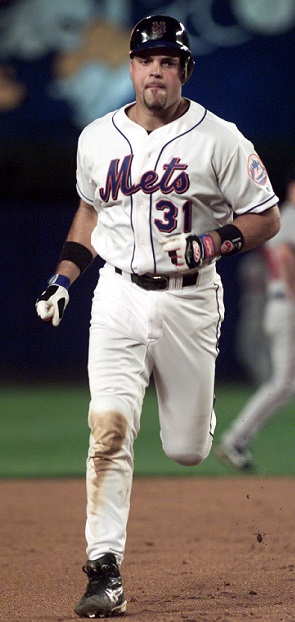
Hall of Famer Mike Piazza runs out his larger-than life, late-game, post-9/11 two-run homer that electrified a city and a country. Who’ll be a similar baseball hero post-coronavirus pandemic quarantine?

The discussions are on for when and whether major league baseball will return this year. Some of them trigger bristling suggestions that the owners want to use this to suppress player pay further, via a 50-50 revenue split that might, admittedly, mean lower takes for the owners, too.

Others trigger equal suggestions that the players—who already agreed (in March) to play with pro-rated 2020 salaries when they can play again this year—want someone to remind the owners they had a deal. If necessary, a reminder by way of a bat brought down onto their heads.

And most of those discussions trigger concurrent thoughts, debates, and analyses over just how to keep the players, the team personnel, and the ballpark workers and operators safe when the major league games return, wherever they’re played.

But let’s put those to one side for now and think of something else: If and when the Show goes on again, and whenever fans can and will be allowed back into the stands reasonably, who’s going to be the coronavirus’s Mike Piazza?

We take you back to 21 September 2001, ten days after the 9/11 atrocity, and New York City’s return to baseball by way of the Mets hosting the Atlanta Braves at since-departed Shea Stadium.

To Piazza batting in the bottom of the the eighth against Steve Karsay, with one out, one on, and the Mets down 2-1. To Piazza turning on Karsay’s service just off the middle of the plate and sending it far enough over the center field fence that it banged off the second tier of a three-level television camera scaffold.

To the ballpark whose packed Friday night crowd included 9/11 responders and their families exploding in unapologetic emotion from the moment Piazza’s blast ricocheted off the scaffold.

Four innings earlier, Piazza scored the Mets’ first run following his one-out double to right center field, after Robin Ventura singled him to third and Tsuyoshi Shinjo brought him home with a sacrifice fly. That tied the game at one, but the Braves made it 2-1 in the top of the eighth when Brian Jordan doubled home pinch-runner Cory Aldridge.

“If there was any time to give up a home run, though I obviously didn’t want to, that was the time,” Karsay himself would remember of Piazza’s surrealistic blast.

Piazza had been somewhat in the thick of 9/11’s immediate aftermath, doing what he could along with several teammates and their then-manager Bobby Valentine to help clean up, boost morale, and make sense of the atrocity, while baseball ceased for the first ten days following the attacks.

“I can’t describe that week,” Piazza remembered to MLB Network around the time of his Hall of Fame induction in 2016, “and I can’t describe what it was like to come back and play, because I don’t remember any of it, in a way.”

Not even the moment captured impeccably by a New York newspaper photographer, Piazza sitting on the rooftop of his apartment building with a view of the empty World Trade Center area at sunset, gazing toward the empty region as if still unable to believe what he no longer saw, knowing how it got that way in the first place.

2020-05-14 CarolGies

Carol Gies and her three sons at Shea Stadium during pre-game ceremonies honouring fallen 9/11 responders such as her firefighter husband, Ronald.

Piazza may not have been able to remember but fans and first-responder families wouldn’t forget, including Carol Gies, whose firefighter husband Ronald died in the 9/11 atrocity. “It was a day I will never, ever forget,” she said. “It was a decision, should we go, shouldn’t we go, should we go. We were terrified because here it is, a ball field, and the terrorism and stuff, and we decided as a family that it was some place their father, my husband, would want us to be.”

Despite their pennant race grapple, Valentine remembered the Mets thinking not so much about a competition with their National League East rivals but that the game itself “was so much bigger than anything I’ve ever been part of before.” Today Valentine is the athletic director of Sacred Heart University and active in coronavirus relief and aid efforts.

“It was just inevitable that something really special was happening,” he said of just playing the game. Even he couldn’t predict what would happen when Piazza swung on 0-1 in the eighth.

One of Piazza’s fellow Hall of Famers played third base for the Braves that night. “That’ll be a game that’s etched in my memory forever,” said Chipper Jones in 2012.

You’re talking about two heated rivals. We didn’t necessarily like each other all that much back then. And we got together before the game, we came together grown men shaking hands, giving hugs. I think we all as Braves knew that night we were in trouble, because we’re not only playing, you know, a very good baseball team, but you just had the feeling that God and every other baseball god was on New York’s side that night.

The matinee idol, Mike Piazza, ends up hitting this storybook homer that sent everybody home feeling great, feeling wonderful. We’d done our jobs as baseball players, to entertain people, but we had gone, I feel, above and beyond just the normal day’s work, and we owed it to the city of New York and the northeast United States to help heal a little bit.

Police, fire, and paramedic bagpipers marched from the fence toward the infield before the game, as the Mets and the Braves lined up along the base lines. “I heard the bagpipes,” said Piazza, whose tears were captured on camera, “and I lost it. I remember looking up and praying to God saying, ‘Lord, please give me the strength to get through this’.”

The Lord obviously gave him a lot more strength than he asked.

Today’s players, more players than you think, do what they can with whatever they have in their home regions, from donating food to donating dollars and even time as the coronavirus continues its strange and terrifying journey. A nation that closed ranks in a classically American can-do spirit following 9/11 now struggles to do likewise around the current pandemic.

“The post-9/11 American esprit de corps did not last forever, but it lasted for better than a year,” writes Jonathan V. Last, the executive editor of The Bulwark. “We are barely 12 weeks into the COVID-19 pandemic and the country is already deeply divided.”

Who, then, when fans are allowed to return to the ballparks at last, will prove to be the pandemic’s Mike Piazza?

Will a pitcher or combination of pitchers rear and throw a no-hitter in the first game back, the way Los Angeles Angels pitchers Taylor Cole and Felix Pena did in their first home game following the unexpected death of fellow pitcher Tyler Skaggs last year?

Will Jacob deGrom, Justin Verlander, Max Scherzer, Stephen Strasburg, Gerrit Cole, Zack Greinke, Clayton Kershaw, Walker Buehler, Lucas Giolito, Jack Flaherty, or Madison Bumgarner step on the re-opening mound and pin the other guys’ bats back with a no-hitter or even, dare to imagine, a perfect game?

Will Mike Trout, Christian Yelich, Aaron Judge, Cody Bellinger, Pete Alonso, Juan Soto, Jose Altuve, Mookie Betts, Ronald Acuna, Jr., Anthony Rendon, Freddie Freeman, Anthony Rizzo, Kris Bryant, D.J. LaMahieu, Matt Chapman, Tim Anderson, Joey Votto, Rafael Devers, or even aging and badly ground down Albert Pujols find himself with men aboard in the latest innings and a hefty home run just waiting to be hit to bring down the ballpark’s and the nation’s house?

Try to imagine the future Hall of Fame plaques, for those above making their cases,  including post-pandemic dramatics, reading the way Piazza’s plaque does: “Helped rally a nation . . . with his dramatic home run in the first Mets game in New York following the 9/11 attacks.”

“I got to be honest with you,” Piazza said in that 2016 interview. “I truly feel uncomfortable when people say, ‘You’re a hero.’ I have to disavow myself from that. I don’t feel like I was a hero. I really don’t.”

Whoever will be the same kind of hero when the Show returns from the coronavirus quarantine is liable to feel likewise. And the health care providers and other front-liners in the pandemic who might be at the ballparks, when finally allowed to be, will remember those they could and couldn’t save even as they explode in joy upon the moment if it comes.