A Law against expanded postseasons future

Would the fun-fun-fun Chicago White Sox have that much fun-fun-fun playing for diluted championships in the future?

So the first two teams to clinch postseason places were the Los Angeles Dodgers, who were seen as a powerhouse going into this season regardless, and the Chicago White Sox, third-place American League Central finishers last year and perhaps the most pleasant and entertaining surprise this side of the Slam Diego Padres this year. The Tampa Bay Rays—tied with the White Sox for baseball’s most wins this morning—followed quickly enough.

We know they’re going to have to navigate this pandemic-truncated season’s expanded playoffs. Will they have the same competitive incentive playing a normal 2021 season? Or, will commissioner Rob Manfred and those owners who back him on it get his way and keep regular-season and championship dilution next year and, bite your tongues, eternity to follow? Baseball’s inquiring minds demand to know, because what Manfred and company think they’ll gain isn’t good for the game.

Keith Law—author of two imperative books on re-marrying the thinking person’s sport to thinking, period (Smart Baseball, The Inside Game), and now an analyst at The Athletic—objects like me to that prospect. Let’s presume concurrence, too, from Law’s two analytical superstars, Joey Bagodonuts and Twerpy McSlapperson.

“Going forward . . . expanded playoffs would be primarily a money grab,” he writes, “and they risk diluting the regular season as a unique product while simultaneously reducing the value of individual games as broadcast properties in the playoffs. It also prioritizes short-term gain over the long-term financial health of the sport.” He knows that the regular season is supposed to mean something, and long enough did, and that baseball’s former disinclination to go the way of the NHL and the NBA (more than half its teams entering their postseasons) robs championship of more than half its meaning.

Law also thinks that making this year’s expanded baseball postseason eternity’s as well threatens the game’s integrity and the integrity of a fair and open market for those we spend our hard-earned money to see—and it isn’t Manfred or the owners he admits are his first priority in office.

It also feels like a possible shadow move to discourage the best teams from spending at or above the luxury-tax threshold, because the reward for being the best team in the regular season is so much less than it was previously. Winning 100-plus games in the regular season meant a guaranteed playoff berth when those were somewhat scarce — no team has won 100 games and missed the playoffs in the wild-card era — but with 16 of 30 teams making the playoffs, 90 wins would almost certainly guarantee you a ticket into the postseason.

If 100 wins doesn’t do much for you but improve your seeding, what is the financial incentive to spend more to get to 100 when we know that the results of playoff series aren’t that far from 50/50, and making your team that much better on paper barely increases your odds of advancing? The answer is probably “very little,” and that would impact the free-agent market at all levels — even at the very top, as teams that typically run huge payrolls would no longer see the return on a $30 million investment in one player as they did under a system where fewer teams made the playoffs, and you could easily win 95 games and go home on Oct. 1.

This year, the expanded playoffs carry a concurrent threat—to player health, particularly pitchers’ health, particularly the health of relief pitchers, some of whom have already had their struggles this season thanks to the pandemic-imposed truncation’s side effects.

Don’t think for one moment that spring training’s abortion and the eventual speedy enough “summer camp” didn’t knock several players including relief pitchers off their fulcrums going in as it was. The postseason tournament will be compressed, with no off days. Uh, oh. “The more we ask guys to pitch on short rest, the more they tend to get hurt,” Law reminds us. “These innings are already high-leverage; asking premier relievers to throw more such innings on little to no rest seems like a recipe to blow guys out.”

When I began thinking hard about postseason expansion and Manfred’s wish to make it eternal, I feared with reason that it was liable to do little to arrest baseball’s recent tanking trends and, if anything, give tankers even less incentive to break the habit. When Law addresses the tankers now, he takes a different stance, one that isn’t exactly dismissable too readily. He thinks the tankers will be “disincentivised” with the postseason bar no longer even a .500 record, necessarily:

[These teams] projected to win 75 to 80 games is on the edge of playoff contention, and they’d have a much harder time selling their fans (or players, for that matter) on tanking. These teams probably won’t be in the market for the elite free agents, but they’re less likely to sell off talent, and that could in turn prop up salaries for some lower tiers of free agents because buyers would have fewer options available in trades.

The problems include what Law notices and I fear: the tankers’ fan bases may be re-engaged deeper into the regular season, but the fan bases of the superior teams may be disengaged because their playoff berths could be secure (this is my guesstimate, not his) as early as late enough August. Law also notices what I have otherwise: this year’s model made eternity’s “also puts worse teams in the playoffs, a time when you expect to see the best of the best on the field, and increases the risk that we’ll see more blowouts against depleted or just inferior pitching staffs.”

For the longest time I’ve heard those lost for ways to re-engage long-incumbent baseball fans and court prospective new baseball fans suggest that expanded postseasons were just about the likeliest saviours. Even if they agreed that most such schemes ultimately equate the game’s common good with making money for the owners. Such people could be convinced only on rare occasions that perhaps the biggest factor separating baseball from the rest was that its ultimate championships were the least diluted of any major professional American sports.

Like me, Law thinks some of baseball’s changes have been or will be better for the game. Like me, he loves the universal designated hitter: “[It] is almost certainly here to stay, which absolutely will help the sport, removing the worst hitters in baseball from National League lineups.” Like me, he applauds the automated strike zone and rejects any lingering Luddism that rejects technology when it stands to improve the game: “[T]he idea of eschewing available technology in favor of noticeable errors is confusing to anyone who didn’t grow up a fan of the sport (and to many of us who did).”

In other words, Law—like me—is very willing to trade the intellectual delights of revisiting and re-debating the most notorious blown calls in the game’s history on behalf of getting things right and, concurrently, removing excuses when many blown calls lead to blown outcomes. Don Denkinger, call your office. We’ve had too many decades worth of fun deconstructing and reconstructing Jorge Orta and the bottom of the ninth, Game Six, 1985 World Series. Let’s say it now, Don: You blew the first out but that’s not really why the St. Louis Cardinals lost that Series. But you became in due course an outspoken advocate of replay, which has done the game a huge favour, really, bless your heart.

Sam Holbrook, call yours likewise. We know you blew the interference call on Trea Turner when you didn’t acknowledge a terrible throw pulled Yuli Gurriel off first base and his glove right into Turner after Turner was safe at first. But we also know the Washington Nationals were made of tougher stuff than the ’85 Cardinals. You saw it yourself, Sam, when one out later, with Yan Gomes returned to first, Anthony Rendon hit one into the middle of the Crawford Boxes and saved you from becoming the 21st Century Denkinger.

But diluting the meaning of a championship even further than the wild card era’s done it just to make money for the owners? (And, the players, more of whom would get to divvy up at least some of the postseason spoils even if they and their teams had no legitimate business playing toward a championship in the first place.) Remember the meaning of an emergency measure: the key word is emergency. When the emergency passes and things return to something resembling normal, emergency measures made permanent lead to new and prospectively more grave disasters.

Hasn’t baseball had enough disaster over its long and mostly storied history? Weren’t the self-destruction of the 1877 Louisville Grays (forced out of business in a gambling scandal), the Black Sox scandal, the Ray Chapman tragedy, the colour line, the 1957 Cincinnati All-Star ballot-box stuffing scandal (it cost fans the All-Star vote for over a decade to follow), the 1981 strike, the 1985 Pittsburgh drug trials, the mid-to-late 1980s owner collusion, the Pete Rose scandal, the 1994-95 strike, the era of actual or alleged performance-enhancing substances, and Astrogate/Soxgate more than too much of enough?

Since it’s so much on behalf of the owners making money, Law reminds us, too, that a few too many postseason games erode their value as broadcast properties from which the owners make millions enough. They’ll also help suppress the ratings already being suppressed in the wild card era, or doesn’t anyone think about viewer/listener over-saturation as much as they might? Should?

The safest bet on the planet right now may be that Manfred didn’t think all that hard about that part. The bet safer than that is that Manfred didn’t and doesn’t think.

Intolerable weirdness

Comissioner Rob Manfred presents that piece of metal to the 2019 World Series-winning Washington Nationals.

There it was. Sixteen paragraphs down, during Washington Post writer Dave Sheinin’s Tuesday morning analysis of commissioner Rob Manfred’s virtual panel conducted Monday night by Hofstra University’s business school. The main topic was the Show’s postseason, pandemic-inspired “bubble plan.” Then the real bomb detonated.

Sheinin revealed Manfred saying this pandemic season’s sixteen-team postseason “is likely to remain beyond 2020,” with “an overwhelming majority” of the owners endorsing it before the coronavirus world tour yanked baseball over, under, sideways, down.

“I think there’s a lot to commend it,” Sheinin quoted Manfred directly, “and it is one of those changes I hope will become a permanent part of our landscape.”

Back in February, Manfred got himself into a jam, dismissing thoughts of nullifying the Houston Astros’s illegal-sign-stealing-tainted 2017 World Series win, when he dismissed concurrently the World Series trophy itself (its official name is the Commissioner’s Trophy) as “just a piece of metal.” (His swift apology only helped a little.) Now he’s threatening to make the trophy exactly that, and not in rhetoric alone.

Last Friday, you may remember Sports Illustrated writer Emma Baccalieri saying a pandemically truncated baseball season such as this might make “tolerable weirdness” such as a losing-record team playing for a championship, well, tolerable. “In a non-pandemic-restricted year,” she said, “‘tolerable weirdness’ shouldn’t be the bar.”

Manfred has crossed the line into intolerable weirdness. It’s not that baseball wasn’t playing chicken at that line when it went to the wild card format in the first place, or when it added the second wild card in the second place. Playing chicken is one thing. Manfred wants the clucking birds to run roughshod over “our landscape.”

Baccalieri’s colleague Stephanie Apstein suggested in the same piece that having even one losing team in the postseason just might force Manfred to see how patently ridiculous the idea is in the first place. Apparently, the more ridiculous something is, the more stubborn Manfred becomes on its behalf.

Last Friday, the Astros—already trying to play through the continuing slings and arrows of Astrogate’s aftermath and the injured list—plus the Colorado Rockies and the Milwaukee Brewers sat within real wild card reach with records below .500 in the wild card standings. When I sat down to write this morning, the Astros had a wild card claim at precisely .500 while two National League teams (the San Francisco Giants, the St. Louis Cardinals) held claims with records one game below .500.

If the truncated season ended last night, those three teams would enter the postseason as wild cards. One .500 team and two losing teams. You tell me what would be wrong if that was the case at the end of a full, unimpeded regular season.

If the Show wanted to do what it could to let teams make up for the revenues lost because of COVID-19 shutting down spring training and the first almost half the regular season, you got that. But does Manfred really want to give .500 or below teams the right to enter baseball’s championship round after a full regular season that’s supposed to leave the best teams and no others going there?

Last Friday I ran down ten wild card era teams who entered October holding wild cards and ironed up going all the way to World Series wins. Some of them remained dubious even holding the trophy, and some of them actually made history to reach the Promised Land. (That would be you, O actual or alleged curse-busting 2002 Anaheim Angels and 2004 Boston Red Sox.)

Every one of those teams at least got there on winning records. Even their own fans knew in their hearts how ludicrous it was to have enjoyed the thrills, chills, and spills of watching their teams and others fighting to the last breath to see who’d finish . . . with the best second-place records in the game.

What’s Manfred looking for, really? The thrills, chills, and spills of a fight to the last breath to see who’d finish . . . as the best of the Show’s losing teams? Does he really think the good of the game is that powerfully defined by making money for the owners? Does he really hold the players in contempt so deep that he’d let them claim greatness when greatness isn’t required to have even the chance at a World Series title?

And where’s the Major League Baseball Players Association? Joining the owners in approving the coming postseason “bubble” is one thing. Why aren’t executive director Tony Clark (himself a former player), his board, and his thirty team player representatives standing up on their hind legs, athwart Commissioner Nero who fiddles while burning their game, yelling “Stop?”

Maybe the union, too, thinks the good of the game is defined that powerfully by making money for the players. Maybe the union thinks the more, the merrier, and the more postseason share dollars to divvy up. Maybe the union, like the commissioner and the owners, doesn’t think as deeply as they should.

Wasn’t the small epidemic of tanking teams bad enough without leaving them even more room to care little to nothing about competition on the field? Does anyone really think those owners with the tank mentality are going to shape up, re-discover what their fans really want to pay for, and build truly competitive teams knowing they don’t have to try all that hard to finish in . . . eighth place?

What about those owners (yes, they do exist) who don’t think like tankers? Who pour their dollars and souls into building and re-building competitive teams and systems for the long race year in, year out? Who field teams who finish seasons on top in their divisions? Who’d still have to run a small gamut of not-quites and not-belongings for the right to play for a world championship on behalf of which they busted their fannies all season long?

How useless it now feels to argue as I’ve argued for a very long time—that the wild cards must be eliminated on behalf of restoring genuine baseball championship, and that if we must have three-division leagues there’s a sensible and sane way to align a proper postseason.

That way would be to have the leagues’ division winners with the best regular season record getting round-one byes, while the leagues’ other two winners play best-of-threes, with the winner of those meeting the bye teams in League Championship Series returned to their original best-of-five formats. Keeping the World Series as a best-of-seven and leaving, ultimately, little to no doubt about the legitimacy of the team that reaches the Promised Land.

How useless, too, it now feels to argue that that would likely cure the number one issue that really dogs baseball’s postseason: over-saturation, the prospect that fans by their radios, in front of television sets, in front of Internet computers, can be exhausted by too much of a good thing.

I didn’t mind some of the rule changes the pandemic truncation invited. I’m all in on the universal designated hitter; few things warm my heart more than not having to see a lineup slot that hit .131 with a .161 on-base percentage all through the 2010s wasted on bats making Mario Mendoza resemble Mickey Mantle. The extremely occasional thrill of a pitcher hitting a home run isn’t. worth. it. Not even for the next Bartolo Colon.

I can also live very nicely with doubleheaders of seven-inning games each. (So can the players, seemingly.) The only problem I have with the idea is why it took over a century to consecrate.

I don’t like the three-batter minimum for relief pitchers. I still notice how many managers forget that minimum and still leave the poor saps in even if they’re already getting killed. Poor saps such as St. Louis righthander Jake Woodford. He got pried for two more runs tacked onto Cardinal ace Jack Flaherty’s jacket Tuesday night and had five of his own battered out of him on the way to the Brewers destroying the Cardinals 18-3. And don’t get me started on the free cookie on second base each team gets in each extra inning.

But I’d rather be stuck kicking and screaming with those than to see even one normal regular season in which half of each league gets to enter the championship rounds no matter how little their season records argue for their worthiness. A .500 or a sub-.500 team entering the championship round consecrates incompetence as virtue.

That’s something baseball’s mal-competent Commissioner Nero, and those owners agreeing with his intolerable weirdness, appear clueless to comprehend.

Pending end of the Mets’ reign of error

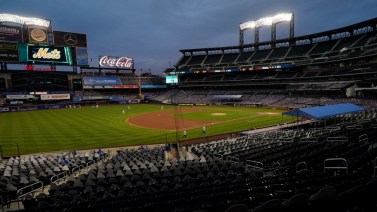
Citi Field at dusk last week. Met fans hope Steve Cohen’s ownership means no more nightmares.

“In truth,” writes The Athletic‘s Marc Carig this morning, “there’s no way to know what kind of steward [Steve] Cohen will be. There’s no guarantee that his love for [the New York Mets] translates into success. There’s no promise that he uses his billions to boost payroll to a level appropriate for a team that plays its home games in New York.

“Of course, the bar he must clear to be an improvement over his predecessors isn’t very high.”

Indeed. Carig himself isolates the bar right after that observation. Promptly enough, he reminds Met fans who need no reminder, and fans elsewhere who think the Mets remain figments of someone’s warped tragicomic imagination, that the legacy of Fred Wilpon and his son Jeff since taking full ownership in 2003 has been reduced to the hash tag #LOLMets.

On Monday, there came the news that Cohen and the Wilpons finally came to a deal allowing Cohen to buy the Mets for $2.4 billion. The last doorway through which Cohen must pass is the approval of 23 of the remaining 29 major league owners. Donald Trump and Joe Biden have smaller chances of winning the coming presidential election than Cohen has of losing approval as the Mets’ new owner.

Cohen resembles more the genial neighbour ready to throw a few steaks on the grill for the whole block than a filthy rich financier. All he has to do to clear the Wilpons’ bar, really, is take even one baby step off the ground.

Since Nelson Doubleday sold his share of the Mets to the Wilpons in 2002, the Wilpons  have accomplished what many in New York once thought impossible. They made the worst of George Steinbrenner’s Yankee reign resemble Camelot. (The Arthurian, not the Kennedy.) “A one-man error machine,” George F. Will called Steinbrenner when the 1980s ended. With extremely few exceptions, the Wilpons have been a two-man forfeit.

“The GMs change. The managers change. The players change. But until now, what has remained the same are the owners, and their aversion to accountability, and their refusal to level with their fans,” Carig writes. Those very words could describe the 1980s Steinbrenner, except that even The Boss found ways to hold himself accountable, however long after the facts.

The stories from those who have lived through it sound the same. They describe a cover-your-ass culture, in which getting the job done often took a back seat to simply avoiding the wrath of Jeff Wilpon. They recount looking over their shoulders and trying to manage up — with varying degrees of success. It’s a dance that requires bandwidth that should be devoted to making the team better. After a while, it’s too exhausting. So many through the years have simply lost their ability to stomach that reality.

Carig knows not every last Mets problem since 2003 can be laid at the Wilpons’ feet, but it has seemed often enough as though every positive met ten negatives. “Upon buying out nemesis Nelson Doubleday,” the New York Post‘s Joel Sherman wrote after the buyout, “Fred Wilpon made bringing a sense of ‘family’ to the organization a priority. Little did we know he meant the Corleone family.”

Doubleday himself tried to warn anyone who’d listen, right after he sold out and when Jeff Wilpon was made the Mets’ chief operating officer: “Jeff Wilpon said he’s going to learn how to run a baseball team and take over at the end of the year. Run for the hills, boys. I think probably all those baseball people will bail.” Some learning.

A few years later, there came a move not even Steinbrenner thought of when he spent much of the 1980s throwing out the first manager of the season for reasons running the gamut from specious to capricious. Even Steinbrenner’s execution of Yogi Berra sixteen games into 1985 didn’t quite equal the Second Mets Midnight Massacre for disgrace because, as the New York Daily News‘s Bill Madden observed, at least Yogi got the guillotine in broad daylight.

Officially, then-Mets general manager Omar Minaya fired manager Willie Randolph—after he and the Mets flew from New York to southern California to open a series with the Angels, after the Mets won the series opener, and about three hours after midnight. All Minaya was was the caporegime carrying out the orders of underboss Jeff Wilpon and his father’s co-consigliere Tony Bernazard. (Beware, Mr. Cohen. That’s Bernazard now manning the first base coaching line for your Mets.)

Minaya and, really, all his successors holding the GM title found themselves, most of the time, doing just that, holding the title while Wilpon fils held and exercised the power while leaving them on (pardon the expression) the firing line. Cohen will do well and right to engage real baseball people with hearts and minds, the wills to exercise both, and no requirement for rear-view mirrors attached to their sunglasses.

Just promise Met fans, Mr. Cohen, that you’ll resist the temptation to mortgage the Mets’ future on behalf of the old Steinbrennerian tack, exercised too liberally too often by the Wilpons, of bringing in “name guys who can put fannies in the seats,” even if the name guys are on the threshold of the end of the line.

Or, demeaning the guys who still have miles to go before they sleep but discover the hard way that they could hit for the home run cycle (solo, two-run, three-run, salami) at the plate or throw a 27-pitch perfect game and still get a Wilpon boot heel in the backside, while wearing Met uniforms or when leaving for other, less capricious pastures. The trashing of Cy Young Award winner R.A. Dickey upon his almost immediate departure was only the lowest of such lows.

The Wilpons’ monkey business management even impacted the Mets’ number one farm team. Why on earth did the Tidewater/Norfolk Tides move clean across the country to Las Vegas, to play in pleasant-stands/rickety field/hotter than hell Cashman Field? (They’ve since moved to Syracuse.) Wilpon fils soured the relationship with Norfolk, according to a Tides executive who spoke to Wall Street Journal reporter Brian Costa in 2013:

[C]ommunication with team officials became ‘virtually nonexistent’ . . . When he became involved in everything was when things changed. I dealt with him on some things and somebody always had to go to him if you wanted to do anything. He had his nose and hands in everything.

Don’t get anyone started on the Mets’ medical disasters of the past several years, either. The Wilpons, Jeff in particular, were seen micromanaging those, too, particularly the clumsy public relations side of them. You’d have been very tempted to think that Wilpon pere and fils alike believed to their souls that numerous avoidable Met injury complications, usually when players were back on the field sooner than reasonable, were either God’s will or the players’ faults.

Anyone else taking over a storied if troubled franchise would merely have his work cut out for him. Cohen may have to reach into a miracle bag right away. This year’s Mets—with a more solid core of younger talent than credited—might be in better postseason position if they hadn’t had a hiccuping bullpen much of the way or catchers who don’t seem allergic to hitting or to pitch calling and framing when working with arms not belonging to Jacob deGrom.

Small wonder that when the social media universe exploded with glee at the finality of Cohen meeting the Wilpons’ price the glee was mixed with a considerable majority of opinion that Cohen’s first order of Met business ought to be targeting and signing J.T. Realmuto, currently the Phillies’ catcher who becomes a free agent after the postseason.

(Codicil: If you must, get him for no more than three years. At 30, Realmuto isn’t likely to be serviceable behind the plate for too much longer, and the Mets already have a few DH types aboard. The starting pitching not named deGrom, Seth Lugo, or pending return Noah Syndergaard needs work. And keep an eye out for available young competent catching.)

How about a front office overhaul? Met fans drooling over Cohen’s advent probably have wet dreams about incumbent GM Brodie Van Wagenen’s departure. The team’s medical staff may or may not need yet another frame-up overhaul. If the Show repairs its relationship with the minor leagues, assuming the minors have a 2021 season to play at all, it wouldn’t hurt Cohen to deliver some badly needed damage control.

Like yours truly, Cohen is a Met fan since the day they were born. On such behalf could he also use his formidable resources as Carig suggests powerfully enough, “spend[ing] on areas not seen by fans. That goes beyond a heavier investment in analytics. It extends to scouting and player development. The Yankees and others have poured resources into those areas. There’s no reason for the Mets to lag behind. Cohen could make that change relatively easily, and almost instantly.”

The new owner doesn’t lack for his own baggage, of course. He’s tangled with the Feds over insider trading, though his old company SAC Capital was forced to yield $1.8 billion to pay a record fine while Cohen himself wasn’t accused of wrongdoing. All he had to do was not involve himself in managing outside investors’ money for two years, and he obeyed the order dutifully enough.

The Wilpons did dodge a howitzer shell by preferring Cohen over a group led by former All-Star Alex Rodriguez and his paramour Jennifer Lopez, who didn’t have enough to out-bid Cohen as it was, after all. A-Rod probably cooked their chances when it became known he sought the unofficial counsel of disgraced former Houston Astros GM Jeff Luhnow. Taking sound baseball counsel from Luhnow compares to studying human relations with Kim Jong-un.

But selling to J-Rod would also have meant not being rid of Wilpon fils entirely. From Daily News writer Deesha Thosar: “Jeff Wilpon desperately wanted the group led by [J-Rod] to take over because the couple, unlike Cohen, would have let him have an active role in the team. Right up until Monday evening, when Sterling Partners announced Cohen would purchase the Mets, Jeff Wilpon was the one propping up A-Rod in exchange for keeping a hand in operations.”

Perhaps in spite of themselves, the Wilpons leave that solid young Met core to Cohen’s stewardship. They also leave a crown jewel in Citi Field, which they built, but which they had to remake after discovering their original little palace played (and looked) more like Ebbets Field surrounding the Grand Canyon. The remake/remodel has done wonders, for the team on the field and the fans in the stands who love the current ambience and the culinary offerings alike, and can’t wait to come back when pandemic relief allows.

“[W]ith how the Mets are currently constructed,” writes Daily News reporter Bradford William Davis, “all the team needs to be turbocharged into a contender is above-replacement level ownership.”

Cohen merely has to do what the Wilpons mostly couldn’t, wouldn’t, or both: Fortify, deliver, and sustain a team as digestible as its ballpark without causing organisational or fan base indigestion. A man whose from-boyhood passion was merely born with Who the Hell’s on First, What the Hell’s on Second, You Don’t Want to Know’s on third, and You Don’t Even Want To Think About It’s at shortstop can’t do any worse. Can he?

For Pujols, meeting Mays wasn’t a walk in the park

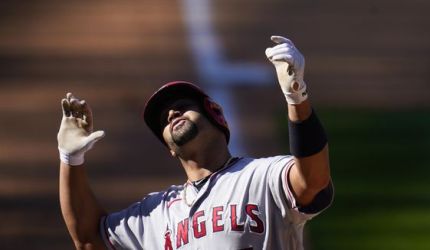
Albert Pujols just after hitting the home run tying him with Willie Mays on the career list Sunday.

A little earlier this pandemic season, Albert Pujols received a text message on his cell phone. “It’s your time now. Go get it,” the message said. The message came from Hall of Famer Willie Mays, whose 660 lifetime major league home runs Pujols has chased all season long.

With the shadows creeping in in the top of the eighth at Coors Canaveral Sunday afternoon, Pujols went and got it. With his Los Angeles Angels down 3-2 and a man on first, El Hombre turned on a meaty 1-1 fastball from Rockies reliever Carlos Estevez and drove it parabolically down the left field line and halfway up the seats.

The blast was the kind of launch for which Pujols has been fabled from the moment he first came into his own in St. Louis almost two decades ago. The kind he’s hit the last few years almost to the exclusion of anything else.

The kind that reminds you of both the greatness that will punch his Cooperstown ticket and the greatness that’s been eroded by the injuries that have sapped him since after his first season as an Angel, turning his ten-year, $255 million contract into the unfair poster child for terrible sports contracts.

When Pujols commented after Sunday night’s game, it was tough to know which affected him more, finally meeting Mays in the record book or Mays himself urging him on in the first place. “Legend,” said the agreeable Dominican who was born seven years after Mays played his last major league game. “I mean, it’s unbelievable.”

Oh, it was believable, all right. Pujols’s swing remains a work of art, even if it’s supported by legs that betrayed him almost a decade ago, a knee that underwent a surgery here and there, a heel that fought with painful plantaar fascitis costing him the final two months of 2013, feet requiring surgeries after 2015 and 2016.

“When his days are done and his legend is told,” wrote The Athletic‘s Fabian Ardaya, shortly after Pujols’s milestone blast, “they will talk about the swing — that beautiful, powerful swing — and the follow-through and the strut when you knew, everyone knew, that Albert Pujols got every piece of a baseball.”

The swing cemented Pujols as perhaps the best right-handed hitter the game has ever seen. It is slower now, a reality that happens with age, and the majestic drives don’t occur as often. But when they do, even for a split second, they take you back to when Pujols wrecked the league, ruined historic closer seasons and, quite simply, hit.

They take you back to when the only thing keeping Pujols’s three-run detonation against Brad Lidge inside Minute Maid Park in the top of the ninth, 2005 National League Championship Series, was the bracing for the park’s retractable roof. The bad news: that bomb won the Game Six battle but merely saved his Cardinals from losing the war in Game Seven.

They take you back to when Pujols ripped three in a kind of reverse cycle in Game Three of the 2011 World Series—a three-run blast, a two-run blast, a solo blast, in that order, and every one of them after the sixth inning in a 16-7 demolition of the Texas Rangers. The solo provided the sixteenth run.

They take you back to when Pujols was younger, unimpeded by his lower body health, and liable to either drop Big Boy or otherwise make life miserable for opposing pitchers and fielders, in a St. Louis run that left him as the Cardinals’ second-best all-around position player ever, behind the man on behalf of whom Pujols doesn’t always accept having been nicknamed El Hombre.

They take you to his deadly postseason record—the lifetime postseason .323/.431/.599 slash line; the .725 lifetime postseason real batting average (RBA: total bases plus walks plus intentional walks plus sacrifice flies plus hit by pitches divided by total plate appearances); the 109 runs produced. Enough Hall of Famers don’t look half that dangerous playing for all the platinum.

Two years ago Pujols tied Hall of Famer Stan Musial on the all-time runs batted in list. Five years before that, when Musial died, Pujols was almost inconsolable. He and Musial became that close personally. “I know the fans call me El Hombre, which means The Man in Spanish,” he insisted, “but for me and St. Louis there will always be only one Man.”

So insistent on the point was Pujols that, when he became an Angel and the club began hoisting billboards touting El Hombre‘s arrival, Pujols flipped. He insisted very publicly there was only one player who should ever be called The Man, and it wasn’t Albert Pujols. The billboards disappeared faster than the Angels executed their scouting staff after an international signing scandal.

When Pujols talks about his own place in baseball, he does it almost as though the idea that he’s part of it is secondary to what came before him. “I know my place in history,” he told Ardaya. “(But) it’s hard. I don’t want to — It’s almost like I take it personal, like I don’t want to disrespect this game.”

He’s even ready to hand history off to the teammate who played his first full season in an Angel uniform the same year Pujols joined the team. The teammate who’s now the Angels’ all-time franchise home run leader and has been the game’s all-everything player almost right out of the chute. The teammate who doesn’t have a team baseball’s All-Universe player can be proud of.

“We have the best player in the game,” Pujols told Ardaya of Mike Trout, “and five or six years from now, he’s going to be making history, too.” As if he hasn’t already. Pujols knows it.

You think that’s an affectation? Pujols is the same player who refused to join the ruckus in Detroit last year, when he hit one out in Comerica Park for his 2,000th career RBI and, for whatever perverse reasons, MLB and the Tigers together tried to strong-arm the Tiger fan who caught the ball by refusing to authenticate it, until or unless he turned it over, assuming before asking that he wanted to cash the ball in big.

Ely Hydes didn’t like being treated like an opportunist. “Honestly, if they were just cool about it I would’ve just given them the ball,” Hydes told a WXYT interviewer. “I don’t want money off of this, I was offered five and ten thousand dollars as I walked out of the stadium, I swear to God . . . I just couldn’t take being treated like a garbage bag for catching a baseball.”

Pujols understood. Completely. “Just let him have it, I think he can have a great piece of history with him, you know,” he said. “When he look at the ball he can remember . . . this game, and I don’t fight about it. You know, I think we play this game for the fans too and if they want to keep it, I think they have a right to. I just hope, you know, that he can enjoy it . . . He can have it . . . He can have that piece of history. It’s for the fans, you know, that we play for.”

Hydes eventually gave the ball to the Hall of Fame in memory of his little son who died at 21 months old a year before Daddy caught the Pujols milestone.

Mays finished his career both with 660 home runs and as a shell of his once-formidable self, ground down by all those seasons and no few off-field heartbreaks, unable until his body finally put him in a stranglehold to admit that the game he loved and lived to play was no longer fun when he was Willie Mays in name only.

Those were real tears that almost poured out of Mays when he faced a Shea Stadium throng on Willie Mays Day, with the Mets who brought him back to the city of his major league youth, and told them, “There always comes a time for someone to get out. And I look at these kids over there, the way they are playing, and the way they are fighting for themselves, and it tells me one thing: Willie, say goodbye to America.”

It shouldn’t shock anyone when Pujols’s time finally arrives. You can say his time is past, that his lower body ruined what should have been a simpler, kinder, gentler decline phase, leaving him prone to as much criticism under ordinary circumstances as praise when now and then the vintage edition makes a cameo as it did Sunday night.

You should also say, as Angels general manager Billy Eppler did two years ago, that few really knew, never mind understood, Pujols’s determination to play through every lower-body malady he’s incurred since trading Cardinal for Angel red.

“He plays through discomfort,” Eppler told MLB.com. “He endures a lot and doesn’t talk a lot about it. But I can tell you that he’s definitely someone that wants to play and fights through a lot of adversity to make sure he’s out there and contributing to the club.”

There’s something to be said for that as well as against that. It’s not as though Pujols needed to burnish his Hall of Fame resume. And, it’s not as though the Angels couldn’t have cashed him in for things they needed even more than they needed Pujols’s cachet—things like a pitching overhaul, mostly.

He has one more year to go on his Angels deal. The Angels as they stand now are still going nowhere and they still need a radical pitching overhaul if they have any prayer of returning to competitive greatness, with Trout committed to them for life and Pujols knowing he can tell Father Time to go to hell only so much longer, if at all.

Would the Angels even think of trading Pujols this offseason, to a contender with young pitching talent to spare, in need of a veteran mentor to whom they’d be grateful for all his counsel and whatever hits he has left, before the Angels bring him back for that ten-year personal services deal that begins when his playing days end? Who knows?

Such a team could do a lot worse than drawing counsel from the man whom Baseball-Reference lists as the number two first baseman ever to play the game. Only Hall of Famer Lou Gehrig is ahead of him. But Pujols has an arguable case as the greatest all-around first baseman of all time simply because, as devastating as he’s been a hitter, he was also a far better defensive first baseman than Gehrig before his lower body resigned its commission.

Or, maybe, Pujols himself will take stock, surrender to his body’s and Father Time’s mandate at last, leave next year’s $30 million on the table, start that personal services term, and congratulate himself as baseball should on a one-of-a-kind playing career. Maybe. Only Pujols knows for certain, and he doesn’t seem to like talking about that any more than he liked talking about what it took for him to just stroll up to the plate any more.

Maybe the combination of this year’s pandemic surreality and the current major league regime’s continuing inability to promote its best and give proper due to its milestoners kept Pujols’s Sunday night smash hit from blowing the social media universe up too much beyond about an hour’s worth of ordnance.

“To be able to have my name in the sentence with Willie Mays is unbelievable,” Pujols said Sunday night. The Angels have an off-day Monday. He hasn’t hit well this season, and Sunday’s smash was only his fourth home run in 31 games. One homer every seven games on average. He and they have twelve games left.

All Pujols needs is one more meaty pitch to drive, one more summoning up of whatever remains of that impeccable swing, and they’ll be saying his name in the same sentence as Mays once again. This time, for passing him to become sole possessor of number four on the all-time bomb squad.

Maybe then, he’ll get the twenty-one guns he deserves. Maybe.

The Buffalonto beatdown

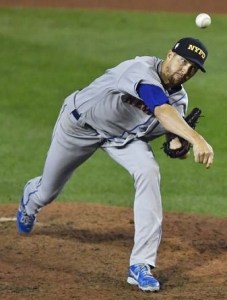
Wearing his NYPD hat to commemorate the 9/11 atrocity, deGrom pinned the Blue Jays while his mates bludgeoned them Friday night.

Until two starts ago, Jacob deGrom must have felt like the single most neglected spouse in town. He was said to be keeping non-support court filings signed and sealed in his locker just in case things went from bad to worse to lost cause entirely.

Then, last Sunday, his New York Mess (er, Mets) gave him seven runs to work with before his day ended and dropped seven more on the Philadelphia Phillies after he came out of the game. You couldn’t blame deGrom if he’d awakened the next morning asking himself whether he’d been dreaming.

So what to make of Friday night against the Buffalonto Blue Jays in the Jays’ temporary, pandemic-season home?

With the Mets allowed to wear first-responder hats at last to commemorate victims and their attempted rescuers in the 9/11 atrocity nineteen years earlier?

With deGrom pitching like the two-time defending Cy Young Award winner he is . . . and the Mets giving him fourteen runs to work with before his outing ended after six innings? Including and especially a ten-run fourth featuring Dominic Smith slicing salami?

This was no band of pushovers deGrom and the Mets massacred Friday night. The Jays were in second place in the American League East with a 24-19 record when the game began. They’re not exactly driven back to the basement after the Mets’ carnage. But they might have been tempted to crawl into the nearest Buffalo basement to hide at least until Saturday’s game.

Maybe the Jays just faced the wrong New York team. Earlier this week they dropped a ten-spot on the Yankees in the sixth. On Friday night, the Mets—who came into the game leading the National League with a .275 team batting average and a .351 team on-base percentage—looked more like Murderer’s Row than a Mess.

“The guys did a good job of going out there and putting up runs for me,” said deGrom to reporters after the 18-1 bludgeoning, in what was probably the understatement of the night. “It was a little cold out there, so I was trying to stay loose in between, but I’m thankful for the runs and they did a good job all night of that.”

The Mets already had a 4-1 lead when Wilson Ramos opened the fourth working a walk out of Toronto reliever Anthony Kay. You may remember Kay’s the one the Mets traded to the Jays last year to get Marcus Stroman, who opted out of this season after it began and goes to free agency after this season.

Well, now. Brandon Nimmo chunked a base hit into shallow left to follow Ramos. After Kay walked Michael Conforto to load the pillows following that, the fun really began. J.D. Davis grounded sharply to Jays shortstop Santiago Espinal. Espinal had a clean shot throwing Ramos out at the plate. The throw hit Jays catcher Danny Jansen right on target. And it bounced right out of Jansen’s mitt and off to his right just before Ramos crossed the plate unmolested.

Up stepped Smith with the pillows still full. He swung on 2-0 and drove it clean over the right field fence. 9-1 Mets, five runs home in the fourth thus far, and the Jays hadn’t seen anything yet.

Robinson Cano followed Smith with a line single. Pete Alonso, who had a night he’d rather forget at the plate, struck out on a full count, but Kay came out of the game in favour of Jacob Waguespack and Jeff McNeil greeted the new man on the mound with a line single up the pipe, before Waguespack hit Mets rookie Andres Gimenez with a pitch that ricocheted off to the left side.

Here came Ramos again, and into the right center field gap went his three-run double. Nimmo pushed Ramos to third with a ground out to Espinal playing him up the middle, then Conforto—who’d hit a three-run homer in the four-run Mets third—sent a liner to left that bounced past a sliding Lourdes Gurriel, Jr. hoping for a shot at the circus catch. And Davis cued one just past third base and up the line for the double sending Conforto home.

Smith looking at strike three hitting the absolute edge of the low outside corner must have felt to the Blue Jays as though he’d decided to have mercy upon them. DeGrom in the Mets dugout must have watched the carnage and wondered, even for a split second, what new and unheard-of ways his mates would find to blow a thirteen-run lead.

The long layoff in the fourth and the Buffalo chill all night may have affected him a little. He had to wrestle a bit for his outs and to keep the Jays from getting any friskier than second and third in the bottom of the fifth, but he still finished his evening’s combination of work and leisure with nine strikeouts, two walks, one measly earned run (Vladimir Guerrero, Jr. singling home Randal Grichuk in the bottom of the first), an ERA shrunk to 1.67, and a second-best 0.87 walks/hits per inning pitched rate.

This time, the only thing the Mets blew was what remained of the Blue Jays’ fight for the night.

Erasmo Ramirez came out of the bullpen for the final three innings’ scoreless relief and a save under the three-inning side of the rule, while the Mets added two in the seventh (a bases-loaded walk to Cano; Davis scoring on Conforto’s ground out to shortstop), one in the eighth (Ramos hitting one over the center field fence), and one in the ninth. (Gimenez doubling home Alonso, who’d reached when he got plunked.)

If this is dreaming, deGrom must have thought when the game went into the books at last, I’ll kill the guy who wakes me up. To death.

“First and foremost,” said Conforto, “we got the win, and we got a win for Jake too. We’re always feeling good when Jake’s on the mound no matter how many runs we put up, but it felt good to do that for him.”

DeGrom wore a New York Police Department hat for the game. Other Mets wore that or hats for the New York Fire Department, the Port Authority Police Department, the Department of Sanitation, and the Office of Emergency Management commemorating the 9/11 atrocity.

Last year, after baseball’s government again told the Mets not to even think about wearing the hats during a game on that anniversary, Alonso decided to let the world know what he thought about that. He paid for 9/11 commemorative cleats for himself and his mates to wear when they played the Arizona Diamondbacks on the anniversary—and beat them with nine runs and eleven hits.

This year, baseball government wised up and let the Mets and the Yankees have their heads about the commemorative hats, just in time for the Mets to hand the Blue Jays their heads and for the Yankees to sweep the Yankees in a doubleheader Friday. Doing the right thing with or without official permission invites its own kind of good karma.