Unknown's avatar

About Jeff Kallman

Member, Internet Baseball Writers Association of America and the Society for American Baseball Research.

Goodbye, RFK. (Stadium, that is . . . )

Olaf Hall

Olaf Hall, RFK Stadium worker, painting white an outfield  seat struck by one of Senators legend Frank Howard’s mammoth home runs. 

Time was when I worked shy of a year at a Washington, D.C. think tank, lived just outside Washington in Capitol Heights (Maryland), and walked the five miles to work every day on behalf of saving what little money I earned. The route from my little hideaway to my job included walking past RFK Stadium.

Perhaps providentially, I had no choice but to walk past the old tub. Not unless I wanted to take the Metrorail, which had a station that was a short walk from my little hideaway. But the baseball maven in me would have had me flogged for even thinking about avoiding RFK.

My days began, after all, with spending time and my breakfast with Shirley Povich, the founding father of the Washington Post‘s sports section. He founded it more or less when the ancient Washington Senators (as in, Washington–First in war, first in peace, and last in the American League) won their only World Series in (count ’em) two tries before they absconded to Minneapolis.

When those days didn’t begin with Povich, they began with Thomas Boswell, now the freshly-inducted Hall of Fame baseball writer, also of the Post. (I refuse to say the official award name until the Baseball Writers Association of America gives it a name far more properly fitting than “Career Excellence Award.” Like maybe the Shirley Povich, Roger Angell, or Wendell Smith Award.)

I’d then tuck the paper into my briefcase and make the aforesaid five-mile walk. Passing RFK Stadium. With only one apology, that I’d never gotten to see a baseball game there and that I’d forgotten to buy myself a Washington Senators hat while I worked in and lived next to D.C. And while I tended to walk with a certain vigour, on behalf of losing physical weight and as much mental and spiritual baggage as I could lose (I was separated from my first wife and en route a divorce), I didn’t mind slowing down to take a slow stroll around the Washington Hall of Stars—if I could talk an early-arriving stadium staffer into letting me in.

Frank Howard

Howard only looked as though he was going send a pitcher’s head and not a baseball into the seats. No gentler giant ever played baseball in RFK Stadium—or anywhere.

Up in the mezzanine were Hall of Stars Panels 6 through 8. Honouring such Old Nats as owner Clark Griffith, Hall of Famers Joe Cronin, Goose Goslin, Bucky Harris, Walter Johnson, Harmon Killebrew, and Early Wynn. Honouring such Negro Leagues legends as Hall of Famers Josh Gibson and Buck Leonard. Honouring such not-quite-Hall of Fame Old Nats as Ossie Bluege, George Case, Joe Judge, Roy Sievers, Cecil Travis, Mickey Vernon, and Eddie (The Walking Man) Yost. Honouring Vernon’s fellow Second manager Gil Hodges. Honouring such Second Nats as Chuck Hinton and Frank Howard.

It was easy to take in such history and all its pleasantries and calamities alike. It was tough to look at the field below and see, aside from the football markings for the Redskins (oops! today we call them the Commanders), the inevitable ghosts of the saddest day in RFK Stadium history: the day heartsick fans broke the joint over the hijacking of the Second Nats to Texas.

“Right where . . . the Senators played their final game in 1971 and the Nationals brought baseball back in 2005—that’s where the crews from Smoot Construction are separating concrete from metal so they can be hauled away separately,” writes the Post‘s Barry Svrluga. “Whatever can be repurposed will be . . . ”

Anyone who has driven or walked by RFK Stadium over the past decade or so knew it would come down, knew it had to come down eventually. Long ago it devolved into an ugly relic that served no one. This was inevitable.

But I have to admit that as I watched the process over that morning last week, I got a little emotional . . . I was at that first game when baseball came back. I saw the stands along the third-base line bounce. I watched Ryan Zimmerman drill his first walk-off home run to beat the New York Yankees on Father’s Day in 2006. I watched Nationals owner Ted Lerner and then-manager Manny Acta dig out home plate from the ground after the final game in 2007.

. . . Do yourself a favor, though. Take some time over the coming weeks and months to drive west on East Capitol Street from Interstate 295 or east on Independence Avenue from downtown. Do a loop around RFK before it vanishes completely. This is athletic history. It’s D.C. history. And piece by piece, it’s finally being torn down.

Ryan Zimmerman

Ryan Zimmerman mobbed and hoisted after his Father’s Day game-winner in RFK, 2006.

Well, I took my slow strolling loops around the joint 35 years ago. When baseball’s return to the nation’s capital was still a fantasy. “Pardon my French: le baseball est revene á Washington,” wrote Radio America founder James C. Roberts, in Hardball on the Hill, in 2001. “In Montreal, that’s how they would say, ‘Baseball is back in Washington.’ They are words I long to hear—in any language.”

Baseball might appear now and then in the old tub until 2005, never more transcendantally than when they cooked up the Cracker Jack Old-Timers Game in 1982 . . . and Hall of Fame shortstop Luke Appling, leading off for the American League’s alumni at age 75, caught hold of a second-pitch meatball from Hall of Famer Warren Spahn, age 61, and sent it behind the specially-shortened left field fence, but traveling a likely 320 feet—a major league home run no matter how you slashed it.

“It was a good pitch, it was right there, and I just swung away,” Old Aches and Pains  deadpanned after the game.

Machinations of dubious ethics to one side, including baseball government taking temporary ownership, Montreal (her city fathers, not her baseball fans) then didn’t seem to want its Expos that much anymore. Washington was only too happy to welcome them. Even the President of the United States donned a team jacket of the newly-rechristened Nationals and threw a ceremonial first pitch. Actual major league pitchers would kill puppies to have the kind of slider Mr. Bush threw—with a ball bearing a unique if sad survival story.

Senators relief pitcher Joe Grzenda had only to rid himself of Yankee second baseman Horace Clarke to secure a Second Nats win on that heartsickening farewell day in 1971. Grzenda never got the chance because all hell that spent much of the game threatening finally broke loose. Fans poured onto the field in a perfect if grotesque impersonation of hot lava soaring over and down a volcano’s side. The umpires forfeited the game to the Yankees. When the mayhem ended, RFK Stadium resembled the net result of a bombing raid.

Perhaps miraculously, Grzenda saved the ball. He presented it to Mr. Bush on Opening Day 2005. It took about 12,000+ days for that ball to travel from the RFK mound to the RFK plate by way of its detour in Grzenda’s custody.

The old structure, built as D.C. Stadium to open in 1962, renamed for an assassinated presidential candidate in 1969, has been the site of assorted joys and jolts. It closed officially in 2019; its final official baseball game was in 2007. “Without RFK, who knows where we would be?” said Chad Cordero, relief pitcher, and the first man to hold the official closer’s job as a Nat, upon that closing. “We might still be in Montreal. We could be somewhere else. This place has treated us well. We have some great memories here.”

And, despite the circumstances that brought me there, so do I. Even if they have to be one part a Hall of Stars display and 99 parts my imaginings.

Most of those stars didn’t play in RFK Stadium, but it was quiet fun to think about Early Wynn, traded away long before, but showing up for the White Sox trying to keep Chuck Hinton from hitting one out. (On the 1962 Second Nats, Hinton tied for the team home run lead with . . . Harry Bright, the man who’d be remembered best, if at all, as the strikeout victim securing Hall of Famer Sandy Koufax’s breaking of the single-game World Series strikeout record a year later.)

It was even more fun remembering the occasional Senators game televised to New York on a Game of the Week offering and watching gentle giant Frank Howard carve his initials into some poor pitcher’s head as he hit one into orbit. Howard, the Senator above all the rest who didn’t quite enjoy the team being hijacked to Texas. Howard, who brought that heartsick RFK crowd to its feet when he hit one into the left field bullpen midway through the game to start the Second Nats comeback that turned into a win that turned into a forfeit.

“What can a guy do to top this?” he asked after it was all over. “A guy like me has maybe five big thrills in his lifetime. Well, this was my biggest tonight. I’ll take it to the grave with me. This was Utopia. I can’t do anything else like it. It’s all downhill the rest of the way.” That from the man who also once said, “The trouble with baseball is that, by the time you learn to play it properly, you can’t play anymore.”

They’re demolishing RFK Stadium slowly, on behalf of environmental concerns, so the Post says. The seats are long gone. The rest has been going one portion at a time. It wasn’t the most handsome of the old (and mostly discredited) cookie-cutter stadiums. But something seems as off about the piecemeal disassembly as the big dent in the rooftop that made the joint resemble a stock pot left on the stove too long.

Note: This essay was published originally by Sports Central.

On the BBWAA’s newly-minted Relief Pitcher of the Year Awards

Hoyt Wilhelm

What’s this bland “Relief Pitcher of the Year” stuff? How about the BBWAA name their new (and overdue) reliever awards for Hall of Famers Billy Wagner (National League) and Hoyt Wilhelm (American League; yeah, I know he’s shown with a New York Giants hat, but he did pitch most of his career in the AL by a hair . . . )

Well. The Baseball Writers Association of America has decided that relief pitchers need a BBWAA award of their own. They’re calling it the Relief Pitcher of the Year Award. Maybe this is the one to which people will pay attention. Maybe not.

The name is about as inspired as when the BBWAA changed the name of the J.G. Taylor Spink Award for Hall of Fame baseball writers to the Career Excellence Award. At least MLB, which already awarded an annual prize to the men of the pen, named their awards for a pair of Hall of Fame relief pitchers, Trevor Hoffman (National League) and Mariano Rivera (American League).

Except that nobody pays real attention to the Hoffman and Rivera Awards, noted Jayson Stark (Hall of Fame writer), who’s been agitating for the Relief Pitcher of the Year Award for a very long time.

But Stark also noted that, well, nobody quite knew how to evaluate relief pitchers reasonably. “And why does that matter?” he asks, then answers:

Because if you look at Hall of Fame voting over the past couple of decades, it couldn’t be more obvious that voters can’t figure out how they’re supposed to go about determining what constitutes a dominant, Hall of Fame reliever.

We elected Rivera and Hoffman. We just elected Billy Wagner, but it took us 10 years to do that. So clearly, the voters need help. And the current awards aren’t providing any of that help because this trend is only getting worse.

This much we do know; or, at least, ought to know: the save statistic is close enough to useless. When writing Smart Baseball, Keith Law singled the save out for a chapter of its own to demonstrate it was nothing more than “[Jerome] Holtzman’s Folly,” named for the Chicago sportswriter who invented it in the first place. It was a classic case of the best intention yielding the worst result.*

“If anyone tried to introduce a statistic like the save today,” Law wrote, “he’d be laughed all the way to a cornfield in Iowa.”

The stat is an unholy mess of arbitrary conditions, and doesn’t actually measure anything, let alone what Holtzman seemed to think it measured. Yet the introduction of this statistic led to wholesale changes in how managers handle the final innings of close games and in how general managers build their rosters, all to the detriment of the sport on the field, and perhaps to pitcher health, as well.

Not to mention the health of common sense, what remains of it.

You think arguments involving Cy Young Awards to pitchers who “win” the most games instead of pitchers who were really the best pitchers in their leagues were somewhere between the ridiculous and the absurd? (Anyone who tells me Bartolo Colon deserved the 2005 American League Cy Young Award over Johan Santana had better come with stronger ammunition than Colon’s 21 “wins.” Colon’s fielding-independent pitching rate [FIP] of 3.75 and his ERA of 3.48 weren’t Santana’s major league-leading 2.80 FIP or his 2.87 ERA. There was also the little matter of Santana leading the Show with 238 strikeouts and the AL with an 0.97 walks/hits per inning pitched [WHIP] rate. Case closed.)

How about arguments over relief pitchers with a duffel bag full of “saves” versus the relief pitchers who actually pitched better? Remember Joe Borowski? As a Cleveland Indian in 2007, Borowski led the American League in “saves” with 45 . . . but his FIP was 4.12 and his ERA, 5.07. And that’s before you see where the guys at the plate hit .289 againat him. If that didn’t kill the save, Craig Kimbrel in the 2018 postseason should have.

Kimbrel pitched 10.2 innings and was 6-for-6 in save opportunities. Sounds like the future Hall of Famer he’s still seen to be by some, right? Now, look deeper: Cardiac Craig allowed nineteen baserunners, posted a 5.90 ERA, and a 5.07 FIP . . . and the World Series-winning Red Sox probably felt that was tantamount to the guy who threw the man overboard an anchor and then dove in to pull him out of the water.

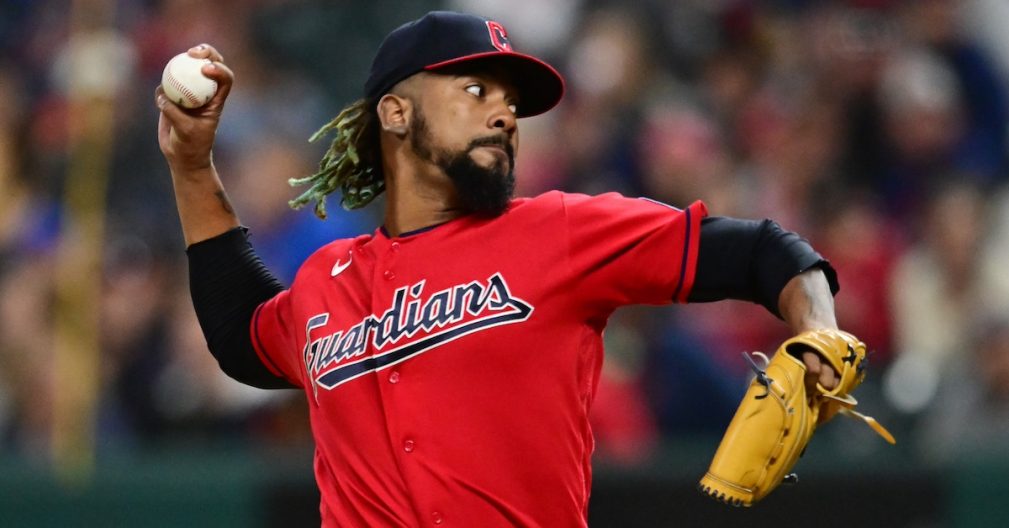
Zach Britton

Zach Britton. Toronto still blesses then-Orioles skipper Buck Showalter for managing to the save stat instead of what was right in front of him in the 2016 AL wild card game, and leaving Britton—the 2016 season’s best relief pitcher—in the bullpen . . .

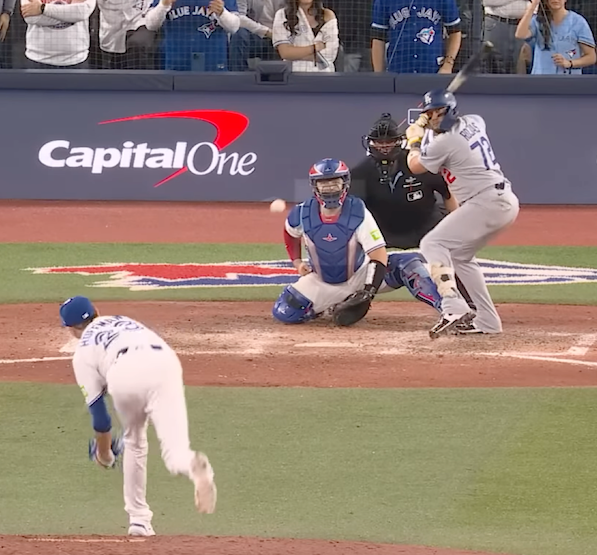
And I haven’t even mentioned the managers who take the nebulous save stat as such gospel they manage to it instead of to the game situation in front of them. The no — “save” situation kept Buck Showalter from even thinking about Zach Britton, baseball’s unarguable best relief pitcher in 2016, with two on and Edwin Encarnacion checking in at the plate in the bottom of the AL wild card game 11th in Toronto. Blue Jays fans still bless the name of Showalter when they remember the monstrous 3-run homer Encarnacion hit to send the Jays to the division series.

Based on what little has been revealed so far otherwise, my guess is that the voting writers will take anything but “saves” into consideration. As they should. If they were to ask me, I’d say it should be some sort of points combination based upon FIP, the batting averages against, their leverage situation pitching, their strikeout-to-walk ratios, and their WHIPs.

Let them have at it post haste.

Because the next time I hear someone tell me Chipper Flippersnapper was the best reliever in baseball because he got all those “saves” even if his ERA/FIP combination was higher than the moon, the batting average against him resembled Ralph Kramden’s weight, and he worked as though he’d learned leverage pitching at the Craig Kimbrel School of Anchor-Throwing, I’m going to throw an anchor or three. And a few other things.

(Maybe I’ll just throw two words out: Mike Williams. 2003: Williams, lifetime 4.49 FIP, named an All-Star because the rules said the woebegone Pirates needed one and he had 25 saves at the break. But he also walked three more than he struck out and carried a 6.44 ERA. One week later: ERA down to a mere 6.27; FIP down to a measly 5.55; the Pirates traded him to the Phillies for a rosin bag and Williams’s career ended after that season. )

And for God’s sake give the new BBWAA awards worthy names. How about the Billy Wagner Award for the National League? How about the Hoyt Wilhelm or Rollie Fingers Award for the American League? Relief Pitcher of the Year? That’s about as inspiring or spirited as a tub of chicken fat.

—————————————————————————————————–

* Historical revision: Longtime Pirates relief ace Elroy Face still inspires oohs-and-aaahs over his 1959, when he “won” eighteen games and “lost” only one. The aforementioned Jerome Holtzman dreamed up a save stat in the first place because of Face.

“Everybody thought he was great,” said Holtzman in 1992. “But when a relief pitcher gets a win, that’s not good, unless he came into a tie game. Face would come into the eighth inning and give up the tying run. Then Pittsburgh would come back to win in the ninth.”

According to Anthony Castrovince in A Fan’s Guide to Baseball Analytics, Holtzman “knew the dirty truth about Face: He had allowed the tying or go-ahead run in 10 of his 18 victories. In five of his eventual ‘wins,’ he had entered the game with a lead and left without one.”

It almost seems a tossup between which nebulous statistic is worse: the pitcher “win,” or the relief pitcher save. God bless all 97 years old of him still living, but Elroy Face’s 1959 is evidence on behalf of both.

—————————————————————————————————

First published in a slightly different version at Sports Central.

Way to go, Jen

Jen Pawol, Clayton McCullough

Jen Pawol (left) holding her face mask as she talks with Marlins manager Clayton McCullough just before Sunday’s game got underway, with Pawol the first woman to call balls and strikes in a major league game.

Ladies, gentlemen, and miscellaneous, a woman worked as a third base and then a first base umpire Saturday, then as a home plate umpire Sunday afternoon, all three games in Atlanta’s Truist Park, all featuring the Braves and the Marlins. Would you like to know what didn’t happen over those three games?

The world did not stop turning.

The flora did not shrivel up into cold death.

The fauna continued leaping, charging, swimming, lunging, diving, and gorging. (Sometimes upon nuts, berries, and vegetation; sometimes, upon each other.)

The sun rose on schedule and set on schedule; the Aurora Borealis auroraed.

And, the Braves won all three of those games.

It would be untoward for the Braves to believe Jen Pawol some sort of good luck charm after she suited up and took her positionings after they dropped the first game of the weekend to the Fish. But they did do her the courtesy of retrieving the ball thrown for the first pitch by Sunday’s Braves starting pitcher Joey Wentz and, upon authenticating it, giving it to her.

A cynic could snark with unfortunate accuracy that Wentz’s opening fastball went far enough inside to fly a drone between the ball and the plate, but that Pawol called it a strike. The same cynic could also snark that the Marlins might also have thought to send her a message, namely, “It’s okay, young lady, this won’t be the first pitch you blow, and it may not be the last, but just keep it consistent.”

Having proven that a woman can blow a call behind the plate at least as well as a man, there was but one thing for Pawol to do: pick herself up, dust herself off, start all over again.

If she thought to herself that she’d opened by blowing one, she kept it to herself. Perhaps the inner dialogue went something like this: Shake it off. One blown call doesn’t make you Angela Hernández. You worked your tail feathers off to get here. Now show both sides how you’re made.

She continued her Sunday assignment honourably. Her 91+ percent accuracy full game score wasn’t great, but you could certainly think of far worse. Pawol’s often radiant confidence and appreciation for where she was, was certainly contagious. (Truist Park fans greeted her both days by wearing and waving umpires’ masks, many hollering or showing signs saying, “Way to go, Jen.”)

She could also be forgiven because she did call the inside strike fairly and evenly to (or against, depending upon your point of view) both teams. She also seemed to call upon her earlier life’s calling on behalf of her umpiring work. Art teachers such as Pawol always appreciate painting the corners, as well as the main plots, and she did call just about all borderline pitches correctly.

“I think Jen did a really nice job,” said Marlins manager Clayton McCullough, obviously not steaming over a mistaken game-opening call against his leadoff hitter Xavier Edwards. “I think she’s very composed back there. She handled and managed the game very well. And big day for her. Big day for Major League Baseball. I congratulated her again on that because it’s quite the accomplishment.”

Marlins starting pitcher Cal Quantrill seemed nothing but impressed by Pawol’s cool. “I’m sure she was well prepared,” he said. “And like I said I think, you know, part of the game moving forward is that if this is normal then we’re going to treat it normal, too. So, you know, I thought it was fine. I think she did she did a quality job . . . And yeah, I think she’d be very proud of herself. And, you know, it’s kind of a cool little thing to be part of.”

Pawol certainly thinks so. “The dream actually came true today,” she told reporters Saturday “I’m still living in it. I’m so grateful to my family and Major League Baseball for creating such an incredible work environment . . . I’m just so thankful.” If she was tempted to include a playing of that vintage soul oldie, Mitch Ryder and the Detroit Wheels’s “Jenny Take a Ride,” you’d tell her, cheerfully, “Play it!”

She returns to the major league umpires’ rover ranks, the umps on call to fill in post haste. You may yet see Pawol out on the major league field again before this season ends. You will surely see her in spring training next year as this year and last year. And you will surely see her in the Show more than a time or two next regular season.

They may or may not make another fuss over Pawol’s next Show time. But unless they’re among the misogynistic contingent, they won’t put on their Chicken Little costumes, either. Way to go, Jen.

On Harper telling Manfred where not to go

Bryce Harper

Bryce Harper, a player who suffers neither fools nor commissioners (did I repeat myself?) gladly . . .

Once upon a time, when John Glenn’s Mercury space flight ran into a brief postponement,  then-Vice President Lyndon Johnson all but demanded he be sent through the phalanx of press outside Glenn’s home to have some television time with Glenn’s wife, Annie. Rebuffed before the postponement, Johnson now thought it’d be just the thing if he could “console” Mrs. Glenn over the airwaves.

Mrs. Glenn wanted no part of Johnson’s publicity hounding. NASA, as Tom Wolfe phrased it so deftly in The Right Stuff (the book, not the movie, you miserable pudknockers), wanted no part of Mrs. Glenn’s demurrals: “There’s John, covered with sweat, drawn, deflated, beginning to feel very tired after waiting for five hours for 367,000 pounds of liquid oxygen to explode under his back . . . and the hierarchy of NASA has one thing on its mind: keeping Lyndon Johnson happy.”

You remember the film version, no? John, we’ve got a problem with your wife, said NASA’s program chief to the astronaut. Oh, no you don’t, Glenn said, figuratively, when replying to his wife that, if she didn’t want Johnson or the networks coming in, “then that’s it, as far as I’m concerned, they are not coming in—and I will back you all the way, one hundred percent, on this, and you tell them that . . . you tell them astronaut John Glenn told you to tell them that.”

NASA program chief to Glenn: John, it’s the vice president!! Glenn to NASA chief: You are way out of line here!  NASA chief: Yeah? Well, I’m thinking of changing the order of flight assignments! Six other Mercury astronauts, not all of whom thought as highly of Glenn as the nation would after his orbital flight and gutsy re-entry, five of whom might well have given their left testicles to be the first American into full orbit (the first two Mercury flights were up to the wild blue yonder, a brief kiss of space, then right back down to the ocean), said that’s what you think: Oh, yeah, Who you gonna get?

Now, my question: If one astronaut could tell a pushy vice president where not to go and get away with it, why on earth couldn’t one baseball player tell a pushy commissioner—whose tricks and rhetoric stand athwart the good of the game he professes to have first on his mind—where to go and get away with it.

I’m not going to repeat the names of the philistines who’ve called for Bryce Harper’s suspension or at least formal and loud enough reprimand after last week’s confrontation with Rob Manfred. The one in which Commissioner Pepperwinkle visited the Phillies clubhouse (as he does with all major league clubhouses each year) with his economic agenda to discuss, and Harper—one of the game’s most intelligent as well as talented and accomplished players—told him flatly that if he wanted to talk salary cap, “you can get the [fornicate] out of our clubhouse.”

Manfred subsequently said that he and Harper shook hands near the end of the meeting. Other reports suggested Manfred tried to contact Harper the following day but Harper declined. To reporters afterward, Harper said, only, “Everybody saw the words and everything that happened. I don’t want to say anything more than that. I’ve talked labor and I’ve done it in a way that I don’t think I need to talk to the media about it . . . I’ve always been very vocal, just not in a way that people can see.”

Perhaps the worst kept secret in baseball right now has been Manfred’s subtle-as-a-jellyfish-sting push to put a salary cap onto the negotiating table for the next collective bargaining agreement, though he doesn’t use the specific phrase “salary cap” and prefers now to use such language as baseball’s “economics.” The lesser volume of talk involving the far more necessary (and viable) salary floor—a requirement that baseball’s owners whose teams aren’t named the Dodgers, the Mets, the Phillies, or the Yankees, among an extremely few others, should either spend a negotiated minimum on player payroll or sell to ownerships more than willing to spend—tells you all you need and more than you want.

Manfred thinks he’s baseball’s grand protector and preserver. But for every one smart thought or plan he devises (smart and thoughtful: the universal designated hitter; the Field of Dreams Games) he devises numerous dumb and dumbers: The free cookie on second base to open each half inning; the continuing City Connect uniform abominations; abetting the Oakland Athletics’ abandonment of a fan base who loved them, in favour of an owner who let the team and their old park go to seed absent “public financing” [read: public fleecing]; NASCAR-like ad patches on uniform jerseys; redefining “permanent” as “lifetime” regarding the late, flagrant Pete Rose; and, the Speedway Classic (please don’t say you couldn’t see this one coming), in which a baseball field was implanted and a baseball game was played inside a NASCAR track, all sit as evidence for the prosecution.

Did you really love looking at the sentence linking to ESPN’s story of the Speedway Classic game between the Braves and the Reds, pushed to Sunday when the rain washed it out in the first inning Saturday? After red flag, [Eli] White’s 2 HRs let Braves lap Reds. See if you can tell where such a sentence as that fits better, especially since no major league team is named for either cars or curs: the Daytona 500, or the Westminster Kennel Club Dog Show. Should Bristol Motor Speedway have sent a home run pace car around the track after every homer . . . or a pack of greyhounds?

Don’t tell me about the Speedway Classic crowd breaking a major league attendance record. American immunity to novelty didn’t end with the pet rock, the Garbage Pail Kids, the Macarena, Beanie Babies, Furby, Pogs, and Fidget Spinners. The good news, otherwise: It broke a major league attendance record. The bad news, further: Bristol Motor Speedway ran out of food and drink on Saturday night; stories abound about motorists stopping at convenience stations and being crowded by Braves and Reds fans allowed to bring their own provisions Sunday.

Maybe a player making nine figures on a thirteen-year deal with six years and $153.2 million yet to come, playing for a team whose owner actually does operate as though the common good of the game isn’t solely to make money for himself*, isn’t quite the ideal man to speak up. But Barnum’s Law has yet to be repealed, and Manfred has proven himself one of its least apologetic supplicants.

————————————–

* Hark back to spring training 2019, when Bryce Harper signed his thirteen year/$330 million deal with the Phillies, after talking directly with Phillies owner John Middletown and all but ordering his agent Scott Boras to sit down and keep his big trap shut. After impressing Middleton with his knowledge of the game’s play and its history, not to mention asking how Middleton himself made a long, happy marriage work, Middleton had this to say to Boras

Scott, I want to tell you something, I’m not interested in talking about marketing dollars, ticket sales, billboards, concessions. There’s only one reason I’m talking to you, and that’s because I believe this guy can help us win. I’ve made enough money in my life, I don’t need to make more. My franchise value has risen dramatically over the last 25 years. I don’t need it to rise more. If it does, fine. I’m here to win, and I think your guy can help me win.

You want to know why players think owners and even commissioners lie whenever their lips move? Middleton is the rare contemporary MLB owner who speaks as a man who’s in it for the love of the game and behaves as though it’s not a mere platitude, whether in Philadelphia or Pudknock. (For the record, too, Harper as a Phillie has more than lived up to his end of the bargain, a few injury disruptions notwithstanding.)

Dave Parker, RIP: Presence

Dave Parker

The Cobra had a blast playing baseball–and he leveled a few blasts, too . . .

Dave Parker almost lived long enough to take the Cooperstown podium for his Hall of Fame induction. A long-enough battler with Parkinson’s disease, there had been a time when Parker wondered whether it was his own fault he hadn’t or wouldn’t be elected to the Hall.

The Classic Baseball Era Committee elected him last December. The Cobra died at 74 Saturday, 29 days before he’d have been up on that stage. Not fair.

Even before his notoriety during the 1985 Pittsburgh drug trials, Parker could have caused a lot of people to wonder the same thing. Power hitter though he might be, he also played with the attitude of scrappy little middle infielders.

On the bases he thought infielders plus catchers were nothing more than papier mache walls through which to run. not living breathing humans liable to stand just as strong against him as the linebackers against whom he played as a high school running back. Describing him as a Sherman tank running on high test would not have been inaccurate.

Those caused him injuries that got in the way of his performance more often than not as time went on. His admitted cocaine use at the drug trials surely did, too. He might apologise for having been a fool, but Parker never once shied away from taking responsibility for his own self.

That classic prankish-looking face and that classic wisenheimer smile—invariably, Parker resembled a man unable to mask that he’d just detonated a ferocious prank somewhere within the vicinity—married his jaw-dropping power at the plate to make the Cobra look as though he couldn’t wait to carve his autograph into a hapless pitcher’s cranium and make the poor sap laugh his fool head off over it.

His self-worth was bottomless and unapologetic. He wasn’t even close to kidding when he told a fan trying to get the best possible angle for a cell phone camera shot, “It wouldn’t take much to make me look good.” But what made him look better was his reputation for team leadership wherever he played.

In Pittsburgh and in Oakland he was part and parcel of World Series winners. In between, he had a memorable stop in Cincinnati, where his manager was Pete Rose and he sat on deck one fine day in Wrigley Field, about to close a road trip out, awaiting manager Rose’s decision on what player Rose would do at the plate—and whether player Rose would take a final shot at passing Ty Cobb on the all-time hit list in the bargain.

Parker’s presence helped Rose make his decision. Manager Rose knew his Reds had only the slimmest shot at staying in the 1985 pennant race and that nobody batting behind Parker was liable to deliver the clutch hit. A sacrifice bunt would have left first base open and the Cubs liable for malpractise if they pitched to Parker rather than put him on to go for the weaker pickings behind him.

Never mind every Red fan on the planet plus their (shall we say) mercurial owner Marge Schott demanding Rose bunt and save the big hit for the home folks. Manager Rose ordered Player Rose to swing away knowing that would give his team just enough more chance to win—but he struck out. It was the most honourable strikeout of Rose’s life. Maybe the most honourable play of it, too. Imagine if Parker wasn’t on deck.

Once he cleaned up from his cocaine issue, Parker’s clubhouse leadership came back to the fore. Making him the kind of guy who had big value to his team even when he slumped. Your clubhouse might be a lot more fun but it would also become a lot more baloney-proof.

As a matter of fact, that clubhouse value shone brightest when the Cobra left Oakland after their 1989 Series triumph, but the Athletics got swept out of the 1990 Series—by a Reds team picking itself up and dusting itself off after Rose’s violations of Rule 21(d) cost him his professional baseball career.

Stop snarling and let Thomas Boswell (who will be in Cooperstown that July weekend accepting his Career Excellence Award induction) explain, as he did in a sharp post mortem analysing just how those mighty A’s could have been humbled by those underdog but hardly modest Reds:

Where is Dave Parker when you need a clubhouse enforcer? The A’s always knew, sooner or later, they’d need Big Dave to quell a cell-block riot, just as the ’77 Reds desperately missed Tony Perez after they traded him. In ’88 [Jose] Canseco popped off about beating the Dodgers in five games. The Dodgers won in five. In ’89 Parker promised to clean, stuff, and mount Jose if he spoke above a whisper. The A’s swept. Now Dave’s gone, Jose predicted a sweep. General manager Sandy Alderson makes a lot of good moves, but saving money on Parker may have cost him a world title.

Dave Parker

“Where is Dave Parker when you need a clubhouse enforcer?” The A’s missed Parker more than they thought when they let him escape after 1989.

“He’s one of the greatest teammates I’ve ever had,” said Parker’s Oakland teammate, pitcher Dave Stewart, a man who looked like six parts commando and half a dozen parts assassin on the mound. “He had such a presence when he walked into the room.”

“He used to say, ‘When the leaves turn brown, I will be wearing the crown’,” said Keith Hernandez, who played against Parker as a Cardinal and a Met and saw Parker win the National League batting title back to back. “Until I usurped his crown in ’79. He was a better player than me. RIP.”

Until his illness made it difficult if not near impossible, Parker’s post-playing days included working as a special batting instructor for the Pirates. Longtime Pirates star Andrew McCutchen was one of those who learned a few things from the Cobra.

“It was rough to see him go through that,” said McCutchen in a formal statement. “I just hope now he’s in a better place and not having to worry about that stuff anymore . . . He was probably Superman to a lot of people when he played.”

Parker’s kryptonite turned out to be Parkinson’s. “I’m having good days, bad days, just like everybody else,” he told a Pennsylvania radio station four years ago. “My bad days, you just got to play the hand that’s dealt. And I know that it’s something that I got to deal with for the rest of my life.”

One of his ways of dealing with it was setting up the Dave Parker 39 Foundation (39 was his uniform number), raising money to continue research into finding a cure for the disease whose other famed victims have included actor Michael J. Fox, boxing legend Muhammad Ali, singer Linda Ronstadt, and Pope John Paul II.

Pirates middle infielder Nick Gonzales wears Parker’s old number 39. He said Saturday, learning Parker had just passed, “It just meant a little more playing today with that number. Personally, I think it should be retired. I think I should get a new number, honestly.”

That kind of tribute would be one of two Parker might appreciate from his new eternal perch in the Elysian Fields. The other was the Pirates doing just what they did Saturday, thumping the higher-flying Mets 9-2 a day after they thumped them 9-1. And the Cobra didn’t have to promise to clean, stuff, and mount anyone to make it happen, either.