Felipe Vazquez, from closer to sexual convict

Felipe Vazquez

Vazquez’s too-prominent tattoos identified him when his face couldn’t in messages he sent an underage girl.

Two seasons ago, Felipe Vazquez was the arguable best pitcher on the National League’s arguably most dysfunctional team. The lefthanded closer on the National League Central’s bottom-feeding Pirates was having a career year and his second consecutive All-Star season when he got clipped over his apparent taste for and sexual misconduct with at least one underage girl.

When Vazquez was arrested on 17 September 2019, the charges came from two places. From Pennsylvania, charging him with statutory sexual assault, unlawful contact with a minor, corruption of a minor by a suspect eighteen or older, and indecent assault of a victim under sixteen. And, from Florida’s Lee County, charging him with computer porn–soliciting a child and providing obscene material to minors

Now Vazquez stands convicted of fifteen counts involving statutory sexual assault, sexual abuse of children, and child pornography in Westmoreland County, Pennsylvania. A jury handed the verdict down on Thursday after needing just four hours to determine they didn’t buy Vazquez’s defense argument that his thirteen-year-old victim misled him about her real age.

“I felt we put on a very strong defense,” said one of Vazquez’s attorneys, Gary Gerson, to Pittsburgh’s CBS affiliate KDKA. “Obviously, the jury disagreed. I’m not sure exactly what their assessment of the case was. But it appears to be that they have concluded that Felipe had a mistaken belief but it was not reasonable.”

On the trial’s fourth day, prosecutors argued Vazquez’s accuser was a minor at the time and remains one at age seventeen, with Vazquez interested not in a real relationship but in self-gratification, KDKA said. As if to emphasise the age point at the time she encountered Vazquez, they presented the jury with images of her.

Vazquez himself testified on Wednesday. KDKA said the pitcher told the court his dealings with the girl started with innocent social media conversation before things “began to veer toward adult topics.” He also testified that he’d asked her to give proof of her claimed legal age to avoid trouble, adding she sent what appeared a Pennsylvania identification card showing her of legal age.

KDKA added that he told the court he’d “had intimate relationships with other female followers and fans.”

The girl herself testified earlier in the trial. KDKA said she admitted not knowing whether Vazquez knew she was only thirteen when they first mat on social media, and she affirmed telling her mother when a police interview paused that she should have been the one in trouble.

Maybe the jury came to believe that Vazquez as a then 26-year-old professional baseball player was more than old enough to know better himself. MLB actually sent him the same message when they put him on its restricted list practically as soon as his arrest finished being processed.

The Pirates also wasted no time banishing him to the Phantom Zone, after the team learned of the bust and both team president Frank Coonelly and then-general manager Neal Huntington called a team meeting before their scheduled interleague game against the Mariners. “By game time, looking around [PNC Park], it was as if Vázquez had never played for the Pirates,” wrote The Athletic‘s Rob Biertempfel.

His clubhouse locker was empty. His banner outside PNC Park had been taken down. His image was scrubbed from the scoreboard videos. His name was deleted from the list of National League save leaders that flashes on concourse monitors before the game. The scorebook magazines with Vázquez on the cover, which normally are handed out to fans as they enter the stadium, were stashed out of sight.

His 2019 arrest sent a far more dark cloud over a team of Pirates that was already battered by its own dysfunctional clubhouse. And “dysfunctional” may have been a kind way to describe things.

Another Pirate reliever, Keone Kela, instigated a wild bench-clearing brawl on the night of the non-waiver trade deadline, when he threw at Cincinnati’s Derek Dietrich—over a pair of April home runs one of which landed in the Allegheny River. The brawl was even more memorable for involving then-Red Yasiel Puig . . . who wasn’t yet aware he’d been traded to the Indians.

That year’s Pirates seemed to earn and rather relish a reputation for headhunting on the mound. But they also seemed too willing to brawl with each other when the occasions arose. The Dietrich drill happened a week before Kela was suspended two days over a confrontation he’d had with the Pirates’ performance coach Hector Morales, a confrontation requiring then-manager Clint Hurdle’s intervention.

When Hurdle did intervene, an exchange between skipper and reliever was called downright insubordination on Kela’s part by a few other Pirates. The manager who’d previously led the Pirates to a couple of postseasons before the team was said to have gone into the tank was canned after the season and elected to retire from baseball, but nobody to my knowledge has said whether 2019’s implosions factored into the latter decision.

That year’s Pirates also had to deal with suspending bullpen coach Euclides Rojas, over an argument with yet another Pirate reliever, Kyle Crick, who’d accused Rojas of giving Vazquez preferential treatment. Rojas ordered Crick to mind his own business none too politely, apparently. Biertempfel wrote at the time that another Pirate went to the team’s administration insisting Rojas get “the same level of punishment as Kela had.”

Kela is now with the Padres, his fine 2021 so far rudely interrupted by pitching forearm strain that’s turned into Tommy John surgery. Crick remains with the Pirates, with a somewhat deceptive 1.59 ERA as a middle reliever/setup man, considering his 3.49 fielding-independent pitching rate and his troublesome 4.8 walks per nine innings so far this season.

In case you wondered, too, Dietrich is now in the Yankees’ minor league system and Puig—who’s denied allegations in a sexual assault suit—is playing in the Mexican League after finding no MLB takes this winter and spring.

The Pirates are at the bottom of the NL Central again this season. So far. They’re 5-6 in their last eleven games, with back-to-back walkoff wins in there. Former Red Sox rebuilder Ben Cherington is now their general manager. The team has announced they’ll open PNC Park to full capacity by July.

Their current closer, Richard Rodriguez, has been off the charts thus far even with the Pirates at rock bottom: a 0.47 ERA/1.71 FIP, and though he’s not particularly a strikeout artist, he pitches like a man allergic to walks. (0.5 per nine innings so far.)

You hope only that Rodriguez and the rest of this year’s Pirates are likewise allergic to the kind of dysfunction that battered a 2019 edition finishing 22 games out of first in their division and climaxed with his predecessor’s sordid denouement.

Vazquez is set for sentencing in three months. Florida charges involving the same girl remain pending. The now-former pitcher could be looking at “decades” worth of imprisonment in the United States, unless the federal Immigration and Customs Enforcement agency elects to deport him home to his native Venezuela.

Vazquez’s nickname is Nightmare. But there’s another word for the man who took himself from a nightmare for opposing batters to a nightmare for an underage girl and her family. The word is degenerate.
Genius playing with mental blocks?

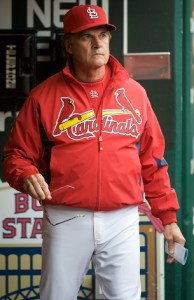
Tony La Russa

Even Hall of Fame managers aren’t always the geniuses they’re cracked up to be.

No baseball manager is a perfect specimen, whether he lucks into the job, performs it long enough and well enough, or gets himself elected to the Hall of Fame because of his actual or reputed job performance. Many have been the managers whose reputations for genius are out of proportion to their actual performances.

Even the certified geniuses made their mistakes. Maybe none was more truly egregious than Casey Stengel’s failure to set up his rotation so his Hall of Fame lefthander Whitey Ford could start three 1960 World Series games instead of two. Unless it was Tommy Lasorda deciding it was safe to let Tom Niedenfeuer pitch to Jack Clark, with first base open and the Dodgers one out from forcing a seventh 1985 National League Championship Series game.

Maybe it was Dick Williams, placing public perception ahead of baseball to start gassed ace Jim Lonborg instead of a better-rested arm in Game Seven, 1967 World Series. Unless it was Gene Mauch, the Little General panicking down the 1964 stretch (with the Phillies, using his two best pitchers on too-short rest and blowing a pennant he had in the bank), or in Game Five (with the Angels) when he was an out away from winning the 1986 American League Championship Series.

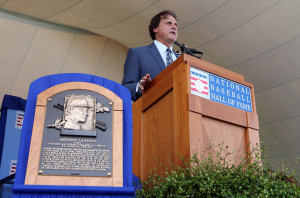
Regardless of his foibles since what proved his first retirement, Tony La Russa still has an outsize reputation as one of the most deft ever to hold the manager’s job. He’s been called a genius. He’s been called one of the smartest baseball men of the last half-century. They point to his Hall of Fame plaque, the 33 years he managed prior to returning to the White Sox this season, eleven division titles, six pennants, and three World Series rings.

Those plus his longtime reputation for volumnious pre- and post-game thinking and analysis (observed perhaps most deeply in a chapter of George F. Will’s Men at Work: The Craft of Baseball) still allow La Russa absolution from his most egregious errors.

He threw his 2021 White Sox star Yermin Mercedes under the proverbial bus, and maybe even invited the Twins to retaliate the following day, after Mercedes swung on 3-0 (violating La Russa’s fealty to the Sacred Unwritten Rules) in the eighth inning of a White Sox blowout, and hit a home run . . . off a middle infielder sent to the mound.

La Russa is still considered one of the smartest of the Smart Guys whatever they think of Mercedes’s homer or La Russa’s definition of “sportsmanship.” (They don’t always stop to ponder what La Russa thought of the Twins’s “sportsmanship” in giving up the ghost with two innings left to close even a fat deficit and sending a position player to the mound with real pitching still available to them.)

Perhaps they haven’t read Keith Law, writing in The Inside Game last year: “Sometimes you do all the right things and are stymied by bad luck. Other times you do everything wrong and are subsequently rewarded for it. That’s outcome bias.” There’s a case to be made that La Russa’s reputation, and maybe even his Hall of Fame case, is a little more than half a product of such outcome bias.

It’s hard to argue against a manager with three decades plus on his resume plus those division titles, pennants, and three Series rings. But maybe it’s easy to forget or dismiss how often La Russa either outsmarted or short-sighted himself when the games meant the absolute most.

“Tony, stop thinking,” Thomas Boswell wrote, after La Russa’s Athletics were swept out of a 1990 Series they could have tied in four and gone on to win, instead of being swept by a band of Reds upstarts who didn’t know the meaning of the words “shrink under pressure.”

If the A’s had picked an usher at random to manage them in this Series, they’d have been better. The usher would have brought in [Hall of Fame reliever Dennis] Eckersley to start the eighth inning of Game Two with a 4-3 lead. The usher would have brought in Eckersley to start the eighth inning of Game Four with a 1-0 lead. And this Series would be two-all.

La Russa could write a book on why did he did what he did. But the bottom line is that every manager in the Hall of Fame would have brought in the Eck. Twice Tony didn’t and twice the A’s lost. This time, the goat’s horns stop at the top.

Outcome bias didn’t help La Russa then, a year after he’d won his first Series. But it sure helped him after a 2011 Series he won despite himself. Because smart baseball men don’t do even half of what La Russa did to make life that much tougher for his Cardinals than it should have been.

Tony La Russa

La Russa’s 2011 Cardinals won a World Series despite the skipper’s missteps.

Smart baseball men don’t take the bats out of the hands of future Hall of Famers with Game One tied at zero. La Russa took it out of Albert Pujols’s hands by ordering Jon Jay to sacrifice Rafael Furcal, guaranteeing the Rangers wouldn’t let Pujols swing even with a swimming pool noodle, walking him on the house. (The next batter got lured into dialing Area Code 5-4-3.)

Smart baseball men don’t lift better clutch hitters (especially those shaking out as Series MVPs) with late single-run leads for defensive replacements who might have to try a lot harder to do the later clutch hitting with insurance runs to be cashed in—and fail. La Russa did that lifting David Freese (after he scored a single tiebreaking run) for Daniel Descalso (grounded out with two in the eighth) in Game Two.

Smart baseball men don’t balk when their closers surrender two soft hits in the Game Two ninth with a groin-hobbled bopper due up and a double play possibility very distinct. La Russa balked. He lifted Jason Motte for Arthur Rhodes with Josh Hamilton coming up. Rhodes gave the lead away and Lance Lynn gave the game away—on back-to-back sacrifice flies.

Smart baseball men don’t look past three powerfully viable and available bullpen options with their teams down a mere 1-0 and reach for . . . a known mop-up man, with the opposition’s hottest Series bat due up. La Russa learned or re-learned the hard way in Game Four. Mike Napoli thanked him for offering Mitchell Boggs as the sacrificial lamb—Napoli hit the first pitch for a three-run homer. (Final score: Rangers 4, Cardinals 0.)

Smart baseball men don’t snooze for even a moment and forget to flash the red light when their batter (Pujols, in this case) signals their baserunner Allen Craig to try for a steal in the Game Five seventh.  Craig got arrested by half a mile, inviting another free pass to the bopper and—following a base hit setting up second and third when the batter advances on the throw to third—another free pass and an inning-ending fly out.

Smart baseball men also don’t let a little (ok, a lot of) crowd noise interfere with getting the pen men up that he wants to get up in the bottom of the Game Five eighth—after ordering one relief pitcher tough on righthanded hitters to put a righthanded hitter aboard on the house, yet, instead of getting the second out—then try sneaking a lefthanded pen man past a righthanded danger who sneaks what proves a game-winning two-run double.

They don’t try to make the Case of the Tangled Telephone out of it, either, after they end up bringing in the wrong man when nobody claimed to hear them ordering the guy they really wanted to get ready. (La Russa wanted Motte but got Lynn. Oops.)

Neither do smart baseball men drain their benches in the eighth of even a do-or-die Game Six. La Russa did. It compelled his Cardinals to perform their still-mythologised ninth and tenth inning feats of down-to-their-final-strike derring-do without a safety net beneath them. Freese took one and all off the hook with his eleventh-inning, full-count, game-winning, Richter scale-busting leadoff bomb.

The Cardinals won that Series despite their skipper. (And, because they pinned the Rangers in Game Seven, after allowing a 2-0 first-inning lead on back-to-back RBI doubles. They made it impossible for La Russa to overthink/mis-think/mal-think again after they tied in the bottom of the first and scored four more from there.) La Russa was thatclose to blowing a Series his Rangers counterpart sometimes seemed to do everything within reach to hand him.

Fairness: La Russa did plenty right and smart winning those division titles. He did plenty right and smart winning the 2006 Series in five. (It didn’t hurt that he knew what he had turning his resident pest/Series MVP David Eckstein loose.) That was two years after nobody could have stopped the Red Sox steamroller from plowing the Cardinals in four, following their self-yank back from the dead to take the last four ALCS games from the Empire Emeritus.

But the 2011 Series got La Russa compared in the long term to . . . Bob Brenly, the Diamondbacks manager who won the 2001 World Series in spite of his own mistakes, too. Batting his worst on-base percentage man leadoff; ordering bunts ahead of and thus neutralising his best power threat; overworking and misusing his tough but sensitive closer, even throwing him out a second straight night after the lad threw 61 relief pitches the night before. (You’re still surprised Scott Brosius faced a gassed Byung-Hyun Kim and tied Game Five with a home run?)

Lucky for Brenly that he had one Hall of Fame pitcher (Randy Johnson) and another should-have-been Hall of Fame pitcher (Curt Schilling, his own worst enemy) to bail him out. Brenly hasn’t managed again since the Diamondbacks fired him during a 2004 skid to the bottom of the National League West.

When La Russa retired three days after that 2011 Series ended, he didn’t announce it until after the Cardinals’ championship parade and after he called a meeting with his players. “Some grown men cried,” he said of the meeting, adding, “I kind of liked that because they made me cry a few times.”

The smartest men in baseball with even half La Russa’s experience don’t invite comparisons to comparative newcomers who trip, tumble, and pratfall their way to World Series rings. Three Series rings keeps him a Hall of Fame beneficiary of the outcome bias Law described. It’ll probably keep La Russa cushioned with the White Sox for now, despite his early tactical mistakes.

And, despite the perception the Mercedes incident leaves that he’d rather burn his players in the public eye than handle real or alleged issues the mature way. (Name one manager who ever invited the other guys to retaliate for a real or alleged rookie mistake.) All that previous outcome bias won’t save him, if he costs himself his clubhouse and the White Sox turn from early-season surprise to season-closing bust.

La Russa doubles down cluelessly

Tony La Russa

Tony La Russa may be more clueless than he accused his own player Yermin Mercedes of being.

Tony La Russa wanted his live rookie Yermin Mercedes to learn a lesson in respect for the game. A Hall of Fame manager who came out of retirement to take the White Sox bridge, La Russa should remember that respect cuts in more than one direction.

If it was “disrespectful” and “clueless” for Mercedes to swing 3-0 in the top of the eighth with the White Sox blowing the Twins out 15-4 at the time, what was it for the Twins to send an infielder named Willians Astudillo out to pitch in the first place?

Astudillo threw a meatball that couldn’t even be called a knuckleball on 3-0. Whether Mercedes didn’t hear or chose not to listen to La Russa hollering to take the pitch, he drove it over the center field fence for the sixteenth White Sox run.

Mercedes and his teammates celebrated the blast when he returned to the dugout. La Russa was more than unamused. He called Mercedes out to the press after the game and again Tuesday morning. It was practically an engraved invitation to the Twins to do what relief pitcher Tyler Duffey finally did—in the seventh inning.

Duffey threw behind Mercedes with the first pitch of the plate appearance, which turned out to be the first and last of Duffey’s evening. Both Duffey and Twins manager Rocco Baldelli were ejected post haste for the drill attempt.

The attempt was foolish on a pair of levels. If you need that badly to send an opposing hitter a message, you do it the first time you see him at the plate and be done with it. You don’t do it near the potential end of the game, especially when you’re down a pair of runs and you can’t really afford an enemy baserunner who has the potential of coming home on a followup hit or two.

Lucky for the Twins that Alex Colome relieving Duffey wrapped a second walk around a pair of strikeouts for the side. They were even luckier that Miguel Sano hit his second homer of the night in the bottom of the eighth to tie before Jorge Polanco walked it off with an RBI single in the bottom of the ninth.

For a story he seemed to think was one big nothingburger in the first place, expressing surprise more than once previously that it took hold as firm and long as it did, La Russa doubled down on a Wednesday Zoom call with the press.

“If you’re going to tell me that sportsmanship and the respect for the game of baseball and respect for your opponent is not an important priority,” said La Russa on a Wednesday Zoom call with the press, “I can’t disagree with you more. You think you need more [runs] to win, you keep pushing. If you think you have enough, respect the game and opposition. Sportsmanship.”

La Russa’s Wednesday starting pitcher Lance Lynn demurs. It was probably the most intelligent observation amidst the entire debate. “The way I see it, if a position player is on the mound, there are no rules,” Lynn was quoted as saying. “Let’s get the damn game over with. And if you have a problem with whatever happened, then put a pitcher out there.”

Maybe you got why the Twins decided it might not be wise to spend any more of their pitching staff when they looked dead and buried by eleven runs with a couple of innings left to play. But maybe La Russa, the Twins, and those applauding La Russa while trying to shame Mercedes would care to re-learn a little baseball history.

Specifically, they might care to re-read the pages that remind you it’s not unheard of for a team to recover from a double-digit deficit before the last inning’s played and either win the game late or force the final decision to extra innings. We take you back to 1925, presumably one of the golden years the Old School/Old Fart Contingency has in mind when speaking of how much more grand was the grand old game in those grand old days.

The Indians had the Philadelphia Athletics buried 14-2, 15-3, and 15-4. Until they didn’t, thanks to the eighth inning. You know, the same inning during which Mercedes drove the infielder’s 49-mph canteloupe over the fence. Listen up, students: The A’s arose from the dead and buried with a thirteen-run eighth—a two-run triple, six RBI singles including two sending pairs of runs home, and Hall of Famer Al Simmons with the exclamation point of a two-out, three-run homer before the inning ended.

Those A’s overcame deficits of twelve, twelve, and eleven runs to nail a 17-15 win.

You don’t even have to go that far back, students. In 2001, the 116 game-winning Mariners sat on the wrong side of such a comeback. They’d had the Indians pinned 12-2 . . . until the Tribe told them, “you only think you have us pinned.” Three runs in the seventh, four in the eighth, five (all with two outs, yet) in the ninth. John Coltrane, call your office: they call it Ascension. (The Indians eventually won it in the eleventh, 15-14.)

Fifteen years later, the Padres only thought they had a somewhat different crew of Mariners sunk with a 12-2 lead after five. The Mariners ordered, “Up periscope!” Five runs in the sixth, nine in the seventh. Deficit overcome: ten runs. Oops. That all happened before the eighth. Double oops: what’s the point?

The points include that you should also get Lynn’s point. Lynn’s, and and Dodger pitcher Trevor Bauer’s:

Dear hitters: If you hit a 3-0 homer off me, I will not consider it a crime.

Dear people who are still mad about a hitter hitting: kindly get out of the game.

Can’t believe we’re still talking about 3-0 swings. If you don’t like it, managers or pitchers, just be better.

La Russa was far less aware of the aforementioned and other double-digit deficit closures than he was of his immediate need to school Mercedes. “There will be a consequence he has to endure here within our family,” he said after Monday’s game. “It’s a learning experience.”

No wonder any Twin pitcher thought he had a license to kill on Tuesday. And after Duffey attempted just that, La Russa went weasel about it: “It wasn’t obvious to me. The guy threw a sinker. It didn’t look good. So, I wasn’t that suspicious. I’m suspicious if somebody throws at somebody’s head. Then I’m suspicious. I don’t have a problem with how the Twins handled that.”

Translation: If one of you lot breaks the Sacred Unwritten Rules on my watch, your back means nothing to me.

Further translation: A Hall of Fame manager didn’t think there was anything wrong with waiting through four preceding plate appearances on Tuesday night before deciding it was time to teach Mercedes a lesson in manners. Mercedes’s teammates probably had every reason to believe the Twins really did shake off the Monday night mash until Duffey went behind his legs.

The Twins were probably lucky Duffey didn’t trigger a bench-clearing brawl over it.

There were moments over this week’s first three days when you’d have thought baseball’s worst problem of the week was Mercedes swinging on 3-0. As if the continuing free cookie on second to start each extra half inning, the three-batter minimum for relief pitchers, the continuing metastasis of hit batsmen courtesy of control-challenged pitchers built for speed and not smarts, and the continuing embarrassment of the National League lacking the permanent designated hitter, were just nuisances like a fly at a picnic.

There were moments, too, when you’d have thought La Russa was merely the unappreciated genius trying to teach the no-respect millenials a little lesson in manners. He’d certainly like you to think so. “What did I say publicly?” he asked aboard that Wednesday Zoom conference, before answering. “I said a young player made a mistake—which, by the way, he did—and we need to acknowledge it. Part of how you get better as a team is, if something goes wrong, you address it.”

Who’s the genius who decided to address it in the public media, instead of keeping it behind clubhouse doors, and thus leave his own player prone to a duster? Who’s the genius who didn’t stop to ponder what sort of “respect” was shown his team when the other team sent an infielder to face them in the eighth instead of continuing an honest effort to come back even with two innings left to play at minimum?

Who’s the genius who also didn’t see his own starting pitcher Lucas Giolito gassed in the early seventh on 27 April, then left him in anyway and watched him surrender back-to-back an RBI double and a two-run homer, giving the lowly Tigers a lead they wouldn’t relinquish?

Who’s the genius who let pool-noodle-bat Billy Hamilton hit with two on and one out in the top of the tenth on 5 May, despite better than decent bench help ready and waiting—then watched his lead runner get thrown out trying to steal third, before Hamilton struck out for the side? In a scoreless interleague game the Reds would win when Jesse Winker walked it off with an RBI single in the bottom of that inning?

(Who’s also the genius who did enough of his part—with a lot of help from a cronyism-stacked Today’s Game Committee—to jam Harold Baines down the Hall of Fame’s throat three years ago, when Baines’s only qualification for the honour, if that, was a 22-season major league career that amounted to making the Hall of Fame the Hall of the Gold Watch?)

Funny thing about “traditions.” Baseball’s include that the game isn’t over until the final out. Baseball’s late Hall of Fame philosopher Yogi Berra interpreted it to mean, “It ain’t over until it’s over.” If you’re worried about a hitter swinging 3-0 against a reserve utility infielder, maybe you should worry more about that infielder’s team deciding the game was over two innings early regardless of the score and on which end of they sat short.

The Twins weren’t trying to be sportsmen as much as they were trying to save their pitching staff to fight another day. Well and good, and with its own risks attached. Throwing at Mercedes late in the following night’s game doesn’t mitigate that.

The Old School/Old Fart Contingency still fuming over Mercedes squaring up the infielder’s meatball like to think they’re standing up for the game’s integrity. They might want to ponder how much “integrity” is present when a team playing a game with no clock surrenders before the game’s actually over.

Clean, legal, case closed

Manny Machado, Tommy Edman

Machado (left) checks on Edman after the Sunday drop slide that blew enough social media up Monday.

Manny Machado isn’t now and never has been a controversy-free baseball player. He’s one of those players who can trigger an uproar  without doing or saying a thing. Sometimes all he has to do is smile.

But it isn’t every day that a man to whom controversy seems as natural as playing third base kicks up a little storm for doing the right thing. Especially when it’s something fundamental he was taught very early in his career.

On Sunday, the Padres’s third baseman reached base in the fourth inning, when the Cardinals’ own third baseman Nolan Arenado committed a very rare (for him) throwing error. Then, Machado ran toward second on a Jake Cronenworth ground ball to Cardinals second baseman Tommy Edman.

Edman fielded the ball cleanly while still a few steps behind the proper basepath. Then he stepped into Machado’s path with thoughts about starting a double play. He got the force tag on Machado. At that moment, Machado dropped into an almost excuse-me, soft slide that still upended Edman to keep him from throwing the none-too-fast Cronenworth out at first.

You couldn’t blame Edman for looking about as thrilled as a dental patient after he recovered from the upending. But the first thing Machado did immediately after the slide was move to see whether Edman was injured on the play. (He wasn’t.)

Whether Machado went rogue yet again ran over social media and enough of the sports press well into Monday. That was after Cardinals starting pitcher Kwang Hyun Kim told reporters he thought Machado should have been called for interference, which would have made Cronenworth out at first. Kim also seemed surprised Cardinals manager Mike Schildt didn’t argue for a review to get the call.

It wouldn’t have done Schildt any good if he’d tried, and he probably knew it. The written rules give the baserunner the right of way on the proper basepath, and you can watch the play fifty times from fifty angles and see nothing indicating Machado interfered with Edman fielding the ball in the first place.

Machado was well prepared to execute such a play. His long-enough-time Orioles manager Buck Showalter taught him the play. “I’m still trying to figure out what the story is,” Showalter told The Athletic‘s Dennis Lin.

Showalter told Lin the play was routine business in the Yankee system from his years managing in that system and finally the Yankees themselves. If the runner executes the drop-slide, it breaks up double plays no matter how far you get caught before second base and with little damage otherwise. Showalter indicated to Lin that not only were players taught how to do it running the bases but infielders were taught to be prepared for such drop-slides.

“The first thing I did,” Padres manager Jayce Tingler told Lin, “was I gave him a high-five. I thought it was a play, honestly, that won the game.”

The Padres entered the bottom of the fourth in the hole 2-0. Machado’s reach on the Arenado error led the inning off. After the force out during which Machado kept Edman from turning the double play, Kim walked Tommy Pham and surrendered a bases-loading line single up the middle to Austin Nola—before walking two runs home back-to-back enabling the Padres to tie the game.

Genesis Cabrera relieved Kim and surrendered a sacrifice fly (Patrick Kivlehan) and an RBI single (Ivan Castillo) back to back before catching Trent Grisham looking at strike three for the side. The Cardinals got a run back when Paul Goldschmidt scored as Yadier Molina dialed Area Code 4-6-3 in the top of the sixth, but Grisham made the game 5-3 with a two-out RBI double in the bottom of the inning. The Padres bullpen made sure the game finished with that score.

Tingler may well have been right. Machado’s slide as Edman crossed right into his proper basepath just might have won the game for the Padres, or at least set up their best chance to win.

Kim had more or less cruised through the first three innings, shaking off only a two-out base hit in the third while otherwise striking out the side. If he was staggered by the Machado slide enough that he couldn’t believe his manager didn’t demand a review and an interference call, on a play for which no interference and no foul play was involved at all, maybe the Padres pounced from there on a pitcher who just might have taken himself out of of his own concentration zone.

Showalter asked aloud whether Machado gave the Padres the best chance to win, and whether it was a clean play? Then, he answered his own question. “Of course it did,” he told Lin. “Outs are precious, and the game, as much as home runs seem to be there, it’s still about ninety-foot increments—who can keep the other team from getting ninety feet and who can gain ninety feet by something offensively. It should be embraced. It’s a great, thinking man’s baseball play.”

According to Lin, Machado’s former Oriole teammate Adam Jones called the play a legal and intelligent play. Also according to Lin, Jones’s comment got a resounding agreement from an old shortstop-turned-coach-and-manager—a fellow named Larry Bowa, who wasn’t exactly renowned for subtlety or gentility as a player or a leader.

The old Bowa might even have thought Machado’s comparatively dainty slide showed Edman a little too much mercy. Compared to Bowa in his time, the typical hard-nosed player often resembled a marshmallow stick figure.

Machado has faced accusations of dirty play in the past. Even if Tingler himself says it’s become a tired narrative. But Sunday’s play reminded too many fans of the play they think destroyed Red Sox second baseman Dustin Pedroia’s career back in 2017, the takeout slide at second that injured Pedroia at the back of his left knee. What they don’t remember is that that by itself didn’t put paid to Pedroia’s career.

The tenacious second baseman actually—and perhaps foolishly—managed to gut 105 games out in all 2017 and finished with a .369 on-base percentage plus six defensive runs saved above his league average at second base. But he could play only three games in 2018 and six in 2019, before sitting 2020’s pan-damn-ically mandate irregular season out and retiring three months ago.

“It’s funny,” Pedroia told NBC Sports Boston’s John Tomase after his retirement conference. “I remember when I got the first MRI after the play, a doctor said, ‘Hey, man, you could not only ruin the rest of your career but the rest of your life with this injury. You tore all the cartilage off on your medial compartment on your femur and your tibia. Your cleat just got stuck, and it’s a bad deal.’

“And I said, ‘Well, can I play’,” Pedroia continued. “And he said, ‘Yeah, you could try to. It’s going to go. When it goes, you’ll know.’ So I just remember everyone there saying, ‘Hey, we need you.’ So it was a no-brainer. If I had to do it all over again, it wouldn’t even be a question. Of course I would.”

In other words, Pedroia knew the risk of trying to continue playing despite the severity of the injury. We’ll never know for dead last certain whether some sort of knee surgery at the time instead of trying to continue despite that injury might have saved and enabled continuing his career.

About the play itself? In the immediate moment after the actual play, Pedroia himself told anyone who’d listen that he never once believed Machado intended that slide to be either dirty or injurious. Indeed—just as he’d do with Edman on Sunday—the first thing Machado did after coming to his feet was try to aid Pedroia. Machado also sent Pedroia a post-game text apology to Pedroia, who replied that he knew Machado wasn’t trying to injure him.

Without now mentioning Machado by name, Pedroia told Tomase, “Unfortunately, I just got caught in the wrong position and that was it. But I think I’m at peace with everything knowing that I did my best and the training staff and the doctors did everything we possibly could’ve to try to continue to play baseball.”

That effort earned Pedroia serious points in the guts-and-glory department. It also forced him in the end into the partial knee replacement last December that guaranteed he can never run again.

Machado was no more responsible for ending Pedroia’s career than Yankee infielder Gil McDougald was for ending onrushing Indians pitcher Herb Score’s in 1957. Score recovered from McDougald’s liner into his face, returned in due course, looked like his old self opening 1958, then blew his elbow out on a cold, wet night. He sat ten days, then tried foolishly to pitch through it, and by his own admission changed his motion to overcompensate for it “and ended up with some bad habits.”

Score hung on with the Indians until they traded him to the White Sox following the infamous Colavito-for-Kuenn deal in 1960. He didn’t regroup any better with the White Sox or in their minor league system, finally retiring to the Indians broadcast booth in 1964. It didn’t stop Cleveland from believing McDougald drilled a hole into Score’s career any more than the actualities stop Boston and elsewhere from believing Machado plowed a hole into Pedroia’s career.

But that was then, this was Sunday, and Lin would remind you that Nationals shortstop Trea Turner executed an almost exact match slide against the Mets, earlier this season,  though Mets shortstop Francisco Lindor actually stopped short of Turner and didn’t tumble over Turner onto the ground.

Nobody went boo or ballistic over that play, by the way.

“If [Machado] would’ve stopped and they threw to first and threw back to second and tagged him, nobody would’ve said a word,” Showalter told Lin. “If he had let him tag him softly up top, like most people do, nobody would’ve said a word. But because he tried to figure out a way to keep that from happening, I mean, it should be extolled.”

For all we know, too, there may be those willing to rag and bag Machado because the actual slide made him resemble a large sack of dog food falling nonchalantly and accidentally off a low warehouse shelf.

If Machado just stopped short like a good little boy and let that nice Edman consummate the double play he was “entitled” to consummate (some of the social media flappers can make you think that’s what they’re thinking), his critics would probably rag and bag him for not trying to bust up that double play by any means necessary. Hell if you do, hell if you don’t.

The bench is for fannies, not fists

Huascar Ynoa

Repeat after me, young marksman: To err is human, to forgive is not bench policy when it meets a flying fist.

I don’t want to be a spoilsport or anything, but some baseball traditions manage to hang around in spite of themselves. Traditions like the guy who performs a feat of back-to-back derring-do one moment, then swings himself out of the starting rotation and into “a couple of months,” maybe the rest of the season, on the injured list the next.

Let the record show that Braves pitcher Huascar Ynoa had every right on earth to feel frustrated Sunday evening, after the Brewers slapped him and his silly for five runs on nine hits, including Avisail’s two-homer that bumped out of center fielder Endier Inciarte’s glove web over the wall, en route a tough enough 10-9 Braves loss.

Let the record show further that rightful frustration doesn’t necessarily counsel you that it’s wise beyond your years to punch the dugout bench out after you’ve been removed mercifully enough from further slappage.

“I knew he had done it and it was sore,” said Braves manager Brian Snitker, after the Braves’ team flight back to Atlanta, “but in the flight it started bothering him more. They checked [Monday] morning and it was a fracture. It’s a shame.”

Maybe hitting home runs including a grand salami during back-to-back starts gives a young man an unlikely and perhaps unreasonable sense of his own invincibility. But maybe Ynoa will learn the hard way that, frustration or no, bad outing or no, benches are for fannies, not fists.

He joins not that fraternity of ballplayers who sent themselves to the injured list in freak accidents. He joins the dubious brotherhood of boneheads who thought they could punch their way out of their bad moments by taking on inanimate objects that don’t hit back but leave mucho damage when they’re hit at all.

The core reasons are as varied as the ways you can win or lose a ball game. There’s no way to predict just what will make a player mad at himself in any inning, on any day.

When Pat Zachry established himself as a new Mets ace, after being traded there in a package sending the Reds the old (and Hall of Fame) Mets ace (Tom Seaver), he faced his old buds from Cincinnati a year later and ran right into Pete Rose’s then-36-game hitting streak.

Zachry kept Rose quiet until the seventh, when Charlie Hustler slapped a single. A couple of batters later, Zachry was lifted from the game and not a happy trooper about it. He decided to kick whatever came within reach of his hoof . . . until he saw a stray batting helmet. He reared back to deliver, then—as if the helmet was the football Lucy kept jerking away from Charlie Brown—swung his foot, missed the helmet, and nailed a concrete block.

Broken foot. Season over. Zachry was probably grateful if no teammate decided to serenade him upon his return the following spring with a chorus or three of a certain old hit by Paul Revere and the Raiders.

A.J. Burnett had a tough enough time pitching in 2010 without deciding the way to take out his frustrations after the Rays made a pinata of him one fine day was to punch out . . . the clubhouse doors. The good news was that Burnett didn’t miss serious time. (Cue up Teddy Pendergrass.) The better news: He wasn’t half as foolish as another short-term Yankee six years earlier.

Kevin Brown wasn’t having a bad 2004 despite a few little injuries in The Stripes when he ran into the Orioles in early September, came out in the sixth inning, and tried to challenge a clubhouse wall with his fist. Guess who won that debate and took Brown out of action for three weeks. We’ll have a wild guess that it was a long time before Brown could listen to a certain Pink Floyd song without cringing.

Legend has it that Elvis Presley was given to picking up a pistol and blowing out the screen whenever he saw something (or someone) he didn’t like on television. Jason Isringhausen once saw and raised Elvis, during his final season as a Cardinal: Having a bad 2008 as it was, Isringhausen decided like Popeye that was all he could stand because he couldn’t stand no more, after Jason Bay blasted a three-run homer on his dollar.

He punched a television set out—cutting his hand and ending up on the old disabled list for fifteen days. The least advisable music with which to serenade him the rest of the year was probably this Allan Sherman chestnut about a pair of early 1960s TV addicts, even if the song was funny as hell otherwise.

Boys will be boys, grown men will be boys, but when on earth will even the most severe competitors finally figure out that certain inanimate objects (in the case of Isringhausen’s would-have-been-victim, inanimate is in the eye of the beholder) live by the motto, “To err is human, to forgive is not my policy?”

Lucky for Ynoa that he doesn’t yet have even a short-term a reputation as, shall we say, a testy guy. John Tudor, ordinarily a quiet fellow who preferred to let his pitching do about 90 percent of his talking, had that reputation to some extent. It was more than a little unfair.

When he felt like using his mouth to cover the other ten percent, Tudor was actually thoughtful, articulate, sensitive, self-aware, and modest. (His least favourite subject was himself.) At least, he was with writers who treated him like a man and not a commodity. When he incurred difficult times with the press, as he did down the stretch in 1985, Tudor could and did bristle enough to challenge at least one writer to put his fists where his mouth was.

When he got knocked out of Game Seven of that World Series at the earliest time in his career that he’d ever been chased (his often-troublesome shoulder gave out), Tudor went into the clubhouse, took a swing at an electric fan with the hand by which he earned his living, and needed a hospital to stitch it up. Tudor apologised publicly one week later. (The following spring training, he admitted to Thomas Boswell the incident and bad press still bothered him: “I can’t worry about it, but that’s not saying I like it.”)

But in the immediate moment, word of Tudor’s ill-fated fan-shake reached the press box. Apparently, at least one of the occupants was one of his least favourite writers. The feeling was surely mutual enough. Said writer whose identity is lost to time and memory is said to have cracked, “Ahhhhh, the sh@t finally hit the fan!”