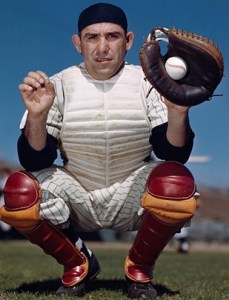
The A’s re-up the whistleblower

Mike Fiers—the A’s re-sign the Astrogate whistleblower.

Under ordinary circumstances a team signing a good pitcher who’s a worthy number-four man in a starting rotation isn’t extraordinary. But then there’s Mike Fiers, whom the Athletics have re-upped for 2021 on a one-year, $3.5 million deal. There’s also San Francisco Chronicle baseball writer Susan Slusser dropping a troublesome suggestion.

Now the Giants’ beat writer and a former president of the Baseball Writers Association of America, Slusser was a longtime A’s beat writer for the Chronicle. So when she says, “The A’s were the only team to make Fiers an offer, I’m told. Interesting – was he being blackballed for being a whistleblower? I certainly hope that’s not the case,” it ought to sound an alarm or two.

Lots of teams have been in need of third and below starters. It shouldn’t have been that difficult for an innings-eating righthander with fourth-starter solidity to find a job even in this winter’s somewhat surreal market. Except that Fiers, who did say his preference was to stay in Oakland, isn’t just an ordinary fourth starter.

Whistleblowers don’t fare as well as some people think after their whistles blast cases of wrongdoing to smithereens. When Fiers blew his on the Astros’ illegal off-field-based electronic sign-stealing cheating of 2017 and some of 2018 (at least) to The Athletic, it seemed as though half of baseball considered him a hero and half a rat bastard.

He moved to the Tigers for 2018 and to the A’s later that season. He warned both collections of new teammates that the Astros were playing with a stacked deck. He and others suspecting the Astros of extracurricular pitch intelligence also tried futilely to convince members of the press to run with and investigate it; those writers couldn’t convince their editors to let them run without a name willing to go on public record.

That’s when Fiers finally put his name on it to Athletic writers Ken Rosenthal and Evan Drellich in November 2019. From which point it swelled toward Commissioner Rob Manfred’s marshmallow hammer, the hammer constructed when he handed Astro players immunity in return for spilling, suspended a GM and a manager, voided two key draft picks and fined owner Jim Crane pocket money.

The Astros likely weren’t the only team in the Show using extracurricular off-field-based sign stealing, just the most sophisticated. They took an existing center field camera off the mandatory eight-second delay or installed a surreptitious new such camera, set monitors up in the clubhouse, and translators would decode the pitch signs and signal hitters with bangs on an adjacent trash can.

The 2018 Red Sox turned out to have enlisted their video rooms at home and on the road for a little extra aid to old-fashioned gamesmanship: the signs would be decoded off the feeds and sent to baserunners to signal batters. They—and anyone else thinking and doing likewise (would you be shocked?)—didn’t install anything extra.

Essentially, the Show handed those Rogue Sox and others, who knows how many yet, the keys to the liquor cabinet and dared them not to imbibe while Mom and Dad high tailed it out of town for the weekend.

Some looked at Fiers’ membership on the 2017 Astros and discovered a rank hypocrite, never mind that if he’d blown his whistle then he’d also have been denounced most likely as a backstabber on the spot. (Fiers wasn’t on those Astros’ postseason roster.) It’s called hell if you do and hell if you don’t.

“Even in cases of obvious right and wrong,” wrote The Athletic‘s Marc Carig last year, “crying foul on family is easy to call for in retrospect and hard to do in real time.” Remind yourself if you will how often you learned of egregious wrongdoing and lamented the lack of a whistleblower. Now ask how simple it really is to blow the whistle in the moment or even a comparatively short time later.

It took New York police legends Frank Serpico and David Durk several years’ futility trying to get that police department to attack graft before they finally went to the New York Times and launched the largest New York police scandal since Brooklyn-based bookie Harry Gross was found to have enough police on his payroll to staff half his borough’s precincts.

Cheating may be sports’ oldest profession, but affirmations don’t always happen concurrent to the instances, for the reason Carig enunciated. When Joshua Prager finally affirmed what was long just suspected—that the 1951 New York Giants cheated their way back into the pennant race to force the fabled playoff with an elaborate telescopic sign-stealing operation—it was half a century after the fact, with the surviving principals willing to talk long retired.

Prager eventually expanded his expose into The Echoing Green: The Untold Story of Bobby Thomson, Ralph Branca, and the Shot Heard Round the World. “A spitballer or corker can be caught by an umpire, who has the right to examine or confiscate equipment,” wrote the Washington Post‘s Thomas Boswell when Prager first hit The Wall Street Journal running.

Both teams play on the same damp base paths and inclined foul lines, even if they’ve been doctored a bit for home-field advantage.

But an elaborate system of sign stealing—with an old pro in the art of signs in a hidden space—is almost impossible to catch. Umps and foes are defenseless. The game becomes fundamentally unfair because knowing what’s coming is a big deal.

If revealing the Astros’ elaborate 2017-18 system at last made Fiers a criminal, maybe baseball needs more such criminals. If other teams needing fourth starters refused to even think about him because he blew a whistle instead of a ball game, after two years worth of trying futilely to get others to investigate without a blown whistle, something’s worse than a hanging slider driven out of sight.

Slusser doesn’t know for dead last certain. Neither does anyone else, possibly including Fiers. To those who still think blowing the whistle is worse than the crime, perhaps you’d like to ask what might have been, instead, if Alexander Butterfield hadn’t suffered a pang of conscience and an inability to lie under oath enough to expose Richard Nixon’s White House taping system.

They have to answer to Yogi

If you don’t know where you’re going, you might end up somewhere else.—Yogi Berra.

The morning-after talk seemed divided evenly between two subjects. 1) The Tampa Bay Buccaneers demolished the Kansas City Chiefs so profoundly, if slightly controversially (debates about bad refereeing abounded), that the 55th Super Bowl became a stupor unless you rooted for 2) Tom Brady, the 43 year old quarterback now winning his seventh Super Bowl ring.

Subject one dissipated swiftly enough, it seems. Subject two, not so fast. Brady’s seventh Super Bowl ring provokes debate on whether he’s the greatest of all time in any team sport. Individual sports, after all, have Serena Williams and her 23 tennis Grand Slam wins, Jack Nicklaus and his eighteen major golf tournament wins, and Michael Phelps with his 23 Olympic swimming gold medals.

Some of the competition raised in the debate include Bill Russell and his eleven NBA Championship rings, Bart Starr and his six NFL Championship/Super Bowl rings, in an earlier and far less high-tech/climate-friendly football era, and Henri Richard and his membership on eleven NHL Stanley Cup winners.

Brady, Richard, Russell, and Starr are not exactly a cast of extras. But there’s one man in any team sport whose championship presence still eludes by a fair margin. Quick: Name the baseball Hall of Famer who played on fourteen American League pennant winners and won ten World Series rings while he was at it.

Hint: Ninety percent of this game is mental and the other half is physical.

It’s still somewhat difficult to believe that a little more than five years have passed since Yogi Berra was taken home to the Elysian Fields at 90. He passed on the 69th anniversary of his first game as a Yankee and two days before the birthday of his wife, Carmen, who passed over a year and a half before her husband. “Gramp wanted to be with Gram on her birthday,” their sportswriting granddaughter Lindsay has said.

There’s still something to be said that Berra’s personality and character loomed so much larger than his actual baseball greatness as the years went passing by. Making himself the nation’s friend sometimes made Berra perhaps the nation’s most underrated among the game’s genuine greats. I’ve run it down in the past, but I wish to God the underrating stopped now.

Perhaps the sobering reality that so many of our sporting greats were (and are) found wanting as people makes us forget often enough that there can be such greats who are as admirable if not more so as men and women as they were when they played their games.

So let’s forget Yogi the beloved and address Berra the arguable greatest all-around catcher who ever played in the Show, including even Johnny Bench, Berra’s extremely close second, and possibly pending the final exhumation of Josh Gibson’s actual statistics. You can pick among several points to open, but let’s open with Yogi at the plate.

He didn’t exactly look like a hitter compared to the wiry musclemen who preceded and followed him. But only two men in Show history hit 350+ home runs and struck out fewer than 500 times, and one was named Yogi. (The other was named Joe DiMaggio.) He never struck out 40 times or more in any season. In five of his seasons, his home runs outnumbered his strikeouts. He averaged 32 strikeouts per 162 games lifetime.

For any hitter, that’d be an impressive achievement. For a classic bad-ball hitter who’d swing at anything he could see and was anywhere within Yankee Stadium’s geographic coordinates, Wee Willie Keeler living  to see Yogi (who was born two years after Keeler’s death) would have re-thought his watchword about hitting ’em where they ain’t.

Berra joined the Yankees the same year Jackie Robinson broke the disgraceful old colour line in the Show. From that year until the first year of expansion (1961), only one man drove more runs home than Berra: Stan Musial. (Here’s a classic for you: Happening upon a conversation of American League All-Star pitchers talking about how to pitch Musial, Yogi cracked as if he’d been in on it all along, “Forget it. You guys are trying to figure out in fifteen minutes what nobody’s figured out in fifteen years.”)

Bench’s greatness is no questions asked, but behind the plate he led his league in putouts twice, assists once, defensive double plays once, and fielding percentage once. Berra led his league in putouts eight times, assists five, defensive double plays six, and fielding percentage twice, and Yogi played in a time when the season was eight games shorter and the opposition running game was re-born almost kicking and screaming.

Robinson’s virtuosity at baserunning as guerilla warfare would be met midway through the 1950s by Luis Aparicio restoring grand theft bases to the game. Both before and after that, Berra was probably the most adept at neutering whatever running game there was. He threw 49 percent of the would-be larcenists who did run against him out, in a time when the league average was 45 percent.

Bench’s caught-stealing average was 43 percent—eight points higher than his league average but two points lower than Berra. There’s little reason to believe Yogi wouldn’t have been just as good shutting the running game down in a more incessant atmosphere for would-be thieves. But how did they handle their pitching staffs?

The pitchers who threw to Bench posted a collective 3.52 ERA, twelve points below the league average. Those who threw to Berra posted a collective 3.41 ERA—67 points below the league average. OK, there’s a bit of a ringer in there: Yogi’s pitchers as the regular Yankee catcher included Hall of Famer Whitey Ford for the first decade of Ford’s career, not counting the two seasons Whitey missed in military service.

So let’s remove Ford from the equation. Berra wasn’t catching a band of nobodies, of course, but there’s something to factor you may not believe. Almost everyone else who pitched in Yankee pinstripes for the eleven seasons Berra was the regular Yankee catcher did better with Yogi behind the plate than a) throwing to other Yankee catchers when the main man needed a day off or was injured and b) when they weren’t Yankees.

Maybe it’s not entirely fair to compare other catchers who didn’t have Berra’s circumstances and pitching talent to work with, but the opportunities mean nothing if you don’t seize them. “They didn’t have the chance; Yogi did,” wrote a Berra biographer, Allen Barra, “and he won—seasonal games, pennants, World Series rings—more than any other catcher. In fact, he won more than any other baseball player of the (20th) century.”

Bill James’s Win Shares system (to define it properly would take a book, and James did just that in 2002), which says a Win Share is worth about a third of a team win, has Berra ahead of fellow Hall of Famers Carlton Fisk by seven (375-368) and Bench by nineteen  (375-356). That’s in terms of career value.

Berra’s great contemporary Roy Campanella didn’t make the top ten for reasons hardly his own making. Campanella wasn’t allowed to play in the Show until the colour line was broken, and his January 1958 road accident left him a quadriplegic. Campanella joined the Dodgers a year before Berra became the Yankees’ regular catcher. Using Campanella’s career from 1949-57, how do the two really compare?

Well, each of them won three Most Valuable Player awards, both in 1951, Campy in 1953, Yogi in 1954-55, and Campy also in 1955. Campanella anchored five Brooklyn pennant winners and a World Series champion. Yogi, of course, anchored eight pennant winners and six World Series champions in the same span.

How do they look according to my Real Batting Average metric? On the surface, Campanella looks a little better:

Player (1949-57) PA TB BB IBB SF HBP RBA
Yogi Berra 5,264 2332 475 54 21 37 .555
Roy Campanella 4,816 2101 533 113 18 30 .580

On the surface, that is. Campanella has a far more glaring home-road split than Berra, since Campy played in the Ebbets Field bandbox at home and Yogi played in far more cavernous Yankee Stadium. I suggest that if they’d played in home ballparks with approximately the same conditions, Campanella’s RBA would probably be within a point of Yogi either way.

Don’t go there about that yummy Yankee Stadium short porch in right field: the further blessing in Berra’s bad-ball hitting was that he wasn’t anchored to pull hitting. Their OPS+es, which adjust to all the parks in which a player hits, are still quite different: Berra’s (130) is seven points higher than Campanella’s (123).
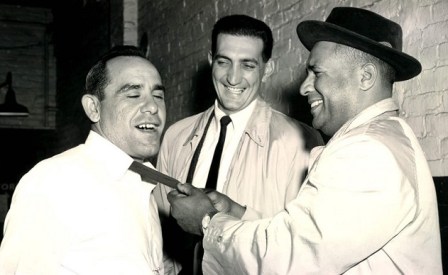
Ralph Branca (center) in on the fun between Yogi and Campy, the friendly rivals. (The Sporting News.)

Don’t think about their strikeouts, either, because Campanella’s going to lose big. From 1949-57, Yogi struck out 215 times . . . but Campy struck out 501. And Campanella was more prone to hitting into double plays than Berra during the same span: 143 for Campy, 89 for Yogi. Neither man was particularly fast on the bases, but somehow Yogi managed to take extra bases on followup hits 49 percent of the time he reached base while Campy did it 39 percent of the time.

Handling pitchers? We’ve given a look at Berra’s Yankee pitchers. Campanella’s Dodgers had good pitchers, a couple of whom had Hall of Fame talent—Don Newcombe and Carl Erskine were probably the two top examples; Campy also got to catch Hall of Famer Don Drysdale for Big D’s first season as a regular starter—but never posted Hall of Fame numbers.

The pitchers who threw to Campanella posted a 3.78 ERA. That’s 31 points higher than the pitchers who threw to Yogi. These were the Show’s two greatest all-around catchers of their time, handling pitching staffs of roughly equivalent talent if you remove Whitey Ford from the equation. (And, in the cases of Eddie Lopat and Preacher Roe, roughly equivalent, shall we say, wile and guile—and anything else they could apply to the ball.)

Berra led his league in catching putouts seven times during Campanella’s career span, while Campanella led his league six. Berra also led in catching assists three times to Campanella’s one. He led his league in catchers’ double plays eight times during Campanella’s career span; Campanella did it only twice. Yogi also led his league in defensive runs saved above the league average (total zone runs) three times; Campy never did.

Berra’s Yankees were better teams than Campanella’s Dodgers, and Campanella’s Dodgers were the best team in the National League cumulative from the year Yogi became the regular Yankee catcher until Campy’s final season. They got to tangle in five World Series against each other in the span in question. Oops.

Yogi’s tough Yankees had to beat Campy’s tough Dodgers in four out of five World Series against each other in that span and—even with the 4-1 Yankee win in 1949—the Dodgers were no Series pushovers. The Yankees also won five straight Series—including three against the Dodgers plus one each against a fluke team (the 1950 Phillies’ Whiz Kids) and a cheating team (the 1951 Giants)—from 1949-53. Guess who was behind the plate anchoring and calling the Yankee program on the field.

“Everyone regarded me as a cocky kid when I came up,” Whitey Ford once told Barra, “and that’s the way they continued to see me throughout my career”

I acted that way ’cause I figured it gave me an edge. I didn’t throw as fast as some guys and I didn’t have as big a curve as some, but I acted as if I was confident, and that’s the way people regarded me, especially the hitters, the ones I really wanted to impress. Well, I wasn’t confident, not really. It was Yogi who was confident, and Yogi that made me feel that way. With anyone else as my catcher, I wouldn’t have been the same pitcher.

Barra has written that catching is “the toughest position to find a good player at in baseball—and maybe in all three major sports.” Assuming he meant baseball, football, and basketball, we should note that finding good goalies in professional hockey isn’t exactly ice cream, either.

Well, now. Three goalies (Jacques Plante, Charlie Hodge, Ken Dryden) are tied for playing on the most Stanley Cup winners—with six. Two (Turk Broda, Grant Fuhr) have five; seven (Clint Benedict, Terry Sawchuk, Johnny Bower, Gump Worsley, Michel Laroque, Billy Smith, Patrick Roy) have four.

Between the Red Sox and the Yankees, Babe Ruth played on ten pennant winners and won seven World Series; as a Yankee, it was seven pennants and four Series winners. Lou Gehrig played on seven pennant winners good for six Series titles. Joe DiMaggio played on ten pennant winners and won nine Series rings. Mickey Mantle played on twelve pennant winners and won seven rings.

That’s not fourteen pennant winners and ten World Series rings.

None of those men played as tough a defensive position requiring as much brain as brawn power as that squat, comical-looking fellow from St. Louis, who told you it wasn’t over until it was over, who could have seen a pitch sailing toward the press box and hit it down the line one way or the other when not hitting it over the fence one side or the other, and who out-coloneled everyone else at his position.

Love or loathe Tom Brady (it seems to be spread about evenly between the two), congratulate him for seven Super Bowl rings. But if you’re judging team sports players according to how many world championships their teams won when anchored by them,  Brady and the others have to answer to someone else before you think of them as the greatest and/or most valuable team players.

Hint: It’s tough to make predictions, especially about the future.

———————————————————–

* What would have happened if Roy Campanella could have continued his career in Los Angeles.

Carl Erskine once swore that playing in the insane asylum that was a baseball field shoehorned into the Los Angeles Coliseum, with its Green Monster-like high left field fencing and short foul line, might have given Campanella a revival as a hitter. Perhaps; perhaps not. He would have been 37 in his first Coliseum season.

Campy would have been 40 and likely retired by the time the Dodgers moved into Dodger Stadium; the years of beatings he took behind the plate in the Negro Leagues and then in Brooklyn might have finished him a little sooner.

But we’ll never know.

Let Bauer be on the Dodgers’ heads

The Dodgers want last year’s Bauer over a full season and without the concurrent social media migraines.

“Talented, antagonistic.” That’s how The Athletic‘s Pedro Moura describes Trevor Bauer in two words. Lots more words under either of those could be and have been written about, shall we say, the controversial enough righthander. They run the gamut from forward thinker to bully, from student of the game to misogynist.

The Dodgers pushed a big bet to the center of the table that Bauer over a full season on the mound will be what he was for the Reds in last year’s short, irregular season. The Mets were thought ready to push the biggest chips forward but let him walk into the Dodger embrace.

The Dodgers are also betting the talent will neutralise the antagonism by signing Bauer to a three-year deal that includes record-setting single-season salaries in the first two. The Mets are also betting they’ve dodged a howitzer shell by not signing Bauer to even the purely single-season deal the pitcher is known to prefer.

A starting rotation that already features Clayton Kershaw, Walker Buehler, Julio Urias, and David Price, plus two starter-capable swing pieces named Dustin May and Tony Gonsolin, just became a repository of depth approaching a season in which pitching depth is going to matter phenomenally.

Last year’s short irregular season left baseball’s pitching corps short enough of full-season regular work that there is and should be even more true alarm about pitcher health than usual approaching a more complete season. Bauer’s history of innings consumption wedded to May’s and Gonsolin’s availabilities gives the Dodgers room to manage the 2021 workloads of Kershaw, Buehler, Urias, and Price prudently.

Especially if they think the Bauer signing has indeed sent the message ESPN’s Alden Gonzalez says it sent: “There’s us, and then there’s everybody else.” And how. Not just in the pennant race. Bauer’s going to earn in one season than the entire payroll of the tanking Pirates. ESPN’s David Schoenfeld warns, though, that that isn’t exactly something new other than the dollar amounts in question.

Look, is it “fair”? No. But we haven’t had a repeat World Series champ since those 1998-2000 Yankees, low-payroll teams like Tampa Bay and Cleveland both reached the World Series in recent seasons, Kansas City won one, and even Pittsburgh had a nice little run there a few years ago. Yes, it’s a challenge for the Pittsburghs and Clevelands of the world, but good luck on finding a better system that satisfies the rich teams, the “poor” teams AND the players.

(There was such a system once upon a time, in fact. Then-commissioner Bowie Kuhn murdered it when he blocked the infamous Charlie Finley fire sale of three Athletics stars and imposed a $400,000 limit on cash sales of players. Kuhn didn’t stop to think that that now kept the “poor” teams from profiting on developing younger players without losing their abilities to return to competitiveness within shorter periods.)

It’s the other message the Bauer signing sends that has no few people alarmed, too. No, not the one about Bauer’s 2020 being a fluke even inside a fluke, which might be alarming enough. He only had one full season remotely comparable to 2020, back in 2018. He built his Cy Young 2020 almost entirely with bricks provided by weak competition: he faced .500+ teams only three times, and ten of his starts were against teams whose offenses were called “anemic” in charitable moods.

No, the other message alarming people is the antagonistic side. Bauer’s reputation isn’t exactly radar proof. His presence on Instagram, Twitter, and YouTube has made him a social media star somewhat out of proportion to his career results despite his talent and his deep studies in how to maintain his health and develop his pitches. And he isn’t exactly Mr. Congeniality across those platforms.

“[H]e will need to both own up, and put an end to, social-media tactics that include harassment when he responds aggressively to fans and reporters on Twitter, particularly women, prompting his followers to attack those who challenge him,” another Athletic writer, Ken Rosenthal, observes.

Bauer has pledged to wield his platform more responsibly in the past, only to engage in such conduct again. Those around him say he cannot control the behavior of his followers, an empty claim that does not absolve him of responsibility. Frankly, he should have been capable of seeing the impact of his actions long ago.

He has made it clear he wants to be active on social media and cultivate a large audience, which he says is because he wants to help make baseball more exciting for younger fans. But by lashing out at his critics, he fails to recognize the power he has over that audience and its desire to defend him. Continuing that behavior is inexcusable.

Bauer’s prior written nastinesses toward women just might have backed the Mets away in the end.

Yes, the Mets might have made for their own super-rotation—plugging Bauer into a rotation featuring two-time Cy Young winner Jacob deGrom plus Carlos Carrasco, Marcus Stroman, and returning Noah Syndergaard. But their recent upendings involving ex-general manager Jared Porter’s and former manager Mickey Callaway’s sexual harassment text messagings past mean the last thing the Mets needed was a pitcher with a history of misogyny compromising their work toward improving conditions for women around the team.

Bauer won’t have things simpler in Los Angeles, even if he is native to the area. The Dodgers’ media market is almost as large as New York’s. He’ll be viewed with magnifying glasses and under microscopes at least as acute and relentless as he would have been in New York.

When the New York Post‘s Joel Sherman wrote two days ago that he wouldn’t sign Bauer but if the Mets must it should be just a single season worth, he had in mind that a single season would be simpler for the Mets to escape any damage to their brand inflicted by Bauer’s way of building his own.

Bauer’s behavior does not rise near the malfeasance that Porter copped to and is alleged against Callaway. But Sandy Alderson hired both Porter and Callaway. He said in the aftermath of both disturbing revelations that had he known prior, he would not have hired Porter or Callaway. He knows what he knows about Bauer. Now. Today.

. . . Bauer might be a terrific big personality for the Mets. But there is enough risk and concern that they should offer $40 million for one year to learn for themselves.

The defending world champion Dodgers also know what they know about Bauer. They’re taking a bigger chance against it exploding in their faces during a three-year deal—from which Bauer can opt out after either this season or next—than the Mets would have taken on a strictly single-year deal.

The Mets have it simpler now. Any money they might have spent on Bauer could now apply toward landing Jake Odorizzi, whom several analyses proclaim the best starter left on the free agency market, for the back of their rotation. Odorizzi isn’t a world-beating starter but he could be the right number five man for the Mets. Could.

They might apply some of that money, too, toward Jackie Bradley, Jr., whose bat hadn’t exactly been a world beater until showing signs of life last irregular season (Real Batting Average has him .484 lifetime) but who’s still a plus defender in center field with a knack for throwing runners out from center field and turning double plays, and enough defensive runs saved.

Bradley has room to improve as a hitter, too: he’s not a big home run threat historically (he averages eighteen home runs per 162 games lifetime), but 41 percent of what he does hit goes for extra bases. And he’s a road runner on the bases: he has an .811 lifetime stolen base percentage and has taken extra bases on followup hits almost half the time he’s reached base.

Let the balance between Bauer’s talent and his headaches be on the Dodgers’ heads. The Dodgers may be deep enough that Bauer’s headaches wouldn’t make a huge impact, but they could leave the Dodgers with as many migraines off the field as their presence on it will leave for the rest the National League West, at minimum.

No surprise the players said no thanks

The old exhausted gag about how you can tell lawyers and politicians lie applies to a bulk of major league baseball’s owners. When they asked the players to go for yet another expanded postseason at all, never mind without offering anything of substance in return, the only shock would have been if the players went for it.
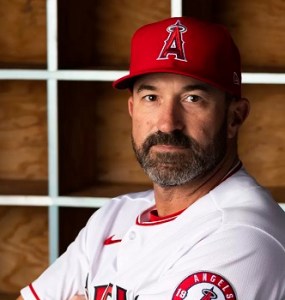
CBS Sports’s Dayn Perry isolates it: “[A]n expanded postseason largely benefits the owners, not the players. According to the terms of the [collective bargaining agreement]—stunning use of italics forthcoming—all postseason television revenues go to the owners. The players, in turn, get a share of the gate revenues, which is a significantly smaller slice of the pie.”

It’ll be smaller, too, depending upon the continuing pandemic protocols that might yet be in place come the next postseason, even if the owners were willing to pay the players their full 162-game salaries on a 154-game schedule. The owners only think they’re being benevolent and caring about their players’ safety.

“If, however, player safety was truly the prevailing concern for MLB,” Perry writes, “then they would’ve proposed that schedule shift by itself and not appended to it a call for expanded playoffs, which benefits owners far more than players.”

Speaking of player safety, how concerned for player safety were the owners last year in allowing fans to attend League Championship Series and World Series games? Or when Justin Turner was allowed back onto the field to celebrate with his World Series-winning Dodgers after he’d just been informed he was COVID-19 positive?

And how concerned are they for pitchers’ safety if they’re refusing to show sense, keep the universal designated hitter permanent, and not use it as leverage to force more permanently-expanded postseasons that compromise competition while fattening their bank accounts?

I’ve argued on behalf of the universal DH until I’m bloated from it because a pitcher’s lineup spot is the least productive in baseball, and that’s not something that suddenly arrived with the advent of the DH in the American League in 1973. That argument was made as far back as 1891 by a National League owner. So knock it off with the lie that the DH is the American League’s continuing plot to dilute baseball.

Now, ponder this, as Perry and his CBS colleague Mike Axisa do: Last year’s pandemic-mandated short, irregular season meant pitchers having far shorter, smaller work loads. Even with a 154-game schedule they’ll be working their way back to full. “It shouldn’t be a labor issue either,” Axisa writes.

MLB should want to keep pitchers healthy — starting pitchers are the closest thing this sport has to a “main character”—and keep their best players on the field. A universal DH helps accomplish that. Reducing injury risk at a time when pitchers are coming off a bizarre year with small workloads is a no-brainer. The universal DH is good for everyone.

By the way, you can also stop lying about the “additional jobs” the universal DH would bring. It won’t, even if it means National League teams having places for DH-types who can still swing even if they’ve become or always were seditious fielders.

What it will do, as Axisa says, is turn fifteen bench seats into fifteen full-time jobs, including opening places for those DH-types. It’ll remove useless bats from having to check in at the plate in the number nine hole. It’ll put useful bats into the lineup at more regular intervals.

You can also give up the lie about the universal DH removing “strategy” from the game. With that dead lineup spot brought back to life, National League managers would have some very creative options available. Maybe they’d like a second cleanup hitter in that spot? An additional leadoff-type hitter?

Maybe they can also do what American League managers have done for years with the DH slot: give one of their regulars a extra day or two off from the field, asking him nothing more than swinging the bat a few times, and have those guys a little more fresh down the stretch of a pennant race and into the postseason.

There’s also no reason to make a bargaining chip out of the seven-inning doubleheader except owners’ avarice. In some ways making the seven-inning doubleheader permanent is more important than the universal DH for safety’s sake. We got a few because of the COVID-related postponements last year. In just a 154-game season we could be getting lots more.

“We saw teams play three doubleheaders in a single week at times last year,” Axisa says. “MLB has to assume something like that will happen again, in which case seven-inning doubleheaders are a necessity. You can’t ask players to run themselves into the ground like that.” Tell that to Joe and Jane Fan who still don’t get things like that.

Once upon a time teams were liable to play between 20-25 doubleheaders a season. (The single-season record is 44 such twin bills, played by the 1943 White Sox, in case you wondered.) If they’d thought of the seven-inning doubleheader back in the Good Old Days, the doubleheader never would have disappeared except for makeup games.

I’ve also argued until my spleen couldn’t stand it that the postseason is already expanded too much as it is. The owners may be banking mucho millions but the competition is already diluted and the audiences who can’t buy tickets for postseason game packages are already saturated with postseason baseball. Is the common good of the game really the same thing as making money for it, after all?

You already have teams thinking they don’t have to go the extra distances to compete when they can settle for the thrills and chills of fighting to the last breath to finish in second place. You think baseball has tanking issues now? Wait till you see them if last fall’s postseason should become baseball’s permanent future. Three third-place teams and one fourth-place team got to the 2020 postseason. Where’s the anti-tanking incentive?

“Lower the bar for contention, which is what an expanded postseason does, and teams aren’t going to spend as much,” Perry says. “Even at the top end, the idea of having to claw through another round of the playoffs is a disincentive for teams like the Yankees, Dodgers, Red Sox, Cubs, and Mets to fortify rosters they already see as being playoff-worthy.”

. . . [T]he players aren’t likely to give away a strong bargaining piece like the expanded postseason unless it’s in exchange for something of similar import. From the players’ standpoint, they’d presumably like to address their shrinking share of league revenues, the occasional practice of service-time manipulation (i.e., when teams hold back a clearly ready prospect in order to delay his free agency or arbitration eligibility for a full year), tanking, the failure of the minimum salary to keep pace with revenue growth in the sport, and teams’ increasing treatment of the luxury tax threshold as a hard cap, among other matters. Addressing any of those things will be a heavy lift.

The novelties that need to disappear post haste, of course, are the free cookie on second base to open each extra half inning and the three-batter minimum for relief pitchers. The extra-inning tiebreaker should last only as long as the pan-damn-ic does. Once we’re dead last certain the coronavirus is either extinct or down to levels so manageable and medically fixable that we can dump the masks and the protocols, that rule should disappear.

But spare us any continuing nonsense about ensuring safety when the owners clearly use the universal DH and other things as leverage to try forcing the players to re-negotiate the current collective bargaining agreement before it’s time to re-negotiate. You can count on maybe half a hand which owners aren’t lying every time they move their lips.

Why should the players—who actually want the universal DH and probably would go for the seven-inning doubleheader—negotiate prematurely when they’re going to come up with the short end of a stick that’s already been shortened just so? Especially knowing that conceding the more permanent expanded postseason means further-diluted competition?

“MLB ownership isn’t going to let a crisis go to waste,” Perry says, “and that’s why they’re seeking to alter the structure of the 2021 season even though said structure should be considered a settled matter.” Line drive, base hit.

Mickey’s monkey business

If the Angels fire pitching coach Mickey Callaway over a five-year pattern of sexual harassment, it’s the least of baseball’s problems with the issue.

The man who was in over his head as the manager of the Mets seems in further over his head when it comes to ladies in the sports media. As in, five years or more worth of pursuit involving five young women, with “lewd” barely covering what he’s accused of doing.

Outside baseball’s innards, we didn’t know Mickey Callaway was any kind of sexual harasser. Inside those innards, alas, there’s a real chance that such suspicions were as one woman speaking to The Athletic says, “the worst kept secret in baseball.” If she’s right, Callaway’s head on a plate shouldn’t be the only consequence.

The Athletic‘s detailed story by Brittany Ghiroli and Katie Strang hit the Net running Monday evening. “Los Angeles Angels may be hiring a new pitching coach,” said one Facebook baseball group member in posting the article to the group. Needing a new pitching coach should be the least of the Angels’s worries. Or baseball’s.

Three organisations for whom Callaway’s worked should stand up for account. The Indians, for whom he was a respected pitching coach; the Mets, whom he managed clueslessly enough in baseball terms; and, the Angels, who probably did get caught with their own pants down about Callaway’s behaviours but probably have no choice but to fire him now.

As Los Angeles Times writer Bill Shaikin says of Callaway, “This is not a he-said, she-said story.” Not with five shes saying Callaway went considerably beyond being merely tactless in expressing his apparent interests in the five.

On baseball grounds alone there wasn’t a jury on earth that would have ruled the Mets unjustified if they’d fired Callaway months before the execution finally arrived after the 2019 regular season. In human terms, it’s now to wonder whether the Mets were half asleep when hiring him in the first place.

His reported sexually-implicit approaches to media women ran for five years across three different major league teams and in multiple cities, write Ghiroli and Katie Strang. “Two of the women said they were warned about his behavior – from fellow media members and others who worked in baseball,” they say. “An additional seven women who worked in various MLB markets said that, although they had not been approached by Callaway, they had been cautioned about him.”

The five Callaway’s believed to have pursued received anything from inappropriate photographs and requests for nude images in return to unsolicited messages, “uncomfortable” comments about their appearance, and his crotch “thrust . . . near the face of a reporter as she interviewed him.”

This emerges barely a fortnight after now-former Mets general manager Jared Porter lost his freshly-minted job over unsolicited explicit texts messages he sent a woman reporter while he worked for the Cubs.

The Indians issued a statement in response to the story saying they were “made aware for the first time tonight” that Callaway behaved like a predator toward women. “We seek to create an inclusive work environment where everyone, regardless of gender, can feel safe and comfortable to do their jobs,” the team said.

When Ghiroli and Strang contacted the Mets, the team told the two reporters they learned in August 2018 of “an incident” that occurred before they hired Callaway to manage them. “The team investigated that matter, a spokesperson said, but declined to reveal the nature of the incident, the outcome of that probe or whether Callaway was disciplined. Callaway continued managing the rest of the season.”

Mets owner Steve Cohen, who bought the team over a year after Callaway was fired, handed down a terse but unequivocal statement after seeing The Athletic‘s report: “The conduct reported in The Athletic story today is completely unacceptable and would never be tolerated under my ownership.”

Cohen had better mean that. Especially since the Porter firing and now Callaway’s exposure have the team’s personnel vetting procedures under serious question. Cohen’s owned the Mets short of three months and he’s had two nasty sexual harassment scandals to clean.

“I was unaware of the conduct described in the story at the time of Mickey’s hire or at any time during my tenure as General Manager,” said team president Sandy Alderson in his own statement. “We have already begun a review of our hiring processes to ensure our vetting of new employees is more thorough and comprehensive.”

Alderson has to do better than that. It was Alderson as GM who hired Callaway to succeed Terry Collins; it was Alderson as president who hired Porter. If he was really unaware that he’d hired a pair of sexual harassers, Alderson needs to exercise a top-down remodeling of the Mets’ vetting process.

The Angels were almost as terse as Cohen in their own statement. “The behavior being reported violates the Angels Organization’s values and policies,” the team said. “We take this very seriously and will conduct a full investigation with MLB.”

Six years ago the Angels stood on values and policies—and botched completely the Josh Hamilton incident, when he relapsed to substance abuse during a Super Bowl gathering but reported the relapse to the team promptly as required. Angels owner Arte Moreno could hardly wait to run Hamilton out of town on a rail despite the outfielder obeying the protocol.

If they were that willing to purge Hamilton without so much as a by-your-leave over “values” after Hamilton voluntarily reported his relapse straight, no chaser, the Angels better not take too long dispatching Callaway.

Hamilton’s relapse hurt no one but himself. Callaway can’t claim the same. The Angels had to find about about his predations the hard way, not by way of Callaway approaching them to say he’d been caught with everything but his pants down as a semi-serial sexual harasser.

“Rather than rush to respond to these general allegations of which I have just been made aware, I look forward to an opportunity to provide more specific responses,” Callaway said in an e-mail to The Athletic. “Any relationship in which I was engaged has been consensual, and my conduct was in no way intended to be disrespectful to any women involved. I am married and my wife has been made aware of these general allegations.”

Consensual relationships don’t generally provoke what Ghirolil and Strang describe, his pursuits putting the media women in question “in a difficult position at work given what they perceived as a stark power imbalance. The women were forced to weigh the professional ramifications of rebuffing him.” Not to mention his wife now forced to weigh the marital ramifications of her husband’s pursuits.

Don’t make the mistake of thinking Callaway and Porter before him remain isolated instances. Who can forget then-Astros general manager Jeff Luhnow rebuffing the opinion of his entire office, practically, in trading for relief pitcher Roberto Osuna at a time Osuna was still under suspension for domestic violence?

Or then-Astros assistant GM Brandon Taubman making sure three women reporters heard him loud and clear when—celebrating their 2019 American League Championship Series triumph despite Osuna surrendering an almost-game-winning home run to Yankee second baseman D.J. LeMahieu—Taubman hollered, “Thank God we got Osuna! I’m so [fornicating] glad we got Osuna!”

You don’t need to be a feminist to get that trading for an abuser of women or being so fornicating glad the team got him isn’t going to make women covering your team feel comfortable that they can do their jobs in the proper professional atmosphere.

You don’t need to subscribe to an automatic MeTooism to agree that a man taking “no” or “not interested” for an answer when he shows certain interest in a woman is simply plain sense and decency. For that matter, a woman taking “no” or “not interested” for an answer when she shows certain interest in a man is likewise.

Neither do you need to subscribe to cancel culture to agree that sending unsolicited shirtless selfies and asking for nudes in return, shoving your crotch in a woman’s face, continuous sexual implications in compliments about looks, near-incessant pressure to socialise together, or promising to share team information if she agrees to get drunk with you, among other things attributed to Callaway, are not the ways civilised men old enough to know better behave.

Baseball’s government is investigating the Callaway incidents. It needs to take an all-levels look into how rampant are the atmospheres in which women doing nothing more or less than their jobs feel discomfited by men taking too much more than professional interest in them, and refusing to take “no” for an answer to interest above and beyond the game.