For Pujols, meeting Mays wasn’t a walk in the park

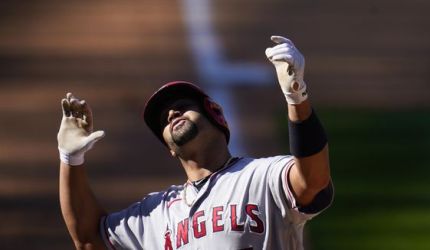
Albert Pujols just after hitting the home run tying him with Willie Mays on the career list Sunday.

A little earlier this pandemic season, Albert Pujols received a text message on his cell phone. “It’s your time now. Go get it,” the message said. The message came from Hall of Famer Willie Mays, whose 660 lifetime major league home runs Pujols has chased all season long.

With the shadows creeping in in the top of the eighth at Coors Canaveral Sunday afternoon, Pujols went and got it. With his Los Angeles Angels down 3-2 and a man on first, El Hombre turned on a meaty 1-1 fastball from Rockies reliever Carlos Estevez and drove it parabolically down the left field line and halfway up the seats.

The blast was the kind of launch for which Pujols has been fabled from the moment he first came into his own in St. Louis almost two decades ago. The kind he’s hit the last few years almost to the exclusion of anything else.

The kind that reminds you of both the greatness that will punch his Cooperstown ticket and the greatness that’s been eroded by the injuries that have sapped him since after his first season as an Angel, turning his ten-year, $255 million contract into the unfair poster child for terrible sports contracts.

When Pujols commented after Sunday night’s game, it was tough to know which affected him more, finally meeting Mays in the record book or Mays himself urging him on in the first place. “Legend,” said the agreeable Dominican who was born seven years after Mays played his last major league game. “I mean, it’s unbelievable.”

Oh, it was believable, all right. Pujols’s swing remains a work of art, even if it’s supported by legs that betrayed him almost a decade ago, a knee that underwent a surgery here and there, a heel that fought with painful plantaar fascitis costing him the final two months of 2013, feet requiring surgeries after 2015 and 2016.

“When his days are done and his legend is told,” wrote The Athletic‘s Fabian Ardaya, shortly after Pujols’s milestone blast, “they will talk about the swing — that beautiful, powerful swing — and the follow-through and the strut when you knew, everyone knew, that Albert Pujols got every piece of a baseball.”

The swing cemented Pujols as perhaps the best right-handed hitter the game has ever seen. It is slower now, a reality that happens with age, and the majestic drives don’t occur as often. But when they do, even for a split second, they take you back to when Pujols wrecked the league, ruined historic closer seasons and, quite simply, hit.

They take you back to when the only thing keeping Pujols’s three-run detonation against Brad Lidge inside Minute Maid Park in the top of the ninth, 2005 National League Championship Series, was the bracing for the park’s retractable roof. The bad news: that bomb won the Game Six battle but merely saved his Cardinals from losing the war in Game Seven.

They take you back to when Pujols ripped three in a kind of reverse cycle in Game Three of the 2011 World Series—a three-run blast, a two-run blast, a solo blast, in that order, and every one of them after the sixth inning in a 16-7 demolition of the Texas Rangers. The solo provided the sixteenth run.

They take you back to when Pujols was younger, unimpeded by his lower body health, and liable to either drop Big Boy or otherwise make life miserable for opposing pitchers and fielders, in a St. Louis run that left him as the Cardinals’ second-best all-around position player ever, behind the man on behalf of whom Pujols doesn’t always accept having been nicknamed El Hombre.

They take you to his deadly postseason record—the lifetime postseason .323/.431/.599 slash line; the .725 lifetime postseason real batting average (RBA: total bases plus walks plus intentional walks plus sacrifice flies plus hit by pitches divided by total plate appearances); the 109 runs produced. Enough Hall of Famers don’t look half that dangerous playing for all the platinum.

Two years ago Pujols tied Hall of Famer Stan Musial on the all-time runs batted in list. Five years before that, when Musial died, Pujols was almost inconsolable. He and Musial became that close personally. “I know the fans call me El Hombre, which means The Man in Spanish,” he insisted, “but for me and St. Louis there will always be only one Man.”

So insistent on the point was Pujols that, when he became an Angel and the club began hoisting billboards touting El Hombre‘s arrival, Pujols flipped. He insisted very publicly there was only one player who should ever be called The Man, and it wasn’t Albert Pujols. The billboards disappeared faster than the Angels executed their scouting staff after an international signing scandal.

When Pujols talks about his own place in baseball, he does it almost as though the idea that he’s part of it is secondary to what came before him. “I know my place in history,” he told Ardaya. “(But) it’s hard. I don’t want to — It’s almost like I take it personal, like I don’t want to disrespect this game.”

He’s even ready to hand history off to the teammate who played his first full season in an Angel uniform the same year Pujols joined the team. The teammate who’s now the Angels’ all-time franchise home run leader and has been the game’s all-everything player almost right out of the chute. The teammate who doesn’t have a team baseball’s All-Universe player can be proud of.

“We have the best player in the game,” Pujols told Ardaya of Mike Trout, “and five or six years from now, he’s going to be making history, too.” As if he hasn’t already. Pujols knows it.

You think that’s an affectation? Pujols is the same player who refused to join the ruckus in Detroit last year, when he hit one out in Comerica Park for his 2,000th career RBI and, for whatever perverse reasons, MLB and the Tigers together tried to strong-arm the Tiger fan who caught the ball by refusing to authenticate it, until or unless he turned it over, assuming before asking that he wanted to cash the ball in big.

Ely Hydes didn’t like being treated like an opportunist. “Honestly, if they were just cool about it I would’ve just given them the ball,” Hydes told a WXYT interviewer. “I don’t want money off of this, I was offered five and ten thousand dollars as I walked out of the stadium, I swear to God . . . I just couldn’t take being treated like a garbage bag for catching a baseball.”

Pujols understood. Completely. “Just let him have it, I think he can have a great piece of history with him, you know,” he said. “When he look at the ball he can remember . . . this game, and I don’t fight about it. You know, I think we play this game for the fans too and if they want to keep it, I think they have a right to. I just hope, you know, that he can enjoy it . . . He can have it . . . He can have that piece of history. It’s for the fans, you know, that we play for.”

Hydes eventually gave the ball to the Hall of Fame in memory of his little son who died at 21 months old a year before Daddy caught the Pujols milestone.

Mays finished his career both with 660 home runs and as a shell of his once-formidable self, ground down by all those seasons and no few off-field heartbreaks, unable until his body finally put him in a stranglehold to admit that the game he loved and lived to play was no longer fun when he was Willie Mays in name only.

Those were real tears that almost poured out of Mays when he faced a Shea Stadium throng on Willie Mays Day, with the Mets who brought him back to the city of his major league youth, and told them, “There always comes a time for someone to get out. And I look at these kids over there, the way they are playing, and the way they are fighting for themselves, and it tells me one thing: Willie, say goodbye to America.”

It shouldn’t shock anyone when Pujols’s time finally arrives. You can say his time is past, that his lower body ruined what should have been a simpler, kinder, gentler decline phase, leaving him prone to as much criticism under ordinary circumstances as praise when now and then the vintage edition makes a cameo as it did Sunday night.

You should also say, as Angels general manager Billy Eppler did two years ago, that few really knew, never mind understood, Pujols’s determination to play through every lower-body malady he’s incurred since trading Cardinal for Angel red.

“He plays through discomfort,” Eppler told MLB.com. “He endures a lot and doesn’t talk a lot about it. But I can tell you that he’s definitely someone that wants to play and fights through a lot of adversity to make sure he’s out there and contributing to the club.”

There’s something to be said for that as well as against that. It’s not as though Pujols needed to burnish his Hall of Fame resume. And, it’s not as though the Angels couldn’t have cashed him in for things they needed even more than they needed Pujols’s cachet—things like a pitching overhaul, mostly.

He has one more year to go on his Angels deal. The Angels as they stand now are still going nowhere and they still need a radical pitching overhaul if they have any prayer of returning to competitive greatness, with Trout committed to them for life and Pujols knowing he can tell Father Time to go to hell only so much longer, if at all.

Would the Angels even think of trading Pujols this offseason, to a contender with young pitching talent to spare, in need of a veteran mentor to whom they’d be grateful for all his counsel and whatever hits he has left, before the Angels bring him back for that ten-year personal services deal that begins when his playing days end? Who knows?

Such a team could do a lot worse than drawing counsel from the man whom Baseball-Reference lists as the number two first baseman ever to play the game. Only Hall of Famer Lou Gehrig is ahead of him. But Pujols has an arguable case as the greatest all-around first baseman of all time simply because, as devastating as he’s been a hitter, he was also a far better defensive first baseman than Gehrig before his lower body resigned its commission.

Or, maybe, Pujols himself will take stock, surrender to his body’s and Father Time’s mandate at last, leave next year’s $30 million on the table, start that personal services term, and congratulate himself as baseball should on a one-of-a-kind playing career. Maybe. Only Pujols knows for certain, and he doesn’t seem to like talking about that any more than he liked talking about what it took for him to just stroll up to the plate any more.

Maybe the combination of this year’s pandemic surreality and the current major league regime’s continuing inability to promote its best and give proper due to its milestoners kept Pujols’s Sunday night smash hit from blowing the social media universe up too much beyond about an hour’s worth of ordnance.

“To be able to have my name in the sentence with Willie Mays is unbelievable,” Pujols said Sunday night. The Angels have an off-day Monday. He hasn’t hit well this season, and Sunday’s smash was only his fourth home run in 31 games. One homer every seven games on average. He and they have twelve games left.

All Pujols needs is one more meaty pitch to drive, one more summoning up of whatever remains of that impeccable swing, and they’ll be saying his name in the same sentence as Mays once again. This time, for passing him to become sole possessor of number four on the all-time bomb squad.

Maybe then, he’ll get the twenty-one guns he deserves. Maybe.
The Buffalonto beatdown

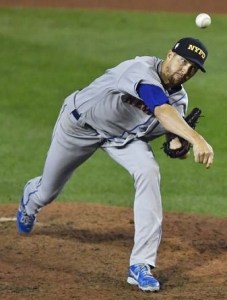
Wearing his NYPD hat to commemorate the 9/11 atrocity, deGrom pinned the Blue Jays while his mates bludgeoned them Friday night.

Until two starts ago, Jacob deGrom must have felt like the single most neglected spouse in town. He was said to be keeping non-support court filings signed and sealed in his locker just in case things went from bad to worse to lost cause entirely.

Then, last Sunday, his New York Mess (er, Mets) gave him seven runs to work with before his day ended and dropped seven more on the Philadelphia Phillies after he came out of the game. You couldn’t blame deGrom if he’d awakened the next morning asking himself whether he’d been dreaming.

So what to make of Friday night against the Buffalonto Blue Jays in the Jays’ temporary, pandemic-season home?

With the Mets allowed to wear first-responder hats at last to commemorate victims and their attempted rescuers in the 9/11 atrocity nineteen years earlier?

With deGrom pitching like the two-time defending Cy Young Award winner he is . . . and the Mets giving him fourteen runs to work with before his outing ended after six innings? Including and especially a ten-run fourth featuring Dominic Smith slicing salami?

This was no band of pushovers deGrom and the Mets massacred Friday night. The Jays were in second place in the American League East with a 24-19 record when the game began. They’re not exactly driven back to the basement after the Mets’ carnage. But they might have been tempted to crawl into the nearest Buffalo basement to hide at least until Saturday’s game.

Maybe the Jays just faced the wrong New York team. Earlier this week they dropped a ten-spot on the Yankees in the sixth. On Friday night, the Mets—who came into the game leading the National League with a .275 team batting average and a .351 team on-base percentage—looked more like Murderer’s Row than a Mess.

“The guys did a good job of going out there and putting up runs for me,” said deGrom to reporters after the 18-1 bludgeoning, in what was probably the understatement of the night. “It was a little cold out there, so I was trying to stay loose in between, but I’m thankful for the runs and they did a good job all night of that.”

The Mets already had a 4-1 lead when Wilson Ramos opened the fourth working a walk out of Toronto reliever Anthony Kay. You may remember Kay’s the one the Mets traded to the Jays last year to get Marcus Stroman, who opted out of this season after it began and goes to free agency after this season.

Well, now. Brandon Nimmo chunked a base hit into shallow left to follow Ramos. After Kay walked Michael Conforto to load the pillows following that, the fun really began. J.D. Davis grounded sharply to Jays shortstop Santiago Espinal. Espinal had a clean shot throwing Ramos out at the plate. The throw hit Jays catcher Danny Jansen right on target. And it bounced right out of Jansen’s mitt and off to his right just before Ramos crossed the plate unmolested.

Up stepped Smith with the pillows still full. He swung on 2-0 and drove it clean over the right field fence. 9-1 Mets, five runs home in the fourth thus far, and the Jays hadn’t seen anything yet.

Robinson Cano followed Smith with a line single. Pete Alonso, who had a night he’d rather forget at the plate, struck out on a full count, but Kay came out of the game in favour of Jacob Waguespack and Jeff McNeil greeted the new man on the mound with a line single up the pipe, before Waguespack hit Mets rookie Andres Gimenez with a pitch that ricocheted off to the left side.

Here came Ramos again, and into the right center field gap went his three-run double. Nimmo pushed Ramos to third with a ground out to Espinal playing him up the middle, then Conforto—who’d hit a three-run homer in the four-run Mets third—sent a liner to left that bounced past a sliding Lourdes Gurriel, Jr. hoping for a shot at the circus catch. And Davis cued one just past third base and up the line for the double sending Conforto home.

Smith looking at strike three hitting the absolute edge of the low outside corner must have felt to the Blue Jays as though he’d decided to have mercy upon them. DeGrom in the Mets dugout must have watched the carnage and wondered, even for a split second, what new and unheard-of ways his mates would find to blow a thirteen-run lead.

The long layoff in the fourth and the Buffalo chill all night may have affected him a little. He had to wrestle a bit for his outs and to keep the Jays from getting any friskier than second and third in the bottom of the fifth, but he still finished his evening’s combination of work and leisure with nine strikeouts, two walks, one measly earned run (Vladimir Guerrero, Jr. singling home Randal Grichuk in the bottom of the first), an ERA shrunk to 1.67, and a second-best 0.87 walks/hits per inning pitched rate.

This time, the only thing the Mets blew was what remained of the Blue Jays’ fight for the night.

Erasmo Ramirez came out of the bullpen for the final three innings’ scoreless relief and a save under the three-inning side of the rule, while the Mets added two in the seventh (a bases-loaded walk to Cano; Davis scoring on Conforto’s ground out to shortstop), one in the eighth (Ramos hitting one over the center field fence), and one in the ninth. (Gimenez doubling home Alonso, who’d reached when he got plunked.)

If this is dreaming, deGrom must have thought when the game went into the books at last, I’ll kill the guy who wakes me up. To death.

“First and foremost,” said Conforto, “we got the win, and we got a win for Jake too. We’re always feeling good when Jake’s on the mound no matter how many runs we put up, but it felt good to do that for him.”

DeGrom wore a New York Police Department hat for the game. Other Mets wore that or hats for the New York Fire Department, the Port Authority Police Department, the Department of Sanitation, and the Office of Emergency Management commemorating the 9/11 atrocity.

Last year, after baseball’s government again told the Mets not to even think about wearing the hats during a game on that anniversary, Alonso decided to let the world know what he thought about that. He paid for 9/11 commemorative cleats for himself and his mates to wear when they played the Arizona Diamondbacks on the anniversary—and beat them with nine runs and eleven hits.

This year, baseball government wised up and let the Mets and the Yankees have their heads about the commemorative hats, just in time for the Mets to hand the Blue Jays their heads and for the Yankees to sweep the Yankees in a doubleheader Friday. Doing the right thing with or without official permission invites its own kind of good karma.

“You just have to wear some things”

Buck Showalter facing the press after the 2016 AL wild card game.

Former major league manager Buck Showalter had the perfect chance to explain himself once and for all. He sat for an otherwise splendid interview with the New York Post‘s Steve Serby, published Friday. He offered several splendid recollections, revelations, and insights.

Then, just after he explained today’s Yankees sticking with Gary Sanchez behind the plate despite his problems at it, Serby asked the money question: “Your Orioles controversy in the 2016 AL wild-card game when you didn’t call on Zack Britton and lost in the bottom of the 11th in Toronto.”

Showalter, one of the most intelligent managers of his time, a man who once resigned as the Yankees’ manager rather than stand for one of his most trusted coaches being removed, defaulted: “You just have to wear some things, and I can sit here and tell you ten things you may not know about that situation, but nobody wants to hear it. I’m at peace with that.”

Serby didn’t seem to push just a little for the ten things Showalter thinks we may not have known about that situation, and Showalter’s probably dead wrong that nobody would have wanted to hear even one of them. If Rob Neyer ever gets the chance to update 2006’s Big Book of Baseball Blunders, bet big on Showalter’s wild card game mistake, ten years after that book, showing up prominently.

Bottom of the eleventh, Showalter’s Baltimore Orioles tied with the Toronto Blue Jays at two. One out, and Ubaldo Jimenez, usually a starting pitcher, relieving Brian Dueseng after Dueseng opened by striking Ezequiel Careera swinging. Back-to-back singles setting the Blue Jays up for first and third, and Zach Britton, the Orioles closer and arguably the best relief pitcher in 2016 baseball, nowhere to be seen—even though Showalter used six relief pitchers already.

Just like Mike Matheny of the St. Louis Cardinals not even thinking of Trevor Rosenthal in the 2014 National League Championship Series in the bottom of the ninth in San Francisco, Showalter reasoned, too, that Britton’s job as his closer was to come in strictly with a lead.

As Matheny stuck with rusty Michael Wacha in San Francisco, Showalter bargained on Jimenez, who’d pitched well down the Oriole stretch, holding fort in Toronto and the Orioles breaking the tie in the twelfth with Manny Machado due to lead off. (The real shock of that game: two of the league’s most bludgeoning lineups got themselves into a pitching duel most of the night.)

Like Matheny, Showalter forgot—if it was ever programmed into their software in the first place—that the time to bring in your best relief pitcher was when you needed a stopper right then and there, not when his “role” mandated.

“It wasn’t just that he hadn’t used Britton,” wrote Jeff Passan, then a baseball writer for Yahoo! Sports. “It was that any number of game states presented themselves with Britton’s use optimal, and Showalter ignored them all the way to his team’s demise.”

Travis Ishikawa delivered Matheny’s reminder a lot more brutally when his three-run homer sailed to the top of Levi’s Landing with a Giants pennant attached. Showalter got off easier by comparison. Edwin Encarnacion’s three-run homer into the second deck merely sent the Blue Jays to a division series.

What were the ten things about that situation Showalter could have told us but he thinks we don’t want to know?

Surely he knows he’s not the first and won’t be the last manager having to wear, own, and live with such things. Some of them owned and explained them with no attempt to evade responsibility. Some of them owned but excused them. Some of them could barely bring themselves to own them. Some of them thought it was God’s will or somebody else’s fault.

Hall of Fame manager Joe McCarthy took the blame squarely for picking Denny Galehouse to start over Mel Parnell at the last minute (Parnell reported to Fenway Park that day expecting to go) against the Cleveland Indians in the 1948 pennant playoff game. A McCarthy biographer quoted the old man as telling Parnell himself, “I made a mistake. I’ll just have to live with it.”

Charley Dressen, as Neyer pointed out, “never made a mistake he couldn’t blame on somebody else.” Citing Brooklyn Dodgers exec Buzzie Bavasi, Neyer revealed Dressen blundered when the Dodgers won the coin flip for the famous-turned-infamous 1951 pennant playoff—and elected to play Game One in Ebbets Field, where the Giants didn’t usually play well, but Games Two and Three in the Polo Grounds, where the Dodgers usually didn’t.

Ill-fated Dodgers pitcher Ralph Branca would remember Dodgers ticket manager Jack Collins calling the coin flip back in Brooklyn since the Dodgers were in Philadelphia at the moment. Not quite. “Dressen . . . probably told anybody who’d listen,” Neyer wrote, “that the pointy-headed ticket sales manager was the one who screwed up.” The pointy-headed ticket sales manager got canned after the season, too. The Giants stole the pennant, but the Dodgers blew their cleanest shot at it when Dressen blew that coin flip.

Casey Stengel had to answer for failing to align his 1960 World Series rotation well enough to give his Hall of Fame lefthander Whitey Ford three instead of two Series starts. The Pittsburgh Pirates still like to thank him for that. The Ol’ Perfesser didn’t discuss it in his memoir Casey at the Bat. A month after Hall of Famer Roberto Clemente was killed in his humanitarian-mission plane crash, the Hall of Fame skipper gave Boston radio reporter Ken Meyer an interview:

I blame myself on the whole Series. I mean for the Yankees losing. Now here’s the reason why I make that statement was because I thought Ford was so good . . . if I’da pitched him in the first game he’da been in better shape to go in the last game when I blow the Series.

Stengel’s biographer Robert W. Creamer translated the Stengelese to mean pitching Ford in Game One instead of holding him back until Game Three might have let Ford pitch Game Five and then be available in relief, maybe even to start, for Game Seven.

Showalter has more company in that special club whose membership requirements are that you’re a manager who blew one of the biggest decisions of your major league life, if not the big one. He has Matheny, Dressen, Stengel, and Gene Mauch to join him.

He has Leo Durocher, who burned the 1969 Cubs out as the Miracle Mets heated up fresh to stay. He has Tony La Russa, who blew a 1990 World Series he might have won, or at least kept from losing in a sweep, if he’d thrown his personal Book out and let his Hall of Fame closer Dennis Eckersley pitch at least twice before ninth innings.

He has Dusty Baker. (Reference Mark Prior staying in but no activity in the bullpen, Game Six, 2003 National League Championship Series, with the Cubs six outs from the World Series.) He has Grady Little. (Pedro Martinez, gassed but left in two hitters too long, Game Seven, 2003 American League Championship Series.)

Most of the time such men wear, own, and explain their mistakes plausibly, even if their teams’ fans would still prefer to see them strapped in the electric chair. Most of the time. When Mauch’s 1964 Phillies returned home after finishing the pennant race they’d blown, Mauch refused to let his players leave the plane before he did: “You didn’t blow the pennant. I did.”

But when John McNamara elected to keep Bill Buckner at first base for the bottom of the tenth in Game Six, 1986 Series, rather than send his uninjured regular late defensive replacement Dave Stapleton out, McNamara refused to change his original tune. He wanted his wounded warrior Buckner out there as he “deserved” to be when the Red Sox finally won it all and that was it, that was all, and that was goodbye.

To the day he died McNamara never backed off. His widow was very right saying upon his death that his entire career shouldn’t be judged by one game. McNamara clinging that stubbornly to his original rationale is its own kind of admirable, but it didn’t make him any less dead wrong.

What’s the worst that Showalter could face now if he’d just given Serby what was asked for and explained himself once and for all about why Zach Britton was nowhere to be seen when Edwin Encarnacion destroyed the 2016 Orioles’ season in one fell swing? Twenty-second guessing?

Oriole fan would still love to hear it. So, really, would baseball fan without a particular Baltimore rooting interest. Showalter has to wear that, too.

The postseason as “tolerable weirdness”

“We’ll get through this, and we’ll get through it together,” said the Yankee Stadium scoreboard earlier this year. How easy will it be to comfort yourselves that way during the coming weird postseason?

Stephanie Apstein, one of Sports Illustrated‘s most acute baseball reporters, has one sound reason to root for as many losing teams making this truncated season’s postseason experiment as possible. She gets why the postseasons’s expanded for 2020, but that’s as far as her approval goes: “[I]t’s going to be hard to kick the new postseason format if MLB likes what it sees here,” she writes. “And the new postseason format is a disgrace.”

Apstein promptly addresses the New York Yankees, sitting bloodied but unbowed in third place in the American League East and one game atop the league’s wild card heap. Bloodied but unbowed? Last year’s Yankee yearbook could have been The New England Journal of Medicine. This year, it could be The Johns Hopkins Medical Journal. Half the team staging from St. Elsewhere, Yankee Stadium is on the injured list this year, Apstein reminds us.

In a normal season, panic would be reigning in the Bronx. Instead, the team trudges through listless game after listless game, secure in the knowledge that it will make the playoffs no matter what. The Dodgers, the best team in baseball, did not make any major moves at the trade deadline, because what’s the point of spending prospect capital to bolster a team that has to win the barely-better-than-a-coin-flip three-game first-round series?

This setup dissuades teams from trying to be good. The clearer that is this year, the more likely it is that we can go back to normal next year.

There, I’ll say it. Apstein wants the losing teams in the postseason in the hope that even the recalcitrant commissioner Rob Manfred sees what a patently ridiculous sight it’ll be. Not to mention a deflating one. We baseball fans were so proud, so long, that our sport didn’t invite practically half of all teams to play for championships. This year, we really will be no better off than basketball or hockey fans.

Eight teams in each league will go to the postseason this year: three division winners and five wild card teams. There’s a reasonable chance that the fifth wild cards at least might go to losing teams: as of Friday morning, the overall standings show the Yankees in the American League and three National League teams (the Marlins, the Cardinals, the Giants) holding final wild card claims . . . each with records a single game above .500.

One potential American League wild card team (the Houston Astros) sits a game behind the Yankees . . . with a record this morning one game below .500. Two potential National League wild cards (the Colorado Rockies, the Milwaukee Brewers) sit two games behind in that standing . . . three and four games under .500.

It could happen, more than theoretically. And more’s the pity.

Ever since its wild card era began, in 1995, baseball has had more than a few penultimate champions who got to the postseason dance on the wild card in the first place, not having been exactly the best or the winningest in their league in such seasons. I’m talking about you, 1997 Florida Marlins (second best league record), 2000 Yankees (fifth-best league record), 2001 Arizona Diamondbacks (third-best), 2002 Anaheim Angels (third-best), 2003 Marlins (third-best), 2004 Boston Red Sox (second-best), 2006 and 2011 St. Louis Cardinals (fourth-best, each time), 2014 San Francisco Giants (fourth-best), and 2019 Washington Nationals (fourth-best).

Even those teams’ fans must have thought to themselves how ludicrous it was to experience the thrills, spills, and chills of watching their teams fighting to the last breath to see who’d finish . . . in second place. Never mind this year’s setup, those setups, especially with the advent of the second wild cards, dissuaded teams from trying to be a little bit better than just above average.

Last year’s Nats, of course, went from being 19-31 after 23 May’s play to dancing the lights out (74-38 on the regular season; 12-5 in the postseason) on the way to Washington’s first MLB World Series conquest since the Coolidge Administration. (The Homestead Grays, based in Washington, won the final Negro League World Series in 1948.) They beat the Astros fair and square (and entirely on the road) in the Series, no questions asked, but it’s not as though they’d been the kings of the National League all season long.

Maybe, as Apstein’s colleague Emma Baccalieri says, the price we pay for baseball at all this pandemic year is that things were bound to be a little weird. “Especially,” Baccalieri says parenthetically, “given the varying team-by-team impacts of the coronavirus—that’s made it much harder than usual to gauge a club’s actual talent level from its record.”

But Baccalieri says a one-time-only “tolerable weirdness” of a sub-.500 team in the postseason is one thing. Making it any kind of reality past this tolerably weird season is something else. “In a non-pandemic-restricted year,” she writes, “‘tolerable weirdness’  shouldn’t be the bar.”

Manfred’s regime to date has seemed too often to be the regime of tolerable weirdness. We’ve had the barely tolerable weirdness thus far of things like the free cookie on second base to open each half extra inning, the three-batter minimum for relief pitchers, managers forgetting that minimum and leaving relievers in past three batters even (especially?) when they’re being murdered on the mound, and canned crowd noise in the ballparks.

About the only thing that hasn’t joined the barely tolerable weirdness yet is that hapless stadium DJ who hits the crowd noise surge by accident when the home team’s batter gets hit by a pitch. But don’t hold your breath.

This postseason stands an excellent chance of stretching tolerable wierdness to the point of intolerance. Even fans of the division winners, a couple of whom may have to face a sub-.500 team to open and possibly be closed out by a heretofore-undetectable surge, may think to themselves, hell must be very much like this.

Commemorating 9/11—Defiance yields dividends, revisited

Note: New York Mets first baseman Pete Alonso now seems to have broken out of his slump. The 2019 National League Rookie of the Year has hit five home runs in his past seven games, including a game-ender against the Yankees last week and a game-winner against the Orioles Wednesday night. The Mets’ batting coach, Chili Davis, says Alonso—hardly the only star struggling this strange season—sought a fast start and tried to force too much and thus his slumps.

On today’s anniversary of the 9/11 atrocity, against both my country and my native city, I’d like to revisit Alonso’s most shining among many 2019 moments en route his setting a new seasonal home run record for rookies—the day he defied commissioner Rob Manfred on behalf of inviting his teammates to join in delivering a 9/11 commemoration, springing entirely from his heart as well as his own checkbook. I also include the dedication to which I offered the original essay.

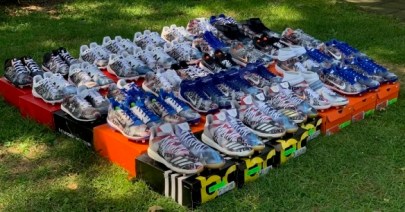
The 9/11-commemorative shoes with which Pete Alonso defied a witless commissioner last year.


Defiance yields dividends
(Original publication: 13 September 2019)

Baseball’s unwritten rules are ridiculous enough. Some of the written or at least known-to-be rules are even more ridiculous. Which is why Mets rookie star Pete Alonso’s 9/11 defiance ennobles and should elevate him and shame baseball’s government.

When the Mets played their first home game following the original 9/11 atrocity, they wore hats brandishing NYPD, NYFD, and other first responders with their uniforms. They defied baseball government then, too. Ever since, baseball government has shot down subsequent similar bids to honour the rescuers and the fallen. And others.

As the Mets pondered violating the edict on 9/11’s tenth anniversary (they ended up obeying baseball government orders for nothing more than an American flag on their caps), the Nationals had ideas about wearing Navy SEALs caps during a game around the same time, honouring those SEALs killed in Afghanistan that August. Baseball government said sure—pre-game only. During the game, don’t even think about it.

Alonso—a first grade Florida kid when the World Trade Center was attacked on 9/11—wasn’t having any of that nonsense.

If baseball was going to shoot down his original idea for custom hats featuring New York police, fire, and assorted first responders* and others, Alonso was going to shoot his own weapon—he got his teammates’ shoe sizes and footed the bill himself for Adidas, New Balance, and other top athletic shoemakers to make special 9/11 commemorative game cleats.

“I’ve just been thankful and gracious for this opportunity,” Alonso said to Yahoo! Sports‘s Mike Mazzeo, referring apparently to both his surrealistic rookie season and his chance to do honour to 9/11’s victims and responders.

“For me, this season has been an absolute fantasy. I just want to give back. I want to help. I don’t just want to be known as a good baseball player, I want to be known as a good person, too. And I just want to really recognize what this day is about. I don’t want it to be a holiday. I want it to be a day of remembrance of everything that happened. It was an awful day.”

Baseball government at least had the Mets, the Diamondbacks, and other teams wear patches on their caps showing MLB’s official logo converted to an American flag backdrop, a red-white-blue ribbon behind the logo, and “We shall not forget” embroidered into one side of the surrounding blue circle. Royalties from replica sales will go to three national 9/11 memorial groups.

That’s something commendable, but the idea that Alonso—who gave ten percent of his Home Run Derby prize money to two 9/11-related charities, the Wounded Warriors Project and the Stephen Stiller Tunnel to Towers Foundation (Stiller was a New York firefighter killed during 9/11 rescue efforts)—should have had to defy his game’s governors to honour those killed in America’s arguably worst single-attack atrocity, is grotesque.

Maybe the Mets being one and all on board with Alonso’s footwear helped keep the Manfred regime from slapping the team with a fine or other disciplinary measures. Or maybe the sense that fining or otherwise disciplining Alonso and the Mets for it would bring the regime more negative publicity kept it on its better behaviour.

And maybe the Mets’ defiance delivered them a little favour from the Elysian Fields.

First, they flattened the visiting Diamondbacks Wednesday, 9-0—nine runs on eleven hits including a five-run first. Then, as if to prove that some good deeds go unpunished, the Mets finished a four-sweep of the Snakes Thursday with an 11-1 battering.

Again, the Mets used eleven hits, including a single-game team record six clearing the fences, including center fielder Juan Lagares doing it twice, while Marcus Stroman nailed his first genuinely quality start on the mound since becoming a Met shortly before this year’s new single trade deadline.

Lagares’s first blast was only the biggest blow. Todd Frazier’s second-inning leadoff blast against Diamondbacks starter Alex Young and J.D. Davis’s two-out RBI single in the third off Young opened the game 2-0 Mets. A base hit and a walk loaded the pads for Lagares in the third when he wrestled Young to a full count.

Then Young threw a fastball arriving under the floor of the strike zone, and Lagares picked the perfect moment for his first career salami, hitting the equivalent of a five-iron shot into the left field seats.

The center fielder joined the long ball party in the bottom of the fifth, too. Aging second baseman Robinson Cano opened the inning with a line drive into the right field bullpen at Snakes reliever Robby Scott’s expense. Michael Conforto drew a one-out walk and, a strikeout later, exit Scott, enter Jimmie Sherfy, and exit another Lagares launch, this one landing in the seats near the right field foul pole.

Mets catcher Tomas Nido—the backup to Wilson Ramos, and the receiver half the Mets’ starting rotation seems to prefer throwing to (the Mets’ team ERA with Nido behind the plate: 3.68; with Ramos: 4.46), but who doesn’t hit enough to enable them to cement that preference—batted next. He didn’t give Sherfy a chance to breathe after Lagares’s second blast, lining one off the back left field wall above the thick orange line marker that denotes a home run.

Two innings later, and after pinch-hitter Ildemaro Vargas doubled home the only Arizona run in the top of the frame, Conforto punished reliever Kevin Ginkel for a third straight four-seam fastball, driving the down-and-in service into the upper deck in right.

Nothing, however, made even half the impression Alonso’s defiance in tribute to 9/11’s fallen and heroes made. The rook plotted the subterfuge for weeks and, by all known accounts, got the Mets’ team leaders including defending Cy Young Award winner Jacob deGrom on board with the plot.

Threats of fines or other disciplinary measures against Alonso or the Mets have proven unfulfilled, so far.

The fact that such a threat was made or implied and even had to be taken seriously tells you plenty of what you need to know about why baseball’s government has such a rotten public image while the game itself and most of those who play it have one of simple beauty.

Thus does baseball remain very much like its country—our government has a rotten image that’s very well deserved, but our country and most of those who call it our own have one of simple beauty.


* In my college years, briefly, I dated a Long Island nursing student named Kathy Mazza. It never became serious between us, but we had a few pleasant dates including a couple that ended with an all-night hunt for bialys—they differ from bagels in being smaller and based in flour, not malt—which I remember were a particular favourite snack of hers at the time.

Kathy eventually became an operating room nurse turned Port Authority of New York and New Jersey Police officer who, her eventual police officer husband once swore, became a cop to show him how policing was really done. In due course, she became the second woman to earn captain’s bars on the PAPD and the first to command its police academy.

Her achievements there included convincing the Port Authority to install portable heart defibrillators in the airports it oversaw and training the 600 PAPD officers posted to those airports on how to use them. She also taught emergency medical procedures at the PAPD academy.

And, she died in the 9/11 atrocity.

Joining PAPD responders at the North Tower, she shot out the glass walls of the North Tower’s mezzanine enabling hundreds to escape; the tower ultimately collapsed while she and fellow PAPD officers tried leading more out of the tower. Her body was found a month later, I believe.

Kathy Mazza was one of 37 PAPD officers including its then-chief killed on 9/11. She’s still the only woman ever killed in the line of duty on the PAPD, which suffered the largest single-event loss of life of any single law enforcement agency in history on 9/11.

This column is dedicated to her and their memory.