The last of the big boys buried

Johan Rojas

Young center fielder Johan Rojas making the catch of his life so far, robbing Ronald Acuña, Jr. of a possible Game Four-changing double and saving the Phillies’ NLDS triumph in the bargain Thursday night.

If you consider 100+ game regular season winners the truly big boys, they’ve all been knocked out of the postseason before it even got to the League Championship Series. The 90-game winning Phillies secured that dubious distinction when they sent the Braves home for the winter Thursday night.

And they didn’t need Bryce Harper to do the heavy lifting this time. Nick Castellanos was more than happy to do that when he hit two more solo home runs, this time off the Braves’ best starting pitcher, this time making himself the first man ever to hit two bombs each in two postseason games.

Spencer Strider all but owned the Phillies in regular season play. In postseason play the Phillies puncture him just enough, including in their National League division series Game Four. And, unlike a lot of young men whose ownership thus becomes subject to hostile postseason takeover, Strider didn’t flinch when asked the wherefore.

“I’m not a person that makes excuses,” Strider said after the Phillies punched their NLCS ticker with an emphatic enough 3-1 win. “I’m sure there’s a lot of Braves fans out there that are not happy, and they have every right to be that way. We’ve got nobody to blame but ourselves. Me personally, I wasn’t good enough.”

Neither did he flinch when asked whether the postseason system awarding byes to the top two seeds in each league harmed the Braves for the extra week off.

“I think that the people trying to use the playoff format to make an excuse for the results they don’t like are not confronting the real issue,” Strider continued. “You’re in control of your focus, your competitiveness, your energy. And if having five days off (means) you can’t make that adjustment, you’ve got nobody to blame but yourself.”

“We got beat,” Braves manager Brian Snitker said, “by a really good club that has a penchant for this time of year.”

For me, the real issue is letting teams into the postseason at all who give their fans the thrills, chills, and spills of fighting to the last breath to finish . . . in second place. Forcing the teams who owned the regular season to run the gamut through lesser-performing teams in order to even think about a shot at the World Series.

And yet, it couldn’t hurt to watch the games, anyhow.

Especially between the Braves and the Phillies, finishers one and two in the National League East. Especially since the Braves were the only departing division champions who didn’t get swept out of what’s now their only postseason set of the year.

The Phillies didn’t have easy work to do. Not against the team who hit a record 307 regular-season home runs. But nobody figured anyone, never mind the Phillies, to out-homer these Braves in this division series 11-3, with Castellanos and Harper accounting for 63 percent of those bombs, and Harper himself hitting as many homers as the entire Braves team for the set.

And, with Ronald Acuña, Jr., Mr. 40/70, held to three hits without reaching the seats while walking twice but stealing nothing.

The nearest Acuña got to serious damage was in the top of the Game Four seventh. With Cardiac Craig Kimbrel relieving Jose Alvarado, entering a first-and-second jam, Kimbrel went from 1-2 to 2-2 before handing Acuña something to drive to the back of center field. Citizens Bank Park’s crash carts were on red alert.

Then young Phillies center fielder Johan Rojas, who wasn’t hitting much but who was making his bones with the leather (he was worth nine defensive runs on the regular season), ran the drive down and, after one hesitation step at the track, hauled it in on the track two steps shy of the wall . . . and just shy of becoming at least a two and possibly three-run double.

Strider dodged a Harperian bullet in the first inning Thursday night. He had Trea Turner on second with a one-out double down the left field line and off the wall. He tried to pitch around Harper, knowing that Harper needs only one swing to wage nuclear destruction, but after falling behind 3-0, Braves manager Brian Snitker said don’t even think about it, put him on.

For that moment Snitker resembled Casey Stengel the Yankee dominator, as Strider struck Alec Bohm out and got Bryson Stott to fly out to center field for the side. Strider didn’t look overwhelming with two walks and two hits on his jacket in two innings. He needed help from center fielder Michael Harris II again, Harris making a highlight-reel sliding catch of Rojas’s one-out liner to center in the second, then doubling Castellanos off second for the side.

The Phillies’ plate plan included just making Strider throw as many pitches as possible whatever the results. But they wouldn’t say no if an early count pitch looked delicious enough to dine. With one out in the bottom of the fourth, and the Braves up 1-0 thanks to Austin Riley’s solo homer in the top of the frame, Strider served Castellanos just such a slider, and Castellanos served it into the left field seats.

Phillies shortstop Trea Turner saw a similar feast heading his way on the first pitch with one out in the bottom of the fifth, breaking the tie with his own launch into the left field seats. Until then, Turner had faced Strider seventeen times in his career and gone hitless for his effort. What a difference two months plus makes.

One moment, in August, Turner’s struggles were so profound that someone asked, and Phillies fans agreed, to bathe him in cheers just for encouragement his first time up. Now, he put the Phillies in the lead and would finish the set with a 1.441 OPS for it. He also finished a triple short of the cycle in Game Three and became the first Phillie—ever—to have a 4-for-4 game in a postseason set.

An inning after Turner unloaded, Castellanos finished Strider’s evening’s work with another solo homer. This time, Castellanos was kind enough not to do it on the first pitch, hitting a 1-2 fastball not too far from where his first bomb landed.

The Braves had one more shot at forcing a fifth game in the ninth. Marcell Ozuna wrung a leadoff walk out of Phillies reliever Gregory Soto and Sean Murphy singled him to third. Exit Soto, enter Matt Strahm. He got Kevin Pillar to pop out behind second base where Turner hauled it in; he got pinch hitter Eddie Rosario to fly out to left not deep enough to score Ozuna; and, he landed a swinging strikeout on pinch hitter Vaughan Grissom.

That sealed the fate of the Braves who’ve been ousted from two straight postseasons after winning the 2021 World Series. This time, the Phillies pitching staff and defense found a way to keep their regular-season threshing machine from threshing in this set. (Their NLDS slash: .186/.255/.264.) The Braves’ pitching staff and defense couldn’t stop the Phillies from looking . . . almost like the regular-season Braves. (The Phillies: NLDS slash: .275/.373/.565.)

“Obviously, we’re going to have to make an adjustment in the way we handle the postseason and the way that we focus and prepare for it,” Strider said, “but we’re going to get to work the moment we get out of here.”

Like the Dodgers, the Braves had compromised starting pitching. They missed veteran Charlie Morton, dealing with an index finger injury. Also, having Max Fried pitch only once in three weeks prior to Game Two because of finger blistering hurt.

But Braves catcher Travis d’Arnaud, who pinch hit for Harris in the Game Four seventh and drew the bases-loading walk from Kimbrel, handed the Phillies the major credit. “All of them stepped up,” he said. “All of their big offense and their pitching. Their bullpen all stepped up. Their starters all stepped up. Ranger had a tremendous series, Zack (Wheeler) had a tremendous game, (Aaron) Nola, their whole bullpen. Their pitching was unbelievable.”

Wheeler, Nola, and Game Four starter Ranger Suárez have started all six Phillies postseason games thus far. Their collective ERA for the span: 1.54. The Phillies bullpen over the same six games: 1.29 ERA. D’Arnaud may have made the understatement of the postseason through today.

“In baseball, it’s not always the best team that wins, it’s the team that plays the best that day,” said Braves reliever A.J. Minter, who surrendered one earned run in two and a third series innings. “And they played better than us, that’s what it came down to. We’ve just got to come back this offseason and be ready to go at spring training . . . When we won the World Series in ’21, we weren’t necessarily the best team.”

The best team doesn’t always win. You can ask the 1921 Yankees, the 1924 Giants, the 1952 Dodgers, the 1954 Indians, the 1969 Orioles, the 1981 Reds, the 1987 Tigers and Cardinals, the 1990 Athletics, and the 2001 Mariners, among others. Now, you can ask this year’s Braves, Brewers, Dodgers, Orioles, and Rays, too. Those were baseball’s top five teams this season.

But now the number six Astros go to the American League Championship Series against the number eight Rangers, and the Astros will be the only division winner involved in an LCS. The number seven Phillies go to the National League Championship Series against the number twelve Diamondbacks. There’s a reasonable if not ironclad chance that baseball’s seventh or twelfth best team could face its eighth best team in the World Series.

You tell me something isn’t terribly wrong with that picture no matter how much fun the games were to watch, anyway. No matter how much you loved Harper answering the post-Game Two trolling Braves. No matter how much you loved Castellanos’s Games Three and Four demolition or Harper’s continuation as his own kind of Mr. October. No matter how much you loved watching the Phillies’ pitching keep the Braves from truly serious mischief. No matter how much fun we’ll have watching the two LCSes, anyhow.

Just don’t ask commissioner Rob Manfred.

“I’m sort of the view you need to give something a chance to work out,” Manfred said. “I know some of the higher-seeded teams didn’t win. I think if you think about where some of those teams were, there are other explanations than a five-day layoff. But I think we’ll reevaluate in the offseason like we always do and think about if we have the format right . . . It’s Year Two (of the three-wild-card format). I think we need to give it a little time . . . We all want the competition to be the best it can possibly be.”

As the great (and Spink Award-winning Hall of Fame) New York Times baseball writer Red Smith once said of then-commissioner Bowie Kuhn dismissing Curt Flood’s reserve challenge out of mealymouthed hand, Commissioner Pepperwinkle really seems to be saying, “Run along, sonny, you bother me.”

ESPN writer in depth: Oakland was had

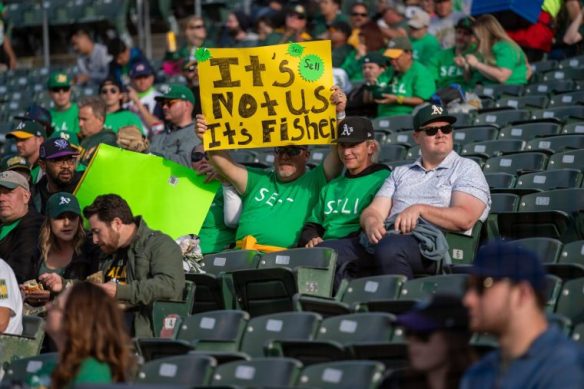
Oakland Athletics fans

Few fans are more abused by the shenanigans of their team’s owner than A’s fans.

Come November, seemingly, baseball’s owners may have the chance to vote on whether or not to let Athletics owner John Fisher finish what he started, namely hijacking the A’s to Las Vegas. Seemingly.

Getting it to their vote is a three-layered process. It should end with the A’s told to stay put, with Fisher told to sell the team, and with new owners tasked for good faith work with Oakland that will keep the A’s there without one taxpayer’s dime to pay for it.

Right now, the best news for abused A’s fans is that the team isn’t going to equal the 1962 Mets for season-long futility. As of Thursday morning, the A’s sat at 46-106 with ten games left to play. They’re 7-11 in September including a current seven-game losing streak, but even if they lose those final ten they won’t overthrow the Original Mets. Swell.

Because the worse news, according to an in-depth examination by ESPN’s Tim Keown, is that Fisher and his trained seal David Kaval “blindsided” Oakland with their plan to move the A’s to Las Vegas. It’s also that Fisher running the so-called “parallel track” between staying in Oakland and moving to Las Vegas might well have been a one-way track in disguise.

Bottom line: Oakland was had. Fisher’s failed attempt to strong-arm the city into all but handing him a $12 billion Howard Terminal development project that seems to have included a by-the-way new ballpark for the A’s turned into Fisher picking up his badly-abused baseball toy and carting it off to Vegas in due course.

On 19 April, according to Keown’s examination, Oakland mayor Sheng Thao was driving home from a local business opening, comfortable that the gap in keeping the A’s in Oakland was down to a mere $36 million once the city learned of $64 million in federal grants coming toward Howard Terminal.

That’d teach her. Because as she drove, Keown said, Kaval called. Oops. “Hey, just a heads up. Somebody leaked to the press that we have a binding deal with Las Vegas.”

“Thao had scheduled a week of intensive talks with the A’s and a team of mediators to bring the deal home,” Keown wtote. “Hotel rooms were booked. Flights were reserved. Thao even gave it a name: The Negotiation Summit. At the event the evening of Kaval’s phone call, Thao told Leigh Hanson, her chief of staff, ‘I really think we’re going to get this over the finish line’.”

Not quite. After one call leading to another leading to another, Fisher himself called Thao. She told Keown Fisher said, quote, “I feel really bad. I really like you and I like working with you, but we’re going to focus all our energy on Las Vegas.” “In the very beginning,” she said she replied, “I literally asked you, ‘Are you serious about Oakland?’ and you said yes. But if your focus is on Vegas, good luck.”

The leaked story appeared in the Las Vegas Review-Journal. Thao’s chief of staff Leigh Hanson told Keown, “Not sure it’s a leak when you’re quoted in the story. Pretty sure that’s not how leaks work. If you’re going to be strategic, try not to be so sloppy.”

Sloppy? That doesn’t begin to describe this disaster. Neither does it begin describing Fisher and Kaval not only pronouncing the $12 billion Howard Terminal plan dead, but also trading Fisher’s so-called “legacy” project in Las Vegas—55 acres off the Strip, and a community park atop a ballpark—for nine acres where the Tropicana Hotel now sits.

Except that Keown says further that the A’s relocation application to MLB now doesn’t even include a ballpark proposal. Sketches were produced and published back last spring, of course, but there’s not only no park propsal in the application—a ballpark which would  have to be domed or retractably-roofed thanks to Las Vegas’s notoriously hot summers—there’s no financing plan noted and no architect designated.

All that after Nevada lawmakers approved and Gov. Joseph Lombardo signed a bill authorising $380 million public dollars to build a ballpark on the Tropicana site, and sports economists began tabulating how much higher prospective cost overruns would run the taxpayer price tag no matter how much the A’s would kick in to help cover them.

Nevada fell hook, line, and stinker after Fisher and Kaval essentially tried and failed to game Oakland. “Fisher wanted to build a new, state-of-the-art ballpark at Howard Terminal because he had a vision of changing those 55 acres around the Terminal,” writes Cup of Coffee‘s Craig Calcaterra, interpreting the damning Keown report.

Fisher wanted to be a hero; he didn’t want to build a new stadium because it would be good for the fans, or it was simply something the team needed after playing in a decrepit ballpark for so long. He wanted the plaudits. When Fisher didn’t get exactly what he wanted exactly when he wanted it from Oakland, he wasted no time in taking the next-best deal in Vegas.

Hilariously, the Fisher and Kaval’s rush to Vegas has been largely disorganized. Keown notes that in the Athletics’ revenue projections, they assumed an annual attendance of 2.5 million fans, but their proposed new ballpark in Vegas would only seat 30,000. Multiply 30,000 by 81 home games and you get 2.43 million — a mathematical impossibility, even if they sold out every single home game. Furthermore, the Athletics don’t have an actual ballpark design, a financing plan, an interim home for the team until they open the new digs, nor do they even have an architect.

After Lombardo signed the aforesaid bill, I wrote this: “An optimist may now be described as someone who thinks enough owners will a) wake up and decide, after all, that there’s something transparently stupid about billionaires unwilling to build their teams’ own digs without a taxpayer soak; and, b) show enough spine, accordingly, to stand athwart Fisher (and Manfred, their hired hand, after all), yelling ‘Stop!'”

But who will yell? Especially with the Rays reaching a deal for their own new $1.3 billion ballpark in St. Petersburg, for which the Rays reportedly will only have to pay half, with the other half coming from city and Pinellas County governments, which means from taxpayers living in or visiting that area.

Will it be the preliminary three-owner review panel of Mark Attanasio (Brewers), John Middleton (Phillies), and John Sherman (Royals), not exactly the Three Stooges but three of the smartest owners among a group not exactly renowned for brains?

Will it be commissioner Rob Manfred (whose hands are anything but clean in the entire A’s mess) and an eight-member executive board, knowing Manfred is too willing to grant Fisher and the A’s a bye on the usual required nine-figure-plus relocation fee?

Will it be enough among the remaining thirty owners if and when it gets far enough for their vote? Will they be willing to a Fisher who more or less abused the living daylights out of Oakland and its baseball team before deciding he and it have a future in Las Vegas, long-enough-suffering A’s fans in Oakland be damned?

The Attanasio-Middleton-Sherman panel should be brainy enough to do what they can to recommend against rewarding Fisher-Kaval’s bad faith playing and convince enough of their peers to vote no. “This whole process” Calcaterra writes, “has been even more of a circus than we thought.” In the Fisher-Koval circus, it seems the clowns and the animals trade off on holding the keys.

But at least the A’s won’t meet or beat the Original Mets for season-long futility. Isn’t that just peachy?

Where was Rob?

Baltimore Orioles fans

The commissioner’s lack of thought or action over the unwarranted Kevin Brown suspension is more than just a terrible look.

In 1988, the Democratic National Convention rocked to Sen. Edward M. Kennedy’s list of doings and concurrent demands of Republican presidential nominee George H.W. Bush, “Where was George?” Those who knew too well of (speaking politely) Kennedy’s rakish and adulterous ways snarked right back, “Dry, sober, and home with his wife.”

This week’s uproar over Orioles broadcaster Kevin Brown’s suspension on perhaps the most nebulous grounds imaginable should have prompted the demand, “Where was Rob?”

Since not enough owners proved dry and sober enough to look all the way deep, the commissioner has another term to serve, through 2029. How delicious is this: Manfred got his extension on the same day Brown was last seen and heard on television for the Orioles. And from the moment we learned the Orioles took Brown’s matter-of-fact comparison between the Orioles’s lack of success in the Rays’ home stadium the past couple of years and its success there this year as fouling their nest, Manfred’s silence has been as deafening as a heavy metal concert.

The clip in question has been viral this week. It’s impossible to hear it and conclude that Brown was anything other than absolutely complimentary about the 2023 Oriole turnaround in Tropicana Field. The turnaround was included in the team-provided game notes. That didn’t stop Orioles boss John Angelos or a designated subordinate from suspending Brown.

It took Awful Announcing to unearth the suspension. It took about ten seconds from their posting it aboard the social media site formerly known as Twitter for the suspension to go pandemic-level viral. It took about that much time, too, for the Orioles to start taking it on the chin for Angelos’s stupidity. But it’s still too much time without a peep from the so-called steward of the game.

Major league broadcasters poured out support for Brown en masse. One, Yankee broadcaster Michael Kay, said that if Angelos didn’t like Brown speaking the plain facts, “then he’s thin-skinned, he’s unreasonable, and he should actually get a call from Rob Manfred, the commissioner of baseball, because it’s unconscionable that you would actually suspend a good broadcaster for no reason whatsoever.”

So far as anyone knows at this writing, Angelos hasn’t gotten the call. Not even after broadcast legend Al (Do you believe in miracles? Yes!) Michaels said (to ESPN’s Jeremy Schaap), “I thought that it was either a joke or there was something much more insidious behind the suspension. And now that I realize that it had everything to do with what was said about Tampa Bay and playing the Rays. I agree, there should be a suspension here. They should suspend the doofus that suspended Kevin Brown.”

Manfred is renowned for a good many things that don’t include statesmanship. Baseball’s version of Winston Churchill he isn’t. But the commissioner has a very broad mandate within the rules outlining his job to act in the best interests of baseball and to act against a team, a player, a manager, an umpire, anyone who’s done something he believes detrimental to the game and the trust the public holds for it.

Commissioners have not always deployed that broad power wisely, of course. Without saying so outright, or with mealymouthed denials, Kenesaw Mountain Landis upheld the disgraceful colour line that wouldn’t be broken until after his death. (His successor, Happy Chandler, told Pittsburgh Courier legend Wendell Smith, “I’m for the Four Freedoms, and if a black boy can make it at Okinawa and go to Guadalcanal, he can make it in baseball”—and proved it by approving Branch Rickey’s signing of Jackie Robinson.)

Bowie Kuhn tried and failed to suppress Jim Bouton’s Ball Four but succeeded in stopping Charlie Finley’s post-Messersmith fire sale of several key Athletics players. The former merely left Kuhn resembling a damned fool. The latter, with its concurrent cap of $400,000 for player sales, probably did as much as any capricious free agency spending spree to abet the salary structure’s inflation and block truly less-endowed teams from sustained financial competitiveness.

And Fay Vincent’s foolish attempt to strong-arm three Yankee officials including then-manager Buck Showalter out of their testimony on behalf of drug-troubled relief pitcher Steve Howe just might have been the wick that lit the powder keg forcing Vincent—already in enough owners’ crosshairs over intervening in the 1990 spring lockout and other business issues—to resign before he could be fired in 1992.

Maybe Manfred didn’t like the thought that calling Angelos out or even disciplining him over the Brown suspension might amount to biting one of the hands that feeds him. Maybe he thought that calling Angelos out or even disciplining him over Brown would have compelled him to address the known Oriole brass objections to Brown’s observation included implications that they were “cheap.”

Translation further: Maybe Manfred thought calling out and disciplining Angelos over Brown would amount to admitting the Orioles tanked their way to where they are today. Manfred has objected to tanking verbally in the past while doing little to nothing in the public perception to put a stop to something that amounts to fan abuse. Tanks for nothing.

But there are times when a commissioner must consider that, as longtime New York Times writer George Vecsey once formulated (and as I’ve borrowed shamelessly over the years), the common good of the game isn’t the same thing as merely making money for the owners.

Manfred thought nothing of dropping a heavy fine upon Astros owner Jim Crane;  suspending general manager Jeff Luhnow, manager A.J. Hinch, and former bench coach Alex Cora; and, eliminating key draft picks from the team over the next couple of years, after the exposure and investigation of Astrogate. If he could act in the game’s best interest over its worst cheating scandal ever, he could certainly act on behalf of saying there’s no place for censorship on the baseball air.

He could, but he hasn’t.

Brown is due to return to the Orioles’ television booth tonight, when the American League East leaders open a weekend series against the Mariners in Seattle. Sports Illustrated‘s Jimmy Traina offers a sobering point when suggesting that Brown will be in a somewhat untenable position going in:

He’ll return to the airwaves with no explanation of him going MIA. His every word will be dissected and fans watching, while admiring and respecting Brown, will fully expect him to watch his every word, which hurts his credibility.

The poor guy has basically been neutered. A quick check of Brown’s Twitter account shows he hasn’t tweeted since July 26. Before that, Brown rarely went two or three days without tweeting. He’s probably terrified to say anything because he knows he can’t address the injustice he experienced honestly.

It’s just surreal to think about the irreparable damage that has been done by the Orioles in this situation.

“Free Kevin Brown” chants in Camden Yards a couple of nights ago must have fallen upon deaf ears in the commissioner’s office. Those fans would have been justified completely if they’d altered those chants with chanting “Where was Rob?” This time, answering “Dry, sober, and home with his wife” won’t be enough.

The doofus who suspended and thus may also have neutered Brown remains unsuspended yet. Where is Rob?

“The best job in the world” deserves better

Rob Manfred

Rob Manfred at last month’s draft in Seattle—where the commissioner couldn’t quite understand why he was booed so lustily by the crowd.

I saw it first from Even Drellich, the Athletic writer whose Winning Fixes Everything proved the most in-depth exposure of Astrogate and what developed it. Commissioner Rob Manfred’s re-election for another term of office is all but a done deal when the owners vote next week. Manfred has said publicly he’d like another term in the job, which he considers “the best job in the world” to have.

A commissioner’s re-election window begins nine months prior to his term’s designated expiration date. Drellich says the owners’ vote will come smack dab at the opening of that window. If the owners have enough of a contingency among them who don’t have oatmeal for brains, Manfred should be denied. If.

He’s overseen a continuous climb in baseball’s revenues since he took the job in 2015, disrupted only by the coronavirus pan-damn-ic. That by itself may be enough to win him another five-year term. But it’s time to consider yet again an observation upon which I’ve leaned shamelessly that was first sketched by longtime New York Times writer George Vecsey: The common good of the game isn’t the same thing as making money for the owners.

The 2021-22 owners’ lockout said, guess again. When Manfred laughed during the first announcement of canceled games, assuredly he did not laugh like Figaro that he might not weep. I’ll say it again: When Manfred called it a “defensive lockout,” it sounded like Vladimir Putin pleading that he’s only defending Mother Russia from Ukraine’s “aggression.”

His handling of the Oakland/Las Vegas debacle as much as said, Oh, yes it is. He failed to school himself deeply enough on the core of that debacle, a capricious owner who tried and failed to strong-arm Oakland after reducing his team to compost, but discovered Las Vegas and its Nevada parent state didn’t have to be strong-armed to fall hook, line, and stinker into giving him a new ballpark.

The commissioner was caught pants down when he said mid-June that there was “no Oakland offer, OK? They never got to a point where they had a plan to build a stadium at any site.” Oakland mayor Sheng Thao said, that’s what you think. Last weekend she laid down the law to the commissioner in person. Oops.

Of course, John Fisher wanted Oakland to build him a big real estate development with a ballpark thrown in for good measure. Of course Oakland’s political (lack of) class finally said, not happening that way. Manfred has stood for continuing the nebulous push of municipalities building ballparks at taxpayers’ expense.

He has stood there even when it turns from a questionable proposition to a downright disaster. Atlanta’s Turner Field was only two decades old when the Braves decided the city limits were just too much and it was time to strike for the burbs. Double oops.

“[T]hey abandoned . . . Turner Field for suburban Cobb County in large measure because the county agreed to commit hundreds of millions of tax dollars to the project,” wrote CBS Sports’s Dayn Perry. “That tally is more than $350 million (and probably growing), which means Cobb taxpayers will never come close to getting that back.” Not even if the Braves own the National League East (again) for the foreseeable future.

Those are just too-obvious manifestations. Manfred has been baseball’s Professor Pepperwinkle, using the game as a lab and those who play and administer it as the experimental rats. For every one change he has ordered or shepherded that’s been good for the game, you can find several that have been worth either a laugh or a lament.

The universal designated hitter has been one of the good ones. Sorry, but I’m going to die on the hill that says however much fun it is to see the extreme outliers who can actually handle themselves at the plate, they were just that, outliers. When pitchers as a class hit a mere .162 from the end of the dead ball era through the end of the 2021 season, the universal DH was long overdue.

The ghost runner on second base to open extra half innings has been one of the terrible ones. So has the three-batter minimum for relief pitchers, especially when a manager is barred from lifting a pitcher right then and there who doesn’t have it and might be dangerously wild. So have the expanded wild cards and postseasons that dilute championship play even further.

The jury may still be out on the pitch clock. But it does present issues ranging from the sublime to the dangerous, especially concerning pitchers’ arms. Manfred’s inability thus far to commit to turning it off in the postseason’s late innings suggests he’d rather sacrifice the integrity of a championship round than one inch of his stubbornness.

We should also have noticed that the truest reason for lengthening games was never even a topic in Manfred’s mind: reducing the broadcast commercials between half innings to a single minute each. Smart negotiating could have brought that about without costing the owners money. They were no further endowed with vision on that than Manfred.

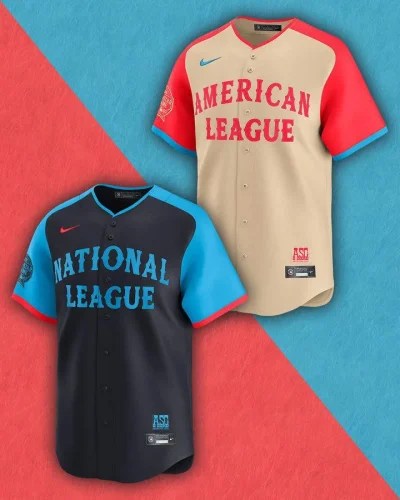
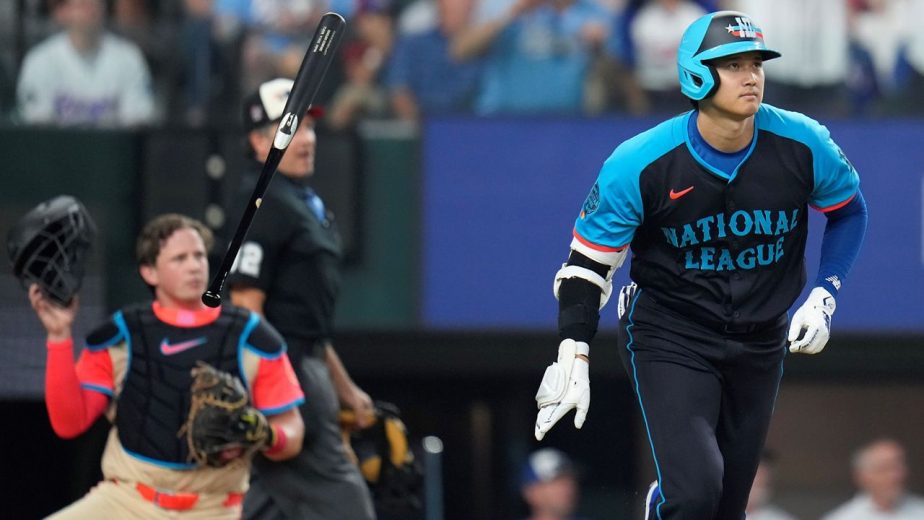
It’s also difficult to determine which has become more cringe-inspiring: the garish City Connect and All-Star Game uniforms; or, the presence of small advertising patches on uniform sleeves. It’s not impossible to say that the former are merely grotesque but the latter suggest the future baseball uniform might become the next best thing to a NASCAR jumpsuit.

Manfred has also shown far too much tendency to put his foot in his mouth and worry about the actualities after the screaming dissipates. Remember his dismissal of the World Series trophy as “a hunk of metal,” addressing questions of whether he would or could vacate the 2017 Astros’ World Series triumph once Astrogate erupted?

Fast forward to last month. Manfred now said he made a boo-boo giving 2017-18 Astros players immunity in return for spilling about the Astro Intelligence Agency. “Once we gave players immunity, it puts you in a box as to what exactly you were going to do in terms of punishment,” he told Time. “I might have gone about the investigative process without that grant of immunity and see where it takes us. Starting with, I’m not going to punish anybody, maybe not my best decision ever.”

But he did that to himself. The memo he sent down after the Red Sox and Yankee incidents of using AppleWatches and other devices in their dugouts to steal signs made clear he’d punish front offices, not players. He dropped a hammer on Astros owner Jim Crane and then-general manager Jeff Luhnow, but he let the cheaters in the dugout and on the field get away with murder.

Sort of. To this day, those 2017-18 Astros still playing major league baseball hear it from fans in the stands. Conversely, and unfairly, Astros second baseman Jose Altuve hears it despite it being shown authoritatively—and discussed in both Drellich’s book and Andy Martino’s previous Cheated: The Inside Story of the Astros Scandal and a Colorful History of Sign Stealing—that Altuve was “the one player that didn’t use” the stolen signs.

Now, back to the Oakland debacle. That fine day Nevada’s state legislature elected to spend $380 million of their citizens’ money on a Las Vegas ballpark for the A’s, A’s fans staged a “reverse boycott.” They poured into the decrepit RingCentral Coliseum to protest, among other things, Fisher’s gutting of the team while hiking ticket prices, doing squat to improve anything at the old dump, then all but saying it was all the fans’ fault.

Commissioner Pepperwinkle’s response? “It was great. It’s great to see what is this year almost an average major league baseball crowd in the facility for one night. That’s a great thing.” Ask him how a 27,759-strong crowd turned out to be a little over three times the average RingCentral Coliseum crowd for one particular event, and he was probably stuck for an answer.

Wait—no, he wasn’t. “The ballpark’s not in good shape,” he said. “The ballpark is not a major league facility. I’ve said it repeatedly.” Ask him how it was allowed to devolve in the first place. Now he might be stuck for an answer.

Someone should present these and more to the owners when they gather to vote upon whether Manfred gets another term. It may be asking them to think beyond their competence, and beyond their faith that the common good of the game is making money for them. But at least they won’t be able to plead ignorance.

The Las Vegas Athletics of Oakland

Oakland Athletics

Will the owners do the right thing and block John Fisher’s final betrayal of the fan base he abused?

Now we know Nevada governor Joseph Lombardo lacks either a brain or a veto pen when he needs both. We’re about to discover—or rediscover, as the case probably is—whether major league baseball owners have brains and vetoes enough to do what Nevada’s legislature and governor couldn’t or wouldn’t do.

Lombardo signed off on the state pledge of $380 million tax dollars toward building the Las Vegas Athletics of Oakland a new playpen on the fabled Las Vegas Strip. That, as more than a few social media crawlers have snarked, makes Lombardo the rookie of the year. Not.

The only thing left to plunge the knife all the way into Oakland’s back are the owners. Are they willing to rubber-stamp A’s owner John Fisher and baseball commissioner Rob Manfred’s insistence on finishing Fisher’s betrayal of Oakland and, by the way, waiving the $1 billion dollar relocation fee the A’s would normally have to pay MLB to make the move?

You’d better not ask Manfred about that. All indications are that the commissioner has long surrendered Oakland as a lost cause without bothering himself to ponder that the cause wasn’t lost, it was discarded witlessly. And A’s fans smothered in frustration, rage, and sorrow alike have learned the hard way what Manfred thinks of them after all.

Almost 28,000 fans poured into RingCentral Coliseum Tuesday in a “reverse boycott” aimed at letting the world know the A’s atrocity wasn’t their doing. That they weren’t the ones who let the team and the ballpark—whose usefulness disappeared years if not decades before the A’s might—turn into the city dump.

Manfred himself didn’t see the game. He was occupied with dining with some of the owners after their week of meetings ended in New York. But he did see the game’s coverage. And it impressed him this much: “It’s great to see what is, this year, almost an average Major League Baseball crowd in the facility for one night. That’s a great thing.”

Was Commissioner Nero even mildly aware that Fisher reduced the A’s to rubble while trying and failing to strong-arm Oakland and its home Alameda County into handing the A’s a new home practically on the house? That Oakland called his bluff and compelled Fisher to think about sticking it to Las Vegas and its home Nevada?

“I think if you look at the A’s record over time and the economic circumstances, including the state of the stadium that they’ve operated in for a very long time, they had a very good record up through the pandemic,” he said.

Translation: Oakland wasn’t willing to just build Fisher a delicious real-estate development in Howard Terminal with a new ballpark thrown in for good measure. Except that that wasn’t the only option Fisher blew sky high. “Wasn’t Fisher committed to Fremont not that long ago?” asked The Athletic‘s Tim Kawakami—in April. “Then to San Jose? Then to rebuilding at the Coliseum? Then to the Laney College site? Then to Howard Terminal . . . ? This is the Death Lineup of squandered and blundering stadium efforts.”

Kawakami then was perversely optimistic that Fisher would fall on his face in Las Vegas and thus be compelled to sell the A’s if only because he wouldn’t be able to meet Manfred’s deadline of getting new digs by 2024 or else. Except that Fisher and Manfred and Fisher’s parrot David Kaval picked their Nevada marks well. Nevada’s cactus juice-for-brains lawmakers and governor fell for it hook, line, and stinker.

Oakland itself (the city, that is) isn’t entirely innocent. They were quite prepared to make $375 million worth of commitments to a new A’s stadium if only Fisher and Kaval left it at that. But no. Fisher and Kaval insisted on pushing the $12 billion Howard Terminal development project. That, said mayor Sheng Thao, turned the simple into the too-complex.

“There was a very concrete proposal under discussion,” Thao’s spokeswoman Julie Edwards said in a formal statement, “and Oakland had gone above and beyond to clear hurdles, including securing funding for infrastructure, providing an environmental review and working with other agencies to finalize proposals.

“The reality is the A’s ownership had insisted on a multibillion-dollar, 55-acre project that included a ballpark, residential, commercial and retail space. In Las Vegas, for whatever reason, they seem satisfied with a nine-acre leased ballpark on leased land. If they had proposed a similar project in Oakland, we feel confident a new ballpark would already be under construction.”

If you need me to explain why Fisher and Kaval are settling for just the ballpark in Las Vegas, remember my beach club in Antarctica? You can have it for a song now. Maybe just a short medley.

Thao’s statement said, essentially, spare us the crocodile tears, Mr. Commissioner. “I feel sorry for the fans in Oakland,” Manfred says.

I do not like this outcome. I understand why they feel the way they do. I think the real question is what is it that Oakland was prepared to do? There is no Oakland offer, OK? They never got to the point where they had a plan to build a stadium at any site. It’s not just John Fisher . . . The community has to provide support, and at some point you come to the realization that it’s just not going to happen.

“This,” tweeted retired (and one-time A’s) pitcher Brandon McCarthy, “is [fornicating] pathetic. How is this not disqualifying? This toad is the steward of a glorious sport, dripping with history and he feels entitled to mock fans who are making their voices heard as he sits by and caters to hiding billionaires?”

Why does Manfred think Oakland “has to support” a team reduced to pathos by its owner, in a ballpark allowed to become a dump for too many years, with its host city responsible for building a new ballpark and just handing it to the team on whatever terms the team demands—even and including a $12 billion development where the ballpark would have been oh-by-the-way?

All that was Fisher’s doing. He did his level best to make things unpalatable for A’s fans. Including but not limited to the abject gall of inflating prices after last year’s A’s finished 60-102; two years and more worth of shipping or letting walk any viable A’s players who now perform well for other teams; and, ten years worth of fielding baseball’s 26th highest payroll with only one postseason game win to show for it.

(For the curious, the win was Game Three of the 2000 American League division series against the Astros—when courageous Liam Hendricks was still an Athletic, and kept a late two-run lead intact pitching the final two innings to nail the game.)

“[T]he A’s could have made money in Oakland,” writes Mark Normandin in Baseball Prospectus, using Tuesday night’s “reverse boycott” game as a classic example, “but chose not to.”

They stopped trying a long time ago, and began to try even less after that. No matter how many executive fingers are pointed at the fans in Oakland for not attending games, it doesn’t change that there is money to be made if you simply give the fans a reason to give it to you. Nearly 28,000 people paid an average of $29 just to show up on TV and tell John Fisher he sucks and should sell the team; do you know how much more positive energy and money could be out there for the A’s if they had a team worth paying to see? This is a city that, after all the team has done to them, was still willing to give them hundreds of millions in taxpayer funds to stick around even longer!

All that stands in the way of the A’s hosing Las Vegas and the entire state of Nevada now are the owners. (You think $380 million tax dollars is a fortune? Just wait until the almost-inevitable cost overruns begin to make themselves manifest. Three guesses whom the A’s and MLB will try to stick with those bills.)

I say again: I’d love nothing more than major league baseball in Las Vegas. But not like that. Not by way of a taxpayer hosing. Not a team whose often colourful history was betrayed by an owner who treated the team and its fans who’ve loved them like nuisances. I don’t want major league baseball in Vegas that badly. I’m perfectly happy having the Triple-A Aviators.

An optimist may now be described as someone who thinks enough owners will a) wake up and decide, after all, that there’s something transparently stupid about billionaires unwilling to build their teams’ own digs without a taxpayer soak; and, b) show enough spine, accordingly, to stand athwart Fisher (and Manfred, their hired hand, after all), yelling “Stop!”