The Mets re-heat to burn the Indians

2019-08-21 JDDavisWilsonRamos

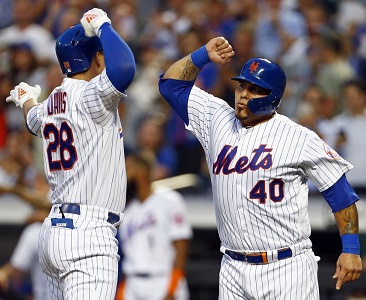
J.D. Davis and Wilson Ramos bump the forearms after Davis’s two-run homer in the bottom of the second gives the Mets their first lead in a 9-2 win against the AL wild card-leading Indians Tuesday night.

Five days ago, the Mets were something of a wreck. Looking more like their earlier season selves than their post All-Star break juggernaut.

They lost a pair to the National League East-leading Braves that they could have won, then they beat the Braves despite seeming to do everything in their power to snatch defeat from the jaws of a blowout.

Then they took two out of three in Kansas City from the American League Central’s rebuilding Royals, nothing remotely close to the Royals who beat them in a World Series they could have won but for porous defense.

But there was still that little matter of coming home with the Indians due for a visit. The Mets’ rounds with the big boys weren’t over yet. Opening Tuesday night, the Mets began a set between baseball’s two hottest post All-Star teams. Making it arguably even up in import to the set they blew in Atlanta last week.

The pre-break Mess, risen from the dead. The pre-break Indians, yanking themselves from an injury, inconsistency, and once in awhile indifferent wreck to put a near-end to the juggernaut from Minnesota that’s proving you can’t always just bludgeon your way to the top and keep as much as an eleven-and-a-half-game distance in front.

The Mets suddenly re-resembled a group of crisis junkies whose apparent such addiction didn’t stop them from taking a set against the Nationals but threatened to wreck them against the Braves last week, before re-charging in Kansas City. The Indians finished pulling themselves all the way back to the AL Central’s penthouse. The Tribe even claimed first place for a couple of days and still sit only a couple of games behind the Twins in their division.

And they entered Citi Field Tuesday on an extended New York trip. After taking three out of four from the Twins but losing two out of three to the somewhat rickety Red Sox, the Indians split a set with the Yankees in the south Bronx before opening against the Mets. This may be the first time in the interleague play era that the Indians didn’t have to switch up their hotel reservations after finishing a visit to one team before starting the next one.

And with a little side intrigue involving Mets manager Mickey Callaway—once embattled, now looking somewhat more secure—compelled to try out-thinking and out-maneuvering his former boss, Indians manager Terry Francona, the Mets did something last week’s Atlanta excursion might have left people thinking was two things, difficult and impossible.

They beat the Indians 9-2 Tuesday night. They took the lead twice, and the second time they didn’t let the Tribe even think about trying to re-tie or overtake them by the time Mets reliever Paul Sewald—whose career has been described as up and down when observers have wished to be polite—struck out Greg Allen and Tyler Naquin back-to-back to end it.

It didn’t faze Mets starter Steven Matz when Jason Kipnis sent a hanging changeup over the right center field fence with two out in the top of the second. He still scattered five hits and a pair of walks otherwise while striking out seven in six and a thirds innings and outpitched Shane Bieber, whose striking out of the side before the home audience nailed him the All-Star Game’s MVP over a month ago.

And well it shouldn’t have fazed Matz because J.D. Davis had an answer for Kipnis in the bottom of the second. With Mets catcher Wilson Ramos aboard on a one-out base hit right up the pipe, Davis caught hold of a 1-0 Bieber slider down the pipe and sent it over the center field fence, right past the big housing for the big red apple that rises whenever a Met hits one out at home, a holdover from the ten-years-gone Shea Stadium.

“The scouting report was to attack him early,” Davis said after the game. “He threw strikes early in the count, and in that at-bat, I was aggressive with the 0-0 fastball. Then he went to the off-speed pitch, and we got him. I think that was his first time out of the stretch, and he left one over the plate.”

A throwing error by Mets third baseman Todd Frazier opened the Cleveland fourth with Yasiel Puig on first. He got as far as second when Jose Ramirez followed with a base hit before coming home on Kipnis’s single up the pipe to tie things at two. Then Matz contained the damage by getting a fly out, an infield force, and dropping strike three in on Bieber, whose hitting experience was limited to one walk and one base hit in a mere eight trips to the plate entering Tuesday.

Two three-up, three-down innings for each pitcher later, the Indians learned the hard way what happens when you make even the tiniest mistake against these Mets. With one out in the bottom of the sixth, left fielder Oscar Mercado had a perfect bead drawn on Mets second baseman Joe Panik’s opposite-field fly. That despite shortstop Francisco Lindor looking likewise before Mercado called him off.

Against the railing, the ball descended into and right out of Mercado’s glove in an instant. A fan may or may not have interfered with the play. Francona elected not to challenge it because, as he put it, “It was really iffy.” The fan was ejected from Citi Field post haste.

A center fielder ordinarily, Mercado didn’t try to excuse himself, either. “I just dropped it,” said Mercado after the game. “I thought I had it just like with every other flyball I’ve caught in my life, but it just popped out of my glove.” After Pete Alonso struck out looking at one that barely hit the low outside corner, there was nothing iffy about Michael Conforto popping Bieber’s 1-2 slider almost exactly into the same spot where Kipnis’s second-inning blast landed.

“I feel like that swung the whole momentum of the game,” Bieber said after the game. “If I make a better pitch there, we probably have a different result.”

“We’ve had a feeling over this run that we’ve been on that we might not get them the first time through the order,” said Conforto, mindful of how good Bieber has been overall this year, “but our lineup has been so good, our hitters have been able to figure out ways to get on base, figure out ways to get runs in.

“We just feel that regardless of who is pitching, we’re going to put a lot of runs on the board. Any time the defense gives us an opportunity like that, we have to take advantage of it, so that was huge.”

All the Mets have to do in concert with that is keep from giving the other guys even remotely comparable opportunities. While taking advantage of every gift from every bullpen bull they can handle.

With both starters out of the game by the bottom of the seventh, the Mets got even more playful with the Indians’ bullpen in that inning. They introduced themselves to Adam Cinder with a leadoff single and a followup walk. Then they re-introduced the Indians to an old buddy, Rajai Davis, called up after a term in Syracuse found him re-grouping respectably enough to get a second term as a Met.

Davis tried bunting both runners over. He got Juan Lagares (the walk) to second but the Indians nailed Frazier (the leadoff hit) at third while Davis arrived at first. Then Mets shortstop Amed Rosario, one of their hotter bats of late, drove Lagares home with a base hit up the pipe.

“This game can really bring you to your knees sometimes,” Cimber said after the game. That’s the voice of a righthander against whom righthanded batters hit only .227 against him before he tangled with the Mets’ righthanded foursome. “You’ve just to keep moving forward and fight your way through it. The last couple of weeks I’ve been grinding a little bit. It’s something everybody goes through and it’s my turn now.”

Exit Cinder, enter Hunter Wood. And Panik sent Davis home with an opposite-field single, before Alonso atoned for looking at strike three his previous time up by doubling home both Rosario and Panik, then taking third on a wild pitch before Wood and the Indians escaped.

Davis the Rajai re-joined the Mets’ party a little more forcefully in the bottom of the eighth, when he turned on Indians reliever Phil Maton’s slightly hanging curve ball and hung it down the left field line for an RBI double sending Lagares home with the ninth Mets run.

All that on a day when injured list news was mixed for both teams. The Indians shut Corey Kluber down two more weeks with an abdominal strain he suffered during a rehab outing; the Mets shut down reliever Robert Gsellman, possibly for the season, after his injury turned up a torn lat muscle.

But Carlos Carrasco’s comeback while battling leukemia goes to a second rehab outing after he looked impressive enough in his first, which stands to help the Cleveland bullpen since that’s where they plan to bring him.

And Mets outfielder Brandon Nimmo (bulging neck disk) advanced to Syracuse on his rehab and had a 2-for-5 day while playing center field for five innings. Nimmo’s return may provide a slightly ticklish outfield situation for the Mets, but these Mets have known far more troublesome knots this year.

Maybe last week in Atlanta really will prove a little hiccup, after all, but these Mets haven’t begun full recovery from crisis addiction just yet. Even if they’re still talking as much in postseason mode as they’ve begun playing again. Taking at least two of the three with the Indians will go big in that recovery. Especially with more big boys awaiting them.

“I think we all knew,” said J.D. Davis, “that even though it’s August, the playoffs started today. We have to have that playoff mentality, that playoff atmosphere, that every game counts, especially with the hole we dug ourselves into. I think the elephant in the room is that we have a lot of home games but a lot of games against playoff teams.”

That’s not elephant singular. That’s a pack of pachyderm awaiting them still. The Braves and the Cubs come to town after they’re finished with the Indians; between the two, the Cubs could be slightly easier pickings based on recent performances. And, after a road trip to Philadelphia and Washington, the Mets return home for a ten-game homestand against the Phillies, the Diamondbacks, and the Dodgers.

Tuesday night? The Mets send Marcus Stroman out to face the Indians’ Adam Plutko, who beat the Yankees to open the Indians’ New York excursion. With the Mets 25-10 since the break and the Indians 24-14 in the same period, this isn’t exactly a plain pit stop for either team.

And if you’re looking for historically rooted omens, half a century ago the Mets were ten games out of first in the NL East—and went all the way to win their first World Series. Four years later, they eleven and a half out and dead last in the division—and won the pennant before pushing the Swingin’ A’s to a seventh World Series game.

Today they’re nine games out of first but two games away from the second NL wild card. With a clean shot at re-proving their post All-Star mettle against the AL’s wild card leaders, who’ve proven they’re not exactly willing to play dead when told to do so, either.

 

Al Jackson, RIP: “Everybody here crazy”

2019-08-19 AlJackson

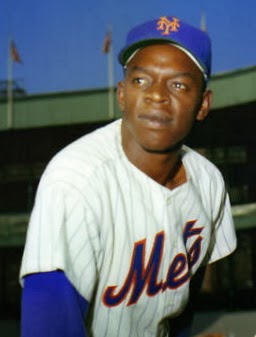
Al Jackson pitching to Hall of Famer Willie Mays in Shea Stadium, 1964. Jackson was a control pitcher whose Original Mets were only too often beyond control.

With the National League’s teams agreeing to let the expansion Mets and Colt .45s (the Astros-to-be) pick only from among their flotsam and jetsam, the two new clubs didn’t have much in the way of quality choices. As the Colts’ first general manager, Paul Richards, said infamously to his crew, “Gentlemen, we’ve just been [fornicated].”

The Colts went for younger unknowns, predominantly, though they did pick a few veterans, notably pitchers Don McMahon and Bobby Shantz, infielders Joey Amalfitano and Billy Goodman, and first baseman Norm Larker.

Knowing New York still smarted over the Dodgers and Giants moving west, the Mets opted mostly but not exclusively for veterans with National League name recognition (several of whom were former Dodgers or Giants), suspecting that might help goose the box office while the Mets set about building an organisation that might bear fruit within the decade.

Their choices included Hall of Fame center fielder Richie Ashburn, first basemen Gus Bell, Ed Bouchee (the NL Rookie of the Year runner-up in 1957), and Gil Hodges (the Brooklyn favourite), infielders Felix Mantilla and Don Zimmer, outfielder/first baseman Frank (The Big Donkey) Thomas, catchers Hobie Landrith and Joe Pignatano, and pitchers Roger Craig and Clem Labine.

But they did make room, too, for younger players who were either spare parts on other clubs or lucky to get cups of coffee if that much. Maybe the best of the Mets’ finds out of the latter end of the pool was a lefthanded, African-American pitcher named Al Jackson, whom the Mets plucked from the Pirates. To whom manager Casey Stengel took an immediate liking.

“Jackson,” wrote Stengel’s biographer Robert W. Creamer, “was one of the few accomplished players that Casey had when he was managing the Mets, a fine pitcher who could field his position skillfully, handle a bat well, run bases intelligently, and pitch with guile and courage.” The feeling was mutual. “He never treated me with anything but respect,” Jackson once said.

The Waco, Texas native died Monday morning at 83 in a Port St. Lucie, Florida nursing home, following a long illness that came in the wake of a 2015 stroke. Met fans from my generation won’t forget the game he pitched to open 1964’s final regular season weekend. In which, for the very first time in their existence, the Mets actually mattered to a pennant race outcome.

In fact, the infamous Phillie Phlop threatened the prospect of a three-way tie for the 1964 National League pennant. Thanks to that ten-game losing streak eroding what was a six-game lead when it began, the Cardinals opened the weekend in first place by half a game, the Reds were right behind them, and the Phillies were two and a half back.

The Cardinals hosted the Mets three games in St. Louis for that final weekend. The Reds faced the Phillies for a pair. And after the Phillies won their Friday game thanks to a four-run eighth and tidy bullpen work, a Cardinals win later in the day would clinch at least a tie for the pennant. Naturally enough, the Cardinals sent future Hall of Famer Bob Gibson to the mound to dispatch the Mets.

Stengel countered with Jackson. “Jackson,” the manager liked to say, “is a pret-ty good-looking pitcher,” which Creamer wrote was high praise from the Ol’ Perfesser. And at a time when it looked like the novelty of the Mets’ comedy of errors began wearing off, and the losing quit being funny, accompanied by some increased mutterings that Stengel was losing whatever he had left, Jackson proved one of Stengel’s few defenders.

A manager who loved to teach baseball above almost anything else, Stengel savoured Jackson as one of his very few younger Mets who was willing to listen and learn—even while he was at work on the mound. “Casey would stand in the dugout,” Jackson would remember, “and say real loud, ‘If I was a lefthanded pitcher, here’s what I would do right now.’ That’s when I knew he was talking to me.”

There were men on first and second, and you knew the other team wanted to bunt them over. Casey would say, “Here’s what I would do. I would let him bunt. I would throw him a little slider, and I would break toward the third base side, and I would throw his ass out at third.” Casey had the guts to tell you what he’d do in a certain situation when it came up on the ball field. He didn’t wait until after it was over and second guess. He’d tell you right now, and he’d tell you what the other team should do. He’s the only man I ever saw do that.

Gibson and Jackson squared off. The only run of the game scored when Mets first baseman Ed Kranepool singled home outfielder George Altman with two out in the third inning. Despite Gibson striking out seven while scattering eight hits and no walks in eight innings’ work, the script got flipped—the Cardinals committed three errors to the Mets’ none, though none of the errors factored in the score.

Jackson went the distance scattering five hits and a walk and, after surviving a bases-loaded threat in the eighth, retired the Cardinals in order on two fly outs and a ground out to finish. The next day, with the Phillies and the Reds off, the Mets blew the Cardinals out, 15-7. These were the Mets? Now the National League race went from chaos to bedlam.

The blowout left the Cardinals and the Reds tied for first with the Phillies a full game back. If the Phillies beat the Reds on the final Sunday and the Mets could finish sweeping the Cardinals, the National League would have to figure out a round-robin to decide a pennant winner. The Phillies did their job, blowing the Reds out 10-0 behind Hall of Famer Jim Bunning.

2019-08-19 AlJackson02

Al Jackson, in the Polo Grounds, where the Mets played their first two bizarro seasons.

The Mets, alas, didn’t do theirs. Not for lack of trying. They had a 3-2 lead in the middle of the fifth, but the Cardinals dropped a three-spot on them in the bottom of the inning and never looked back; in a game that included Gibson working four innings’ relief, the Cardinals won the game (11-5) and the pennant. At the last possible minute.

Yet somehow the Mets made the Cardinals earn it the hard way, starting with Jackson’s cool shutout. A 5’10” lefthander whose money pitches were a snappy curve ball and a shivering slider, Jackson was as athletic as the day was long and pitched stoutly despite being charged with heavy losses as a Met, and his teammates befriended and respected him.

Kranepool in particular befriended Jackson, the two socialising often, even playing basketball together in the off seasons to stay in shape, according to Newsday.

“You had to be a pretty good pitcher to lose that many games,’’ Kranepool said of Jackson, who was charged with twenty losses in each of 1962 and 1965 and pitched too often in hard luck . “He was in the games at the end because he did so many things well. He was a good fielder and good hitter. He didn’t throw that hard; his curveball was his best pitch. But he was such a nice guy. He really was. You can’t find a negative thing to say about Al Jackson.’’

His fellow Original Mets pitcher, Jay Hook, credited with the win in the Mets’ first-ever regular season victory, had the same admiration. “He had good control, No. 1,” Hook says. “I think he really knew how to pitch.”

Jackson was dealt to the Cardinals after the 1965 season for veteran third baseman Ken Boyer, who was coming to the end of a should-have-been Hall of Fame career. After two fine if unspectacular Cardinal seasons, including not pitching in the 1967 World Series, he was returned to the Mets to finish a trade for relief pitcher Jack Lamabe.

He worked effectively as a swingman in his second Met tour, but before he could be a full part of the 1969 miracle—he if any Original Met had earned the chance after having survived the worst of their earliest seasons of comic futility—the Reds bought him that June. By then a middle reliever, a role that didn’t necessarily suit him, Jackson didn’t pitch as well as previously, and when the Reds released him in 1970 he retired.

He became a pitching coach for about two decades, including with the Red Sox and the Orioles, then returned to the Mets to work as a minor league pitching instructor except for a brief spell on the parent club during Bobby Valentine’s managerial term.

Jackson was as well known for good humour as he was for his pitching ability and knowledge. He needed every ounce of that good humour he could muster, as Jimmy Breslin related unforgettably in Can’t Anybody Here Play This Game. Specifically, about the third inning in a 10 August 1962 game in Cincinnati’s Crosley Field.

This one left even the even-keeled Jackson—who’d pitch the longest game in major league history in terms of the game’s time (four hours and thirty-five minutes, pitching fifteen innings against the Phillies four days later)—wondering if he’d lost his marble. Singular.

The Mets were in a 3-0 hole when Jackson surrendered a leadoff double to Hall of Famer Frank Robinson. Wally Post grounded out right back to Jackson off the mound but Don Pavletich walked to set up first and second. After Robinson stole third, Jackson got Hank Foiles to whack into a sure double play starting at first base.

Marvelous Marv Throneberry fielded it cleanly. He had all the time on earth to start the play. He could go to second for the first out and take the relay; or, he could throw home for the first out and get the relay back. “Don’t think,” Crash Davis warned. “It’ll only hurt the ball club.” Throneberry thought. Then he decided to go home to start the double play. Except that his throw didn’t arrive quite at the moment Robinson did.

Then a walk to Vada Pinson loaded the pads for Don Blasingame. And Blasingame obeyed Jackson’s pitch, too, whacking a perfect double play grounder, this time to second base. Where Hot Rod Kanehl was so anxious to pick it up and get it started that he let the ball bounce right off his leg.

“Jackson,” Breslin wrote, “now has forced the Reds to hit into two certain double plays. For his efforts, he has two runs against him on the scoreboard, still only one man out, and a wonderful little touch of Southern vernacular dripping from his lips.”

Then with Reds starting pitcher Jim Maloney at the plate, Jackson wrestled him to 3-2 and, as he threw Maloney a sure ground ball pitch, the runners broke. And Maloney whacked the ball to Kanehl. This time, the Hot Rod picked it clean. And this time, he tossed the ball to Charley Neal playing shortstop. But since the runners broke on the pitch Blasingame was already safe at second, and Pavletich scored.

Again Jackson threw what he hoped would be a double play pitch. And Cincinnati shortstop Leo Cardenas obeyed orders, whacking it on the ground right to Neal in perfect position to finish the Area Code 6-4-2 dial. “But you were not going to get Charley Neal into a sucker game like this. No sir,” Breslin wrote. Neal fired to first. Out made. Fourth run of the inning scoring.

Then Eddie Kasko lined out to Kanehl for the side. Breslin swore Jackson must have set some sort of record for getting hitters to hit into consecutive double play balls whose pooches were screwed on the first leg.

Stengel decided sending Jackson back out for the fourth would do him irreparable damage, if not what came to be known as post-traumatic stress syndrome, so he sent Ray Daviault out to work the fourth. And, perhaps flummoxed himself over the third inning’s undoings, the Ol’ Perfesser forgot to tell Jackson, who went out to the mound to warm up without seeing Daviault coming in from the pen. The Crosley Field P.A. announcer announced the Mets’ new pitcher—Daviault.

Breslin swore Jackson stopped cold and made his own announcement: “Everybody here crazy.”

“#L[et’s]F[or]G[et]M[ets]?”

2019-08-14 SunTrustPark

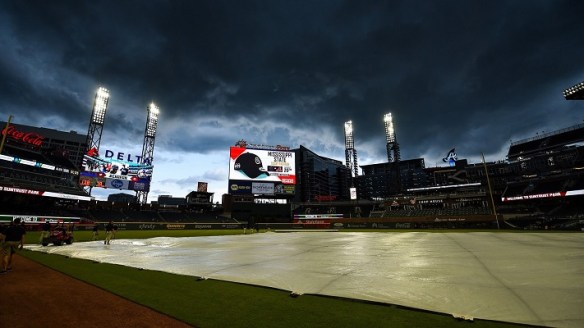
Atlanta’s Sun Trust Park Wednesday night, shortly after scheduled game time–but not a Mets disaster— was delayed.

Rain and the look of a storm of doom over Atlanta’s Sun Trust Park delayed game time between the Mets and the Braves by about an hour and a half Wednesday night. By the time the game ended, traveling Mets fans in the ballpark must have wondered if that storm-of-doom look was really an omen of doom.

For the Mets.

If the Mets’ post All-Star break surge and swath turns into disaster the rest of the way, their faithful are liable to look back to the bottom of the seventh Wednesday night. And ask themselves how often even the most heads-up rookies make the kind of rookie mistakes that prove to deflate the re-aspiring.

The kind that turn a two-all tie early in the bottom of the seventh into the open door through which the Braves finally finished a five-run inning that may have had even them wondering whether they were really there even if they were the beneficiaries.

The kind Pete Alonso, to this point a solid Rookie of the Year candidate, including normally steady and heads-up play at first base, instigated when he ran so wide of first to try for a grounder that had “second baseman” clearly in its destination window that it turned into an RBI single. When nobody was left to cover first on the play on which Alonso should likely have stayed in his proper position.

The kind that serve as a prelude to the Braves gifting the Mets the bases loaded and one out in the top of the ninth, after the Mets scratched their way back to a two-run deficit, and the Mets looking the proverbial gift horse not just in the mouth but all the way down the creature’s throat.

The kind that clear a path to a 6-4 loss that stands an excellent chance of entering Mets lore on the wrong side of the ledger, because it’s the kind of loss that can and often enough does turn what had been baseball’s hottest team until arriving in Atlanta into a collapsing bubble.

Alonso made a plain rookie mistake. It invited more than just a single inning five spot against the Mets. It invited serious thinking as to whether these Mets, as plucky and as willful and as tenacious as they’d been before they arrived in Atlanta this week, played too far over their own heads since the All-Star break to think of any kind of serious contention until next year.

And it was the last thing the Mets needed after learning their top-of-the-order ignition switch, Jeff McNeil, hit the ten day injured list with a left hamstring strain.

With the tying run already home against Mets reliever Seth Lugo and the bases still loaded, Braves catcher Tyler Flowers grounded one toward second. Alonso may have taken a couple of cheat steps to his right at the moment of contact, but the ball headed just too clearly toward Mets second baseman Ruben Tejada.

Alonso still scrambled to his right furiously. And the ball scrambled right past his downstretched glove. And Lugo at the mound may have been caught completely flatfoot by Alonso scrambling for a ball he really had no business trying to play. Tejada would have such a simpler grab that, in proper position, Alonso could have taken the throw for the out at first and thrown home to get Braves left fielder Adam Duvall.

And with Lugo not even close to covering first on a play where he shouldn’t have had to think about it, Tejada did grab the ball after Alonso’s staggering miss. With no place to throw. With Duvall scoring safely and the Atlanta ducks still on the pond.

Then pinch hitter Matt Joyce lined one that Mets right fielder Michael Conforto almost reached before it hit the grass, Conforto having to settle for a sliding short-hop pick and a throw in to get Flowers at second while Johan Camargo scored. And Ronald Acuna, Jr. singled to right center to send Ender Inciarte home and Lugo out of the game in favour of Luis Avilan.

Ozzie Albies greeted him with sixth single of the inning before Avilan got Freddie Freeman to hit into a step-and-throw inning-ending double play.

Too little, too late.

Or was it? After wasting Steven Matz’s solid start against a surprisingly stingy Dallas Keuchel, the Mets found themselves pushing reliever Mark Melancon and the Braves up against the wall in the top of the ninth.

Lagares rapped a one-out single and Joe Panik pinch hitting doubled to shallow left. Amed Rosario singled Lagares home and pinch hitter Luis Guillorme singled Panik home. And up stepped Alonso in desperate need of redeeming himself and his terrible miscue.

He rapped a bouncer toward second, where Albies threw it inside-out to Camargo coming over from shortstop. Camargo caught the ball as Guillorme arrived sliding but—as replays and review showed, strangely enough—Camargo began transferring the ball out of his glove a split moment before his foot touched the base, and he couldn’t hold the ball in his throwing hand, the ball bumping and grinding away from him.

The review overturned the original out call at second. The Mets were just handed the bases loaded and only one out. A base hit was liable to tie the game; an extra-base hit liable to give the Mets a one-run lead at minimum.

But Wilson Ramos struck out swinging on a Melancon curve ball that dove like a fighter plane shot down. And Braves manager Brian Snitker brought in a lefthanded former Met, Jerry Blevins, to work to lefthanded incumbent Met Michael Conforto.

First Conforto missed hammering Blevins’s opening fastball for a grand slam by a couple of feet wide of the right field foul pole. Then, Conforto fouled off a curve ball. Then, he swung on and missed a curve ball.

Even Mets manager Mickey Callaway’s decision to lift Matz when the Mets wrested a 2-1 lead in the top of the seventh—after Matz himself hit a two-out single and scored the first of two tiebreaking runs on J.D. Davis’s single up the pipe—won’t be second guessed as heavily as Alonso might be for hustling himself into such a mishap instead of standing his ground and waiting for the putout that might have changed the inning tone. Might.

It’s hard enough when you run yourself into a fateful fielding mistake while in proper position. It’s worse when it happens as you’re scrambling and rambling too far out of position. And don’t ask about when you subsequently scratch, claw, burrow, and shovel your way back to within a pair of runs and ducks on the pond with one out in the ninth, and come up with the ducks quacking fowl over abandonment.

It’s worse to think that Alonso, the rookie who’s been so magnificent for these Mets all year long, through the worst of times and the better of times alike, may yet be remembered the way Met fans remember David Cone leaving the Dodgers bulletin board fodder in the 1988 National League Championship Series.

Or, Kenny Rogers walking home the pennant-losing run in the 1999 National League Championship Series.

Or, Carlos Beltran frozen by strike three to end the 2006 National League Championship Series.

Or, Hall of Famer Tom Glavine battered on the final day to secure their fall out of the 2007 postseason.

Or, Lucas Duda, with the easiest chance on earth, throwing home offline in the top of the ninth of Game Five, 2015 World Series.

Men who had done well enough or better as Mets only to come up, despite careers ranging from modest to good to great to the Hall of Fame, like enough 20th Century (and one or two 21st Century) Cubs and Red Sox to start writing their own snakebite history.

This year’s Mets continue learning the hard way that they can’t win everything at the last minute, or even the next-to-last minute. Alonso’s own rally hashtag, #LFGM, may have begun turning from “L[et’s]F[ornicating]G[o]M[ets!]!” to “L[et’s]F[or]G[et]M[ets!]”

It may take a radical intervention to get the Mets into crisis addiction recovery, after all. And by that time it may yet be too little, too late, to save a season they looked as though they were turning into surrealistic redemption.


Impatience is no virtue

2019-08-14 RonaldAcunaJr

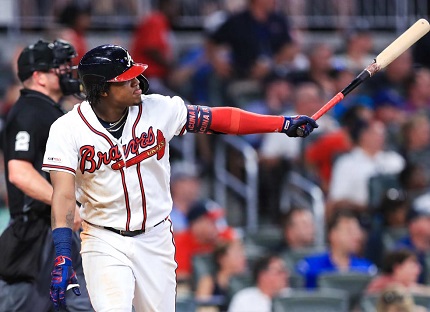
Ronald Acuna, Jr.’s fourth-inning bomb was almost half as important as bagging Todd Frazier trying to score in the sixth Tuesday night.

Zack Wheeler took the blame himself. The Mets pulled into heat-hammered Atlanta Tuesday and came up short against the National League East-leading Braves. Wheeler simply said he didn’t have it. But he had lots of help along the way to the 5-3 loss.

“It stinks,” Wheeler lamented after the game. “We’re on this run and I really didn’t give us a chance. This one’s on me.” Not entirely. A lot of the help Wheeler got came through the kindness of Braves left fielder Ronald Acuna, Jr.’s heart.

And if there’s justice in baseball world, Acuna should extend that kindness to Mets third base coach Gary DiSarcina and credit him with a major assist.

Because no sooner did Todd Frazier atone for a rally-compromising double play in the top of the sixth, whacking a double to the back of center field off Braves starter Max Fried, than Mets center fielder Juan Lagares lined a single right to Acuna playing in a none-too-deep left field positioning.

Frazier isn’t as swift afoot as he was earlier in his career, but even Hall of Fame road runner Rickey Henderson would have resembled Wile E. Coyote on a hit that shallow against a left fielder with an arm like Acuna’s.

You get why Frazier had eyes on the plate with the Mets down four runs at the moment. But DiSarcina should have thrown up a stop sign post haste. With the pitcher’s spot due to follow Lagares, and Wheeler’s evening over with recent acquisition Brad Brach up and throwing in the pen, the Mets were certain to send up a pinch hitter with Jeff McNeil, their leadoff man, due to follow if the pinch swinger could swing.

The light never even changed to yellow. Frazier rounded third at just about the moment Acuna let fly. Frazier was such a dead pigeon sliding toward the plate you got the impression Braves catcher Brian McCann tagged him out as a mere formality. And a grand chance to close the distance escaped the Mets.

“His arm,” said Acuna’s manager Brian Snitker, “is a weapon.” Disrespecting that weapon equals disaster.

Coming off taking two of three from the Nationals last weekend, winning the two in almost anti-textbook examples of doing things the hard way, the Mets let Fried and the Braves compel them to try doing it the hard way again. I said it before, I’ll say it again: crisis addiction only wins you so many games.

All night long, whenever they swung the bat the Mets swung as if they thought they could hit the ball right out of Fried’s hand. With Fried pitching exactly the way you’d expect a guy with a 1.38 walks/hits per inning pitched rate, patience would have been the Mets’ virtue. Tuesday night they approached Fried as though patience were what you saw in the doctor’s waiting room.

And the Mets better hope they duck another kind of crisis, after McNeil tweaked his left hamstring trying to hustle out a leadoff ground out in the top of the ninth. He flung his helmet to the ground in obvious discomfort, let a trainer escort him back to the dugout, and said after the game he didn’t feel anything pop.

“Just a little snag,” said McNeil, who undergoes an MRI Wednesday. “Nothing crazy.” He and the Mets better hope it’s nothing “crazy.” Things have been crazy enough for them this year.

The Braves are deep enough that they could withstand life without shortstop Dansby Swanson and rookie slugger Austin Riley for a spell, even if they have been only 17-13 since the All-Star break. And they’re deep enough that even that post-break record doesn’t hurt them after spending the first half eluding everyone else in their division at 54-37.

The Mets aren’t that deep no matter how they’ve looked since the break. They can’t afford to lose McNeil for any appreciable time. And they know it.

“It’s tough. He’s a huge part of this team. He brings fire every day to the field,” said Wheeler. “He’s a ballplayer and you need those type of guys on your team and you need them in the lineup. It’s unfortunate that happened, hopefully it’s not too serious and he can get back decently quick. We need his bat, that’s for sure.” His bat, and his passion.

Recently minted Joe Panik’s going to play a lot more second base now, and he can still whip his leather with authority as well as postseason experience. Bringing back prodigal veteran Ruben Tejada—whom the Mets re-signed in March, but who hasn’t played a major league game since he was a 2017 Oriole while hitting .337 at Syracuse this year—is a band-aid.

There wasn’t much Wheeler could do on a night he admits was an off night from keeping the Braves off the bases and the scoreboard. Acuna himself opened the proceedings with a base hit in the bottom of the first and, after Freddie Freeman sent him to third with a one-out single, Josh Donaldson singled him home. A fly out later, Matt Joyce singled to deep enough right to score Freeman.

The Mets were in a 2-0 hole before they got a second crack at Fried. They’d squandered the first one brilliantly. Pete Alonso and J.D. Davis wrung back-to-back walks out of the Braves lefthander, but Ramos with a near-perfect inner zone pitch to handle and pull whacked it instead to Charlie Culberson, the former Dodger now pressed into shortstop service until Swanson returns from the injured list. Culberson tossed to second for the inning-ending force.

They looked like they’d get to Fried in the top of the second when, after two quick enough outs, Lagares singled up the pipe and, of all people, Wheeler himself got plunked to set up first and second. Never one to look a gift horse in the proverbial mouth, McNeil drilled a single deep enough to left to send Lagares home and cut the deficit in half. But Mets shortstop Amed Rosario let Fried fool him with a slider that broke right under his bat for the side-retiring strikeout.

Freeman put things a tick further out of reach in the bottom of the inning with an RBI single. After the Mets wasted two-out baserunners in the third and the fourth, Acuna made it a little more tough to catch up in the bottom of the fourth. With one out and nobody aboard, Acuna wrestled his way back from 0-2, caught Wheeler’s two-seamer traveling right down Main Street, and sent it traveling over the left field wall.

Ender Inciarte turned a three-run Atlanta edge into a four-run distance in the bottom of the fifth, after Wheeler wild-pitched McCann (leadoff single) to second, hitting a double into the right field corner to send McCann home with the fifth and final Braves run.

But come the top of the seventh, it was Sun Trust Park’s scattered audience now in need of oxygen above and beyond the oppressive heat: the Braves went to the bullpen. And in came Luke Jackson, whose recent misadventures may not have spelled final disaster but were misadventures enough to make Braves fans wonder if he hadn’t been taking lessons in pressure pitching from last postseason’s version of Craig Kimbrel.

Now the Mets went to pinch hitter Luis Guillorme in the pitcher’s hole to lead off the seventh. And Jackson gave the home audience a better reason to put the nitro pills under their tongues. He got Guillorme to pop out to Culberson out from shortstop, then caught McNeil and Rosario overanxious enough to strike them out swinging back to back.

But then Snitker went to Shane Greene, the new toy from Detroit who was supposed to step into the lockdown job out of the Braves’ pen but whose ERA since joining the Braves is a ghastly 14.54. If even one fan in the stands pondered thoughts of Snitker taking pity on the Mets with this move, you couldn’t blame him or her.

Right off the bat, Alonso and Davis singled back to back to open the top of the eighth. And after Ramos forced Davis at second, Snitker took no more chances, bringing in former Met Jerry Blevins. Michael Conforto grounded one to first that got rid of Ramos at second but sent Alonso home with the well overdue second Mets run.

Out came Blevins and in came another former Met, Anthony Swarzak. Frazier singled Conforto to second promptly, and Lagares beat out a grounder to the back of first base to score Conforto almost as promptly, pushing Frazier to second, and suddenly the Mets were back to a mere two-run deficit. But pinch-hitter Panik, swinging a little over anxiously himself, grounded out to short for the side.

Drew Gagnon, recalled from Syracuse (AAA) for his third spell with the Mets this year, got rid of pinch hitter Rafael Ortega, Acuna, and Ozzie Albies almost in a blink in the top of the ninth. But after McNeil’s ham snagged, another trade deadline-minted Brave reliever, Mark Melancon, shaking off his Miami disaster admirably, struck out Rosario and Alonso swinging to end it.

There are teams up and down the standings against whom you can go into crisis and come out with your heads intact and triumphant. The Mets were reminded Monday night that the Braves aren’t one of them.

Neither is Acuna’s throwing arm. Give it even a fraction of an inch, and he’ll take as much distance as you let him get away with. Not to mention his trying and having an excellent chance of becoming only the third player 22 or under to hit forty or more into the seats in a season—behind Hall of Famers Mel Ott and Eddie Mathews, the latter a Braves legend in his own right.

If the Mets want to remain baseball’s hottest post-All Star break team and stay in the postseason hunt, they’d better not dismiss that reminder lightly. Especially against these Braves, who almost never show mercy to those asleep at the switch.

Limits to crisis addiction

2019-08-11 SeanDoolittle

This time, Sean Doolittle wasn’t at the mercy of his 2019 nemeses, the Mets.

Seek the clinical definition of “crisis junkie,” and you shouldn’t be surprised to find that the definition includes, “New York Mets.” As white hot as they’ve been since the All-Star break, the Mets have not been in complete recovery from crisis addiction.

Every crisis junkie believes it’ll take just one turn of luck, the cards, or both to escape his or her latest crisis. On Sunday afternoon, down three going to the bottom of the ninth, the Mets had more than enough reason to believe theirs was coming in from the Nats bullpen. Sean Doolittle.

Doolittle—whom they’d battered for four runs to win at the last minute Friday night and bullied otherwise all season long. With the top of the order due up for the Mets and the Citi Field crowd giving Doolittle a standing ovation as he arrived on the mound.

Doolittle—who got Jeff McNeil to line out hard to right, struck out Amed Rosario swinging, and got Michael Conforto to ground out into a right-side shift. Crowning a scoreless two-and-a-thirds relief job by Doolittle plus Daniel Hudson and Wander Suero before him.

If it was a monkey off Doolittle’s back after his season-long futility against the Mets, the Nats could still be forgiven if they felt that even this 7-4 win, snapping the Mets’ eight-game winning streak, didn’t necessarily feel like a win.

Even if the Mets spotted the Nats three unearned runs in the top of the first, on a throwing error to first and a dropped ball at the plate that would have kept Juan Soto from scoring that third run: Mets catcher Wilson Ramos had him cold by several feet before the ball fell from his mitt.

Because the Mets broke their weekend habit of fourth-inning ties by tying it at three in the bottom of the second—on a pair of one-out singles, a two-out RBI single, a sneak-attack, bases-loading, two-out bunt by Mets starting pitcher Jacob deGrom, and a two-run double. By then the Nats must asked, if they hadn’t the previous two nights, “What the hell do we have to do to put these pests away?”

They may not be the only team in the league tempted to keep cases of Raid in the dugout or pest control crews on call when they face the Mets.

For their part, the Mets may not quite be ready to send themselves to a twelve-step program for crisis addiction. Because if that’s what’s keeping them white hot and helping them prove they can hang with the big boys—even those addled otherwise by the injured list and by self-immolating bullpens, just as the Mets were earlier in the season—they’ll work with it.

The twelve steps could wait until the season was over or the Mets fell out back out of the races. Whichever came first. Couldn’t they?

“It’s magic!” crows a Met fan of my acquaintance. He’s probably echoed by a few million Met fans who prefer seeking extraterrestrial causes for both the heights of success and the depths of failure. You’d think they couldn’t bear to admit that playing heads-up baseball when the Mets needed to play it the most had anything to do with their post-All Star break success.

Let the Nats pull back ahead 5-3 in the seventh on a two-out, two-run double by Asdrubal Cabrera that followed a little shakiness out of the Mets’ bullpen? The Mets weren’t going to let that stand without an answer if they could help it. Conforto’s seventh-inning sacrifice fly off Nats reliever Hunter Strickland said as much.

But for a brief moment it looked as though the Nats were going to pay the price for their manager’s unconscionable brain freeze right after that. How could Dave Martinez not have challenged Pete Alonso being ruled hit by a pitch when the pitch hit the batter, not the ball, with every television replay available showing as much?

A called strikeout later, ex-Nat Wilson Ramos drilled a frozen rope right into Gerardo Parra’s glove in left to strand two Met runners and make Martinez look like a genius for a few moments. Better not to let Alonso have another swing with two aboard. Except J.D. Davis loomed and could crunch one. Strickland nailed Davis with a called strikeout before the Ramos line out. That’s called dodging the atomic bomb.

Unfortunately for the Mets, the net result is also called wasting yet another stellar deGrom start. He shook off the three unearned in the first to all but have his way with the Nats, but that first inning drained him enough that he wasn’t likely to pitch more than five innings. All odds favoured even the Mets’ shaky bullpen against the Nats’ shakier pen.

Until Jeurys Familia—once the Mets’ closer, this year a prodigal son having a horror of a season—found his old self at just the right hour to strike out the side in the top of the eighth. And Wander Suero sandwiched a grounder back to the box between two strikeouts in the bottom of the eighth.

Then Doolittle was up and throwing in the Nats bullpen and the Mets could just taste the gift coming. In a way, that was part of their problem Sunday. They looked as though they were trying to hit six-run homers in about half their plate appearances. They looked as if they wanted to get to the win without navigating the traffic on the way all day long.

Didn’t quite work out that way. Now, before they got another crack at Doolittle they had to get past the Nats in the top of the ninth. And they trusted Edwin Diaz, command struggles and all and with almost a full week’s rest in the bargain, to perform that assignment. With the dangerous top of the Nats order to greet him.

Diaz shook off a one-out walk to Adam Eaton and didn’t let Eaton stealing second stop him from catching Anthony Rendon, having a four-hit day to that point, looking at strike three. But up stepped Victor Robles, a late-game insertion to center field, after Parra was moved to left following Juan Soto’s ankle turn on a seventh-inning baserunning out, after ex-Met Asdrubal Cabrera doubled home a pair to break the three-all tie in the first place.

On 2-1 Diaz hung a slider to Robles. And Robles hung it over the left field fence. And after Matt Adams grounded out to second for the side, Diaz walked into the dugout looking as though he’d been told his favourite pet was kidnapped and left for dead. Pitching coach Phil Regan spoke gently to him and hugged him, like a father comforting a heartbroken son.

And this time Doolittle stood up well enough to his season-long bullies.

Yet considering their Friday and Saturday night surrealistics, Sunday afternoon’s loss probably didn’t feel like a loss to the whole of the Mets, either.

With apologies to Vin Scully, in a second half that has been so improbable, the impossible happened. Friday night the Nats put a boot on the Mets’ throat in the top of the ninth, and the Mets yanked it away in the bottom of the ninth. Also known as the last minute. On Saturday night, the Mets had to settle for the Nats putting the edge of a shoe against their neck and bumping it to one side in the eighth. Also known as the next-to-last minute.

Friday night the Mets overthrew two three-run deficits and Strasburg becoming the Nats’ all-time franchise strikeout leader to win. Saturday night they overthrew a two-run deficit in the fourth and a one-run deficit in the eighth to win. They’d tied against Strasburg and Patrick Corbin alike. When it came time for the running of the bullpens, the Mets ended up looking a little less like bull.

And on both nights Citi Field rocked and rolled as if this was a postseason series. It didn’t escape the Nats’ eyes and ears, either. Strasburg’s in particular.

“They pull for their team,” the righthander said, calmly but firmly, after Friday night’s shock. “And I don’t know if they come play us again, but I hope all the fans are watching the game cause it gets into crunch time and those things really carry teams and get us to the next level.”

Actually, the Mets are scheduled for one more trip to Washington, down the stretch, a 2-4 September set to end the season series between the two teams. If this weekend doesn’t make or break either the Mets’ or the Nats’ seasons, by the time that Monday-Wednesday meeting comes to pass either team could be looking closer at a wild card slot or an early winter vacation.

Theoretically, both teams could also be nipping at the heels of the National League East-leading Braves by then, too. If not sooner. The Braves are a .500 team for August so far, and after winning four straight after the All-Star break they’re 12-13 since. They’re no longer a necessarily impossible target.

But the Mets since the All-Star break restored reasons for the throngs to rock their ballpark. The Nats had a 5-6 homestand before their current road trip, but if Strasburg was calling out Nats Nation to give the team a little more in the way of the Mets’ current kind of crowd incentive, since they’re not quite dead and in the coffin just yet, Nats Nation would be wise to heed.

Even taking two of three from the Nats stands the Mets well with a trip to Atlanta looming. A Mets win Sunday would probably have made them feel invincible no matter where they traveled afterward. Ending the day at 21-7 since the All-Star break still leaves them baseball’s hottest team since that break.

A Nats loss Sunday—compounded by Max Scherzer’s continuing absence, the continuing rehabs of both Ryan Zimmerman and Howie Kendrick, and the likelihood that pending free agent Rendon may be playing his last weeks in Nats fatigues—might have made them feel as though the string to be played out was closer to resembling the clothesline from which they’d hang to dry.

The Nats have a slightly more balanced schedule the rest of the season. Starting with a weekday set against the Reds at home, they get to mix sets against the flotsam and jetsam with sets against the big boys. The Mets should be so lucky. Theirs isn’t that well balanced a schedule the rest of the season. They might have felt charmed Friday and Saturday, but Sunday should have re-grounded them enough.

Enough to remind them that crisis addiction isn’t always the way to stay in a wild card race after you’ve returned from the living dead to get back into one. Especially with bigger enough fish than the Nats swimming into the waters in which they’re about to bathe the rest of the season.

Walk through the door of your friendly neighbourhood Crisis Anonymous. Say it loud and humble. “Hi, we’re the Mets. And we’re crisis junkies.” Step one. Take it ASAP.