Mickey’s monkey is off the Mets backs

2019-10-04 MickeyCallaway

Now the former Mets manager . . .

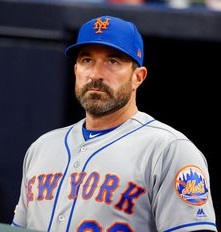
The least unpredictable fact when the regular season ended was Mickey Callaway’s job status. Never mind the Mets’ little comedy of an organizational meeting without him; the question was when, not whether Callaway had a date with the executioner.

Thursday proved the when. Mickey’s monkey is off the Mets’ backs.

At least Mets chief Jeff Wilpon and general manager Brodie Van Wagenen had the decency to fly to Callaway’s Florida home and tell him to his face. They didn’t send a flunky to do the firing for them, the way George Steinbrenner once did with Clyde King when he decided he wouldn’t fire Yogi Berra because the players did.

Even the Mets’ deceptive second-half self-resurrection, pulling them as close as two games from at least a wild card game entry but not quite close enough, wasn’t enough to save Callaway’s job. Or, for that matter, bench coach Jim Riggleman’s.

They brought Riggleman in to help shepherd Callaway through game situations. Riggleman doesn’t exactly have a sterling managerial record himself. And based on a lot of the Mets’ results this season, whether in the first half nightmare or the deceptive second half revival, it didn’t seem as though Riggleman was the best bridge lieutenant.

It’s a shame after a year during which the Mets yielded up the likely no-questions-asked National League Rookie of the Year (Pete Alonso) and possible second-straight National League Cy Young Award winner. (Jacob deGrom.) It’s no surprise, though, after the Mets played thrilling baseball one minute and looked like crisis junkies the next.

But time and again in the diciest moments Callaway’s moves blew up in his face, sometimes because that’s the way of the game and oftentimes because he wasn’t exactly the most in-tune observer of the moment.

One of them almost cost him his job in June. Against the Cubs in Wrigley Field, Callaway let Seth Lugo go out for a second inning’s relief work on a day Lugo didn’t exactly have his A game in his first inning’s work but Callaway had a fresh (and as yet uninjured) Robert Gsellman and his closer Edwin Diaz ready in the pen.

So Lugo went out for the eighth, fed Kyle Schwarber a hanger he was lucky didn’t disappear across the street but went up the middle for a shallow hit, walked Anthony Rizzo a fly out later, and served Javier Baez a meaty slider to serve into the right field bleachers, turning the game into a 5-3 Cub lead that held up through the ninth.

There wasn’t a reporter in the room who wouldn’t ask why Callaway stayed with a faltering Lugo who’d struggled to survive the seventh, or why he didn’t think to bring in Diaz to try for a five-out save after Schwarber’s single. Callaway snapped at Newsday writer Timothy Healey in particular, and so did then-Mets pitcher Jason Vargas, who threatened to “knock you the [fornicate] out.”

Right then and there another team’s general manager would have dumped Callaway and shuttled Vargas right the hell out of town. Right then and there nothing of the sort happened. It wasn’t Callaway’s first head-scratcher from the bridge and it sure as hell wouldn’t be the last:

* He often pulled his starting pitchers when they were more or less cruising and at extreme minimal pitch counts only to be caught by not having allowed his relievers enough warmup time. And this was from a manager who probably knew in his heart of guts that he could trust most of his bullpen the way a cobra would trust a mongoose on a dinner date.

* He never quite clued in to the idea that a lot of his pitchers were more comfortable throwing to Tomas Nido behind the plate—with the numbers to back them up—than Wilson Ramos. This is probably on general manager Brodie Van Wagenen as well, but it merely amplified a key Mets dilemna: choosing between a catcher who could hit but didn’t always get the best out of his pitchers, or a catcher who usually got his pitchers’ best but couldn’t hit with the Washington Monument.

* Granted he had a bullpen of 98 percent arsonists, but he sometimes over-used his better bulls and never really defined who’d be doing what, particularly with his high-priced closer Edwin Diaz, who turned into a season-long mess wondering who’d burglarised him and made off with his once-deadly slider.

* In early September, with the Mets down 9-6 in the seventh, Callaway ordered an intentional walk to the Phillies’ number eight hitter to load the bases, even knowing Bryce Harper, who hadn’t started that day, loomed as a pinch hitter for Phillies reliever Mike Morin, merely because Callaway wanted Morin out of the game—which Morin was liable to be, anyway, after the inning ended.

Then Mets reliever Taylor Bashlor walked Harper unintentionally to bring home the tenth Phillies run. Be careful what you wish for.

Well respected as a pitching coach with the Indians, from whence the Mets hired him, Callaway—according to several published reports since his execution—rarely if ever drew on his pitching knowledge to give his pitchers more than cursory counsel. About the only thing he may have done, the reports say, was fume when pitching coach Dave Eiland was canned in favour of octogenarian Phil (The Vulture) Regan, who actually proved a lot more effective with Mets pitchers.

Callaway may also have helped cook himself by contravening earlier promises to open wider communication lines with his players. He’s said instead to have isolated himself in his office far more often and delegated far too many more responsibilities to his coaches.

And Mets players weren’t the only ones tempted to believe Callaway was really a front office plant who didn’t always call the shots. Nobody seemed to know whether his marching orders and in-game maneuvers came from Callaway himself, or from Van Wagenen, or even from chief operating officer Jeff Wilpon.

The only thing anyone knew was that, whether the Mets looked falling apart or looked like they’d really sneak into even the wild card picture, Callaway resembled a ship’s captain who couldn’t really believe torpedoes were striking for the hull and wouldn’t give the appropriate orders to cut them off.

So the question becomes whom the Mets will bring aboard to succeed Callaway. The answer may not be simple. And some of the options a lot of fans seem to favour may end up being worse.

One rumour has it that the Mets have eyes on former Cardinal manager Mike Matheny. Because he has postseason experience. Never mind that Matheny blew a couple of postseasons with his own head scratchers and refusal to contravene The Book, and blew up his own clubhouse in early 2018 (hence the advent of Mike Schildt) when he turned out to have a taste for engaging veteran snitches to play fun police with his young team.

Another suggests former Yankee manager Joe Girardi. Postseason experience. World Series ring. Itching to get back on the bridge. Except that Girardi is better suited, really, to a mostly veteran club, not a largely youthful club such as the Mets are now, something he may have proven when he had the vaunted Yankee youth in their first true season together but may have lacked for real communication with them.

A third suggests former Yankee, Diamondback, and Oriole manager Buck Showalter. Nice idea until he gets you to the postseason, refuses just like Matheny to throw The Book to one side despite the game situation demanding it, leaves his best relief pitcher in the bullpen because it’s just not a proper “save” situation, and watches a three-run homer fly into the left field seats with the other guys’ division series ticket attached.

A fourth suggests freshly deposed Cub manager Joe Maddon. Wonderful with youth and vets alike. Actual or alleged cursebuster. World Series winner. Postseason entrant. And probably more likely to have his eyes on southern California, where the Angels for whom he worked eons need to replace freshly executed Brad Ausmus and the Padres need to replace last-minute in-season execution Andy Green.

But a fifth pair presents a little intrigue. One involves Edgardo Alfonso, once a fine third baseman for the Mets and lately a winning manager for their Brooklyn Cyclones farm. The other involves Luis Rojas, currently the Mets’ quality control coach, who also managed a lot of the younger Mets in the minors and who’s said to have enormous respect from most Mets players.

Rojas comes by his baseball knowledge more than honestly: he’s also the son of longtime player and respected former manager Felipe Alou. (No, there was no extramarital hanky panky: The family name is Rojas, actually, and reads properly as Rojas-Alou, in the Spanish custom of the paternal family name coming first. The Giants scout who first signed Felipe Alou mistook the matronymous “Alou” for the proper family surname.)

Other candidates? Depending on where you look, they include current Astros bench coach Joe Espada (whose boss A.J. Hinch is a Van Wagenen friend), current Nationals first base coach Tim Bogar (once a Met player), former Mets bench coach Bob Geren (now Dave Roberts’s consigliere with the Dodgers), current Pirates third base coach Joey Cora (brother of Red Sox manager Alex and former Mets minor league manager), and former Mets infielder Joe McEwing. (Now White Sox manager Rick Renteria’s consigliere, but was a finalist for the job Callaway got with the Mets.)

But if Callaway really was just an errand boy for Van Wagenen as often as not, maybe the Mets need to re-think Van Wagenen, too. It seems strange to say about a team that finished third in the National League East and ten games over .500, but the Mets are probably due for the overhaul few seem to think they’re ready to deliver. Third and .531 look a lot better on paper than the Mets really looked this year.

Feud for thought

2019-09-15 NoahSyndergaard

Noah Syndergaard isn’t exactly being a prima donna when he insists throwing to Tomas Nido behind the plate is both his preference and better for him.

One of the first baseball legends I can remember reading about as a child is the 1927 feud between Pirates outfielder Kiki Cuyler and manager Donie Bush in 1927. I read about it in a pulp early 1966 paperback called Baseball’s Unforgettables, which had the ink-painted heads of Willie Mays and Sandy Koufax on the front jacket and cartoon baseball images—several of also which illustrated the chapters—surrounding them.

The way I read it in that book, Bush “stubbornly and foolishly” held a grudge against Cuyler for refusing a lineup shift out of his number three slot to bat second. Not to mention that the feud between the two may have cost the pennant-winning Pirates the World Series. And neither is entirely true.*

In his first season as strictly a manager (he’d been a player/manager for the 1923 Washington Senators), Bush wasn’t thrilled about the usually mild-mannered Cuyler’s defiance. But if Baseball’s Unforgettables quoted Cuyler as pleading, “Don’t do it, Skip, it’s a jinx for me,” Cuyler himself had a different take: as The Sporting News quoted him in his 1950 obituary, Cuyler didn’t think his kind of freer swinger really belonged in a lineup slot demanding more precise contact hitting.

According to Rob Neyer’s Big Book of Baseball Blunders, the argument didn’t do Cuyler any favours with Bush, but it came to a head not over the batting order but over a potential double play. On 6 August 1927, running from first, Cuyler elected not to slide into second on a double play attempt because he thought he had a better chance of obstructing the relay throw to first by arriving standing up.

The Pirates lost the game and fell three behind the Cubs. Bush didn’t buy Cuyler’s reasoning over the running play. Maybe marrying that to the batting order dispute prompted Bush, at last, to bench Cuyler for the rest of the season (save one early September game) and the Series. Then, the Pirates traded Cuyler to the Cubs after the season.

The legend became that benching Cuyler cost them the Series. The legend is bunk. Cuyler wasn’t the Pirates’ best player in 1927; the Hall of Famer wasn’t even their tenth-best player. (The two best the Pirates had in ’27: Hall of Fame outfielder Paul Waner and pitcher Ray Kremer.) The Pirates went 34-18 after the Cuyler benching to win the pennant. But the only team on the planet who could beat the 1927 Yankees might be the 1998 Yankees, if not this year’s Astros.

The worst thing the feud did was to alienate Donie Bush with the Pirates’ fan base. Cuyler was popular enough that Bush couldn’t recover his public image in Pittsburgh, and he resigned in August 1929. He’d have 65 years in baseball total before his death in 1972 while scouting for the White Sox.

My revisiting the Cuyler-Bush feud was instigated by the current apparent debate between Noah Syndergaard and the Mets. Syndergaard isn’t the first pitcher to think about having a particular catcher working with him or even about having a personal catcher. But the issue amplified Friday night.

That’s when Syndergaard took three shutout innings and a 1-0 Mets lead against Clayton Kershaw into the fourth, with Wilson Ramos behind the plate. After a leadoff groundout, Syndergaard and Dodgers star Cody Bellinger wrestled to a ten-pitch walk. Corey Seager singled Bellinger to third at once; then, A.J. Pollock singled through the right side of the infield to score Bellinger, and Gavin Lux, a rookie September call-up, smashed a three-run homer.

Syndergaard worked the fifth the better to keep Mets manager Mickey Callaway from having to turn to his rickety bullpen too soon. It didn’t keep the Dodgers from piling five more on at that bullpen’s expense. And it re-opened the question of whether Syndergaard should get to throw to his preference, backup catcher Tomas Nido, instead of regular catcher Ramos.

There were those who thought (and probably still think) that Syndergaard wrestling with the Mets over his catchers is going to be one more reason for the Mets to put him on the trading block at last after the season ends. There are those who thought (and probably still think) that forcing Syndergaard to throw to a catcher with whom he’s not comfortable may cost the Mets a by-now-too-slim shot at the postseason.

We’ll know soon enough whether the former proves true, but the latter? The Mets’ postseason chances went from new and much improved with that magnificent post-All Star break run to strikingly slim after losing one too many key contests despite a .600+ record in each of July, August, and September thus far.

What really ruined their postseason chances was their horrible, drama-dominant April through June. They looked like a Mess, acted like it often enough, and still have a few things from those three months returning to bite them in the butts just a little too often even in the middle of their second-half success.

Callaway remains under a white-hot microscope over his tactical missteps and strategic vision-challenges. Saturday’s next-to-the-eleventh hour shutout win against the Dodgers, 3-0, magnified it, when he was forced to pinch hit for one of his few relief jewels, Seth Lugo, with the bases loaded in the bottom of the eighth, where he could have double-switched Ramos out after the backstop ended the seventh and kept Lugo’s lineup slot eight slots away from arriving.

He got lucky with pinch hitter Rajai Davis, who hadn’t had a base hit since late August and took an 0-for-10 string to the plate. Davis yanked Dodger reliever Julio Urias’s 1-2 changeup down the left field line to clear the pads. And he said afterward that he didn’t want to leave the Mets without Ramos’s bat in the lineup.

There’s part of the issue. Ramos has been one of baseball’s hottest hitters since the All-Star break. Nido by comparison can’t hit with a hangar door. But have a look at how Syndergaard—and Cy Young Award defender and 2019 candidate Jacob deGrom—pitch when Ramos or Nido are their catchers:

To Wilson Ramos: G ERA BAA XBH K K/BB K/IP K/G
Jacob deGrom 19 2.68 .209 24 145 5.0 1.3 7.6
Noah Syndergaard 16 5.20 .258 32 97 4.4 1.0 6.1
To Tomas Nido: G ERA BAA XBH K K/BB K/IP K/G
Jacob deGrom 11 1.88 .202 18 91 7.0 1.2 8.3
Noah Syndergaard 10 2.45 .217 20 63 3.3 0.9 6.3

Syndergaard’s -2.75 ERA differential when throwing to Nido instead of Ramos bears out his argument in favour of Nido on purely pitching/defense terms. DeGrom’s differential is -0.80. DeGrom to Ramos still has a Cy Young Award-caliber 2.68 ERA. Syndergaard looks like a Cy Young Award-caliber pitcher with Nido behind the plate and like a Sayonara Award-caliber pitcher with Ramos behind the plate.

Syndergaard strikes batters out just a shard more often than he walks them with Ramos than he does with Nido—but he strikes them out a speck less throwing to Nido than to Ramos.

DeGrom is simply a better pitcher almost regardless of who’s behind the dish for him; you could send bullpen coach (and ex-major league pitcher) Ricky Bones behind the dish and deGrom will pitch like a Cy Young Award winner. If he’s striking out 8.3 hitters a start with Nido behind the plate, assuming deGrom’s average seven innings per start continues, he’s still striking out 7.6 per start with Ramos behind the plate.

While I was at it, I looked up the Mets’ other starters. Zack Wheeler’s ERA is 3.03 lower with Ramos behind the plate than with Nido. Marcus Stroman, who pitched his first truly quality start as a Met Saturday, has a -0.20 differential when throwing to Nido. It may not make a great difference if Stroman throws to Ramos.

(Where’s Steven Matz, you ask? Easy: Matz only threw to Nido once this season, in a relief appearance against the Phillies just before the All-Star break. You can leave Matz with Ramos behind the plate safely, especially with Matz’s turnaround second half. Matz in the second half has a 2.52 ERA and an 8.5 K/9 rate, both far above his first-half struggling. Matz-Ramos is one battery you don’t want to break up.)

Maybe we should look at the walks and hits per inning pitched (WHIP) when each catcher is behind the plate for deGrom and Syndergaard:

To Wilson Ramos G IP H BB WHIP
Jacob deGrom 19 114.0 87 29 1.02
Noah Syndergaard 16 97.0 96 22 1.22
To Tomas Nido G IP H BB WHIP
Jacob deGrom 11 72.0 53 13 0.92
Noah Syndergaard 10 66.0 52 19 1.07

It might have made plenty of sense if the Mets had spent more time reviewing the actual performance papers and decided that, yes, it would be smart to start Tomas Nido every time Jacob deGrom and Noah Syndergaard pitch. And, with the need for Ramos’s live bat as profound as it is, switch Ramos into those games after lifting deGrom or Syndergaard.

Dreaming, you say? This season, Ramos is hitting .314 when the games are late and close—and he’s hitting a whopping .379 with a 1.003 OPS in high leverage. And, yes, that’s mostly thanks to his bristling second half at the plate. Now, try to imagine the outcome of more than a few games if Nido was sent out to start with deGrom and Syndergaard regularly, and Ramos got switched into those games after those two pitchers were lifted.

Curiously, deGrom pitched a gem Saturday with Ramos behind the plate and outpitched Dodgers Cy Young candidate Hyun-Jin Ryu while he was at it: three hits and eight strikeouts in seven innings; nineteen called strikes and eleven swinging strikes; and, a 2-to-1 ground ball to fly ball rate.

But remember that even with Ramos catching him deGrom pitches like the ace he is. Syndergaard, who’s almost as talented, needs every break he can get. You can say Syndergaard is responsible for executing pitches, and you’d be right, of course. But ponder this, as New York Post writer Joel Sherman does:

Kershaw is the best pitcher of his generation and when he was Syndergaard’s age, he insisted on throwing to A.J. Ellis, a light-hitting backup. A main task of a manager is putting players in position to succeed—and that is not happening currently with Syndergaard.

Syndergaard’s not exactly being a prima donna by insisting he’s better off with Nido than with Ramos behind the plate. Kershaw, a Hall of Famer in waiting, really, wasn’t the first to think about personal catchers and he won’t be the last. And a lot of pitchers have credited their success to one or another particular catcher.

Hall of Famer Whitey Ford once said throwing to Hall of Famer Yogi Berra made him the pitcher he became. And those pesky statistics also bear out that every Yankee pitcher not named Ford when Berra was the regular Yankee catcher pitched better throwing to Berra than at any other time in their entire careers.

(You want to argue success? With Yogi as their regular catcher, the Yankees won nine pennants and seven World Series including five straight despite pitching staffs composed mostly of pitchers who shone as Yankees but were comparative non-topics elsewhere.)

That’s not quite the same as the personal catcher concept, of course, but it’s not something to dismiss too readily.

Tim McCarver had a fine playing career but a lot of it included being Steve Carlton’s preference behind the plate. Charlie O’Brien and then Eddie Perez were a lot more valuable to the Braves because Greg Maddux preferred pitching to one and then the other when the one left as a free agent. Those catchers weren’t exactly in Berra’s league but a pair of Hall of Famers must have known and seen something, right?

You can’t really say that obstinance over who catches whom will sign the Mets’ 2019 death warrant if they don’t make even the wild card play-in game. Of course, if by some alchemy the Mets do sneak into the second wild card and play the likely first card-winning Nationals in the play-in game, they should be broiled and basted if they send anyone not named Nido out to catch either deGrom or Syndergaard in that game.

No Syndergaard-vs.-Mets feud will cost the Mets. Any more than a Kiki Cuyler-Donie Bush feud really cost the 1927 Pirates. Those Pirates won the pennant without Cuyler down the stretch, but they were done in in the World Series by an immovable threshing machine. These Mets will have done themselves in with a first half that, for all their second-half perseverance, still seems like the insurmountable burden.


* Baseball’s Unforgettables also managed to get the spelling of Donie Bush’s name wrong—the book spelled it “Donnie.”

Born Owen Joseph Bush, his original nickname as a Tigers shortstop was Ownie, which teammate Ed Killian got changed to Donie based on Killian describing a pitch on which Bush struck out as a “donie” pitch, “donie” happening to rhyme with Bush’s original nickname. Teammates picked up on it—and began calling him Donie Bush.

Defiance yields dividends

2019-09-13 Mets911Shoes

You can do anything but lay off the Mets’ 9/11 commemorative shoes . . .

Baseball’s unwritten rules are ridiculous enough. Some of the written or at least known-to-be rules are even more ridiculous. Which is why Mets rookie star Pete Alonso’s 9/11 defiance ennobles and should elevate him and shame baseball’s government.

When the Mets played their first home game following the original 9/11 atrocity, they wore hats brandishing NYPD, NYFD, and other first responders with their uniforms. They defied baseball government then, too. And ever since, baseball government has shot down subsequent similar bids to honour the rescuers and the fallen. And others.

As the Mets pondered violating the edict on 9/11’s tenth anniversary (they ended up obeying baseball government orders for nothing more than an American flag on their caps), the Nationals had ideas about wearing Navy SEALs caps during a game around the same time, honouring those SEALs killed in Afghanistan that August. Baseball government said sure—pre-game only. During the game, don’t even think about it.

Alonso—a first grade Florida kid when the World Trade Center was attacked on 9/11—wasn’t having any of that nonsense.

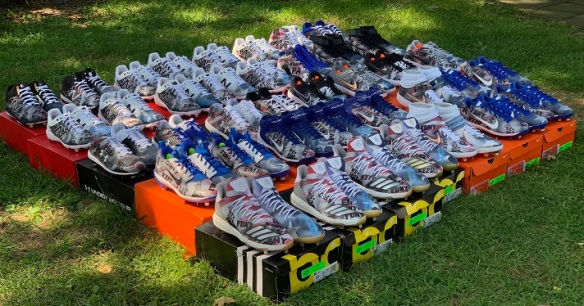
If baseball was going to shoot down his original idea for custom hats featuring New York police, fire, and assorted first responders* and others, Alonso was going to shoot his own weapon—he got his teammates’ shoe sizes and footed the bill himself for Adidas, New Balance, and other top athletic shoemakers to make special 9/11 commemorative game cleats.

“I’ve just been thankful and gracious for this opportunity,” Alonso said to Yahoo! Sports‘s Mike Mazzeo, referring apparently to both his surrealistic rookie season and his chance to do honour to 9/11’s victims and responders.

“For me, this season has been an absolute fantasy. I just want to give back. I want to help. I don’t just want to be known as a good baseball player, I want to be known as a good person, too. And I just want to really recognize what this day is about. I don’t want it to be a holiday. I want it to be a day of remembrance of everything that happened. It was an awful day.”

Baseball government at least had the Mets, the Diamondbacks, and other teams wear patches on their caps showing MLB’s official logo converted to an American flag backdrop, a red-white-blue ribbon behind the logo, and “We shall not forget” embroidered into one side of the surrounding blue circle. Royalties from replica sales will go to three national 9/11 memorial groups.

That’s something commendable, but the idea that Alonso—who gave ten percent of his Home Run Derby prize money to two 9/11-related charities, the Wounded Warriors Project and the Stephen Stiller Tunnel to Towers Foundation (Stiller was a New York firefighter killed during 9/11 rescue efforts)—should have had to defy his game’s governors to honour those killed in America’s arguably worst single-attack atrocity, is grotesque.

Maybe the Mets being one and all on board with Alonso’s footwear helped keep the Manfred regime from slapping the team with a fine or other disciplinary measures. Or maybe the sense that fining or otherwise disciplining Alonso and the Mets for it would bring the regime more negative publicity kept it on its better behaviour.

And maybe the Mets’ defiance delivered them a little favour from the Elysian Fields gods.

First, they flattened the visiting Diamondbacks Wednesday, 9-0—nine runs on eleven hits including a five-run first. Then, as if to prove that some good deeds go unpunished, the Mets finished a four-sweep of the Snakes Thursday with an 11-1 battering.

Again, the Mets used eleven hits, including a single-game team record six clearing the fences, including center fielder Juan Lagares doing it twice, while Marcus Stroman nailed his first genuinely quality start on the mound since becoming a Met shortly before this year’s new single trade deadline.

Lagares’s first blast was only the biggest blow. Todd Frazier’s second-inning leadoff blast against Diamondbacks starter Alex Young and J.D. Davis’s two-out RBI single in the third off Young opened the game 2-0 Mets. A base hit and a walk loaded the pads for Lagares in the third when he wrestled Young to a full count.

Then Young threw a fastball arriving under the floor of the strike zone, and Lagares picked the perfect moment for his first career salami, hitting the equivalent of a five-iron shot into the left field seats.

The center fielder joined the long ball party in the bottom of the fifth, too. Aging second baseman Robinson Cano opened the inning with a line drive into the right field bullpen at Snakes reliever Robby Scott’s expense. Michael Conforto drew a one-out walk and, a strikeout later, exit Scott, enter Jimmie Sherfy, and exit another Lagares launch, this one landing in the seats near the right field foul pole.

Mets catcher Tomas Nido—the backup to Wilson Ramos, and the receiver half the Mets’ starting rotation seems to prefer throwing to (the Mets’ team ERA with Nido behind the plate: 3.68; with Ramos: 4.46), but who doesn’t hit enough to enable them to cement that preference—batted next. He didn’t give Sherfy a chance to breathe after Lagares’s second blast, lining one off the back left field wall above the thick orange line marker that denotes a home run.

Two innings later, and after pinch-hitter Ildemaro Vargas doubled home the only Arizona run in the top of the frame, Conforto punished reliever Kevin Ginkel for a third straight four-seam fastball, driving the down-and-in service into the upper deck in right.

Nothing, however, made even half the impression Alonso’s defiance in tribute to 9/11’s fallen and heroes made. The rook plotted the subterfuge for weeks and, by all known accounts, got the Mets’ team leaders including defending Cy Young Award winner Jacob deGrom on board with the plot.

Threats of fines or other disciplinary measures against Alonso or the Mets have proven unfulfilled, so far.

The fact that such a threat was made or implied and even had to be taken seriously tells you plenty of what you need to know about why baseball’s government has such a rotten public image while the game itself and most of those who play it have one of simple beauty.

Thus does baseball remain very much like its country—our government has a rotten image that’s very well deserved, but our country and most of those who call it our own have one of simple beauty.


* In my college years, briefly, I dated a Long Island nursing student named Kathy Mazza. It never became serious between us, but we had a few pleasant dates including a couple that ended with an all-night hunt for bialys—they differ from bagels in being smaller and based in flour, not malt—which I remember were a particular favourite snack of hers at the time.

Kathy eventually became an operating room nurse turned Port Authority of New York and New Jersey Police officer whom, her eventual police officer husband once swore, became a cop to show him how policing was really done. In due course, she became the second woman to earn captain’s bars on the PAPD and the first to command its police academy.

Her achievements there included convincing the Port Authority to install portable heart defibrillators in the airports it oversaw and training the 600 PAPD officers posted to those airports on how to use them. She also taught emergency medical procedures at the PAPD academy.

And, she died in the 9/11 atrocity.

Joining PAPD responders at the North Tower, she shot out the glass walls of the North Tower’s mezzanine enabling hundreds to escape; the tower ultimately collapsed while she and fellow PAPD officers tried leading more out of the tower. Her body was found a month later, I believe.

Kathy Mazza was one of 37 PAPD officers including its then-chief killed on 9/11. She’s still the only woman ever killed in the line of duty on the PAPD, which suffered the largest single-event loss of life of any single law enforcement agency in history on 9/11.

This column is dedicated to her and their memory.

Discouraged even when the Mets win?

2019-09-04 AmedRosarioJoePanik

Amed Rosario and Joe Panik (2) celebrate the Mets’ Wednesday win over the Nats. So why does it still feel discouraging?

Four months ago, Dave Martinez couldn’t live five minutes without yet another pundit or sports talking head measuring him for the electric chair. Four minutes after the Mets blew one to the Nats in the bottom of the ninth that they led by six in the top, on Tuesday night, Martinez can live like a skipper who has about a 99 percent chance of seeing the postseason even by way of the National League’s first wild card.

Even if he and his Nats lose the afternoon after.

And a few moments before the Nationals started their off-the-charts Tuesday overthrow, Martinez had only one message for his players: “If you let this game go like this, it’s not going to be good,” as he put it in his post-game press conference. Kurt Suzuki in the bottom of the ninth finished making damn sure the game didn’t go like that. He also made sure that what was left of the Nationals Park crowd went from chaos to bedlam while he was at it.

After Suzuki’s three-run homer landed halfway up the left field seats Tuesday night, the Mets looked like they wouldn’t live another five minutes without someone, anyone, preparing to stage an intervention on behalf of the Crisis Addiction Anonymous organisation for which this year’s Mets ought to be the founding fathers.

“It kind of just seemed like a bad dream,” said Mets outfielder Brandon Nimmo, who accounted for two of the Mets’ ten Tuesday runs with a fourth-inning sacrifice fly and a ninth-inning homer.  “I don’t know. That’s hard to do even in a Little League game I feel like, come back from [six] runs down in the bottom of the ninth against guys throwing 99 mph. I don’t really have words for it.”

Mets fans thought it was bad enough watching the Mets blow a seven-run lead in what looked like a blowout in the making against the Braves in Atlanta while almost letting the Braves win it at the eleventh hour? That was just a hard day’s night of a 10-8 win. Tuesday night’s 11-10 loss after the Mets had the damn game locked in the vault was they should have known better. And didn’t.

“We had a six-run lead,” lamented Mets manager Mickey Callaway, whose own neck looked as though it were being measured for a guillotine in May. “Major league pitchers got to be able to hold that.”

How could Martinez and his Dancing Nats, the guys who’ve been baseball’s best since 23 May and think nothing of turning the dugout and the clubhouse into Soul Train after epic home runs or hard-earned wins, know that their still-testy, still-implosive bullpen was going to be taken off the Tuesday night hook by a Mets bullpen that would have fought the Chicago Fire with incendiaries instead of water and other retardants?

A Wednesday matinee between the two, their final meeting of the regular season, promised to be an anticlimax if the Nats won. Or, if the Mets’ self-immolating bullpen incinerated themselves and the Mets yet again. Well, some promises are made to be broken, after all. Some.

Come Wednesday, Luis Avilan struck out Juan Soto swinging after Jeurys Familia surrendered an RBI single (to ex-Met Asdrubal Cabrera) and a two-run double (to Anthony Rendon); Seth Lugo—who wasn’t allowed to work a second inning Tuesday night, with results that will still live in Mets infamy—got his usual two-inning gig and shook off a pair of hits with no runs; and, Justin Wilson pitched a spotless bottom of the ninth.

And the Mets held on to win 8-4. Which cynics, meaning practically any Met fan on the planet, might suggest means it just isn’t safe anymore to trust these Mets with any lead more than four runs. They even had another six-run lead in the middle of the sixth—and let the Nats get a little frisky in the bottom of the inning.

They tied the Nats at a run in the top of the third when spaghetti-bat outfielder Juan Lagares, of all people, led off and hit Nats starter Anibal Sanchez’s hanging cutter over the center field fence. They doubled their pleasure in the top of the fourth when aging second baseman Robinson Cano, returning fresh from the injured list, blasted a first-pitch splitter the other way, into the Mets’ bullpen in left center, with right fielder Michael Conforto (leadoff double) aboard.

And they kicked the train into overdrive when Pete Alonso sent his National League-leading 45th bomb inside the left field foul pole with one out in the top of the fifth.

But with Mets starter Zack Wheeler labouring through five innings and 101 pitches despite surrendering nothing more than Nats shortstop Trea Turner’s two-out RBI single in the bottom of the second, Callaway decided he had no choice but to open the bullpen, and Familia came forth to open the Washington sixth.

Once the Mets’ effective closer, Familia hasn’t been the same since the Mets’ defense blew three World Series saves for him in 2015, or since Conor Gillaspie homered off him to help the Mets lose the 2016 wild card game, not to mention a domestic violence suspension and a blood clot putting paid to his 2017 before the Mets traded him away during 2018.

This season Familia’s been somewhere between lost and implosive, though he had a recent stretch of serviceability before he turned a two-all tie into an eventual 5-2 loss to the Phillies with a little help from a walk to Rhys Hoskins and, in due course, a three-run double by Scott Kingery on Sunday.

Now he took the mound in Nationals Park, walked Gerardo Parra and pinch hitter Andrew Stevenson back-to-back, and struck Turner out swinging. But he threw Cabrera—still bent on making the Mets pay for failing to re-sign him last winter—a creamy pitch that got turned into an RBI single. And he threw Rendon more fodder for the Nats third baseman to solidify a Most Valuable Player case in a walk year, Rendon driving one to the back of right center for a two-run double.

After Avilan dispatched Soto for the side, it took until the top of the eighth for the Mets to thicken the cushion, when Jeff McNeil squirted an RBI single through the right side for the seventh Mets run. The Mets made a push against returning Nats reliever Sean Doolittle in the top of the ninth but Doolittle managed to strand first and third with no scoring damage.

Then Wilson got a ground out, a line out, and shook off a walk to Suzuki—after spinning him around and into the dirt on the first pitch, perhaps just a little reminder against getting too comfy following Tuesday night’s discomfort—to end the game by getting Victor Robles to force Suzuki at second.

You’re encouraged to see a team recover that swiftly from a disaster like Tuesday night. Whether or not it means said team has one more run of derring-do in them before the regular season’s over. But maybe the Mets picked up a piece of Tuesday night news out of Pennsylvania that helped remind them it could always be worse.

Because as bad as it was for the Mets Tuesday night, it was absolutely worse for their Syracuse Mets AAA affiliate. The Mets blew a six-run lead in the ninth? The S-Mets blew a seven-run lead in the eighth, with the International League’s North Division title at stake in a tiebreaking game. But the S-Mets bullpen let the Scranton-Wilkes Barre RailRiders overthrow them, 14-13.

The Mets have been playing for a mere second National League wild card that looks more and more distant the deeper the stretch drive runs. Playing with dynamite, or matches at least, isn’t the way to reach it.

By and large the big boys have reminded the Mets how invincible they aren’t when they look like champions in the making but do it mostly at the expense of the bottom crawlers. Taking two of three from the first NL wild card-leading Nats, just like sweeping the American League second wild card-tied Indians last month, may yet prove aberrational.

Hi! We’re the Mets! And we’re crisis junkies. So who’s going to be the first Met to stand up, make the confession, and begin the recovery process?

The Mets have now won twelve of their last sixteen series, and have won the season series against the Nats, 12-7, but they don’t make you feel too encouraged anymore when they win. And the Nats don’t make you feel discouraged even when they lose two of three. (Even when you think they might think about joining CAA themselves.) Not until they open against the Braves Friday night, anyway.

The Mets hang themselves on the Nats’ gallows

2019-09-03 KurtSuzuki

Trea Turner (7) gives Kurt Suzuki the Gatorade shower. The Nats bullpen should pay for his filet mignon dinners for a year after he helped the Mets bullpen stop the Nats’ intended self-hanging Tuesday night.

These Mets can hang with the big boys. We just forgot to remind ourselves it means hanging themselves. Adolf Eichmann himself didn’t hang from a gallows as big as the one the Mets’ bullpen built in Nationals Park Tuesday.

It takes a rare enough talent to blow a game your team has in the bank. But it takes genius to blow one your team secured in Fort Knox. Just when you thought the Mets’ pen began swearing off arson, and even meaning it, they remind you why you shouldn’t trust them with even a tea light.

Actually, let’s get the facts right. The Nats’ bullpen built the gallows for themselves in the top of the ninth. And they were in not necessarily dire shape but not necessarily pronounced revived fully, especially with overworked closer Sean Doolittle on the injured list.

Then the Mets’ bullpen yanked the Nats’ hapless bulls away from the rope and said, “Thanks large for saving us the trouble! Let us help you to the largest ninth-inning comeback in your franchise history. Least we can do for you building such a nice gallows for us!”

And when Kurt Suzuki, the Nats’ catcher, hit the game-ending three-run homer after Paul Sewald, Luis Avilan, and Edwin Diaz couldn’t get more than one out all inning long, it yanked the noose so tight the Mets looked decapitated as well as hanged.

(The last team to yield five runs or more in the top of the ninth and score more runs than that in the bottom of the ninth? The Red Sox, in June 1961. Against a different Washington franchise. What a difference over half a century makes.)

It didn’t matter that the Mets thumped Nats ace Max Scherzer for four runs in the fourth, beginning with ex-Nat Wilson Ramos extending his hitting streak to 26 games with an RBI double. Any more than it mattered that the Nats pried runs out of Jacob deGrom in the first, the sixth, and the eighth.

But it suddenly mattered even less that Pete Alonso made the score 10-4 in the top of the ninth when he finished a four-run inning with a two-run homer. And, less than that that two Nats relievers—Roenis Elias and Daniel Hudson—got strafed for the four runs before Juan Guerra finally ended that destruction by getting Michael Conforto to fly out for the side.

Because what really matters is three Mets relievers in the bottom of the ninth—Paul Sewald, Luis Avilan, and Edwin Diaz—making a chump out of their manager Mickey Callaway, who’s looked like a chump a little too often this year.

Callaway thought Seth Lugo working a perfect eighth before the five-run Met ninth meant it was perfectly safe for a change not to extend him for a second inning to protect a six-run lead. It was like telling a Brinks guard it was perfectly safe to let Bonnie and Clyde into the bank vault to double check their safe deposit box.

With Victor Robles leading off beating out an infield hit, Sewald got Howie Kendrick to fly out for the first and only Nats out of the inning. Because Trea Turner hit a 1-2 meatball to the back of right field for a double. And after Asdrubal Cabrera singled up the pipe for first and third, Anthony Rendon, the Nats’ should-be MVP front runner, singled home Turner.

Callaway then reached for Luis Avilan to pitch to Juan Soto, whose RBI double in the first opened the game’s scoring in the first place and whose two-run homer in the eighth pulled the Nats back to within a single run just before the Mets started their ninth-inning runaway-that-wasn’t. Soto singled to right to load the pads for Ryan Zimmerman pinch hitting for Matt Adams.

Out went Avilan and in came Edwin Diaz, who only looked in his last couple of outings as though he’d ransomed his once-deadly slider out of its kidnappers’ clutches. In his previous seven outings, he’d surrendered only two earned runs in five and two-thirds total innings. Maybe not close to the Diaz who was lights out in 2018 but not exactly the one who’d dissipated most of this season, either.

The problem was, only the first two of those gigs could be called high-leverage gigs. Diaz hadn’t seen anything like that in over two weeks until Tuesday night. And it showed when Zimmerman hit the second pitch of the plate appearance to deep right to send home Cabrera. But Diaz gamely wrestled Suzuki for seven pitches, a 3-1 count after opening with a swinging strike, then a pair of fouls.

The eighth pitch caught so much of the plate Suzuki could have been tried by jury for neglect if he didn’t send it over the left field fence.

Just like that, the Nats’ worries after losing to the Mets on Labour Day—especially filling their number-five starting rotaton spot after the Mets abused Joe Ross for two and a third, on a day Noah Syndergaard might as well have been the Invisible Man so far as the Nats were concerned—were over. For another day, at least.

With one swing Suzuki silenced the traveling 7 Line Army—a gang of Mets fans whose doings include making numerous road trips including to Washington this week, and who often sounded louder than Nats fans on Monday. In one half inning the poor 7 Liners got silenced almost as fast and hard as they’d been hot and loud in the top.

And Suzuki also punctuated a cold reality about these Mets. That magnificent post-All Star run not only ended ignominiously when they finally got to take on the bigger boys, it now looks like a cruel tease of a dream.

Their apparent crisis addiction remains their number one enemy. You thought the Mets were suddenly beginning to be exposed when they blew a set in Atlanta that they could have won, and won the third game of that set despite opening what looked like a blowout and managing to survive the Braves cutting the margin to a pair?

Who says a team that can blow a seven-run lead they’d built by the fourth inning against the Braves can’t blow a six-run lead they’d built in the top of the ninth against the Nats? Who were only too happy to dance over the Mets’ Tuesday night corpses? The backside of that, of course, is who says a team of Dancing Nats can’t pick themselves up from a six-run deficit at the eleventh hour?

And don’t discount the revenge factor when you think about that. It now seems like centuries ago, but the Mets overthrew the Nats in the bottom of the ninth to open a two-of-three Mets series win in New York last month. They did it almost the reverse of what the Nats did Tuesday night, with a three-run homer to tie and an RBI single to win. But it still left the Nats feeling deflated.

The Mets have been deflating themselves lately. After sweeping the Indians in New York they dropped back-to-back sweeps to the Braves and the Cubs, also in New York, before taking three of four from the Phillies before coming to Washington. That’s now a 3-8 record since 23 August.

Tuesday night may or may not demoralise the Mets completely. But it turned their hopes for even a second wild card into unreality. It probably, really was a sweet dream that they could have played and thought like contenders even for that card for as long as they did.

The Nats reminded the Mets in the worst way possible what happens when a contender real or alleged decide the other guys have no business hanging themselves while the Mets happen to be in the house.

But the Nats better be careful themselves. They have better teams to face yet. And those teams won’t be so inclined to stop them if the Nats insist on building and hanging on their own gallows.