Starting postseason life with two bangs

Royce Lewis

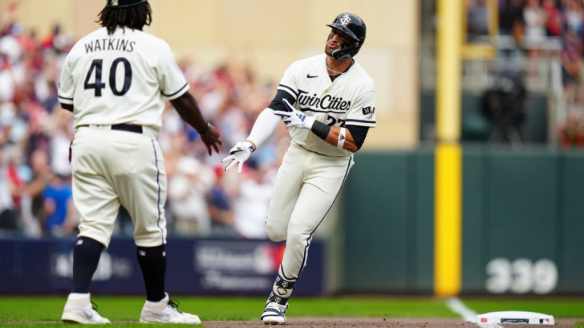
Sometimes things line up too perfectly to pass up on those opportunities.—Royce Lewis, here rounding third off the second of his AL wild card series-opening home runs Tuesday.

Children who grow up with dreams of baseball have numerous supporting fantasies. Rest assured, once they realise they can play the game well, they dream of making the Show. Many of them then dream of going number one in the draft, with or without the glandular signing bonus. Many of those dream of going number one, making the Show, then making the postseason for the first time and making . . .

Waves? Big splashes? Broken precedents? All the above? Ask Royce Lewis, the Twins’ infielder who slotted as the team’s designated hitter for Game One of their wild card set against the Blue Jays Tuesday. The same guy who hit grand slams in back-to-back games against the Guardians in July.

He faced formidable Blue Jays starter Kevin Gausman in the bottom of the first with one out and Edouard Julien aboard (leadoff walk). He worked the count full. Then, he turned on a pitch in the middle of the inside part of the plate, and it sailed on a high line into the left field seats. Game One wasn’t ten minutes old, and Lewis put the Twins up 2-0.

Two somewhat quiet innings later, Lewis checked in against Gausman again. This time, he opened the inning. This time, he didn’t wait for the count to get full. This time, Gausman’s 3-1 service came right down the pipe. This time, the ball took a flight the opposite way, banging off the top of the right field wall, making it 3-0, Twins, turning Target Field temporarily into the world’s largest outdoor nuthouse.

Two plate appearances. Two swings. Two bombs. There have been 58 number-one draft picks since Rick Monday went number one to the then-Kansas City Athletics in 1965. There have been a number of big boppers among them. Only three of those number-ones became Hall of Famers. (Harold Baines, Ken Griffey, Jr., Chipper Jones.) Four, if you count Hall of Famer-in-waiting Joe Mauer.

Not a one of them began any postseason life they had with even one home run, never mind two, never mind hitting the first bomb of any postseason, never mind being responsible for every run scored in their team’s postseason series-opening win, which the Twins won 3-1. The lone Toronto run: Kevin Kiermaier singling Bo Bichette home in the top of the sixth.

“That’s a God thing,” Lewis said postgame. “I’m just blessed to be part of it. It felt like I was blacked out the whole game. My heart was racing.” He keeps blacking out like that and the Twins have an excellent chance of going places other than home prematurely this postseason.

Wherever Lewis’s career goes from here, he’s got bragging rights forever on every fellow member of the Number One Club. He also has the honour of being the man most responsible for ending the Twins’ most peculiar negative achievement, stopping their postseason game losing streak at eighteen. Not to mention only the third player ever, regardless of draft position, to open his postseason life with a first-inning home run, joining Evan Longoria (Rays, 2008) and one-time Twins favourite Gary Gaetti (the eventual 1987 World Series winners).

Eighteen straight postseason games lost over nineteen years, under three different managers and with several franchise icons in the mix, from Mauer to Johan Santana to Torii Hunter to Byron Buxton. It took a guy whose first couple of seasons in the Twins’ fatigues have been disrupted rudely by injuries and who was freshly recovered from a hamstring injury to step up Tuesday and bring his demolition kit to the park with him.

“We just wanted to put an end to something that was very unfortunate to our beloved fans,” said Twins starting pitcher Pablo Lopez, who pitched five and two-thirds strong innings before Kiermaier’s steak single ended his day. “Our fans have been so great to us—they support us, they root for us no matter the situation. It felt right. The way I see it now, we have a new streak going.”

“I thought the place was going to split open and melt,” said Twins manager Rocco Baldelli—who has a pair of postseason home runs on his own resumé, including in the 2008 World Series for the Rays. “Honestly. It was out of this universe out there on the field. The fans took over the game. They helped us win today.”

The Twins’ fielders took over when the fans didn’t. There was center fielder Michael Taylor stealing a prospective game-tying double from Matt Chapman with a flying leap against the fence in the top of the second. There was, especially, Kiermaier’s chopper in the fourth, sneaking away from onrushing Twins third baseman Jorge Polanco.

Bichette on the run from second thought he had a shot at scoring. Plantaar fasciitis-addled shortstop Carlos Correa thought otherwise. He yanked himself running to his right, picked the ball barehand as Bichette headed down the third base line, threw off balance, and managed somehow to get the diving Bichette out by about the full length of a catcher.

“If you like watching the biggest players making the biggest plays in the biggest games,” Baldelli said, “then you should go watch that play. It was fantastic.”

Lewis had the fantastic franchise wrapped up in the first and the third, though.

“Some people believe in fate,” he said. “Some people believe that the things we do today drive what we do tomorrow. But sometimes things line up too perfectly to pass up on those opportunities.”

He had two pitches line up just that perfectly as ironclad evidence.
Concussions killed Mauer’s career, not his Cooperstown case

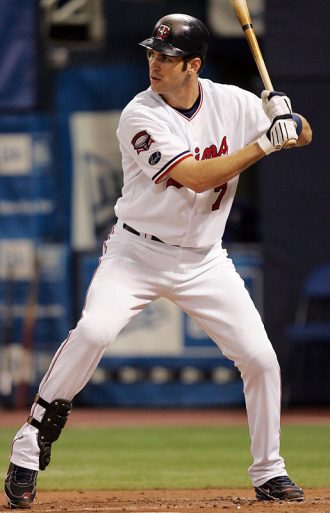
Joe Mauer

Mauer’s critics, not Mauer, should be shamed for willfully ignoring what concussions did to end his catching life and, in time, his playing career.

Scott Rolen’s election to the Hall of Fame triggered almost immediate discussions about next year’s likely Hall of Fame class. Social media being what it is, as opposed to what we wish it became, Rolen’s election also triggered an unfathomable outpouring of bile against one of three deserving Hall of Famers who make their first appearances on the writers’ ballots toward 2023’s end.

Adrián Beltré is a Hall of Fame lock. Not just because he’s a paid-in-full member of the 3,000 hit club but because he has 93.5 wins above replacement-level player (WAR) and he’s the number-two third baseman ever in terms of run prevention: Beltré’s 168 defensive runs above his league average is second all-time to Hall of Fame Brooks Robinson. (Baseball Reference rates Beltré the number four all-around third baseman.)

Chase Utley deserves a plaque in Cooperstown, too, even if his lack of black ink might be blinding. He wasn’t an overwhelming hitter, but he was a run machine once he reached base, including being worth 45 runs as a baserunner and worth another 25 runs due to his ability to avoid double plays. He’s also fourth for run prevention at second base (+141 runs, behind only (in ascending order) Hall of Famers Bid McPhee, Joe Gordon, and Bill Mazeroski.

And, then, there’s Joe Mauer. The number seven catcher all-time according to Baseball Reference. Uh-oh.

“I’ve never seen fans of a team hate an all-time great of their own the way some Twins fans do Mauer, tweeted The Cooperstown Casebook author Jay Jaffe. “They’re just so convinced he gave them a raw deal for that contract.” As in, the eight-year, $184 million contract extension he signed with the Twins in March 2010. As in, before the injury that ultimately put paid to his life as a catcher, then a ballplayer period.

It’s as though a man whose baseball profession had already led him to knee and leg issues committed some grave capital crime when, in August 2013, Mauer took a hard foul tip off his face mask. It caused a concussion that soon caused the Twins to pull him out from behind the plate and move him to first base—a position left largely vacant when they traded Justin Morneau to the Pirates a year before Mauer’s concussion.

Morneau, who suffered a concussion on a baserunning play the year Mauer signed that yummy contract extension, and who would suffer a second concussion on another diving play after he’d signed with the Rockies for 2014. One concussed first baseman eventually replaced by a concussed catcher who’d never again be the player he’d been prior to August 2013.

The guy with a reputation as a baseball gym rat who played the game with a commitment and a steadiness that caused some people to mistake him for emotionlessness spent the rest of that contract extension doing his level best to play despite things like the balance issues and light sensitivities that now made hitting a challenge and fielding a battle.

The Twins’ struggles around Mauer’s had far less to do with Mauer’s and more to do with its ownership seeming to impose a de facto spending cap the rest of Mauer’s career, including major league salaries and minor league development. But the native son, the franchise face, was too simple a target to resist, as the injured often are.

As if Mauer hadn’t battled enough at the plate following 2013, in May 2018 he suffered a second one after he dove chasing a foul ball and injured his neck. Concussion symptoms kicked in a few days later. They didn’t just impact him on the field, either. His wife, Maddie, told The Athletic they were no treat for him at home with two young twin daughters to raise, either. (The story was published as she was about to give birth to their third child, a son.)

“It’s not quiet at our house and they don’t understand why dad wants it to be quiet or be in a different room or have the lights off,” Mrs. Mauer said.

Our girls had been born about a month prior (to the 2013 concussion). Both of these times it does put things into perspective that you’re dealing with these symptoms at work, but you’re dealing with them at home just as much. I think that’s something he may not have talked about as much publicly, but it was a difficult challenge to be going through concussion-like symptoms with children.

“The neck [injury] is an easy one to take care of,” Twins trainer Tony Leo told The Athletic for the same story. “We can fix that. But the concussion had all these ebbs and flows going up and down.”

I think people don’t appreciate how much it impacts you on a day-to-day basis with just simple things like getting out of bed. Am I going to feel OK? Am I going to have a headache? Am I going to have ringing in my ears? Am I going to feel nauseous? Am I going to be able to see all right? When I turn on the lamp next to my bed, is that light going to cause me to start having a headache? Am I going to be too agitated and upset at my kids when it’s not their fault, but just because of all the sensations going on.

Everything starts compounding and adding to the anxiety you’re going through when you’re trying to minimize all these distractions and trying to allow the brain to heal. Little things trigger big symptoms, which cause you to doubt whether you’re healing or not. It’s really hard to remove yourself from everything let alone when you’re in the clubhouse with music, all the lights we have, TVs, people. You have the same thing at home with the day-to-day living that . . . We get focused on the baseball. I get focused on getting them back on the field for the game. But how do you start minimizing everything else in life that’s bothering you, especially with kids who just want to be around dad?

Maybe instead of soaking Mauer in a phlegm-and-bile bath because of what his head refused to let his body do at the level it once did during five of the eight years of that contract extension, the idiot brigades might consider what it took for Mauer to continue playing at all, at any level. After they consider that, perhaps miraculously, it actually didn’t compromise his Hall of Fame case.

As a catcher, Mauer—unusually tall for a backstop at 6’5″—was easy to overrate while he played. I made that mistake once myself. I’m not making that mistake again. I’m going to show you where Mauer will sit among Hall of Fame catchers who played in the post-World War II/post-integration/night-ball era, according to my Real Batting Average (RBA) metric. (Total bases + walks + intentional walks + sacrifice flies + hit by pitches, divided by total plate appearances.)

Catchers PA TB BB IBB SF HBP RBA
Mike Piazza 7745 3768 759 146 45 30 .613
Roy Campanella 4815 2101 533 113 50* 30 .587
Joe Mauer (as C) 3943 1640 478 79 35 13 .569
Johnny Bench 8674 3644 891 135 90 19 .551
Yogi Berra 8359 3643 704 91 95* 52 .549
Carlton Fisk 9853 3999 849 105 79 143 .525
Ted Simmons 9685 3793 855 188 100 39 .514
Gary Carter 9019 3497 848 106 99 68 .512
Ivan Rodriguez 10270 4451 513 67 76 58 .503
HOF C AVG .547

You’re not seeing things. Among that group of Hall of Fame catchers, Mauer is number three—eighteen points ahead of Johnny Bench, and twenty points ahead of Yogi Berra, the two men considered the greatest all-around catchers who ever played the game. (You might care to know, too, that as a catcher Mauer had 62 more walks than strikeouts at the plate.) He was also a highly-regarded pitch framer behind the plate who was worth 65 defensive runs above average for his entire life there.

Mauer retired in 2018 because he decided at last that family life without further health compromise was more important than his itch to compete. (The Twins retired his uniform number 7 the following season.) “Experiencing a concussion looks different for everyone,” he said in his formal retirement letter to Twins fans, “but my personal experience forced me to look beyond baseball at what is best for me as a husband and father.”

Instead of shaming Mauer because they don’t get what two concussions did to his Twins life under that contract extension, the idiot brigades should marvel that those two serious, life-and-career-altering injuries didn’t compromise his case as a Hall of Fame catcher in waiting, and even admire him for having the will to try playing on in spite of them. And, for deciding that being a husband and father was more important than playing the game he loved.

But that might ask too many people to surrender their ongoing and erroneous belief that injuries incurred in real competition equal weakness at best, thievery at worst, and character flaws somewhere in there, too. “I am done with a lot of things,” Jaffe also tweeted, “but especially done arguing about Mauer with Twins fans who don’t understand the impact of the concussions on his career.” As of this sentence, so am I.

What a long, strange trip it’s been . . .

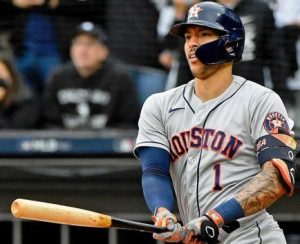
Carlos Correa

Correa took a medicals-inspired, coast-to-coast trip back to the Twins in the end.

This much we should understand about today’s typical Met fan, and it’s not the first time this lifelong (theirs) Met fan has said so: Today’s typical Met fan is ready to push the plunger on a season over one bad inning—in April. The least shocking thing when Carlos Correa didn’t go from likely signing to donning a Met jersey at an introductory press conference was any Met fan surrendering 2023.

From the moment the Twins with whom Correa played last year came back into play for the shortstop, when the Mets proved as alarmed over Correa’s long-term health as the Giants had previously, many Met fans did. Social media was as crowded with them as a major subway transfer station is crowded during a New York rush hour. But there were voices of reason to be heard if you knew where to listen.

And what those voices said, from the top down, possibly including the fellow lifelong Met fan who owns the team now, was, If this guy’s rebuilt lower leg betrays him when the deal is halfway finished or less, he’s going to become a fan target and we are going to resemble the village idiots for signing him. At least, at the full thirteen and $350 million originally planned.

Now the Twins—who weren’t exactly circumspect about wanting to have Correa back longer term—have brought him back for six years and $200 million. ESPN’s Jeff Passan broke that news aboard Twitter Tuesday. The deal is now official with the physical passed.  Even if it took Correa two long stops aboard what sometimes resembled the crazy train to get there.

Remember: The Giants had landed him—until they didn’t. They quaked over something in Correa’s medical profile, enough to let him walk right into the Mets’ open arms on the day they expected to present him at a presser climbing into a Giants jersey. First it was thought to be Correa’s back. Then, as the Mets were ready to wrap him up for Christmas, the discourse turned to that now-notorious rebuilt ankle.

The Mets had Correa ready to place under New York’s Christmas tree—until they didn’t. They, too, quaked over something in the medical profile. Unlike the Giants, the Mets were willing to adjust. We know now they worked up an adjusted deal for six years and $157.5 million (were willing to go six assured at $175.5 million (roughly $27 million annually), with additional years up to six to follow based upon annual physical examinations.

The Giants’ prudence (if that’s what it was) about Correa in the end still leaves them with more holes to fill. The Mets’ such prudence doesn’t leave them with more than maybe a dent or two to fix. Remember: the Mets won 101 games last season before they collapsed in postseason round one. They’re not exactly in terrible 2023 shape, either.

But it looks as though Steve Cohen isn’t going to be the wild free-spender the rest of baseball world believed and maybe feared. It also looks as though he’s not willing to be as risky as people thought when it comes to players with injury histories no fault of their own but profound enough. Even players he says publicly, as he did about Correa, might be necessary pieces for a full-distance championship team.

Remember: Cohen once let a shiny draft pick (pitcher Kumar Rocker) walk rather than sign him over concerns about shoulder issues. He’s the owner who let Jacob deGrom, the arguable best pitcher in baseball when healthy (underline those two words), walk. (To the Rangers, for five years and $185 million.) If he was willing to let the game’s best pitcher when healthy (underline those words) walk, he wasn’t going to fear letting one of its best left-side infielders walk over similar alarms.

Is it unrealistic to think that the Astros, who raised Correa in the first place and saw him shine with them for seven seasons, let him walk into free agency in the first place because they, too, had long-term concerns about his long-term health?

Cohen may be willing to open the vault wider than any other major league owner, but it doesn’t mean he’s going to be that drunk a sailor. Remember: He had a plan and executed it regarding deGrom, signing seemingly ageless future Hall of Famer Justin Verlander for two years.

He also locked down late-game relief ace Edwin Diáz and outfield mainstay Brandon Nimmo. Extending first base anchor Pete Alonso isn’t unrealistic, either, especially after letting talented but too-firmly blocked Dominic Smith walk into the Nationals’ arms. The plan for Correa was moving him to third to play aside uber-shortstop incumbent Francisco Lindor. Without Correa? They have a pair of talented third basemen, veteran Eduardo Escobar and sprout Brett Baty.

The Mets aren’t hurting without Correa. The Twins are risking that they won’t be hurting if and when Correa begins hurting. As it was, Correa on his 2022 deal—three years, $105.3 million, and three opt-outs, the first of which Correa exercised to play the market in the first place this winter—proved a second half godsend, when the Twins became injury riddled enough but Correa managed to stay the distance.

The Twins also liked Correa’s clubhouse leadership and prodding teammates to improve. “The vision he has,” assistant pitching coach Luis Ramirez told The Athletic, “the awareness, the anticipation about what is going to come next. When he needs to talk to a teammate about an adjustment that needs to be made, or just, to like, picking up a teammate, or paying attention to small details in the game that others don’t see—he makes us better in everything, in the field, everywhere.”

They’re also banking on Correa maturing further and further away from his Astrogate past. Correa was once the staunchest public defender of the Astros’ 2017 World Series title. Yet he said not so fast, more or less, at that notorious February 2020 word salad-bar presser; their illegal, off-field-based, electronic sign-stealing Astro Intelligence Agency was “an advantage. I’m not going to lie to you.”

If you know what’s coming, you get a slight edge. And that’s why [then-general manager Jeff Luhnow and then-manager A.J. Hinch] got suspended and people got fired because it’s not right. It’s not right to do that. It was an advantage. But . . . it’s not going to happen moving forward.

Correa also took the Astros’ superstar second baseman José Altuve off the Astrogate hook, insisting—and the evidence since brought forth backs it up—that Altuve not only declined to work with stolen signs transmitted to him but actively objected to the infamous trash can banging of the pilfered intelligence while he was at the plate.

“The man plays the game clean,” Correa insisted, after then-Dodger Cody Bellinger fumed that Altuve should return his 2017 American League MVP award. “That’s easy to find out. [Astrogate whistleblower] Mike Fiers broke the story. You can go out and ask Mike Fiers: ‘Did José Altuve use the trash can? Did José Altuve cheat to win the MVP?’ Mike Fiers is going to tell you, straight up, he didn’t use it. He was the one player that didn’t use it.”

That’s what SNY’s Andy Martino said, too, in his Astrogate book, Cheated. It’s what Evan Drellich—one of the two Athletic reporters (with Ken Rosenthal) to whom Fiers blew the Astrogate whistle—is liable to reiterate in his forthcoming (next month) Winning Fixes Everything: How Baseball’s Brightest Minds Created Sports’ Biggest Mess. It’s what too many fans continue to ignore.

Without Correa, and placing their shortstop present and future into Gold Glove-winning rookie Jeremy Peña, last year’s Astros were down to only four or five remaining from the notorious 2017-18 Astrogate roster, including Altuve. The facts didn’t stop fans from hammering Altuve along with the others with chea-ter! chea-ter! chants—all the way into the World Series they won straight, no chaser at last.

The Twins bring Correa back with a front-loaded deal that includes no opt-outs and a full no-trade clause. They’re still taking a big risk on his health even for six years. God help Correa if his ankle or anything else breaks down and reduces him to journeyman status if he can play at all. Fans never let facts get in the way of fuming rants against what they think are fragile goldbrickers. Ask any Yankee fan when it comes to Jacoby Ellsbury.

But would a cynic suggest that, maybe, just maybe, in his heart of hearts, Correa was happy enough in Minnesota to let this weird coast-to-coast, medicals-scripted swing bring him back there in the first place, for a few more dollars than the Mets were willing to go on the same six guaranteed years? Maybe a cynic would. Maybe enough Met fans would. Did I just repeat myself?

The realist knows that, as fine as he’s still going to be, Correa’s ancient ankle repair did cost him in the long run. That, and not his controversial uber-agent Scott Boras, wrote this costly script. Costly for Correa. As The Athletic also points out, he lost seven years and $150 million compared to the original Giants offer, ended up with a lower offer from the Mets (half that $315 million over half the time), and signed with the Twins for four years and $85 million less than the ten/$285 million they first offered.

But realism isn’t half as much fun as ranting your head off about a season blown because of a signing blown, is it? Such is one of the major headaches of being a Met fan since the day they were born.

“But . . . history, dammit!!!”

Clayton Kershaw

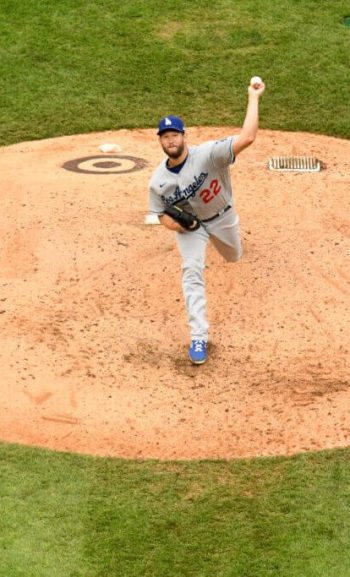
Clayton Kershaw pitching in Target Field, against the Twins, Wednesday. He was lifted after seven perfect innings and the world went nuclear.

Finally, Steven Kwan went hitless. It took his sixth major league game before somebody’s pitchers finally found ways to get him out all day long, if you don’t count the bases-loaded walk he took in the second to start the scoring in a 7-3 Guardians win.

Then Vladimir Guerrero, Jr. smashed three home runs against the Yankees in the south Bronx, including a pair off Yankee ace Gerrit Cole, en route a  6-4 Blue Jays win, a performance that had even the Yankees dropping their jaws in amazement.

Those might have been the top stories Wednesday if not for Clayton Kershaw and Dave Roberts.

Kershaw pitched seven perfect against the Twins in Minneapolis. Despite his having thrown “only” seventy pitches while striking thirteen Twins out including striking the side out in the sixth, Kershaw didn’t come back for the eighth inning. Roberts ended Kershaw’s day knowing both men agreed he’d be on a limited leash in his first season’s start at all, never mind pitching in temperatures in the thirties.

The world went nuclear over it.

Sometimes during the uproar it seemed nobody wanted to listen when Kershaw postgame explained, among other things, “I knew going in that my pitch count wasn’t going to be one hundred. It’s a hard thing to do, to come out of a game when you’re doing that. We’re here to win. This was the right choice.”

He’s Clayton Freaking Kershaw and he should have been entitled to finish that perfect game!

“Those are selfish goals. We’re trying to win,” said the lefthander who pitched a no-hitter in 2014 and whose black ink from ages 23-29 has already secured his reservation in the Hall of Fame.

That’s really all we’re here for. As much as I would’ve wanted to do it, I’ve thrown 75 pitches in a [simulated] game, and I hadn’t gone six innings, let alone seven. Sure, I would’ve loved to do it. But maybe I’ll get another chance.. . . I would have loved to have stayed, but bigger things, man, bigger things . . . Earlier in my career, I’d be built up to a hundred pitches. Blame it on the lockout. Blame it on me not picking up a baseball until January. My slider was horrible the last two innings. It didn’t have the bite. It was time.

Whaddabout history?!? Whaddabout entertainment?!? This is the way baseball brings the fans back?!?

What about the injury history of a 34-year-old pitcher, working in that 30-degree temperature range in crisp Minnesota, after an owners’ lockout-imposed badly abbreviated spring training, and coming off a season ended by forearm/elbow inflammation, accompanied by speculation he might even face Tommy John surgery? To say nothing of Kershaw not picking up a ball until January because of continued recovery from that forearm issue?

Goddam analytics!!!!!

Protecting a pitcher’s health—which is exactly what Roberts did, presiding over a starting rotation about whose long-term health Roberts has said on the record is the key to the Dodgers’ long-term seasonal health and success—has absolutely nothing to do with analytics. All the analytical information available to managers and players about their own and their oppositions’ tendencies isn’t going to tell you whether or when a player’s liable to incur injuries. Analytics aren’t that smart.

“It was a short spring training after a lockout,” reminded no less than Aaron Gleeman, who covers the Twins for The Athletic. “He’s not fully built up. Nothing to do with analytics.”

Nolan Ryan wouldn’t have come out after only seventy [fornicating] pitches, and his manager would have had a fight on his hands if he tried to lift Ryan!!!!

Any time any starting pitcher gets the early hook for any reason in any circumstance—never mind that most managers now have their starters on pitch limits in an admirable bid to compensate for the too-short spring training preparation and assure their long-term season’s health as best as possible—there still comes even one ignorant Ryan name-drop. This one delivered truckloads of them all around social media.

I’m going to let Athletic analyst Keith Law say it for me as I also did when reviewing the book in which he said it, The Inside Game: Bad Calls, Strange Moves, and What Baseball Behaviour Teaches Us About Ourselves, two years ago:

The center square on your [Pitch Count Bingo] card is Nolan Ryan, whose name is certain to come up in any attempt to discuss the limits of the human body to throw a projectile at 95 mph repeatedly over a three-hour span . . .

Nolan Ryan was a physical marvel, and an extreme outlier when it came to durability, although most discussions of the latter ignore the part where he missed 1967 and 1968 with persistent arm trouble. Ryan did things we will probably never see again, not now that pitchers throw harder than ever and play more than ever as kids, while teams work to keep their most gifted pitchers healthy until they reach the majors . . .

Nolan Ryan is the ultimate survivor, the survivor ne plus ultra, the übersurvivor when it comes to survivorship bias. Yes, Ryan defied everything we know now about pitch limits, and shouldered (pun intended) workloads that no MLB would ever allow a pitcher to carry [now], whether in individual games or entire seasons . . .

He is . . . an outlier, a great exception—not one that “proves” the rule, but one that causes many people to discard the rule. Most pitchers can’t handle the workloads that Ryan did; they would break down and suffer a major injury to their elbow or shoulder, or they would simply become less effective as a result of the heavy usage, and thus receive fewer opportunities to pitch going forward. Teams did try to give pitchers more work for decades, well into the early 2000s, but you don’t know the names of those pitchers because they didn’t survive: they broke down, or pitched worse, or some combination of the above. (Emphasis added.)

By the way, the Dodgers did finish the victory they began while Kershaw was in the game. They led 3-0 when he came out. With one out in the top of the eighth, Cody Bellinger, Gavin Lux, and Austin Barnes smashed back-to-back-to-back home runs off Dereck Rodriguez working his fourth inning of relief. Then Max Muncy greeted Rodriguez’s relief Griffin Jax by leading off the top of the ninth hitting a full-count fastball over the right field fence.

They also lost the perfecto when Kershaw’s relief Alex Vesia surrendered a one-out line single to former Yankee Gary Sanchez in the bottom of the seventh. Nobody saw Kershaw complain. If anything, he looked about as jovial and hail-fellow in the dugout as a man can look after being “robbed” of a shot at “history.” A man who knows his baseball immortality is already assured is far more sanguine in such circumstances than the world going nutshit about his “robbery.”

There were 233,345 major league baseball games before Wednesday, and only 23 of them were perfect. Thirteen (57 percent) were pitched by men who’d get to the Hall of Fame as visitors only. Only one—Hall of Famer Sandy Koufax’s jewel of 9 September 1965, after Koufax threw mere no-hitters in each of his three previous seasons—actually proved that practise makes perfect.

Should the Dodgers fail in their quest for one full-season World Series championship while Kershaw remains among them, it won’t be because he was lifted after seven perfect innings in his first season’s start. Should they succeed in that quest, it will be in considerable part because Roberts placed his pitcher’s long-term, season’s health—with his pitcher on board entirely—ahead of “history.”

“But who is a perfect game for, anyway?” asks Sports Illustrated writer Emma Baccelieri, who answers promptly. “It might be just as easy to conceive of it as selfless rather than selfish: a great communal gift as much as a great individual achievement. Everything on Wednesday made sense. But perhaps it is not selfish—not unreasonable—to wish that everything did not have to make so much sense all the time.”

Would I have loved to see Kershaw consummate a perfect game? You might as well ask if I still enjoy being alive. Just don’t ask me to list the roll of Hall of Fame pitchers who never got to pitch perfect games, either. They’d only begin with Walter Johnson, Christy Mathewson, Warren Spahn, Whitey Ford, Juan Marichal, Bob Gibson, Tom Seaver, and, yes, St. Ryan himself—who threw seven no-hitters but was never perfect even once.

You’re worried about “entertainment?” The single most entertaining things in baseball other than actual games and even World Series triumphs are arguments liable to last as long as baseball itself will last. Even when those arguments are as witless as the day is long.

The Twins deliver a stunning signing: Carlos Correa

Carlos Correa

Almost nobody expected the longtime Astros shortstop to sign with the Twins.

It’s hard to look at Carlos Correa signing with the Twins for three years and $105.3 million without knowing the Astros’ remaining Astrogate contingent is reduced officially by one. There are now only three position players and one pitcher remaining from the tainted 2017 World Series winners.

This should be good for the Astros in terms of leaving the Astrogate taint further and further behind them. But I suspect it won’t be. With only four Astrogate-team members left last year, the Astros still heard it loud and long from fans on the road. Some of it was mere booing, catcalling, and “chea-ter!” chants. Some of it was inflatable and actual trash cans hitting fields.

I still suspect it’s not going to stop until the last Astrogater standing no longer wears an Astro uniform. Not until second baseman Jose Altuve (who actually didn’t partake all the way in the Astro Intelligence Agency’s 2017-18 off-field based, illegal camera-abetted, electronic sign-stealing operation), third baseman Alex Bregman, first baseman Yuli Gurriel, and pitcher Lance McCullers, Jr. move to other teams if not into retirement.

As it happens, I have tickets for what will now be Opening Day, period, in Angel Stadium on 7 April. Guess who the Angels host to start their regular season. My son and myself will probably wonder en route the ballpark how many other Angel fans will turn up with inflatable trash cans, bangable trash cans, and more to continue letting the Astros have it.

It took decades before the 1951 New York Giants were verified once and for all as off-field based sign-stealing cheaters en route the comeback that forced the fabled pennant playoff. It took only two years from the 2017 World Series to expose and verify the AIA. And it took only a couple of hours during the pandemically-aborted 2020 spring training for the Astros to show the world they didn’t quite think their cheating was that big a deal.

Correa since the infamous spring training 2020 presser has been maybe the most stubborn defender of the Astros’ 2017 Series title. “When you analyze the games,” he said before the coronavirus closed that spring training and half the season to come, “we won fair and square. We earned that championship.”

Funny, but that’s not exactly what Correa said at the infamous presser. While Astros owner Jim Crane tripped over himself, Bregman tossed word salad, and since-gone outfielder Josh Reddick “couldn’t really say [the AIA operation] did or didn’t” give the Astros an advantage, Correa said, essentially, not so fast:

It’s an advantage. I’m not going to lie to you. If you know what’s coming, you get a slight edge. And that’s why [then-general manager Jeff Luhnow and then-manager A.J. Hinch] got suspended and people got fired because it’s not right. It’s not right to do that. It was an advantage. But . . . it’s not going to happen moving forward.

After the Braves nailed last fall’s World Series at the Astros’ expense, Correa spoke in terms that would have made him a fit on the 20th Century Yankees.

Second place is not good enough for us. I know it’s not good enough for you guys. But it speaks volumes of how good our organization is, how talented our clubhouse is. Five ALCS in a row. Three World Series in five years. I don’t know what else you want to ask from a great ball club . . .People expect greatness when you talk about the Houston Astros. They expect us to make the playoffs every year. They expect us to be in the World Series every year.

But the only one they won is the one that just so happens to be tainted.

And, speaking of the Yankees, take a poke around the vast multitudes that root for or at least follow them and it seemed as though the number one thought in and out of their minds Saturday morning was, How on earth could the Yankees miss out on signing Correa? Did they really take Josh Donaldson’s contract on in that trade with the Twins just to let the Twins snatch Correa with the savings?

Others thought Correa outsmarted himself into taking considerably less with the Twins than he thought he might get on a market that got forced into overdrive thanks to that ridiculous owners’ lockout. But he’ll pull down the fourth-highest single-season salary of 2022, behind pitchers Max Scherzer (Mets) and Gerrit Cole (Yankees) plus outfielder Mike Trout (Angels).

The deal also includes opt-outs after this season and next. Turning 28 in the final third of this coming September, and assuming he has a typically Correa season in Minnesota, he could still opt out and play next winter’s market for something more to his supposed liking. Maybe he didn’t really outsmart himself, after all?

Maybe the Yankees still have a spring surprise yet to play. They unloaded Gio Urshela (shortstop) and Gary Sanchez (catcher) to bring Donaldson (third base), Isiah Kiner-Falefa (shortstop), and Ben Rortvedt (catcher) aboard. Maybe they have Kiner-Falefa in mind to play support after they sign free agent shorstop Trevor Story? Maybe?

Or maybe the Twins have decided, yes, they’re coming into it to try to win it, including enticing the shortstop anchor from the penthouse of the American League West for a season at least. Maybe they can make Correa happy in the Twin Cities, after all.

Maybe he can join his fellow high 2012 draft pick Byron Buxton (Correa and Buxton were numeros uno and two-o in that draft) to yank them from the basement to the penthouse. He did prove last year that he knows how to win without any funny business that anyone knew of, even if the Astros came up two bucks short in the World Series.

‘[T]he makings of a formidable lineup are present in Minnesota, though they’ll need a few things to break right,” writes MLB Trade Rumors’s Steve Adams, who also notes their “patchwork starting [pitching] rotation” remains a cause for some alarm even with trading for Sonny Gray from the apparently tanking Reds.

From the defensive side of things, Correa gives the Twins a pair of Platinum Glove winners, joining Buxton in that regard. With quality defenders like [Max] Kepler, Urshela and young catcher Ryan Jeffers also occupying key spots on the diamond, the Twins should have a strong defensive team overall. The Twins already ranked 12th in the Majors both in Defensive Runs Saved and Outs Above Average in 2021, and Correa should boost both marks.

There’s something else Correa could do now that he’s become a Twin, too. Something not exactly unprecedented. He could become the latest 2017 Astro to drop all pretenses, denials, and whataboutisms, and come a lot cleaner about Astrogate.

That began with utilityman Marwin Gonzalez, who signed with the Twins as a free agent for 2018, then with the Red Sox as a free agent for 2021, got released by the Red Sox last August, and signed to return to the Astros for their run to the World Series.

Gonzalez broke the ice around the time of the infamous 2020 Astro presser. “I’m remorseful for everything that happened in 2017,” he told reporters, “for everything that we did as a group, and for the players that were affected directly by us doing this.”

He, too, didn’t use the C word. Maybe it’d be too much to expect Correa to use it, too, if he decides it’s safe to come all the way clean now. But it would give him a better look either way than the one he often had clinging stubbornly to the idea that the 2017 World Series title wasn’t really tainted.