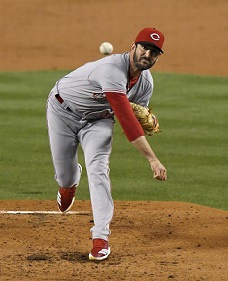
The former Dark Knight, retiring with grace

Matt Harvey

Matt Harvey, young, a Met, and a Dark Knight.

Few baseball surges of the 2010s were as electrifying as Matt Harvey’s. Few baseball shrinkages were almost that electrifying. And, after a few years of trying and getting not even close to back to where he once belonged, Harvey elected to call it a career Friday.

The former Dark Knight, who’d provoked Mets fans to declare “Happy Harvey Day!” on the days he started, announced his retirement on Instagram. “With all the amazing memories came a lot of injuries and tough times,” the 34-year-old righthander wrote.

The realization that those amazingly powerful moments that make me thrive as a pitcher and help my teammates and city win are no longer possible. Believe me I wish I could have done more and brought more of those amazing moments back to life. I have to say this is my time to say thank you, and goodbye.

Asking Harvey to retire with no regrets would be asking him to be superhuman. That’s an ask he can’t possibly satisfy. He’d tried that earlier and too often in his career, on the mound and off it, and he nearly fried himself alive trying.

In the Show, Harvey was last seen trying a comeback with the Orioles two years ago. He started with three shutout innings followed by a dicey fourth in his first Oriole start. He went on to post for the season a modest 4.60 fielding-independent pitching (FIP) rate, a ghastly 6.27 earned run average, a 2.57 strikeout-to-walk rate, a 1.54 walks/hits-per-inning pitched rate (WHIP), and was hittable for 11.3 hits per nine innings.

That was double the transcontinental distance from his staggering second Mets season, 2013, when he led the Show with a 2.01 FIP, posting an 0.97 WHIP and a 6.16 K/BB rate, good enough to finish fourth in the National League’s Cy Young Award voting.

Those were the days when Harvey embraced New York and its white-hot heat as ardently as the city embraced him. “To the fans, most importantly the NY Mets fans: you made a dream come true for me,” he wrote in his retirement post. “A dream I never could have thought to be true. Who would have thought a kid from Mystic, [Connecticut] would be able to play in the greatest city in the world, his hometown. You are forever embedded in my heart.”

He’s had worse than that embedded in his heart. Harvey’s early ability to pitch like an executioner on the mound was equaled only by his ability to find and dwell among the demimonde as though it had his name on it.

He electrified the country when he started the 2013 All-Star Game and—having to shake off a leadoff double from future Hall of Famer Mike Trout followed by hitting Robinson Canó with a pitch—struck three out in two innings’ work and surrendering not a single run. (The American League went on to win, 3-0.)

He missed 2014 recovering from Tommy John surgery, but he electrified the country further when he all but ordered his manager Terry Collins to leave him in to pitch the ninth in Game Five of the 2015 World Series.

Uh-oh. Collins went with Harvey’s heart while misreading his fuel tank. He walked Kansas City’s Lorenzo Cain to open, then surrendered Eric Hosmer’s RBI double. Then Collins lifted him for Jeurys Familia. Two ground outs, one of which provoked Hosmer’s daring dash home while Mets first baseman Lucas Duda threw what should have been an easy double play ball offline to the plate (Hosmer would have been dead on arrival if the throw was accurate), tied a game the Royals won with a five-run twelfth as the rest of the Mets bullpen lost its wheels.

The Royals had bypassed Harvey in the 2010 draft. The guy they took instead, infielder Christian Colón, sent what proved the Series-winning run home. “I still have nightmares over that,” Harvey would tell the New York Post about the game. “One thing I’m most angry about is not getting it done.”

He’d have better reason to be angry the following season: he was hit with thoracic outlet syndrome in July 2016 and gone for the season. And, never again the same pitcher. TOS occurs when blood vessels and/or nerves between your collarbone and your first rib compress. That causes shoulder and neck pain and finger numbness.

“I had TOS,” Harvey’s former fellow Mets pitcher Dillon Gee once said. “I know how much that sucks. It definitely changes you. You start trying to tinker with things. It’s not natural anymore. You start being robot-ish. You start not trying to hurt one area and totally hurt another area. Your whole body is out of whack.”

Harvey’s body wasn’t the only thing going out of whack. Between TOS and a 2017 season interrupted nastily by another shoulder injury, Harvey melted down almost completely. The mound no longer elevated him; the city’s bright lights and demimonde no longer seemed to comfort him entirely.

Very publicly, he found himself dropped by a Brazilian supermodel with whom he thought a real romance was seeded—until she elected to return to her former beau, an NFL wide receiver, leaving a glittering party with the man. That was the night before he showed up late for a game against the Marlins claiming a migraine that was translated to mean a hangover.

Harvry had had such a big-timing attitude prior that now, when he needed empathy, aid, and comfort most, he had none. A year later, after refusing to try it out of the bullpen, perhaps out of stubborn lingering pride, Harvey’s days as a Met ended in a trade to the Reds. “Besides life on his fastball and bite on his slider, you know what was missing with Matt Harvey?” asked Joel Sherman of the New York Post after the deal. The answer:

Compassion. There was no empathy from a teammate or member of management for Harvey’s plight. They wanted him to rebound and do well, but that was about the team and their own selfish desire for success.

Matt Harvey

Humbled, Harvey pitched respectably for the Reds following his trade from the Mets. But he couldn’t reimagine his form successfully in stops at Anaheim, the Oakland system, Kansas City and Baltimore (above). 

Tom Verducci, the Sports Illustrated writer who first handed Harvey the Dark Knight nickname (picking up on Harvey’s boyhood love of Batman), advised one and all that Harvey’s taste for New York’s night life wasn’t the reason he’d collapsed on the mound. “The truth is, for all the times he wound up in the tabloids other than the sports section, Harvey failed because his arm failed him,” Verducci began.

. . . His arm likely failed him because of how he threw a baseball. And when his arm failed him, he knew no other way. He couldn’t pitch without an A-plus fastball, he couldn’t embrace using a bullpen role as a way back, and he couldn’t believe in himself again.

. . . The Mets cut Harvey because his once-fearsome fastball became the almost exact definition of a mediocre fastball (MLB averages: 92.7 mph, 2,261 rpm). Because he couldn’t find another way to get hitters out, because he could not change his mechanics and because he could not buy into the bullpen, the Mets could not keep sending [him] out to the mound as a starter.

The decline in his stuff was obvious. And there was no way his fastball was coming back with the way he throws.

As a Red, Harvey finished his walk year into free agency with a respectable if unspectacular enough performance that the Angels were willing to take an $11 million flyer on him for 2019. He lasted long enough to be designated for assignment that July. The Athletics signed him but he never saw Show action. The Royals took a chance on him for pan-damn-ically shortened 2020.

A free agent again, the Orioles took a chance on Harvey for 2021. He re-signed with the organisation for 2022 but he spent the season at three minor league levels around a sixty-day suspension after testifying in the Eric Kay trial that he’d used painkillers provided by Kay while with the Angels.

Kay was tried, convicted, and sentenced to 22 years in federal prison, having been the man who provided the drugs that killed popular Angels pitcher Tyler Skaggs. On the stand, Harvey admitted he’d given Skaggs (who was likely addicted to painkillers following early-career Tommy John surgery and subsequent other injuries), a few Percocets, perhaps unaware of the depth of Skaggs’s addiction. He didn’t shrink from it, he didn’t try to excuse it.

Harvey pitched in this year’s World Baseball Classic—for Italy, posting a 1.29 ERA in two starts before Team Italy lost to Japan and eventual WBC most valuable player Shohei Ohtani in the quarterfinals. It tempted him to try one more major league comeback. But it was just a temptation. Maybe the most important temptation Harvey resisted. He got to leave the mound permanently on a very high plane, at any level.

(For the record, his Team Italy manager, Hall of Fame catcher Mike Piazza, saluted Harvey upon his retirement announcement: “Look forward to teeing it up with you man..I want to Thank You for your awesome effort in the @WBCBaseball, You’re a warrior on the bump.”)

Back in 2020, he offered the Post something few who knew him as a Met might have accused him of having: introspection. “There are a lot of things I’d do differently,” he began, “but I don’t like to live with regret.”

There were just things I didn’t know at the time. Now, obviously, I’ve struggled the last few years. And what I know now is how much time and effort it takes to stay at the top of your game. I wouldn’t say my work ethic was bad whatsoever, but when you’re young, it’s not like you feel invincible, but when everything is going so well, you don’t know what it takes to stay on the field. It’s definitely more time consuming and takes more concentration.

Too many sports party boys don’t learn until their sports say goodbye to them first. Harvey learned soon enough, if sadly enough, that the party doesn’t always end on your terms. The Dark Knight who crashed and burned off the mound while his body betrayed him on it became something far more important before he retired: a man.

The deeper issue at play in the Kay trial

Matt Harvey

Harvey admitting on the witness stand that he did coke as a Met shouldn’t be bigger than Harvey suggesting too many players still feel desperate to return to action despite not being recovered fully from injuries.

The Eric Kay trial—in which the former Angels communications director faces up to twenty years in prison on drug charges if convicted, stemming from the unexpected overdose death of pitcher Tyler Skaggs in 2019—seemed the sleeper of the week. Until it suddenly wasn’t, after sworn testimony from one-time Angels pitcher Matt Harvey.

Harvey, once a star in New York but still trying to rebuild a career compromised less by his once-notorious night life than by the aftermath of thoracic outlet syndrome surgery. Harvey, once the Dark Knight, but since struggling to find any semblance of the form that once made him what his old rotation mate Jacob deGrom has become.

You had to strain yourself, though, to hear anyone discussing what ESPN writer T.J. Quinn  tweeted Tuesday morning from the trial. “[Matt] Harvey is describing culture of MLB,” Quinn wrote, “guys desperate to stay on field and play through injuries.”

That was about as cryptic as a sledgehammer blow. Harvey wasn’t exactly revealing classified information he’d formerly flushed down the nearest precious-metal commode, either.

But for every one who got what Quinn described him saying during his testimony, there were probably a few hundred more interested in Harvey copping to doing coke as a Met and how many Angels were getting and gulping assorted painkillers from Kay directly or by way of others.

Joe and Jane Fan would rather just dump on the druggies than admit a big reason they get their meathooks on assorted painkillers and other naughty pills and powders in the first place is that too many team medical staffs—even today, even with everything we know about sports injuries that wasn’t known or ignored for generations preceding—could still be tried by jury for medical malpractise.

The Twitterpated are more titillated that the former Dark Knight had a few too many off-field nights partying than that he, too, felt all but forced to perform despite his body’s inner warnings. The talk about the “drug culture” on those Angels (and don’t think it doesn’t exist on other teams) seemed to override talk about the pressures placed upon the injured to get back onto the mound or onto the field like yesterday—no matter how fully they’ve recovered from their injuries.

Harvey wasn’t the only one of Skaggs’s teammates looking for pain relief. Pitcher Mike Morin, an Angel from 2014-2017 now with the Marlins, testified he sought Kay’s help after Skaggs mentioned Kay as someone who could provide painkillers like oxycodone to help Morin, too, deal with what turned out thoracic outlet syndrome. Former Angels relief pitcher Cam Bedrosian (now with the Phillies) and first baseman C.J. Cron (now with the Rockies) also said they got painkillers from Kay.

Harvey also copped to giving Skaggs one Percocet. Why? He thought he was doing his teammate in pain a favour and wanted to be a good teammate. That may still be enough to get him suspended under baseball’s drug policy. Now a free agent, after an up-and-down 2021 that ended almost a month early due to a knee injury, Harvey may have a harder time catching on when the current lockout ends.

In case you forgot or didn’t know in the first place, Skaggs himself had an injury history. He underwent Tommy John surgery after returning to the Angels in a trade from Arizona and starting eighteen games in 2014. Missing all 2015 recovering and rehabbing, he subsquently incurred oblique, adductor, and ankle injuries. And it’s not impossible that he was given something powerful enough coming out of TJ surgery to hook him.

When the Texas coroner’s report revealed fentanyl may have caused Skaggs’s accidental overdose death, USA Today columnist Bob Nightengale wrote of him as a young man in pain.

“Perhaps more physical than even the doctors and trainers knew,” he wrote. “Maybe more mental than even any team therapist knew. It will be a bigger tragedy if we never understand why. Prescription painkillers are a scourge in this country, and professional sports—with catastrophic injuries and the expectation to play through the pain they cause—are ripe for potential abuse.”

It’s not just a particular contingent among current players talking these things, on a witness stand or elsewhere. Hall of Famer Pedro Martinez is talking about those pressures, too. His freshly-published memoir, Pedro, includes a portion where Martinez says that, as a Met, then-chief operating officer Jeff Wilpon forced him to pitch despite a toe injury that affected either his push off the rubber or his landing as he threw—in September 2005, despite the Mets being out of the pennant race.

Before Joe and Jane Fan start barking ohhhhhh, he was forced to earn his keep when his itty bitty toesy hurt, they should try to remember Dizzy Dean. That Hall of Fame pitcher once forced himself to alter his delivery to compensate, after suffering a broken toe courtesy of an Earl Averill batted ball in the 1936 All-Star Game. Dean ruined his shoulder with the new motion, turning the second half of his career from Hall of Fame great to nothing special.

Maybe if Dean had been allowed to recover completely from the toe fracture it would have been a different story? “I was unable to pivot my left foot because my toe hurt too much,” the ever-locquacious Dean was quoted as saying, “with the result I was pitchin’ entirely with my arm and puttin’ all the pressure on it and I felt a soreness in the ol’ flipper right away. I shouldn’ta been out there.”

When the 1969 Cubs burned out and faded down the stretch as the Miracle Mets heated up to take the National League East en route their championship series sweep of the Braves and World Series conquest of the Orioles in five games, it turned out that manager Leo Durocher cowed too many of his players into not disclosing injuries for fear he’d denounce them—in the press as well as in clubhouse reamings—as quitters.

Now retired, Jacoby Ellsbury was oft injured even in his Red Sox years . . . and accused of malingering when he tried his best not to return prematurely. After shining in his contract walk-year during the Red Sox’s 2013 World Series conquest, Ellsbury signed big with the Yankees—and ran into the injury bug again.

And again. And again. Knee injuries, concussions, hip injuries, setbacks rehabbing. Joe and Jane Fan wrote him off as a waste of Yankeebucks. Some even called him a quitter, never mind that his injuries came from playing the game as hard as he could with what he had.

Was it Ellsbury’s fault he’d been injuried on the job, in honest competition? Maybe we should wonder that, so far as anyone knows, Ellsbury didn’t seek the kind of extracurricular pain relief others have, clearly enough.

Skaggs’s death at 27 “shines a harsh spotlight on the dark underbelly of playing professional sports,” writes FanSided‘s Gabrielle Starr. “Many players feel forced to go to extremes to be able to compete, and we’re now witnessing the worst possible outcome of that desperation.”

What is it with the Angels’ organisational culture that compelled several players including Skaggs to seek extracurricular pain relief? Were they, too, being pushed beyond reasonable expectation to come back from injuries? Do you really think they’re the only team who’d be guilty of that?

Could those Angels have been pushed unreasonably compared to the team’s Hall of Famer-in-waiting Mike Trout, who’s been injured often enough but was never pressured improperly so far as anyone knows to return before he was healed completely? As in were the Angels’ administrators sending the message Trout himself would never send, that, well, he’s Mike Trout and . . . you’re not?

Don’t dismiss the Kay trial as just another sports drug trial. It’s easy to denounce the druggies. It’s a lot harder to remember that a lot more of them than we might have thought went there not for kicks but for genuine pain relief. It didn’t have to take the death of a still-young major league pitcher, whose death provoked game-wide grief, to mean those issues might finally be addressed with the seriousness they deserve.

Unless you’re diffident or soulless, it makes you stop to ponder that maybe we shouldn’t be too swift to worship the players or teams who “grit” or “gut” or “grind” it out through various injuries of all dimensions. (The 2019 Yankees, the Broken Bombers, using 53 different players and sending thirty to the injured list that season, come to mind as a recent example.)

Maybe, instead, we should question the sanity lost when they push themselves or are pushed to play injured—with the reward now barely worth what might be lost to their futures. Think about that before you denounce the injured as gutless, heartless, useless quitters. Again.

Short, sweet, and encouraging enough

From Dark Knight to dark horse. So far.

Going from the Dark Knight to a dark horse isn’t the worst thing that could have happened to Matt Harvey. The Orioles have had worse happen to them the last few years than a dark horse pitching up well enough to send them on the way to a second straight season-opening win, too.

Looking resplendent enough in the Orioles’ orange and black, mustachioed but no longer bearded, Harvey started and pitched three shutout innings before running into a little trouble in the fourth and tiring after 86 pitches with two out, two aboard, and a one-run Oriole lead in the fifth.

For other pitchers it might be cause for caution tape. For Harvey, it might be a giant step forward in the second act that’s been harder to find than Harvey once found the bright New York lights that finally helped sear him when his shoulder didn’t.

The righthander threw 56 strikes, including eleven first-strikes and fifteen called strikes, and looked generally like he was anything but the increasingly lost cause who left the Mets for a brief resurrection in Cincinnati but a collapse in Anaheim.

To the Orioles, this is the next best thing to hitting a jackpot on a slot machine. To Harvey, it’s one step at a time even now. Don’t doubt for a moment that he won’t take it.

He certainly won’t spurn the help he got from his new friends. Not when two runs score for him in the top of the fourth on an infield hit, not when another run scores for him on another infield hit in the top of the fifth, not when a seventh-inning sacrifice fly re-claims a two-run Oriole lead, and not when the first of those two fourth-inning runs was set up by an unlikely throwing error by Red Sox third baseman Rafael Devers.

Maybe the only real mistake involving Harvey was Oriole manager Brandon Hyde electing to let him pitch to J.D. Martinez in the fifth after back-to-back one-out walks to Kevin Plawecki and Enrique Hernandez. Martinez didn’t exactly murder Harvey, but his wicked-hopping comebacker bounced off Harvey’s body enough to let Plawecki score.

The so-far-surprising Oriole bullpen took it from there shutout style, not letting even the extremely few hiccups along the way stop them from stopping the Red Sox.

Harvey isn’t unappreciative. “Overall I think it was a solid first start and I’ll try to build off that next time,” he told reporters after the game. “Anytime you win the first series of the year, it’s big, so we’ve got some good momentum now. To come in here against a good ball club, you’ve got to play well and our guys came in and pitched great after me.”

That’s a far different tone than the one for which Harvey was once notorious. He’s no longer the howitzer-armed Dark Knight whom Met teammates sometimes accused of big-timing them while chasing the demimonde. He’s not the guy who thought the world was his to conquer until thoracic outlet surgery, diminished speed, and especially a crash and burn out of the demimonde and off the Mets brought him down to earth with a resounding crash.

When Harvey missed last year without a major league job, pondering and even making a video for consideration by the Korean Baseball Organisation, he spoke with an introspection many who knew him as a Met might have thought unlikely.

“There are a lot of things I’d do differently, but I don’t like to live with regret,” he told the New York Post.

There were just things I didn’t know at the time. Now, obviously, I’ve struggled the last few years. And what I know now is how much time and effort it takes to stay at the top of your game. I wouldn’t say my work ethic was bad whatsoever, but when you’re young, it’s not like you feel invincible, but when everything is going so well, you don’t know what it takes to stay on the field. It’s definitely more time consuming and takes more concentration.

The beginning of wisdom too often arrives after great pain and self-demolition. Harvey began acquiring it before he stepped on the mound for the Orioles. He pitched like it Saturday afternoon. All he has to do now is continue acquiring more hard-arrived wisdom and pitching every few days like he’s not kidding.

Darkness gone for the former Dark Knight?

2020-06-07 MattHarveySI

Little did Tom Verducci know that when he pegged Matt Harvey as the Dark Knight that another kind of darkness would compromise Harvey’s once-promising career.

Ten 7 Junes ago, the Kansas City Royals with the number four pick elected to draft a Cal State-Fullerton shortstop named Christian Colon instead of a University of North Carolina pitcher named Matt Harvey—because they thought they had enough pitching.* The New York Mets in the same draft picked two pitchers: Harvey, with the number eight pick overall, and a Stetson University kid named Jacob deGrom.

Five years after that draft, Harvey bulldozed his manager Terry Collins into letting him try to finish a World Series Game Five shutout that would have sent the set to a sixth game back in Kansas City.

“Would I take back getting to the World Series with those guys and the city of New York?” Harvey asks now, before answering.   “There’s not a chance. I believe things happen the way they are supposed to. I got hurt and maybe I would have anyway. Getting to the World Series was worth it.”

Then Collins had to lift his gassed Dark Knight after a leadoff walk and an RBI double and bring in his closer Jeurys Familia, who already had a sick-looking Series resume thanks to those Mets’ porous infield gloves. Unfortunately, you can’t give the blown save to the defense under the save rule.

Two groundouts, then a terrible throw home to complete what should have been a simple game-ending double play, and Game Five went to extra innings. Where Colon, pinch hitting for Royals reliever Luke Hochebar, broke the two-all tie in the top of the twelfth, opening a five-run inning that won the Series for the Royals after the Mets couldn’t get a single baserunner past second in the bottom of the frame.

Today, deGrom—who waited until the ninth round before the Mets took him, too, ten years ago—is the National League’s back-to-back defending Cy Young Award winner. Arguably, he’s also the best pitcher in the game right this moment, among those not named Max Scherzer or Gerrit Cole.

Harvey, whom the Mets traded to the Cincinnati Reds in 2018, who signed as a free agent with the Los Angeles Angels for 2019, who was released after that experiment tanked, and who gave it another try in the Oakland Athletics system the rest of the season, now looks for a job. In the Korean Baseball Organisation.

MLB’s tug-of-war between the owners and the players over the financials in getting a coronavirus-delayed 2020 season in at all probably meant it was a very long shot for Harvey to catch on with another major league organisation for now. He doesn’t mind taking his chances otherwise.

“It’s been an interesting ride, a roller coaster,” Harvey tells the New York Post. “With where I am now, physically and how I’m feeling, I hope I get another shot.” Calling it “an interesting ride” may be an understatement. Which is saying something about a pitcher you could call many things other than understated.

“As soon as he signed, he came to New York. I saw this big, good-looking kid standing in our bullpen with a black suit, white shirt, very thin tie — very GQ-ish, as he always was,” the Mets’ then-pitching coach Dan Warthen tells the Post. “His hair was always perfect. Then you see the ball coming out of his hand and you say, ‘Oh, it won’t be long until he’s playing baseball up here.’ And he was cocky, oh Lord. He said, ‘Hey, I’ll be ready to pitch for you next year’.”

Harvey premiered for the Mets in late July 2012, against the Arizona Diamondbacks.  He struck out ten in five and two-thirds innings while walking three and scattering three hits. “All of the reports I read,” says then-Mets manager Terry Collins, “didn’t talk about a 98 mph fastball. It was ’94-95, pretty good slider, working on changeup.’ All of a sudden, this guy is throwing 97-99 with a 92-mph slider. I said, ‘Holy cow!’ We were shocked by what we saw.”

“When he burst on the scene with a fury, it was fun, man,” then-Mets pitcher Dillon Gee—whose own career was sapped by injuries until he retired last year—tells the Post. “You had heard about him coming up. When he got here, he was like on a different level. You could tell he was a special talent.”

By the following season, Harvey was practically the talk of the town in New York baseball. When he ended June 2013 with a 2.00 ERA, Met fans has already begun greeting his starts with “Happy Harvey Day!” Harvey started that year’s All-Star Game—which was played in Citi Field, his home ballpark. The American League went on to win, 3-0, but Harvey’s three strikeouts in two innings electrified the joint.

Then Sports Illustrated put Harvey on the cover with the headline, “The Dark Knight of Gotham.” But the writer who delivered that cover story, Tom Verducci, would write five years later, after Harvey pitched (and, many said, partied) his way out of New York, “The truth is, for all the times he wound up in the tabloids other than the sports section, Harvey failed because his arm failed him.”

. . . His arm likely failed him because of how he threw a baseball. And when his arm failed him, he knew no other way. He couldn’t pitch without an A-plus fastball, he couldn’t embrace using a bullpen role as a way back, and he couldn’t believe in himself again.

. . . The Mets cut Harvey because his once-fearsome fastball became the almost exact definition of a mediocre fastball (MLB averages: 92.7 mph, 2,261 rpm). Because he couldn’t find another way to get hitters out, because he could not change his mechanics and because he could not buy into the bullpen, the Mets could not keep sending [him] out to the mound as a starter.

The decline in his stuff was obvious. And there was no way his fastball was coming back with the way he throws.

Especially not after blowing his elbow ligament into Tommy John surgery late in 2013 (which didn’t keep him from leading the Show with his 2.01 fielding-independent pitching rate or third in the National League with his 2.27 ERA), or incurring thoracic outlet syndrome, the surgery for which cuts somewhat invasively into the shoulder and the back, or trying too hard to come back too soon from both.

Be very afraid, Pittsburgh Pirates fans. Your struggling pitcher Chris Archer (though he did pitch decently after last year’s All-Star break) just underwent thoracic outlet syndrome surgery himself, who probably won’t return if and when major league baseball returns, and who may even find himself receiving a contract buyout before he can pitch 2021 and hit free agency after that season.

Like Harvey, alas, Archer’s post-surgery career prospects don’t look as promising as he himself formerly looked.

“I had TOS,” Gee says. “I know how much that sucks. It definitely changes you. You start trying to tinker with things. It’s not natural anymore. You start being robot-ish. You start not trying to hurt one area and totally hurt another area. Your whole body is out of whack.”

The limelight and the taste for night life among New York’s demimonde certainly didn’t help Harvey in the long run. “You could see the media and limelight kind of became part of what he wanted to do,” says Gee. “I’m sure that is super, super hard not to let that creep in, as popular as he got. I couldn’t imagine being bombarded as he was. He was the guy.”

Who’s to say, too, that Harvey didn’t sink into the demimonde because the slow realisation that his body began betraying the talent that got him there in the first place was too painful to bear? Dark Knights are supposed to be invincible, right?

Verducci believes Harvey’s mechanics both took him to the Show and eroded him soon enough. “Harvey pulls the ball far behind him—crossing the airspace over the rubber,” he wrote, “a strenuous maneuver that rarely leads to long careers.”

Harvey’s psyche also may have fallen out of whack in 2017, when that May Brazilian supermodel Adriana Lima, with whom he thought he had an enduring romance in the making, parted with him to leave a tony Manhattan afterparty with her former boyfriend, a New England Patriots football player.

Up to that point Harvey’s taste for the charms of supermodels was rivaled only by his taste for a ride whose value sometimes equaled that of a modest suburban home. But a few days later, Harvey missed a game claiming a migraine but possibly suffering a ferocious hangover, as the Post‘s Page Six had it. It got him a three-day suspension from the Mets.

Then Harvey suffered yet another injury, a stress fracture in his shoulder area, ending his 2017 and draining more off his fastball. The following season, in which he approached his first free agency, his continuing decline prompted then-Mets manager Mickey Callaway to think about moving him to the bullpen to rehorse, a move that tasted to Harvey rather the way Brussels sprouts taste to small children.

“We were trying to get him to use his curveball and changeup more, which he did in spring training — and he had a nice, four-pitch mix,” says then-Mets pitching coach Dave Eiland. “And then once the regular season started, he went back to his old habits, fastball and slider primarily. The command of it wasn’t quite there. If he missed a little bit, the outcome was going to be a little different than when he missed 97-99 with a 92-93 slider.”

When Harvey rejected the bullpen option, sometimes nastily, the Mets designated him for assignment, then dealt him to the Reds.

“I gave him the Dark Knight nickname, because I saw in Harvey someone who not only had the stuff to save the Mets in Gotham—they were in the middle of six straight losing seasons when Harvey arrived—but also the desire to play the role,” Verducci wrote. “He embraced not just being a staff ace but also a dominating personality.”

Learning to be just a young man may be almost as tough as re-learning how to pitch. Once upon a time Harvey was the most identifiable Met to the public but a somewhat alienating one inside his own team. Maybe riding the high life too hard distanced Harvey from people who might otherwise have felt for him, empathised, wanting to feel for him.

In Cincinnati and in Anaheim he was described as a changed young man, not exactly the type to just jump when the siren call of a tony party beckoned. If Gee and former Mets general manager Sandy Alderson are any examples, there’s empathy now, even if through hindsight’s eye.

“I liked Matt. I continue to like Matt,” Alderson tells the Post. “Sure, he had his reputation, but ultimately I thought as an individual, he was sort of a vulnerable person. Someone whose confidence was a little brittle. I remember in his postgame interviews, he came across as a real solid, humble, genuine guy. The things that we went through with him were not novel for me. It was part of the job. I didn’t resent it at all. I didn’t take it personally.”

Alderson isn’t the only one with a hindsight’s eye view of the Harvey dilemna. The former Dark Knight has one of his own. “There are a lot of things I’d do differently,” the 31-year-old Harvey now says, “but I don’t like to live with regret.”

There were just things I didn’t know at the time. Now, obviously, I’ve struggled the last few years. And what I know now is how much time and effort it takes to stay at the top of your game. I wouldn’t say my work ethic was bad whatsoever, but when you’re young, it’s not like you feel invincible, but when everything is going so well, you don’t know what it takes to stay on the field. It’s definitely more time consuming and takes more concentration.

Pitching respectably in Cincinnati got Harvey that shot in Anaheim that collapsed last year. The word now is that the video he’s produced of a pitching workout may impress someone in the KBO to give him a try. Eiland says he’s seen the video and it shows Harvey’s arm “looked like it was working well.” Warthen agrees: “This is the cleanest and easiest that I’ve seen him throw the baseball in a long time.”

Harvey also looks healthy. Shorn of his once-familiar beard, he looks as young as he was when the Royals bypassed him and the Mets snapped him up ten years ago. Almost as though he’d erased all those nights on the town and the flash he once embraced, except from inside his mind and soul where he can review them and remind himself how not to do it.

If Harvey can suggest that he knows better now what it takes to stay on the field or the mound, it’s an even more encouraging sign. It could also mean him trying to fend off the possibly inevitable one last time. It could also mean Harvey having to come to terms at last with the possibility that whatever else fell out of whack in his life before, his body’s betrayal was just too profound in the long run.

——

* Colon, the shortstop the Royals preferred to more pitching in the 2010 draft, remains the reserve-level player he’s been all his major league life. Before he was waived out of Kansas City, the Miami Marlins claimed and shortly farmed him out. 

The Braves signed him but released him the following May, the Mets (of all people) signed him on a minor league deal but let him walk as a free agent, then the Cincinnati Reds signed him to a minor league deal, gave him a cup of coffee last September, and re-signed him on a minor league deal.

But he’ll always have Game Five of the 2015 World Series. With one swing in the top of the twelfth he drilled his way into permanent baseball lore. It’s more than a lot of journeymen get.

In the same 2010 draft, the Royals passed over another pair of stars-to-be: outfielder Bryce Harper and pitcher Chris Sale. Harper is now in the second year of a $330 million/thirteen-year contract. Sale was the last man standing—striking out the side in the Game Five ninth—when the Boston Red Sox won a 2018 World Series that may or may not be tainted by their replay-room sign-stealing cheating that season.

Devil or Angel?

2018-12-19 MattHarveyThe way Matt Harvey’s tempestuous tenure with the New York Mets ended last May is still an eye-rubber. When Harvey refused a Mets’ request to go to Las Vegas and work his way back to something resembling his former mound self, prompting the Mets to trade him to the Cincinnati Reds. When the Mets decided he wasn’t worth saving anymore, and nobody on or around the Mets seemed to care.

Harvey was already less than thrilled about being exiled to the Mets’ bullpen, where manager Mickey Callaway thought he would have at least as good a chance to re-horse as Callaway had seen happen for a pitcher he coached in Cleveland, Carlos Carrasco. His final relief appearance as a Met went from promising to disaster. (An inning-ending strikeout to open; a spotless sixth; an RBI single, a sacrifice fly, a walk, and a three-run homer in the seventh, putting the Mets in the hole against the Atlanta Braves, 11-0.)

A week earlier, in San Diego, Harvey managed somehow to make a tony Beverly Hills restaurant opening. Microcosmically that was Harvey’s dilemna as a Met. As former Met Jesse Hahn, his high school teammate, once said, he had no relationship with Harvey “because he’s always big-timed me.” The Dark Knight proved only to self-immolate  himself in the brightest lights he could find and, when his health began to erode the talent that was once just as electric, he may have tried too hard to keep the illusion because he lost his own plot.

But once he got out of New York and into Cincinnati he seemed a changed young man and pitcher. For the first time in what seemed an excessive sentence, Harvey was healthy. He never missed a single starting assignment as a Red. And as he approached free agency, the only Red headed that way in 2018, he showed enough to convince the Los Angeles Angels that his potential upside, very different from the incendiary young Met, was worth gambling $11 million for a single season.

Are the Angels tempting too many fates? Anaheim is closer to Hollywood and Beverly Hills than San Diego, even if Harvey in Cincinnati seemed a changed young man without the lure of the demimonde. But tempting the fates has always been in the Angels’ DNA, even when they were successful. And far bigger deals than Harvey’s have incinerated them in the recent past, though the flames weren’t always of their own making.

It was nobody’s fault including Albert Pujols’s when serious heel and knee issues began reducing the future Hall of Famer—whom the Angels signed for a decade and the value of a large state economy—to little more than a designated hitter who can still hit for distance (he hit home run numbers 500 and 600 in Angel fatigues) but can barely stand up at first base anymore. Lacking the kind of teammates not named Mike Trout who can get on base ahead of him hasn’t done Pujols’s run production that many favours, either. A lot of people may still wonder how Pujols still managed to drive in 100+ runs in four of his seven Angel seasons.

It was nobody’s fault that Josh Hamilton battled injuries as an Angel before relapsing into a brief spell of substance abuse on one otherwise fine Super Bowl Sunday. But what the Angels did to Hamilton upon that relapse was a disgrace. Hamilton himself reported the relapse to major league baseball, as vivid a cry for help again as you could ask. Angels owner Arte Moreno elected to run him out of town on the proverbial rail, though Moreno might have preferred a hypersonic airplane. And now-retired manager Mike Scioscia demanded he apologise. Then the Angels paid the Rangers to take him back, basically.

The Angels were pitching strapped before they trained their sights on Harvey. They’ve lost Garrett Richards, J.C. Richards, and Rookie of the Year Shohei Ohtani (as a pitcher, not a designated hitter) for 2019 thanks to Tommy John surgery. They couldn’t convince J.A. Happ to sign for two years and $28 million; Happ’s returning to the New York Yankees. They couldn’t convince Patrick Corbin to stay in the southwest at a “strong” offer; Corbin, of course, signed for $140 million with the Washington Nationals.

With the American League West rival Oakland Athletics (who now claim Las Vegas as their AAA affiliate, the Mets having moved theirs to Syracuse) showing interest in the righthander, the Angels convinced Harvey to sign up for a year at comparative bargain money. They’re banking at minimum that Harvey will continue the improvement he showed in Cincinnati, where he began finding a little more velocity on his pitches after it eroded with the Mets (92.6 mph as a Met; 94.4 as a Red) and where he began missing bats again.

As a Red, Harvey pitched 128 innings. His ERA didn’t look anything like his Dark Knight years at 4.50, but he had more quality starts than not—his 24 starts included fifteen quality starts (five or more innings, three or less earned runs) including his final gig of the season. He had seven no-decisions in those quality starts and five of them the Reds went on to lose by a single run. Maybe his biggest was nearly no-hitting the Giants against Madison Bumgarner in August, taking the hitless bit to the sixth and the Reds winning the game 7-1.

His swinging strikeout rate jumped from 8.2 with the Mets earlier in the season to 9.9. He returned to a 7.9 strikeouts-per-nine rate as a Red with a 42.6 percent ground ball rate. And his fielding-independent pitching was enough points lower than his ERA to suggest Harvey, too, could hardly do more to neutralise the Reds’ overall futility. It wasn’t his fault the Reds couldn’t really afford to keep him aboard even at the two years for which he looked and scouts figured he might receive.

After that jewel against the Giants, Harvey couldn’t resist a soft joke about his incumbent status, not having pitched in a full week before that game. “After a successful outing last time, it is big to have another,” he told reporters. “I’m getting there. Health is the biggest thing. It is hard to stay sharp when you’re used to going every sixth day. You feel a little out of whack. The guys are calling me the Saturday starter, like in college.”

As a Met, Harvey’s early promise got flattened first by Tommy John surgery and a return season in which his workload was questioned severely. Earning Comeback Player of the Year honours for 2015, Harvey crowned that season famously by all but demanding the ball to go back out for the ninth of Game Five of the World Series.

Then-Mets manager Terry Collins read his man’s heart deeper than the fuel tank even with a 2-0 shutout in the making. Harvey ran empty with a leadoff walk and, after a stolen base, an RBI double to break the shutout. The Mets’ porous defense allowed the Royals to blow a sure save for now-prodigal reliever Jeurys Familia, when Lucas Duda threw home wild on a sure double play, and the bullpen held fort before a spent Addison Reed got murdered in the twelfth for the Series.

Then it was thoracic outlet syndrome surgery to kill Harvey’s 2016 in its crib. (The syndrome is cause when blood vessels and/or nerves between your collarbone and your first rib compress, causing shoulder and neck pain and finger numbness.) Then, a 2017 interrupted rudely by a shoulder injury. Concurrently, Harvey melted down. The demimonde among whom he felt most at home when not rooting for the New York Rangers of the NHL no longer comforted him. And the aforementioned big-timing attitude left him wanting for empathy when his mound trouble matched his off-field heartbreak.

“Besides life on his fastball and bite on his slider, you know what was missing with Matt Harvey? Compassion,” wrote Joel Sherman of the New York Post when the Mets traded him to the Reds.”There was no empathy from a teammate or member of management for Harvey’s plight. They wanted him to rebound and do well, but that was about the team and their own selfish desire for success.”

The Angels saw a haunted pitcher finding smarter ways to pitch with the numbers trending upward little by little in Cincinnati after he’d collapsed so completely in New York. They’re investing in a realistic enough chance that Harvey approaching 30 years old can continue the upward trend enough to give them one less rotation piece over which to fret. If he does continue upward and stays healthy he becomes a bargain of a middle-rotation piece.

Harvey seemed too often at core as though the big-timing attitude seen in him was really a clumsy way of letting the world know that it wasn’t his teammates who weren’t worthy of him but the other way around. If he learned anything else in Cincinnati other than beginning to remake himself as a major league pitcher, he may have learned that one of the loneliest places on earth is the place to which you fall, good and hard, discovering no empathy, after you’ve burned yourself too deeply seeking artificial life.

For Harvey the Angels are his chance to pitch himself into either an extension with the Angels or a decent payday after the 2019 season ends. So far, all he has to do is remember that, as close as they are to Angel Stadium, the Los Angeles/Hollywood demimonde is only smaller, not less psychically incendiary than it is in New York.