If they really must visit this White House . . .

Jackie Robinson

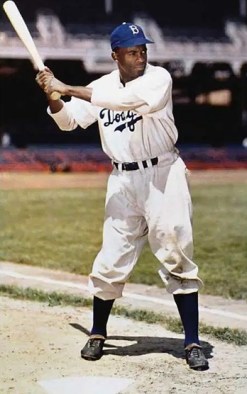
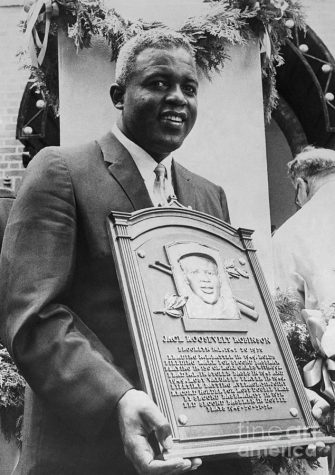
The Dodgers should remind Trump and his minions—quietly, but profoundly—that they don’t hold with Hall of Famer Jackie Robinson’s dismissal as just another DEI hire.

The defending World Series champion Dodgers will go to the White House Monday at the invitation of President Donald Trump. Including Mookie Betts, who once declined the visit when his then-defending World Series champion Red Sox accepted the same invitation from the same president.

Three days before the Dodgers’ scheduled White House visit, Los Angeles Times columnist Gustavo Arellano urged the Dodgers to show up wearing jerseys with Jackie Robinson’s number 42. I hope the Dodgers read that column and heed the advice. Then, after the White House visit, I hope they perform a team march in those jerseys from the White House to the Pentagon, right up to Secretary of Defense Pete Hegseth’s office.

Of course I can dream, can’t I?

Hark back to March. When the Defense Department scrubbed from their Websites the stories of Robinson (an Army lieutenant in World War II, who beat a court martial for refusing to go to the back of a bus), the Navajo Code Talkers, the Tuskegee Airmen, and Ira Hayes, the Native American Marine who was one of the six raising the American flag at Iwo Jima.

When DoD press secretary John Ullyot cited Hegseth saying, “[Diversity, Equality, Inclusion] is dead at the Defense Department.” Until it wasn’t, within just days, following an uproar of the type that’s become second nature to Trump/Trump Administration doings, sayings, undoings, unsayings.

“It’s not a political stance that I’m taking,” the Mookie Monster told The Athletic‘s Fabian Ardaya last Friday. “I know no matter what I say, what I do, people are going to take it as political, but that’s definitely not what it is. This about an accomplishment that the Dodgers were able to accomplish last year.”

Was Betts unaware of Trump’s DoD’s bid to turn Robinson and other wartime African-Americans of the 1940s into non-persons? No one says he or his Dodger teammates should turn the visit into a giant, noisy raspberry. But just wearing the Robinson jerseys would be a more powerful rebuke to Trump than any verbal schpritz.

“Opponents of Trump can’t scream into the void, or among themselves, and think that’s resistance enough,” Arellano wrote.

They shouldn’t cede the traditions of this country, like the flag, the White House and democracy, to a tyrant like Trump just because he has wrapped himself in them.

Going to the White House does not normalize Trump—it’s a reminder that the place is ours, not his . . .

. . . Guys: Y’all pioneered the type of globalism and multiculturalism that Trump loathes, that L.A. now exemplifies and that continues to power the best franchise in baseball. It’s time to stand tall for the Dodger Way at the moment it matters the most.

“We have a lot of different people that are part of this organization,” said Dodger manager Dave Roberts.

Different backgrounds, different cultures, race, gender. So everyone had a different story. Economic situations. So we are all going as an organization. I do know that we’re all aligned, and everyone’s going to have their opinions.

This is not a political thing, and I’m not going to sit up here and make it political. I’m excited to, again, recognize the 2024 World Series champions, the Los Angeles Dodgers.

Roberts should be excited likewise to offer the president a reminder that the Dodgers stand for something above and beyond World Series rings. If they don’t want to wear number 42 Dodger jerseys to the White House, Roberts should think of handing Trump a number 42 Dodger jersey. Hand it to him, and say nothing.

Then—before they lend or spend any further credibility upon a man who rejects that for which the Dodgers have stood, since Jackie Robinson stepped onto a field to begin the Dodger career that launched a powerful rebuke to formal segregation and Robinson himself into Cooperstown and world immortality—Roberts and his players should get the hell out.

Carl Erskine, RIP: From Jackie to Jimmy

Roy Campanella, Jackie Robinson, Carl Erskine.

Carl Erskine (right) congratulated by Hall of Famers Roy Campanella (left) and Jackie Robinson (center) after he no-hit the Giants in 1956.

If you consider The Boys of Summer as author Roger Kahn did, the 1952-53 Brooklyn Dodgers he covered for the New York Herald-Tribune, Carl Erskine was the last Boy standing. Which may have surprised him as much as anyone else.

If you consider them to include Brooklyn’s only World Series winners from 1955, Erskine’s death at 97 Tuesday leaves Hall of Famer Sandy Koufax (a bonus rookie on that team who didn’t appear in that Series) the last Boy standing. It almost seems sadly appropriate.

Erskine’s fourteen strikeouts in Game Three of the 1953 World Series stood as a Series record until Koufax broke it with fifteen punchouts in Game One of the 1963 Series. “Don’t worry, Dad,” one of Erskine’s sons said to his father after they finished watching the game on television. “You still hold the record for righthanders.” (He did until Hall of Famer Bob Gibson broke both him and Koufax in the 1968 Series.)

Either way, Erskine’s long and exemplary life doesn’t prevent mourning. A good pitcher who was a better man no longer lives and walks among us.

“He was a calming influence on a team with many superstars and personalities,” said former Dodger owner Peter O’Malley, whose father Walter owned the team from 1950-1979. “But getting credit was not Carl and that is what made him beloved.” No, that only began to delineate what made Erskine beloved.

The Hoosier righthander known for the kind of big, overhand curve ball Koufax himself would develop and surpass from the left side, Erskine grew up in Anderson devoid of prejudice and was a boyhood friend of eventual Negro Leagues baseball player and Harlem Globetrotters basketball player Jumpin’ Johnny Wilson.

Joining the Dodgers a year after Hall of Famer Jackie Robinson broke the major league colour barrier, Erskine was approached by Robinson, who asked, “Hey, Erskine, how come you don’t have a problem with this black and white thing?” Erskine mentioned his friendship with Wilson, saying, “I didn’t know he was black. He was my buddy. And so I don’t have a problem.”

Over two decades later, Erskine told Kahn for the latter’s fabled book, “Jumpin’ Johnny Wilson ate maybe as many meals at my home as he did at his own. With a background like that, the Robinson experience simply was no problem.”

Remembering further, Erskine also beamed when tellling Kahn of the welcome he got when the Dodgers brought him up from their Fort Worth (TX) farm in July 1948. “The team is in Pittsburgh,” he said. “I walk into the Forbes Field dressing room carrying my duffel bag.”

Just inside the door Jackie Robinson comes over, sticks out his hand, and says, “After I hit against you in spring training, I knew you’d be up here. I didn’t know when, but I knew it would happen. Welcome” . . .

. . . Man, I’d have been grateful if anyone had said “Hello.” And to get this not just from any ballplayer but from Jackie Robinson . . . I pitched that day and won in relief.

Known colloquially as Oisk by Brooklyn fans, Erskine was managed first by Burt Shotton. And Shotton made a grave mistake. During a start against the Cubs, Erskine suffered a torn shoulder muscle. He finished the game but awoke the following morning unable to lift his arm. He started next against the Phillies and could barely lift his arm after five innings.

“Why, son, you’re pitching a shutout,” Erskine remembered Shotton telling him then. “Now you go right ahead out there. If you get in any trouble, we’ll take care of that.” Erskine went on and again couldn’t lift his arm the following morning. “I did a lot of damage to my shoulder in those two starts,” he remembered to Bums author Peter Golenbock, “and I began then to have really, really severe arm problems, and it plagued me my whole career.”

Carl & Jimmy Erskine

Father and son beam as Jimmy Erskine displays his Spirit of the Special Olympics award, known to be the SO’s highest honour for a participating athlete. His father liked to hold up a World Series ring and one of Jimmy’s SO gold medals during personal appearances and ask, “Which of these means more?”

Somehow, Erskine managed to pitch two no-hitters (1953, 1956) and get credit for two wins in eleven World Series games between 1949 and 1956. “I’m very pleased and fortunate that I was not finished after I hurt my arm,” he told Golenbock, after admitting his retirement two years after the Dodgers moved to Los Angeles was for just that reason at last. “But occasionally it would cross my mind, I wonder if I had not hurt my arm, how good could I have been?”

Soon after Erskine retired as a pitcher, his fourth child was born. Jimmy Erskine was a Down’s syndrome baby (they called it mongolism in those years, alas) and everyone in the Erskine orbit, practically, urged Erskine and his wife, Betty, to have the boy institutionalised. The Erskines said, “Not so fast.” They determined, in Kahn’s words, “to make Jimmy Erskine as fully human as a (Down’s child) can become.”

At that time, Down’s children had an average life expectancy of ten years. Jimmy Erskine said, essentially, “That’s what you think.” Thanks to his parents and the Special Olympics, in which he participated for decades to follow, he lived 63 years, even coming to work in the restaurant business before his death last November. His parents and his three older siblings made sure people saw him as part of their family, taking him on normal outings to the supermarket, church, and restaurants.

His father worked in insurance and then as a bank president and an Anderson College baseball coach. But his father also plunged deeply into the Special Olympics among other advocacies for the developmentally disabled. One of Erskine’s friends became Special Olympics founder Eunice Kennedy Shriver. Jimmy’s parents also created the Carl and Betty Erskine Society to raise money for the Special Olympics.

Those who watched him pitch may have believed at times that his shoulder issues kept him from a Hall of Fame career, but Erskine arrived in Cooperstown regardless. His Special Olympics work and advocacy for the disabled helped earn him the Buck O’Neil Lifetime Achievement Award at last year’s Hall ceremonies.

Erskine had a habit when speaking in public of hoisting his 1955 World Series ring, then hoisting one of the gold medals his son won as a Special Olympian. “You tell me which is the greater achievement?” he’d say. “Which of these means more?”

I’ll answer that personally. I’m the father of a developmentally-disabled son thanks to babyhood deafness (which cleared in due course) leaving him speech-language impaired. Bryan is an avid baseball fan and a near-rabid Los Angeles Angels fan, and he now works as a restaurant shift lead. He also played softball for the Southern California team in the 2018 Special Olympics in Seattle. He whacked a home run in his first-ever national SO plate appearance, and his team earned the silver medal. The only one who could have been more proud than him was (and remains) his father.

And I’ll still take that over any World Series title won by any major league baseball team, even any major league team that won one playing in the New York sunlight or under the New York stars. May Carl and Jimmy Erskine’s Elysian Fields reunion have been even more joyous than any of the times they shared on this island earth.

On Anderson, Robinson, Donaldson, and jokes

Tim Anderson

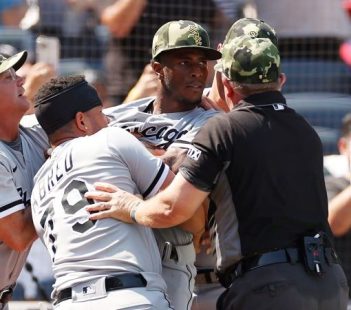
Tim Anderson has to be restrained by teammates including Jose Abreu, and plate umpire Nick Mahrley, after Josh Donaldson took what he calls a joke too far Saturday.

That’d teach him. Three years ago White Sox shortstop Tim Anderson gave Sports Illustrated reporter Stephanie Apstein an interview in which he likened himself to Jackie Robinson. Not as a race pioneer, but as the kind of pioneer looking to break down another barrier, the barrier against having plain fun and letting it show while you play baseball.

Anderson didn’t kid himself. He as much as said he didn’t and probably wouldn’t face the kind of obstacles Robinson faced. What he did say, in language as plain as the plays he makes at shortstop or the hits he nails at the plate, was that he didn’t care two figs what you thought of him having fun playing, you know, a game.

The impetus for the interview was his then-recent suspension for hollering an insult back at Kansas City pitcher Brad Keller, after Keller hit him on the rump roast with the first pitch, two innings after Anderson demolished a Keller pitch for a two-run homer, looked to his dugout, and nailed a delicious bat-flip as he proceeded up the first base line.

“I kind of feel like today’s Jackie Robinson,” Anderson told Apstein then. “That’s huge to say. But it’s cool, man, because he changed the game, and I feel like I’m getting to a point to where I need to change the game.” In other words, Anderson planned to have his fun while he played. Oh. The hor-ror.

“Anderson’s point is more nuanced than it might sound,” Apstein wrote.

Robinson remains an American hero, and Anderson will never face the Jim Crow horrors Robinson and the first generation of black major leaguers endured. Also, plenty of players, white and nonwhite alike, have had fun while playing the game.

But, as a rule, baseball does not encourage individualism. As other sports have evolved to showcase their stars’ personalities, the baseball old guard has held tight to its principles. Run out ground balls. Keep your mouth shut. Gently place your bat near home plate—a player should react to a home run just as he would react to the news that an acquaintance filed his taxes on time.

Yankee third baseman Josh Donaldson remembered Anderson’s “I kind of feel like today’s Jackie Robinson” only too well. On Saturday, the Yankees and the White Sox had a dustup on the field over it, a few innings after Anderson says Donaldson greeted him with an apparent “What’s up, Jackie?”

A few innings later, as Donaldson approached the plate with the Yankees up 6-3, White Sox catcher Yasmani Grandal engaged him in a little chat. It didn’t look like anything drastic at first—from the outside. The next thing anyone knew, plate umpire Nick Mahrley was moving between the pair and the benches and bullpens emptied. With White Sox teammates moving Anderson back to the dugout before any serious damage could be done.

Nobody other than the immediate participants had any clue until White Sox manager Tony La Russa spoke to reporters following the 7-5 Yankee win. “He made a racist comment, Donaldson, and that’s all I’m gonna say,” La Russa said. It took Anderson himself to elaborate.

“He just made a disrespectful comment,” the shortstop said of Donaldson. “Basically was trying to call me Jackie Robinson, like ‘what’s up Jackie?’ I don’t play like that. I don’t really play at all. I wasn’t really gonna bother nobody today. But he made the comment, and it was disrespectful. I don’t think it was called for.”

Donaldson didn’t deny calling Anderson “Jackie,” but he did say the motive had nothing to do with race and everything to do with Anderson telling SI he felt like the Robinson of defunding baseball’s Fun Police.

“All right, so first inning I called him Jackie,” Donaldson told reporters post-game.

He’s gonna bring back fun to the game. [In] 2019 when I played for Atlanta, we actually joked about that on the game.

I don’t know what’s changed — and I’ve said it to him in year’s past. Not in any manner than just joking around for the fact that he called himself Jackie Robinson. If something has changed from that, my meaning of that — has not any term trying to be racist by any fact of the matter. It was just off of an interview of what he called himself.”

Donaldson may have lacked racial intent but his timing Saturday was a terrible look. “The very simple problem with Josh Donaldson calling Tim Anderson ‘Jackie’,” tweeted Business Insider writer Bradford William Davis, “is that he perverted honour into mockery.”

Could there have been those thinking Anderson, who’s normally as unpretentious as the morning sun, did likewise when he suggested himself as the Jackie Robinson of letting the kids play? Robinson broke barriers far more severe and grave than those between ballplayers letting joy in accomplishment show and ballplayers still artery-hardened enough to continue thinking you should play a game as though you’re wearing a three-piece suit in the board room.

And I for one have long tired of the hypocrisy saying one moment that you need to play professional baseball like a business but saying the next—as in, contract talks, free agency markets, or collective bargaining agreement skirmishes—that you need to remember you’re only playing a kids’ game, dammit.

Maybe Anderson was being just a little grandiose in 2019, while his heart was clearly enough in the right place. Maybe Donaldson chose the absolute wrong conversational weapon to send a message that baseball’s Fun Police aren’t about to be defunded without a fight.

Or, giving him the benefit of the doubt about the exchange he cited from 2019, maybe Donaldson doesn’t get that a joke has a finite shelf life. As in, immediately after he and Anderson laughed about it the first time. Cracking it three years past that expiration date doesn’t mean a laugh or a tension dissipator but a nasty cut to the heart and soul.

“This game went through a period in time where a lot of those comments were meant,” said Grandal post-game, after telling reporters they didn’t want him to tell them what he actually said to Donaldson behind the plate. “And I think we’re way past that. And it’s just unacceptable. I just thought it was a low blow and I want to make sure I’ve got my team’s back. There’s no way that you’re allowed to say something like that.”

Baseball government told Anderson with a suspension that there’s no way he’s allowed to call Keller, who’s white, “a weak-assed [N-word]” after he got drilled in 2019. Let’s see if baseball government tells Donaldson the same way that there’s no way he’s allowed to call a black player “Jackie” even as a joke, three years after the joke’s shelf life expired.

Stop wearing 42 ubiqitously on Jackie Robinson Day

Jackie Robinson

Only one Show team really has the call to wear 42 on Jackie Robinson Day. But he can still be honoured by the rest of the Show on his day . . .

Before he was anything else once he broke baseball’s disgraceful colour line, Jackie Robinson was a Dodger. A Brooklyn Dodger. A Dodger as the first major league Rookie of the Year (the award became one for each league in 1949), a Dodger when the Boys of Summer finally made this year next year (the 1955 World Series), and a Dodger when he retired at 37.

My friend Howard Cole, a splendid baseball writer who created the Internet Baseball Writers Association of America (and very kindly lured me into life membership), tried to remind people of that point around Jackie Robinson Day 2013.

“Truth be told,” he wrote for L.A. Weekly then, “while I understand the reasoning behind it, I’m a little jealous of the teams that get to share in the holiday. They didn’t do anything in particular, and some made things as difficult for Jack as can possibly be.” Not to mention that not every team other than the Cleveland Indians (with Larry Doby) and a third Show team got the near-immediate hint.

“I’d kind of like to see just the Dodger players wearing the number 42 on their jerseys,” Cole continued, “with the rest of teams bowing in reverence.”

Retiring Robinson’s uniform number baseball-wide is one thing, but my friend Cole is right. On Jackie Robinson Day—whether everyone’s playing on the actual day or whether, as this week, it covers two days since several teams were off Thursday—only one team has the proper call to wear 42 on their backs.

That team is Robinson’s team.

It’s not that the entire Dodger team necessarily welcomed him with open arms and hugs when he first arrived in 1947. There were teammates who did so. There were others who didn’t. There were those among the latter who petitioned to push the Dodgers not to bring Robinson up from the Montreal Royals, where he’d won the International League batting title and helped lead them to the league championship.

Robinson had to change hearts and minds the hard way. In a Dodger uniform. He had to change hearts and minds on both his own team and the rest of the league. It was easier to convince a barracuda to think about a strictly vegetation diet. Maybe the toughest mind he had to change was the man said to have petitioned the Dodgers to block Robinson’s advent in the first place.

But there the Dodgers were clinching the 1947 pennant. And there in The Sporting News was a remarkable quote: No other ballplayer on this club, with the possible exception of Bruce Edwards, has done more to put the Dodgers up in the race as Robinson has. He is everything Branch Rickey said he was when he came up from Montreal.

That was Dixie Walker talking. The same Dixie Walker who’d once said he’d sooner stay home and paint his house than play with a black man on his team. The same Dixie Walker who eventually made a reputation as a coach for helping young black players adjust and improve their swings at the plate. Though he’d be one-upped by a southern white teammate named Bobby Bragan.

When Branch Rickey called his southern Dodgers to ask about the Walker petition and their real feelings, Bragan said right out he’d been raised to segregation. Rickey agreed to trade Bragan but never made the deal. Bragan’s heart and mind could be changed by only one man. Robinson.

Rickey asked Bragan if he’d play his best with Robinson on the team. The reluctant Bragan said yes, he would. Then, little by little, piece by piece, Bragan found himself drawn to Robinson. They’d talk baseball, on the team train and in the dugout, maybe sharing a joke or two. Before long, as a remarkable profile by Joe Posnanski said, Bragan found himself dissenting from his own family’s dismissal of Robinson. “Wait a minute,” he told his family, “you don’t know him.”

“Bragan and Robinson became friends, real friends, the sort who would go to each other’s houses for dinner occasionally, the sort who would happily embrace whenever they came across each other,” Posnanski wrote. “And Robinson was always proud that Bragan became known as a man who would treat people fairly, honestly, no matter the color of their skin.”

Bragan went further. He became a manager in the minors and the majors and developed a bigger reputation for helping young minority ballplayers—including turning a frustrated kid in the Dodger system into a switch hitter and shepherding his path to the Show, a kid named Maury Wills.

“I think it’s just a matter of becoming acclimated to the thing by association,” Bragan ended up writing in his memoir, Baseball Has Done It. “I was exposed to integration daily under the shower, in the next locker, on the bus, in the hotel and many conversations . . . All this adds up to a tolerant attitude, a little more understanding of the situation than if we’d never left Alabama.”

If only today’s Bragans in and out of baseball were that open. And not just when it comes to black players, black people. When the Indians’ Yu Chang—a middle infielder by trade placed at first base, and a Taiwan native—made an unfortunate ninth-inning throwing error (instead of stepping on the pad for the second out, his throw to second trying for a double play hit Yasmani Grandal in the helmet, allowing the White Sox to score the winning run), he was hit with particularly racist Twitter messages.

“Maybe fix those slanty eyes and you can throw the ball straight jerk off,” said the nastiest of the messages and probably the one above all that hit Chang between his eyes. “Exercise your freedom of speech in a right way,” he tweeted, “I accept all comments, positive or negative but DEFINITELY NOT RACIST ONES. Thank you all and love you all. #StopAsianHate.”

I hope I wasn’t the only one who noticed that that happened to a member of the team that followed the Dodgers’ lead almost immediately, when the Indians’ then-owner Bill Veeck bought Larry Doby from the Newark Eagles of the Negro National League and Doby broke the American League colour line in July 1947.

Hank Thompson

Hank Thompson—the St. Louis Browns became baseball’s third integrating team when picking Thompson and Willard Brown in 1947.

Would you like to know or be reminded how baseball’s re-breaking of the colour line (there’d been black and Latino players in the pre-20th Century game, however scattered or short lived before the colour line was imposed in earnest) actually progressed? Here you go:

After Robinson in Brooklyn and Doby in Cleveland, the next team to admit black players in 1947 was the St. Louis Browns, with infielder Hank Thompson and outfielder Willard Brown. Brown at 32 played one season with the Browns but became a Hall of Famer by way of the eventual Negro Leagues Committee in 2006; he’d been a solid slugging player for the legendary Kansas City Monarchs.

Also 1947—the Dodgers brought up pitcher Dan Bankhead, whose Show career didn’t amount to much. From there, here are the first black/minority players with each major league team of the time:

1949—Hall of Famer Monte Irvin, the outfielder who broke the New York Giants’ colour barrier.

1950—Sam Jethroe, outfielder, Boston Braves. Anyone who says Boston just wouldn’t have accepted black or minority players in those years should be called a liar. The Braves welcomed black players as liberally as the Tom Yawkey Red Sox wouldn’t.

1953—Ernie Banks (shortstop, Chicago Cubs), Bob Trice (pitcher, Philadelphia Athletics), Carlos Bernier (outfielder, Pittsburgh Pirates). Bernier was a black Puerto Rican; a year later, the Pirates welcomed African-American second baseman Curt Roberts. Inexplicably, Show historians tend to consider Roberts and not Bernier the first black Pirate.

1954—Tom Alston (first baseman, St. Louis Cardinals), Nino Escalera and Chuck Harmon (outfielder, infielder-outfielder, respectively, Cincinnati Reds—both players debuted in the same game), Carlos Paula (outfielder, Washington Senators).

1955—Elston Howard (catcher, Yankees).

1956—Ozzie Virgil (catcher/infielder, Tigers).

1957—John Kennedy (infielder, Phillies).

1959—Pumpsie Green (infielder, Red Sox.)

If you want to be absolutely technical about it, only three teams in today’s Show really have any business thinking about wearing 42 on Jackie Robinson day: the Dodgers, the Indians, and the Orioles, who’d moved from St. Louis in the first place after 1953 but who thought nothing of bringing two black players to the major league team in the same year as Robinson premiered.

What should the other teams do on Jackie Robinson Day if they have no call in certain ways to wear 42? I have an idea: Let the teams in both leagues who were there before expansion wear the numbers of their first black players.

Let the Braves wear Sam Jethroe’s number 5. Let the Red Sox wear Green’s number 12. Let the Cubs wear Ernie Banks’s 14 and the White Sox wear Minnie Minoso’s 9. Let the Tigers wear Ozzie Virgil’s 22. Let the Giants wear Monte Irvin’s 20. (He debuted with 7 but changed his number in 1950.) Let the Yankees wear Elston Howard’s 33. Let the Athletics wear Bob Trice’s 23, let the Phillies wear John Kennedy’s 8. Let the Cardinals wear Tom Alston’s 10, let the Twins (the original Senators) wear Carlos Paula’s 31. (Paula wore 31 for two of his three Washington seasons.)

Let the subsequent expansion teams wear the numbers of significant black players who played contiguous to their areas unless we know whom their first chosen black players might have been:

Los Angeles Angels—Julio Becquer, 19. The first black player the Angels picked in the 1960 expansion draft that created the team.

Texas Rangers—Since they were born as the second Washington Senators, maybe they could wear Homestead Grays legend Buck Leonard’s 32.

New York Mets—Martin Dihigo, Hall of Fame pitcher for the New York Cubans, 17.

Houston Astros—This is a stretch: the Newark Eagles moved to Houston in 1948, by which time the team’s most notable players were either going to the Show or gone. Maybe Ray Dandridge, the Hall of Famer who wore 38 as an Eagle.

Kansas City Royals—This one’s a no-brainer: Satchel Paige, who wore 25 as a Kansas City Monarch.

Milwaukee Brewers—The erstwhile Seattle Pilots have a kind of choice: they could wear Luke Easter’s 9, since Easter once played for the Seattle Steelheads; or, they could wear Henry Aaron’s 44, since Aaron was the first black player signed by the Braves after they moved to Milwaukee and played his final MLB season with the Brewers.

Julio Becquer

Julio Becquer, the first black player to be selected by the Angels in the expansion draft creating the team.

San Diego Padres—John Ritchey, the first black player in the Pacific Coast League, who played as it happened for the Padres of that old venerable PCL. Uniform number: 1, I think.

Washington Nationals—Born as the Montreal Expos, well, nobody could top Jackie Robinson who’d been a Montreal Royal. But since they’re ensconced in Washington and won their franchise-first World Series as the Nats, they could go for a Homestead Grays immortal since the Grays played most of their games in Washington: Hall of Famer Josh Gibson, 20.

Seattle Mariners—Artie Wilson, who integrated the ancient Seattle Rainers of the ancient PCL and was the last Negro Leagues player known to hit .400. I haven’t been able to unearth his Rainers uniform number, but when he made it briefly to the New York Giants he wore 15.

Toronto Blue Jays—Charlie White, relief pitcher, Hall of Famer as a Negro Leaguer, and one of the first two black players signed to the longtime minor league Toronto Maple Leafs after Jack Kent Cooke bought the team in 1951. I can’t find his Negro Leagues uniform numbers, but he did wear 24 as a brief mid-1950s Milwaukee Brave.

Colorado Rockies—Middle infielder Bubbles Anderson. The only Negro Leaguer known to have been born in Colorado. Played for the Negro minor league Denver White Elephants, whose schedule often included games against white Colorodan minor league teams. Later played for the Monarchs and the Birmingham Black Barons. Number: 22.

Florida Marlins—Herbert Barnhill, a catcher for the Jacksonville Red Caps, Florida’s only-ever entry in the Negro American League. The Red Caps lured Barnhill from the Atlanta Black Crackers. Number: Possibly 18.

Arizona Diamondbacks—Ford Smith, pitcher and the only native of Arizona ever to play in the Negro Leagues, with four seasons as a Monarch before the New York Giants signed him to play in their organisation. Smith never made the Giants. I can’t unearth his uniform number, either, so since he was the first from Arizona let the D’Backs wear 1 with his name on the back.

Tampa Bay Rays—Walter Lee Gibbons, pitcher, who played for the Tampa Rockets of the Florida State Negro League before joining the legendary Indianapolis Clowns of the Negro American League. Number: 19.

If the foregoing has been a bit of a sprawl, I apologise. But it just doesn’t seem right that every Show team should wear 42 on Jackie Robinson Day. Not when only one team in the Show has the true right to claim Robinson as their own pioneering Hall of Famer, not when only two other teams took the same-season hint.

That team is the Dodgers. Everyone else, please ponder the foregoing and do your best to make it so. But don’t stop there, either. It would make everything Robinson stood for and believed meaningless if baseball can’t convince more of today’s generations of young black and other American minority people to embrace and feel at home playing Robinson’s game as their game, too.

The suddenly Luddite Hall of Fame

Allen’s Hall candidacy waits an extra year since the Hall won’t Zoom.

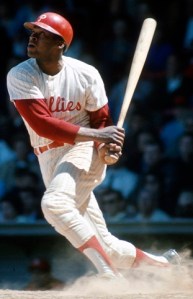
Dick Allen used to hit home runs that zoomed into earth orbit. Thanks to the Hall of Fame’s unexpected allergy to Zooming, Allen’s and others’ Cooperstown candidacies will have to wait another year.

Among other changes fun and dubious the pandemic has imposed upon baseball, two Era Committees—the Golden Era Committee on which Allen would now be a candidate, and the Early Baseball Era Committee—now won’t meet until winter 2021, with those they elect if any inducted in 2022.

It seems the old fogies who think baseball is headed into an abyss with newfangled analytics aren’t the only ones who think technology and the old ball game are a match made in hell. Hall of Fame chairman Jane Forbes Clark seems to think, erroneously, that technology mustn’t overcome the coronavirus’s travel confusions and constrictions to compromise Era Committee nominations and elections:

With the nation’s safety concerns, the travel restrictions and the limitations on group gatherings in effect for many regions, it is not possible to ensure that we can safely and effectively hold these committee meetings. The Era Committee process, which has been so effective in evaluating Hall of Fame candidates, requires an open, yet confidential conversation and an in-person dialogue involving the members of the 16-person voting committee.

Is Clark telling us that members of the Era Committees or the Baseball Writers Association of America (who determine their candidacies) can’t Zoom what numerous schools and non-retail businesses have arranged, managed, and zoomed since the coronavirus world tour kicked into overdrive in earnest a few months ago?

It really is so simple a child of five can do it. (Sorry, Groucho.) Lots of children of five in kindergartens are doing it.

When the Today’s Game Committee elected Harold Baines to the Hall of Fame so controversially two years ago, the committee members included Hall of Fame manager Tony La Russa, a man who is about as allergic to high technology as Donald Trump is to self-congratulation. And, Dave Dombrowski, last seen as the Boston Red Sox’s general manager until late last season.

Surely Clark and the Luddites among Hall governors don’t think a manager who helped introduce the computer to baseball thinking and strategising would have run home to Mommy at the idea of Zooming about Hall candidates? Or, a general manager who last worked for a team 20,000 leagues deep into analytics that require computers as much as other tools?

Technology isn’t always a gift, of course. There probably isn’t a baseball jury on earth that would say artificial turf was a baseball blessing. But if Clark thinks confidentiality would be compromised by a Zoom remote conference call, what does she think when, almost invariably, certain Hall of Fame doings and undoings get leaked to the working press routinely enough?

Fair disclosure: I have a little skin in this game. I’ve championed Dick Allen for the Hall of Fame for quite awhile now, after once being skeptical about it myself. (I’d also like to see elected his great contemporary Tony Oliva plus Minnie Minoso, both of whom deserve the honour.) But a long time reviewing the record as it was and remains convinced me that Allen belongs in Cooperstown.

I’m convinced with no further questions asked that his Hall case was compromised way less by the racism against which he waged war in Philadelphia than by a series of injuries he was sometimes foolish enough to try playing through, and that those injuries kept him (as Rob Neyer and others have observed) from posting better late-career numbers that might have solidified his Hall case.

Jay Jaffe, in The Cooperstown Casebook, says it better in prose than I could (and did) say it:

[C]hoosing to vote for him means focusing on that considerable peak while giving him the benefit of the doubt on the factors that shortened his career. From here, the litany is sizable enough to justify that. Allen did nothing to deserve the racism and hatred he battled in Little Rock and Philadelphia, or the condescension of the lily-white media that refused to even call him by his correct name. To underplay the extent to which those forces shaped his conduct and his public persona thereafter is to hold him to an impossibly high standard; not everyone can be Jackie Robinson or Ernie Banks. The distortions that influenced the negative views of him . . . were damaging. To give them the upper hand is to reject honest inquiry into his career.


I can and did say it statistically, too. I determined on my own that if Dick Allen had been allowed fifteen completely healthy seasons and a normal late-career, uncompromised decline phase, he might have finished his career with as many as 525 lifetime home runs instead of the 351 he did hit. (Oliva wasn’t Allen’s kind of power threat but the same healthy fifteen seasons and uncompromised decline phase might have left him with 315 lifetime homers.)

According to my Real Batting Average metric—which I’ve since modified to disallow sacrifice bunts (sorry, but intentional outs don’t and shouldn’t count) but retain sacrifice flies; and, which allows the complete look at a player that traditional batting average (treating all hits equal and factoring only “official” at-bats) denies—this is Dick Allen in his absolute nine-season peak period, and bear in mind that he missed an average twenty games per season in that period because of injuries:

Player PA TB BB IBB SF HBP RBA
Dick Allen, 1964-1972 5,457 2,592 685 120 33 11 .631

Forty-one percent of Allen’s hits went for extra bases, too, and they weren’t all those orbital belts that once inspired Hall of Famer Willie Stargell to suggest one reason Allen was booed by the notorious Philadelphia boo-birds (Those people would boo at a funeral—Bo Belinsky, briefly a Phillie) was that his home runs traveled too far to become souvenirs.

“What I’ve done, I’m pretty happy with it,” Allen told his biographer/Phillies historiographer William C. Kashatus once. “So whatever happens with the Hall of Fame, I’m fine with. Besides, I’m just a name. God gave me the talent to hit a baseball, and I used it the best I could. I just thank Him for blessing me with that ability and allowing me to play the game when I did.”

Whatever happens with the Hall of Fame, Allen, Oliva, Minoso, and others covered by the Golden Days and Early Baseball Era Committees, the Hall that includes members who were elected on behalf of being innovators (Branch Rickey, Bill Veeck) or pioneers (Albert Spalding, Barney Dreyfuss) is suddenly allergic to a little pioneering.