What the Mets should ask if they want Showalter managing

Buck Showalter

Showalter still has some splainin’ to do over Zack Britton’s absence when the 2016 AL wild card game was squarely on the line . . .

If you want to keep your minds off the lockout for awhile, you can find plenty of issues with which to do that. One coming to mind almost at once is New York Post columnist Mike Vaccaro waxing, as his column’s headline said Friday, on why the Mets should hire Buck Showalter as their next manager.

“The truth is,” Vaccaro wrote, “the team [new general manager Billy] Eppler and [owner Steve] Cohen have already cobbled together — and the one that seems destined to emerge from the lockout — is a team custom-designed for Showalter’s particular talents.”

There will be plenty of veterans, and Showalter likes having vets he can trust in his clubhouse. There will be plenty of intriguing players of younger vintage—think Pete Alonso, Jeff McNeil, Brandon Nimmo—whose experiences as major leaguers have largely been shaped by the stone hands of [former manager] Mickey Callaway and the inexperienced ones of [former manager Luis] Rojas . . .

But Showalter’s teams, in addition to almost always being of a superior collective baseball IQ, also take care of their business properly . . . The Mets, under Showalter, would be a Showalter team. That may mean they’re a couple of degrees less flamboyant, maybe a few layers less fun-loving . . .

So far, so good. And Showalter’s supporters include his former Orioles outfielder Adam Jones, who acknowledged Showalter still has to go through “the process,” meaning proper vetting. “[F]olks don’t have any idea of the real impact he can make on a ball club,” Jones tweeted Friday. “And I’m not just talking players. The Franchise. He made everyone better and accountable!”

How about Showalter making Showalter himself accountable? Say, for not making the move he should have made in the bottom of the eleventh of the 2016 wild card game? Vaccaro’s Post colleague Steve Serby tried in a September 2020 interview. And Showalter failed.

“Your Orioles controversy in [that game] when you didn’t call on Zack Britton and lost in the bottom of the eleventh in Toronto,” Serby presented. “You just have to wear some things, and I can sit here and tell you ten things you may not know about that situation, but nobody wants to hear it. I’m at peace with that,” Showalter replied.

The obvious followup—In fact, Buck, people would love to hear about the ten things that stopped you from bringing in your best relief pitcher, who also happened to be the best reliever in baseball that season, despite there not being a quote save situation, unquote, despite the Blue Jays with first and third and one out in a tie ballgame—didn’t come from Serby’s mouth.

Showalter stayed with Ubaldo Jimenez, normally a starter, but working in relief of Brian Dueseng, after Dueseng opened the inning with a strikeout . . . and despite Jimenez’s prompt surrender of a pair of base hits on four pitches. And Edwin Encarnacion hit Jimenez’s first pitch to him for a three-run homer.

It wasn’t as though Showalter didn’t have a very recent precedent by which to go. Just two years earlier, then-Cardinals manager Mike Matheny made the same mistake—with his Cardinals one game from elimination, Matheny left his best relief option, Trevor Rosenthal, in the bullpen in the bottom of the ninth of a tie game . . . because that, too, wasn’t a quote save situation unquote.

The Giants then had first and second and also one out. Matheny left in Michael Wacha, still rusty from late-season injury idling. And Travis Ishikawa hit Wacha’s second pitch to him for a three-run homer. Showalter was luckier—Encarnacion’s blast into the second deck merely sent the Jays to a division series; Ishikawa’s launch to the top of Levi’s Landing had a National League pennant attached to it.

Matheny reminded everyone what Showalter would forget a mere two years later: the time to bring your absolute best relief pitcher into a game is when it’s squarely on the line, previously designated “role” be damned. Especially when postseason advancement or a trip to the World Series depends on it. That’s not purely a thought from the school of analytics. It’s what they taught in Common Sense Elementary School.

If the Mets take Vaccaro’s suggestion seriously, they should be mindful of Jones’s reminder to put Showalter through the full vetting process. That vetting must include Showalter telling them, at least, what he wouldn’t deign to tell Serby over a year ago.

The Mets should damn well want to know why else—beyond no “save situation”—Showalter left his best relief option to rot when that option just might have sent the game to a twelfth inning giving his team one more chance to win at minumum. Accountability neither begins nor ends with the players.

If Showalter says only and again that nobody wants to hear those ten things you may not know about that situation, the one that sent his team home for a winter too soon, the Mets’ proper reply should be, “Way wrong answer! Thanks for coming, Buck, and don’t let the door knob goose you on your way out.”

The lockout is on

Before you start cringing while you lament the lockout, try to keep one thing in mind: It hasn’t canceled any games, regular, postseason, or World Series. Yet. If there must be a “work stoppage” for baseball, let it happen during the off-season. Let yourselves be fooled not one moment, either, that baseball has ceased going to work entirely.

About the only work that’s been stopped is contract offerings and signings between the owners and the players. Be advised that team front offices and staffs will continue going to work and players will continue their customary off-season routines preparing for the season to come.

That slightly surreal rash of tradings and free agency signings leading up to the deadline for the lockout—right down to the Red Sox trading Hunter Renfroe to the Brewers to bring home Jackie Bradley, Jr., he of the modest bat but the immodest outfield defense—is halted. That portion of the annual winter meetings involving the Show is pre-empted.

The lockout, as The Athletic‘s Evan Drellich observes, was somewhat inevitable “for months now, even years.” It’s the first “work stoppage” Major League Baseball has seen since the 1994 players’ strike.

That strike was pushed and provoked by the owners then. This “stoppage?” “Players have grown increasingly dissatisfied with club behaviors and the CBA that enables at least some of them,” Drellich writes, “and owners have shown little interest in making the concessions the players seek.”

Talks broke off a few hours before the Wednesday/Thursday midnight deadline after the owners refused to consider any economic proposal from the players unless the players agreed “in advance” to cease certain demands. Those demands, Drellich writes, include the time it takes a player to achieve free agency and changes to the current revenue sharing system.

The players believe with plenty of good reason that the current revenue sharing ways enable too much tanking, teams refusing to rebuild on the fly in favour of just throwing in the towel, allowing the major league product to perform like the St. Louis Browns while (it is alleged) they rebuild from the ground up.

Now hear this: Only two teams are known to have tanked successfully, meaning they tanked to rebuild and ended up in the Promised Land: the Astros and the Cubs. The Cubs tanked to build their 2016 World Series champion within just a handful of seasons; the Astros tanked likewise to build their long-since tainted 2017 World Series champion.

Time was when teams tried to urge certain star players out of the lineup the better to enable them to reach particular milestones before the home audience. It’s a lovely thing to behold when a man does it at home, but when his team tries maneuvering him into it it besmirches the competitive mandate.

That kind of tank usually drew a fury of indignation against the team that put coffers ahead of the honest competition, ahead of the presumption that a team must and does put its best possible lineup forth in the best interest of winning an honest contest.

Today’s tanking teams put coffers ahead of an honestly competitive season. In perhaps one of the top five perversions of “stop us before we over-spend/mis-spend/mal-spend again,” the owners would rather see a small handful of teams abuse their fans than demand such teams do what needs to be done to ensure at least an effort to compete.

Commissioner Rob Manfred audaciously calls it “this defensive lockout,” needed because the Major League Baseball Players Association’s vision for the game “would threaten the ability of most teams to be competitive.” If you believe that, my Antarctican beach club’s sale price has just dropped another hundred grand. “It’s simply not a viable option,” Manfred’s statement continues. “From the beginning, the MLBPA has been unwilling to move from their starting position, compromise, or collaborate on solutions.”

The union says the lockout was anything but “defensive”—“It was the owners’ choice, plain and simple, specifically calculated to pressure players into relinquishing rights and benefits, and abandoning good-faith bargaining proposals that will benefit not just players, but the game and industry as a whole.”

“This drastic and unnecessary measure,” says a statement from union director and former first baseman Tony Clark, “will not affect the players’ resolve to reach a fair contract. We remain committed to negotiating a new collective bargaining agreement that enhances competition, improves the product for our fans, and advances the rights and benefits of our membership.”

Do you notice that the owners through Manfred didn’t mention the fans but the players through Clark did? Do you notice the owners didn’t mention enhancing competition but the players did? The player are also concerned, rightfully enough, with younger players getting their major league earnings due and with younger players no longer subject to arbitrary whims that include suppressing them in the minor leagues when they’ve shown themselves Show ready.

“There’s also a feeling among players that front offices have become very good at manipulating the system to their advantage,” says the union’s chief negotiator, Bruce Meyer. “We want to make changes designed to incentivize competition for players, and remove disincentives for that competition. We want to find ways to get players compensated at an earlier stage of their careers when the teams are valuing them the most. And we want to preserve the fundamental principles of a market system.”

Tanking to one side, both sides have a couple of troublesome competition proposals. The owners are said to want a fourteen-team postseason; the players are said to prefer twelve.  Both should be rejected out of hand, no further questions asked, because postseason competition needs no further dilution than has happened in the wild card era.

Not long ago, there came a proposal for four-division leagues that might require expanding the leagues to another team each. I’ll see and raise: expand each league with one additional team each (and, this time, please do make damn sure there’s a real market for major league baseball in the new locales), but return each league to two divisions.

You’d actually have something resembling baseball the way it once was, after its first expansion: eight-team divisions, two in each league. Now, eliminate the damn wild cards and make it plain enough that either you’re playing for first place or it’s wait till next year, and don’t even think about tanking any longer.

Then, you remove the number one reason why the postseason loses its audience the deeper it progresses—saturation. Today’s postseason involves a maximum forty-two games. This still isn’t as crazy as the National Basketball Association’s maximum possible 98 postseason games, but it’s insane enough. In two divisions of eight teams each, baseball could (should) re-align itself to best-of-five League Championship Series and leave the World Series its best-of-seven self.

Guess what? In that re-alignment, you’d have a maximum of seventeen games, and the postseason wouldn’t even think of sneaking into the wee small hours of the month of November.

No, I’m not angling to become baseball’s next commissioner, but I’m only too well aware that the postseason has become a plaything through which the common good of the game becomes even more equal to making money for the owners and provoking the players to demand their cuts of it, too.

“[B]oth sides, after years of discontent, could be interested to test the other’s resolve,” Drellich says of the lockout now on. “The owners, as well, might believe that the free agents who remain when the lockout concludes will feel pressure to sign quickly, and therefore, at a discount.”

Don’t believe for one nanosecond that the owners should get away with crying poverty. Not when such new deals or extentions come forth as those recently handed to a Mets trio of Mark Canha, Eduardo Escobar, and (especially) Starling Marte; plus, Sandy AlcantaraJavier Baez, Byron Buxton, Wander Franco, Avisail Garcia, Kevin Gausman, Jon Gray, Robbie Ray, Corey Seager, Marcus Semien (is it me, or did the Rangers just drop about $512 million on new signings including Seager?), and (especially) Max Scherzer.

Unfortunately, the mid-level players often get bypassed during collective bargaining issues and often bear the brunt of whatever new CBAs cost. The talks usually involve “a league minimum and free agency eligibility,” as ESPN’s Buster Olney observes. “The players’ middle class, which has seen salary diminishment as a lot of teams apply analytics and identify cheaper replacement-level players, while other teams adopt the tanking strategy and cut payroll dramatically, has mostly been left out of those conversations.”

Scherzer isn’t the only player concerned about that plus making sure the owners can’t further suppress real competition and the full free agency picture. “Unless this CBA completely addresses the competition (issues) and younger players getting paid,” Max the Knife says emphatically, speaking as a member of the union’s eight-member player subcommittee, “that’s the only way I’m going to put my name on it.”

More competition issues? How about pushing the owners to push Manfred away from that ridiculous three-batter minimum for relief pitchers? How about pushing them to make the designated hitter universal, once and for all time, and eliminate the single most automatic out in the game? And, to make it so without one insane owners’ proposal that it be tied to a six-inning minimum for starting pitchers?

How about knocking it the hell off with monkeying around with the baseball itself (yes, MLB used two different sets of balls with two different actual weights in 2021—unbeknownst to anyone), then just develop and use a viable ball that favours neither pitcher nor hitter but makes it as level a confrontation as possible?

People thought Pete Alonso (Mets first baseman) was talking through his batting helmet when he waxed last June about MLB manipulating the balls themselves on behalf of impacting free agency. An astrophysicist discovered not only the different ball weights this year, but spoke to one unnamed pitcher who suspected the possibility that MLB might send different-weighted balls to stadiums hosting certain series: say, deader balls to sets between lesser teams but livelier balls to those hosting, say, the Yankees vs. the Red Sox.

I’d say that demands a full-throttle investigation. If people could and did go slightly mad over pitchers using that new old-fashioned medicated goo, they ought to go slightly more mad over ball cheating by baseball’s administration itself. The MLBPA should bring that up—and stick it in the owners’ ears.

The best news about this lockout is that it did happen during the off-season. Assorted analyses say strikes in sports are becoming things of the past. The bad news is that unreason isn’t going to become a thing of the past any time soon. Not, at least, until baseball’s ownerships today continue to prefer manipulation over competition, and the players increase their concern that competition be diluted no more.

The Mets bet Max (the Knife)

Max Scherzer

Shown pitching against the Mets in New York in late August, Max the Knife is a Met now . . . and lucratively.

Lose a shot at bringing a solid pitcher back to the Mets? Lose a followup shot at luring a pitcher who resurrected himself in San Francisco? Go forth and sign a three-time Cy Young Award winner to what might well be his final major league deal—at a record average annual value for pitchers, future Hall of Famers or otherwise.

When you say it that way, it sounds so simple that a refugee from the Delta Quadrant could have done it, despite knowing about as much about baseball as a veterinarian knows about astrophysics. But this is baseball, these are the Mets, that’s Mets owner Steve Cohen, and this is Max Scherzer.

Never mind that Cohen first found an immediate way to atone for squandered time after his particular (and not yet detailed at this writing) rift with former Met Steven Matz’s agent dovetailed with Matz signing a nice four-year deal with the Cardinals.

Signing Starling Marte (center field with a big bat), Mark Canha (just about any outfield spot and an on-base machine), and Eduardo Escobar (solid third baseman who can play second, solid batter) turned Cohen almost overnight from a sad gag to a definite big-market player. Even if it means moving Brandon Nimmo to a corner outfield slot and saying goodbye to a Michael Conforto whose walk-year collapse didn’t look great for himself or the Mets.

Never mind, too, that Cohen and/or his designated hitter couldn’t quite close the deal with righthanded pitcher Kevin Gausman, who turned a career year with the Giants into a nice five-year deal with the Blue Jays—who lost Matz to free agency—that’s the second most lucrative in their franchise history. (George Springer’s five/$125 million beats Gausman’s five/$105 million.)

Signing Scherzer qualifies thus far as the largest, loudest splash on this off-season’s open market to date. Maybe even louder than the ten-year/$325 million the Rangers handed now-erstwhile Dodgers shortstop Corey Seager the day before. In two swell foops (as the lady once said on the radio) the Mets swept up both the single best center fielder available and the pitcher whose 5.9 wins above replacement-level player in 2021 led all free-agent pitchers this time around.

It may also be the least expected. Remember: Scherzer’s conditions for being traded from the Nationals to the Dodgers last July included that he go to either a west coast contender or those guys in his native St. Louis who just bagged Matz. New York was thought to be near the bottom of his baseball bucket list. The Yankees weren’t even a topic, really.

Remember when Hall of Famer Reggie Jackson said he signed his first free agency deal with the Yankees because George Steinbrenner “hustled me like a broad?” Cohen and his minions must have hustled Scherzer like ten ladies and their ladies-in-waiting.

Landing Scherzer means the Mets bring aboard as respected a clubhouse figure as exists in today’s game, a guy who does his best to keep the dysfunction away and also serves as a kind-of de facto second pitching coach, sitting with younger arms while they review video of their past performances and helping them analyse and prepare.

It also means the Mets just landed the guy who led the entire 2021 Show with the lowest walks-per-nine innings rate (1.8), the lowest walks-and-hits-per-inning pitched (WHIP) rate (0.86), posted a better than splendid 2.97 fielding-independent pitching rate, and mostly looked better than his usual self after becoming a Dodger at the 2021 trade deadline.

Mostly.

Max the Knife isn’t quite a kid anymore. At 37, it’s very possible that he’s just signed the final big contract of his major league career; it could even be his final major league deal, period. He pitched mostly like his classic self until his final two starts of the regular season, when he got pried for five runs by the Rockies in Coors Field (23 September) and then for six runs (five earned) by the Padres at home (29 September).

Scherzer recovered from those to pitch well enough in the postseason until former Dodger Joc Pederson yanked a two-run homer off him in the fourth in Game Two of the National League Championship Series. With his shoulder and arm feeling exhausted, Scherzer would have been that set’s Game Seven starter—if the Braves hadn’t yanked four runs out of Game Six starter Walker Buehler while the Dodgers had no answer past two runs off Braves starter Ian Anderson and reliever Luke Jackson.

Nobody would have counted Scherzer out for the seventh game that never came. Just two years earlier, he shook away a terrible neck issue to start Game Seven of the World Series, keep the Astros in check enough despite having nothing left in the tank otherwise, and leave the Nationals room to win the Series with a record fourth road win in the set. He really has been one of those pitchers who can survive on will when the stuff deserts him.

The Mets must be hoping that Scherzer has enough left in the tank to help yank them back into the races to stay. Either that or that he still has that iron will to survive on the mound when the repertoire goes from Kind of Blue to Milli Vanilli.

Assuming both a healthy Scherzer and a healthy returning Jacob deGrom, the Mets in theory would have a 1-2 punch at the top of their starting rotation equal to none today but comparable to several of the past. Sandy Koufax/Don Drysdale. Randy Johnson/Curt Schilling. Heady and three-out-of-four Hall of Famer company to keep.

In theory, too, it could be enough to cause division-rival Nats general manager Mike Rizzo, now navigating a rebuild on the fly without even thinking about tanking, to rub his head with sandpaper (since he has no hair to tear out) and mutter loudly, “If I’d known he’d end up a Met, maybe I wouldn’t have traded Scherzer at all.”

But . . .

“Scherzer could outperform 95 percent of pitchers his age through MLB history and still underperform relative to the contract,” writes Smart Baseball author Keith Law at his usual stand for The Athletic.

Good for him for getting paid, but the idea in free agency is to pay for expected future production, not past production, and the base rate for pitchers his age is not promising. They either lose effectiveness, or they get hurt. Maybe Scherzer is an outlier, just like the race isn’t always to the swift or the battle to the strong. That’s just the way to bet.

The Mets are laying a $43.3 million a year average annual value bet. As Law points out, no pitcher 37 or older has had a 5-WAR season since Bartolo Colon at 39 for the 2013 Athletics; only three since World War II (Hall of Famers Johnson and Phil Niekro, plus Roger Clemens) have delivered 7-WAR seasons at 38+; and, only twelve times have 38-year-old-plus pitchers posted 5+ WAR seasons since the turn of the century.

They’re banking on Jenny Diver, Suki Tawdry, Miss Lotte Lenya, old Lucy Brown, and company forming that big line on the right now that Maxie’s coming to town. For every Met fan and observer wondering if their boy Cohen’s done something else rash, there may be ten counting on Scherzer to become the kind of outlier the Johnsons and Niekros were at his age.

They might even be banking on Scherzer spinning a third no-hitter, this time for them. He has two already, both in 2015, the second of the two against the Mets. When he nailed his 3,000th lifetime major league strikeout last August, bagging San Diego’s Eric Hosmer in the second, Scherzer also took a perfect game into the eighth—when Hosmer exacted revenge by breaking it up with a double to deep right.

Assuming next season won’t be compromised or delayed by any coming lockout, (and it sure feels as though enough of the owners are landing their free-agent signings in a big hurry and rash to secure themselves further before any lockout—a rash which also puts the big lie to any claims of financial ill health), there’s something else to consider.

The Mets are scheduled to open against the Nats. How delicious would it be to see their next manager have to decide whether to open with deGrominator or Max the Knife? Already the National League East would look many things with boring not even close to being one of them.

Big Papi leads my IBWAA Hall of Fame ballot

David Ortiz

David Ortiz, Hall of Famer in waiting. 

It would be nice to think that the Internet Baseball Writers Association of America’s annual Hall of Fame voting can be more than merely symbolic in the bigger picture. Not just because I happen to be a life member, but for reasons I enunciated in a previous essay addressing how to adjust the Hall vote.

Including that we of the IBWAA aren’t just a gaggle of bathrobe scribblers. We do have members of the Baseball Writers Association of America among us. But we also have a flock of very dedicated writers who watch baseball and think hard about the game we love, at least as hard as the average “legitimate” reporter/commentator.

We think hard about the Hall of Fame, too. We want to see the worthy get their due. We cringe with everyone else when the less worthy stand at the Cooperstown podium. We lament when the worthy don’t get their due. We want to see the Hall of Fame represent geniune greatness, not mere sentiment or a kind of gold or platinum watch.

Our baseball hearts break with anyone else’s, too, when we see men on the ballot we thought looked to be Hall of Famers in the making when they first hit the field or the mound only to be waylaid for assorted sad reasons.

There’s sadness enough on this year’s Hall ballot. But there’s also joy enough. And, additional or recurring controversy enough. That’s one, two, three bases, you’re in at the old ball game’s vote for the game’s highest known honour. Let’s hope that, this time, between the BBWAA, the Golden Era Committee, and the Early Baseball Committee, they step up with the bases loaded and knock it right out of the park.

We of the IBWAA vote only for those on the BBWAA ballot. More’s the pity, because I’d love to see us make ourselves known about the Golden Era and Early Baseball Committees’ candidates. (Frankly, I’d love to have even a symbolic hand in giving their due  to Dick Allen, Ken Boyer, Bill Dahlen, John Donaldson, Minnie Minoso, Tony Oliva, Buck O’Neil, and Tubby Scales.)

Following will be my Hall votes this time around, and why, symbolic though they are. You may notice no review of Barry Bonds and Roger Clemens. That’s because the IBWAA already “elected” them and thus removed them from our annual ballot. In the real world, of course, neither Bonds nor Clemens are in yet. They’re also now on their final real-world BBWAA ballots. (So, for that matter, is Sammy Sosa.)

They’re still hobbled by, you know, that stuff with actual/alleged performance-enhancing substances. Never mind that a) they’re believed to have indulged during the pre-testing, so-called Wild West PED era of the 1990s/early Aughts; or, b) they had Hall of Fame credentials to burn before the points at which they became suspect.

But on with it. There’s only one BBWAA ballot newcomer getting my vote:


David Ortiz 

Big Papi is problematic for one reason only: that anonymous 2003 testing that 1) turned him up positive but 2) was supposed to be anonymous and to determine just how broad a testing program to come should be. And even Commissioner Nero has said, often enough, that there was enough false positive doubt to remove the taint from him.

Ortiz didn’t even know about that anonymously-tested positive for a few years to follow . . . and he never flunked a drug test in thirteen years once the mandatory testing programs began in earnest not long afterward.

The anti-DH bias doesn’t hold anymore, not with Frank Thomas and Edgar Martinez in the Hall of Fame, it doesn’t. (Harold Baines, you say? Sorry, that was a Today’s Game Committee mistake—a big mistake. Baines was and remains a classic Hall of the Gold Watch player and nothing much more than that. The Today’s Game Committee decided to give him the platinum watch of a plaque in Cooperstown. Nobody says I have to agree with it or keep my mouth shut about it.)

But as a designated hitter, especially once he joined the Red Sox, this guy was a wrecking machine. Not given much of a shot with the Twins while they still played at home in the old Metrodome, Ortiz going to the Red Sox got a big boost right out of the chute: he moved from a home “park” that wasn’t so great for him to one that was.

He also moved from a team that wasn’t as good as the 2003 Red Sox were at putting men on base for him to drive in. He’d given previous hints to what he could do in the postseason; then, in 2004, he damn near became the postseason with what he did to help the Red Sox overthrow the Yankees in the American League Championship Series.

Ortiz helped the Red Sox break the actual or alleged Curse of the Bambino at last and helped them to two more World Series rings before he was finished at last. He was nothing to trifle with in the postseason overall (.289/.404/.543; seventeen home runs; .947 OPS) but he was a weapon of mass destruction in the World Series. (.455/.576/.795 in fourteen World Series games; 1.372 OPS; nine of twenty Series hits going for extra bases including three over the fences.)

Big Papi was must-see everything once he flipped the switch and went from good to great to off the charts at the plate. That’s before considering he finished his career with 541 home runs, 1,192 extra base hits total, and 48 percent of his hits going for extra bases overall. He’s also one of only three men to finish their careers with 500+ home runs and 600+ doubles: the others are Bonds and Hall of Famer Henry Aaron.

So how does Ortiz stack among the Hall of Fame DHs according to my Real Batting Average (RBA: total bases + walks + intentional walks + sacrifice flies + hit by pitches, divided by total plate appearances)?

DH PA TB BB IBB SF HBP RBA
Frank Thomas 10,075 4550 1667 168 121 87 .654
David Ortiz 10,091 4765 1319 209 92 38 .637
Edgar Martinez 8674 3718 1283 113 77 89 .609
Harold Baines 11,092 4604 1062 187 99 14 .538
HOF AVG .610

Ortiz is only fourteen RBA points behind Thomas and 28 points ahead of Martinez, and he’s 27 points above the Hall average for DHs. (Yes, that’s Baines 72 points below the Hall’s DH average—considering those who spent all or the majority of their careers in the role.)

You know something? Yes, let’s get it out of the way, since there’s been more than a little carping from the anti-DH crowd: Ortiz played 265 games at first base lifetime . . . and he wasn’t terrible at it.

He didn’t have a lot of range, but he was only three points below his league average for fielding percentage, he was only seven defensive runs saved below the league average, and he had decent hands that enabled him to turn more than a few double plays. We’re not exactly talking about the second coming of Dick (Dr. Strangeglove) Stuart here.

But we are talking about the arguable second-greatest full-time DH ever to check in at the plate. We’re also talking about a guy who avoided more than a few Red Sox scandals during the heat of his career there (they don’t remember Papi Being Papi with due derision) and a guy who could and often did put the entire city on his back when disaster or terrible mass crime struck.

Who can forget This is our [fornicating] city! that Opening Day following the Marathon bombing and launching the Red Sox to their third World Series conquest with Ortiz in the lineup? Just pray that, during his Cooperstown induction speech, Big Papi doesn’t surrender to the overwhelming temptation to holler, This is our [fornicating] Hall of Fame!


The rest of my yes votes

Todd Helton—Unlike Hall of Famer Larry Walker, the Toddfather never got the chance to show what he could do with a park other than Coors Field as his home park. Even with the width of his home/road splits, though, Helton hit respectably enough on the road that you’d have a hard time convincing anyone that he wasn’t as Hall of Fame as a first baseman gets.

Helton also crosses the average Hall of Famer’s batting threshold according to Bill James’s Monitor and Standards measures, and his peak value is a few points above the average Hall of Fame first baseman. He was a rare bird who walked more than he struck out, was an on-base machine (.414. lifetime on-base percentage), and he was deadlier at the plate with men in scoring position than he was with the bases empty.

He wasn’t the second coming of Keith Hernandez at first base, but he was a well above-average defender. That still sounds like a Hall of Famer to me.

Andruw Jones—I’m pretty sure people still have a near-impossible time reconciling Jones’s too-staggering decline phase to his peak through age 29. It started with his final, injury-marred Atlanta season, and continued so profoundly in Los Angeles that he became indifferent enough to be a sad punch line before he was finally bought out of his deal.

But that peak should still be enough to make Jones a Hall of Famer. He wasn’t just a Hall-level hitter before those later-career health issues, but he was way off the proverbial charts as a run-preventive center fielder. He had a great throwing arm, a genius for finding sure routes to balls despite his habitual shallow positioning, and both elevated him where it mattered the most—and not just in the highlight reels, either.

Jones retired with the second-most defensive runs saved above his league average for any player at any position—only Hall of Famer Brooks Robinson’s +293 out-rank Jones’s +253. Jones is also +80 ahead of Hall of Famer Willie Mays, incidentally.

Don’t be silly. I’m not calling Jones a better player than Mays, or even Hall of Famer Ken Griffey, Jr. They were just too much better all-around to kid yourself. I am saying, however, that taken strictly for his defense Jones was the most run-preventive defensive center fielder who ever played major league baseball.

Measure him by wins above replacement-level player (WAR), and Jones’s seven-year peak WAR is above that of the average Hall of Fame center fielder. There are plenty of peak-value Hall of Famers in Cooperstown. Jones’s Hall of Fame teammate, Chipper Jones, wasn’t just blowing smoke when he said upon his own induction that if you wanted to beat the 1990s Braves “you had to go through the Jones boys, too.”

That’s the way Hall of Famers play the game. And if the Hall now gives more value to defense than in the past, Jones assuredly deserves the honour even more.

Andruw Jones

Andruw Jones—the best in the game at center field for long enough, and the second-most run-preventive defender at any position, ever. That sounds like a Hall of Famer to me. 

Jeff Kent—The best-hitting second baseman of the expansion era was traded three times before finding a home with the Giants at 29. He was also a product of a high-scoring era, but he wasn’t a particlarly great defensive second baseman even if he was slick on the double play. That -42 defensive runs saved below his league average doesn’t enhance him.

Neither does his reputation as a personality often described as “prickly,” and its still to wonder whether Kent’s once-notorious attitude issues remain enough to keep the BBWAA from putting him in despite the continuing ballot crowd. More telling, though, is that both early-career mishandlings plus enough injuries over the second half of his career had big enough hands in his final performance papers.

Kent’s 351 home runs as a second baseman remain the most for any player playing that position. (The man most likely to have threatened that record, Robinson Canó, may not get the chance after all.) That helps his Hall case, as does his overall fine postseason record.

He wouldn’t be the worst man or second baseman in the Hall. I’ll vote for Kent on the record alone, but I do suspect he may yet find himself needing a future Era Committee to give him the second look he may yet need to get his plaque.

Scott Rolen—It wasn’t Rolen’s fault that he was villified and sullied during his early seasons in Philadelphia. He just wasn’t the kind of guy Loud Larry Bowa and Drill Sgt. Dallas Green loved. He was soft spoken, he let his prep and his play do his talking, and he didn’t blow up the nearest inanimate objects when a swing missed or a play faltered or a game was lost. You hear a lot of lip service to let’s just get ’em tomorrow. Rolen lived it.

If he’d been a fighter pilot, Rolen would have earned a rep as the classic maintain-an-even-strain type. The Right Stuff. Bowa, Green, and the Phillies front office misread Rolen as indifferent. Even if every teammate he had knew better. He hustled himself into injuries and that only added to the sullying, in Philadelphia and in St. Louis, where he ran afoul of Tony La Russa despite playing his usual kind of hard and delivering performances that helped the Cardinals to a few postseasons and a World Series ring.

Rolen fumed over La Russa souring on him for being injured in honest competition. If only he could have then-Brewers manager Ned Yost for a skipper. Yost called him “the perfect baseball player. It’s his tenacity, his preparation, the way he plays. He tries to do everything fundamentally sound. And he puts the team first—there’s no fanfare with him.”

Then-Cardinals GM John Mozeliak came publicly to regret trading Rolen to the Blue Jays. Former Cardinals GM Walt Jocketty caught wind that Rolen wanted to play closer to home   and pried him out of the Jays for the Reds. Rolen helped the Reds to a couple of postseasons, too.

Rolen wasn’t the hitter Hall of Fame third baseman Chipper Jones was, but Jones wasn’t the defender Rolen was, either. Not by about ten country miles. Rolen won eight Gold Gloves and they weren’t by reputation alone. Only Robinson and Hall of Famer Mike Schmidt have more such awards at third base.

Rolen had eleven seasons averaging ten or more runs saved at third and three in which he averaged twenty or more. His 140 defensive runs above league average are tied for sixth amont third basemen all time. Preferring to leave it on the field and at the plate without starving for publicity or acting like the star he did his best not to present himself being may have been Rolen’s number one career problem.

Every team should have that kind of problem, then sit back and watch themselves win a little bit more with it. Rolen’s Hall candidacy gets more traction year by year. He deserves a plaque in Cooperstown and he should get it before his ten years’ ballot eligibility expires.

Curt Schilling (with prejudice)—On the mound: no-questions-asked Hall of Famer. (Only Schilling plus Hall of Famers Ferguson Jenkins, Greg Maddux, and Pedro Martinez have ever struck 3000+ batters out and walked -1,000 batters.) He sought the biggest of the big games and delivered when he got them most of the time.

Off the mound: no-questioned-asked jerk. It only begins with eleven words: “Rope. Tree. Journalist. Some assembly required,” on a T-shirt; “OK, so much awesome here,” in a tweet he deleted at the speed of light when the you-know-what hit the you-know-what and he pleaded sarcasm. He also said of it in due course, “Gotta own the times you go off the rails.”

Schilling’s Phillies general manager Ed Wade once said he was a horse every five days and a horse’s ass the other four. I’ll say again: When you take your children to Cooperstown, and you see his plaque, just tell them he’s not the first and won’t be the last Hall of Famer at the ballpark who was a Hall of Shamer away from it.

I don’t have to love the man to respect and vote for the pitcher. But let’s let Jay Jaffe have the penultimate word, from The Cooperstown Casebook:

I wouldn’t invite Schilling into my own home, and I wouldn’t encourage anyone to view him as a role model, but in my view nothing in his career leaves a doubt that he belongs in Cooperstown. He ranks among the all-time greats via his run prevention skill, his dominance in the game’s most elemental battle of balls and strikes, and his repeated ability to rise to the occasion when the on-field stakes were highest.

Gary Sheffield—Strictly by his counting statistics, Sheffield has a Hall of Fame case. His talent was as outsized as his reputation for self-centricity. He was a study in pending destruction at the plate, and he had a one-for-one-and-all-for-Gary reputation that wasn’t always justified.

His career happened mostly in a high-offense era, but he had an odd problem: he played too much in home ballparks that hated righthanded hitters. (Strangely, too, he did well enough in one of them, Dodger Stadium.) Marry that to the nagging injuries dogging him much of his career and he lands in a strange position.

For all his home runs (509), for all that he sits in the top 25 for walks and runs created, his offensive winning percentage (.687) puts him just inside the top one hundred. A player that talented with his kind of stats should have pulled up a lot higher. Taken all-around, his lack of black and gray ink (top ten finishes) leaves Sheffield as borderline as it gets. His defensive deficiencies (-195 defensive runs below his league average) killed him for peak and career WAR, too.

Sheffield could be his own worst enemy but in some ways he’s also a wronged man. He tended to nuke more than burn bridges when he felt he was done wrong, but he was also accused falsely of tanking plays with the Brewers after a hard wild throw in the minors caused a rift with a manager who subsequently apologised to him.

Dinged by the notorious BALCO steroids case when he really might have been tricked into using an actual/alleged PED, Sheffield’s ding, too, came before the formal testing/penalty program. Even the hardest-line writers against actual or alleged PEDs inclined to give Sheffield the benefit of the doubt. I do, too.

There are worse men in Cooperstown than Sheffield, and there are Hall of Famers who were their own worst enemies to a far greater extent. He may end up having to wait for an Era Committee to send him there, but Sheffield has a real Hall of Fame case. And he won’t be half as controversial as some other Hall of Famers who might come to mind.

Billy Wagner—Maybe the most underrated relief pitcher of his and just about any time. He was as lights out as relief pitchers got and then some, even allowing that nobody yet has really figured out a final objective and definitive way to rate relief pitchers of any era.

Wagner yanked himself to a pinnacle following a childhood about which “hard scrabble” might be an understatement. (Too-frequent home changes; poverty so profound that peanut butter on a cracker equaled dinner often enough.) He was a small man who made himself into a lefthanded assassin. (Two right arm fractures during his impoverished childhood compelled him to go portside.)

Billy the Kid finished his fifteen-year career with a 0.99 walks/hits per inning pitched rate; and, when it comes to win probability added, Wagner has only four relievers ahead of him, Hall of Famers all: in ascending order, Trevor Hoffman, Goose Gossage, Hoyt Wilhelm, Dennis Eckersley, and The Mariano. He was also on his own planet when it came to missing bats. In fifteen full major league seasons (he had a cup of coffee with the 1995 Astros), his strikeouts-per-nine innings rate fell below 10.0 only once; he retired with a lifetime 11.9 rate.

Nobody could hit this guy too often: the lifetime batting average against him is .187. Here’s how the hitters did against the other Hall of Fame relievers:

Lee Smith—.235.
Rollie Fingers—.232.
Bruce Sutter—.230.
Goose Gossage—.228.
Dennis Eckersley—.225.
Hoyt Wilhelm—.213.
Trevor Hoffman—.211.
Mariano Rivera—.211.

Would you like to be reminded whom among those men pitched in the most hitter-friendly times? That would be Smith (in the final third of his career), Hoffman, The Mariano, and Billy the Kid. It’s to wonder how much more stupefying the record might be if Wagner could have avoided assorted injuries including late-career Tommy John surgery.

Maybe his only flaw was a Sheffield-like tendency to nuke bridges once he left town, though for far different reasons. Wagner waged war against those he thought didn’t share his competitiveness and determination. But he finally admitted in his memoir, A Way Out, “I learned a lot about criticism and how not to be a leader when I was traded.”

When he walked away after 2010, he decided his family was a lot more important to him than whatever else he could accomplish as a pitcher. “There’s nothing left for me to do in baseball,” Wagner admitted after leaving the park one last time. “I’m not going to change anyone’s mind about whether I’m a Hall of Famer. People are either going to like me or hate me, and I can’t change their minds. Besides, life is about a lot more than this game.”

If you must, call Wagner the Bert Blyleven of relief pitchers, with a Hall case that kinda sorta sneaks up on you upon deeper analysis. But he does deserve the honour.

The Rest of the Newcomers

I didn’t vote for the rest of the BBWAA ballot newcomers, but a few were geniunely sad:

Carl Crawford—On-base and speed machine ground down by injuries, especially when he tried playing through them anyway to avoid certain managers dismissing him as a quitter. He was a great defensive left fielder, too. (+99 runs saved above his league average.) Short enough of a Hall of Famer, but better than you remember him.

Prince Fielder—Finished at 32 thanks to neck injuries and surgery, but he sure looked like a Hall of Famer in the making for a few years with that big incendiary bat, didn’t he? I did zap him once in print for a seemingly indifferent take on the Tigers’ postseason elimination, but I changed my mind—you’d rather he trashed the clubhouse or wailed about the injustice of it all?

Ryan Howard—Everyone in Philadelphia would love to rewind the tape back to just before Howard’s Achilles tendon injury turned him almost overnight from the deadliest of the deadly to a journeyman who still had some pop but little else in the final five seasons of a thirteen-year career. No great defensive first baseman, the injury eroded Howard’s real ticket to Cooperstown, his thunderous bat.

Tim Lincecum—Won two Cy Young Awards in his first three seasons. A small guy who pitched big, maybe too big for his size, much like Mike Boddicker a few generations earlier. I’ve seen Lincecum described as an injury waiting to happen. His painful fadeaway was too sad especially because The Freak was extremely likeable as a person and known as that kind of teammate, too.

Justin Morneau—Had Hall of Fame talent, won a single American League Most Valuable Player award that he didn’t really deserve (going by WAR, Cy Young Award winner Johan Santana probably deserved that 2006 MVP, too, but if you won’t give it to pitchers Grady Sizemore among the position players really deserved that year’s MVP), and was done in gradually but surely by a few too many concussions.

Álex Rodríguez—Of course it’s sad that a guy who didn’t need help to be Hall of Fame-great went for it, anyway. First out of terrible insecurity after signing that mammoth deal with the Rangers; later, out of hubris at minimum. His post-career image-rehabilitation efforts may be laudable, if controversial. (He’s criticised at least as often as he’s praised.) But it’s going to be impossible to forget that—even if there were many compromising issues around baseball’s Biogenesis investigation—A-Rod did a splendid enough job compromising himself.

Jimmy Rollins—What Rollins has to sell is speed on the bases and solid shortstop defense. The bad news, part one: His 95 OPS+ (OPS adjusted to all parks, not just his home park) and .330 on-base percentage in the leadoff spot aren’t quite what a Hall of Fame leadoff man should have, and he didn’t steal enough bases to make himself a Lou Brock-like Hall case. The bad news part two: He’s 53rd all-time for defensive runs above his league average—with +38. At minimum there are eighteen men going nowhere near the Hall of Fame who were good for more.

Mark Teixiera—He looked like a Hall of Famer in the making, didn’t he? A few too many injuries keep him from pulling up far enough beyond several non-Hall first basemen, but when he was healthy the switch-hitting Teixiera was a genuinely great hitter and a well above-average first baseman.

Correa vs. Jeter vs. Syndergaard

Carlos Correa, Derek Jeter

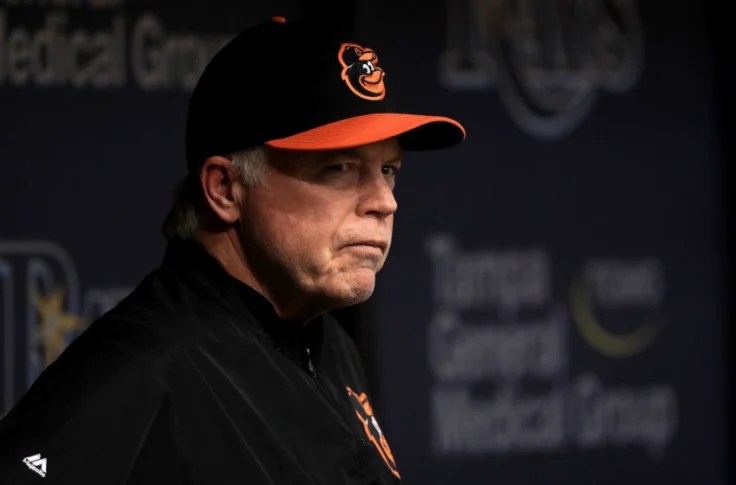
Carlos Correa’s jab at Hall of Famer Derek Jeter’s Gold Glove awards inspired the New York Post to insert Jeter showing one of his Gloves into this action shot of Correa with the leather. But was Correa really out of line?

Carlos Correa versus Derek Jeter isn’t exactly the equivalent of a cage match, no matter what Noah Syndergaard might want to make of it. Correa has just finished his seventh major league season; Jeter is a Hall of Famer who played twenty major league seasons. Correa’s career has miles to go before it sleeps; Jeter’s baseball legacy is secure in Cooperstown.

Correa actually said, aboard a recent Me Gustan Los Deportes (I Like Sports) podcast: “Derek Jeter didn’t deserve any of the Gold Gloves he won.” Syndergaard, now a former Mets pitcher freshly signed with the Angels, was not amused: asked by MLB Network whom he’d like to strike out the most, Syndergaard didn’t flinch.

Thor’s preferred strikeout target is Correa. “Not just for the obvious reason, but just what he said about Derek Jeter not deserving his Gold Gloves,” he said. “I think that was a little ridiculous to say.”

The “obvious reason,” of course, is the lingering stench of Astrogate and Correa’s frequent willingness to embrace the villain role the scandal imposed on the Astros, an imposition too likely to remain until the last member of the 2017-18 Astros no longer wears their uniform.

The next-obvious reason might be Correa winning this year’s American League Gold Glove award for shortstop, plus being a free agent and drawing a lot of attention as a contract candidate for the Yankees and other teams looking for better than they’ve got at shortsop.

Jeter wouldn’t let himself be drawn in. Today the Marlins’ chief executive officer, Jeter simply dismissed Correa’s jab: “I didn’t think much about it. I don’t know how my name came up. My Spanish is not that good, I still haven’t seen it, I don’t know how my name was brought up, but it doesn’t even warrant a response. I mean I could go a lot of different directions but I won’t.”

That was the same kind of high-road travel for which Jeter was known well enough during the prime of his playing career. But was it actually that ridiculous to critique Jeter’s Gold Gloves?

When Jeter wasn’t yet eligible for Hall of Fame election, Jay Jaffe wrote The Cooperstown Casebook: Who’s in the Baseball Hall of Fame, Who Should Be In, and Who Should Pack Their Plaques in 2017. He did it position by position. When it came to the shortstops, Jaffe looked at Jeter in the chapter’s “Further Consideration (upcoming or overlooked candidates” subsection.  And this is what Jaffe concluded about Captain Clutch:

Seemingly engineered to withstand the spotlight’s glare, Jeter spent two decades in Yankee pinstripes pulling off the remarkable feat of simultaneously exuding charisma and remaining completely enigmatic, able to evade virtually every controversy that surrounded the franchise. A starter for sixteen playoff teams, seven pennant winners, and five [World Series] champions, he ranks among the position’s best hitters, collecting more hits than any other infielder, and ranking third in batting runs among shortstops (353) behind [Hall of Famer Honus] Wagner and [Hall of Famer Arky] Vaughan. Defensively, his strong arm, sure hands, and low error totals helped him pass the eye test of casual fans, broadcasters, and even the opposing managers who bestowed those Gold Gloves. However, his range was limited—he moved to his left about as well as Dick Cheney—and his -246 fielding runs is more than double the total of the next-closest shortatop; he was at least ten runs below average in three Gold Glove seasons. Still, Captain Clutch was unflappable in the big moments, hitting .304/.374/.465 with twenty homers in the postseason. Expect him to pull in at least 97 percent [of the Hall of Fame vote] in 2020.

Jeter ended up pulling 99.7 of the vote for his Hall of Fame election. He also inspired the strange phenomenon of Hall voters all but conspiring actively to make him the twenty-third Hall of Fame player to stand alone among incoming players on the Cooperstown podium.

The pan-damn-ic kept it from working out quite that way, of course. Jeter was inducted formally in 2021 with Ted Simmons and Larry Walker, both of whom were elected last winter, as was longtime Major League Baseball Players Association leader Marvin Miller posthumously. He didn’t quite get to stand alone.

But notice the text on Jeter’s Hall of Fame plaque:

Heartbeat of a Yankee dynasty defined a two-decade run of Bronx dominance that produced 17 postseason appearances, seven American League pennants and five World Series championships. Selected to 14 All-Star Games and named 1996 AL Rookie of the Year. Winner of five Gold Glove Awards, appearing in all of his 2,674 games in the field at shortstop. Totaled 200-or-more hits in eight seasons, retiring sixth all-time with 3,475. Scored 1,923 runs, with 100-or-more in 13 seasons. In a record 158 postseason games, batted .308 with 111 runs, 200 hits, 32 doubles. Earned 2000 World Series Most Valuable Player Award.

There you have it. Except for mentioning his five Gold Gloves almost in the middle of his other accomplishments, there’s not. one. single. word. about Jeter’s shortstop defense. Not one. Mentioning that he played every major league game of his career at the position is a question of presence, not performance. The plaque speaks essentially to what Jaffe isolated, Jeter being that great a batter among his fellow shortstops.

Let’s revisit where Jeter stands among his fellow post-World War II/post-integration/night ball-era Hall of Fame shortstops, according to my Real Batting Average (RBA) metric: total bases + walks + intentional walks + sacrifice flies + hit by pitches, divided by total plate appearances:

Shortstop PA TB BB IBB SAC HBP RBA
Luis Aparicio 11230 3504 736 22 177 27 .398
Ozzie Smith 10778 3084 1072 79 277 33 .422
Phil Rizzuto 6719 2065 651 35 195 49 .446
Pee Wee Reese 9470 3038 1210 67 176 26 .477
Alan Trammell 9376 3442 850 48 200 37 .488
Robin Yount 12249 4730 966 95 227 48 .495
Derek Jeter 12602 4921 1082 39 155 170 .505
Barry Larkin 9057 3527 939 66 126 55 .520
Cal Ripken 12883 5168 1129 107 137 66 .539
Ernie Banks 10395 4706 763 202 141 70 .565
HOF SS AVG .486

There’s no question. Jeter is an above-average Hall of Fame shortstop at the plate; only Barry Larkin, Cal Ripken, and Ernie Banks (in ascending order) are past him there.

But that’s entirely at the plate. In the field, at shortstop, Jeter has a pocketful of isolated highlight-reel plays—the Flip, the Seat Dive, you name them—and they surely contributed to the image that he was an overall virtuoso with the leather and on the run. And that’s the problem. Perception is still everything to the casual observer and to the fanboi alike.

But perception is not evidence. The real evidence says that Jaffe had Jeter right in the field: he had the basic skills to enable him to pass the eye test with the minimum passing grade. But like the student who could pass his subjects without trying too hard wouldn’t advise anyone else to try it, you wouldn’t advise another shortstop to try passing the eye test with only the basics in the field unless he, too, is embedded on a passel of division/pennant winners and five-time World Series champions.

The table that follows is Derek Jeter’s fielding record during his five Gold Glove seasons, looking strictly at the number one job a defensive player has; namely, helping his team keep the other guys from putting runs on the scoreboard. The glossary is: DRS-defensive runs saved; RF/9-range factor per nine innings’ play; RF/9-LG-his league’s range factor per nine innings; RF/6-range factor per game; RF/6-LG-his league’s range factor per game.

Derek Jeter Gold Glove Years DRS RF/9 RF/9-LG RF/G RF-G/LG
2004 -13 4.46 4.56 4.32 4.53
2005 -27 4.76 4.60 4.56 4.55
2006 -16 4.14 4.60 3.97 4.42
2009 3 3.90 4.36 3.64 4.31
2010 -9 3.78 4.40 3.62 4.36
AVG-Gold Glove Years -15 4.21 4.50 4.02 4.43

Jeter won his first Gold Glove at age thirty, after he’d been the Yankees regular shortstop for nine years and after he and his Yankees already earned four pennants and World Series rings. There’s an awful lot of cred attached to him already just by dint of that kind of flight jacket.

He’d already shown his postseason mettle. He’d already proven himself money at the plate in those postseasons. He’d already secured his eternal image in Game Three of the 2001 American League division series with the fabled Flip—hustling down from his position across the first base line, grabbing an off-line throw home as he crossed the line a third of the way up from home plate, and throwing backward still on the run to get Oakland’s Jeremy Giambi at the plate.

The most likely reason Jeter won those five Gold Gloves to come was his image, the rep his image produced, perhaps the fact that he produced both as a Yankee—but not for his actual position performance. With the possible exception of his fellow Hall of Famer Mariano Rivera, Jeter was the first player you thought of when someone mentioned the Core Five who brought the Yankees back to greatness during the first half of Jeter’s career.

He was a good defensive shortstop who had periodic highlight-film plays in him, and executed them memorably, but shook out in the long run as a slightly below-average defensive shortstop for his time and place. It’s no crime to look at the evidence and make that conclusion based on the evidence as a whole, surface and depth alike. It doesn’t diminish the plate skills, the leadership, the public carriage that really put Jeter in the Hall of Fame in the first place.

If you were to see a shortstop with those net results who didn’t wear the Yankee uniform during Jeter’s career, you’d probably laugh your head off at the suggestion that you’d seen a Gold Glove shortstop. Just don’t let yourself go there about whether Correa did or didn’t deserve his Gold Glove this year:

Carlos Correa’s Gold Glove DRS RF/9 RF/9-LG RF/G RF-G/LG
2021 20 3.91 3.81 3.83 3.72

You can see this year’s American League shortstops weren’t quite as rangy as they were during Jeter’s five Gold Glove seasons, but you can also see Correa standing well above the league average for saving runs from his position and standing at least ten points above his league average for getting to balls in the first place.

If someone other than Correa had said aloud, on the record, that Jeter didn’t deserve his five Gold Gloves, it wouldn’t have been even an eighth as momentarily controversial. Neither would it have broiled Noah Syndergaard into having to defend a boyhood baseball hero’s honour with an urge some think may not stop with just a strikeout.