Concussions killed Mauer’s career, not his Cooperstown case

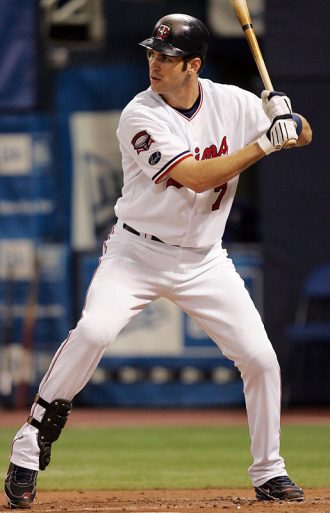
Joe Mauer

Mauer’s critics, not Mauer, should be shamed for willfully ignoring what concussions did to end his catching life and, in time, his playing career.

Scott Rolen’s election to the Hall of Fame triggered almost immediate discussions about next year’s likely Hall of Fame class. Social media being what it is, as opposed to what we wish it became, Rolen’s election also triggered an unfathomable outpouring of bile against one of three deserving Hall of Famers who make their first appearances on the writers’ ballots toward 2023’s end.

Adrián Beltré is a Hall of Fame lock. Not just because he’s a paid-in-full member of the 3,000 hit club but because he has 93.5 wins above replacement-level player (WAR) and he’s the number-two third baseman ever in terms of run prevention: Beltré’s 168 defensive runs above his league average is second all-time to Hall of Fame Brooks Robinson. (Baseball Reference rates Beltré the number four all-around third baseman.)

Chase Utley deserves a plaque in Cooperstown, too, even if his lack of black ink might be blinding. He wasn’t an overwhelming hitter, but he was a run machine once he reached base, including being worth 45 runs as a baserunner and worth another 25 runs due to his ability to avoid double plays. He’s also fourth for run prevention at second base (+141 runs, behind only (in ascending order) Hall of Famers Bid McPhee, Joe Gordon, and Bill Mazeroski.

And, then, there’s Joe Mauer. The number seven catcher all-time according to Baseball Reference. Uh-oh.

“I’ve never seen fans of a team hate an all-time great of their own the way some Twins fans do Mauer, tweeted The Cooperstown Casebook author Jay Jaffe. “They’re just so convinced he gave them a raw deal for that contract.” As in, the eight-year, $184 million contract extension he signed with the Twins in March 2010. As in, before the injury that ultimately put paid to his life as a catcher, then a ballplayer period.

It’s as though a man whose baseball profession had already led him to knee and leg issues committed some grave capital crime when, in August 2013, Mauer took a hard foul tip off his face mask. It caused a concussion that soon caused the Twins to pull him out from behind the plate and move him to first base—a position left largely vacant when they traded Justin Morneau to the Pirates a year before Mauer’s concussion.

Morneau, who suffered a concussion on a baserunning play the year Mauer signed that yummy contract extension, and who would suffer a second concussion on another diving play after he’d signed with the Rockies for 2014. One concussed first baseman eventually replaced by a concussed catcher who’d never again be the player he’d been prior to August 2013.

The guy with a reputation as a baseball gym rat who played the game with a commitment and a steadiness that caused some people to mistake him for emotionlessness spent the rest of that contract extension doing his level best to play despite things like the balance issues and light sensitivities that now made hitting a challenge and fielding a battle.

The Twins’ struggles around Mauer’s had far less to do with Mauer’s and more to do with its ownership seeming to impose a de facto spending cap the rest of Mauer’s career, including major league salaries and minor league development. But the native son, the franchise face, was too simple a target to resist, as the injured often are.

As if Mauer hadn’t battled enough at the plate following 2013, in May 2018 he suffered a second one after he dove chasing a foul ball and injured his neck. Concussion symptoms kicked in a few days later. They didn’t just impact him on the field, either. His wife, Maddie, told The Athletic they were no treat for him at home with two young twin daughters to raise, either. (The story was published as she was about to give birth to their third child, a son.)

“It’s not quiet at our house and they don’t understand why dad wants it to be quiet or be in a different room or have the lights off,” Mrs. Mauer said.

Our girls had been born about a month prior (to the 2013 concussion). Both of these times it does put things into perspective that you’re dealing with these symptoms at work, but you’re dealing with them at home just as much. I think that’s something he may not have talked about as much publicly, but it was a difficult challenge to be going through concussion-like symptoms with children.

“The neck [injury] is an easy one to take care of,” Twins trainer Tony Leo told The Athletic for the same story. “We can fix that. But the concussion had all these ebbs and flows going up and down.”

I think people don’t appreciate how much it impacts you on a day-to-day basis with just simple things like getting out of bed. Am I going to feel OK? Am I going to have a headache? Am I going to have ringing in my ears? Am I going to feel nauseous? Am I going to be able to see all right? When I turn on the lamp next to my bed, is that light going to cause me to start having a headache? Am I going to be too agitated and upset at my kids when it’s not their fault, but just because of all the sensations going on.

Everything starts compounding and adding to the anxiety you’re going through when you’re trying to minimize all these distractions and trying to allow the brain to heal. Little things trigger big symptoms, which cause you to doubt whether you’re healing or not. It’s really hard to remove yourself from everything let alone when you’re in the clubhouse with music, all the lights we have, TVs, people. You have the same thing at home with the day-to-day living that . . . We get focused on the baseball. I get focused on getting them back on the field for the game. But how do you start minimizing everything else in life that’s bothering you, especially with kids who just want to be around dad?

Maybe instead of soaking Mauer in a phlegm-and-bile bath because of what his head refused to let his body do at the level it once did during five of the eight years of that contract extension, the idiot brigades might consider what it took for Mauer to continue playing at all, at any level. After they consider that, perhaps miraculously, it actually didn’t compromise his Hall of Fame case.

As a catcher, Mauer—unusually tall for a backstop at 6’5″—was easy to overrate while he played. I made that mistake once myself. I’m not making that mistake again. I’m going to show you where Mauer will sit among Hall of Fame catchers who played in the post-World War II/post-integration/night-ball era, according to my Real Batting Average (RBA) metric. (Total bases + walks + intentional walks + sacrifice flies + hit by pitches, divided by total plate appearances.)

Catchers PA TB BB IBB SF HBP RBA
Mike Piazza 7745 3768 759 146 45 30 .613
Roy Campanella 4815 2101 533 113 50* 30 .587
Joe Mauer (as C) 3943 1640 478 79 35 13 .569
Johnny Bench 8674 3644 891 135 90 19 .551
Yogi Berra 8359 3643 704 91 95* 52 .549
Carlton Fisk 9853 3999 849 105 79 143 .525
Ted Simmons 9685 3793 855 188 100 39 .514
Gary Carter 9019 3497 848 106 99 68 .512
Ivan Rodriguez 10270 4451 513 67 76 58 .503
HOF C AVG .547

You’re not seeing things. Among that group of Hall of Fame catchers, Mauer is number three—eighteen points ahead of Johnny Bench, and twenty points ahead of Yogi Berra, the two men considered the greatest all-around catchers who ever played the game. (You might care to know, too, that as a catcher Mauer had 62 more walks than strikeouts at the plate.) He was also a highly-regarded pitch framer behind the plate who was worth 65 defensive runs above average for his entire life there.

Mauer retired in 2018 because he decided at last that family life without further health compromise was more important than his itch to compete. (The Twins retired his uniform number 7 the following season.) “Experiencing a concussion looks different for everyone,” he said in his formal retirement letter to Twins fans, “but my personal experience forced me to look beyond baseball at what is best for me as a husband and father.”

Instead of shaming Mauer because they don’t get what two concussions did to his Twins life under that contract extension, the idiot brigades should marvel that those two serious, life-and-career-altering injuries didn’t compromise his case as a Hall of Fame catcher in waiting, and even admire him for having the will to try playing on in spite of them. And, for deciding that being a husband and father was more important than playing the game he loved.

But that might ask too many people to surrender their ongoing and erroneous belief that injuries incurred in real competition equal weakness at best, thievery at worst, and character flaws somewhere in there, too. “I am done with a lot of things,” Jaffe also tweeted, “but especially done arguing about Mauer with Twins fans who don’t understand the impact of the concussions on his career.” As of this sentence, so am I.

Rolen rolls into Cooperstown at last

Scott Rolen

A big enough bat at the plate . . .

When Scott Rolen was in his absolute prime, Sports Illustrated said of him, among other things, that he “could have played shortstop with more range than Cal Ripken.” When he was with the Cardinals following his somewhat unfairly contentious departure from Philadelphia, the St. Louis Post-Dispatch asked where Rolen ranked among his era’s third basemen, then answered: the best at the moment.

Rolen’s overdue election to the Hall of Fame Tuesday still inspired carping enough among the philistines who think it was just another case of defining the Hall down. Maybe he wasn’t charismatic. He certainly wasn’t the cheerleading or the self-promoting type. But he was just as SI‘s Tom Verducci described him in 2004, “a no-nonsense star who does it all.”

That’s practically what they said about legendary Tigers second baseman and Hall of Famer Charlie Gehringer, too. He was so no-nonsense he was nicknamed the Mechanical Man. Rolen was many things at the plate and in the field. Merely mechanical wasn’t among them.

“Rolen played with an all-out intensity,” wrote The Cooperstown Casebook author Jay Jaffe, “sacrificing his body in the name of stopping balls from getting through the left side of the infield . . . and he more than held his own with the bat as well, routinely accompanying his 25–30 homers a year with strong on-base percentages.”

This son of Indiana schoolteachers did little more than let his preparation and his play do most of his talking. It’s worth repeating further that he didn’t blow up the nearest inanimate objects when a swing missed, a play faltered, or a game was lost. He played to win, but he lived what most confer lip service upon: let’s get ’em tomorrow. I say it again: if Rolen was a fighter pilot, he’d have earned a reputation as the classic maintain-an-even-strain type. The Right Stuff.

He has the numbers to support it, too, at the plate and in the field, where he knew what he was doing with a bat in his hand and didn’t sacrifice his body at third base or on the bases for naught. Once, he dropped into a slide into second base that wasn’t aggressive or out of line but so forceful that he flipped Royals second baseman Tony Graffanino and knocked shortstop Gerónimo Berroa down. Observed Verducci, “[It was] like a bowling ball picking up a 2-5 combination for the spare.”

“Berroa had this look on his face,” said Cardinals pitcher Matt Morris to Verducci, “like, I didn’t even hear the train whistle!”

First, let’s review Rolen one more time according to my Real Batting Average (RBA) metric: total bases + walks + intentional walks + sacrifice flies + hit by pitches, divided by total plate appearances. This table shows where he stands among all Hall of Fame third basemen who played in the post-World War II/post-integration/night-ball era:

HOF 3B PA TB BB IBB SF HBP RBA
Mike Schmidt 10062 4404 1507 201 108 79 .626
Chipper Jones 10614 4755 1512 177 97 18 .618
Eddie Mathews 10100 4349 1444 142 58 26 .596
Scott Rolen 8518 3628 899 57 93 127 .564
George Brett 11625 5044 1096 229 120 33 .561
Ron Santo 9397 3779 1108 94 94 38 .544
Wade Boggs 10740 4064 1412 180 96 23 .538
Paul Molitor 12167 4854 1094 100 109 47 .510
Brooks Robinson 11782 4270 860 120 114 53 .458
HOF AVG .557

You see it right. RBA has Rolen as the number-four offensive third baseman of the group and seven points ahead of the average RBA for such Hall third basemen. You can do an awful lot worse than to say you weren’t quite as great a batter as Mike Schmidt, Chipper Jones, and Eddie Mathews. But you can’t exactly carp when you shook out slightly better at the plate than George Brett, Ron Santo, Wade Boggs, Paul Molitor, and Brooks Robinson.

Scott Rolen

. . . and an Electrolux at third base.

Now, let’s put Rolen at third base. Only one of those Hall of Famers has more defensive runs above his league average than Rolen does (+140) above his—Robinson (+293). And, only two of them join him among the top 24—Schmidt (+129) and Boggs (+95). The eye test told you that Rolen was willing to throw himself under a train to make a play at third. It also told you what the meds confirmed in due course, that injuries were going to grind him into a harsh decline phase, as happened after his last solid St. Louis season.

“[He’s] the perfect baseball player,” then-Brewers manager Ned Yost said of him not long after he reached the Cardinals in the first place. “It’s his tenacity, his preparation, the way he plays. He tries to do everything fundamentally sound. And he puts the team first—there’s no fanfare with him.”

Maybe the Phillies should have had Yost to lean upon instead of Larry Bowa (manager) and Dallas Green (advisor) during Rolen’s first six-and-a-half major league seasons. Green especially dismissed him in 2001 as “satisfied with being a so-so player. He’s not a great player. In his mind, he probably thinks he’s doing OK, but the fans in Philadelphia know otherwise. I think he can be greater, but his personality won’t let him.”

That was at a point when Rolen struggled at the plate though he was making plenty of plays at third base. Rolen finished that season with a splendid enough .876 OPS and the second of his eight Gold Gloves. His personality won’t let him. Again, the misinterpretation of Rolen’s even strain as indifference.

Call it a classic case of not knowing what you had until he and you were both gone, but Bowa offered a far different assessment upon Rolen’s Cooperstown election. “To be honest with you,” Bowa told MLB-TV, “I thought he should have gotten in a few years ago. I was very happy for him.”

This guy is the ultimate professional, played the game the right way. As a manager, as a coach, you looked at guys like that, very few mental mistakes, always on top of his game. Played the game as hard as you could play for nine innings. There was really nothing Scott couldn’t do on the baseball field. He was a hitting machine, he drove in runs, hit lots of doubles, unbelievable third baseman. He had a tremendous pair of hands, a great arm. If he didn’t play a game, it was because he had an injury or something like that. This guy posted every day. His work ethic, off the charts. This guy was a tremendous baseball player.

That’s the manager who ripped Rolen a few new ones and demanded then-Phillies GM Ed Wade trade him, after Rolen called out the Phillies’ penny-pinching anticipating the arrival of Citizens Bank Park. “Fans deserve a better commitment than this ownership is giving them,” Rolen told then-ESPN writer Jayson Stark. “I’m tired of empty promises. I’m tired of waiting for a new stadium, for the sun to shine.”

In St. Louis, Rolen found a home and three postseason trips including a World Series ring, yet he ran afoul of manager Tony La Russa, who soured on him for—the horror!—injuries he incurred during honest competition on the field. Then-GM John Mozeliak eventually traded him to the Blue Jays, a deal Mozeliak came to regret by his own admission.

When former Cardinals GM Walt Jocketty landed in Cincinnati and discovered Rolen wanted to play closer to home, he didn’t hesitate to wrest him from the Jays onto the Reds. He helped those Reds to a couple of postseasons while he was at it—even after a brain-scrambling concussion and lower back issues.

If you should happen to be traveling through Smithville, Indiana, you may come upon a facility known as Camp Emma Lou. It’s a retreat built by the Enis Furley Foundation, created by Rolen and his wife Niki in 1999, aimed at children and their families struggling with illness, hardship, and other issues and giving them expenses-paid weekend retreats. The foundation and the camp are named for two of Rolen’s dogs.

That’s also the current Indiana University director of baseball player development, who got the call from the Hall and granted a request from his son immediately following a call to his parents with the news. “[I]t’s about thirty degrees here, supposed to snow twelve inches,” he told a reporter, “but there we were, about fifteen minutes after the call, in the driveway having a catch. I’ll remember that forever.”

It’s not every son who gets to have a catch with a freshly-minted Hall of Fame father.

Sal Bando, RIP: One grave mistake

Sal Bando

Sal Bando, a solid third baseman and peacemaker/keeper for the Swinging’ A’s, but the eventual American League player representative helping change the player pension plan in 1980 with a grave error.

“Sal Bando,” said Hall of Famer Reggie Jackson about the third baseman for the 1970s Athletics, “was the godfather. Capo di capo, boss of all bosses on the Oakland A’s. We all had our roles, we all contributed, but Sal was the leader and everyone knew it.” In more ways than one.

When then-commissioner Bowie Kuhn decided to put the brakes on A’s manager Dick Williams’s seemingly endless mound conferences in a World Series, Williams chose Bando as his end-run around Kuhn’s edict. This enabled Bando to visit Hall of Famer Catfish Hunter as often as he wanted or needed to settle Hunter down.

“Take him away,” said the Mustache Gang’s 1973 traveling secretary Jim Bank of Bando, who died of cancer Friday at 78, “and that team was nothing.”

That team was also saved a few moments when mere testiness might have turned grave. The early-to-mid-1970s A’s were known as the Swinging’ As, partially for beating everyone else on the field and partially for swinging on each other almost at will, or the drop of a single brickbat. Bando himself had to thwart a few such swings including one that involved more than a flying fist.

After the A’s beat the upstart Mets in the 1973 World Series—and it took seven games to do it—shortstop Bert Campaneris, fuming over Jackson being named the Series MVP despite Campaneris having an arguable better Series, grabbed a table knife during the team’s closed victory dinner and headed for Jackson.

Bando headed Campaneris off at the pass. After enough Series hoopla, including the unconscionable bid by owner Charlie Finley to scapegoat hapless second baseman Mike Andrews over a pair of errors in the Game Two twelfth, the last thing Bando needed was one teammate trying to shish kebab another.

“Because no media was there to document it,” wrote Jason Turbow in Dynastic, Bombastic, Fantastic: Reggie, Rollie, Catfish, and Charlie Finley’s Swingin’ A’s, “the incident was quickly lost amidst the annals of team drama. What really could be said? This, apparently, was how the A’s relaxed.“

“[T]hey didn’t have many rules,” wrote the late Jim Bouton in I Managed Good But, Boy, Did They Play Bad. “Oh, maybe they weren’t allowed to punch each other in public. No punching a teammate, I suppose, in a nightclub. Fighting only allowed in the clubhouse. No screaming at each other when the wives are around. And don’t embarrass the manager to more than two wire services during any homestand.” (Ancient evenings, of course. Today, Bouton would write, “Don’t embarrass the manager to more than two social media sites.”)

A rock-solid third baseman who was too often underrated for his sterling defense (he retired with 8.5 defensive wins above replacement-level among his 61.5 total WAR, and with +35 defensive runs above his league average), Bando couldn’t resist when manager Dick Williams made good on his threat to step down over Finley’s abuses after the ’73 Series and Alvin Dark—a former A’s manager canned after he refused to go along with ginning up an incident and fine against pitcher Lew Krausse—was hired to succeed him.

“When you have a championship club, you don’t make many changes,” Bando told a reporter after Dark’s formal reintroduction. “I hope he doesn’t have too many strict rules, because we haven’t had many the past two years and we don.” As Bouton went on to continue, “[It] doesn’t mean the A’s won the championship just because they had long hair, or their manager had long hair, or their manager was permissive and let them do things their own way.”

That was maybe ten or fifteen percent of the reason. The other 85 percent was because they had a lot of good baseball players. Williams could have tried his long hair, his mustache, and his lack of rules with the Cleveland Indians, for instance, and he would have gotten a lot of long-haired .220 hitters. In fact, there would have been a lot of people blaming his permissive ways for why the Indians didn’t do so good.

Bando, Willliams would remember in his own memoir, No More Mr. Nice Guy, was “the only player I ever socialised with. I’d invite him to my hotel suite after games or during an offday, and we’d just talk baseball. The rest of the [A’s] saw this and figured I must be all right.” Small wonder they didn’t exactly plan a celebration when the fed-up-with-Finley Williams wanted out.

Bando also criticised Finley unapolgetically for his notorious meddling in their off-field lives and for his weaknesses in delivering television contracts to broadcast the team on their own home turf. “In another town, someplace back East,” Bando told The Sporting News in May 1973, “we might be heroes. Here we’re not even something special.”

The Messersmith ruling ended the reserve era near 1975’s end. Bando was one of seven A’s refusing to sign 1976 contracts, electing to play their lawful options out to become free agents at the end of that season. When Finley’s subsequent bid to fire-sale Hall of Fame reliever Rollie Fingers plus pitcher Vida Blue and outfielder Joe Rudi was blocked by Kuhn, and Finley ordered manager Chuck Tanner not to play the three, Bando intervened, threatening a team strike until Finley caved.

The third baseman signed as a free agent with the Brewers, then still in the American League. A player-coach in due course, he finished his playing career in Milwaukee as the team’s and then the American League’s player representative. Which is where Bando made perhaps his worst mistake, even ahead of eventually letting Hall of Famer Paul Molitor escape as a free agent in 1991 when Bando was the Brewers’ general manager.

When the Major League Baseball Players Association joined with the owners to revamp the player pension plan in 1980, the result was 43 days major league service time to qualify for a pension and one day’s major league service time to qualify for health benefits. But it excluded players with major league careers shy of the previous four-year vesting requirement even if they had 43 days or more major league time.

Their redress since has been a 2011 deal between then-MLBPA director Michael Weiner and then-commissioner Bud Selig, giving them $625 per quartet for every 43 days’ worth of MLB time, up to four years’ worth. And, a fifteen percent hike in that stipend as a result of last winter’s lockout settlement. The kickers: It’s still not a full pension, and the players can’t pass the money to their families upon their deaths.

Today, there are 514 pre-1980, short-career players without full baseball pensions. The most recent such affected player to pass was Bill Davis, a first baseman/pinch hitter who played in part of two 1960s seasons with the Indians and one with the expansion Padres.

Bando and his National League player rep counterpart, Montreal Expos pitcher Steve Rogers, voted in favour of the 1980 change and the exclusion. Various surviving affected players even now suspect the reasons included perceptions that they were mere September callups. But a majority of the affected players actually made teams out of spring training, or came up to play in the Show in months prior to September in various seasons.

The solid third baseman who didn’t suffer Charlie Finley’s act gladly suffered a momentary lapse of reason that left several hundred players with short careers but long vision in supporting their union on the undeserved short end of a big economic stick.

A man smart with his own money during his playing days, working off-seasons in banking before the free agency era, then creating a successful investment firm after his playing days ended, should have been smart enough to know better.

Frank Thomas, RIP: The needling and the damage done

Frank Thomas

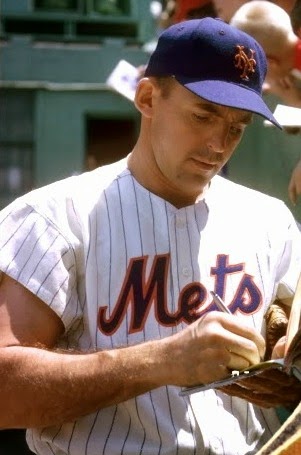
Frank Thomas, signing autographs in the Polo Grounds as an Original Met. As a Phillie, his 1965 fight with Dick Allen accelerated Allen’s undeserved war with Philadelphia racists.

Baseball’s best known Frank Thomas who isn’t the Hall of Fame bombardier died Monday at 93. The good news: That Thomas had a colourful history as one of the Original Mets, for whom he played from their 1962 birth through August 1964. The bad news is that he had a terrible history involving a teammate of colour on the 1965 Phillies.

It soiled a respectable major league career as a power-hitting outfielder/corner infielder, a three-time All-Star with the 1950s Pirates, and an Original Met who was grateful to have been remembered when the Mets reinstituted Old Timers Day last year and he fought through a neck injury to appear.

Thomas survived nasty contract battles with Branch Rickey, then running the Pirates, whose genius as a baseball thinker and courage as baseball’s colour line breaker in signing Jackie Robinson to the Dodgers was countered by his often devious and insulting penury when it came time to pay his players reasonably.

He also prospered somewhat with and survived the Original Mets, that expansion troupe remembered best as baseball’s version of . . . well, they really did have Abbott pitching to Costello with Who the Hell’s on first, What the Hell’s on second, You Didn’t Want to Know’s on third, and You Didn’t Even Want To Think About It at shortstop.

Thomas became the Mets’ first home run king, hitting 34 in 1962, a team record that stood until Dave Kingman smashed it by two in 1975. He also factored in one of the most typical of the inadvertent sketches that, perversely enough, endeared his Mets to a generation of New Yorkers bereft of the Dodgers’ and Giants’ moves west and drowning in a couple of generations of Yankee dominance and hubris.

Center fielder Richie Ashburn, eventually a Hall of Famer based on his long career with the Phillies, despaired of collisions between himself and shortstop Elio Chacón on pop flies to short left center and despaired of how to call Chacón off. Teammate Joe Christopher knew enough Spanish to tell Ashburn to holler Yo la tengo! (I got it!) Sure enough, the next such short pop to short left center had Chacón steaming out from short and Ashburn rumbling in from center.

Yo la tengo! Yo la tengo! Ashburn hollered. Chacón caught the drift at once and stopped dead. Ashburn was saved for about five seconds. Thomas had also come steaming in from left. He crashed into Ashburn and the ball fell safe. Someone forgot to hand Thomas the yo la tengo! memo.

(The pull-hitting Thomas also spent so much time trying to hit the “o” on a Howard Clothes sign on the Polo Grounds’s left field wall—because the New York clothier promised a luxury boat to the Met who hit it the most at season’s end—that manager Casey Stengel finally hollered at him, “If you want to be a sailor, go join the Navy!”)

That season proved Thomas’s final truly solid year at the plate. After a somewhat down 1963 and a 1964 that saw him in and out of the lineup with a few nagging injuries, the Mets traded Thomas to the pennant-contending Phillies that August. He hit respectably enough until he fractured his thumb on a hard slide into second base, ending his season just before the infamous collapse that cost the Phillies a pennant with which they seemed to be running away.

But now age 36, Thomas started too slowly in 1965 before the 3 July pre-game incident that ended his Phillie days in ignominy. Should-be Hall of Famer Dick Allen, the Phillies’ superstar in the making and the National League’s 1964 Rookie of the Year, was taking grounders at third while Thomas was in the batting cage and Phillies center fielder Johnny Callison came out to third to chat with Allen.

According to Phillies historian (and eventual Allen biographer) William C. Kashatus, in September Swoon, Callison suggested to Allen they give Thomas the business over a strikeout following three failed bunt attempts during a plate appearance the night before. In the batting cage now, Thomas took a big swing and miss. “Hey, Donkey!” Callison hollered. (Thomas’s nickname was the Big Donkey; he was also known as Lurch.) “Why don’t you try bunting?”

“Instead of responding to Callision,” Kashatus wrote, “Thomas glared down the third base line at Allen and shouted, ‘What are you trying to be, another Muhammad Clay, always running your mouth off?'”

Insulted by the comparison with Cassius Clay, the colourful but controversial heavyweight boxer who had recently changed his name to Muhammad Ali, Allen charged the cage, and the two players went at each other. Allen hit Thomas with a left hook to the jaw, sending him to the ground. When he got to his feet, Thomas was wielding a bat and connected with Allen’s left shoulder. By now the rest of the team was at home plate trying to restrain the two players.

In his memoir, Crash, Allen remembered Thomas knowing it was Callison who’d taunted him but aiming his return fire at Allen, wrongly.

The Muhammad Clay remark was meant to say a lot. It reminded me of how Frank would pretend to offer his hand in a soul shake to a young black player on the team. When the player would offer his hand in return, Thomas would grab his thumb and bend it back. To him, it was a big joke. But I saw too many brothers on the team with swollen thumbs to get any laughs. So I popped him. I just wanted to teach him a lesson. But after he hit me with the bat, I wanted to kill him.

Callison said hard feelings between Thomas and Allen were building well before the “Muhammad Clay” remark. One of the brothers to whom Allen referred was young outfielder Johnny Briggs, whom Kashatus quoted as saying Thomas “often made racially inflammatory comments.” But Kashatus also quoted Briggs as saying of Thomas, “Thomas agitated everybody on the team. He was just as abusive to the white guys. But the press turned that fight into a racial issue and refused to let up.”

The game that followed the ugly brawl included Allen slashing a three-run triple and Thomas hitting a pinch home run in the next inning. The Phillies lost 10-8 to the Reds . . . and Thomas was put on release waivers afterward. This, Kashatus noted, was despite Allen intervening on behalf of not letting Thomas go, pleading with manager Gene Mauch not to let it happen out of regard for Thomas’s wife and eight children. (Dolores Thomas died in 2012; one of his children, his daughter Sharon, also died before her father.)

Mauch’s fatal mistake otherwise was ordering one and all involved in the Thomas-Allen fight to keep their mouths shut or face fines: $1,000 each, except for $2,000 for Allen. That only enabled that capricious Philadelphia sports press of the time to help make life as a Phillie more miserable for Allen than the city’s racists already began making it, until he finally got the trade he’d been trying to force for long enough.

With Thomas’s release, Kashatus wrote, the veteran wasn’t bound by Mauch’s edict, and appeared on a Philadelphia radio show that often had him as a guest. “I’ve always tried to help him,” Thomas insisted. “I guess certain guys can dish it out, but can’t take it.” Said Tony Taylor, the Phillies’s talented Latino second baseman, “Since Dick was black and Thomas was white, [the Philadelphia writers] made it into a racial thing and gave Dick the label of trouble-maker. It wasn’t fair.”

“Thomas was going to go anyway,” Mauch eventually admitted about his further-fading veteran. “I should have shipped him sooner. Instead, the press came down on [Allen’s] head. If he did one little thing wrong, they would see it as so much worse because, in their heads, he was a bad guy.”

The Phillies dealt Thomas to the Astros, where he was further unhappy from knowing his baseball aging wasn’t going to reverse itself. (He’d move to the Braves and then the Cubs from there but retire in 1966.) “I would not say I enjoyed my time there,” he told an interviewer in 2017, “but not because of the city or the players.”

I was just in a bad place personally. I was an old fogey. When you reach your thirties in baseball, you’re an old man. Expendable. But I loved the guys in Houston. Joe Morgan, Rusty Staub, and my favorite Jimmy Wynn. I once got Wynn with the hidden ball trick. He was so angry with me. But what I remember most is that I hit two home runs and then they traded me! My last at-bat in Philadelphia was also a home run. I guess I just needed to stop hitting them!

Let the record show that Thomas spoke affectionately there of two black players, Hall of Famer Morgan and Wynn. Let it show further that, when the black Frank Thomas was inducted into the Hall of Fame, the first, white Frank Thomas—once one of four consecutive Braves to hit home runs in an inning, along with Hall of Famers Hank Aaron and Eddie Mathews, plus slugging first baseman Joe Adcock—was invited to join in the fun and accepted happily.

“I was the original, but he was better,” Thomas once said of his namesake. “We hold the record for most home runs hit by two players with the same name.” (Thomas is right: the two Frank Thomases actually combined for 25 more home runs than Ken Griffey, Sr. and Hall of Famer Jr. did.)

“I was told that his father was a fan of mine and named him after me,” he continued. “I have met him several times and I love him. I told him that I used to be The Big Hurt, but after meeting him I know that I was just The Little Hurt.”

Between those, and more than a few stories I’ve seen saying Thomas and Allen eventually buried the hatchet together, my better angel wants to believe that that 1965 fight and its immediate aftermath jolted the Big Donkey into a permanent awakening about human relations.

Robby the Umpbot steps closer to the Show

Ángel Hernández

Ángel Hernández, Exhibit A on behalf of Robby the Umpbot’s eventual major league advent.

Almost two years ago, when the automated strike zone was on the threshold of its tryout in the low-A level Southeast League, you could hear the so-called traditionalists waver between tears of sorrow and tears of rage. Wait until they hear Robby the Umpbot is going to get a tryout behind the plate at the AAA level this year—in all thirty parks across the Pacific Coast League and the International league.

If they haven’t already, they’re liable to palpitate, have kittens, scream themselves into strokes, or plot to storm the baseball commissioner’s office. There are plenty of reasons to wish Rob Manfred’s ouster. This isn’t one of them.

First, let’s look at how it’s going to operate in the AAA leagues. Half will be full Robbies to call every pitch with earpieces relaying the calls to the plate umpire. Half will operate similar to tennis’s challenge system: each team receives three pitch call challenges a game—the batter, the pitcher, or the catcher can call for them—and, if Robby upholds the challenge, the challenging team won’t lose the rest of its game challenges.

And to think Robby will now be one step up from the Show itself.

When Robby prepared for his Southeast League premiere, the trad thunderings went along the line of one I quoted from an online baseball forum: “The game is played by humans . . . why take away one of the most human elements of the game???” That’s what makes it beautiful.”

Well, now. The beautiful human element (a phrase once uttered by Hall of Fame manager Joe Torre, when he was the commissioner’s top cop, and that was only uttered about replay) leaves too little room for getting it right, particularly when postseason advance or maybe even a World Series championship is on the line squarely enough.

There were bugs to work out of the technology during that Southeast League tryout. There may yet be bugs to work out during its Triple-A tryout this year. But work them out baseball must, because that beautiful human element is still only too human, too prone to error, and too little held properly accountable. Including baseball’s government, which seems to believe the human element’s accountability and competence are consummations devoutly to be avoided.

It’s not impossible to think that the Manfred regime glommed onto Robby the Umpbot not because he might tend to get the calls right but because the regime has a lazy side powerful enough to reject holding umpires as accountable as any other baseball employee as . . . what? Too intrusive? Too troublesome? Too likely to launch a war with a Major League Baseball Umpires Association that was born of such a war in the first place?

The regime had no trouble launching a war against the players with last winter’s lockout. Does the regime think the umpires are as gods? Does it remember nobody comes to the ballpark to see the umpires? Does it pine for the so-called good old days when skirmishes between even Hall of Fame managers behaving like toddlers over umpires behaving like judicial tyrants were must-see television?

(That little [expletive] called me names that would get a man killed in other places, and that was on days I didn’t throw him out.—Steve Palermo, a mild-mannered and respected umpire, to say nothing of courageous, about Earl Weaver, Hall of Fame manager who was as mild-mannered as a saltwater crocodile. There was even a time when a Baltimore-area Oldsmobile dealership used a Weaver tirade as a television commercial. Charming.)

That beautiful human element still insists, too much of the time, that the strike zone is whatever the umpire says it is, Rule 2.0 be damned. At least, they do until they see the latest mischief Ángel Hernández, Laz Diaz, and Doug Eddings commit. There’s perverse pleasure in abusing the Hernándezes, Diazes, Eddingses, and their like for their errors. “Kill the ump!” has yet to become an unpopular chant.

The worst umpiring jobs are done behind the plate. Last season, the median major league umpire averaged 95 percent correct pitch calls. While you may think that a sterling record, keep in mind that a 95 average might get you a medical school scholarship but a five percent error rate in the operating theater might get you a malpractise suit.

Within that blown five percent might be and has been, often enough and too often for comfort, the blown call that turned a key pennant race game, a postseason series, or the World Series, all the wrong way around. Very few umpires, still, own up when they blow it. Chad Fairchild, now-retired Jim Joyce, Jerry Meals, and long-retired Tim Welke are only four such exceptions.

EV Analytics, a statistical company whose work includes rating and ranking sports officiating, says Hernández and Diaz are considered “neutral” umpires, not disposed excessively toward either pitchers or batters: they’re equal opportunity butchers. EVA also considers Eddings among pitchers’ best friends for butchery behind the plate.

Sam Fels, a Deadspin baseball writer who is on board with Robby the Umpbot’s advent, has one concern, that about whether “cantankerous umps” such as Hernández or Eddings respond when challenged during any game: “No chance they’ll hold a grudge, right? Or start their own argument with a batter or catcher after having their authority and precision questioned?” It might be mad fun to see whether the Replay Command Center  sends them to the showers.