The dying Mets turn to a Vulture

2019-06-20 PhilReganMets

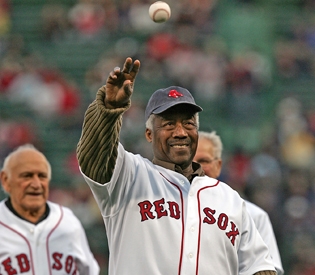
Former relief ace Phil (The Vulture) Regan, who’s worked in the Mets organisation since 2009, is now their pitching coach.

To a lot of people, the Mets are the walking dead awaiting the vultures to feed. So when they canned pitching coach Dave Eiland and bullpen coach Chuck Hernandez Thursday, it must have delivered a truck load of laughs when they named a vulture as their new pitching coach.

As in, Phil (The Vulture) Regan. Former bird of prey out of the bullpen himself. Who’s alive and well, apparently, at 82. Who’s probably going to have a few people wondering just how he’s going to fix the Mets’ talented but struggling rotation and a bullpen that’s mostly full of bull.

And, who can’t do a thing to fix the Mets’ pitching’s top weakness—the unsound defense behind them, and the unsound baserunning that runs them out of scoring chances.

This Vulture isn’t worried about either dealing with today’s breed of player or his own age.

“I think kids today, they want you to be honest,” Regan told Syracuse.com. “I don’t ever lie to them. I try to come in and not change their whole delivery. I’m not a big believer in doing that, or taking pitches away from them. But there’s a lot of little fundamental things that you have to do as a pitcher. And sometimes a person can see that, maybe just one little thing. Try it, and if you like it stick with it.”

Where was he when the Mets really needed him?

Ask him about his octogenarian status, and Regan—who once pitched for the Syracuse minor league team during his years with the Tigers—doesn’t exactly sound like a man ready for assisted living.

“I’ve always kind of stayed in the game and done different things,” The Vulture continued. “I still go to the Dominican in the winter and coach down there. I spent twenty years in Venezuela managing and coaching there. So I’ve kept busy all year-round. And I think it’s kind of helped me keep going. I’m 82 years old now, but I don’t feel it.”

That means Regan feeling younger than a lot of Mets must feel more often than not this season. This may be the first time the dying were known to invite a vulture to try saving their lives instead of dining on their corpses.

But are the Mets going to start throwing sweat balls?

After life as a sort of swingman for the Tigers in 1960-65, the Dodgers traded Hall of Famer Sandy Koufax’s buddy and road roommate Dick Tracewski to get Regan away from the Tigers after the 1965 season. His too-obvious itch to get into games, not to mention an early 1966 spell of coming into tie games from which Koufax was lifted late, prompted Koufax himself to crack, “Regan, you’re a real vulture, getting my wins like that.”

“From there, the press picked it up,” The Vulture says. “I got hundreds of these rubber vultures from all over the country. People would send them in. The zoo wanted to put a vulture down in the bullpen, but they wouldn’t let them do it. We had a lot of fun with it.”

Regan thinks he kept Koufax from one final achievement in 1966, Koufax’s last season. “He could have been a 30-game winner his last year,” Regan told the New York Post, “but I vultured a few wins.”

And while having his own career year in 1966—a 1.62 ERA and a 2.33 fielding-independent pitching rate, with a 0.93 walks/hits per inning pitched rate, not to mention a 14-1 won-lost record—Regan began getting away with a pitch nobody could catch for a very good reason.

“I don’t use foreign substances,” George Frazier would crack much later when he was caught throwing funny pitches. “Everything I use is made in the U.S. of A.” Regan could see and raise that: he used part of his body to do it. Specifically, his sweat glands.

2019-06-20 PhilReganDodgers

They knew why the caged Vulture sang: Phil Regan (facing camera) in the 1966 Dodgers’ bullpen.

“He had an awkward diving delivery,” wrote David Claerbaut in Durocher’s Cubs: The Greatest Team That Didn’t Win, “and his out pitch was a moist one that went with a tough slider. Because Regan threw what might be called a clean spitter, allowing the perspiration to run down his arms onto the ball, umpires were never able to bust him, despite their certainties that the ball coming in was less than arid.”

The Vulture got away with it long enough. “I can’t come right out and tell you that I now throw the spitter,” he once told a reporter, “but I’d say: I don’t use it nearly as much as everybody thinks.” Relief ace-to-be Al (The Mad Hungarian) Hrabosky later said Regan’s money pitch was “the slippery elm.”

Whatever it was, when the Dodgers traded him to the Cubs with outfielder Jim Hickman for outfielder Ted Savage and minor league pitcher Jim Ellis, Regan was almost damaged goods: he’d opened the ’68 season with swollen hands, knees, and legs, including one frightening morning when he couldn’t even lift his cup of coffee.

He got a just-as-frightening diganosis of rheumatoid arthritis but it turned out to be an odd temporary form of the affliction that lasted only a month. The arthritis might have cleared but nobody was clear about what Regan was throwing and just when he might throw it. As with the 1966 Dodgers, Regan became the Cubs’ bullpen anchor, and in too short order it proved to pull him to the bottom.

He was 32 years old by then. He gave the ’68 Cubs the second-best season of his career and it came with a price: Leo Durocher depended on him so voluminously that he burned the Vulture out almost as profoundly as he’d burned out the rest of the ’69 Cubs by the time the Miracle Mets re-heated for keeps down the stretch.

“We just flat wore Phil Regan out,” said catcher Randy Hundley to Rick Talley for The Cubs of ’69. Leo started going to him all the time. What did he pitch, 112 innings in 71 games? That’s a bunch for a short relief man. Now, if he pitches 80 or 90 innings in 71 games, he might survive. But Leo didn’t feel he could count on the other guys out there, so he kept calling on Regan.”

Durocher had a well-established pattern of not trusting his youth and over-trusting his veterans, when he wasn’t refusing to rest his regulars judiciously or making them feel like quitters if they spoke up about being injured.

Somehow, Regan remained Durocher’s favourite bullpen bull despite the toll, until the Cubs finally sold him to the White Sox in June 1972. After ten more games in which he continued to look anything but the bullpen terror he’d formerly been, the White Sox released Regan and the Vulture retired.

A 1966 All-Star, Regan knows only too well the differences between conditioning today and conditioning in his time. Those who think today’s pitchers are “babied” and lacking toughness should wonder how it was pitchers in Regan’s day survived at all.

“I think that the pitchers today are bigger and stronger and throw harder and are in better shape than we ever thought of being,” he says. “When I see the way that they train . . . when I was with the Dodgers they said the two things you don’t do, you don’t lift weights and you don’t swim. Well, those are two of the better things for you now. It’s an evolution a little bit of where we’ve come from where we were. But today the pitchers train year-round. Guys, in my era, used to go get a job during the winter because the money wasn’t there.

“It’s a different era in that in today’s society, in baseball, these are major investments,” the Vulture continued. “I could tell you I pitched . . . in Detroit and never made $20,000 a year. And that’s fine. But that was my era and that was a lot of money in those days. But today, when you have a guy that you’re making $10 million, you need to protect that investment. And that means take care of him, give him the best medical help, give him the best conditioning that we can give him. You protect him better because when you lose $10 million, that’s a major loss as opposed to $7,000.”

Pitch for Leo Durocher and you learn only too well about how not to handle pitchers. No two pitchers are quite alike physically; no two pitchers will have the same endurance or the same physical composition. Neglect that and you face disaster, whether you’re on the mound or shepherding men to the mound.

A near-inveterate storyteller, the one Regan likes most to remember involves the Dodgers’ 1966 pennant clinch, on the final day of the season, when Hall of Famer Don Drysdale’s faltering in game one of a doubleheader forced manager Walter Alston to send Koufax out to pitch and win the nightcap on two days’ rest, which also altered Alston’s pitching plan for the coming and ill-fated World Series.

As Regan and his fellow bulls ran out of the pen toward the clubhouse, a fan snatched Regan’s Dodgers cap right off his head. Twenty-nine years later, Regan received a package in the clubhouse while managing the Orioles. It was the same year Hall of Famer Cal Ripken, Jr. broke fellow Hall of Famer Lou Gehrig’s consecutive games played streak.

The package contained the cap lifted from Regan’s head that day in 1966. The fan who snatched it decided Regan should have it after all those years. Regan invited the fan to an Oriole game personally. “I still have the hat today,” he told the Post.

It isn’t every Vulture who gets his hat handed back to him.

Now the question becomes whether this Vulture can raise the Mets’ pitching staff from the dead before the real vultures make carrion of them. With or without breaking a sweat.


He’ll pitch when he’s blue in the face

2019-06-20 MaxScherzer

Eat right, exercise, and you, too, can throw shutout innings through a black eye and a face left swollen from a bunt richochet . . .

The following shutout was brought to you in living colour on Max TV. There really is someone who’ll pitch until and when he’s blue in the face.

A bunting accident during Tuesday batting practise left the Nationals’ righthander looking as though he’d been foolish enough to throw the old Rowan & Martin’s Laugh-In catch phrase “Sock it to me!” at an inebriated hit man on a stool at the local tavern.

The ball Scherzer bunted ricocheted hard into his otherwise playful looking face, the face that looks like he’ll bust you on the corner one moment but have trouble holding back his snickering when the mouse he slipped into your pocket crawls into your uniform jersey and up your stomach and chest and around your neck.

I didn’t just pull that out of the floppy clown hat I don’t own. Hall of Famer Warren Spahn used to pull gags like that on his teammates during his pitching days. Spahn and his running mate Lew Burdette might also hire limousines to bring to the ballpark opposing hitters against whom they were having particular success of late. (Speculation has it that Joe Gariagiola may have cost the two a small fortune at one time.)

Wearing his flag-blue Nationals home alternate merely accented Scherzer’s battered appearance. That normally playful face is accented going in by individual eye colour, one blue and one brown. After the errant practice bunt smashed into him, leaving him a shiner that surrounded his right eye and left the upper right side of his face to look like someone planted a baseball into it, the wags said he’d be the first pitcher to take the mound with three eye colours.

“Trust me,” said Scherzer after Wednesday’s doubleheader against the Phillies, “this thing looks a lot worse than it actually is.”

By the time Scherzer and his mates finished what they’d started, a doubleheader sweep—winning the first game 6-2, before Scherzer’s handiwork fed a 2-0 nightcap win—the only ones looking like they’d taken a punch in the phiz were the Phillies themselves. Why, even the Nats’ infamously rickety bullpen didn’t lay Scherzer’s four-hit, ten-punchout jewel to waste, after all.

They’d better not have. Scherzer worked with deadly efficiency, getting twenty first pitch strikes, fourteen called strikes, 24 swinging strikes, and threw strikes 66 percent of the time Wednesday night. Between Scherzer, Wander Suero, and Sean Doolittle, the Nats kept the Phillies hitless five times with men on second or better, and the worst knock Scherzer had to shake off was a leadoff double to Phillies second baseman Cesar Hernandez in the top of the seventh.

“I felt zero pain,” Scherzer said after the Nats banked the nightcap. “There’s been plenty of other injuries where I felt a lot of pain and I’ve had to pitch through. I’ll hang my hat on those starts, but tonight I felt zero pain. This is part of what you have to do. You take the ball every fifth time. That’s my responsibility to the team, to make sure I always post, and I knew I could post tonight.”

Scherzer probably wasn’t that worried when Hernandez rammed that double. Striking out the side to follow immediately was proof enough, but this season Scherzer is one of the few pitchers who’s more effective when he begins to see a lineup the third time than when he sees it the first time.

The first time around this year, opposing teams so far have a .700 OPS against him despite his 15/1 strikeout-to-walk rate that first go-round. The third—.584 OPS. And he’s also one of the few pitchers who gets deadlier after he passes 100 pitches. Scherzer threw 117 pitches Wednesday night. Opposing batters already hit a measly .222 against him when he’s between pitches 76-100; after 100, they only hit .143.

He’s doing far better in those regards this season than he’s done for his entire stellar career to date: lifetime, the OPS against him when he faces a lineup the third time around is 51 points higher (.669) than when he faces it the first time around (.618); and, also lifetime, the other guys hit .242 against him between pitches 76-100 and .187 after pitch 100.

Philadelphia’s Jake Arrieta was the guy you felt a little sorry for against Scherzer. He wasn’t a Scherzer-like strikeout machine and he’s never really been that kind of strikeout machine, but he worked six solid innings blemished only by the full-count bomb Brian Dozier sent over the left field fence with two out in the bottom of the second.

“Going out there and throwing,” Scherzer went on to say, “the only thing I had to deal with was the swelling underneath the eye. It was kind of jiggling around, and so in warm-ups I just had to get used to knowing what it was feeling like to throw the ball and just have that swelling.”

Far as Arrieta was concerned, Scherzer could have taken the mound with his head re-attached by neck bolts and still proven a tough customer. “We have ran into him a couple of times. That’s just what he does,” the Phillies righthander said. “He is tough to square up, and he is throwing three or four pitches for strikes with electric stuff. Just a tough one.”

Phillies reliever Pat Neshek had the honour of surrendering a 1-0 bomb to Victor Robles in the bottom of the eighth. And he became the guy you really felt sorry for. Less than a week after returning from three weeks on the injured list with a shoulder strain, Neshek strained his left hamstring a couple of batters after Robles teed off and looks to be returning to the IL.

Legs are as important to pitching as arms. Faces? Well, Hall of Famer Yogi Berra once said all you had to do in this racket was hit the ball and he’d never seen anyone hit one with his face.

Scherzer, who inadvertently hit one with his face in a batting practice round, can say he’s got the proof that, in the pitching racket, all you have to do is throw the ball, and he’s never seen anyone throw one with his face.

Marberry fields forever

2019-06-17 FirpoMarberry

Firpo Marberry, whose manager Bucky Harris saw the future in part through his eyes and arm in 1924 . . .

The Washington Senators of ancient times, you may know, had a slightly exaggerated image, thanks to a San Francisco writer: “Washington—First in war, first in peace, and last in the American League.” Then, in 1924, they did what people who buy the legend might consider impossible. They won the pennant. And the World Series.

And those Senators, with a stacked six-man starting rotation led by Hall of Famer Walter Johnson, won that Series with what we’d call today—wait for it!—bullpenning.

Remember: these were the Good Old Days of the Grand Old Game. When men were men, pitchers pitched until their arms looked as though they’d self-amputate, and managers wouldn’t even joke about having regular bullpens except as the holding area for the starters who couldn’t cut the mustard in the first place or the washed-up just hanging on a little longer. Right?

But 1924 was also when the Senators’ “Boy Wonder” shortstop/manager, Bucky Harris, basically said he wasn’t going to wait for self-amputation. He couldn’t quite grok why he shouldn’t have good pitchers in his bullpen in the event that, you know, the games at hand required him to reach for a stopper or close enough to one.

If anyone howled over it during the season, they must have quit laughing for awhile after Game Seven of that Series 95 years ago. But only for awhile. “The Senators,” wrote Brian Kenny in Ahead of the Curve: Inside the Baseball Revolution, “had given the rest of the league a template to winning baseball. It responded by ignoring it.” For a long enough while.

Harris’s Game Seven starter Curly Ogden, a righthander, didn’t get hurt or shellacked right out of the chute. His arm wasn’t even thinking about a self-amputation. He struck out Hall of Famer Freddie Lindstrom and walked Hall of Famer Frankie Frisch to open. No big deal. Pitchers can and often do shake such walks off and escape unscathed otherwise.

Except that Ogden knew going in that he wouldn’t get the chance. Ogden and Harris knew bloody well that Harris sent him out to deke New York Giants Hall of Fame manager John McGraw into loading his lineup with lefthanded hitters, giving Harris the raison d’etre to reach for lefthander George Mogridge that soon. You think today’s managers are too obsessed with “matchups” to just let the boys pitch? The 1924 World Series-winning manager thought about the matchups in the earliest hour of the biggest game in his and his team’s life to that point.

And until the top of the sixth, Harris looked like a genius. Thanks to Harris’s own fourth-inning home run and Mogridge’s stout pitching, the Senators led 1-0. Then Mogridge ran into trouble in the top of the sixth, walking Hall of Famer Ross Youngs and feeding Hall of Famer High Pockets Kelly a base hit with room enough for Youngs to take third. Exit Mogridge, enter Firpo Marberry, who in 1924 blew the prevailing traditional observations about relief pitching right out of the Potomac.

The 1924 American League batted a collective .290; Marberry kept hitters to a .263 collective hitting average whether he was a starter or a reliever. The 1924 American League delivered a cumulative 4.23 ERA and 4.14 fielding-independent pitching rate; Marberry had a cumulative 3.09 ERA and 3.76 FIP. His starting ERA: 3.66; his relief ERA: 2.82. (Complete games were falling around the Show: 48 percent of pitching starts went the distance; a decade earlier, it was 55 percent; a decade later, it would be 43 percent.)

He threw a live fastball but relied on contact and his defense, and he knew what he was doing on the mound. He was probably the Old Nats’ not-so-secret weapon that season.

Before Game Seven, Marberry worked in relief in Game Two (retroactive save), started Game Three (charged with the loss despite surrendering only one earned run in three innings), and threw the final two innings in Game Four. (Retroactive save.) Now he was in Game Seven with a World Series on the line and a 1-0 lead to work with.

It cost Marberry a run to get the first out: pinch hitter Irish Meusel flied out to right deep enough to let Youngs tag and score the first Giants run. (The sacrifice fly didn’t become a rule until 1954.) But then, after Hall of Famer Hack Wilson singled Kelly to third, Marberry was betrayed by his defenders: first baseman Joe Judge fumbled Travis Jackson’s hard grounder, and Ossie Bluege—spelling Harris at shortstop—let a hard shot by Hank Gowdy get through his legs. The errors allowed two unearned Giants runs home.

Marberry retired the next two hitters to keep the damage at 3-1, Giants. The bad news is that his fielders’ mistakes hung a retroactive blown save on Marberry, making you wish there could be some way to award the equivalent of a blown save to errant defenders. (Mets reliever Jeurys Familia would learn the hard way about defenders blowing your saves for you in the 2015 World Series.)

But Marberry pitched a scoreless seventh and eighth, the former inning disrupted only by a walk and the latter only by another infield error. In the bottom of the eighth Harris hit the to-be-fabled bad-hop high bouncer that eluded Lindstrom at third base to tie the game at three and cause President Calvin Coolidge attending the game to drop his cigar.

“What happened next,” wrote Judge’s grandson, Mark Gauvreau Judge, in Damn Senators, “would have been rejected by Hollywood producers as too shamelessly contrived.” (It’s possible that the younger Judge never saw the film version of The Natural.) Harris brought in Johnson for the top of the ninth.

“I saw men crying unashamed, and men and women praying aloud,” Johnson’s wife, Hazel, would remember. Baseball men might have been crying, too, including Johnson’s fellow Hall of Famer Christy Mathewson in the press box: “Poor old Walter, it’s a shame to send him in.” Johnson had looked tired earlier in the Series and some thought he still might be.

But except for second and third in the ninth (Frisch tripled with one out) and a man on second in the eleventh, Johnson pitched as well as he could be expected to go at that point in his career, walking three but striking out five and scattering three hits over his four innings’ work.

It took a staggering stretch play by Judge at first to pick off a wide throw from third to end the ninth inning threat. Judge opened the bottom with a base hit and took third on Bluege’s infield hit, but Judge was stranded on an inning-ending double play. It took Gowdy catching his foot in his discarded mask in the bottom of the twelfth, on Muddy Ruel’s foul pop, to keep Ruel alive long enough to double down the left field line. Then Johnson himself beat out an infield hit, before Earl McNeely whacked a high hopper up the third base line.

Once again, the ball sailed over Lindstrom’s head. This time it enabled Ruel, normally a slow runner, to score the Series-winning run, thanks also in part to Meusel not charging toward the infield when he expected Lindstrom to field the ball.

If you believe Baseball as I Have Known It author Frederick Lieb, no less than commissioner Kenesaw Mountain Landis asked aloud whether the ’24 Series was “the zenith of baseball.” Of course it wasn’t. Landis wasn’t that visionary.  Even if he didn’t see it, someone else showed baseball the future, even if baseball would still have to be  dragged kicking and screaming toward it.

“Even with the Senators’ success,” Kenny wrote, “credit went to the Big Train and the rest of the starting staff. No other club felt compelled to jump on board and create their own Firpo Marberry.” Not, perhaps, until Harris himself and then Casey Stengel (with Joe Page) in 1947 and 1949 with the Yankees; and, Eddie Sawyer (with Jim Konstanty) in 1950 with the Phillies.

With his season-long deployments of Marberry, his clever deke of McGraw, Marberry holding up despite the Game Seven lead-losing fielding miscues, and Johnson coming out of the pen delivering whatever he had left, Bucky Harris looked into the future. And what he saw gave his Senators their best chance to win.

It didn’t make him want to run home to Mommy. Or to seek absolution in the places where old ballplayers thundered about how much better it was in their days. It let his team’s fans crow, “Washington—First in war, first in peace, and first in the American League.”

1924. The year in which Lenin died; Rhapsody in Blue premiered; Coolidge became America’s first radio president; Hitler got five years for the Munich beer hall putsch; Mercedes-Benz and Sarah Vaughan were born; and Kafka, Puccini, and Woodrow Wilson died. And, in which bullpenning pulled the corks on the only World Series-winning champagne Washington has yet tasted.

Whither Encarnacion?

2019-06-16 EdwinEncarnacion

Edwin Encarnacion, AL home run leader, due to arrive at Stadium Elsewhere Monday after a surprise trade . . .

Once upon a time, Edwin Encarnacion exposed a former Yankee manager as a shortsighted strategist. Now he’ll get to help reveal how clever the incumbent Yankee manager is as a juggler. Or, how clever the Yankee front office is at trade maneuvering.

As a Blue Jay, Encarnacion laid waste to then-Orioles manager Buck Showalter’s insistence, in the 2016 American League wild card game, that his then-stud closer Zach Britton had no business appearing any time other than the last inning with a lead to protect.

Not even if Ubaldo Jimenez—normally a starter who’d pitched very well down the stretch but who wasn’t the reliever who’d allowed only four earned runs all year, all of which scored in April—really was the best Blue Jays arm in that period. (And he wasn’t, quite.)

Showalter ignored the law that says when you need a stopper right now, you forget his customary assignment and bring him in if you want to live to play another inning, if not another postseason game. Encarnacion took Showalter’s ignorance plus Jimenez’s sudden inability to throw a potential double play pitch and turned a fastball down the pipe into the three-run homer that sent Rogers Centre nuclear and the Blue Jays to play another few postseason days.

Encarnacion went from there to a pair of somewhat productive seasons with the Indians in which he kept hitting the long ball but nothing much else; he has a cumulative 4.7 wins above replacement level for those two seasons, which averages him out to 2.4. Which is, according to Baseball Reference, just good enough to be in the starting lineup but not exactly even All-Star level.

But he could still do the monster mash after he went to the Mariners in a three-way December deal that made an Indian out of Jake Bauers (who belied his anemic bat and hit for the cycle during the week), a Ray out of Yandy Diaz, and a prodigal Indian of Carlos Santana. The Mariners have gone into the sewage treatment plant after that staggering 13-2 start and they’re all but pushing the plunger on the season.

They unloaded Jay Bruce, the traveling man, to the Phillies last week. Bruce has begun his Philadelphia life as a productive masher, so far. Now they’ve sent Encarnacion to the Yankees, and even those who love this year’s Empire Emeritus‘s ability to make their injuries seem like momentary disruptions to their power plant seem scratching their heads over this one.

Wasn’t the Yankees’ number one need right now a little reinforcement to their starting pitching? Shouldn’t they have been pondering what it would take to pry someone like Madison Bumgarner from the Giants, maybe Noah Syndergaard from the Mets, possibly Max Scherzer from the Nationals? (Never mind that their supremo Mike Rizzo insists he has no intention of letting Scherzer loose?)

Didn’t they still have thunder in the lumber with every current regular save Brett Gardner showing a 113+ or better OPS? And weren’t Aaron Judge (strained oblique) and Giancarlo Stanton (leg and shoulder trouble) due to finish their rehab assignments and return to Stadium Elsewhere beginning some time next weekend?

Isn’t Judge the regular right fielder when he isn’t injured? Hasn’t Luke (Into the) Voit put a vise grip on the first base job? Don’t Gardner, Aaron Hicks, and Clint Frazier have the outfield well enough set, with Gardner and Stanton rotating in and out between that and designated hitting when the need arises? And doesn’t Aaron Boone have enough in his hands trying to juggle Gleyber Torres, D.J. LaMahieu, Didi Gregorius, and Gio Urshela into infield playing time?

Sports Illustrated‘s Jon Tayler has one resolution floating before him:

The likeliest outcome post-Encarnacion is that he and Voit juggle first and DH between them, Judge takes over right, Stanton becomes the starting leftfielder, Gardner hits the bench and Frazier is either sent down to Triple A or traded to address the Yankees’ biggest extant issue: starting pitching. It’s an unfair outcome for Frazier, who’s hit well (.291/.340/.533 and a 128 OPS+), but as the only one of that group left with options, he’s the easy choice to be the odd man out, especially given his struggles with the glove. And as a 24-year-old with a first-round pedigree, he’s now a lock to show up in every Yankees trade rumor between now and July 31.*

Tayler also fears veteran Cameron Maybin may be seeing his last days in Yankee pinstripes when he was just getting used to wearing them: an April pickup when the injuries began to buffet the Yankees, Maybin may be a productive part-timer “but [he’s] a definite goner now.”

In other words, you might think, the Yankees needed the American League’s home run leader so far this season about as much as the Democratic Party needs yet another candidate jumping into the coming presidential contest. The Democrats may have an easier time winnowing out the excess players sooner than the Yankees may have integrating them.

Of course, there’s always the chance that there might be a madness to the Yankee method. The Empire Emeritus might (underline that) be building a stockpile for a little trade deadline season maneuvering that won’t cost them anything too much in the way of delicious farm prospects. Bumgarner, Syndergaard, and even Scherzer should still keep an eye on their cell phones. Their GMs may yet come a-calling with news out of New York.


* It turns out that Jon Tayler was right about the Clint Frazier option: the Yankees sent him to Wilkes-Barre (AAA) Sunday. The Yankees were diplomatic about it, but it wouldn’t be a surprise if they believed that, no matter Frazier’s bat, his defense (a second-worst-in-Show -10 defensive runs saved) can use the work in hand with keeping him playing instead of being caught in the Yankee logjam. Let’s keep an eye on where Frazier, a talented player otherwise, does or doesn’t go from here.

Murphy’s law: Celebrate!

2019-06-14 TomLawless

Tom Lawless, the patron saint of bat flippers, starting his flip in Game Four, 1987 World Series . . .

The Fun Police have a new protester who played the game in an earlier era. And when Dale Murphy talks, it would be wise for the Fun Police to lend him their ears and not their billy clubs.

Murphy inaugurated his partial new life writing for The Athletic with a September 2018 essay in which he applauded doing away with throwing at batters on hot streaks. That was after the Marlins’ Jose Ureña was stupid enough to think the proper way to stop Ronald Acuna, Jr. from making mincemeat out of Marlins pitching was to open a game by drilling Acuna’s elbow.

The longtime Braves bombardier said then pitching inside is one thing but drilling hitters who offend you is something else entirely. “If Ureña thought he was being tough, he wasn’t. Good pitchers–and staffs–will take command of a situation before a guy is swatting home runs left and right. The Marlins kept throwing Acuña fastballs down the middle. Well, what did they think was going to happen? A light should have gone on. Hmm, maybe we should try something else.”

Now, Murphy wasn’t exactly amused when Madison Bumgarner barked at Max Muncy after Muncy drove one of Bumgarner’s offerings clean into McCovey’s Cove last week. Murphy was far more impressed not just that Muncy was sharp enough in spontaneity to hand Bumgarner a classic one-liner (I just told him if he doesn’t want me to watch the ball, go get it out of the ocean) that begat a classic troll shirt, but that Muncy had no qualms about even a lower-keyed celebration of, you know, achievement.

“Admiring a home run is OK,” Murphy writes in an essay published Friday. “Bat-flipping is OK. Emotion is OK. None of that is a sign of poor sportsmanship or disrespect for an opponent. It’s a celebration of achievement — and doing so should not only be allowed, but encouraged.” And he’s not limiting its encouragement to hitters alone, either. “Pitchers can shout excitedly after an important out,” he writes. They can pump their fist after a clutch strikeout. Players, fans—and basically any rational-thinking human—will understand that no harm is intended by these spontaneous expressions of joy.”

Last year, Nationals reliever Sean Doolittle jumped onto the fun train. And he said he wanted more than just bat flips. “If a guy hits a home run off me, drops to his knees, pretends the bat is a bazooka, and shoots it out at the sky, I don’t give a shit,” he said. To which I myself added, “I hope a lot of pitchers start channeling their inner Dennis Eckersley and start fanning pistols after they strike someone out. I’d kill to see a hitter moonwalk around the bases after hitting one out. Let’s see more keystone combinations chest bump or make like jugglers after they turn a particularly slick and tough double play.”

“These are some of the best athletes in the world, competing against some of the other best athletes in the world, with generational wealth at stake,” writes Murphy. “Yet, they’re expected to play baseball like they’re doing calculus at afternoon tea.” My own expression was (and remains) that whereas Willie Stargell was right saying, “The umpire doesn’t say, ‘Work ball’,” if you want to play baseball like businessmen, take the field and check in at the plate in three-piece suits.

“In what other sport does this happen?” Murphy asks. “In what other sport is celebration considered disrespect? In football, guys plan celebrations. They choreograph them with teammates. They gesture when they get a first down. As far as I know, the world hasn’t ended.  Baseball is a strange place. It’s not OK to watch your home run, but it is OK for someone to throw a baseball 95 miles per hour at your head if you do.”

It’s still funny in anything but a ho-ho-ho way that when it’s free agency signing season the Old School wants us to remember they’re getting overpaid to play a game, for crying out loud . . . but when it’s time to actually play the game, God forbid the players look like they’re, you know, playing.

Murphy is careful not to say that those on the field who don’t like celebrating their achievements should be allowed not to like it, either. But he’s adamant that if they want to celebrate, they shouldn’t risk being decapitated the next time they bat against the pitcher they just took into the ocean. And, to Madison Bumgarner’s eternal credit, he didn’t even think about trying to flip Max Muncy when Muncy faced him the next time.

Neither did the arguable and unlikely father of the home run bat flip as we’ve come to know it face revenge.

I take you back to the 1987 World Series. The one in which no game was won on the road and the Twins won in seven. The one in which Tom Lawless—journeyman infielder, minus 2.1 wins above a replacement-level player, lifetime .521 OPS, lifetime hitter of two regular-season major league home runs, who hadn’t hit one out since 1984—squared up Frank Viola (a Cy Young Award winner the following season) with two on and nobody out, in the bottom of the fourth, in a tied-at-one Game Four, and hit a meaty fastball over the left field fence.

Lawless took ten leisurely steps out of the box up the first base line as the ball flew out. When it banged off a railing above and behind the fence, he flipped his bat about ten feet straight up into the Busch Stadium air before starting his home run trot. The crowd may have cheered as much for that flip as for the ball flying out in the first place.

“Look at this!” hollered then-ABC commentator Tim McCarver when showing it on a replay. McCarver and Al Michaels sounded absolutely exuberant. Viola didn’t exactly look thrilled to have just surrendered a tiebreaking three run homer, but he wasn’t exactly spitting fire or raging in the moment, either.

As Bleacher Report‘s Danny Knobler observes in Unwritten: Bat Flips, the Fun Police, and Baseball’s New Future, Viola never once retaliated for the Lawless flip. On 14 May 1989, Viola and Lawless met for the first time since that Series, with Lawless now a Blue Jay pinch hitting for Rob Ducey in the top of the fifth. Viola caught Lawless looking at a third strike in that pinch hit appearance. Lawless stayed in the game playing right field, of all places. He batted against Viola in the top of the eighth and grounded out to first.

Not once did Lawless face a knockdown or brushback.

It’s a shame someone didn’t teach that lesson to Hunter Strickland two years ago, when he opened against Bryce Harper by drilling Harper in the hip—over a couple of long, almost three-year-old postseason home runs the second of which Strickland thought Harper pimped, when the only thing Harper actually did was make sure the launch straight over the right field line and foul pole would fly out fair.

“I didn’t remember flipping it,” Lawless said after that ’87 Series game. “I’ve never been in a position like this before.” He never would be again, either. That blast was the only World Series hit of Lawless’s career, and he never played in the Series again.

In 2017, he told a Cardinals television broadcast interviewer, “I don’t have any idea why I did it. It just happened.” Spoilsport.