Fate moves its huge Hand

2019-08-22 AmedRosario

Mets shortstop Amed Rosario scores on the staggering Indians double play that wasn’t Wednesday night.

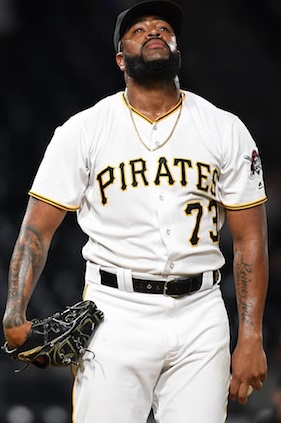
Someone in Cleveland will play any handy version of Abbott & Costello’s “Who’s on First” routine when the moment moves them. And some  wisenheimer’s liable to answer, “It wasn’t Brad Hand in the bottom of the tenth.”

That’s how staggering was the Hand of fate that let the Mets re-tie before winning a 4-3 game the Indians could have put in the safe deposit box Wednesday night.

When at first the relief pitcher looked to have ideas about heading for the plate to back up a possible play, but was caught flatfoot nowhere near first to take a double play-finishing relay throw, a throw that would have meant side retired, game over, the Indians winning, 3-2.

Instead, the tying run scored, and an infield hit later the winning run was driven home. And nobody would have blamed Hand if he wanted to book the first available flight out of New York and maybe out of the country. Maybe all the way to Antarctica.

Roll over Fred Merkle and tell Freddie Lindstrom the news.

No. On second thought, you didn’t see that. And I didn’t say it. Merkle’s Children have suffered enough from the chattering class (or lack thereof). And, from the fans who won’t admit they’d sacrifice their first born in the proverbial New York minute to be for even one nanosecond where Hand was Wednesday night.

Admit it. You know in your heart of hearts that you’d have been where you were supposed to be when Michael Conforto shot that sharp grounder to first. With apologies to Groucho Marx, the play’s so simple a child of five could have done it, right?

So how come you’re out looking for a child of five? Because you know damn well that even highly paid professionals make human mistakes, in baseball games and elsewhere.

They don’t all bring down the wrath of the gods, or at least the ghosts of Mickey Owen and Bill Buckner. But when they do, you know damn well, Joe and Jane Fan, that you’re thanking God it wasn’t you making a seven-million-dollar fool of yourself. Because in your real heart of hearts, you don’t know that you wouldn’t have made the same in-the-moment misjudgment.

So don’t even think about Hand’s mishap costing the Indians their postseason shot. Any more than left fielder Oscar Mercado’s error in Tuesday night’s loss. For one thing, the Twins also lost Wednesday night, meaning the Indians didn’t lose precious American League Central ground, either, and remained half a game in possession of the AL’s first wild card.

Just like with Merkle’s Giants in 1908, there were plenty of other games the Indians could have won to make the difference. And, unlike with Buckner’s Red Sox, it wasn’t the point where Tribal Nation could forget there’s still a World Series Game Seven to play.

For another thing, the Indians were playing with blasting caps already when—with one out and Mets shortstop Amed Rosario on third, after his leadoff double prompted second baseman Joe Panik to sacrifice him deftly—the Tribe decided to put Pete Alonso, the Mets’ Rookie of the Year candidate bombardier and the potential winning run, aboard on the house.

Every relevant paragraph in the traditional Book says you don’t put the potential winning run aboard on the house. Especially when your pitcher is a strikeout machine of a sort with 76 punchouts in 51 innings and Alonso remains prone to the strikeout. But to the Indians it makes perfect sense, because Alonso can still win the game with one swing. He’s done it before, he could do it again, and Hand’s money pitch, his slider, hasn’t been working quite right for a short while.

So you pitch to Conforto, the Mets right fielder, a lefthanded hitter who’s hitting only .224 lifetime against lefthanded pitching. Even with 22 home runs against the portsiders while he’s at it, the odds now stack in Hand’s and the Indians’ favour.

And Hand on 0-1 served Conforto a near-perfect pitch to whack onto the ground, the ball bounding up to Indians first baseman Carlos Santana, whose two-out solo homer off Mets reliever Luis Avilan in the top of the tenth broke the two-all tie that ultimately compelled the extra inning in the first place.

The grounder did pull Santana away from the pad at first, but almost no one but Santana knew he had no thought about throwing home and every thought about trying for the game-ending double play. Hand knew going in that the last thing the Indians wanted was Rosario coming home to tie the score again.

“I wasn’t looking at the runner,” he told reporters after the game. “I didn’t see if he was breaking right away. Obviously, a one-run game, you can’t let that run score right there. I thought maybe he could’ve gone home.”

Hand probably wasn’t alone thinking Santana might throw home with Rosario running on contact. Hence his initial two steps or so down from the mound toward the plate, away from the first base side just so, knowing he’d have to be there as a helpmate on any play at the plate.

But then he saw what didn’t happen.

“I kind of stopped, expecting him to throw it home,” the lefthander said. “But once he wasn’t throwing it home, I didn’t have a chance to get over [to first base].”

Even Indians manager Terry Francona, whose employees once included Mickey Callaway, his former pitching coach now the Mets’ manager, thought Santana should have gone home. “With a lefty on the mound,” Francona said after the game, “you’re not going to be able to get over there. So once he can’t get back, there’s nobody else there to take the throw.”

Santana threw perfectly to second, where Indians shortstop Francisco Lindor took the ball as Alonso dropped into what looked like an exercise-in-futility slide and pivoted slightly to make the relay throw. Except that Lindor saw what everyone else in Citi Field saw.

Who’s on first?!?

He completed his motion with the ball still in his throwing hand. He probably needed smelling salts right on the spot. Santana bent over to avoid being skulled by the relay throw that wasn’t, while Hand’s realisation that the play wasn’t going to the plate meant him arriving several steps short of Santana, never mind first base, where Conforto hit the pad cleanly as Rosario scored.

None of the Indians’ infielders believed what just happened. Third baseman Jose Ramirez—whose sixth-inning RBI triple tied the game at two—sank into a crouch of disbelief. Lindor and second baseman Jason Kipnis looked as though they didn’t know what to think. Santana looked for the moment as though he was afraid to think.

Kipnis, who was too far toward second base to think about trying to cover first, said after the game he thought Hand believed Santana would go home, too. “I haven’t looked at it. My job is to kind of hover and clean up the mess,” he said. “I’m over a little bit, but I’ve never covered first for a double play in nine years. Granted, it doesn’t mean it can’t happen.”

The Mets couldn’t believe what just happened. They thought one and all that Conforto’s sharp grounder meant they were dead ducks for the night. “Off the bat, I was like, yeeeek!” Davis admitted. “You hold your breath.”

All night before the tenth inning the Indians and Mets played a kind of cat-and-mouse against each other. Magnified when it became a bullpen game too early after Mets starter Marcus Stroman left after four because of an unexpected hamstring issue. Amplified when Indians starter Adam Plutko opened with three perfect innings before dodging first and second in the fourth, before running into back-to-back one-out RBI doubles (Mets center fielder Juan Lagares and pinch-hitter Luis Guillorme) in the fifth.

After Hand’s misread on the double play that wasn’t, Mets catcher Wilson Ramos beat out a squibbler up the third base line that Hand pounced upon like a cat who’d let the mouse escape once but wasn’t going to let that happen again. Except that even he couldn’t stop even the speedless Ramos from making first safely.

Then it was Davis, whom Hand opened 0-2 on a called strike and a foul off. By his own admission Davis lives for such counts. He relishes the battle back from up against the wall. That much could be said for these Mets, who put themselves up against the wall in most of the season’s first half but put themselves there more than once (Hi! We’re the Mets! And we’re crisis junkies!) while rolling to baseball’s best post All-Star break record.

Davis then took balls one through three, all on the inside, climbing the ladder and missing further in each time, before fouling off three straight. Then he nailed Hand’s hanging slider and drove it on a fat hop off the left field wall. Earning himself a jersey shredding near second base similar to Conforto’s after he’d walked one off against the Nationals a week and a half earlier.

“You hit a walkoff,” chirped Alonso, who initiated the ritual with Conforto, “your shirt’s coming off.” Unlike Conforto, though, Davis was well prepared: he had a blue undershirt beneath his jersey in the event he finally nailed his first career game-ending, game-winning hit. “Let the kids play, right?” Callaway chuckled after the game.

Hand came into the game with two blown saves in his four previous chances, one against the Twins to whom the Indians are still keeping American League Central pace, and one against the shaky enough Red Sox. He’s been a solid reliever otherwise, his career-low 2.59 fielding independent pitching rate this season holding hands with his strikeouts as evidence enough overall.

But Hand also has a 1.91 walks/hits per inning pitched rate in his last fifteen games. And questions now arise about whether Hand’s first-half work load hasn’t had a hand in his recent struggles. Francona himself suggests that just might be the case, which doesn’t bode well considering the veteran lefthander is the best talent in a somewhat surprising  Indians pen.

“From my side of it, I have to be more consistent in when he’s used,” the skipper said. “The last month he’s been used a ton and then he’ll go six days without pitching. That’s a hard thing to do, but I think that’s where maybe how I can help.” Before Wednesday night, Hand had had five days off between gigs against the Red Sox and the Yankees and two days off between his Yankee gig and Wednesday night.

But Wednesday night had nothing to do with errant breaking balls or mechanical issues or workload issues. Wednesday night turned on an honest mistake in judgment. Even World Series winners make those and survive to win their leases to the Promised Land.

It wasn’t as if Hand just stood pat when Conforto rapped that grounder. He acted on an immediate and viable thought, then stopped on the proverbial dime when the thought proved false, and couldn’t acquit himself in the right direction in time to make the difference Santana hoped to make starting the double play that wasn’t.

Are the Mets the never-say-quit bunch Davis proclaims them to be? They are now. “I’ve been saying it for a while now that this is a special team,” Davis told the New York Post. “We knew it from the beginning of spring training, it was just a matter of time until we hit on all cylinders where our pitching, bullpen, hitting, timely hitting all came together. We’re doing it.”

A matter of time? To Mets fans and just about everyone else it seemed as though it would take forever and a day. This team nearly imploded in May and June. Since the All-Star break they’re baseball’s most unfathomable self-repair, mostly. Some dare think they’re channeling their 1969 forebears.

But they’re still a game and a half away from the second National League wild card even after Wednesday night’s surrealism. And they still have the arguable toughest schedule yet to come of any contender the rest of the way, even if most of it will be played for the home audience. They’re not just going to walk into the postseason if they get there. And they know it.

These Indians, heirs to a legacy at least as star-crossed as the pre-2004 Red Sox, the pre-2016 Cubs, and the pre-2017 Astros, are made of slightly stronger stuff than one human mistake exposes, too. Don’t bite the Hand you fear betrayed you, Tribal Nation. Because we humans all make mistakes. And this one may not cost these Indians as much as you fear.

The Mets re-heat to burn the Indians

2019-08-21 JDDavisWilsonRamos

J.D. Davis and Wilson Ramos bump the forearms after Davis’s two-run homer in the bottom of the second gives the Mets their first lead in a 9-2 win against the AL wild card-leading Indians Tuesday night.

Five days ago, the Mets were something of a wreck. Looking more like their earlier season selves than their post All-Star break juggernaut.

They lost a pair to the National League East-leading Braves that they could have won, then they beat the Braves despite seeming to do everything in their power to snatch defeat from the jaws of a blowout.

Then they took two out of three in Kansas City from the American League Central’s rebuilding Royals, nothing remotely close to the Royals who beat them in a World Series they could have won but for porous defense.

But there was still that little matter of coming home with the Indians due for a visit. The Mets’ rounds with the big boys weren’t over yet. Opening Tuesday night, the Mets began a set between baseball’s two hottest post All-Star teams. Making it arguably even up in import to the set they blew in Atlanta last week.

The pre-break Mess, risen from the dead. The pre-break Indians, yanking themselves from an injury, inconsistency, and once in awhile indifferent wreck to put a near-end to the juggernaut from Minnesota that’s proving you can’t always just bludgeon your way to the top and keep as much as an eleven-and-a-half-game distance in front.

The Mets suddenly re-resembled a group of crisis junkies whose apparent such addiction didn’t stop them from taking a set against the Nationals but threatened to wreck them against the Braves last week, before re-charging in Kansas City. The Indians finished pulling themselves all the way back to the AL Central’s penthouse. The Tribe even claimed first place for a couple of days and still sit only a couple of games behind the Twins in their division.

And they entered Citi Field Tuesday on an extended New York trip. After taking three out of four from the Twins but losing two out of three to the somewhat rickety Red Sox, the Indians split a set with the Yankees in the south Bronx before opening against the Mets. This may be the first time in the interleague play era that the Indians didn’t have to switch up their hotel reservations after finishing a visit to one team before starting the next one.

And with a little side intrigue involving Mets manager Mickey Callaway—once embattled, now looking somewhat more secure—compelled to try out-thinking and out-maneuvering his former boss, Indians manager Terry Francona, the Mets did something last week’s Atlanta excursion might have left people thinking was two things, difficult and impossible.

They beat the Indians 9-2 Tuesday night. They took the lead twice, and the second time they didn’t let the Tribe even think about trying to re-tie or overtake them by the time Mets reliever Paul Sewald—whose career has been described as up and down when observers have wished to be polite—struck out Greg Allen and Tyler Naquin back-to-back to end it.

It didn’t faze Mets starter Steven Matz when Jason Kipnis sent a hanging changeup over the right center field fence with two out in the top of the second. He still scattered five hits and a pair of walks otherwise while striking out seven in six and a thirds innings and outpitched Shane Bieber, whose striking out of the side before the home audience nailed him the All-Star Game’s MVP over a month ago.

And well it shouldn’t have fazed Matz because J.D. Davis had an answer for Kipnis in the bottom of the second. With Mets catcher Wilson Ramos aboard on a one-out base hit right up the pipe, Davis caught hold of a 1-0 Bieber slider down the pipe and sent it over the center field fence, right past the big housing for the big red apple that rises whenever a Met hits one out at home, a holdover from the ten-years-gone Shea Stadium.

“The scouting report was to attack him early,” Davis said after the game. “He threw strikes early in the count, and in that at-bat, I was aggressive with the 0-0 fastball. Then he went to the off-speed pitch, and we got him. I think that was his first time out of the stretch, and he left one over the plate.”

A throwing error by Mets third baseman Todd Frazier opened the Cleveland fourth with Yasiel Puig on first. He got as far as second when Jose Ramirez followed with a base hit before coming home on Kipnis’s single up the pipe to tie things at two. Then Matz contained the damage by getting a fly out, an infield force, and dropping strike three in on Bieber, whose hitting experience was limited to one walk and one base hit in a mere eight trips to the plate entering Tuesday.

Two three-up, three-down innings for each pitcher later, the Indians learned the hard way what happens when you make even the tiniest mistake against these Mets. With one out in the bottom of the sixth, left fielder Oscar Mercado had a perfect bead drawn on Mets second baseman Joe Panik’s opposite-field fly. That despite shortstop Francisco Lindor looking likewise before Mercado called him off.

Against the railing, the ball descended into and right out of Mercado’s glove in an instant. A fan may or may not have interfered with the play. Francona elected not to challenge it because, as he put it, “It was really iffy.” The fan was ejected from Citi Field post haste.

A center fielder ordinarily, Mercado didn’t try to excuse himself, either. “I just dropped it,” said Mercado after the game. “I thought I had it just like with every other flyball I’ve caught in my life, but it just popped out of my glove.” After Pete Alonso struck out looking at one that barely hit the low outside corner, there was nothing iffy about Michael Conforto popping Bieber’s 1-2 slider almost exactly into the same spot where Kipnis’s second-inning blast landed.

“I feel like that swung the whole momentum of the game,” Bieber said after the game. “If I make a better pitch there, we probably have a different result.”

“We’ve had a feeling over this run that we’ve been on that we might not get them the first time through the order,” said Conforto, mindful of how good Bieber has been overall this year, “but our lineup has been so good, our hitters have been able to figure out ways to get on base, figure out ways to get runs in.

“We just feel that regardless of who is pitching, we’re going to put a lot of runs on the board. Any time the defense gives us an opportunity like that, we have to take advantage of it, so that was huge.”

All the Mets have to do in concert with that is keep from giving the other guys even remotely comparable opportunities. While taking advantage of every gift from every bullpen bull they can handle.

With both starters out of the game by the bottom of the seventh, the Mets got even more playful with the Indians’ bullpen in that inning. They introduced themselves to Adam Cinder with a leadoff single and a followup walk. Then they re-introduced the Indians to an old buddy, Rajai Davis, called up after a term in Syracuse found him re-grouping respectably enough to get a second term as a Met.

Davis tried bunting both runners over. He got Juan Lagares (the walk) to second but the Indians nailed Frazier (the leadoff hit) at third while Davis arrived at first. Then Mets shortstop Amed Rosario, one of their hotter bats of late, drove Lagares home with a base hit up the pipe.

“This game can really bring you to your knees sometimes,” Cimber said after the game. That’s the voice of a righthander against whom righthanded batters hit only .227 against him before he tangled with the Mets’ righthanded foursome. “You’ve just to keep moving forward and fight your way through it. The last couple of weeks I’ve been grinding a little bit. It’s something everybody goes through and it’s my turn now.”

Exit Cinder, enter Hunter Wood. And Panik sent Davis home with an opposite-field single, before Alonso atoned for looking at strike three his previous time up by doubling home both Rosario and Panik, then taking third on a wild pitch before Wood and the Indians escaped.

Davis the Rajai re-joined the Mets’ party a little more forcefully in the bottom of the eighth, when he turned on Indians reliever Phil Maton’s slightly hanging curve ball and hung it down the left field line for an RBI double sending Lagares home with the ninth Mets run.

All that on a day when injured list news was mixed for both teams. The Indians shut Corey Kluber down two more weeks with an abdominal strain he suffered during a rehab outing; the Mets shut down reliever Robert Gsellman, possibly for the season, after his injury turned up a torn lat muscle.

But Carlos Carrasco’s comeback while battling leukemia goes to a second rehab outing after he looked impressive enough in his first, which stands to help the Cleveland bullpen since that’s where they plan to bring him.

And Mets outfielder Brandon Nimmo (bulging neck disk) advanced to Syracuse on his rehab and had a 2-for-5 day while playing center field for five innings. Nimmo’s return may provide a slightly ticklish outfield situation for the Mets, but these Mets have known far more troublesome knots this year.

Maybe last week in Atlanta really will prove a little hiccup, after all, but these Mets haven’t begun full recovery from crisis addiction just yet. Even if they’re still talking as much in postseason mode as they’ve begun playing again. Taking at least two of the three with the Indians will go big in that recovery. Especially with more big boys awaiting them.

“I think we all knew,” said J.D. Davis, “that even though it’s August, the playoffs started today. We have to have that playoff mentality, that playoff atmosphere, that every game counts, especially with the hole we dug ourselves into. I think the elephant in the room is that we have a lot of home games but a lot of games against playoff teams.”

That’s not elephant singular. That’s a pack of pachyderm awaiting them still. The Braves and the Cubs come to town after they’re finished with the Indians; between the two, the Cubs could be slightly easier pickings based on recent performances. And, after a road trip to Philadelphia and Washington, the Mets return home for a ten-game homestand against the Phillies, the Diamondbacks, and the Dodgers.

Tuesday night? The Mets send Marcus Stroman out to face the Indians’ Adam Plutko, who beat the Yankees to open the Indians’ New York excursion. With the Mets 25-10 since the break and the Indians 24-14 in the same period, this isn’t exactly a plain pit stop for either team.

And if you’re looking for historically rooted omens, half a century ago the Mets were ten games out of first in the NL East—and went all the way to win their first World Series. Four years later, they eleven and a half out and dead last in the division—and won the pennant before pushing the Swingin’ A’s to a seventh World Series game.

Today they’re nine games out of first but two games away from the second NL wild card. With a clean shot at re-proving their post All-Star mettle against the AL’s wild card leaders, who’ve proven they’re not exactly willing to play dead when told to do so, either.


Wait till last and next year?

2019-08-20 ChrisSale

Chris Sale’s and the Red Sox’s 2019 was hard enough before his elbow inflammation shut him down for the season. The Red Sox seem all but cooked for the year, too.

“Wait ’till next year. That quartet of words is either the most or least comforting in a baseball fan’s language.

For generations in Brooklyn it was a watchword of faith almost equal to a Jew’s Hear, O Israel, the Lord our God, the Lord is One. But after 1956 didn’t mean a second straight World Series title for the Boys of Summer, wags suggested, “Ahhhh, wait ’till last year!”

For many teams’ fans, alas, they’re the saddest of possible words. And, for generations of pre-2004 Red Sox, pre-2016 Cub, and pre-2017 Astro fans, not to mention almost every Washington Senators fan and every St. Louis Browns fan on the planet past, and every Indians fan since 1954, the saddest of possible words may have been, “This year is next year.”

At this writing, of course, the Red Sox are four-time World Series champions in this century (take that, Empire Emeritus!) including the current defending Series champs. And that, alas, is as far as it’s going to go. The end of Chris Sale’s season, which wasn’t going all that well in the first place, might as well be the end of the Red Sox’s title defense.

Unless there’s a miracle on the horizon equal if not superior to such as the 1914 Braves, the 1961 Reds, the 1967 Red Sox, the 1969 Mets, or the 1990 Reds, you can stick a fork in the 2019 Red Sox. They may be done.

They’ve learned or re-learned the hard way that all the hitting on earth, and the Red Sox bats make life miserable enough for opposing pitchers, isn’t going to out-hit, out-slug, or out-run a pitching staff whose starting rotation fell apart so profoundly this year that their number five starter (Eduardo Rodriguez) leads the rotation with . . . a 4.10 ERA.

There’s no point to having Rafael Devers emerge as one of the league’s premier third basemen, Xander Bogaerts jumping into the conversation about the league’s best shortstops and team leaders, Mookie Betts recovering from an up-and-down first half to look like his defending MVP self the second half so far, or the entire Red Sox offense making for the American League’s second-most runs behind the Yankees, if they can’t find even a used pitching machine that can get you through games without disaster every couple of innings.

Bad enough that Sale looked as often as not as though he were pressing to live up to that yummy contract extension he signed during last offseason. Worse is that his shoulder was already a concern when he signed it, and that now his pitching elbow is inflamed enough to shut him down for the season with a question of Tommy John surgery lurking.

If Sale needed the procedure, he’d have missed 2020 recovering. And the Red Sox would have to be the most creative they’ve had to be in several years to work around it. Because right now they don’t have the pitching depth to cover losing Sale, any more than they proved to have it when they didn’t have Nathan Eovaldi for the first three months of the season after arthroscopic elbow surgery.

They’re not likely to re-sign Rick Porcello, and they probably shouldn’t considering Porcello’s Cy Young Award-winning 2016 is small enough in the rear view mirror and was thought to be a fluke even when he won the award. (Porcello won it because he was credited with 22 wins to lead the league, but Justin Verlander actually pitched better that season.) A 5.49 ERA and 4.87 fielding-independent pitching rate just don’t equal even a number three rotation man, never mind an ace.

And David Price, who rediscovered his changeup to deadly effect last postseason, seems to have lost it again this year. He’ll have to rediscover it one more time if at all if he’s going to contribute positively again.

They could sign either Gerrit Cole or Madison Bumgarner this winter, considering the money coming off their books, including the last of the ill-fated Pablo Sandoval contract, gives them some significant flexibility. But the Red Sox have little if any pitching to look toward on the farm, even less considering general manager Dave Dombrowski mortgaged a significant chunk of it to get Sale, Price, and long-departed bullpen bulls Craig Kimbrel and Joe Kelly in the first place.

The rotation issues turned the Red Sox bullpen into an overworked mess even before Eovaldi returned and the Red Sox couldn’t decide whether he should start or relieve. Their only significant trade deadline period acquisition, Andrew Cashner, went bust as a starter and his move to the bullpen was clearly a demotion.

But Cashner could prove a relief godsend and he’d still be only one man. Unlike the Nationals and the Mets, whose effective starting pitchers were undermined by mal-constructed bullpens much of the season, the Red Sox bullpen looked decent going into the season. The original closer-by-committee plan didn’t work. The rotation—hurt in part by being underworked in spring training—ended up vaporising the pen too profoundly for a single saviour.

What hath Dombrowski wrought? In Detroit he was on a mission to get the Tigers back to the World Series and got close enough often enough—but he crashed and burned the Tigers’ farm to do it. Now the Tigers are forced into a frame-up reconstruction while being saddled with four more years and $124 million still due injury prone, 36-year-old  Miguel Cabrera. Thanks for the memories, Dave.

In Boston, Dombrowski was given the mission he’d had in Detroit: spend, deal, and build us another World Series winner. Unlike in Detroit, where his Tigers got close, closer, closest, but never quite back to the Promised Land, with the Red Sox he did it. Last year’s Red Sox just might have been the single best Red Sox team in the franchise’s history.

The question is how badly Dombrowski crashed and burned the Red Sox farm to do it, too. He builds winners but the prices longer-term prove more insurmountable in the end. Red Sox Nation now has the potential to become very empathetic with Tiger fans who can’t really be sure how long or how painful the Tigers’ restoration will be.

And, considering the $237 million committed to just three pitchers (Sale, Price, Eovaldi) over the next three years, all eyes will be cast upon the Olde Towne Team when Betts and Jackie Bradley, Jr. (who still isn’t a consistent hitter but who’s still valuable with his glove in the outfield) hit free agency after next year.

The good news is that reports broke early Tuesday saying Sale wouldn’t need Tommy John surgery after all. The elbow inflammation hasn’t telegraphed the tear that would make the operation mandatory. He’ll have time aplenty to rehorse himself for next year. Which would solve only one Red Sox pitching problem. The parched pitching picture on the farm is deadly serious.

Now it seems like generations ago when the Red Sox destroyed the Yankees in three out of four in a late July home set that only began with a 19-3 massacre. After that series, during which the Red Sox out-bludgeoned the Yankees 44-22, the Red Sox:

* Lost three straight to the Rays followed immediately by the Yankees doing to them in New York what they’d just done to the Yankees in Fenway.

* Split with the Royals and the Angels, both of whom have their own issues to solve and answers to find.

Which put them sixteen games out of first in the AL East. They’ve gone from there to take two of three from the AL Central-resurgent Indians followed by a sweep of the Orioles which can be argued was doing it the easy way. But they’re still a .500 club since the All-Star break, they’re still sixteen out of first in the East, and they’re six behind in the wild card hunt.

Dombrowski has one year left on his own current contract. The Red Sox may consider it a prudent investment to just eat the money and let him go. Which might solve one headache now, but whether it solves a longer-term pain depends upon whom they bring in to succeed him and how well they can reconstitute their pitching corps.

Dombrowski’s off-season just may dictate whether the Red Sox put the rest of his contract on their dinner menu. A little creativity and a bold signing or two just might yank the Red Sox back for a run in 2020. Hello, Gerrit Cole? Welcome to Boston, MadBum?

Re-deepening the parched farm requires a lot more creativity. That’s where the Red Sox face a longer-term burden. Wait till next year and last year at once?

Al Jackson, RIP: “Everybody here crazy”

2019-08-19 AlJackson

Al Jackson pitching to Hall of Famer Willie Mays in Shea Stadium, 1964. Jackson was a control pitcher whose Original Mets were only too often beyond control.

With the National League’s teams agreeing to let the expansion Mets and Colt .45s (the Astros-to-be) pick only from among their flotsam and jetsam, the two new clubs didn’t have much in the way of quality choices. As the Colts’ first general manager, Paul Richards, said infamously to his crew, “Gentlemen, we’ve just been [fornicated].”

The Colts went for younger unknowns, predominantly, though they did pick a few veterans, notably pitchers Don McMahon and Bobby Shantz, infielders Joey Amalfitano and Billy Goodman, and first baseman Norm Larker.

Knowing New York still smarted over the Dodgers and Giants moving west, the Mets opted mostly but not exclusively for veterans with National League name recognition (several of whom were former Dodgers or Giants), suspecting that might help goose the box office while the Mets set about building an organisation that might bear fruit within the decade.

Their choices included Hall of Fame center fielder Richie Ashburn, first basemen Gus Bell, Ed Bouchee (the NL Rookie of the Year runner-up in 1957), and Gil Hodges (the Brooklyn favourite), infielders Felix Mantilla and Don Zimmer, outfielder/first baseman Frank (The Big Donkey) Thomas, catchers Hobie Landrith and Joe Pignatano, and pitchers Roger Craig and Clem Labine.

But they did make room, too, for younger players who were either spare parts on other clubs or lucky to get cups of coffee if that much. Maybe the best of the Mets’ finds out of the latter end of the pool was a lefthanded, African-American pitcher named Al Jackson, whom the Mets plucked from the Pirates. To whom manager Casey Stengel took an immediate liking.

“Jackson,” wrote Stengel’s biographer Robert W. Creamer, “was one of the few accomplished players that Casey had when he was managing the Mets, a fine pitcher who could field his position skillfully, handle a bat well, run bases intelligently, and pitch with guile and courage.” The feeling was mutual. “He never treated me with anything but respect,” Jackson once said.

The Waco, Texas native died Monday morning at 83 in a Port St. Lucie, Florida nursing home, following a long illness that came in the wake of a 2015 stroke. Met fans from my generation won’t forget the game he pitched to open 1964’s final regular season weekend. In which, for the very first time in their existence, the Mets actually mattered to a pennant race outcome.

In fact, the infamous Phillie Phlop threatened the prospect of a three-way tie for the 1964 National League pennant. Thanks to that ten-game losing streak eroding what was a six-game lead when it began, the Cardinals opened the weekend in first place by half a game, the Reds were right behind them, and the Phillies were two and a half back.

The Cardinals hosted the Mets three games in St. Louis for that final weekend. The Reds faced the Phillies for a pair. And after the Phillies won their Friday game thanks to a four-run eighth and tidy bullpen work, a Cardinals win later in the day would clinch at least a tie for the pennant. Naturally enough, the Cardinals sent future Hall of Famer Bob Gibson to the mound to dispatch the Mets.

Stengel countered with Jackson. “Jackson,” the manager liked to say, “is a pret-ty good-looking pitcher,” which Creamer wrote was high praise from the Ol’ Perfesser. And at a time when it looked like the novelty of the Mets’ comedy of errors began wearing off, and the losing quit being funny, accompanied by some increased mutterings that Stengel was losing whatever he had left, Jackson proved one of Stengel’s few defenders.

A manager who loved to teach baseball above almost anything else, Stengel savoured Jackson as one of his very few younger Mets who was willing to listen and learn—even while he was at work on the mound. “Casey would stand in the dugout,” Jackson would remember, “and say real loud, ‘If I was a lefthanded pitcher, here’s what I would do right now.’ That’s when I knew he was talking to me.”

There were men on first and second, and you knew the other team wanted to bunt them over. Casey would say, “Here’s what I would do. I would let him bunt. I would throw him a little slider, and I would break toward the third base side, and I would throw his ass out at third.” Casey had the guts to tell you what he’d do in a certain situation when it came up on the ball field. He didn’t wait until after it was over and second guess. He’d tell you right now, and he’d tell you what the other team should do. He’s the only man I ever saw do that.

Gibson and Jackson squared off. The only run of the game scored when Mets first baseman Ed Kranepool singled home outfielder George Altman with two out in the third inning. Despite Gibson striking out seven while scattering eight hits and no walks in eight innings’ work, the script got flipped—the Cardinals committed three errors to the Mets’ none, though none of the errors factored in the score.

Jackson went the distance scattering five hits and a walk and, after surviving a bases-loaded threat in the eighth, retired the Cardinals in order on two fly outs and a ground out to finish. The next day, with the Phillies and the Reds off, the Mets blew the Cardinals out, 15-7. These were the Mets? Now the National League race went from chaos to bedlam.

The blowout left the Cardinals and the Reds tied for first with the Phillies a full game back. If the Phillies beat the Reds on the final Sunday and the Mets could finish sweeping the Cardinals, the National League would have to figure out a round-robin to decide a pennant winner. The Phillies did their job, blowing the Reds out 10-0 behind Hall of Famer Jim Bunning.

2019-08-19 AlJackson02

Al Jackson, in the Polo Grounds, where the Mets played their first two bizarro seasons.

The Mets, alas, didn’t do theirs. Not for lack of trying. They had a 3-2 lead in the middle of the fifth, but the Cardinals dropped a three-spot on them in the bottom of the inning and never looked back; in a game that included Gibson working four innings’ relief, the Cardinals won the game (11-5) and the pennant. At the last possible minute.

Yet somehow the Mets made the Cardinals earn it the hard way, starting with Jackson’s cool shutout. A 5’10” lefthander whose money pitches were a snappy curve ball and a shivering slider, Jackson was as athletic as the day was long and pitched stoutly despite being charged with heavy losses as a Met, and his teammates befriended and respected him.

Kranepool in particular befriended Jackson, the two socialising often, even playing basketball together in the off seasons to stay in shape, according to Newsday.

“You had to be a pretty good pitcher to lose that many games,’’ Kranepool said of Jackson, who was charged with twenty losses in each of 1962 and 1965 and pitched too often in hard luck . “He was in the games at the end because he did so many things well. He was a good fielder and good hitter. He didn’t throw that hard; his curveball was his best pitch. But he was such a nice guy. He really was. You can’t find a negative thing to say about Al Jackson.’’

His fellow Original Mets pitcher, Jay Hook, credited with the win in the Mets’ first-ever regular season victory, had the same admiration. “He had good control, No. 1,” Hook says. “I think he really knew how to pitch.”

Jackson was dealt to the Cardinals after the 1965 season for veteran third baseman Ken Boyer, who was coming to the end of a should-have-been Hall of Fame career. After two fine if unspectacular Cardinal seasons, including not pitching in the 1967 World Series, he was returned to the Mets to finish a trade for relief pitcher Jack Lamabe.

He worked effectively as a swingman in his second Met tour, but before he could be a full part of the 1969 miracle—he if any Original Met had earned the chance after having survived the worst of their earliest seasons of comic futility—the Reds bought him that June. By then a middle reliever, a role that didn’t necessarily suit him, Jackson didn’t pitch as well as previously, and when the Reds released him in 1970 he retired.

He became a pitching coach for about two decades, including with the Red Sox and the Orioles, then returned to the Mets to work as a minor league pitching instructor except for a brief spell on the parent club during Bobby Valentine’s managerial term.

Jackson was as well known for good humour as he was for his pitching ability and knowledge. He needed every ounce of that good humour he could muster, as Jimmy Breslin related unforgettably in Can’t Anybody Here Play This Game. Specifically, about the third inning in a 10 August 1962 game in Cincinnati’s Crosley Field.

This one left even the even-keeled Jackson—who’d pitch the longest game in major league history in terms of the game’s time (four hours and thirty-five minutes, pitching fifteen innings against the Phillies four days later)—wondering if he’d lost his marble. Singular.

The Mets were in a 3-0 hole when Jackson surrendered a leadoff double to Hall of Famer Frank Robinson. Wally Post grounded out right back to Jackson off the mound but Don Pavletich walked to set up first and second. After Robinson stole third, Jackson got Hank Foiles to whack into a sure double play starting at first base.

Marvelous Marv Throneberry fielded it cleanly. He had all the time on earth to start the play. He could go to second for the first out and take the relay; or, he could throw home for the first out and get the relay back. “Don’t think,” Crash Davis warned. “It’ll only hurt the ball club.” Throneberry thought. Then he decided to go home to start the double play. Except that his throw didn’t arrive quite at the moment Robinson did.

Then a walk to Vada Pinson loaded the pads for Don Blasingame. And Blasingame obeyed Jackson’s pitch, too, whacking a perfect double play grounder, this time to second base. Where Hot Rod Kanehl was so anxious to pick it up and get it started that he let the ball bounce right off his leg.

“Jackson,” Breslin wrote, “now has forced the Reds to hit into two certain double plays. For his efforts, he has two runs against him on the scoreboard, still only one man out, and a wonderful little touch of Southern vernacular dripping from his lips.”

Then with Reds starting pitcher Jim Maloney at the plate, Jackson wrestled him to 3-2 and, as he threw Maloney a sure ground ball pitch, the runners broke. And Maloney whacked the ball to Kanehl. This time, the Hot Rod picked it clean. And this time, he tossed the ball to Charley Neal playing shortstop. But since the runners broke on the pitch Blasingame was already safe at second, and Pavletich scored.

Again Jackson threw what he hoped would be a double play pitch. And Cincinnati shortstop Leo Cardenas obeyed orders, whacking it on the ground right to Neal in perfect position to finish the Area Code 6-4-2 dial. “But you were not going to get Charley Neal into a sucker game like this. No sir,” Breslin wrote. Neal fired to first. Out made. Fourth run of the inning scoring.

Then Eddie Kasko lined out to Kanehl for the side. Breslin swore Jackson must have set some sort of record for getting hitters to hit into consecutive double play balls whose pooches were screwed on the first leg.

Stengel decided sending Jackson back out for the fourth would do him irreparable damage, if not what came to be known as post-traumatic stress syndrome, so he sent Ray Daviault out to work the fourth. And, perhaps flummoxed himself over the third inning’s undoings, the Ol’ Perfesser forgot to tell Jackson, who went out to the mound to warm up without seeing Daviault coming in from the pen. The Crosley Field P.A. announcer announced the Mets’ new pitcher—Daviault.

Breslin swore Jackson stopped cold and made his own announcement: “Everybody here crazy.”

The wreck of the Pirates

2019-08-18 PittsburghPirates

The Pirates have more problems than just the reputation for headhunting earned by such brawls as this with the Reds on trade deadline day . . .

The iconic Roberto Clemente would have been 85 today. He’s probably playing a game in the Elysian Fields and, when getting news of his old club on earth today, shaking his head in dismay. Any way you look at it, and several have over the past couple of days, the Pirates are a mess.

Even winning three out of five from the Angels and the Cubs entering Sunday can’t turn this wreck of a leaky boat into the U.S.S. Constitution. The wreck of the Edmund Fitzgerald was nothing compared to the wreck of the Pittsburgh clubhouse. These Pirates couldn’t raid an Everglades airboat and get away with it.

No baseball team likes to lose. The Pirates’ 7-26 run since the All-Star break would harry in a hurry anyone to the rack of their regrets. But there’s no hard written, hard enforced rule that that kind of futility on the field has to equal a clubhouse carpeted by rubber wall to rubber wall eggshells, either.

And nobody seemed to know just how deeply troubled the Pirates may have been until a couple of days ago. When The Athletic‘s Rob Biertempfel published a piece headlined, “A pair of altercations between players and coaches highlights the Pirates’ fraying clubhouse.” I’m not entirely certain all hell has broken loose as a result, but consider.

The worst kept secret in the National League was the Pirates’ pitching staff riddled by injuries and inconsistencies. The second-worst has been the Pirates’ apparent indifference to the periodic scrums into which they get when their penchant for pitching inside and tight crosses the lines between inside tight and headhunting. But . . .

“While the problems with health and performance are well-chronicled,” Biertempfel wrote, “the clubhouse conflicts have not been as apparent, aside from the team’s announcements of a pair of suspensions in July for separate altercations involving coaches and two relievers, Keone Kela and Kyle Crick.

“The details of those incidents, many of which have not previously been reported, illustrate rifts caused by envy, charges of favoritism, and overt insubordination against manager Clint Hurdle and his staff.”

Not been previously reported? The Pittsburgh Post-Gazette, which covers the Pirates daily, almost looked willfully ignorant about it. In early August, the paper’s Jason Mackey did a run-down of the Pirates’ problems on the field that hit things squarely enough. But almost nothing in the paper has appeared to shine even a flicker on the team’s deeper issues beyond almost rote announcements of suspensions involving two relief pitchers and one of those pitchers, Keone Kela, denying profusely that he’s a clubhouse pain.

Notoriously, Kela got himself a ten-game suspension for instigating what ultimately became a wild trade deadline-night brawl when he threw at Derek Dietrich—over a pair of April home runs one of which landed in the Allegheny River—and admitted outright he wanted to decapitate the Cincinnati outfielder.

But over a week earlier Kela got into a tangle with performance coach Hector Morales. The team announced his two-day suspension “for violating team rules.” What wasn’t revealed at the time was manager Clint Hurdle having to intervene and Kela engaging Hurdle in a shouting match that Biertempfel and others say amounted to downright insubordination against the skipper.

“Clint wasn’t even in the vicinity to break up anything,” Kela told Mackey. “I was letting [Morales] know that we had some differences in terms of what we believe with [team] culture. Clint and I have never had a shouting match at each other. And honestly, if you can’t tell, I’m truthful. I don’t have anything to lie about.”

Kela missed two months this season with shoulder inflammation. Since his return he’s been one of the Pirates’ better relievers. But after the Dietrich incident people were reminded that Kela had a reputation for trouble with the Rangers, including but not limited to “confronting players and causing disruptions” after spring training 2017.

They seem to have included what the Fort Worth Star-Telegram described as “multiple heated exchanges with more established teammates.” When the Rangers sent Kela down to AAA Round Rock as that spring training ended, that paper said most Rangers players agreed with the move.

“The Rangers decided that Kela, projected to be a key member of their bullpen, should be sent to the minors in an effort to preserve clubhouse chemistry,” wrote the Star-Telegram‘s Jeff Wilson. “It is the first known punishment for Kela since he joined the Rangers, even though sources have indicated he has a track record of confronting players and causing disruptions in only two seasons in the majors.”

So why did the Pirates deal for Kela in 2018 at the former non-waiver trade deadline? They liked his arm and the idea of adding him to a promising bullpen, even though, as Biertempfel notes, “they knew he came with a history of clubhouse issues.” But after the blowup with Morales and the outrage over the brawl with the Reds, “sources with the Pirates told The Athletic that many players are wary of Kela because his demeanor can be so mercurial.”

A week after the Kela-Morales-Hurdle showdown, bullpen coach Euclides Rojas was suspended by the team over a confrontation with Crick. Apparently, Crick challenged Rojas over preferential treatment perceived to be given to closer Felipe Vasquez and Rojas ordered Crick to mind his own business. When they argued over the issue, Biertempfel wrote, “a player went to management and insisted that Rojas should get the same level of punishment as Kela had.”

You expect certain key performers to get a few breaks on the team, and Vasquez is both a veteran and a two-time All-Star. He “is not always on the field during the pregame period when other relievers are stretching and shagging flies,” Biertempfel wrote. “Earlier this season, Vázquez explained there are times when he is doing other things — such as getting a massage, working with a conditioning coach or taking a nap — to sharpen his performance during the pregame period.”

If Crick was annoyed over such preferential treatment, and he may not be alone, you might expect one of the Pirates’ veterans to step in and settle him down. But that’s the problem, Biertempfel wrote: “many sources say the Pirates are lacking leadership — the no-nonsense, active type that was brought by players such as [long gone] A.J. Burnett and David Freese, as well as the low-key, calming presence of veterans like [long gone] Andrew McCutchen and Josh Harrison.”

Early in the 2018 season, when former Nationals manager Dusty Baker was interviewed and the subject of the Nats’ reportedly skittish clubhouse came up, Baker said it flatly: “Jayson Werth. That’s who they miss in that clubhouse.” Werth at the time had signed with the Mariners as a free agent, after an offseason in which his agent may or may not have deflected several offers, but he retired that June.

The Nats prize veteran leadership, even if some such as Max Scherzer, Anthony Rendon, Ryan Zimmerman, and since-departed Bryce Harper often seemed more likely to lead by example rather than with a vocal, gently-but-firmly hands-on approach. Or, a rah-rah rousing. This year, however, the Nats’ clubhouse is one of the game’s more fun loving and cohesive. So are Harper’s Phillies. The cost-obsessed Pirates, of course, have unloaded several veterans in recent years on behalf of the ledger more than the field.

As the Nats once missed Werth, it’s entirely likely that the Pirates really miss McCutchen, whose skills may not be as acute as they were during his glory seasons in Pittsburgh but whose gentle style of off-field leadership might have gone a considerable distance in keeping the current waters undisturbed. He might even have kept the Pirates from adding such a known pot-stirrer as Kela in the first place. Might.

But there have been chronically losing teams who’ve found ways to band up and brace each other up in the lowest of hours. When the 1988 Orioles opened the season with a 21-game losing streak, players and manager alike took to gallows humour to keep their spirits from flying south. A new reporter on the Orioles beat coming aboard at the absolute depth of that streak? “Join the hostages,” Hall of Famer Cal Ripken, Jr. cracked to welcome him aboard.

Hall of Famer Frank Robinson, handed the bridge after Ripken’s father was fired earlier in the collapse, merely displayed similar wit and displayed a button handed him by a fan: “It’s been lovely, but I have to scream now.” Told of a local radio personality determined to stay on the air until the Orioles finally won a game, Robinson sympathised: “We’re gonna kill the poor guy.”

Hall of Famer Richie Ashburn finished his career as maybe the only conservatively decent player on the expansion, 1962 Mets—losers of 120 games, who managed somehow to avoid losing 21 straight at any point. (Their longest losing streak: seventeen.) Ashburn was most impressed by how the losing didn’t affect the morale of those Mets, made of veterans (mostly) and youth (somewhat) alike.

“Any losing team I’ve ever been on,” said Ashburn, who’d played with several as the 1950s Phillies faded following their unlikely 1950 pennant, “had several things going on. One, the players gave up. Or, they hated the manager. Or, they had no team spirit. Or, the fans turned into wolves. But there was none of this with the Mets . . . So we lose 120 games and there isn’t a gripe on the club. It was remarkable. You know, I can remember guys being mad even on a big winner.”

When the 1958 Yankees clinched their pennant on the road, the team flight home was ruined by a nasty incident in which relief star Ryne Duren, in his cups and celebrating the clinch, walked up and down the aisle of the plane planting big cigars between assorted Yankee lips. He came to Ralph Houk, third-string catcher-turned-coach, and his thanks for putting a cigar between Houk’s lips was to get his face smashed in.

An enterprising New York Post reporter named Leonard Shecter—the future editor of Jim Bouton’s Ball Four—was aware of the incident. Being chewed out for missing one story, Shecter mentioned the Duren-Houk incident. The Post verified it and ran with it. The Yankees were so furious that then-general manager George Weiss canceled the usual pennant-clinching party.

And God only knew the “Mustache Gang” Athletics of the early-to-mid 1970s ran roughshod over the league—and each other. And not necessarily in that order. Even with three Hall of Famers on the team. (Rollie Fingers, Catfish Hunter, Reggie Jackson.) Even managed by Dick Williams, a Hall of Fame manager who changed from the tyrant he was with the 1967-69 Red Sox to a far more laissez-faire skipper when he took the bridge of the Swingin’ A’s.

Wrote Bouton, in “I Managed Good But, Boy, Did They Play Bad”, Williams this time figured there was no point to rules if they weren’t making the team play better. He probably would have gotten his own lights punched out if he figured otherwise.

From what I know of the new Dick Williams and the bunch of guys on the 1972 Oakland team, they didn’t have many rules. Oh, maybe they weren’t allowed to punch each other in public. No punching a teammate, I suppose, in a nightclub. Fighting only allowed in the clubhouse. No screaming at each other when the wives are around. And don’t embarrass the manager to more than two wire services during any homestand.

. . . Which doesn’t mean the A’s won the championship just because they had long hair, or their manager had long hair, or their manager was permissive and let them do things their own way. That was maybe 10 or 15% of the reason. The other 85% was because they had a lot of good baseball players.

The Pirates don’t have a lot of good baseball players. They have a few good hitters who amount to a reasonably empty team .270 traditional batting average and a couple of decent pitchers who’ve kept them from worse than a team 4.99 ERA and 4.69 fielding-independent pitching rate. And owners to whom competing isn’t supposed to cost, you know, money—despite the franchise and its owners said to be worth $1 billion. Each.

Gallows humour? From the look of it, these Pirates have all the humour of a tax examiner. There’ll sooner be a real gallows on the PNC Park field than there’ll be even gallows humour in the Pirate clubhouse.

Kela, for one, thinks the Pirates’ dissension is all in the game. “It’s in any major sport,” he told Mackey. “When you’re playing at an elite level and you’re here to win, it’s a livelihood. You’re going to have disagreements because everyone has a viewpoint on how things should be done.”

Elite level? The only thing elite about these Pirates is that they can fight among themselves at the Swingin’ A’s level. They’re not good enough baseball players to get away with it for very long. If you see bolts of lightning hit PNC Park this afternoon, that’ll be Roberto Clemente telling his old organisation, “I am not amused.”