The Polar Bear of Baltimore

Pete Alonso

The Polar Bear gets his wings in Baltimore.

Those running baseball front offices will never lack for pressure. But there are always those among them who inflict the pressure upon themselves. Sometimes the intentions are noble. Sometimes the foresight is far. Sometimes the vision is blurry. Sometimes the blur becomes blindness.

Today’s Oriole fans have the unexpected luxury of believing their team’s president Mike Elias means business, when he says he was looking to take the Orioles’s promising lineup over the top and signing Pete Alonso was the means to that end.

Today’s Met fans have what they think is the too-familiar lack of luxury in believing their team’s president David Stearns is either talking through his head gear or blowing smoke, when he says the Mets were wary of going as far ahead in time with Alonso as the Orioles ultimately did.

Those Met fans, who’ve made a dark art out of pronouncing a season lost after a single bad inning on Opening Day, can’t fathom how a first baseman who’s still a young enough man, and has been one of their team’s most consistent power hitters since his 2019 arrival, became un-affordable beyond three years and unworthy of even receiving an offer this time around.

Stearns hasn’t kept his wish to upgrade the Mets defensively a state secret. The unfortunate flip side of Alonso’s batting prowess has been his fielding lack of it. As good as he is on the double play, as excellent as he is at snatching throws in the dirt, Alonso has slightly negative run prevention plus below-league average range factors.

The Orioles seem to be counting on Alonso’s formidable bat making up for the fielding shortfalls. The Mets seemed unwilling to continue taking that chance no matter how many home runs, no matter how many extra base hits, no matter that Alonso nudged Darryl Strawberry to one side as the franchise’s all-time home run hitter.

Alonso wasn’t the first free agent Stearns allowed to change addresses. The day before the Orioles landed him, relief ace Edwin Diaz elected to sign with the Dodgers. Three years and $96 million—and the largest average annual value for a reliever yet—wasn’t a figure the Mets couldn’t equal if they were thinking in three-year increments as seemed to be the case with Alonso.

So what made the bullpen bellwether return west? Part of it might have been Stearns signing bounceback relief candidate Devin Williams, with whom he was familiar from their time in Milwaukee. Part of it, too, and perhaps especially, might have been their coaching overhaul following the season included Jeremy Hefner, a pitching coach Diaz liked and respected.

The 2025 Mets had pitching issues that had nothing much to do with Hefner. But Diaz took his dismissal to mean the Mets suddenly got unserious about something dear to his heart.

“I spent seven years in New York,” the righthander said after he signed with the Dodgers. “They treated me really good. They treated me great. I chose the Dodgers because they are a winning organization. I’m looking to win, and I think they have everything to win. Picking the Dodgers was pretty easy.” Owitch.

And Alonso? He was both a fan favourite and an undisputed team leader, on the field and off it, known as much for his charitable acts as his bat and his fun-loving leadership style. But he spurned a significant extension offer a few years ago, and he re-upped with the Mets last winter in the face of a thinner market, taking two years with an opt-out after 2025. He exercised it after a big bounceback season and found a more accommodating new market.

Never underrate the power of betting on yourself and winning big even if it’s moving from the Grand Central Parkway to Cal Ripken Way.

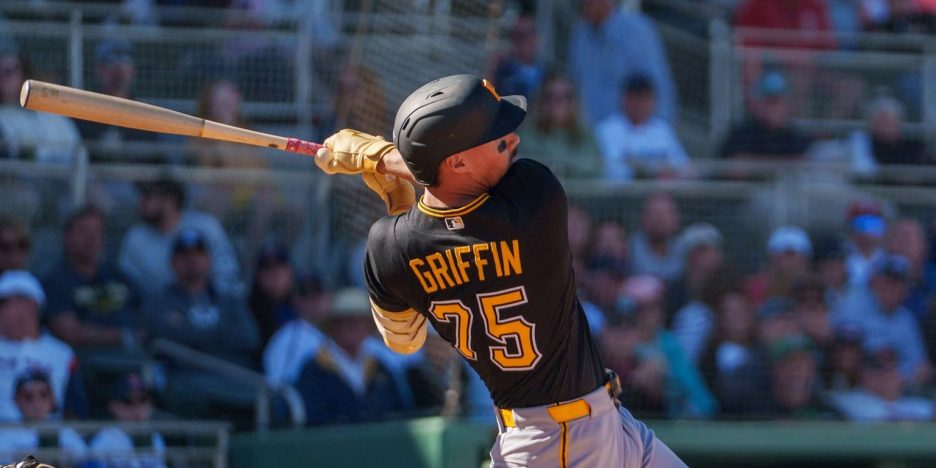
“I’ve really enjoyed playing in New York,” said the Polar Bear, whose Oriole introduction included a large stuffed white polar bear on the table to his right and a brief struggle to button up his new Orioles jersey properly. He took number 25 only because his long-familiar number 20 has been long, long retired by the Orioles in honour of Hall of Famer Frank Robinson.

“I’m very gracious for that opportunity,” continued Alonso, who may have landed himself the Yogi Berra Malapropriety Award with that phrasing. “There’s some amazing people over there. Whether it be the locker room staff, clubbies, it was phenomenal. I really enjoyed my time. But this right here, this organization, this city, I’m so proud to call it home.” Double owitch.

“Losing franchise stalwarts Díaz and Alonso on back-to-back days is something a Mets fan might have expected from the Wilpon ownership—only with some ridiculous positive spin on how the team will be better for it,” said The Athletic‘s Ken Rosenthal.

Now, fans might wonder if Fred and Jeff Wilpon are practicing voodoo on David Stearns and owner Steve Cohen.

Stearns and Cohen have not said much of anything. That’s to be expected as they start to clean up the mess they’ve created, the baseball equivalent of a flooded kitchen floor. But they had better provide some answers quickly, and with actions, not words.

Maybe reuniting with Stearns gives Williams a clean shot at a big bounceback following a testy 2025 in Yankee pinstripes. Maybe bringing aging, injury-recovering Marcus Semien aboard—at the cost of another fan favourite, Brandon Nimmo, going to the Rangers—helps the Mets begin the defensive remaking Stearns has sung as a mantra. Maybe adding Jorge Polanco on a two-year deal helps likewise, especially since Polanco can play first as well as second with some pop at the plate. (He hit 26 homers last year.)

Alonso solves a huge portion of half the Orioles’s issues. They need pitching upgrades and  the best Alonso can do about that is help give that staff runs to work with. But they’re getting a class act who seems unable to wait to have a clubhouse impact as well as a scoreboard one.

“How I’m going to help is share my experience, and pretty much share whatever has helped me kind of step and rise to the occasion,” said Alonso, who has a sterling postseason resumé including an intergalactic moment or two. “I want to be an open book, pretty much to everyone in the clubhouse. For me, I take pride in that. Not only do I love performing, but ultimately I love forging great relationships and being a great teammate.”

That sounds like just the kind of guy the Mets should have wanted to keep.

Published originally at Sports Central.

Kent stands alone, for now

Jeff Kent

Jeff Kent, now a Hall of Fame second baseman, during the height of his career, as a Giant.

In 1999, during which he earned his first All-Star selection, Jeff Kent told Sports Illustrated  writer Franz Lidz that, growing up, “I never watched baseball on TV. It’s slow and boring. I’m not a fan. Never was.” Well.

He played the game as a boy growing up in southern California, but it seems to have been a joyless activity. That, in turn, seems to have been the product of parenting in which his father, a motorcycle policeman of stern perfectionism, who took his children to Dodgers games, grounded his son similarly.

“I’d go 3-for-4,” he told Lidz, “and he’d chastise me for the out. I’d throw a one-hitter, and he’d tell me I could have gotten the hitter on a curve.” Reading that, you suspect that, if the boy Kent had broken his league’s home run record, the father would have harped and carped on the ones he missed. If he’d pitched a perfect game, perhaps Pop would have snarked about the ones the boy didn’t get over the plate.

Will Kent take his election to the Hall of Fame by the Contemporary Baseball Era Committee as a vindicating rebuke to such dubious parenting? Hard to say unless you can read his mind. More than one profile has revealed Kent as a high school player with both an “attitude problem” and a discomfort being sandwiched between a coach not unlike his father and teammates who itched for him to stand up for them.

Marry his father’s negativism to his apparently unpleasurable high school playing experience, and perhaps you get a better sense of how Kent came by a personality that either unnerved or annoyed teammates and reporters. It might have pained him to consider, but Kent had experienced joyless parental judgmentalism comparable to his eventual teammate/rival Barry Bonds. Bonds grew up having similar skirmishes with his own haunted, major league playing father. It only began with coming home from school with B’s on his report cards and hearing Pop’s retort, “B’s ain’t A’s, boy.”

Maybe that’s why Kent would earn a too-quick reputation as a malcontent after he was dealt as a rookie to the Mets (for star pitcher David Cone) in August 1992. His new teammates treated him to a rookie-hazing prank; he reacted with fury. From the Mets to the Indians to the Giants, Kent seemed to have a reputation as a solid enough player and something of a head case.

As a Giant, he launched a six-season run in which he’d hit at least 20 home runs and drive at least 100 runs home. He owed it to two things: 1) He picked up on lifting his hands a little more at the plate from Hall of Fame designated hitter Edgar Martinez; and, 2) he had Bonds’s protection in the lineup batting ahead of him. Come 2002, come highs and lows.

The lows began in spring training, when he tried claiming that he’d injured himself washing his truck but it turned out he’d done it popping motorcycle wheelies. They continued when a scuffle with Bonds prompted him to tell manager Dusty Baker he wanted off the Giants. The highs included a career-high 37 home runs, and a two-bomb World Series Game Five against the ultimately triumphant Angels. He also took a stand against actual or alleged performance-enhancing substances, admirably.

He went from there to have good seasons with the Astros. (And shine in Game Five of the 2004 National League Championship Series, a three-run bomb off Cardinals closer Jason Isringhausen.) From there, a two-year deal with his hometown Dodgers that turned into an extension. He’d have his moments again, but the injuries began taking a toll. He found himself questioning how professional some of his younger teammates truly were; his final postseason saw him limited to the bench after mid-season knee surgery.

When he elected to retire rather than try one more season in 2008, Kent let his vulnerability show. He also showed himself, as I’ve written before, a man who learned to say hello when it was time to say goodbye. “I’ve learned to love and appreciate the fans,” he said in an emotional announcement, “and I’ve learned to love and appreciate the Jeff Kent haters out there, too.”

I’m thankful for those people even more than the fans who gave me a hug every day, because those people motivate you . . . I leave this game proud that I have treated it with the utmost respect . . . I have tried to carry on a legacy of winning wherever I have gone. Any integrity that I have had in this game is something that I’m very, very proud of. I believe I played this game right, and I believe I’m leaving this game right.

His Hall of Fame case seemed almost entirely in his bat and his counting statistics: the most home runs by any expansion-era second baseman, among other things. (His black ink is limited to leading his league twice in sacrifice flies.) But would you believe that, by my Real Batting Average metric (total bases + walks + intentional walks + sacrifice flies + hit by pitches, divided by plate appearances), Kent is the best batter among the post-World War II/post-integration/night-ball era second basemen?

That’s batter, not hitter.

Mazeroski’s is the lowest RBA among such second basemen, but he’s in the Hall of Fame because he’s still the single most run-preventive second baseman who ever played the major league game. Kent’s defensive statistics aren’t even in the same quadrant: he was 52 defensive runs below his league average. It cost him plentiful wins above a replacement-level player (WAR) and moved him outside the top twenty second basemen of all as Baseball Reference sees him.

Kent dropped off the Baseball Writers Association of America ballot after ten years in which he’d climbed steadily to 46.5 percent of the vote. The Contemporary Era Committee elected him to Cooperstown with fourteen out of sixteen possible votes, the only committee candidate to make it.

“The time had gone by, and you just leave it alone, and I left it alone,” Kent told a conference call after the committee result came. “I loved the game, and everything I gave to the game I left there on the field. This moment today, over the last few days, I was absolutely unprepared. Emotionally unstable.”

The guy who once admitted motivation from his critics while trying to exist in his own isolated baseball world now admitted that achieving the game’s highest honour caught him off guard and vulnerable. It’s enough to make you wish that Kent could have allowed this side of himself more room to breathe at the plate, at second base, in the clubhouse.

Of the rest of the Contemporary Era Committee candidates, Bonds plus Roger Clemens, Gary Sheffield, and Fernando Valenzuela, made fewer than five ballots. Meaning the Hall of Fame’s new protocol makes them ineligible to return the next time the Contemporary Era Committee considers post-1980 players. They can return to that committee’s ballot after that, but another five-or-less-votes shortfall removes them from Hall consideration permanently.

But it also means Carlos Delgado, Don Mattingly, and Dale Murphy can return on the next Contemporary Era Committee ballot, in 2028.

Kent wouldn’t commit to whether Bonds deserved a berth in Cooperstown, a stance he’s maintained from the moment each first became Hall eligible. “Barry was a good teammate of mine. He was a guy that I motivated and pushed,” Kent told the call.

We knocked heads a little bit. He was a guy that motivated me at times, in frustration, in love, at times both. Barry was one of the best players I ever saw play the game, amazing. For me, I’ve always said that. I’ve always avoided the specific answer you’re looking for, because I don’t have one. I don’t. I’m not a voter.

Time mellows even the harshest of rivals often enough.

A-Rod’s right about Coupmissioner Selig in Cooperstown

Bud Selig

Maybe one of Selig’s few truly good deeds was the Show-wide retirement of number 42.

I hate to admit it, but Álex Rodríguez is right. There is a mountain of hypocrisy in former commissioner Bud Selig’s membership in the Hall of Fame. Especially when you marry it to A-Rod’s, Barry Bonds’s, Roger Clemens’s, and Mark McGwire’s lack of Hall memberships.

If the Baseball Writers Association of America is keeping Rodríguez, Bonds, Clemens, and McGwire (among others) out of Cooperstown for their actual or alleged use of actual or alleged performance-enhancing substances, there should have been no reason why that Today’s Game Committee elected their prime enabler.

Have you ever read Coupmissioner Selig’s Hall of Fame plaque? It’s a minor masterpiece of a mealymouthful. What was then the Today’s Game Committee that elected the Brewers owner-turned-coupmissioner should have been ashamed.

It only begins with omitting that his coupmmissionership began with the “acting” tag after he and enough of his fellow owners of the time strong-armed Commissioner Fay Vincent into resigning before they could fire him.

From 1990 through 1992, you had to be deaf, dumb, blind, and limbness not to know that Vincent’s execution papers began with his futile but full-bodied efforts at making owners and players partners instead of combatants. The Lords of Baseball were anything but thrilled at being seen as a little bit lower than lords.

The bad news was limited. Unfortunately for Vincent, the owners weren’t amused when a) he refused to surrender his authority when it came to labor matters; and, b) he actually played fair (the horror) about expansion spoils and division/league realignment. Then drug-addicted, self-destructive relief pitcher Steve Howe—whom Vincent magnanimously allowed an umpteenth chance—followed a magnificent comeback with the Yankees by stepping in it yet again.

After which Vincent himself stepped in it. Howe’s relapse prompted three Yankee personnel including manager Buck Showalter into facing an official hearing and character witnessing for the drug-battling righthander. Vincent tried strong-arming the Yankee trio into changing that character witnessing. It took press outrage to get Vincent to back off, but it gave those Lords so predisposed room to denounce as dictatorial a man who normally preferred discussion, debate, and reason.

“Formally named [commissioner] by unanimous vote of all 30 owners in 1998,” Coupmissioner Selig’s plaque continues. That’s like handing Kim Jong-un a loving cup for stable, unanimously-acclaimed leadership but forgetting to mention the thousands of bodies whose owners’s extermination made it so.

“Presided over an era of vast change to the game on the field while extending its breadth and depth off it.” So the dilution of championship, the advent of the wild card era with three-division leagues, the birth of regular-season interleague play were just think-nothing-of-it participation trophymongering hardly worth losing your sleep over, eh?

“Fostered an unprecedented stretch of labour peace . . . ” The achievement of which took the season-killing, World Series-ditching, near-ruinous 1994 players’ strike that should have been called an owners’ strike for the manner in which Coupmissioner Selig and his allies all but forced. The only thing the 1994 strike proved, other than how easy it was to manipulate the sporting press of the time into swallowing the owners’ side without investigating the recipe, was that no former owner should ever be allowed to hold the office Selig helped to besmirch.

So much for “acting” commissioner. It’s alleged that the owners spent six years searching for a permanent commissioner. Then, they decided to just remove “acting” from Coupmissioner Selig’s title.

“Under his leadership, umpiring was centralised and replay review was established” Umpiring became worse enough after its centralisation that replay review, which should have been established well before, became all but mandatory.

What the plaque also leaves off, of course, is that Coupmissioner Selig and enough of his fellow owners looked the other way long enough as actual or alleged performance-enhancing substances poured into the game. Looked the other way and never once sought to investigate the whys. Looked the other way until Capitol Hill decided to fashion player perp walks and threaten to spank the game’s bottom unless it moved. Fast.

Did some players take the actual/alleged PEDs up simply believing others doing it meant they needed to catch up, regardless of whether their chosen substances actually did enable that? Of course they did. Did other players take them up believing they’d help faster injury recovery? Of course they did. (Yes, you can look it up.)

Did Selig and his fellow owners make even a cursory effort to determine who did what and why before Capitol Hill roared? Did they make even a cursory effort to investigate when enough players did speak about the injury reasons they took up the stuff? No to both.

Enough of the players who tried the substances were and still are pilloried, with or without real, hard evidence. The coupmmissioner who averted his gaze before Crapola Hill forced his and the owners’ hands into beginning and securing testing has a plaque in Cooperstown. A plaque that also looks the other way at his role in the owners’ flagrant salary-suppressing collusion of the mid-to-late 1980s that ended up costing them $280 million.

The should-be Hall of Famer who was caught red-handed indulging in Biogenesis-provided substances, and threatened to sue baseball’s heads off over it before accepting his precedent-setting suspension, has been a changed man since that suspension ended.

“Once I put myself in therapy, and the year suspension was two years into that, and it took me, and I’m still in therapy,” A-Rod told Stephen A. Smith. “It’s important to explain to the young people, not just to share, hey, here are my great stats and my home runs, but here’s how I screwed up.”

He even compared himself to Derek Jeter, the Hall of Fame shortstop who was once one of his best friends before an ill-considered remark sullied that friendship and his arrival to the Yankees compelled a reconciliation strained at first.

“Not only the ego but the lack of self-awareness and understanding my place in the clubhouse, understanding my place in the world,” A-Rod went on. “You know, the truth is, Derek is a phenomenal guy. I first met Derek when he was seventeen. I think I’m catching up to Derek at seventeen, now at fifty. Now we’re pretty much on the same level at seventeen. I mean, Derek’s never made a mistake in his life, and I’ve made every mistake in the book. And I love myself for that. I love myself for the good, the bad and the ugly.”

I’ve looked around. Rodríguez doesn’t have a book for sale.

Maybe it’s time to think about enshrining a man who really did try to save baseball from itself, the one who made only one or two mistakes trying. The man about whom Thomas Boswell once wrote that he, “perhaps more than any other commissioner, took his mandate seriously.”

He came to believe that he really should try to act independently in the “best interests of baseball.” Like [predecessor and best friend A. Bartlett] Giamatti, he viewed baseball as an institution that was both indestructibly strong and constantly vulnerable. Nobody could kill it. But plenty of people, from Pete Rose to narrow-minded, dollar-obsessed owners, could tarnish it.

Maybe we can’t purge Coupmissioner Selig from Cooperstown. But we ought to think hard about prodding to have Vincent enshrined. His plaque won’t look half as ill-placed.

First published at Sports Central.

BBWAA Hall ballot: Reviewing the holdovers

Carlos Beltran

Will this be Carlos Beltrán’s year? Or will he have to serve Astrogate penance a bit longer?

The Baseball Writers Association of America’s Hall of Fame ballot for 2026 includes fifteen return engagements. One of them remains a bit troublesome because of something foolish and illegal by baseball’s rules he did in his final season as a player. His voting support has increased since his first turn on the BBWAA ballot. Will all be forgiven this time?

I’ll address the ballot newcomers soon enough. For now, the holdovers . . .

Carlos Beltrán

Before the exposure of the Astro Intelligence Agency’s illegal, off-field-based, electronic sign-stealing operation of 2017-18, Carlos Beltrán figured to have ended his playing career (as the Astros’ 2017 designated hitter) looking forward to accepting a plaque in Cooperstown. That and managing in the major leagues.

The number-nine center fielder of all time (according to Baseball-Reference via Jay Jaffe) who’d been respected as a student of the game and managerial material in the making found himself having to yield the bridge of the Mets (for whom he’d once starred as a player)—before he had the chance even to manage a spring training exhibition.

Though Commissioner Rob Manfred handed all 2017-18 Astro players immunity from discipline in return for spilling AIA deets, Beltrán was the only player Manfred singled out by name in his Astrogate report. It was Beltrán who suggested the Astros needed to “upgrade” from mere replay room reconnaissance, prompting then-bench coach Alex Cora to arrange the long-infamous real-time camera feed to an extra clubhouse monitor for sign deciphering and the long-infamous trash can transmissions.

That was despite Manfred’s September 2017 warning against using replay room reconnaissance and other such off-field chicanery, after the Red Sox (eventually using their own Rogue Sox Replay Room Reconnaissance in 2018 regardless) and the Yankees were caught trying a few tricks from the dugouts.

Beltrán landed the Mets’ managing job twelve days before Ken Rosenthal and Evan Drellich (in The Athletic) dropped the first full Astrogate revelation in November 2019. Within 72 hours of Manfred’s January 2020 report, all three incumbent managers named in the Rosenthal-Drellich exposure—Beltrán, Cora (who managed the 2018 Red Sox to a World Series championship), and the Astros’ A.J. Hinch (who acted feebly at best when catching onto his AIA cheaters)—were out.

Hinch was fired by Astros owner Jim Crane in hand with general manager Jeff Luhnow, but after sitting out his Manfred-imposed season’s suspension and some very contrite interviews, he found new life on the Tigers’ bridge. Cora sat out his Manfred-imposed season’s suspension, gave a few interviews in which he expressed genuine remorse for his Astrogate role, and was brought back to manage the Red Sox.

Beltrán said little about his Astrogate culpability until he returned to baseball as an analyst for the Yankees’ YES cable television network. There, he owned up in an interview with YES colleague Michael Kay:

Looking back now—yes, we did cross the line. I made my statement about what happened in 2017, and I apologized . . . This happened in such an organic way for ourselves. We all did what we did. Looking back today, we were wrong. I wish I would have asked more questions about what we were doing, I wish the organization would have said to us, “What you guys are doing, we need to stop this.” Nobody really said anything—we’re winning.

Seemingly, Beltrán either didn’t know or chose not to know that “the organisation” as headed by Luhnow was in it up to its kishkes, having deployed the Codebreaker sign-stealing algorithim despite its creator’s warning that it was legal to use only before or after games but not during.

Had Astrogate never happened, Beltrán would have been a very likely first-ballot Hall of Famer. He played twenty seasons, and his peak with the Royals, the Astros (the first time, helping them reach a postseason with his second-half term there), the Mets (helping them to the 2006 postseason), and the Cardinals (two postseasons) was All-Star caliber or better. (He was actually a nine-time All-Star.)

He earned 67.6 wins above replacement-level (WAR) from his first full Kansas City season through the second of two with the Cardinals. That was despite missing significant time due to injuries in his final Met seasons. “Had he not missed substantial portions of three seasons, he might well have reached 3,000 hits,” Jay Jaffe (The Cooperstown Casebook) has written, “but even as it is, he put up impressive, Cooperstown-caliber career numbers. Not only is he one of just eight players with 300 home runs and 300 stolen bases, but he also owns the highest stolen base success rate (86.4%) of any player with at least 200 attempts.”

Beltrán is the number seven center fielder all-time for run prevention above his league average with +104. He was rangy, smart on the fielding lanes, and was a top of the line reader of batted balls from his position before Father Time finally began to exact a penalty.

Until Astrogate, of course, Beltrán had only one genuine black mark against him, especially so far as Met fans were concerned: frozen solid by an Adam Wainwright curve ball for strike three called—with the bases loaded, the Mets down two runs, and the pennant on the line in the bottom of the ninth—in Game Seven of the 2006 National League Championship Series.

You know something? It happens. Even to Hall of Famers. Beltrán wasn’t the first superstar to get himself tied up at the last minute of that critical a postseason set, and he won’t be the last. That’s not enough to damage a man’s Hall case. No eleventh-hour shortfall should have been. Not even for Babe Ruth.

You want to continue condemning Beltrán for that? How about The Big Fella getting himself caught stealing on a likely busted run-and-hit play to end the 1926 World Series in the Cardinals’ favour—with Bob Meusel at the plate and Hall of Famer Lou Gehrig on deck?

How about Willie McCovey—with second and third, two out, and the Giants down only 1-0—hitting a howitzer shot speared by Bobby Richardson to end the 1962 Series in the Yankees’ favour instead of sending the tying and maybe winning runs home?

How about Carl Yastrzemski fouling out with two out and the Red Sox down a single run to end the 1975 Series in the Reds’ favour?

How about Mariano Rivera surrendering a Series-losing base hit to Luis Gonzalez in 2001 or—after Dave Roberts stole second off a leadoff walk—an RBI single to Bill Mueller to tie the game at four when the Yankees were only three outs from a 2004 ALCS sweep?

None of those fatalities kept Ruth, McCovey, Yastrzemski, or The Mariano out of Cooperstown when their time eventually came. Getting frozen solid by a great pitch shouldn’t keep Beltrán out, either.

But it’s entirely realistic to suggest that, had Beltrán not gotten himself into the thick of the 21st Century’s worst major league cheating scandal, in his final season as a player, he’d probably be looking at unvarnished, uncontroversial first-ballot Hall of Fame election. Right now, we don’t know how many Hall-voting BBWAA writers will hold it against him enough to make him wait until after his third ballot appearance—or more.

Yes to anyone else?

Andruw Jones

To beat us, you had to go through the Jones boys.—Hall of Famer Chipper Jones on his Braves teammate Andruw Jones.

Andruw Jones—He’s the most run-preventive center fielder who ever played the game. He was a whale of a hitter as a Brave, too; injuries (and the sour attitude that emanated from them) once he left Atlanta turned him into a sadly declining shell of his former self. But those great Braves seasons should have been more than enough to enshrine him long before this. Yes.

Chase Utley—Maybe the most underrated middle infielder of his time. Deserved several Gold Gloves that he didn’t win. Hit with brains as well as skill and handled himself on the bases even more so. He was worth almost twice as many defensive runs as his Philadelphia double play partner Jimmy Rollins. His peak value is above the Hall standard; his career value only slightly below it, but Utley does deserve the honour. Yes.

The Rest of the Holdovers

Bobby Abreu—He’s a lot closer to being a bona fide Hall of Famer than you think or remember. He was a disciplined five-tooler and few of his time were as good as he was for wearing pitchers down. And he was a good, above-average defensive right fielder. But I wouldn’t be surprised if he doesn’t remain on the BBWAA ballot.

If not, a future Contemporary Era Committee just might give Abreu a review. His peak WAR is just too close to the Hall of Fame peak average. Maybe.

Mark Buehrle—He was a good pitcher who touched greatness occasionally; a no-hitter and a perfect game prove that. He used a deft off-speed mix and ground balls to thrive. He was also an excellent fielder. But the traditional and advanced numbers don’t get Buehrle through the gate, and his postseason record doesn’t help him. Neither do four league leaderships in most hits surrendered.

The number 79 starting pitcher overall, and still beloved on Chicago’s South Side, Buehrle still might linger on the ballot awhile. No.

Félix Hernández–King Felix pushed the door open that said a pitcher’s won-lost record was probably the least sensible way to judge his work. His heavy early workload took a toll on him; his questionable conditioning caught up to him his final four seasons.

He was a terrific pitcher for a good while, the best in the American League for five seasons. But it wasn’t enough to make him a peak value case, and losing both his fastball and his deadly changeup hurt too much. No.

Torii Hunter—He was good enough to play nineteen seasons. He was a decent hitter but not as run preventive a center field defender as you might have guessed. (Hunter earned nine Gold Gloves the last eight of which may have been off the rep he established in his one plus-run prevention defensive season.)

He’s also remembered as a good clubhouse guy whom teams almost couldn’t wait to add when he was available. But as employable as he was for nineteen years, he’s short enough of a plaque. No.

Dustin Pedroia—Career killed by injury, taking him out before he could finish solidifying the Hall case he was certainly making before that. P.S. You can also stop blaming Manny Machado for the end; by his own admission, Pedroia was foolish enough to try playing through that one and put paid to his career before it should have happened.

Regardless, he’s still the best second baseman in the history of the Red Sox, even if he’s barely the number 20 of all. Maybe.

Andy Pettitte—Jaffe says it better: Pettitte was a plow horse, not a race horse: [B]ased upon both traditional and advanced metrics, Pettitte would represent a rather weak choice for the Hall of Fame—and I say that as somebody who had a considerable emotional investment in his career as a fan and would like nothing more than to find a rationale for electing him . . . although he’s probably not a fit for Cooperstown, flags fly forever, and he’ll always be fondly remembered in the BronxNo.

Manny Ramirez—Pettitte’s hGH dalliance (to recover from an elbow injury) happened during the so-called Wild West Era, when the game and the world looked the other way. (So did the reputed indulgences of Barry Bonds and Roger Clemens.) Manny Being Manny included two failed tests for actual/alleged performance-enhancing substances after baseball started testing in earnest.

How foolish could you get? Not even at gunpoint or under presidential threat, whichever comes first.

Álex Rodríguez—Dubious as MLB’s handling of Biogenesis probably was, that didn’t mitigate A-Rod’s using their wares or threats to sue baseball to death to escape punishment, until he was slapped with that massive suspension. He’s rehabilitated his public image to a certain extent since, but I’m not convinced that’s enough to clear his way to Cooperstown yet. P.S. His ranking as a shortstop is almost entirely in his bat; Ozzie Smith he wasn’t. No.

Francisco Rodríguez—From his embryonic supersplash in the 2002 postseason through the rest of his Angels years, K-Rod looked like the very essence of a Hall of Fame reliever who wasn’t named Mariano Rivera, and it wasn’t just his saves count, either.

After he left the Angels, his career was stained when he became involved in a couple of unsavoury domestic violence incidents, one of which (as a Met) injured his thumb when he punched his girlfriend’s father repeatedly, and another (as a Brewer) in which he attacked his then-fiancée. (Case dismissed when she and a household staff member who saw the incident returned to Venezuela, according to numerous reports.)

After his major league life faded, he tried coming back via the independent and Mexican leagues before calling it a career. It’s a question of whether his domestic violence issues will block him, the way they may keep blocking Omar Vizquel. (Andruw Jones pleaded guilty without fuss, paid a hefty fine, and no other such incident seems known of him.) For me, being multiple, they do. No.

Jimmy Rollins—The goods: solid shortstop defense and speed on the bases. The bads: a 95 OPS+; a .330 on-base percentage that isn’t quite what you should find in a Hall of Fame leadoff hitter; and, his basepath larceny didn’t make him a Lou Brock Hall of Fame lookalike. Not to mention that his +38 defensive runs at shortstop are 53rd all-time.

You loved watching him play in his prime even if he was trying to beat you, though, and he was one of those trash talkers who made you laugh instead of scream. But still. Not quite.

Omar Vizquel–He may have been the outstanding defense-first shortstop of the 1990s, but 1) his highlight reels in the advent of widespread cable television masked that he wasn’t quite as good defensively as Cal Ripken, Jr., never mind Ozzie Smith; and, 2) splendid as his defense was, Vizquel still shakes out as the number 42 shortstop ever.

That’s not a Hall of Famer, and that’s not counting subsequent issues of domestic violence and sexual harassment that may keep him unemployed in the game. No.

David Wright—He’s the Mets’s version of Don Mattingly and Dale Murphy: A character-to-burn guy whose Hall of Fame case was snuffed by injuries. He was the heart and soul of the Mets before the injuries began blocking him, but they’ll never forget that 2015 World Series home run that surely qualifies as the biggest blast of his past.

Yes, Wright deserved better. His uniform number retirement should amplify that. No, with regret.

Some portions of this essay—first published by Sports Central—have been published previously.

The microbet scandal: Don’t let it get to Congress

Darren McGavin

Darren McGavin, in The Natural, as Gus Sands, the bookie who boasted a) of microbets decades before they turned into a real-life baseball scandal; and, b) claimed his glass eye (with its iris larger than his right eye) was his “Magic Eye” which saw all.

When freshly-resurrected slugger Roy Hobbs was introduced to jaded bookmaker Gus Sands, in the novel and film The Natural, some slightly awkward conversation turned to Hobbs’s sterling doubleheader performance: five hits in the opener, four in the nightcap. “That’ll cost me a pretty penny,” Sands said. “I was betting against you today, slugger.”

Hobbs thought it meant against his team, the New York Knights, but Sands corrected him, saying, “Just you.” This surprised Hobbs. “Didn’t know you bet on any special player,” he said.

“On anybody and anything,” Sands continued. “We bet on strikes, balls, hits, runs, innings, and full games. If a good team plays a lousy team we will bet on the spread of runs. We cover anything anyone wants to bet on.” Sands’s example was a World Series game during which he bet $100,000 on three pitched balls.

The film showed the late Robert Redford looking somewhere between bemused and befuddled. “How’d you make out on that?” he asked. “Didn’t,” Darren McGavin’s smug Sands replied with a fatalistic smile out of which he could and did shift on the proverbial dime.

“But the next week,” Sands perked up, “I ruined the guy in a different deal.” Pausing for a sigh somewhere between extravagant and feigned, Sands went on. “That’s the way it goes,” he began. “Sometimes you win, sometimes you don’t. Today I lost on you. Some other time, I’ll clean up double.”

How would he do that? Hobbs inquired. “When you’re not hitting so good.” How would he know when? “The Magic Eye,” Sands replied, pointing to the glass eye with the larger iris. “It sees all.”

From there, the novel had it, Hobbs and Sands wagered on a few small things that led to Hobbs performing some impromptu magic tricks that amused their restaurant show’s MC, befuddled the sports columnist who’d introduced his running mate Sands to Hobbs in the first place, and left Sands himself somewhere between embarrased and infuriated.

Bernard Malamud may have known the wherefores of sports bookmaking in and before his time, even whether a Gus Sands would describe his game-within-the-game bets as microbets. He couldn’t have predicted that betting on anybody and anything, including individual pitches, would ooze into the scandal now bedeviling a major league baseball team and the sport’s governors alike.

If only this could be resolved by yanking tablecloths out from under undisturbed table settings or tweaking a snide bookmaker’s nose to produce several silver coins (tricks  Malamud described Hobbs as pulling upon Sands before their evening ended).

MLB went into its marketing relationships with assorted legal gambling businesses certain enough that it was only to reach sporting fans. It didn’t necessarily believe that the relationship would lure players or other team personnel into cooperative gambling behaviours that might or might not have a direct effect upon a game itself.

The disabusement began externally if no less dismayingly, when there came to light over a few seasons various players receiving death threats over certain game outcomes. It wasn’t just frustrated fans pouring their grief out aboard social media, it was frustrated fan bettors ready to horsewhip or hacksaw this or that player for costing them assorted volumes of money.

That was serious enough. But we have had Tucupita Marcano, Padres infielder, banished for life last year for betting on major league games with or without his own team. We have had four other players (Michael Kelly, Jay Groome, José Rodríguez, Andrew Saalfrank) suspended for a year apiece for betting on major league games in which they weren’t involved.

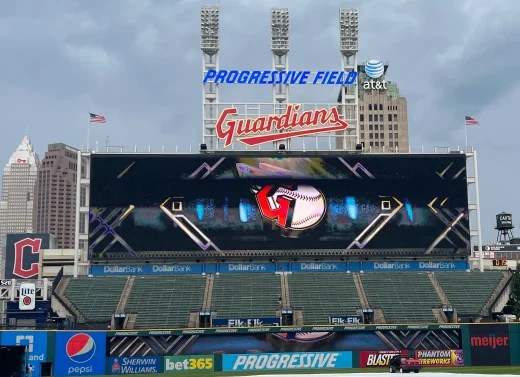
And now we have Guardians pitchers Luis Ortiz and Emmanuel Clase under scrutiny, fire, and arrest for pitch rigging the better to enrich gamblers betting Sands-like on particular pitches. Ortiz was arraigned in federal court in Brooklyn over a week ago; Clase surrendered for arraignment last Thursday. The Guardians are understandably not entirely certain how to proceed from there.

Both pitchers were lost to them last July when the pitch rigging came to light and they were placed on administrative leave. It’s not entirely untoward to suspect that one critical reason Guards manager Stephen Vogt earned a second straigth Manager of the Year award was that he succeeded in keeping his team on message and striking to snatch the American League Central title in spite of the pall created by losing two key pitchers for reasons not associated with the injured list.

“We arguably played our best baseball after they left,” said Guards general manager Chris Antonetti last week. “It’s one of the things I’m most proud of our team for.” Which is understandable thinking and magnanimous praise from the man who also admitted, not long after Ortiz and Clase were drydocked, “In the GM manual that I read, they left these chapters blank.”

Ortiz and Clase are accused of enabling gamblers to bet on certain pitches for what totaled six-figure dollar amounts and of receiving kickbacks for their parts in the plots. Since their arraignments, MLB has arranged with a good number of its authorised sports book advertisers to restrict gamblers’ microbets to $200 per and bar making such bets parts of parlays.

It may not be enough. Not since Marcano. Not since Groome, Kelly, Rodríguez, and Saalfrank. Not since Ortiz and Clase.

However tricky was the original idea of baseball taking ad revenues from legal sports books, we had the knowledge that it was strictly for the fans and that players, coaches, managers, front office personnel, clubhouse workers, and other team people were still governed by Rule 21. Governed by it, and wholly obedient to it.

“Why do we need the ability to bet on every pitch?” asked The Athletic‘s Jason Lloyd, who answered promptly. “The correct answer is because of how much revenue prop bets generate, but abolishing the concept of micro-bets in sports is the only true way to eliminate the uncertainty of whether a player is on the take.”

No argument from über-agent Scott Boras, who waxed affirmative on banning microbets when he wasn’t going Dr. Seuss discussing this or that man among his major league clientele at the general managers’ meetings in Las Vegas last week.

“You have to remove those prop bets to make sure the integrity of the players isn’t questioned,” he told Lloyd. “There’s going to be all forms of performance questions given now to pitchers when they throw certain pitches to the back of the screen or situationally, and really, we don’t want any part of it. We don’t want the players’ integrity to ever be questioned.”

He might have added that we don’t want players’ integrity being questioned when they offer at certain pitches, when they don’t, what type of pitches they’re hankering to hack, what type they’ll pass upon, that kind of thing.

Maybe it’s time at last for baseball to rethink the soundness of allowing even legal sports books to advertise around the ballpark or on the baseball air. Rethink it before Capitol Hill, so often interested more in perp walks than proper policymaking, goes from merely demanding MLB “demonstrate how it is meeting its responsibility to safeguard America’s pastime” to ordering MLB onto such a perp walk.

First published by Sports-Central.