The forecast is in

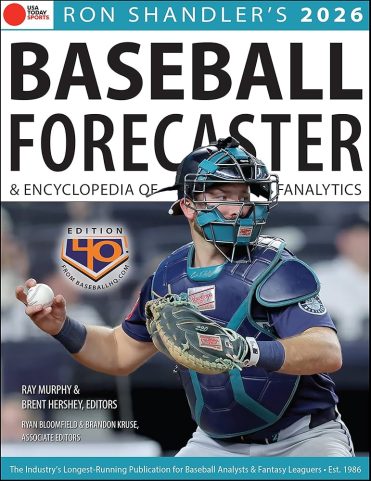
Yes, this year’s cover boy is Cal Raleigh. (And, yes, alas, Raleigh still wears the hideous nickname “the Big Dumper.”)

Well. Spring training is entering full swing, if you’ll pardon the expression. We like to think it’s as the poets and the pundits alike have enunciated time and again, the early acts producing the new birth, of spring by the calendar and by baseball season.

We’d rather not be sobered up until the first disgruntled fan of the White Sox, the Reds, the Rockies, the Angels, the Marlins, or the Mets pronounces the season to come lost upon one bad inning . . . on Opening Day.

The editors of Ron Shandler’s 2026 Baseball Forecaster & Encyclopedia of Fanalytics, alas, hew to the truth that facts don’t care about your feelings. (“Fanalytics” is their compound of fantasy and analytics.) They also uphold the truth that the only crime in information behind, beyond, and beneath the surfaces is rejecting it.

Whether you’re a fan, fantasy ballplayer, sportswriter, player, coach, manager, player agent, or front office muckety-muck, ignorance isn’t bliss.

This fortieth edition of Baseball Forecaster (Mr. Shandler birthed it the last year his beloved Mets won a World Series) contains what the old and very much missed Elias Baseball Analyst once contained: the most important information for Americans to master this side of the Declaration of Independence, the Constitution, and The Federalist Papers.

Shandler himself fires the opening high hard one after a brief anti-soliloquy regarding “Casey at the Bat” in which Mighty Casey’s descendants remain ascendant but his conqueror may be one pitch from disaster. Not the kind that flies over the fence, either: Oh here where hearts are heavy, and fans are homeward bound/The infield shouts in triumph, but there’s silence from the mound/The pitcher grabs his elbow, his face white as a ghost/Casey may have struck out, but our ace’s arm is toast.

Just in case you hadn’t taken the point, deciding Mr. Shandler tastes best when served up on the short end of a long stick, he has the temerity to point out that the number of major league pitchers who can throw past 95 miles per hour has risen from 64 in 2014 to 163 in 2024. And, the number of days pitchers spent on injured lists rose from 20,014 in 2014 to 32,250 in 2024.

Concurrently, Mr. Shandler obseves, the eight full seasons ending last October “have been an unprecedented era of record-breaking offensive performances. The new rules introduced in 2023—pitch clock, shift restrictions, larger bases, etc.—amped things up, but you can detect a subtle tipping point when hitters started making headlines even earlier.” (Italics in the original.)

The more detailed timeline Mr. Shandler sketches only begins with the team then known as the Indians including pitchers who set a new single-season major league team strikeout record in 2014. (The number: 1,450; or, eight more pitching strikeouts than that year’s Astros hitters recorded at the plate.)

Three years later, the Show set a single-season home run record. (6,105.) One year after that, major league batters struck out more than they hit safely. Don’t faint; the difference between the hits and the strikeouts was . . . 189. Or, three strikeouts fewer than ill-fated Orioles first baseman Chris Davis had at the plate that season.

One year after that, in 2019, the entire Show set a new single-season home run record (6,776) and Pete Alonso, the National League’s Rookie of the Year, set the rookie home run record. (53.) Two years later, Shohei Ohtani went nuclear: 46 home runs at the plate; a 3.18 ERA with 156 strikeouts on the mound. (Ohtani also led the Show with eight triples.)

What happened in the four seasons to follow? 2022: Aaron Judge broke Roger Maris’s American League home run record. (62.) 2023: Ronald Acuña, Jr. delivered baseball’s first 40/70 (home runs/stolen bases) season. 2024: Ohtani delivered its first 50/50 season and was the fastest to hit 40/40 en route. 2025: Cal Raleigh’s 60 home runs set single-season records for catchers (he only hit 49 while in the game as a catcher, but it was still enough to eclipse Hall of Famer Johnny Bench) and switch-hitters.

But 2025 didn’t stop there, either. Ohtani became only the sixth with back-to-back 50+ home run seasons. (Mr. Shandler notes four of the other five did it during the era of actual or alleged performance-enhancing substances and the fifth was a fossil named Ruth.) The year was also the first without no-hitters since 2005, and the Mets and the Braves set new Show records for using the most pitchers. (46.)

“[C]onsidering all [that],” Mr. Shandler writes,

I can’t escape one unavoidable conclusion:

MLB must view the destruction of pitchers’ arms as acceptable collateral damage for boosting offense and fan-friendly record chases. Pitchers are fungible, like the $1 players [fantasy baseballers] draft after Round 20. There are hundreds more arms available throughout the minors, after all. Yes, they are less skilled, but that only helps increase offense even more. It’s a win-win.

Unless you’re a pitcher. (Italics in the original.)

Baseball Forecaster includes a section of “Research Abstracts,” perhaps prime among them orthopedist Dr. James C. Ferretti addressing that recent spike in pitching injuries. He acknowledges the chase for speed is its major cause but advises there’s more to the story and analyses accordingly. Hint to Joe and Jane Fan and Old Coach Cup: Don’t think the ulnar collateral ligament just blows out, and don’t assume it’s only the hardest throw that does it.

Mr. Shandler and company deliver an “Encyclopedia of Fanalytics,” which divides into five portions: Fundamentals, Batters, Pitchers, Prospects, and Gaming. In the first portion, their performance validation criteria is instructive. It’s an attempt to determine whether Thumper O’Thrasher at the plate or Slingshot D. Stonegrinder on the mound post stats that reflect their skills accurately. It combines age, health, minor league background, his historical trends, ballpark effects, team chemistry effect, batting or pitching style, usage patterns, coaching effects or lack thereof, off-season life (Has the player spent the winter frequenting workout rooms or banquet tables?), and personal factors.

Don’t laugh or sharpen your nastygram pens just yet. Never discount a player’s personal life affecting his baseball play. Dig deep as you’re allowed and you’ll find any number of players whose seasons were compromised if not ruined by family crises. (Dig deeper and you may not want to know or stomach those whose seasons if not careers were ruined by their inability to reject domestic violence.)

Back to the health factors for a moment or three. Call this the “Watch Your Language” department. Especially when you hear a report on an injured player say, “No structural damage.” Mr. Shandler and company knock that one down the line: “[It] sounds reassuring, but it’s often misleading . . . it’s a way of saying that whatever body part being imaged is intact, with no broken bone or soft tissue tear. This is not the same as a ‘normal” or “negative’ diagnosis. When you hear ‘no structural damage,’ continue to keep a close eye on the situation.”

Wait until you get to their breakdown, “Paradoxes and Conundrums.” Read carefully and defy yourself to think to yourself that a good many sportswriters and no few team officials don’t talk through their chapeaus or see with their mouths: Play hurt, take statistical dive, risk your job; admit you’re hurt, leave the lineup or the rotation to recover, and . . . risk your job.

The crew also isolate what they consider three paths to a player’s retirement: the George Brett (you’re still producing and the fans still adore you), the Steve Carlton (you stayed too long, your numbers are toxic, and nobody remembers when you were top of the heap), and the Johan Santana. (You’re on the injured list so long your retirement flies past “until your name shows up on a Hall of Fame ballot.”)

Meanwhile, the news gets worse instead of better for Emmanuel Clase. The nearly thirty-page indictment against him unsealed Friday says he got a text message reading, “Throw a rock at the first rooster in today’s fight.” It wasn’t Warner Bros. Animation telling him how they wanted him to open a new Foghorn Leghorn cartoon.

“Yes, of course, that’s an easy toss to that rooster,” the indictment says Clase replied. Translation: The beneficiary of one of his rigged pitches in an interleague game against the Reds last May had a bet on Clase throwing it low. This revelation is part of a broadening picture of the federal case that includes charges of Clase rigging a pitch or two in 2024, including during Game One of the Guards’s American League division series against the Tigers.

Shandler and company note that Clase’s hits per ball in play and stranded runner rate regressed in 2025, but other than a drop in ground ball pitches and “save” opportunities, “it was mostly business as usual through” before his pitch-rigging scandal broke. Mostly.

“But then,” they continue, “it turned out his business was anything but usual—and in fact, was allegedly illegal. Indicted in a sports betting case in November, it’s very likely this will be his final box in this book.” The promise of Baseball Forecaster‘s continuance is far more appealing than the promise of Clase’s final punishment if he graduates from alleged to absolute pitch-rigger for fun and microbetting profit.

Emmanuel Clase and the lower 48

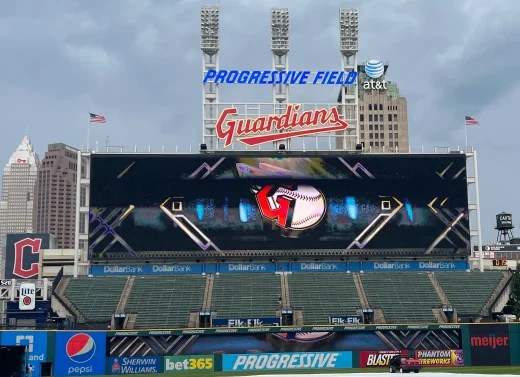
Progressive Field

That Bet365 sign on Progressive Field’s right field wall isn’t a license for players or team personnel to bet on baseball against their sport’s rules. (Neither is or was Fanatics Betting and Gaming’s sports book stand inside the ballpark.) It’s for fans only, folks, in the Prog and all ballparks.

Whoops. The microbet scandal plaguing baseball now has turned at least one worm. The government is accusing Guardians pitcher Emmanuel Clase with pitch rigging for microbettors in 48 games. You may be forgiven if you can’t help asking yourself, “And counting?”

That came forth in hand with news that co-conspiring Guardians pitcher Luis Ortiz’s attorney, Christos N. Georgalis, wrote in a court filing of Clase being accused of such rigging in “dozens of games.”

The filing also asks that, since the two pitchers have “markedly different levels of culpability,” Ortiz’s case should be separated on grounds he couldn’t get a fair trial otherwise, according to ESPN’s David Purdum.

It almost makes perfect sense for Georgalis to make the request. It would make sense for the government to grant it. If you take the government’s own word for it, Ortiz is the anchovy in this case, accused of rigging pitches in a measly two June 2025 games. Clase is the big blue whale, accused of swimming in criminal waters from 2023-2025 and possibly rigging pitches in a quarter of the 197 regular season games in which he pitched over that span.

Georgalis’s filing argues that twenty-six months worth of Clase’s alleged rigging, “including suspect pitches during 48 games, dozens of communications with [a bettor], cash transfers and coordination of illegal wagers,” might get Ortiz found “guilty by association.”

The two pitchers have already pleaded not guilty to wire fraud conspiracy, honest services wire fraud conspiracy, money laundering conspiracy, and conspiracy to influence sports events by bribery, Purdom reminds us. Perhaps regardless of who rigged in how many games, prosecutors charge the pair with accepting bribes from two unnamed bettors from their native Dominican Republic who won $460,000 at minimum in bets “on the speed and outcome of their pitches.”

Clase and Ortiz are set to stand trial starting on 4 May. Georgalis has also asked for additional time before his client goes on trial.

By no means are Clase and Ortiz the only athletes involved in criminal gambling cases. Since the Supreme Court struck down the 1992 law limiting legal betting mostly to Nevada for slightly over a quarter century, it’s probably no shock that athletes in assorted sports might find themselves on the wrong sides of the action. Athletes or, in the case of Dodgers gigastar Shohei Ohtani, their interpeters or other aides.

Two years ago, Padres infielder Tucupita Marcano was “declared permanently ineligible” for betting on baseball, after baseball government learned the hard way he’d been betting on Pirates games while he was a member of that team. Don’t bet on a certain president demanding his reinstatement any time soon. Apparently, said president’s favour confers solely upon otherwise Hall of Fame-eligible miscreants who went to their rewards without reinstatement and without honest admission until or unless it’s needed to sell books.

Even those who achieve perfection on the field can get clipped if they’re at the wrong betting windows. Just ask Pat Hoberg, former umpire, who earned the praise usually afforded perfect game pitchers when he called a perfect game in Game Two of the 2022 World Series. (What’s an umpire’s perfect game? In Hoberg’s case, calling all 129 pitches that were taken at the plate correctly.)

A little over two years later, Hoberg was investigated for breaking baseball’s gambling rules. Investigated and fired. He protested he’d never bet on baseball, but it turned out that the ump shared betting accounts with a friend who did bet on baseball and that he “deleted evidence pertaining to the league’s investigation.”

Hoberg can apply for reinstatement this year. Any bets on whether the aforementioned president is in a big hurry to demand baseball reinstate an umpire or else?

There’ve been arguments since the Clase and Ortiz cases began on behalf of banning sports microbetting because it just might erase any prospect of players being on the take. Whether it’s pitchers rigging certain pitches or hitters tanking on certain pitches. Whether it’s kickers taking how many steps before their feet launch field goal balls or how many blade strokes before Sniper D’Slapshot launches that puck to the nets on a penalty shot.

Remember: Ad partnerships between sports leagues and legal sports books did not mean those leagues’ players or personnel were suddenly granted immunity from their rules against their betting on their sports or their teams. (Do you think illegal bookies are going to be buying ballpark ad space any time soon?) That Bet365 sign on the right field wall at Progressive Field didn’t hand Clase and Ortiz licenses to rig pitches for fun and profit, their own and/or their reputed partners’ profit.

Much as the late Pete Rose’s partisans would like you to believe otherwise, the ads were for fans only. They did not mean players, coaches, managers, umpires, trainers, team doctors, video room operators, scoreboard operators, general managers and their aides, presidents of baseball operations and their aides, or owners were immunized from the game’s formal no-betting rules.

But don’t waste your valuable intellectual time trying to figure out how and why young men of vast means such as Clase and Ortiz needed additional income at all, never mind the kind yielded by a little pitch rigging. It is easier to pass the proverbial camel through the proverbial eye of the proverbial needle. Whether or not someone has bets down on the passage.

The offseason: Ending with bangs? Whimpers?

Jacob Wilson

Jacob Wilson, secured as an Athletic for seven seasons and $70 million . . .

I confess. I’m not sure whether the January portion of the Hot Stove League offseason ended with more bangs than whimpers. I’m willing to wager that not too many others are, either. So, here’s some news as January’s end arrived . . .

Sale? What Sale? Dept. — It’s been speculated often enough that Padres general manager A.J. Preller is somewhat hamstrung making offseason moves with the team’s pending sale and its attendant Seidler family squabbling. Preller would like us to know that such speculation is slightly exaggerated.

“You get to this point, and obviously you get the opportunity to hopefully get some players that are motivated, that want to be here, and get some deals that we feel like line up for us from a price standpoint and what we get in the player,” he told the Padres FanFest. “Hopefully we’re going to look to add some guys here in the next couple of weeks that help us a lot.”

In other words, Preller hopes to make some moves this month. Padres fans can only reply, “We hope!” They may temper that with their fingers crossed now that Luis Arraez signed a single-season deal with the Giants, where his wish to play second base full time is likely to come true for now.

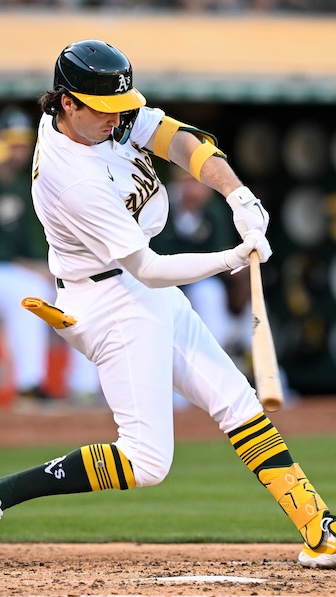
Jacob’s Ladder Dept. — The ladder goes further up with the Las Vegas Athletics of Oakland via Sacramento. The A’s and their All-Star shortstop Jacob Wilson have agreed on a seven-year, $70 million contract with a team option for an eighth season, according to ESPN’s Jeff Passan.

“With exceptional bat-to-ball skills, Wilson stamped himself as a likely future batting champion last season and spent much of the year atop the AL batting average leaderboard,” Passan wrote. “His power output surprised evaluators, who were concerned Wilson’s desire for contact — he struck out just 39 times in 523 plate appearances last year — would limit his home runs.”

The Wilson deal means the A’s have 2025 Rookie of the Year Nick Kurtz, Wilson, designated hitter Brent Rooker, and outfielders Tyler Soderstrom and Lawrence Butler locked down until at least 2030, according to Passan. Wilson and Soderstrom will be under team control through 2033, Butler through 2022, and Rooker through 2030, he added.

Translation: the somewhat loaded offense the A’s have been building without big fanfare is aimed squarely at making sure the A’s have more than just their presence, their uniforms, and a garish-on-the-outside ballpark to offer Las Vegas when they finally move there in 2028. If only the maneuverings making the move possible were done a) on the square; and, b) on owner John Fisher’s entire own dollars and not too many of those of Nevada taxpayers, without c) screwing Oakland in the bargain.

Insurance Running Dept. — You may or may not have noticed, but a rising number of major league stars aren’t going to be playing in the World Baseball Classic after all. That’s because MLB’s chief insurer is taking a tougher line on insuring players for the international tournament. So much so that Puerto Rico is considering pulling out of the tournament . . . because as many as ten of their team, including Mets superstar shortstop Francisco Lindor, are denied coverage.

The concern is comprehensible. The affected players have incurred injuries either in the most recent seasons or in the WBC itself. Perhaps the most notorious was relief pitcher Edwin Díaz, who missed the entire 2023 major league season after he was injured during a WBC celebration in that year’s tournament. The Athletic says WBC injuries to Díaz and Astros star Jose Altuve that year prompted MLB’s insurers to toughen up approval for play outside MLB.

Aside from Altuve and Lindor, Puerto Rico’s non-cleared players also include Astros third baseman Carlos Correa, Blue Jays pitcher José Berríos, and Twins catcher Victor Caratini. Puerto Rico’s team operations manager Joey Sola told The Athletic they’d have to withdraw entirely if they can’t find substitutes.

Pohlaxed Dept. — The departure of Twins general manager Derek Falvey disturbed a good many people who watch the Twins closely — except for Falvey himself. The Athletic‘s Aaron Gleeman reported this weekend that, if anything, Falvey now seemed like a man with tons of weight removed from his head.

“It’s been a challenge at times,” Falvey told Gleeman. “I’d be lying to say anything else. Everyone is going to have different limitations or challenges they have to navigate through. I do think for us over the course of certainly the last 16 or 18 months, those were ratcheted up.” Falvey seems to have a future as an understatement expert.

“Those” included the Polhads dropping the Twins payroll by $30 million in 2024 and by another $30 million this offseason, the non-reward for Falvey taking a $165 million 2023 payroll and shepherded it to the American League Central title and the end of the team’s two-decade-long postseason winless streak. Gleeman said the Twins’ projected $100 million 2026 payroll “left Falvey with few appealing options to improve a 92-loss team that needs all kinds of help following last year’s trade-deadline fire sale and second-half ineptitude.”

Good luck with all that. As Gleeman pointed out, the Twins’ owning family “pushed out Joe Pohlad as the executive chair in December, replacing him with older brother Tom Pohlad, who has since repeatedly made it clear he expects the Twins to be competitive this season without actually giving the front office the resources to add impact talent.”

That’s something along the line of American Airlines demanding its pilots fly Dreamliner jets across the Atlantic with their fuel tanks an eighth full.

There is Good News This Morning Dept. — It’s only seven days before pitchers and catchers begin reporting for spring training. They’ll be almost as happy to escape this winter’s cruel lash across the upper and eastward regions of this nation as baseball fans will be to welcome them back.

The 20th century New York Times writer/outdoorsman Hal Borland once observed, “No winter lasts forever; no spring skips its turn.” Now hear this, Mr. Borland, serene in your perch in the Elysian Fields: For those nine words alone, the reading of which baseball fans are grateful beyond expression, you should have been awarded the Pulitzer Prize.


First published in slightly different form at Sports Central.