Sorry, Charlie

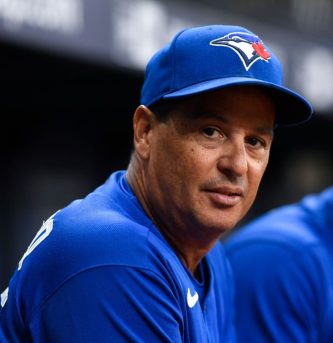
Charlie Montoyo

Montoyo takes the fall for somewhat less than gets other managers executed.

Let’s see. The Phillies sat 22-29 and having lost 11 of their previous 17 when they executed manager Joe Girardi in favour of Rob Thomson—whose team has gone 24-14 since.

The Angels went from 27-17 to 27-29, the first team in major league history to plunge from  ten games over .500 to a twelve-game losing streak, and sent manager Joe Maddon to the guillotine in favour of Phil Nevin. Nevin’s crew has gone 12-21 since, including 2-11 to open July.

The Blue Jays went 46-42 through Wednesday morning but suffered a five-game losing streak after opening July with a win, went 1-7 against one American League West wild-card contender and one of the division’s weaker teams, and awoke Wednesday at 2-12 for the month to date. Thus did they decide manager Charlie Montoya had a date with the firing squad despite the Jays beating those Phillies Tuesday.

Bench coach John Schneider was handed the bridge with the usual “interim” tag. The Blue Jays’ first act under their interim commander was to beat the Phillies to sweep a two-game set. Thomson’s been a steady skipper thus far; Nevin’s been little more than an apprentice seaman. One win isn’t enough to make the call on Schneider.

But something stunk about Montoya’s firing at first that was a little more profound than the fragrances surrounding the Girardi and Maddon executions. The timing especially.

Earlier this month first base coach Mark Budzinski’s seventeen-year-old daughter Julia was killed in a tubing accident. On Monday, Montoyo—who’d left the dugout with Budzinski in the middle of a doubleheader on receiving the news—joined other team reps in attending Julia Budzinski’s funeral.

Maybe collapsing to a 2-12 July opening gave the Jays enough reason to think Montoyo had to go, but with the All-Star break approaching it’s not unreasonable to think they might have waited just a short while longer, maybe on the eve of the break itself, to align the firing squad.

This may have been the second most cold-blooded managerial firing in modern major league history. The first would have to have been the Yankees dumping pennant-winning manager Yogi Berra in favour of the man who beat him in the 1964 World Series, the Cardinals’ Johnny Keane, the day after the Cardinals won in seven, a move that was planned back-channel before the Yankees put on the stretch drive (going 30-13) that nailed their pennant in the first place.

It looked even worse if you thought about was Montoyo having managed the Jays to 91 wins and a near-miss to the 2021 postseason despite the continuing coronavirus pan-damn-ic compelling the team to make three different cities the site of their home games.

But as Ken Rosenthal of The Athletic pointed out in the immediacy of Montoyo’s execution, the Jays may have their still-euphemistic “compelling reasons” to give the command to fire. If that’s true, maybe they shouldn’t have let him stay on the bridge with a one-year extension and a couple of option years to follow to open the season in the first place.

Like Girardi and Maddon before him, Montoya bore the burden of a misconstructed team even if it’s a team still in the new but dubious wild card hunt. It wasn’t Montoya who delivered a bullpen that finds as many bats as it misses or a starting rotation whose rear end resembles the northbound end of a southbound moose.

They opened July in second place in the tough American League East, but hitting the skid let the re-horsing Red Sox and the Rays pass them in the division standings while letting the Mariners match them for the third wild card thus far.

Now it comes forth, too, that some in the Jays clubhouse thought they needed a somewhat firmer hand when they hit the skid and Montoyo, as loved and popular as he was on the bridge, wasn’t quite the man to offer that hand.

Athletic Blue Jays beat reporter Kaitlyn McGrath found at least two players willing to talk about the clubhouse atmosphere, one anonymously but another willing to go on the record. Of course.

The anonymous Jay told McGrath that hitting the skid required what Montoyo apparently lacked. “When you’re [in a] 1-9 [slump], you’re looking for someone to come in and either kick you in the ass or pump you up, just something, some guidance,” the player said. “And you could have it as players, for sure, and we did, but you really do need it coming from the top and that just wasn’t happening . . . If we were playing better, this wouldn’t have been as much of an issue, but we weren’t, so you’re looking for leadership and a lot of us felt like it wasn’t really there.”

But even that didn’t erode the respect the Jays’ players have for Montoyo the man, if you take the word of pitcher Ross Stripling, who earned the Wednesday win against the Phillies with six strikouts but eight ground outs and ten fly outs in seven innings during which he surrendered two earned runs on two hits.

“I don’t think anyone would ever think that he doesn’t want us to have success individually or as a team, the whole Blue Jays organization,” Stripling told McGrath.

He had our backs all the time and wanted us to win baseball games. And it’s a shame—he’s been here since 2019, when this kind of young core got going—that he’s not going to be there to see a lot of their success and where they go and where we go as a team. But I think everyone would say thank you to him and the effort that he gave us for the years that he did and that we love him and wish him well.

General manager Ross Atkins, who carried the execution forth, said it’s not “necessarily” good starting pitching and good bullpens alone that contend and win. “Look at the history of the game,” he said, “good teams win championships. The person to look to is me. I’m the one that needs to be accountable. And we will continue to work hard in every area of our team to improve.”

In other words, don’t blame me because Charlie couldn’t make do with shallow starting and bullpen bulls.

For now the Phillies have lived a somewhat charmed team life since Girardi’s dismissal, even while losing Bryce Harper to a thumb fracture after the right fielder was limited to DH duty thanks to an elbow injury. They’re only nine games out of first in the National League East, though they have a formidable wall to climb with the first-place Mets and the second-place (and defending World Series champion) Braves making life none too simple.

The Angels? They could bring Casey Stengel back from the dead and still sputter. Especially since, in addition to their still-usual pitching problems not named Shohei Ohtani, the bottom of their order became such a trainwreck that it didn’t matter what the bigger bats did. It comes into sadder play when such bigger bats hit the slumps to which all bats are prone, even those of future Hall of Famers.

Nevin’s tenure has been a plane crash thus far. Especially when he landed himself a ten-game suspension for being none too subtle about looking to avenge a ninth-inning Mike Trout head hunt the night before and sending an opener to start the game and exact revenge. The Mariners may have had it coming, but one behind-the-back pitch and a subsequent plunk was out of line.

And while the umpires sounded mealymouthed in not starting the game with warnings after Trout was inches from decapitation in the ninth the night before, the ensuing brawl after Andrew Wantz hit Jesse Winker in the hip cost Nevin a key relief pitcher (Archie Bradley) for a month, at least, when he hopped over the rail to join the fracas and broke a bone in his pitching elbow.

It’s gotten to the point where the published calls for the Angels to start thinking about the once-impossible: trading both Trout at this year’s trade deadline and Ohtani before he reaches his first free agency, the better to get a replenishing return (hopefully, with pitching slightly above the level of arthritic cleaning crews) while the getting is prime—aren’t waiting until their season is all but officially dead.

So the Blue Jays aren’t exactly that bad off just yet. It’s still too soon to call a single win under a new bridge commander the beginning of an in-season resurgence. Who knows what Atkins might move upon as the trade deadline approaches? But there’s still something badly disconcerting about the Montoya execution. The man’s been a class act who’ll probably get another chance to take another major league bridge soon enough.

There may yet be more to come in the way of deeper details. As often as not, there usually are. And it’s not impossible to ponder whether Atkins himself might now be on a seat whose temperature rises a little more as the season goes forward.
“What have you gotten yourself into?”

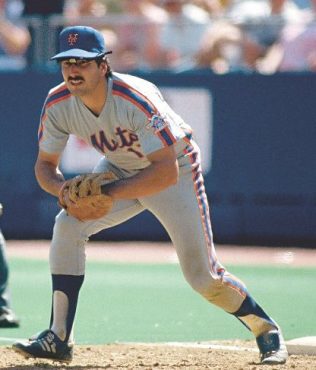
Keith Hernandez

An on-base machine at the plate, Keith Hernandez’s real baseball genius was revolutionising first base as a command infield position.

Almost four decades ago, the Mets’ general manager Frank Cashen thought he’d laid the foundation for the Taj Mahal. The Cardinals’ transcendent but troubled first baseman, Keith Hernandez, thought the roof fell in on him.

A mainstay of a defending world champion, who’d driven Cashen to drink almost every time he played against the Mets, was about to become a Met.

From the moment a previous Met regime traded Hall of Famer Tom Seaver because he seemed a little too uppity about how the team should spend their money (a few parts upon himself as baseball’s best pitcher; a lot more parts on the free agency market and replenishing the farm), the Mets reverted to their original losing ways. And they weren’t half as funny about it.

It was one thing for the best first baseman in baseball to run afoul of his manager Whitey Herzog because a small morass of off-field issues sent him into the cocaine netherworld and, in 1983, into a few lazy baseball habits. It was something else to be sent to what was then, still, the National League’s version of the seventh circle of hell.

Herzog and Hernandez weren’t exactly Damon and Pythias. The White Rat was earthily thoughtful; Mex was cerebral. Where Herzog preferred the George Brett prototype right down to the pinch of Skoal in that Hall of Famer’s cheek, Hernandez smoked cigarettes and engaged Civil War period fiction and the New York Times crossword puzzle, for openers.

The thinking person’s sport had an actual thinking person in its ranks, who just so happened to be an on-base machine and a first base revolutionary. Herzog forgot the thinking side of himself and also listened to the whispers about Hernandez’s cocaine dalliance. (At the 1985 Pittsburgh drug trials, Hernandez would call cocaine “the devil on earth.”)

Herzog asked Cashen if he’d be willing to deal talented reliever Neil Allen. “[Allen’s] well-known drinking problem,” Jeff Pearlman noted in The Bad Guys Won, “didn’t seem to bother Herzog.” When Cashen said he hadn’t thought about it, Herzog replied, “If you think about Neil Allen and another pitcher, we’ll give you Keith Hernandez.”

To St. Louis, which roasted the Cardinals for years to follow over the trade, it was rather like Capitol Records sending Frank Sinatra to Dot Records in exchange for two spare session musicians and a tape operator. (“He came right into our kitchen and rattled our pans for about four years,” Herzog has written, “burned the Cardinals with a lot of big hits.)

Only Hernandez was probably less amused than the Chairman of the Board would have been. The first call he made when told he was about to become a Met was to his agent, Jack Childers. Hernandez wanted to know if he could afford to retire and live off his deferred income. Childers counseled his client not to even think about it. Hernandez resigned himself. Oops.

His Met tenure began with a classic, almost Metsian screwup. According to Pearlman, he caught a flight to Montreal, where the Mets were playing the Expos. The Mets’ media relations man, Jay Horwitz, sent a limousine to meet Hernandez. The limo went to the wrong gate, compelling Hernandez to catch a cab.

“When he first got there, I remember looking across the clubhouse at him,” says Ed Lynch, a pitcher on the 1983 Mets. “He was unpacking his bags, I think we’re in Montreal, and I’m thinking, ‘Boy, you poor son of a bitch. What have you gotten yourself into?’”

It took a little romancing and a lot of tour guidance from popular veteran Mets pinch hitter Rusty Staub to convince Hernandez he hadn’t exactly been sentenced to Sing-Sing. Staub showed Hernandez enough of the city’s best—the theater, the museums, the eateries, the libraries, the clubs, the lovely ladies on every street corner, seemingly—to convince the first baseman, “I’ll make a brand-new start of it, New York, New York.”

Hernandez became about 3,200 degrees more. After playing out the 1983 string, Hernandez was convinced enough to sign a five-year deal with the Mets. In his six full seaons as a Met—five solid, the sixth showing the toll the injuries and age took at last—the Mets won more games than any team in the entire Show.

As a Met, he posted a 131 OPS+ upon a slash line of .301/.388/.437, an OPS of .825, and a Real Batting Average (total bases + walks + intentional walks + sacrifice flies + hit by pitches, divided by total plate appearances) of .530. Lifetime, his RBA is .528.

Among postwar, post-integration, night ball-era Hall of Fame first basemen it would put Hernandez two points above Tony Perez and in seventh place. But being an on-base machine was only part of his presence. He remains the single most run-preventive first baseman in baseball history. (+120 total zone runs above league average.) It isn’t close. (Should-be Hall of Famer Todd Helton is a distance +107 in second place.)

He wasn’t the lumbering, big-bopping first base cliche. He played the position as though a third or second baseman, not just going for the tough plays and not just his expertise at neutralising bunts, but making himself the on-field infield commander.

“Not only he would tell you what you need to do,” says Lynch, “but he’s going to tell you how the pitchers going to try to prevent you from doing it. So he gave you not only the result, but he gave you the plan to get to that result.”

“The knowledge of the league, which he’d been in for a while, the knowledge of the other hitters, the willingness to know about the other manager’s strategy, the nuances of the game, the minutiae of who’s hitting, who’s running, their tendencies—it all added up to a wealth of knowledge over there that you could draw on,” says Bob Ojeda, the best lefthanded pitcher on the World Series-winning 1986 Mets. “And I did draw on it at times, no question.”

Keith Hernandez

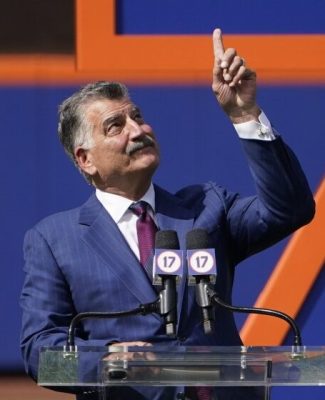
Now a respected, popular longtime Mets game broadcaster, Keith Hernandez points up to where his 17 hangs as a newly-retired Met uniform number.

It was hardly Hernandez’s fault that the Mets climbed the National League East ladder, reached the Promised Land, and finished his tenure with only one World Series ring and two pennants to show for a run of first or second place division finishes.

It wasn’t Hernandez’s idea to fool with Dwight Gooden’s repertoire in spring 1986, a foolery that would turn him in due course from beyond this earth to journeyman pitcher while he battled with his own drug addiction. It wasn’t Hernandez’s idea that Darryl Strawberry should spend most of the rest of his Mets life at war with himself, with substance abuse, and with his own team time and again.

It wasn’t Hernandez’s idea that Cashen should break the team apart little by little, or that he and Hall of Famer Gary Carter (Winning brings opposites together, Hernandez once said of Carter, an intelligent catcher but not in Hernandez’s cerebral league) should hit decline phases accelerated to somewhat warp speed by injuries atop their years of hard labour on the field.

Hernandez might have begun giving the Mets “a swashbuckling, devil-may-care, damn the torpedoes, full-speed ahead image,” as Lynch phrases it, an image New York loved but the rest of the league didn’t, but it didn’t exactly mean he wanted swashbuckling confused with recklessness as happened with too many of those 1986 Mets.

It took the Mets a very long time to come to terms with both the best and the most controversial team in their long, surrealistic history. The beginnings of those terms included bringing Hernandez into the broadcast booth, first as a part-time colour commentator, then a full-time partner to longtime mainstay Gary Cohen plus Hernandez’s 1980s Mets teammate, equally cerebral pitcher Ron Darling.

“You do the pitching, I do the hitting,” Hernandez told Darling when completing the trio.

The most vivid continuation of that coming to terms was the Mets retiring Hernandez’s uniform number 17 Saturday, before the Mets beat the Marlins in ten innings, 5-4, in a fashion that must have reminded Hernandez of his own good old days, almost: a two-out double sending the inning-opening zombie runner home; and, a throwing error on a dying ball on the front infield grass allowing the winning run to score.

“He asked for No. 37; that was his number with the Cardinals,” Lynch remembers of Hernandez’s original arrival. “And they told him no. He looked at them funny. And they said, ‘That’s Casey Stengel’s number.’ So now he comes over, he takes 17, and that’s getting retired also.”

“I never dreamed I’d be here this long, in the organization,” the Young Perfesser told a packed Citi Field Saturday. “I am absolutely humbled and proud that my number will be up in the rafters for eternity.” With the Ol’ Perfesser and The Franchise, among others.

Perhaps another humbling day will come Hernandez’s way, in due course, if the newly-aligned Contemporary Baseball Era Committee sees fit to give his career the thorough review it merits and gives first base’s greatest defender ever and one of its steadiest on-base machines a berth in the Hall of Fame.

“I got traded to a last-place team and no one at the ballpark,” Hernandez says. “And it turned out to be such a life-changing event for me in such a positive way.” For him and, for a few glorious if not always controversy-free seasons, New York itself.

Are Hal Chase’s statistics “meaningless?”

Hal Chase

Hal Chase—The talent said a great defensive first baseman; the corruption says otherwise. (Sporting News photo.)

If there’s one thing that baseball itself will debunk somewhere, some time, somehow when you least expect it, it’s the idea that you’ve seen everything on or off the field. The moment you satisfy yourself that you have, the game has a way of replying in a split second, “Pants on fire!”

That doesn’t work with great hits or great plays alone. You think you hear it all (over again) whenever Pete Rose’s dwindling supporters burp up yet another mealymouth argument on behalf of putting him into the Hall of Fame despite what Rule 21(d) and the Hall’s own rule about ballot eligibility say? Brace yourselves.

For whatever reason, the subjects of the day a few days ago, on a Society for American Baseball Research (SABR) social media group thread, included Hal Chase, whom history still treats as perhaps the poster boy for baseball’s gambling infestation from the late 1800s through the end of the Dead Ball Era.

A thread opener cited Babe Ruth’s once-famous observation, when asked to name those he thought the best at their positions:

[T]he Prince was also a very fine hitter who played his entire career before the ball was juiced up. He couldn’t run, he could fly. And aside from Ty Cobb, he was the best baserunner I ever saw. Fielding, are you kidding? Prince Hal was the greatest fielding first baseman that ever played. He was worth the price of admission just to watch him toe-dance around first base and pick those wild throws out of the dirt.

Funny, but that’s not exactly what Chase’s statistics say. When I pointed that out in the thread, among the replies was, “And that’s what makes the stats on him useless,” which was dubious enough. But then came the real corker: “Just goes to show how much stats are useless.” Not the stats on Chase himself but stats overall. On a SABR group thread, no less.

Just about all accounts of Chase affirm that what Ruth saw in him was there. But add that it tended to happen only when Chase was of a mind to exercise it. You don’t even have to read Donald Dewey and Nicholas Acocella’s The Black Prince of Baseball to comprehend. The record was long enough in place attesting that, in baseball’s arguable most corrupt era, Chase was its arguable most corrupt figure.

“Chase’s talents,” wrote SABR director of editorial content Jacob Pomrenke in a 2013 essay, “were legendary: He made one-handed catches with astonishing ease, played farther off the bag than anyone had ever seen and charged sacrifice bunts with speed and agility. He also earned the reputation of being the best hit-and-run batter in the American League and frequently ranked among league leaders in batting average, RBI and stolen bases.”

There is, of course, an ocean’s worth of distance between one’s talents and one’s development and exercise of them. In this instance Pomrenke’s reminder is vivid enough:

His career in the major leagues from 1905 to 1919 was checkered with accusations of game-fixing. Two of his managers with the New York Highlanders (later the Yankees), George Stallings and Frank Chance, accused him of “laying down” on the team. He missed signs frequently (especially on the hit-and-run, causing base runners to be hung out to dry) and dropped balls from his infielders in such a subtle way that it made their throws look like errors. But whenever a stink was raised about his play, club owners Frank Farrell and Big Bill Devery sided with their star first baseman—and even made him the manager once, a decision that satisfied no one. Chase lasted just one full season in the role.

We’re not going to run down the entire record of Chase’s corruption here. We know that the Dead Ball Era could also have been called the Dubious Ball Era considering how many players were involved in gambling-inspired game fixing and how many owners and managers lacked clean hands themselves. (It only begins with remembering New York Giants manager John McGraw owned a piece of a pool hall belonging to and run by eventual 1919 World Series financier Arnold Rothstein.)

We won’t even go into the complete details about how Christy Mathewson—pitching star (and charter Hall of Famer) turned manager of the 1916 Reds, where Chase landed after a two-season term in the upstart/outlaw Federal League—caught Chase dead to right bribing teammates and opponents to help him fix games and suspended him, only for Chase to be let off after Mathewson entered the Army during World War I and was unable to testify at a league hearing.

Let’s hark back to the Ruthian recollection of Chase’s abilities. Far from being meaningless, Chase’s actual major league statistics do portray him the way the stats so often portray outsize talents that don’t turn them into performance at the plate or on the field:

A very fine hitter. Well, Chase won a batting title in 1916 and had four other top-ten finishes. That might speak well of a player with a short career, but Chase played fifteen major league seasons. He finished third in the batting race once, eighth once, and tenth once. For eleven major league seasons (including his Federal League years) he wasn’t a top-ten guy for batting average.

Aside from Ty Cobb, he was the best baserunner. This one’s tricky, because the stats are incomplete on how often Chase was caught stealing while he did steal 363 bases and finished in the lower third of his league’s top ten three times.

He was worth the price of admission just to watch him toe-dance around first base and pick those wild throws out of the dirt. Ruth’s hardly the only Chase contemporary or semi-contemporary to praise Chase as a fielder. But considering the full story, isn’t it possible that Chase flashed that amazing ability selectively, delivering the goods just as Pomrenke observed, when he bloody well felt like it or when it was in his personal as opposed to his teams’ interest?

Think of this, too: Forgot for the moment how dubious “errors” are (think deep and ponder that an “error” is some official scorer’s notion of what should have happened on a play no matter how tough) and consider that Chase led his league eight times (it’s the most black ink on his record), finished second three times, third twice, fourth twice, fifth once, and seventh once. All fifteen major league seasons he played show him with top ten finishes including eight league leaderships in fielding errors.

Christy Mathewson

Christy Mathewson—the charter Hall of Fame pitcher turned manager may have been the only man in pre-Landis baseball willing to challenge and try purging Chase and other gambling-corrupt elements in the game before the Black Sox scandal forced the game’s hand.

The final stats show Chase shaking out as the 124th best first baseman who ever played the major league position. I think the entire body of evidence shows that he didn’t just hurt his teams and his game with his game-fixing actions.

Writing The New Historical Baseball Abstract, Bill James ranked him number 76, but that was published in 2001. “[W]hat greatness as a baseball player comes down to is, ‘What did he do to help his teams win?’ If you were trying to win a pennant, how badly would you want this guy? Hey, this is not Joe Jackson that we are talking about here. This is not the corrupted. This is the corrupt.”

As James pointed out further, Chase never played on a pennant winner, “and most of the teams he played for declined precipitously when he joined them and improved dramatically after he was gone.” Let’s look at that all the way. Was James right? The following table shows where Chase’s teams finished the year before he joined, right after he joined, and the year after he left:

Joined Before After Left Year After
New York (AL) 1905 2nd 6th (-) 1913 6th (push)
Chicago (AL) 1913 4th 5th (-) 1916 3rd (+)
Cincinnati (NL) 1916 7th 7th (push) 1918 1st (+)
New York (NL) 1919 2nd 2nd (push) 1919 2nd (push)

Two Chase clubs finished farther out of the race after he joined them than they finished the year before. Two finished exactly the same after he joined, but one (the 1916 Reds) won the pennant the year after he left. One (the 1919 Giants) finished the same before, with, and after Chase.

What we have is a baseball talent who elected to undermine his own skills on behalf of the worst elements in baseball during the era that climaxed with the disgraces of the Black Sox scandal. (Chase had no part in the 1919 World Series fix attempt himself, but it’s on the record that he made $40,000 betting against the White Sox.) He was avariciously corrupt enough to undermine his own abilities and thus his own final statistics.

You can run down baseball history and find scores of players who had all the talent but none of the final results that equaled the talent. Many were undermined by injuries, many squandered or eroded their talents by themselves. For every truly talented player who worked concurrently on the team-first ethic, there’s another who placed himself well beyond the team need.

Chase was a team player in the sense that he enlisted teammates and even opponents to be part of a game-tanking for profit fraternity whose purpose was to continue undermining the very essence of honest competition for his and their own profit.

Ruth and other contemporaries praising Chase’s skills so extravagantly begs the question of just how far they were willing to look the other way. How far were they willing to ignore the dark side leaving Chase with a statistical record on both sides of the ball that’s nowhere near what you expect or hope of a ballplayer that gifted who exercises and advances his talent.

You’d be as hard pressed to find a player as simultaneously gifted and corrupt as Chase as you’d be to understand what about him (other than equally corrupt or corrupted officials) enabled him to skate on numerous attempts to run him out of the game. Except perhaps his personal popularity.

Rose’s gambling issues traced back at least to the mid-1970s. But as John Helyar wrote, in The Lords of the Realm, “baseball let him get away with it. GMs wouldn’t mess with a gold-plated gate attraction. Writers had no need to expose the best quote in the business. And baseball’s security director then, Henry Fitzgibbon, limited himself to Dutch-uncle talks with Rose.”

Only when it became too flagrant to dismiss did baseball finally take steps forward. But in Peter Ueberroth’s final days as commissioner he called Rose in, listened to Rose’s flat denials, then told a reporter, “There’s nothing ominous, and there won’t be any follow-through.” Not so fast, we came to learn the hard way soon enough.

Chase was insulated similarly long enough. He was popular, according to most accounts from his time; in fact, he was the first homegrown star of the Yankee franchise. (They were known as the Highlanders when he came up; the name changed in 1913.) A game that deep in gambling corruption wasn’t that anxious to make an example of Chase, no matter how earnest the equally popular Mathewson was—and he might have been the only man in pre-1920 baseball willing to stand up to the gambling cancer—in trying to purge him and similar elements.

Only in 1919 as a Giant did Chase’s major league career come to a halt. Technically, he suffered an injured wrist, but even McGraw couldn’t look the other way anymore when he’s said to have caught Chase and third baseman Heinie Zimmerman trying to bribe teammates to tank a few games.

The following spring, Chase was home on the west coast playing semipro ball when his old Reds teammate Lee Magee blew the whistle: Magee and Chase conspired to throw games in 1918. Chase was also caught trying to bribe players in the Pacific Coast League in 1920. The only thing knocking those out of the headlines was the slowly revealing scandal of the 1919 World Series.

The PCL banned Chase for life. (Chase came to the Highlanders/Yankees attention originally when he starred for the PCL’s Los Angeles Angels.) Incoming baseball commissioner Kenesaw Mountain Landis didn’t ban Chase formally from the rest of organised ball, but the hammer upon the Black Sox plus Chase’s age (37), injuries, and flagrant corruption meant he wasn’t going to be seen in the majors again.

Chase didn’t inaugurate baseball’s gambling corruption. That was established before he emerged as a major league first baseman. He merely found himself at home on the corrupt side. His major league statistics aren’t meaningless. They’re the outcome for a genuinely talented player who embraced instead of rejecting the game’s pre-1920 corruption.