Home Run—a poem


This is the first baseball poem I have ever written.—JK.

Home Run

The first pitch
inside and tight.
The batter’s flinch
the grunted “ball one”
the re-composing step
back into the box.

The second pitch
diving to the floor
of the flexible zone
swung on and missed
even the pitcher
surprised by the breeze.

The third pitch
rising like temperature
at a nasty debate
the batter allows
its swift escape.

The fourth pitch
from the inside looking out
the batter off guard
lines it into the camera well
deuces wild.

The fifth pitch
imitation of
the Arch de Triumphe
the batter knows
a ripoff when he hits it
high drive
somewhere over the rainbow
into the mighty river.

Dyson drydocked for domestic violence

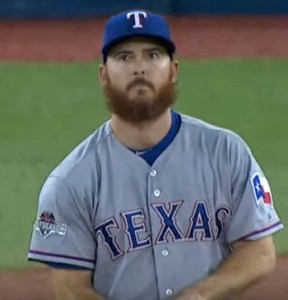
If Sam Dyson was stunned by surrendering Jose Bautista’s postseason-advancing bomb, imagine how stunned his former girlfriend was by his attacks upon her and her pet.

Until today, relief pitcher Sam Dyson was probably known best as the co-catalyst for one of the Show’s most ridiculous brawls, half a year after he surrendered the postseason home run that provoked it. Today he says goodbye to baseball 2021, having been suspended for the season for violating the Show’s domestic violence policy.

When Dyson hit free agency in November 2019, The Athletic revealed a pair of social media posts by his former girlfriend provoked a baseball government investigation. Athletic writers Ken Rosenthal and Katie Strang unearthed that her posts in which she didn’t name the assailant referenced Dyson after all.

At the time, Alexis Blackburn wrote on social media about receiving violent haranguing and objects thrown at herself and her cat. Today, Strang shared a statement from Blackburn to herself on Twitter:

I had the strength and courage to come forward so other women and victims know they aren’t alone, that this isn’t healthy, that you’re worth more than the bruises on your body and the bitch you’re referred to . . . We fought hard and we were validated by one of the largest sports organisations in the world.

The Athletic‘s initial expose included quoting Blackburn writing on the Instagram account she kept on behalf of her cat, Snuckles. “No one deserves to be intimidated, scared, worthless, and hopeless.”

Once upon a time, Dyson himself could actually be thought of as believing likewise.

We take you back to 14 October 2015, when Dyson as a Ranger squared off against Jose Bautista of the Blue Jays in Game Five, bottom of the seventh, in an American League Division Series. With two on and two out, and a 1-1 count, Dyson—himself a one-time Blue Jay—threw a fastball toward the inner half of the plate and up the middle. Uh-oh.

Bautista hit a monstrous three-run homer off the rim of the upper left field deck. Punctuated by a whirlybird of a bat flip as Bautista strode out of the box to run it out. The blast turned a three-all tie into a 6-3 Jays advantage that held up to send them to the American League Championship Series.

The worst thing Dyson did or said then was misintepret Edwin Encarnacion’s gestures calling for fans to quit throwing things around the stadium and engage in a brief argument. The second worst came after the game when he changed into his Fun Police uniform.

“Jose needs to calm that down, just kind of respect the game a little more,” Dyson told reporters afterward. “He’s a huge role model for the younger generation that’s coming up playing this game, and I mean he’s doing stuff that kids do in Wiffle ball games and backyard baseball. It shouldn’t be done.” That’s how many kids playing Wiffle ball who grow up to hit postseason-advancing skyrockets?

Fast forward now to the 2016 regular season series between the two teams.

Dyson faced Bautista in the first game of a May set between the two in Toronto. If he or the Rangers wanted a little revenge for that October blast flip, this was the time to seek it. But Dyson never once made any move against Bautista. Neither did any other Ranger—until the final game of the season between the two teams, in Arlington, 15 May 2016.

Bautista whacked a three-run double off Rangers reliever Tom Wilhelmson in the top of the sixth. The next Jays batter, Encarnacion, got drilled on the first pitch. After the Rays loaded the bases on him in the top of the seventh, Wilhelmson yielded to Matt Bush, who surrendered a sacrifice fly but nothing else to make the game 6-3, Jays.

Then Bautista led off against Bush—freshly returned to baseball after his imprisonment for manslaughter when his motorcycle ran over an elder man who subsequently forgave him for the crime—in the top of the eighth. Exactly why Bush did what he did with the first pitch still escapes, since he wasn’t even part of the Rangers organisation when Bautista hit the postseason-advancing blast.

But Bush drilled Bautista on pitch one. A fly out later, Justin Smoak grounded to third for a double play. Bautista slid hard into second baseman Rougned Odor, straight over the pad, with Odor on the relay throw looking very much like he was more interested in trying to decapitate Bautista than in finishing the double play.

“I could have injured him, but I chose not to,” Bautista said after the game. “I tried to send the message that I didn’t appreciate getting hit.” Especially not seven months after the fact, in the latest innings of the final contest between those two teams for the rest of the year, when any Ranger pitcher had six previous 2016 occasions to send Bautista a message about going interstellar and celebrating the launch so ostentatiously.

“Having failed [decapitation], and apparently ignorant of how in the wrong Bautista wasn’t,” I wrote at the time, and I haven’t changed my mind almost six years later, “Odor watched Bautista spring up preparing to defend himself, knowing Odor looked as though he had further mayhem on his mind. And then it came. First Odor shoved Bautista. Then, when Bautista extended an arm in a very obviously defensive position, Odor swung and landed that right cross.”

Just what did Odor expect to receive at second base after Bautista got drilled by Bush so late, if Bautista was given the chance—a dozen roses with a singing telegram? If your team is cowardly enough to wait until Bautista’s last possible chance to face you all year to send a seven-month-old message, you might want to consider yourself grateful that a hard slide into second base was all you got before you decided to throw a punch or two.

Both benches emptied. The umpires may have figured Bush threw the driller under orders because he wasn’t ejected, though he was fined. Odor and Bautista got ejected posthaste, with Odor getting eight games suspended plus a fine and Bautista getting one game—because the slide was illegal under the Utley Rule but nothing worse. Appropriately.

As I noted further at the time, “Funny how all the so-called ‘old schoolers’ canonizing Odor forgot Bautista answered that unwarranted plunk the old-school way. Throw at Jackie Robinson, Hank Aaron, Frank Robinson, Willie Mays, Duke Snider, and if they got the chance on a followup grounder they’d have sliced and diced the nearest middle infielder on the play at second.”

The real-life law-enforcement Texas Rangers motto, legendarily, is: “One riot, one Ranger.” The baseball Rangers left themselves after that set with a likewise indelible image: One Ranger, one riot.

All throughout that early-year season series, up to and including the scrum Odor’s idiocy (and that of whomever ordered the hapless Bush to throw the Bautista driller) provoked, Dyson was one Ranger who behaved like a complete professional.

Somewhere along his travels to come, from the Rangers to the Giants, from the Giants to the Twins, before right shoulder capsule surgery looked to bench him for 2020, Dyson in whatever frame of mind he was decided his girlfriend deserved violent bawlings out and target practise a few too many times for her comfort and his professional good. And in that order.

His frame of mind isn’t an excuse. This isn’t a soldier or a Marine in the early grip of post-traumatic stress syndrome, having violent nightmares about the death and destruction he’s lived, trying to injure his wife while dead asleep and unaware of what he’s doing.

It’s entirely possible for couples in any kind of love, to disagree and debate without exchanging thoughts and feelings for loud, lewd insults and self-propelled objects at each other’s heads and bodies.

There are indeed worse things a man can do than surrender a monstrous, ultimately postseason series-winning home run. Dyson went from there and from professionalism in refusing to seek vengeance seven months after the fact to taking whatever out violently on his one-time girlfriend and her pet. For making them victims like that, there’s only one appropriate word.

The word is disgust.

Commissioner Rob Manfred’s statement upon announcing Dyson’s suspension read, “Having reviewed all of the available evidence, I have concluded that Mr. Dyson violated our policy and that discipline is appropriate.”

How about saying, “I’ve seen the evidence. Eff our ‘policy,’ what he did to her’s a crime.  This guy’s lucky that a year off without pay is all I can give him. What’d be appropriate is me throwing things at him to see how he likes it.”

No 2021 expanded postseason or universal DH. Guess which one should stay—forever.

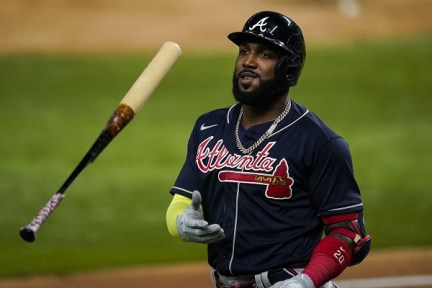
Marcell Ozuna, one of the men who helped the Braves’ 2020 designated hitters out-hit the rest of the Show’s.

The good news, as reported by The Athletic Wednesday evening: last year’s expanded-to-the-stretching-point major league postseason won’t happen this year—so far. The bad news, as reported by the same journal’s Evan Drellich: neither will the universal designated hitter return this year—so far.

I say “so far” because Drellich says reversals can never be ruled out, even though “both sides are proceeding as though there will not be any last-minute addition of the DH in the National League, or additional playoff teams from the current field of 10, for 2021.”

Here’s to hoping at least one reversal among the two is ruled in—and that it won’t be another expanded postseason past the customary three division winners and two wild cards in each league, either.

That’s the one that was agreed upon at the eleventh hour last year, after the owners tried pulling a few fast renegings on previous season agreements with the players and the players told them, appropriately, where to shove them. The one that ended up including two teams with losing records into the postseason at all.

Sound thinking required the hope that some way, some how, the Astros (29-31) and the Brewers (29-31 likewise) would bump, nudge, elbow, shove, kick, and bop their way past all comers and face each other in last year’s World Series. The reason: it would have shown only too vividly the absurdity of allowing losers or at least so many lesser winners (including the Astros and Brewers, there were ten wild card teams in the rounds) to even think about playing for a championship.

I’m not married till death do us part to tradition for its own sake, even in baseball. There have been traditions worth keeping and traditions worth sending to the place where the Edsel reposes and where the ball point pen, the bagless vacuum cleaner (go ahead, tell me you just love getting a faceful of dust when you empty the cup and those mounds of dirt hit the rest of the trash and recoil), and artificial baseball turf ought to repose.

Sound championship competition doesn’t deserve to end. “The players are concerned an expanded postseason harms competition,” Drellich writes, “disincentivizing teams from adding talent they would otherwise pursue for a chance to crack a smaller field. The league believes the effect would be the opposite, that the format would encourage teams to upgrade in an effort to claim additional spots.”

The players know the owners only too well. It would be nice, however, if they’d also speak up for two further points: 1) The more expanded the postseason remains, the greater chance for saturation than existed already, something you’d think the broadcasters buying postseason baseball would enunciate as well. 2) The harm to competition goes a lot deeper than just removing incentives for teams to improve on the fly.

If anything, the format rudely interrupted by last year’s pan-damn-ically provoked irregular season deserves to be reduced further. There’s already been a postseason saturation factor for a long enough time. There’s also no reason why the World Series should remain practically just another playoff round.

As things turned out, the two winningest teams in last year’s irregular seasons did wrestle their way to the World Series, and the Dodgers won it (at last!) in six gripping games. I say “winningest” instead of “best” because, in several ways, the irregular season stopped enough teams short of the chance they’d have had in a full season to re-horse and rise from the dead a la the 2019 Nationals. (19-31 after 23 May; 74-38 the rest of the season and, oh yes, they won the World Series.)

But wouldn’t real fans prefer to see a postseason such as what I’ve said before but will say again, and as often as necessary?

* If we must have three-division leagues, the wild cards should be eliminated and the division winner with the best season record should get a round-one bye while the other two division winners play a best-of-three division series.

* The bye team and the division series winner should play in a best-of-five League Championship Series. (There was a tradition worth keeping: from its 1969 birth through 1984, the LCS was a best-of-five.)

* The primacy of the best-of-seven World Series would be restored appropriately. The postseason saturation factor would likely reduce to zero. Teams would no longer have several disincentives, including and especially working toward playing for the thrills, chills, and spills of fighting to the last breath to finish . . . in second place.

Now, about that universal designated hitter. Bringing it aboard last year was as much a question of assuring pitchers’ health further as a question of sound baseball playing. Still.  “The DH in both leagues has long been of interest to the union,” Drellich writes, “because it means an additional talent set that teams would pay for and pursue.”

That’s only half right. Teams probably would pursue off-season free agents they might not think about otherwise in the instances of players whose defense is dubious but whose bats are true weapons. But speaking technically, absent a team signing a Marcell Ozuna or a Nelson Cruz the universal DH wouldn’t add jobs so much as create them for the incumbent pine riders whose defense would have them on trial for treason but whose bats would add runs to the scoreboard.

Incidentally, and I discovered it last October, the designated hitters in the National League (one of whose owners thought of the idea in the first place, in 1891)  out-hit the American League’s, and the Braves’ DHs out-hit everybody else’s. (The Braves’ DHs slashed .316/.411/.589 and a 1.000 OPS. They also hit more home runs than anyone else’s except the Twins’.) Did I mention again that six of the top ten teams’ DHs for OPS were National League teams?

Tell me now that you’d rather return and keep permanent all those .130/.161/.165-slashing  National League pitchers wasting a lineup spot that could be deployed better with solid bats—maybe even a second cleanup hitter or a technically extra leadoff type which, by the way, has been tried and not found wanting.

Tell me you absolutely must continue a lineup spot filled with batters who’ve hit about .166 on average from the advent of the live ball era through the end of the 21st century’s first decade. Show me one position player who’s going to have a major league job hitting like that even if he might be the second coming of Mark Belanger with the leather.

Tell me it was really worth all that waste just to have seen Bartolo Colon hit one out at long enough last, and to have watched him run it out like a pregnant hippopotamus on feet flatter than the first five lines of a Rob Manfred speech.

Tell me again Thomas Boswell was wrong when he wrote, “It’s fun to see Max Scherzer slap a single to right field and run it out like he thinks he’s Ty Cobb. But I’ll sacrifice that pleasure to get rid of the thousands of rallies I’ve seen killed when an inning ends with one pitcher working around a competent No. 8 hitter so he can then strike out the other pitcher. When you get in a jam in the AL, you must pitch your way out of it, not ‘pitch around’ your way out of it.”

Tell me it’s worth it to see a pitcher at the plate when no few pitchers have had careers interrupted, compromised, or ruined because of mishaps swinging or running the bases. (Sandy Koufax, Carlos Zambrano, Adam Wainwright, Steven Wright, Chien-Ming Wang, Masahiro Tanaka, Jacob deGrom, for openers, call your offices.)

You want to say those are outliers or aberrations? So are Don Drysdale being the 1965 Dodgers’ arguable best hitter, Madison Bumgarner hitting a pair of Opening Day home runs, and Shohei Ohtani, period—though Ohtani won’t be batting on the days he pitches. Try again.

The owners recently tried to strong-arm the players into accepting the continuing expanded postseason if they wanted the universal DH that badly. The players told them, politely but firmly, where they could shove that trade-off. Both sides should be thinking not of trade-offs but of sound baseball and the overall good of the game—which isn’t the same thing as merely making money for it or for them.

Baseball government letting the National League continue standing upon a nebulous tradition isn’t as grave or as grotesque as Kenesaw Mountain Landis allowing the major league game to remain segregated until the days after he died. But the time for ending the NL’s nebulous “tradition” is long past. The universal DH is sound, smart baseball the way expanded postseasons are not. It’s long past time to bring it aboard to stay.

Is Mickeygate Tribegate now?

How much did the Indians really know about Mickey Callaway’s pursuits?

It’s going from worse to impossible for Mickey Callaway. But it’s going from bad enough to far worse for the Indians, too. Callaway hasn’t worked for the Indians since 2017, but it looks as though they can’t really be shocked anymore.

Team president Chris Antonetti told the press in early February he was “disturbed, distraught, and saddened” by allegations of Callaway’s sexually-oriented misconduct. That was after The Athletic exposed his inappropriateness with five media women while he managed the Mets. It may have been only the first hints.

Come Tuesday morning, Athletic reporters Brittany Ghiroli and Katie Strang published that Callaway’s kind of behaviour not only traced back to his Indians years but that several key organisation members—including Antonetti and manager Terry Francona—seemed aware enough then that Callaway’s taste for pursing women inappropriately wasn’t a one-time wild pitch.

“Since the publication of The Athletic’s first article,” Ghiroli and Strang wrote, “more women have come forward to say that Callaway made them uncomfortable by sending them inappropriate messages and/or photos, making unwanted advances and more while they worked for the Indians.”

Additionally, in 2017, an angry husband repeatedly called the team’s fan services department to complain that Callaway had sent “pornographic material” to his wife. Those calls were brought to the attention of Antonetti, manager Terry Francona and general manager Mike Chernoff; the Indians spoke with Callaway about the matter . . .

Over the past month, The Athletic has interviewed 22 people who interacted with Callaway during his years in the Indians organization, including 12 current and former employees. They say that Callaway’s sexual indiscretions permeated the workplace to such an extent that it would have been difficult for top officials to not be aware of his behavior, and they push back against any assertion that Callaway’s actions, when made public by The Athletic last month, caught team executives or MLB by surprise.

“I laughed out loud when I saw the quote (in The Athletic’s original report) that said it was the worst-kept secret in baseball, because it was,” said one Indians employee. “It was the worst-kept secret in the organization.”

After the Mets canned Callaway as manager following the 2019 season, the Angels hired him as pitching coach for incoming manager Joe Maddon. Following The Athletic‘s initial report, the Angels suspended Callaway, pending the outcome of a joint probe between the Angels and baseball’s government. Assorted reporting since has said the only reason it’s a suspension and not unemployment was Callaway’s insistence he’d done nothing truly wrong.

Ghiroli and Strang say Callaway’s reputation as a huntsman traced back to his days as a high school pitching hero (“He was a high school celebrity,” they quote “one woman he frequently pursued”) and ran into his years at the University of Mississippi, his drafting and development by the Rays (known then as the Devil Rays), and past his short, three-team pitching career, and his 2001 marriage.

““He does have a way of making you — you kind of always thought it’s just you,” Ghiroli and Strang quoted a woman from Callaway’s Memphis hometown. “Until one day you sit down with a bunch of girlfriends and a glass of wine and realize you’re not.”

Callaway had the gift of working the room profoundly enough that a career as a pitching coach all the way up from the lowest minors to the Show itself seemed almost a given. In baseball terms, Ghiroli and Strang observed, his forward-thinking and ability to present complex metrics in simpler forms made him “a key conduit” for the Indians’ pitching program overhaul.

The trouble was, his reputation for hunting women aggressively paralleled the growth of his reputation as a thinking person’s pitching coach. One of his former minor league pitching charges told Ghiroli and Strang Callaway was given to too-frequent sexualising of women in his comments and often asked players regarding women, “Where’s the beef?”

The beef to which Callaway didn’t refer is now with him, with the Indians who may actually have known what Antonetti professed to be shocked to have learned, and with anyone in baseball who’d caught onto his predatory ways without moving to stop them. The same former pitching charge told the two Athletic reporters, ““It gets kind of awkward when he’s checking out players’ girlfriends” in the stands near the dugout.

Becoming the Indians’ pitching coach didn’t send him any message about maturity, either. He’d gaze, gawk, leer, and send messages to assorted women’s social media accounts. Ghiroli and Strang also said several Indians players’ wives noted him having an extramarital affair or two.

“I don’t think it’s necessarily a Cleveland issue but a baseball issue,” one who worked for the Indians told the reporters. “As women, we feel like if we report something, we’ll be looked at like a tattletale or that if we talked, (the team) will figure out who reported it.”

Ghiroli and Strang didn’t have to hunt hard to find those women. When their first report emerged, and Antonetti said the organisation received no complaints about Callaway, those women sought the two reporters out themselves. The team was even willing to have Francona talk to the husband of a Callaway paramour who’d been calling the team incessantly for accountability.

All that was before Callaway was hired to manage the Mets, who’ve since been very public about their need to investigate prospective hires more deeply than in the past. What the Jared Porter sext scrum began, the revelation of Callaway’s sexually oriented misconduct exacerbated for them.

The aforesaid husband is thought to have contacted the Mets about Callaway’s sending his wife “pornographic” material, but the then-manager-to-be assured the Mets it tied to an extramarital affair that “dissolved,” and he was working things out with his wife.

It was bad enough the Mets and the Angels were forced to reckon with the possible full depth of Callaway’s misbehaviours. It looks worse that the Indians knew more than they let on when The Athletic first exposed them. Callaway isn’t helping himself, either, if a reply to a Ghiroli and Strang query the day before they published afresh is any indication:

While much of the reporting around my behavior has been inaccurate, the truth is that on multiple occasions I have been unfaithful to my wife, and for that I am deeply sorry. What I have never done is use my position to harass or pressure a woman. I am confident that I have never engaged in anything that was non-consensual. I feel truly blessed that my wife and children have stuck with me as the most personal and embarrassing details of my infidelities have been revealed. I will continue to work as hard as I can to repair the rift of trust that I have caused inside of my family.

How about the rift of trust he’s caused inside baseball, which has much more work to do when it comes to making women feel comfortable around the arterials of the game? How about the rift of trust he’s caused among those who knew but feared reporting it?

“Some who lived through Callaway’s time in Cleveland and were subjected to his aggressive advances,” Ghiroli and Strang wrote Tuesday morning, “questioned how the men who once supervised Callaway can be trusted to fix the culture that allowed him to operate so brazenly.”

How about even the further rift Callaway’s caused between a father and son already having a somewhat difficult relationship?

“This isn’t easy,” tweeted Nick Francona—son of Terry Francona, a son once fired by the Dodgers as player development assistant, after he sought an assessment by a Boston-based group helping combat veterans such as himself deal with the lingering effects, but who also refused to help cover up sexual misconduct among Dodger minor leaguers—“but it needs to be said.” “It” was a formal statement in which he said he couldn’t “say I am surprised” about Callaway’s behaviour, for openers:

When the news . . . first came out earlier this year, I confonted my father, Chris Antonetti, and others within the Cleveland Indians. I wanted to know why they didn’t say anything to me when the Mets hired Mickey Callaway and they gave him a strong endorsement. My father lied to me and said he didn’t know. Additionally, I think he and his colleagues fail to understand what is acceptable behaviour and what isn’t.

The younger Francona said he “confronted my father” again Tuesday morning and believes further that the elder Francona “simply doesn’t get it,” while admitting father and son are not particularly close “largely as a result of disagreements about his conduct.” Terry Francona has declined comment so far.

After writing that standing up for what he believes right means acknowledging his father and the Indians are wrong, the younger Francona called their behaviour unacceptable, leaving it “hard to have faith” that they can improve when they seem more concerned about covering up.

I don’t think this is a problem that is unique to the Cleveland Indians and I think there needs to be a reckoning across Major League Baseball . . . Until a truly independent outside party is brought in and there is transparency and accountability, these problems will continue to plague the sport.

We love to see women enjoy baseball as much as men enjoy it. What’s wrong with asking that women be made as comfortable working in or around the game as men? What’s wrong with asking a firm, enforceable line be drawn between a man interested in a woman personally and a man believing he has the right to hunt her down sexually? What’s wrong with asking accountability when a man (or a woman, for that matter, and yes that happens, too) crosses that line?

The proper answer to all three questions should be absolutely nothing with any of those.

“Wins” aren’t everything . . .

If you still think the towering Met didn’t earn his back-to-back Cy Young Awards . . .

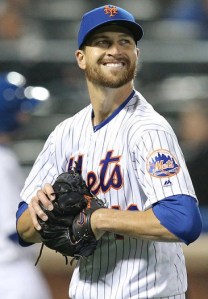
When Jacob deGrom won back-to-back National League Cy Young Awards despite ten wins the first time and eleven the second, enough of the Old Fart Contingent (OFC from here forward) went nuclear. They’ve really lost it this time, the OFC fumed over the award voters. They still fume, occasionally.

What was Max Scherzer with his three-way-tying eighteen wins, then? What was Miles Mikolas, with the least number of losses among the three with eighteen wins? (And the best winning percentage in the league.) That’s the OFC fuming. The proper question really is, what’s this continuing nonsense about judging pitchers first by their “wins?”

Well, maybe not. The truly proper question is: Name me one pitcher who got all 27 outs in the game all by his lonesome, with no help from the catcher calling his pitches or blocking pitches or spearing potential wild pitches; no help from the fielders behind him. (I could be a real rat and follow it with another question: Name me one pitcher who created and produced every run scored by his team during every one of his “wins.”)

While the crickets continue chirping from the OFC grounds, I’d like to show you a table of three 27-game “winners.” The only other thing this trio has in common is winning the Cy Young Award in those seasons. I’m going to show you their “won-lost” records first:

  W-L
Pitcher A 27-6
Pitcher B 27-9
Pitcher C 27-10

The OFC who looks at the “wins” and “losses” first will tell you Pitcher A was the best of the three when he had his 27-“win” season. Now, will the OFC have a look at the trio’s earned run averages, fielding-independent pitching (FIP; kind of your ERA when your fielders’ work is removed from the equation), strikeouts (screw Crash Davis, missing bats is not fascist), strikeouts per nine innings, and earned runs surrendered? (An [#] means leading the entire Show; a [*] means leading the league.)

  ERA FIP K K/9 ER
Pitcher A 2.95 4.19 127 1.7 78
Pitcher B 1.73# 2.07# 317# 8.8# 62
Pitcher C 1.97* 2.01# 310* 3.6* 76

Pitcher A’s 27-6 doesn’t look quite the leader of the pack now, does it? By the way, Pitcher A received 5.0 runs of support from his team while he was on the mound in his games that season. Pitcher B received 4.0 runs of support while he was on the mound in his 27-winning season. Pitcher C received 3.4 runs of support while he was on the mound in his 27-winning season.

The more runs a pitcher has to work with, the less stressful his day’s work will be, of course. Notice Pitcher A was a little too comfortable, surrendering the most earned runs of the trio while striking out the fewest. Pitcher C worked 26 more innings, approximately, than Pitcher B, and surrendered six more earned runs and struck out seven fewer batters. Pitchers A and C experienced fluke seasons overall; Pitcher B had just pitched his sixth straight season leading the entire Show in FIP.

Pitcher A is Bob Welch. Pitcher B is Hall of Famer Sandy Koufax. Pitcher C (perhaps appropriately) is Steve Carlton. Koufax and Carlton were the no-questions-asked best starting pitchers on their teams. Welch wasn’t. Not even close. As a matter of fact, two starters (including Dave Stewart) and two relievers (including Hall of Famer Dennis Eckersley) had better FIPs than Welch in 1990, while the same quartet also had better ERAs.

So how on earth did the 1990 American League Cy Young Award voters give Welch the award? They saw the 27 “wins” and didn’t bother looking at the real indicators of a pitcher’s effectiveness. If they had looked that deep, they would have handed the 1990 American League Cy Young Award to Roger Clemens. (ERA: 1.93; FIP: 2.18; K/BB: 3.87—all of which led the entire Show.)

“In baseball,” wrote Keith Law in Smart Baseball, “team victories matter, but the idea of a single player earning full credit for a win or blame for a loss exposes a deep ignorance of how the game actually plays out on the field.”

If you’ve ever actually watched an actual game of baseball, you know that the sport doesn’t function this way: even a pitcher who throws a perfect game gets some help somewhere—from his defense, from his catcher, and of course from the offense that scored at least one run so he didn’t have to go out and pitch the tenth inning—which happened to Pedro Martinez in 1995 while he was still a Montreal Expo. Pedro threw nine perfect innings against the Padres, but the Expos couldn’t push a run across until the tenth inning; only after that did he qualify for the win despite retiring all 27 batters he’d faced to that point. As the pitcher, Martinez couldn’t have done any more to help his team win the game, but he didn’t “earn” the victory until his teammates scored. This is because the entire thought process that led us to this point, where a starting pitcher gets that credit or blame, is both out of date and very, very stupid.

Don’t you just love watching the OFC temperatures bursting the mercury tubes? Would you like to send them straight into the ionosphere? Let me give you two more pitchers, one of whom won the Cy Young Award in the season in question and the other of whom out-pitched him profoundly:

  W-L ERA FIP K K/9 ER
The Winner 21-8 3.48 3.75 157 6.3 86
The Shoulda Been 16-7 2.87 2.80# 238# 9.2* 74

The winner was Bartolo Colon, 2005. The shoulda-been 2005 winner (if you’re picking strictly starting pitchers) was Johan Santana.

The OFC will tell you those 21 “wins” which led the American League made Colon a no-brainer. (How about one more “loss” than Santana?) The Show-leading FIP and strikeouts, plus the American League-leading 9.2 strikeouts per nine innings and surrendering 12 fewer earned runs, should have told voters Santana was the best starting pitcher in the league that season.

The only American League starter that year who got close to Santana’s ERA was Kevin Millwood, whose 2.86 led the league. But Millwood’s FIP (3.73) was only two points lower than Colon’s; he didn’t miss as many bats as Santana or Colon (146 strikeouts; 6.8 K/9); and, his K/BB ratio (2.81) wasn’t even Colon (3.65), never mind Santana (5.29).

Let’s look in another direction. In 1965, Sandy Koufax pitched a perfect game. Koufax struck fourteen batters out, including striking out the side in the ninth. The remaining thirteen outs came through the courtesy of three ground outs and ten fly outs. It’s absolutely fair to say Koufax himself took care of one more out than his fielders did. It’s absolutely fair to say that Koufax did more to win the game than the rest of the team did.

A year before Koufax’s jewel, Hall of Famer Jim Bunning pitched the National League’s first perfect game of the World Series era. (1903-present.) Bunning struck ten batters out. The remaining seventeen outs came by way of eleven fly outs and nine ground outs. Bunning needed more help than Koufax needed to consummate the game. So did a lot of other perfect game pitchers.

There are 21 perfect games in the World Series era, including one that was pitched in a World Series. Nineteen have available game logs, beginning with Charlie Robertson’s perfecto of 30 April 1922. We’ll see their strikeouts, ground outs, and fly outs. I’ll assign each pitcher a win factor (WF) based on his strikeouts (which he got by himself) divided by the sum of ground and fly outs (for which he needed more than a little help from his friends). I’m also including their fielding-independent pitching rates for those seasons.

Pitcher Score K GB FB WF FIP (Yr.)
Charlie Robertson (1922) 2-0 6 7 14 .286 3.85
Don Larsen (1956)* 2-0 7 6 14 .350 4.27
Jim Bunning (1964) 6-0 10 6 11 .588 2.75
Sandy Koufax (1965) 1-0 14 3 10 1.077 1.93
Catfish Hunter (1968) 4-0 11 7 9 .688 3.46
Len Barker (1981) 3-0 11 9 7 .688 2.46
Mike Witt (1984) 1-0 10 13 4 .588 3.16
Tom Browning (1988) 1-0 7 10 10 .350 4.50
Dennis Martinez (1991) 2-0 5 17 5 .227 3.17
Kenny Rogers (1994) 4-0 8 7 12 .421 4.55
David Wells (1998) 4-0 11 6 10 .688 3.80
David Cone (1999) 6-0 10 4 13 .588 4.28
Randy Johnson (2004) 2-0 13 7 7 .929 2.30
Mark Buehrle (2009) 5-0 6 11 10 .286 4.46
Dallas Braden (2010) 4-0 6 7 14 .286 3.80
Roy Halladay (2010) 1-0 11 8 8 .688 3.01
Philip Humber (2012) 4-0 9 5 13 .500 5.77
Matt Cain (2012) 10-0 14 6 7 1.077 3.40
Felix Hernandez (2012) 1-0 12 8 7 .800 2.84

Notice that only two of those perfect games have a pitcher win factor one or higher. They just so happen to be tied for the most strikeouts in a perfect game while we’re at it. On the other hand, Koufax got ten outs in the air and three on the ground. Still, Koufax and Cain were equal keeping the ball in the yard for a little help from their friends.
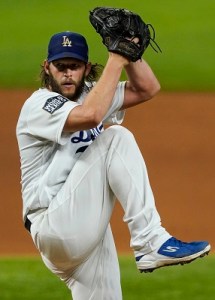
“How about we just de-emphasise the win?” —Clayton Kershaw.

So why shouldn’t Cain be regarded as Koufax’s equal? Aside from the obvious (Koufax is a no-questions-asked peak value Hall of Famer; Cain is maybe the 282nd best starting pitcher of all time), Koufax’s game kind of proved that practise makes perfect: he’d thrown one no-hitter in each of the three previous seasons. Cain’s perfecto was the only no-hitter of his career, and he had the most runs to work with of any of these perfect game pitchers.

Koufax also had a lot less to work with. He also pitched with the anomaly of his mound opponent, Bob Hendley of the Cubs, coming thatclose to pitching a no-hitter on the backside of the game. The lone run of the game scored on a walk, a sacrifice, a steal, and a throwing error on the steal; the only hit of the game was a double after which the batter was stranded without another baserunner.

The closest to the Left Arm of God was the Big Unit: Hall of Famer Randy Johnson had only two runs to work with while striking thirteen out. Johnson and fellow Hall of Famer Roy Halladay are also the only ones of the perfecto pitchers to divide the work among their teammates evenly between the infield and the outfield.

Don Larsen’s opponent in Game Five of the 1956 World Series was Dodger nemesis-turned-teammate Sal Maglie, who’d thrown a no-hitter of his own during the regular season while helping make the final Brooklyn pennant possible. Decades later, Maglie told Peter Golenbock (for Bums: An Oral History of the Brooklyn Dodgers), “I wish we had played in Ebbets Field the game that Larsen beat me, ’cause we hit some mighty long balls that were caught. In our ballpark, I don’t believe they would have beat me.”

Sour grapes? Among the above perfecto pitchers, Larsen tied with Charlie Robertson and Dallas Braden for the most fly outs. These are the flies from which Larsen benefited:

Duke Snider—liner to right field. (1st.)
Jackie Robinson—liner to third. (2nd.)
Sandy Amoros—pop fly around second base. (2nd.)
Carl Furillo—right field. (3rd.)
Sal Maglie—liner to center. (3rd.)
Jackie Robinson—deep right field. (5th.)
Gil Hodges—deep left center field. (5th.)
Carl Furillo—pop fly around second base. (6th.)
Roy Campanella—short center field. (6th.)
Pee Wee Reese—deep left center field. (7th.)
Duke Snider—fly to left field. (7th.)
Gil Hodges—liner to third. (8th.)
Sandy Amoros—deep left center field. (8th.)
Carl Furillo—right field. (9th.)

Maglie was probably right about Hodges in the fifth, Reese in the seventh, and Amoros in the eighth. Balls hit in Yankee Stadium’s impossible deep left center field just might have meant extra-base hits or home runs in Ebbets Field’s shorter dimensions. Robinson’s fifth-inning fly might have hit Ebbets Field’s higher, beveled right field wall. Hodges, Reese, or Amoros, maybe even all three, just might have had home runs if Game Five was played in Ebbets.

Dodger Stadium in 1965 was no hitter’s paradise, either, but Koufax surrendered only one deep fly out—Byron Browne’s high liner toward the back of right center field in the top of the second—that might have been extra bases or a possible home run if the game was played in Wrigley Field.

So what’s the point of all that? Maybe the point is that, even if you pitch a perfect game, you didn’t win it all by your lonesome unless you struck out every one of the 27 men you faced to get there without your catcher having to hold onto a foul tip or throw the batter out at first after bobbling or losing the ball on strike three.

Among the perfecto pitchers, Koufax and Cain got the closest. But if you also measure by each perfecto pitcher’s FIP in the season he turned his trick, Koufax was the most likely to pitch a perfect game the year he did it among any of the nineteen listed who did it—and Philip Humber was the least likely to do it.

(If only we had the game log for Cy Young’s 1904 perfecto! Pitching in the dead ball era, when pitchers were still encouraged to let the batters make contact as best they could, Young’s 1.83 FIP made him look like a candidate to pitch a perfect game, but with a 4.7 K/9 ratio you’d also think he needed a lot more help from his friends than Koufax [10.2 K/9 ration in 1965] did to nail one.)

The five pitchers who struck 20 or more batters out in a single nine-inning game did more to win those games than even the perfecto pitchers did.

Pitcher Score K GB FB WF FIP
Roger Clemens (1986) 3-1 20 3 4 2.86 2.81
Roger Clemens (1996) 4-0 20 8 4 1.67 3.43
Kerry Wood (1998) 2-0 20 5 3 2.50 3.16
Randy Johnson (2001) 4-3 20 3 6 2.22 2.13
Max Scherzer (2016) 3-2 20 3 10 1.54 3.24

Five starters in major league history struck out 20 in a nine-inning game and only two of them (Clemens, Wood) threw shutouts. Wood usually gets the big enough edge because a) he had half the runs to work with that Clemens had; and, b) only three balls hit off him traveled skyward. But Clemens needed one fewer out overall. That’s while pondering that, based on FIP, Johnson may have been the most likely of the quartet to punch out twenty in a nine-inning game.

If by now you’re beginning to think that maybe pitching wins aren’t everything for a pitcher, perhaps you’d like to have a look at a game illustrating that maybe pitching losses aren’t exactly everything for a pitcher, either:

Pitcher Score K GB FB WF FIP
The Hardest-Luck Loser? 1-0 8 14 16 .267 3.40

That was Harvey Haddix’s thirteen-inning heartbreaker in 1959. When he pitched twelve “perfect” innings only to have it broken up in the thirteenth for the loss. (The game is said to have inspired Lew Burdette—the Braves pitcher who went the distance to get credit for the win—when he talked contract before the following season: That guy pitched the greatest game of all time and he still couldn’t beat me—so I must be the greatest pitcher who ever lived. The prankish Burdette got his laugh . . . and his raise, so the story goes.)

There’s no question Haddix worked his tail off to get the game as far as he got it, but a combine of thirty ground and fly outs means he got a lot of help from his friends. Pitchers always do, when all is said and done.

The only friends from whom Haddix got no help were in the Pirates lineup, unable to push runs across the plate despite twelve hits including first and third in the top of the ninth. (They went 0-for-2 with men in scoring position and hit into three double plays while they were at it, too.)

Back to Jacob deGrom. We’ll have a look at his work during his two Cy Young Award seasons, the ones the OFC still believes shouldn’t have gotten him the awards because he didn’t “win” enough. Using the same win factor formula as I used to review the perfecto pitchers, this is the towering Met in 2018-2019:

Pitcher K GB FB WF FIP
Jacob deGrom (2018-2019) 524 360 331 .758 2.33

DeGrom’s win factor shows he pitched more than well enough to earn more “wins” than he actually earned over those two years and to avoid more “losses” than he was charged with in the same period. But enough of the OFC will insist deGrom’s 22 “wins” in 2018-19 mean he wasn’t even a winner, never mind Cy Young Award worthy.

There’s an active three-time Cy Young Award winner who could have been charged with heresy by the OFC for a remark he made during an interview with MLB Network at the 2012 All-Star Game. He actually said, more or less, that pitching “wins” aren’t everything.

Well, he was asked if the pitching win ought to be sent the way of the 78 rpm record. (Well, not quite in those words.) According to Ahead of the Curve author Brian Kenny, one of the three interviewers, this pitcher “said he thought there were many more important categories and thought the W-L was frequently misleading. [Harold Reynolds and Dan Plesac] groaned, lamenting a missed opportunity to crush me.”

I seized on it, asking, “Can we then count on you for the Kill the Win program?” [This pitcher] answered diplomatically, “How about we just de-emphasise the win?”

I’ll take it, Clayton.

That’s Clayton as in Kershaw, he with a pair of 21-game “winning” seasons and the lifetime 175-76 “won-lost” record. The pitcher who nailed back-to-back Cy Young Awards with a 1.91 FIP, a 1.96 ERA, and a mere 16 “wins” in the second of the two seasons. (The first: 21 “wins.”) The fellow who struck out 530 batters over those two seasons, against 418 ground outs and 235 fly outs—for an .812 win factor.

When a man winning back-to-back Cy Young Awards with a win factor higher than those seasons’ “winning percentage” talks, it might be wise to listen.

If it’s any comfort to either himself in the Elysian Fields, or to the OFC any old place you choose to place them, Harvey Haddix’s 1959 FIP says he was more likely to pitch and consummate a perfect game than eight pitchers who actually did pitch and consummate them. Including the million-to-one shot who did it in a World Series.