The owners, running out of feet

2020-06-14 CamdenYards

Oriole Park at Camden Yards. Other than frustrated Oriole fans who’d like to throw things at Peter Angelos, baseball fans don’t spend money to see their teams’ owners. The owners still don’t get the message.

But . . . but . . . not. profitable. That’s what enough of Major League Baseball’s owners kept trying to tell us while they tried to strong-arm their product (the players, in case you keep forgetting) into playing a short 2020 season and accepting less than their agreed-in-March pro-rated 2020 salaries. Right?

But . . . but . . . not. profitable. Never mind that the redoubtable Thomas Boswell once actually figured out that, over the past century’s time, baseball owners have hauled down a twelve percent compound annual rate of return: “That kind of tax-free compounding . . . is like striking an oil well that never runs dry.”

But . . . but . . . not. profitable. Baseball’s such a money loser that MLB just nailed a billion-dollar deal with Turner Sports—you may recall that its founding father once owned the Atlanta Braves—to “keep a playoff package that includes one of the league championship series on the network,” according to the New York Post. Earning MLB at least $150 million a year more than under the current deal set to expire after next season.

Philadelphia Phillies outfielder Andrew McCutchen couldn’t resist. “But baseball is dying!” he snarked. And who could blame him?

When you’re a group that pulls down the aforesaid compound annual rate of return, Boswell said three days ago, and you happen to be baseball’s stewards, “holding the sport in multicentury trust for fans who love it and support it,” you “have a duty to take the brunt of the financial hit from the coronavirus. In the long run, the owners, as a group, are always the huge winners. The players just pass through and get what they can grab — some of them a fortune but most far less.”

. . . The owners’ position appears to be: We don’t want to lose money. The whole world is. But us, no. We want players to accept additional pay cuts below a prorated level (but we won’t show you our books). In contrast, we will take a $0.00 year but not a share-the-pain loss . . .

. . . The owners are so self-protective, so oblivious to the good of the game, they even want to maximize their defenses against a second wave of the virus. Oh, we will play until the normal Oct. 31. But don’t talk to us about playing games in November because that would increase the chance of an erased World Series, lost TV money and losses for us.

That was three days before the Turner Sports deal. Now, remember, as Boswell does: The owners want the absolute maximum safety margin if the Show comes back, but if you assume the coronavirus isn’t quite finished with its grand tour guess who takes the maximum safety risk?

Hint: They’re the ones you pay your hard-earned money to see in uniform on the field, at the plate, on the mound. Accuse me as you must of flogging a dead horse, but nobody hands over anywhere from $15 to $150 or more per ticket to take themselves and their families or friends out to the ballpark to see Peter Angelos (not counting frustrated Oriole fans wanting to throw things at him), Mark Attanasio, Jim Crane, Bill deWitt, John Henry, Mark Lerner, Arte Moreno, Tom Ricketts, Hal Steinbrenner, and company.

Again assuming the coronavirus tour isn’t finished, the maximum risk takers are also the ones who guide you to your parking spot; sell you the food, drinks, souvenir hats and jerseys and other chatzkahs of rooting; post around the parks to keep the lunatics from spoiling your fun; and, run the park facilities from the gates to the scoreboards to the concession stands and back.

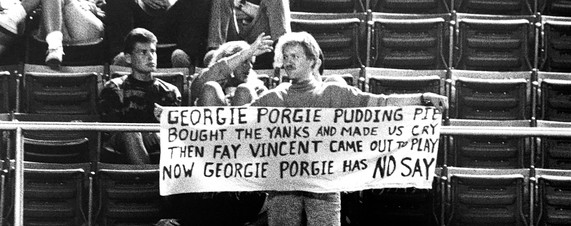
Show me a baseball owner and I’ll show you someone who shoots himself in the foot so often it’s a wonder he has a foot left to shoot. Of all the cliches you can attach to the so-called Lords of Baseball, and it’s been true for just about the entire life of professional baseball, the truest may be that they never miss the opportunity to miss an opportunity. (Except, perhaps, for the tax write-offs.)

Here’s the sport that could and should have dropped the big one on its competitors and gotten major league baseball back onto the field on the Fourth of July. “You get 15-games-a-day visibility before the NBA and the NHL return,” Boswell wrote, “as well as a two-month jump on the NFL.” So much for that idea.

That kind of image enhancing would have been worth more than the entire difference ($4.6 billion, roughly, if you’re scoring at home) between what Hal Steinbrenner’s late father paid to buy the New York Yankees from CBS in 1973 and what the Yankees are worth today.

The only shock, then, in the players all but walking away from the negotiating table on starting a delayed 2020 season—as The Athletic‘s Ken Rosenthal and Evan Drellich put it Saturday, “The March agreement between the parties empowers commissioner Rob Manfred to set the number of games as long as the league awards the players their full prorated salaries, with the caveat that the league make its best effort to make the schedule as long as possible”—is that anyone should be shocked.

Except, perhaps, by the owners looking for every possible way to renege on the March agreement, and the players—not always eloquently, not always with their best (unshot) feet forward—looking for every possible way to thwart them.

Remember the wisdom of the late Hall of Fame manager Sparky Anderson, again: We try every way we can think of to kill this game, but for some reason nothing nobody does never hurts it. Come Monday, when the players asked the commissioner to finalise seasonal plans, we may begin learning whether Anderson is still right.

MLB’s own Saturday statement said they were “disappointed” that the players chose not to negotiate “in good faith.” Set aside for the moment how similar that is to the classic Communist tack of claiming the invaded were the invaders. Remind yourself that, from time immemorial, the owners demanding “good faith” is like hearing Attila the Hun sing “All You Need is Love.”

The Yankeegate letter

2020-06-13 YankeeStadium

What further manner of extralegal sign-stealing Yankee panky might be brought in from the cold?

We’re about to learn the details of commissioner Rob Manfred’s 2017 written admonition to the New York Yankees about extralegal sign stealing. Federal judge Jed S. Rakoff has ordered the letter unsealed and submitted publicly and “minimally redacted” by both the Yankees and Major League Baseball no later than Monday. Very interesting.

That the Yankees used an illicit dugout telephone and may have used their own replay room reconnaissance on behalf of extralegal sign stealing in or before 2017 wasn’t exactly a baseball state secret, however often it was buried beneath the hooplas of Astrogate and Soxgate before the coronavirus turned most of that to one side.

The case involves the DraftKings fantasy baseball playing group suing MLB for fraud over the extralegal sign stealing scandals that jolted and discredited both the Houston Astros (2017-18) and the Boston Red Sox (2018). Rakoff ruled against DraftKings two months ago, but DraftKings thinks there was more in Manfred’s written Yankee spankee than both Manfred and the Empire Emeritus disclosed.

Beware the fool factor, though. Rakoff’s April ruling was comparable in its absurdity to Neville Chamberlain proclaiming peace in our time after agreeing to hand Hitler the Sudetenland 1938:

A sport that celebrates ‘stealing,’ even if only of a base, does not provide the perfect encouragement to scrupulous play. Nor can it be denied that an overweening desire to win may sometimes lead our heroes to employ forbidden substances on their (spit) balls, their (corked) bats, or even their (steroid-consuming) bodies. But as Frank Sinatra famously said to Grace Kelly (in the 1956 movie musical High Society), “There are rules about such things.”

As I couldn’t resist writing then, “The Chairman of the Board spoke to the future Princess of Monaco about love and war and what’s fair in both, not whether the Man of Steal* was really a shameless criminal for stealing as many bases as Robin Yount drove in runs. (1,406.)” Saying DraftKings didn’t have a case wasn’t the same thing as arguing choplogically that fantasy baseball players ought to go in with the presumption of guilt.

Remove for the moment the ongoing haggling over getting a major league baseball season underway at long enough last, the haggling provoked mostly by the owners trying to strong-arm the players into accepting a renege on their March agreement (full pro-rated player salaries, for openers) and the players saying, “We’ll just see about that.”

Absent all that, few baseball fans were unaffected by Astrogate and Soxgate. Fewer still were thrown more into internal turmoil than Astro fans and Red Sox fans faced with the actualities that their heroes, teams of excellence and (ahem) intelligence, who seemed to need extralegal espionage about as badly as the Flash needs a jet pack, were barely-apologetic high-tech cheaters.

Numerous players joined the fun in denouncing the Astro Intelligence Agency and the Rogue Sox Replay Room Reconnaissance Ring. No few of them were Yankees. Now the Yankees may or may not be exposed as going beyond a naughty extra dugout telephone or even their own replay room reconnaissance. No few in the social media swamp demand, too, that the hypocritical Yankees duct tape their mouths shut from this day forward.

So you thought the “what-about” style of rejoinder was limited to answering valid critiques of office holders with the comparable mischief or crimes committed by their predecessors. Must we be reminded continuously that mischief or crimes by one don’t justify those by a successor?

When I reviewed the second-edition publication of Paul Dickson’s The Hidden Language of Baseball: How Signs and Sign-Stealing Have Influenced the Course of Our National Pastime, I wrote that, just after the Rogue Sox were caught taking a bite out of an AppleWatch on behalf of espionage against the Yankees, a Yankee fan thought so well of sometimes beleaguered catcher Gary Sanchez that the fan decided to do Sanchez a huge favour at the plate. As Dickson told it:

[A] fan with a good view of the catcher and a strong set of lungs bellowed out information to . . . Sanchez while he was hitting in the eighth inning of his team’s game with the Tampa Bay Rays. Sanchez heard the voice, but so did Rays catcher Wilson Ramos and the home plate umpire, Dan Bellino, who pointed out the man to stadium security and had him removed from the stadium . . . “You could definitely hear the guy screaming, ‘Outside, outside,’ but you don’t know if it’s going to be a slider or a fastball,” Sanchez said afterward. “You got to stick to your plan, whatever plan you have, regardless of what people are screaming.”

Dickson couldn’t resist adding that that may have been the first time a fan was thrown out of the ballpark for sign stealing.

(Reminder: Sometimes fans blow the whistle on the spies. It happened in Wrigley Field in 1960, when bleacher fans caught Milwaukee Braves pitchers Bob Buhl and Joey Jay red-handed among them, training binoculars on the home plate area and relaying stolen signs to their hitters. Those fans tipped off the Cubs’ bullpen, who relayed the word to the dugout, that Buhl and Jay were jobbing them.)

We’ll know soon enough whether there is a genuine Yankeegate coverup on our hands above and beyond what we knew already about their illegal dugout phone and possible replay room reconnaissance. The Yankees would prefer the fuller disclosure of Manfred’s 2017 letter not happen, of course. Richard Nixon wasn’t exactly anxious to have the White House tapes disclosed fully, either.

“The plaintiff has no case anymore,” says a statement from Yankee attorney Jonathan Schiller to The Athletic, “and the court held that what MLB wrote in confidence was irrelevant to the court’s dismissal of the plaintiff’s case. Under established law, this supports the Yankees’ right to confidentiality required by the Commissioner of Baseball.”

This isn’t an instance of compelling public disclosure of scouting information. It’s not even an instance of compelling public disclosure of team financial value, never mind that fans can never help noticing player salaries are known publicly and to the last dollar but teams’ and their owners’ financials often seem to require extracurricular excavation.

Disheartened Astro and Red Sox fans would probably want nothing more than to know who else—aside from since-purged Astros manager A.J. Hinch, Astros bench coach-turned-Red Sox manager Alex Cora, former 2017 Astros DH-turned-New York Mets manager Carlos Beltran, and Rogue Sox replay room operator J.T. Watkins—availed themselves of those espionage operations.

Disheartened Yankee fans would probably want nothing less of their team, too. Every baseball fan probably wants to know that the line between on-field gamesmanship and off-field-based subterfuge won’t be crossed again any time soon.

The history books have long revealed those players, coaches, and managers who took up high tech cheating in their times. (It didn’t begin or end with the 1940 Tigers, the 1948 Indians, the 1951 Giants, or the 1961 Reds.) Do heartsick Astro, Red Sox, and Yankee fans really want to wait that long before knowing once and for all who was or wasn’t among their teams’ extralegal cheaters?

DraftKings may have no legs claiming deliberate fraud, but if the Astros and the Red Sox couldn’t escape disclosure Yankeegate shouldn’t be treated as a mere annoyance, either. Especially with the chance that, if nothing new might be exposed, everything known might be clarified further–and deeper. Might.


* – Hall of Famer Rickey Henderson.

Claudell Washington, RIP: Signposts

2020-06-10 ClaudellWashington

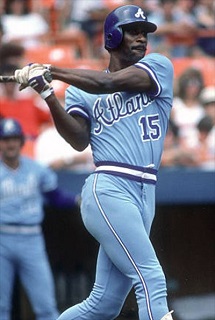
Washington’s 1980 signing with the Braves jolted the free agency market and prompted at least one owner to sell his team.

Claudell Washington, who died Wednesday morning at 65, was a useful player, not exactly one of the greats of his day, who had a little power and a little more speed. But in his first seven major league seasons (1974-1980), he also  impressed a few too many as being a little on the lax side in the outfield.

“[T]he same guy,” John Helyar recorded in The Lords of the Realm, “whose indifferent outfield play cause fans near his Comiskey Park station to hang a banner: WASHINGTON SLEPT HERE.” The same guy who averaged 1.9 wins above replacement-level overall and -4.3 WAR defensively in the same span.

The same guy who jolted baseball bolt upright in November 1980, when then-Atlanta Braves owner Ted Turner signed the guy White Sox fans compared to a sleeping president to a five-year deal totaling $3.5 million and worth about $700,000 a season.

That deal almost choked Philadelphia Phillies owner Ruly Carpenter, Helyar observed, and with good enough reason. Carpenter may have quaked over free agency, enough to hand Hall of Famer Mike Schmidt a six-year, $3.6 million contract in 1977 (before his first prospective taste of free agency), but when the Phillies started getting “close enough to a pennant Carpenter could taste it” he chased down and signed Pete Rose.

The Phillies needed a little help at the time from their television outlet, WPHL, and got it. That helped them land Rose for four years and $3.23 million plus an extra $225,000 based on total games played. It made Charlie Hustler the highest-paid team sports player on the planet at the time.

One month after that deal plus everything else working right for the Phillies culminated in a wild celebratory parade drawing half a million fans to downtown Philadelphia, Washington’s deal with the Braves convinced Carpenter that a few too many brains among his fellow owners went to bed with no hint of waking up.

He could live easily with the Mike Schmidt extension and the Pete Rose signing. These were top of the line players: baseball’s arguable greatest third baseman ever, with power to burn, a phenomenal on-base knack for such a power hitter, and well above average defense; and, one of its more tenacious slap-and-slash hitters who played the game like a guerilla warrior, even if that was as much for showing as for blowing. And the Carpenter family wasn’t exactly living on Poverty Plaza.

Even with his longtime bent toward scouting and player development, Carpenter wasn’t so blind as to ignore the results when George Steinbrenner hit the early free agency market running, blended it with scouting, and bagged back-to-back World Series titles in 1977-78. What unnerved Carpenter was the kind of owner comparative newcomer Ted Turner was and others new and old were showing themselves to be.

These and other owners, essentially, would scream all kinds of blue murder over this or that high-priced free agent signing—until they got to sign a few of their own, of course. The Washington deal, for Carpenter, secured it. The signpost said, “Disregard posturing. Business as usual,” as Helyar translated it.

Carpenter and his family would talk it over for months to come before putting the Phillies on the sales floor. A decade later, while the owners were occupied otherwise demanding the players stop them before they overspent, mis-spent, or mal-spent again, there came an even more portentious moment than the Washington signing—and an equally revelatory one.

Barely had the owners gotten past their execrable late-80s collusive bid to suppress player salaries (which cost them mucho millions in the end) when the San Francisco Giants showed top-of-the-line-looking money to . . . Bud Black, something of the pitching equivalent to Washington: good, serviceable, not even within telescopic sight of the top of the line.

If a pitcher with a 3.70 lifetime ERA to that point who barely missed bats, gave up eight hits per nine innings’ work, and walked two-thirds of what he struck out, was worth $2.5 million for four years beginning in 1991, you could smell the same blood smelled by other pitchers who may not have been Orel Hershiser’s or Jack Morris’s equals but knew they were a little more valuable than Black. The same blood and the same continuing salary inflation.

What did it say, too, when the Giants’ GM who made the Black deal and a few other headscratchers over the previous couple of years, Al Rosen, went to the 1990 winter meetings lamenting the player salaries going wild and crazy?

Is it really any wonder that today’s players, like their 1980s and 1990s forebears, trust the owners about as far as they can hit or throw them? Is it really any wonder than those with eyes to see and ears to hear know that when the owners cry “going broke” the proper response is “prove it?”

Chicago Cubs owner Ted Ricketts says it’s not like you can just shift dollars at will—yet his franchise is worth $3.7 billion after his family bought the team for $900 million in 2009. St. Louis Cardinals owner Bill DeWitt, Jr. says major league baseball isn’t all that profitable—the same man who bought the Cardinals for $150 million in 1996 and saw his team’s value become $2.1 billion this year. (He’s not so impoverished that he couldn’t purchase a third home for about $8 million in the Hollywood hills, either.)

Remember those the next time you hear the owners demanding the players surrender monies to play ball this year. Or, the next time you pick up a newspaper, flip on the television set, or hit the Internet running and discover a team signing today’s version of Washington or Black for today’s version of, say, money close enough to Jacob deGrom or Justin Verlander money.

None of which was Washington’s fault. The only thing that better resembles a case for a straitjacket than Turner showing him that money would have been if Washington had turned Turner down, human nature being what it is.

He looked promising at the beginning of his career; Bill James (in The New Historical Baseball Abstract) called him “among the best players ever to slip through the draft.” He was an undrafted free agent who had his career year at age 20 but didn’t develop from that point forward, unfortunately.

As a 1974 Oakland Athletics sophonore, Washington continued making an impression when he kept Hall of Famer Gaylord Perry from a sixteen-game winning streak that would have tied the American League record. He slashed a triple in the eighth and, in the bottom of the tenth, with Perry still in the game, he smacked an RBI single to win it. Then he went 4-for-7 helping the A’s win a third straight World Series.

Washington’s career stops other than Chicago and Atlanta included the Texas Rangers, the New York Yankees, and the California Angels. “[G]uarantee he was a teammate/clubhouse favorite on each team he played for,” tweeted Braves legend Dale Murphy, who played five years with Washington. “Thankful for the chance to be teammates in #ATL.”

He was a useful fourth-outfielder for those Braves even as the team transitioned from early 1980s success toward their late-1980s deflation. He was one of those players who could do a little bit of a lot but never really lived up to what he showed in 1973-74. It didn’t exactly make him unique among journeymen.

But Washington was good enough to play seventeen journeyman major league seasons. You can surely fill two stadiums with all the players who weren’t that fortunate. How many would be remembered as favourite teammates? And how many achieve celluloid immortality? (Washington did that, too: a clip of him merely ticking a foul ball into the left field seats down the foul line turned up in Ferris Bueller’s Day Off.)

Washington takes all that with him to the eternal peace of the Elysian Fields and to be serene and happy there as he deserves, though here on earth assorted teammates and especially his family will miss him terribly.

“It looks like 1994 all over again”

2020-06-08 FayVincentRogerCraig

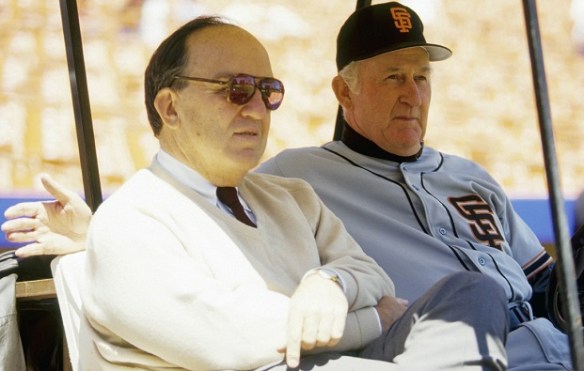
Then-baseball commissioner Fay Vincent relaxes with then-San Francisco Giants manager Roger Craig. Today Vincent thinks MLB owners haven’t learned a thing from their unforced errors of the past.

The Los Angeles Dodgers left Dodgertown—their legendary Vero Beach, Florida spring training complex, which Branch Rickey began and Walter O’Malley completed—for fresh digs in Arizona after the 2008 season. Former baseball commissioner Fay Vincent and his wife built a home in Vero Beach six years earlier.

From that home today, Vincent is unamused by today’s coronavirus-abetted baseball furies. The commissioner who didn’t ask “how high” whenever the owners ordered “jump!” thinks today’s owners are looking for more trouble than even the 1994 strike those owners provoked eyes wide shut.

Today’s owners, pleading potential poverty with little enough evidence to support the plea, seem to prefer jamming an abbreviated 48- or 50-game 2020 season down the throats of the players who prefer and hope to play an 80- or 82-game season. This morning’s whispers indicate that the haggling could mean a season beginning not in July but in August, if at all.

Assuming the owners stay on the terms of a March agreement to pay the players pro-rated 2020 salaries, even Sesame Street‘s residents can tell you that normal times equal the owners thinking the good of the game is making money for them, but abnormal times equal the owners thinking the good of the game is . . . making or at least saving money for them.

Not so fast, warns the last commissioner not to cancel a World Series. (1989, rudely interrupted by the Loma Prieta earthquake shaking Candlestick Park into being nicknamed by one wag “Wiggly Field.”) “[I]f you shut the game down,” he told NJ.com columnist Bob Klapisch, “you’re going to war with the [Major League Baseball Players Association] and that union cannot be broken. It looks like it’s 1994 all over again. I don’t think anyone has learned their lesson.”

The players want the owners to live up to the agreement the two sides made in March. The owners want the players to live down to it. Vincent remembers what a lot of people forget: nobody pays their hard-earned money to go to the ballpark or watch the game on cable television because they’re anxious to see their team’s owner.

The names on the backs of jerseys in which Joe and Jane Fan step out on the town read Trout, Harper, Scherzer, Bellinger, Judge, Yelich, Altuve, and Bumgarner—not Moreno, Middleton, Lerner, Guggenheim, Steinbrenner, Attanasio, Crane, or Kendrick. (Unless it’s Howie Kendrick, 2019 World Series hero.)

“Over the last 25 years,” Vincent told Klapisch further, “there’s been this general myth that the players have done better than the owners. People think, ‘the union’s won because the players are making so much money.’ Well, the reality is the Yankees are worth $10 billion. If the Steinbrenner family sold the team today, the players wouldn’t get a nickel. The players don’t own YES, they don’t own SNY, they don’t own NESN. So tell me who is the winner and who is the loser?”

It cost George Steinbrenner and his original partners $10 million to buy the Yankees from CBS in 1973. Today the Yankees—with their singular if not always controversy-free history—are actually worth $4.6 billion. But still. “That team is one of the greatest investments in history,” Vincent said, “and [the Steinbrenner family] owns it all. The same is true for all the owners: after tax dollars and capital gains (tax) they’ve held onto every bit of equity.”

Vincent gets why the MLBPA and their executive director Tony Clark, himself a former longtime major league first baseman, trust the owners about as far as they can hit or throw them. It’s not that the owners necessarily learned to play nice beforehand, but the mid-1980s collusion of owners suppressing genuinely competitive free agent biddings probably did the most to re-convince the players that most of the owners were about as trustworthy as a politician.

The owners were finally mandated to pony up $280 million in damages for their trouble then. “They owners stole that money from the players,” Vincent said, and you could practically feel him snap as you read the quote. “Stole it. There’s no other verb. When you steal that much it’s a hard argument to deflate. It’s why the players have never trusted owners since then.”

2020-06-08 FayVincent

Banishing George Steinbrenner from baseball over paying a street hustler to find dirt on Hall of Famer Dave Winfield made Vincent a hero in New York.

Vincent was thrust into his former office upon the death of A. Bartlett Giamatti, who barely got to serve a full year in office before—abetted, but not necessarily caused by the ferocious stress of the Pete Rose gambling investigation he’d been bequeathed—suffering a fatal heart attack at 51 eight days after he banished Rose.

When he showed himself a mediator instead of an owners’ errand boy or strong-arm to end the 1990 spring lockout, Vincent made few enough friends among those who thought he was there to do their bidding strictly. Like Giamatti, who didn’t live long enough to suggest whether he’d always behave as though the good of the game didn’t always equal making money for it, Vincent didn’t see himself as his bosses’ stooge.

A man who loves baseball as deeply as his predecessor did, but without Giamatti’s scholarly but accessible eloquence, Vincent visited as many ballparks as he could. He was present and rooting in Milwaukee on 31 July 1990, the night Hall of Famer Nolan Ryan earned credit for his 300th win, even accepting the chance to sit and chat with Ryan in the dugout.

White Sox owner Jerry Reinsdorf, arguably the number one pusher for the 1994 strike, was not amused. “Nolan Ryan’s a player,” Reinsdorf “reminded” Vincent. “You’re the commissioner of baseball. You can’t be in awe of a player, I don’t care who he is.”

Thus said the man who commissioned statues of Hall of Famers Luis Aparicio, Harold Baines, Carlton Fisk, Nellie Fox, Frank Thomas, and Jim Thome around Comiskey Park—oops! Guaranteed Rate Field—not to mention those of Paul Konerko, Minnie Minoso, and Billy Pierce. Reinsdorf certainly seems somewhat awed by middle and corner infielders,  a couple of designated hitters, at least one catcher, and at least one pitcher. (So where’s Hall of Famer Hoyt Wilhelm?)

When he banished Steinbrenner from baseball in 1990, after Steinbrenner was caught and exposed having paid a street hustler to dig up dirt on his future Hall of Fame outfielder Dave Winfield, Vincent lost the Yankees as an ally but won admirers in New York and elsewhere. The news broke while the Yankees hosted the Detroit Tigers at Yankee Stadium and provoked a slowly circulating standing ovation from beleaguered Yankee fans.

Vincent ran afoul of the owners for keeps in 1992. A cabal of smaller market owners led by Reinsdorf and then-Milwaukee Brewers owner Bud Selig (the cabal was known as the Great Lakes Gang), fed up with Vincent’s apparent disinclination to let them keep pleading poverty against those big beasts in the larger markets, knowing only too well that they weren’t as impoverished as they claimed, were only too ready to dump him and finally lined up the votes to do it.

He knew a few things they’d forgotten conveniently, including that it was their own fault player salaries inflated beyond sensible logic as the 1980s turned into the 1990s. Nobody put guns to anyone’s heads when, for example, San Francisco Giants general manager Al Rosen blew a hole in the market ceiling by signing a good but not great 33-year-old pitcher named Bud Black to four years at $2.2 million per, the kind of money paid usually to the Orel Hershisers of the time, not guys with ERAs approaching 4.00.

Vincent also didn’t help himself when he tried strong-arming three Yankee people including manager Buck Showalter out of baseball for going to bat on behalf of drug-troubled relief pitcher Steve Howe, whom Vincent allowed to return to the Show after six previous drug-related suspensions. The commissioner enraged many and caused headlines when he ordered the Yankee three to his New York office as Showalter was preparing to manage a game—with Showalter returning as the game was in progress.

Vincent resigned in 1992, after an 18-9 (one abstention) no-confidence vote by the owners. Except perhaps for his foolish bid to drive the Yankee three out of baseball over Howe (he fumed when one said he’d learned in the Marines that you don’t abandon the wounded), he was the commissioner who swung and missed at knockdown pitches. He remains the last commissioner who was neither an owner nor the handpicked successor to that eventually-former owner.

But if you ask as Klapisch did whether this year’s strife means no major league season and good luck selling a 2021 season, Vincent says . . . well, not so fast. “Even with what’s gone on it’s hard to really, truly damage this game,” Vincent said. “It always comes roaring back, especially if it’s been taken away for a long period of time. Fans end up missing it. Remember one thing. People do love baseball.”

He said in less tortured grammar what Sparky Anderson, Hall of Fame manager, once said by smooshing a pie in the face of the King’s English: “We try every way we can think of to kill this game, but for some reason nothing nobody does never hurts it.” Possibly until now.

Darkness gone for the former Dark Knight?

2020-06-07 MattHarveySI

Little did Tom Verducci know that when he pegged Matt Harvey as the Dark Knight that another kind of darkness would compromise Harvey’s once-promising career.

Ten 7 Junes ago, the Kansas City Royals with the number four pick elected to draft a Cal State-Fullerton shortstop named Christian Colon instead of a University of North Carolina pitcher named Matt Harvey—because they thought they had enough pitching.* The New York Mets in the same draft picked two pitchers: Harvey, with the number eight pick overall, and a Stetson University kid named Jacob deGrom.

Five years after that draft, Harvey bulldozed his manager Terry Collins into letting him try to finish a World Series Game Five shutout that would have sent the set to a sixth game back in Kansas City.

“Would I take back getting to the World Series with those guys and the city of New York?” Harvey asks now, before answering.   “There’s not a chance. I believe things happen the way they are supposed to. I got hurt and maybe I would have anyway. Getting to the World Series was worth it.”

Then Collins had to lift his gassed Dark Knight after a leadoff walk and an RBI double and bring in his closer Jeurys Familia, who already had a sick-looking Series resume thanks to those Mets’ porous infield gloves. Unfortunately, you can’t give the blown save to the defense under the save rule.

Two groundouts, then a terrible throw home to complete what should have been a simple game-ending double play, and Game Five went to extra innings. Where Colon, pinch hitting for Royals reliever Luke Hochebar, broke the two-all tie in the top of the twelfth, opening a five-run inning that won the Series for the Royals after the Mets couldn’t get a single baserunner past second in the bottom of the frame.

Today, deGrom—who waited until the ninth round before the Mets took him, too, ten years ago—is the National League’s back-to-back defending Cy Young Award winner. Arguably, he’s also the best pitcher in the game right this moment, among those not named Max Scherzer or Gerrit Cole.

Harvey, whom the Mets traded to the Cincinnati Reds in 2018, who signed as a free agent with the Los Angeles Angels for 2019, who was released after that experiment tanked, and who gave it another try in the Oakland Athletics system the rest of the season, now looks for a job. In the Korean Baseball Organisation.

MLB’s tug-of-war between the owners and the players over the financials in getting a coronavirus-delayed 2020 season in at all probably meant it was a very long shot for Harvey to catch on with another major league organisation for now. He doesn’t mind taking his chances otherwise.

“It’s been an interesting ride, a roller coaster,” Harvey tells the New York Post. “With where I am now, physically and how I’m feeling, I hope I get another shot.” Calling it “an interesting ride” may be an understatement. Which is saying something about a pitcher you could call many things other than understated.

“As soon as he signed, he came to New York. I saw this big, good-looking kid standing in our bullpen with a black suit, white shirt, very thin tie — very GQ-ish, as he always was,” the Mets’ then-pitching coach Dan Warthen tells the Post. “His hair was always perfect. Then you see the ball coming out of his hand and you say, ‘Oh, it won’t be long until he’s playing baseball up here.’ And he was cocky, oh Lord. He said, ‘Hey, I’ll be ready to pitch for you next year’.”

Harvey premiered for the Mets in late July 2012, against the Arizona Diamondbacks.  He struck out ten in five and two-thirds innings while walking three and scattering three hits. “All of the reports I read,” says then-Mets manager Terry Collins, “didn’t talk about a 98 mph fastball. It was ’94-95, pretty good slider, working on changeup.’ All of a sudden, this guy is throwing 97-99 with a 92-mph slider. I said, ‘Holy cow!’ We were shocked by what we saw.”

“When he burst on the scene with a fury, it was fun, man,” then-Mets pitcher Dillon Gee—whose own career was sapped by injuries until he retired last year—tells the Post. “You had heard about him coming up. When he got here, he was like on a different level. You could tell he was a special talent.”

By the following season, Harvey was practically the talk of the town in New York baseball. When he ended June 2013 with a 2.00 ERA, Met fans has already begun greeting his starts with “Happy Harvey Day!” Harvey started that year’s All-Star Game—which was played in Citi Field, his home ballpark. The American League went on to win, 3-0, but Harvey’s three strikeouts in two innings electrified the joint.

Then Sports Illustrated put Harvey on the cover with the headline, “The Dark Knight of Gotham.” But the writer who delivered that cover story, Tom Verducci, would write five years later, after Harvey pitched (and, many said, partied) his way out of New York, “The truth is, for all the times he wound up in the tabloids other than the sports section, Harvey failed because his arm failed him.”

. . . His arm likely failed him because of how he threw a baseball. And when his arm failed him, he knew no other way. He couldn’t pitch without an A-plus fastball, he couldn’t embrace using a bullpen role as a way back, and he couldn’t believe in himself again.

. . . The Mets cut Harvey because his once-fearsome fastball became the almost exact definition of a mediocre fastball (MLB averages: 92.7 mph, 2,261 rpm). Because he couldn’t find another way to get hitters out, because he could not change his mechanics and because he could not buy into the bullpen, the Mets could not keep sending [him] out to the mound as a starter.

The decline in his stuff was obvious. And there was no way his fastball was coming back with the way he throws.

Especially not after blowing his elbow ligament into Tommy John surgery late in 2013 (which didn’t keep him from leading the Show with his 2.01 fielding-independent pitching rate or third in the National League with his 2.27 ERA), or incurring thoracic outlet syndrome, the surgery for which cuts somewhat invasively into the shoulder and the back, or trying too hard to come back too soon from both.

Be very afraid, Pittsburgh Pirates fans. Your struggling pitcher Chris Archer (though he did pitch decently after last year’s All-Star break) just underwent thoracic outlet syndrome surgery himself, who probably won’t return if and when major league baseball returns, and who may even find himself receiving a contract buyout before he can pitch 2021 and hit free agency after that season.

Like Harvey, alas, Archer’s post-surgery career prospects don’t look as promising as he himself formerly looked.

“I had TOS,” Gee says. “I know how much that sucks. It definitely changes you. You start trying to tinker with things. It’s not natural anymore. You start being robot-ish. You start not trying to hurt one area and totally hurt another area. Your whole body is out of whack.”

The limelight and the taste for night life among New York’s demimonde certainly didn’t help Harvey in the long run. “You could see the media and limelight kind of became part of what he wanted to do,” says Gee. “I’m sure that is super, super hard not to let that creep in, as popular as he got. I couldn’t imagine being bombarded as he was. He was the guy.”

Who’s to say, too, that Harvey didn’t sink into the demimonde because the slow realisation that his body began betraying the talent that got him there in the first place was too painful to bear? Dark Knights are supposed to be invincible, right?

Verducci believes Harvey’s mechanics both took him to the Show and eroded him soon enough. “Harvey pulls the ball far behind him—crossing the airspace over the rubber,” he wrote, “a strenuous maneuver that rarely leads to long careers.”

Harvey’s psyche also may have fallen out of whack in 2017, when that May Brazilian supermodel Adriana Lima, with whom he thought he had an enduring romance in the making, parted with him to leave a tony Manhattan afterparty with her former boyfriend, a New England Patriots football player.

Up to that point Harvey’s taste for the charms of supermodels was rivaled only by his taste for a ride whose value sometimes equaled that of a modest suburban home. But a few days later, Harvey missed a game claiming a migraine but possibly suffering a ferocious hangover, as the Post‘s Page Six had it. It got him a three-day suspension from the Mets.

Then Harvey suffered yet another injury, a stress fracture in his shoulder area, ending his 2017 and draining more off his fastball. The following season, in which he approached his first free agency, his continuing decline prompted then-Mets manager Mickey Callaway to think about moving him to the bullpen to rehorse, a move that tasted to Harvey rather the way Brussels sprouts taste to small children.

“We were trying to get him to use his curveball and changeup more, which he did in spring training — and he had a nice, four-pitch mix,” says then-Mets pitching coach Dave Eiland. “And then once the regular season started, he went back to his old habits, fastball and slider primarily. The command of it wasn’t quite there. If he missed a little bit, the outcome was going to be a little different than when he missed 97-99 with a 92-93 slider.”

When Harvey rejected the bullpen option, sometimes nastily, the Mets designated him for assignment, then dealt him to the Reds.

“I gave him the Dark Knight nickname, because I saw in Harvey someone who not only had the stuff to save the Mets in Gotham—they were in the middle of six straight losing seasons when Harvey arrived—but also the desire to play the role,” Verducci wrote. “He embraced not just being a staff ace but also a dominating personality.”

Learning to be just a young man may be almost as tough as re-learning how to pitch. Once upon a time Harvey was the most identifiable Met to the public but a somewhat alienating one inside his own team. Maybe riding the high life too hard distanced Harvey from people who might otherwise have felt for him, empathised, wanting to feel for him.

In Cincinnati and in Anaheim he was described as a changed young man, not exactly the type to just jump when the siren call of a tony party beckoned. If Gee and former Mets general manager Sandy Alderson are any examples, there’s empathy now, even if through hindsight’s eye.

“I liked Matt. I continue to like Matt,” Alderson tells the Post. “Sure, he had his reputation, but ultimately I thought as an individual, he was sort of a vulnerable person. Someone whose confidence was a little brittle. I remember in his postgame interviews, he came across as a real solid, humble, genuine guy. The things that we went through with him were not novel for me. It was part of the job. I didn’t resent it at all. I didn’t take it personally.”

Alderson isn’t the only one with a hindsight’s eye view of the Harvey dilemna. The former Dark Knight has one of his own. “There are a lot of things I’d do differently,” the 31-year-old Harvey now says, “but I don’t like to live with regret.”

There were just things I didn’t know at the time. Now, obviously, I’ve struggled the last few years. And what I know now is how much time and effort it takes to stay at the top of your game. I wouldn’t say my work ethic was bad whatsoever, but when you’re young, it’s not like you feel invincible, but when everything is going so well, you don’t know what it takes to stay on the field. It’s definitely more time consuming and takes more concentration.

Pitching respectably in Cincinnati got Harvey that shot in Anaheim that collapsed last year. The word now is that the video he’s produced of a pitching workout may impress someone in the KBO to give him a try. Eiland says he’s seen the video and it shows Harvey’s arm “looked like it was working well.” Warthen agrees: “This is the cleanest and easiest that I’ve seen him throw the baseball in a long time.”

Harvey also looks healthy. Shorn of his once-familiar beard, he looks as young as he was when the Royals bypassed him and the Mets snapped him up ten years ago. Almost as though he’d erased all those nights on the town and the flash he once embraced, except from inside his mind and soul where he can review them and remind himself how not to do it.

If Harvey can suggest that he knows better now what it takes to stay on the field or the mound, it’s an even more encouraging sign. It could also mean him trying to fend off the possibly inevitable one last time. It could also mean Harvey having to come to terms at last with the possibility that whatever else fell out of whack in his life before, his body’s betrayal was just too profound in the long run.

——

* Colon, the shortstop the Royals preferred to more pitching in the 2010 draft, remains the reserve-level player he’s been all his major league life. Before he was waived out of Kansas City, the Miami Marlins claimed and shortly farmed him out. 

The Braves signed him but released him the following May, the Mets (of all people) signed him on a minor league deal but let him walk as a free agent, then the Cincinnati Reds signed him to a minor league deal, gave him a cup of coffee last September, and re-signed him on a minor league deal.

But he’ll always have Game Five of the 2015 World Series. With one swing in the top of the twelfth he drilled his way into permanent baseball lore. It’s more than a lot of journeymen get.

In the same 2010 draft, the Royals passed over another pair of stars-to-be: outfielder Bryce Harper and pitcher Chris Sale. Harper is now in the second year of a $330 million/thirteen-year contract. Sale was the last man standing—striking out the side in the Game Five ninth—when the Boston Red Sox won a 2018 World Series that may or may not be tainted by their replay-room sign-stealing cheating that season.