Fields of gold

2019-11-04 GoldGloveLet the award debates begin. The Gold Gloves have been awarded. And, the good news is that there wasn’t as much fool’s gold mined this year as in seasons past.

That won’t stop the debates, of course. Almost nothing in baseball ever really does, which keeps the fun going when the games are over.

I’m as much a lover of the highlight reel plays as anyone, just the way we love the acrobatics of Cirque du Soleil, but the real name of the game behind the plate or in the field is saving runs against your team.

The better news this year: there was only one Gold Glove winner who could really be called a legacy pick alone. If only we could get that kind of success when the All-Star Game teams are chosen.

Catchers—The National League winner: J.T. Realmuto (Phillies). The should-have-been National League winner: Austin Hedges (Padres). Why? Realmuto’s throwing arm looked only too obvious (as it should have), but Hedges saved more runs defensively—the margin is 22 for Hedges and 11 for Realmuto.

Hedges also has another advantage: neither he nor Realmuto had particularly great pitching staffs to handle, but Padres pitchers throwing to Hedges had a collective 4.10 ERA and Phillies pitchers throwing to Realmuto had a 4.61. I get Realmuto’s throwing arm making him look more obvious, but Hedges was better.

Yadier Molina, you say? He was one of the NL’s three Glove finalists, but he simply wasn’t as good as Hedges and Realmuto behind the plate this year. His career-long work behind the plate will probably make him a Hall of Famer in due course.

And he still handles pitching staffs well enough, even allowing that the Cardinals had a better staff than the Padres and the Phillies this year: the Cardinals had a 3.82 team ERA with Molina behind the plate but also with Jack Flaherty coming into his own in the second half.

But in 2019 Molina was worth only two defensive runs saved and he threw out only 27 percent of those trying to steal on him—13 below his career average and one below the league average for his career. Age begins getting all of us sooner or later.

The American League winner: Roberto Perez (Indians). The should-have-been American League winner: Perez. No contest. Perez was worth the second-most defensive runs saved (29) ever since the statistic became accepted in 2003. (Molina had 30 in 2013.) He also saved his pitchers 11 runs with his pitch-framing skill and saved them a nice volume of wild pitches, leading the league with seven pitch-blocking runs saved.

First base—The National League winner: Anthony Rizzo (Cubs). The should-have-been winner: Christian Walker (Diamondbacks). Why? Forget that Walker had a tough job of replacing Paul Goldschmidt. Nobody in the National League was better this season when it came to getting balls most first basemen don’t reach, especially ranging to his right.

Walker was also worth nine runs saved in the field to Rizzo’s three. He also had 99 assists to Rizzo’s 87. Rizzo had a solid season but Walker was far enough better at the pad. With only two Gold Gloves coming into 2019 it’s not really fair to call Rizzo a legacy choice this time. (See Alex Gordon in due course.)

The American League winner: Matt Olson (Athletics). The should-have-been winner: Olson. He’s very much on his own plane, especially the manner in which he handled offline throws knowing the Oakland Coliseum has foul territory comparable to Central Park. Nobody in the league was better at saving throwing errors and runs at first base.

Second base—The National League winner: Kolten Wong (Cardinals). The should-have-been winner: Wong. No contest. He didn’t just lead the league in defensive runs saved at his position, there was no second baseman in the league less likely to crumple or misstep playing in the shifts than Wong. If Hall of Famer Bill Mazeroski had a contemporary equal for virtuosity at second base, it was Wong this season.

The American League winner: Yolmer Sanchez (White Sox). The should-have-been winner: Tossup. Sanchez played more games at second base than D.J. LeMahieu (Yankees) but saved only one more run in the field. Sanchez probably nailed the Glove because he played 149 games at second base to LeMahieu’s 75 at the position. Either would have been a respectable Glove winner.

The third finalist for the Glove, Jose Altuve, was probably hurt in the field as well as at the plate by his early-season health issues: he was worth -2 defensive runs saved in 2019.

Shortstop—The National League winner: Nick Ahmed (Diamondbacks). The should-have-been winner: Tossup. There was barely a hair’s difference between Ahmed and Trevor Story (Rockies) in 2019, but Ahmed was just a little better at ranging to his right to get balls and make assists on difficult-to-impossible throws going that way.

They’ll both have tough competition in 2020, though, now that Javier Baez (Cubs) looks to be entrenched as a full-time shortstop.

The American League winner: Francisco Lindor (Indians). The should-have-been winner: Andrelton Simmons (Angels). He may only have played 102 games in the field in 2019 but he was far enough ahead of the league pack when it came to saving runs that it should have been no contest.

My guess: the Gold Glove voters noted Simmons reaching the minimum innings required at just about the last minute, and they also saw that while Lindor is an excellent fielding shortstop he also out-hit Simmons on the season. Right or wrong, there probably remain those voters who presume a solid bat equals a Gold Glove.

Third base—The National League winner: Nolen Arenado (Rockies). The should-have-been winner: Arenado. Taken cumulatively, it could have been a tossup between Arenado and Josh Donaldson (Braves); taken from there to difficult plays, Arenado takes it by a finger. He was simply that much better at the toughest plays.

Note: Arenado now has the fourth-most Gold Gloves of any third baseman ever, behind Scott Rolen; and, his seven straight are behind only Hall of Famers Mike Schmidt (ten) and Brooks Robinson (sixteen) for consecutive Gloves among third basemen.

The American League winner: Matt Chapman (Athletics). The should-have-been winner: Chapman. If Schmidt and Robinson have a contemporary equal for highlight-reel plays it’s Chapman. If you’re looking for the third baseman who’s going to save you the most runs at the hot corner, it’s Chapman. Still.

Left field—The National League winner: David Peralta (Diamondbacks). The should-have-been winner: Peralta. He tied for the Show lead among left fielders with ten defensive runs saved, and only Robbie Grossman of the Twins was his equal for running balls to the deepest regions on his side of the outfield and catching them.

The American League winner: Alex Gordon (Royals). The should-have-been winner: Tossup between Grossman and Michael Brantley (Astros). Peralta, Brantley, and the Yankees’ pleasant surprise Mike Tauchman each had ten defensive runs saved—the best in Show in left field. The voters didn’t look deep enough to make Brantley a finalist, alas; and Tauchman didn’t play enough innings to rate for the Glove.

Gordon had one defensive run saved in 2019. He may still be a solid man in left field, but this looks like a legacy pick: Gordon had six Gold Gloves on his mantel coming into 2019.

Center field—The National League winner: Lorenzo Cain (Brewers). The should-have-been winner: Victor Robles (Nationals). Both were consistent throughout the season but Robles finished first in the league with 22 defensive runs saved and twelve assists while Cain robbed five home runs (tying the record he shares with Carlos Gomez and Josh Reddick).

I’m guessing the Gold Glove voters also had in mind that Cain should have won a Glove or three in the past and thought it was time to give him what was overdue in some ways. But Robles was better. Cain isn’t exactly a legacy pick, but you can call him a makeup pick. It could have been worse.

The American League winner: Kevin Kiermaier (Rays). The should-have-been winner: Kiermaier. He’s been thinned a little by the injury bug but he still saved the most defensive runs of any American League center field Glove finalist in 2019. (Thirteen.) But Byron Buxton (Twins) was shaved worse by the injury bug; if he’d played just 21 more innings, he might have beaten Kiermaier.

Right field—The National League winner: Cody Bellinger (Dodgers). The should-have-been winner: Bellinger. He edged out the league’s two other Glove finalists, Bryce Harper (Phillies) and Jason Heyward (Cubs) in defensive runs saved; his throwing arm improved enough that runners advanced on base hits to right less against Bellinger than the other two.

The American League winner: Mookie Betts (Red Sox). The should-have-been winner: A healthier Aaron Judge (Yankees). Judge was one of the Yankees who made the team’s yearbook the New England Journal of Medicine and that kept him out of the 2019 Glove running, but he still had more defensive runs saved than Betts.

But Betts without Judge was still ahead of the American League right field pack. And in case you were wondering, the right fielder who had the single biggest improvement in the majors in defensive runs saved in 2019 was . . . Harper. (2018: -29. 2019: +9.) It wasn’t even close.

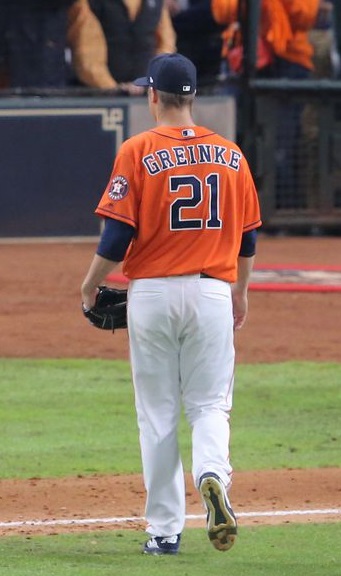
Pitchers—The National League winner: Zack Greinke (then with the Diamondbacks). The American League winner: Mike Leake (Mariners). The should-have-been winner: Greinke in both leagues.

He was that good fielding his position, both before and after his trade to the Astros. He was as good as having an extra second baseman or shortstop on the field. He led pitchers in the entire Show for starting double plays coming off the mound. Pitchers not named Greinke started five tops; Greinke started twelve.

Greinke got only half his due winning the National League award. Leake was a solid defender off the mound this year and has a career-long reputation as one of his league’s best-fielding pitchers. Leake’s other AL competition came up short of qualifying by seventeen innings: Marcus Stroman, traded to the Mets before the new single-season trade deadline.

But since Leake has never won a Gold Glove before, I can’t exactly call his winning it this year a legacy pick. Greinke had five Gold Gloves entering this year, and he certainly earned his Glove this year.

The defensive index of the Society for American Baseball Research (fair disclosure: I’m a member and have had work published by them in the recent past) was used in Gold Glove voting for the first time this year, applied to 25 percent of the vote with Show managers and coaches doing the rest.

According to that SABR index, the absolute best Gold Glove qualifiers in the leagues with the leather and arms were:

NL—C: Realmuto. 1B: Christian Walker. 2B: Wong. 3B: Arenado: SS: Ahmed. LF: Peralta. CF: Robles. RF: Bellinger. P: Max Fried. Note that three SDI champions (Walker, Robles, Fried) didn’t win Gold Gloves.

AL—C: Perez. 1B: Olson. 2B: Sanchez. 3B: Chapman. SS: Simmons. LF: Grossman. CF: Kiermaier. RF: Betts. P: Tie between Leake and Lucas Giolito. Note that three SDI champions here (Simmons, Grossman, Giolito) didn’t win Gold Gloves, either.

Let the debates begin. Or continue, depending. And you can take a little more active part in it: fans get to vote for the Platinum Glove winner, which Rawlings began in 2011. The bad news: you can only vote for someone in each league who actually won one of this year’s Gold Gloves. You can’t vote for the guy who should have won the Gold Glove but didn’t.

That said, my own Platinum Glove picks would be Roberto Perez and Nick Ahmed. Perez led all American League Gold Glove eligibles with a 17.0 SDI rating and Ahmed led the National League Gold Glove eligibles with a 15.7. That looks like platinum work to me.

Ron Fairly, RIP: See ya later

2019-11-03 RonFairly

Ron Fairly. (Seattle Mariners photograph.)

There’s plenty to be said for a fellow whose baseball life involves over seven thousand games, as a player and a broadcaster. There’s more to be said for Ron Fairly, who died at 81 on the morning the Nationals—for whom Fairly once played when they were the infant Montreal Expos—won the World Series last week.

Fairly was a solid first baseman and outfielder who studied the game as attentively as he played it. When he became a broadcaster, his habits included calling walks by saying, “Those bases on balls, they’ll kill you every time.” Fairly should have known if anyone did: his playing statistics include 1,022 walks to 877 strikeouts. That’s a 0.83 strikeout to walk ratio, .84 below the Show average in his 21 seasons.

A lefthanded hitter with more than a little power, and blessed with almost the perfect surname for a major league hitter, Fairly was killed at the plate by his two Dodger home parks, the Los Angeles Coliseum (the baseball field shoehorned into the football emporium was hell on portsiders who didn’t always hit the other way) and Dodger Stadium (heaven for pitchers, hell for hitters) from 1959 (his first full season) through 1968 (his final full year as a Dodger).

And he knew it.

“I played in an era— the 1960s—that might have been the most difficult in which to make your living, as a hitter, of any in the history of the game of baseball,” said Fairly to FanGraphs interviewer David Laurila in 2011. “I played in Dodger Stadium, which was a big ballpark where the ball didn’t carry very well. It doesn’t take many [lost] hits during the course of a season for your average to drop a little bit, and you weren’t going to have as many home runs or RBIs there.”

He probably had the one of the most quiet instances of World Series shining of them all. Seven Dodger position players played all seven games of the 1965 Series and Fairly out-hit all of them, including Maury Wills, first base mainstay-to-be Wes Parker, the season’s super-sub Lou Johnson, and veteran Jim (Junior) Gilliam, who’d come out of retirement to play most of the season at third base and made a key play to save Hall of Famer Sandy Koufax’s Game Seven shutout.

Fairly’s 1.069 OPS for that Series was the tops among the Dodgers by far, well enough beyond Johnson’s .914. He went 11-for-29 with three doubles and two home runs against the Twins and drove six runs home while he was at it. It was a Series that threatened to become an all-home-team-winning set before Koufax’s Game Seven shutout.

“We started Sandy instead of [Hall of Famer Don] Drysdale, and the reason is that Sandy was more muscular and it would have taken him too long to warm up,” Fairly remembered to Laurila of that game. “Drysdale could warm up a lot faster if Sandy got into trouble.”

Koufax did struggle in the early innings, finding his vaunted curve ball unreliable and deciding to go strictly fastball the rest of the way. “It wasn’t until about the sixth or seventh inning that Sandy started to settle down, loosen up and get it going,” Fairly said. “On two days’ rest, he probably threw 140 pitches—maybe 160—and he was throwing better in the seventh, eighth and ninth innings than he was in the first three innings.”

(Don’t go there: before you start lamenting that today’s pitcher’s haven’t got the kidney to work like that, be reminded that Koufax would pitch only one more season to come, then retire after it, at thirty, beyond the top of his game. Among other things, continuing to be a human medical experiment to keep him pitching despite a then-unfixable arthritic pitching elbow was liable to compromise something a little more important to Koufax—like the rest of his life.)

Fairly also scored the only Dodger run in Game Two (which Koufax pitched after declining Game One because of Yom Kippur); he scored the first Dodger run in Game Three; he sent the first of four Dodger insurance runs home off Twins relief mainstay Al Worthington; his RBI double off Jim Kaat in the third gave Koufax a 4-0 Game Five cushion.

And he followed Johnson’s fourth-inning Game Seven homer with a double before coming home when his first base successor Parker bounced one over Twins first baseman Don Mincher’s head immediately to follow. Said Fairly, “[T]hat was it. Sandy took care of the rest.”

Fairly also remembered the ugliest moment of that 1965 season, the Candlestick Park brawl that climaxed a weekend of tensions between the Dodgers and the Giants, kicked off when Dodger catcher John Roseboro threw a return pitch to Koufax that zipped right past Hall of Fame pitcher Juan Marichal’s head in the batter’s box—when Marichal was still looking ahead of and not behind himself.

Marichal had knocked Fairly down at the plate in the third inning, a little pushback after Koufax—who generally preferred domination over intimidation, but answering for a knockdown of Maury Wills in the first—sent one sailing over Hall of Famer Willie Mays’s head in the second. Marichal was less than thrilled, too, that Wills opened the game bunting for a base hit and Fairly drove him home two outs later.

When Marichal eventually came up to hit leading off the bottom of the third, Fairly was stationed in right field and occupied mostly by the wind that afternoon when Koufax threw Marichal a strike inside that Roseboro let get past him.

“After the pitch was made to Juan,” Fairly told Laurila, “I looked down because the wind was blowing so much, and all of a sudden I heard this roar. I looked up and here was Juan swinging the bat and both teams were running out of the dugout.” The return throw tripped Marichal’s trigger when he realised how close he’d been to a hole in the head.

As John Rosengren (in The Fight of Their Lives) and others have attested, both Marichal and Roseboro were buffeted by off-field events. Marichal was haunted by that year’s civil war in his native Dominican Republic, where his cousin was a presidential running mate; Roseboro was haunted by the Watts riots in Los Angeles.

And when Marichal wheeled around screaming “Why you do that??” he saw Roseboro advancing toward him, knowing Roseboro was karate trained, and in one sickening instant was overcome by fear. That’s when he brought his bat down on Roseboro’s head; it didn’t catch Roseboro’s head flush on but struck enough to open a gash over the catcher’s eye.

“Mays and Len Gabrielson were the two guys on the Giants who tried to break that fight up,” remembered Fairly. “Keep in mind, there wasn’t a lot of love between the Giants and Dodgers. We didn’t even like their uniforms. They didn’t like ours.”

Fairly knew how completely out of character the brawl was for both the normally genial, prankish Marichal (whose wife swore he never awoke on the wrong side of the bed) and the quiet but attentive Roseboro. Indeed, Roseboro eventually forgave Marichal, the two became friends, and Roseboro campaigned for Marichal after the great pitcher was denied first-ballot Hall of Fame enshrinement.

“When you talk about all of the great pitching staffs the Dodgers had, keep in mind that Roseboro was the guy putting the fingers down,” Fairly told Laurila. “John was really good at calling games. He was one of the quietest guys I was ever around, but also one of the nicest. His locker was next to mine for years.”

Fairly remained with the Dodgers until 1969, when he was traded to the maiden voyaging Expos in a deal that brought Maury Wills (exiled to Pittsburgh after he walked away from the Dodgers’ winter ’66 tour of Japan) back to the Dodgers. He spent six seasons with the Expos before they traded him to the Cardinals; now already a part-time player, he also spent time with the Athletics (after their ’70s glory seasons), the Blue Jays, and the Angels before calling it a career.

The trade to Montreal affected Fairly negatively. He wasn’t a cold weather fan as it was, he didn’t like losing after those years of Dodger success, and he was haunted, says a Society for American Baseball Research biography, when he showed his then four-year-old son where Montreal is and the boy replied, “Does this mean I don’t have a daddy anymore?”

When he finished with the Angels it didn’t mean the end of his baseball life. Owner Gene Autry offered him a three-year deal in 1979 to broadcast Angel games on television with Dick Enberg and his old Dodger teammate Don Drysdale. Fairly stayed in the Angel booth until 1987, when came the crowning irony of his broadcast life: the Giants, of all people, invited him to take over for play-by-play man Hank Greenwald.

Try to imagine the Dodgers replacing Vin Scully with Russ Hodges (the legendary longtime voice of the Giants) and you have an idea how popular Fairly wasn’t in San Francisco. At least, not until the Giants brought Greenwald back to pair with him. “[We] had a lot of laughs,” Fairly said of their time together, which ended when Fairly moved up the Pacific to step into the Mariners booth. Where he stayed, very popular, until he retired in 2006.

He was known wherever he was on the air for “See ya later” calling home runs (including Hall of Famer Ken Griffey, Jr.’s in an eighth consecutive game) and as a raconteur steeped in baseball history and borne of a fine wit.

A favourite among Mariners fans was Fairly’s recollection of Koufax manhandling Hall of Famer Mickey Mantle in the 1963 World Series. As the sides changed and Mantle passed Fairly at first on the way back to centerfield, Mantle cracked, “Hey, Red, tell the bastard to lighten up, he’s making me look bad.”

Fairly made one more return to the broadcast booth, when the Mariners’ Hall of Fame announcer Dave Niehaus died unexpectedly after the 2010 season and Fairly filled in for a third of 2011. After that, it was home to Palm Springs and a quiet life of grandchildren and golf until esophageal cancer invaded and at last overtook him. “He had seemingly beaten the disease,” writes Spokesman-Review (Spokane, Washington) columnist Larry Stone, “but friends say it was the radiation that did him in.”

As a hitter, Fairly looked on the surface as though he cratered almost completely after Koufax’s retirement. He told an interviewer it was sort of Drysdale’s fault:

Drysdale told (general manager) Buzzie (Bavasi) that we should lengthen the grass and slow down the infield. I thought that was crazy. We were a ground ball/line drive team. We didn’t hit the ball in the air. Well, Buzzie lengthened the grass and it killed me. I didn’t have the speed to beat out infield hits and ground balls that had been getting through for me were winding up in infielders’ gloves.

Obviously, as a baseball theoretician Don Drysdale was one helluva pitcher.

Early in his career, Fairly had the distinction of rooming with Hall of Famer Duke Snider, a California native who also became a broadcaster after his playing days. Snider loved to regale the kid with tales from Ebbets Field where Snider’s prodigious power hitting and handsome looks earned him the nickname the Duke of Flatbush.

According to Laurila, Fairly remembered Snider saying he was batting in Ebbets Field with Hall of Fame catcher Roy Campanella on deck—with his chest protector and shin guards still strapped on. Campanella apparently didn’t think Snider could hit the pitcher in question with two out.

“Duke wouldn’t get in the batter’s box until Campy took them off,” Fairly said. “A few pitches later, Duke popped the ball up in the air. As he was running to first base, he was hollering at Campy, and Campy was laughing at him.”

I hope Fairly is giving them all a little friendly hell about it while they share a drink in the Elysian Fields now. Then, I hope Campanella gets to horn in with some jokes, and Mantle asks them to tell some bastard to lighten up, when Fairly, Drysdale, and Snider get to call some more games together up there.

The Mets take a hearty Beltran

2019-11-02 CarlosBeltran

From crossing home as a Mets player to coming home as their new manager.

Leave it to a few too many Met fans. The organisation hires one of the best respected former players in the game to manage the team, and all they can remember is that he was frozen solid to end the 2006 National League Championship Series.

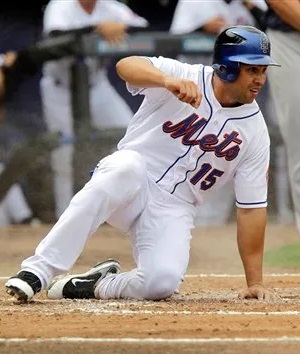
So let’s get it out of the way once and for all. No, I wasn’t any more thrilled than you when the Cardinals’ Adam Wainwright nailed Carlos Beltran with strike three to end that NLCS. Especially after Beltran to that point had thirty at-bats in that NCLS before that one, with three bombs, four steaks, and a .307 batting average.

But Wainwright had baseball’s nastiest curve ball that season. It would have frozen Willie Mays himself. The heartbreak when your team gets beaten isn’t always mitigated when your arguable best gets beaten by their arguable best. But unless you’d rather Beltran frozen by Braden Looper it’s long past time to forgive what needs no forgiveness.

Certainly it didn’t freeze Beltran for the rest of his baseball life. He didn’t look for the nearest mouse hole into which to spend it. He merely played 548 more games as a Met with ninety home runs, three All-Star teams, two Gold Gloves, and a few MVP votes, before he was traded to the Giants for a kid named Zack Wheeler.

And he even put up with the indignity when he defied the Mets’ powers that were at the time to undergo surgery on a bothersome knee, thanks to the past sane thought that just maybe his chosen doctors knew a little bit better than the Mets’ designated quacks what his knee needed. (Indeed, the day would come when the Mets would finally overhaul their medical brain trust.)

He knew enough to play seven more useful seasons including a farewell with the Astros’ 2017 World Series winner. It’s not that he put on a show in that Series (he batted three times, struck out once, and had nothing else to show for it), but there wasn’t an Astro to be found who didn’t benefit from his counsel, either.

As a Met Beltran was invaluable not just because he was a Hall of Fame-level player but because, in the middle of any maelstrom buffeting the team in the city that rarely forgives and rarely forgets, he was a stand-up man no matter the scandal or the struggle amidst the team.

He mentored and shepherded players, he faced the press no matter how hard the loss or how ridiculous the externals, he answered any and every question without evasion, and he was maybe the only baseball man in New York this side of Joe Girardi who couldn’t be T-boned by an unsuspected disaster running the figurative red light.

Now the Met who couldn’t be caught off guard even in testy New York gets to manage them. And they’re in slightly better shape than people think. Their rather stupefying second-half run in 2019 wasn’t enough to save the head of the hapless, often clueless Mickey Callaway, but it might be enough for Beltran to lead them to next year’s postseason after all. Might.

They have the National League’s likely Rookie of the Year. They have arguably the league’s best pitcher still, with arguably several more seasons of comparable performance yet to come. They have a youthful core who showed mettle, flair, and adaptability in 2019. If the Mets give Beltran the thing he needs most—a bullpen overhaul that leaves him more than just bull—he’ll have an advantage even before spring training begins.

Beltran also has a unique ability to connect with even the most disparate players and coaches, something he was known for as a player and a skill he refined even further in two years working in the Yankee front office. Show Beltran two players about whom fire and gasoline would be understatements, and Beltran will show you two players he kept from further combustion.

SNY’s Andy Martino has a classic example. Carlos Gomez and Brian McCann once clashed on the field after Gomez, the punk, had fun hitting one out against the Braves and McCann blocked him up the third base line from scoring to finish the homer over, you know, the Sacred Unwritten Rules. It was hard to know who looked more foolish, Gomez for having his fun or McCann for deciding he had no right to touch the plate.

Mirabile dictu, Gomez and McCann ended up teammates on the same 2017 Astros World Series winner. While they were there, both the Fun Boy and the Fun Fuzz accepted Beltran as a mentor. Beltran could and did counsel Gomez how to have fun without bruising egos; he could and did counsel McCann, we presume, that nobody likes a self-appointed gendarme putting on the cuffs before the not-so-bad guy finishes his job.

Beltran’s reputation, Martino observes, includes that he was the de facto hitting coach for every team who employed him as a player, and that he has a genius for picking up on the tiniest missteps by the other guys and exploiting them, from off-kilter field positioning to pitch tipping. It’s not impossible that Beltran was one of the Astros who caught Yu Darvish tipping pitches early in 2017 World Series Game Seven, enabling the Astros to run him off the mound while securing the Promised Land lease before his departure.

A baseball mind married to a people person gives a brand new manager a leg up already. Right away Beltran isn’t a candidate to blow up his clubhouse before he has a chance to secure it. He also has the advantage of distance on his side. He’s not being handed the Mets’ bridge immediately after his days of playing for them ended.

That was the mistake the Yankees made with Yogi Berra when handing him their bridge for 1964. Berra was too freshly removed as a player to establish a clubhouse rhythm or to avoid a few too many of his veterans from using manager-turned-general manager Ralph Houk as a behind-Yogi’s-back sounding board. Especially when it took Berra awhile to stop lifting his starters too soon and stop looking for bullpen saviours he didn’t yet have.

The ’64 Yankees had other problems, of course, most notably the subterfuges involved in the team’s sale to CBS and the lack of a viable bullpen between April and September. They rehorsed in time to win the pennant and lose a thriller of a seven-game World Series.

Yogi never saw it coming when he was beheaded the following day in favour of the man who’d just beaten him in the Series, Johnny Keane. And Keane himself dodged more than a few similar backstairs betrayals on the season and was actually offered the Yankee job-to-come behind the channels, well before both teams came back to win their pennants after all.

The Mets these days aren’t exactly a model baseball administration, either. Beltran could find himself only too soon wondering what on earth he got himself into when he finds his front office hands him or can’t diffuse a logjam or a bomb.

But it isn’t as though first-timers on the bridge can only fail—-see Alex Cora (a World Series ring his first time out), Aaron Boone (only the second Yankee manager ever to pilot back-to-back 100+ win seasons his first time out), and Rocco Baldelli. (He managed the thumping Twins to this year’s American League Central title.)

And, so far as we can predict, Beltran won’t be managing (yet) the way Boone had to manage the Yankees in 2019—unable to determine whether he was trying to win a division and a pennant or the Nobel Prize for Medicine.

Beltran also becomes the ninth Mets manager who ever played for the team in an earlier life. The roll includes, in ascending order, Gil Hodges (an Original Met before his knees betrayed him for keeps), Yogi Berra (a few pinch-hit appearances for the 1965 Mets before returning to the coaching line for keeps), Joe Torre, Bud Harrelson, Dallas Green (briefly a pitcher on the 1966 Mets), Willie Randolph (he ended his distinguished playing career on the sorry 1992 Mets), and Bobby Valentine (he split 1977 between the Mets and the Padres).

You may care to note that three of those men—Hodges, Berra, and Valentine—won pennants managing the Mets; Hodges, of course, won a World Series managing the 1969 Miracle Mets, and Berra got to within a game of winning the 1973 World Series. Hodges apprenticed as a manager with the second Washington Senators; Yogi spent seven years on the Mets’ first base coaching line; and, Valentine spent eight prior seasons commanding the Rangers before he took the Mets’ bridge.

Beltran’s going to have to show he can develop in-game tactical and strategic smarts fast enough to match his skills at picking up field nuances and missteps and at fostering relationships. But you won’t expect him to be caught flatfoot if questioned over as questionable a move as the now-deposed Callaway was in Chicago in June.

When Callaway left a gassed Seth Lugo in for a second inning only to get him and the Mets clobbered despite a fresh option or two for whom to reach. And, when Callaway accepted the inevitable post-game questions by demanding his questioner be removed from the room and doing nothing when one of his other pitchers threatened to knock the questioner the [fornicate] out.

But when you decide Beltran is the man you want over such candidates as Nationals first base coach Tim Bogar (whose playing career began as a Met), Brewers bench coach Pat Murphy, or Eduardo Perez (former Astros and Marlins coach whose tenures were short lived but who ended up a finalist with Beltran for the Mets job), you’d better know something we don’t know yet.

Which is what Mets observers said when Callaway was handed the Mets’ bridge for 2018, after several years as the respected Indians pitching coach. Callaway proved to be in so far over his head managing the Mets that he needed a periscope just to see a mile below the surface. He’s since moved on to the Angels in the gig for which he’s suited best, pitching coach for their new manager Joe Maddon.

If Beltran proves a capable manager, never mind the kind who can lead the Mets to consistent excellence, he could also accomplish something only Yogi Berra has ever done as a Met—stand at the 2023 podium in Cooperstown, as Yogi did in 1972, accepting his Hall of Fame plaque for his playing achievements while he’s managing the Mets. Never underrate the power of that kind of symbolism.

Beltran goes in with one very key endorsement, from a man with whom he grew up friends in their native Puerto Rico and to whom he reached out after his playing days, as a Yankee advisor, and as he went through the Mets’ hiring process. A man who thinks there’s more than just a marquee name involved in Beltran’s hiring.

“This is something he earned. He has made adjustments throughout from a guy who was quiet to all of a sudden is eager to share information and to talk to players, coaches and front office people,” said Alex Cora, the Astros’ bench coach during the 2017 World Series run he shared with Beltran and who went from there to nail a World Series managing the Red Sox in 2018.

Cora told the New York Post that Beltran did his homework and prepared himself fully after showing he could stay on top of the game by evolving.

“I had him as a player in 2017 and we had long conversations,” Cora continued. “We had some radical ideas of how to do things to kind of prepare myself for what was coming. He would tell me things and I would share stuff with him on how to run a big league team. He helped me out a lot.”

Never underrate the power of a World Series-winning manager’s endorsement, either.

Hinch didn’t blow it, the Nats won it.

2019-11-01 ZackGreinke

Zack Greinke walks off the field in Game Seven. His manager made the right move to follow. The Nats made the righter one to win.

It’s not going to make the pill any easier to swallow, but it wasn’t A.J. Hinch’s fault. He’s not the reason the Astros lost a World Series they seemed destined to win both going in and while they were just eight outs from the Promised Land.

I know Hinch didn’t even think about bringing Gerrit Cole in if he’d decided Zack Greinke had had enough. I second guessed it myself when first writing about Game Seven. And I was really wrong. Just as you are, Astroworld, to lay the loss on Hinch’s head. The Nats beat the Astros, plain and simple. Through no fault of Hinch’s.

He wasn’t even close to having lost his marble. Singular. He actually managed just right in that moment. It’s no more his fault that Howie Kendrick made him look like a fool right after he made his move than it was his fault the Astros couldn’t bury a Max Scherzer who had nothing but meatballs, snowballs, grapefruits, and cantaloupes to throw, two days after Scherzer’s neck locked up so tight it knocked him out of Game Five before the game even began.

Max the Knife wasn’t even a butter knife starting Game Seven and the best the Astros could do against him was an inning-opening solo home run by Yuli Gurriel and an RBI single by Carlos Correa. Remember, as so many love to bleat, the manager doesn’t play the game. Not since the end of the player-manager era.

And I get the psychological factor that would have been involved if Hinch brought Cole in instead of Will Harris. Likely American League Cy Young Award winner in waiting in to drop the hammer and nail down a win and a trophy. The Nats may have spanked Cole and company in Game One but Cole manhandled them in Game Five.

Even the Nats thought Cole was likely to come in if Greinke was coming out and, as their hitting coach Kevin Long said after Game Seven, they would have welcomed it after the surgery Greinke performed on them until the top of the seventh.

You had to appreciate an anyone-but-Greinke mindset among the Nats. Maybe even think within reason that that kind of thinking—never mind Anthony Rendon homering with one out in the top of the seventh— would leave them even more vulnerable once Cole went to work.

Pay attention, class. Cole pitched magnificently in 2019 and his earned run average was 2.19 with a postseason 1.72. But Harris, believe it or not, was a little bit better: his regular season ERA was 1.50 and his postseason ERA until Game Seven was (read carefully) 0.93.

Cole led the American League with a 2.64 fielding-independent pitching rate and Harris finished the season with a 3.15, but all that means is that Harris depends on the Astros’ stellar defense a little bit more than Cole does. And Harris walks into a few more dicey situations in his line of work. Plus, Cole never pitched even a third of an inning’s relief in his entire professional career, major and minor league alike.

Don’t even think about answering, “Madison Bumgarner.” Yes, Bumgarner closed out the 2014 World Series with shutout relief. And it began by going in clean starting in the bottom of the fifth. Bruce Bochy, who may or may not stay retired as I write, didn’t bring MadBum into a man on first/one-out scenario.

When Hinch said after Game Seven that he planned to use Cole to nail the game down shut if the Astros kept a lead, he was only saying he planned to use Cole where he was suited best, starting a clean inning, his natural habitat. Harris is one of his men whose profession involves walking into fires of all shapes and sizes when need be.

It was need-be time in Game Seven. Even Cole acknowledged as much in the breach, when he said postgame, “We just went over the game plan and he laid out the most advantageous times to use me. And we didn’t get to that position.”

Why lift Greinke after only eighty pitches on the night? Greinke historically is almost as tough on a lineup when he gets a third crack at it, but things really are a little bit different in the World Series. Even if Greinke did surrender a single run in four-and-two-thirds Game Three innings.

He may have performed microsurgery on the Nats through six but he’s not the long distance operator he used to be anymore, either, at 36. And he hadn’t exactly had an unblemished postseason before the Series. He’d been battered by the Rays in the division series; he’d been slapped enough by the Yankees in the ALCS.

As Hinch himself observed after Game Seven ended, “We asked him to do more today than he had done, and pitched deeper into the game more than he had done in the entire month of October. I wanted to take him out a bat or two early rather than a bat or two late.”

And Greinke himself believed the Nats were a lot more tough than their evening full of pre-seventh inning soft contacts at the plate indicated. “They got a good lineup, especially the top of the order,” he told reporters after the game. “It’s tough to get through no matter one time, two times, three times. All of them are tough. Really good hitters up there.”

He got the proof of that when Rendon hammered his 1-0 service halfway up the Crawford Boxes and Juan Soto focused for a walk on 3-1. When it’s winner-take-all you don’t want even a Greinke in a position to fail or for the Nats to be just a little bit better after all.

Hinch wasn’t going to walk his effective but lately erratic closer Roberto Osuna into this moment despite Osuna’s 2.63 ERA, 0.88 walks/hits per inning pitched rate, and league-leading 38 saves on the regular season. Osuna’s postseason ERA was up over 3.50 and his WHIP was reaching 2.00.

So Hinch, one of the most thoughtful and sensitively intelligent managers in the game today, really did reach for his absolute best option in the moment. He was right, I was wrong, and the only thing wrong with Hinch’s move wore a Nationals uniform.

The best teams in baseball get beaten now and then. The best pitchers in the game get beaten. The smartest managers in the game get beaten even when they make the right move. The only more inviolable baseball law than Berra’s Law is the law that says somebody has to lose. And now and then someone’s going to beat the best you have in the moment.

This was not Joe McCarthy starting Denny Galehouse over Mel Parnell with the 1948 pennant on the line.

This was not Casey Stengel failing to align his World Series rotation so Hall of Famer Whitey Ford (whose two shutouts are evidence for the prosecution) could start more than two 1960 World Series games.

This was not Gene Mauch panicking after a rookie stole home on his best pickoff pitcher and thinking he could use Hall of Famer Jim Bunning and Chris Short on two days’ rest in the last days of 1964.

This was not Don Zimmer doghousing Bill Lee, his best lefthander against the Yankees, and choosing Bobby (Ice Water In His Veins) Sprowl over Luis Tiant to stop what became the Boston Massacre in 1978.

This was not John McNamara with a weak bullpen and a heart overruling his head to send ankle-compromised Bill Buckner out to play one more inning at first base in the bottom of the tenth, Game Six, 1986.

This was not Dusty Baker sending an already season long-overworked Mark Prior back out for the top of the eighth with the Cubs six outs from going to the 2003 World Series.

This was not Grady Little measuring Hall of Famer Pedro Martinez’s heart but forgetting to check his petrol tank in Game Seven of the 2003 American League Championship Series.

This was not Mike Matheny refusing to even think about his best reliever, Trevor Rosenthal, simply because it wasn’t yet a “proper” save situation with two on, a rusty Michael Wacha on the mound, and Travis Ishikawa checking in at the plate in the bottom of the ninth in Game Five of the 2014 National League Championship Series.

This was not Buck Showalter getting his Matheny on with the best relief pitcher in baseball (Zach Britton) not even throwing in the pen, never mind ready to go, with two on and Edwin Encarnacion checking in—in a two-all tie in the bottom of the eleventh—against a mere Ubaldo Jimenez at the 2016 American League wild card game plate. Because that, too, just wasn’t, you know, a “proper” save situation.

Hinch did exactly he should have done in the moment if he was going to lift Greinke. He reached for the right tool for the job. So did Mauch, in the 1986 ALCS, with the Angels on the threshold of the 1986 World Series, if he was going to lift Mike Witt but not trust Gary Lucas after the latter plunked Rich Gedman, turning it over to Donnie Moore.

It wasn’t Mauch’s or Moore’s fault that he threw Dave Henderson the perfect nasty knee-high, outer-edge forkball, the exact match to the one Henderson had just foul tipped away, and Henderson had to reach hard and wide again to send it over the left field fence.

It wasn’t Hinch’s fault that Harris threw Kendrick the best he had to throw, too, a cutter off the middle and at the low outside corner, and watched it bonk off the right field foul pole. Just ask Harris himself, as a reporter did after Game Seven: “It’s every reliever’s worst nightmare. [Kendrick] made a championship play for a championship team.”

Better yet, ask Correa, the only Astro somehow to have a base hit with a runner on second or better Wednesday night. “The pitch he made to Howie—I just don’t understand how he hit that out,” he said. “It doesn’t add up. The way he throws his cutter, it’s one of the nastiest cutters in the game. Down and away, on the black, and he hits it off the foul pole.”

Now and then even the best teams in the game get beaten. Now and then even the best pitchers in the game get beaten. Sometimes more than now and then. Nobody was better in their absolute primes this century than Clayton Kershaw and Justin Verlander. Yet Kershaw has a postseason resume described most politely as dubious and Verlander’s lifetime World Series ERA is 5.68.

And even the smartest skippers in the game lose. Hall of Famer John McGraw got outsmarted by a kid player-manager named Bucky Harris in Game Seven of the 1924 World Series, though even Harris needed four shutout relief innings from aging Hall of Famer Walter Johnson and a bad hop over Giants third baseman Freddie Lindstrom to secure what was previously Washington’s only known major league World Series conquest.

McCarthy and Stengel were at or near the end of Hall of Fame managing careers (Stengel was really more of a caretaker as the 1962-65 Mets sent out the clowns while their front office built an organisation) when they made their most fatal mis-judgments.

And yet another Hall of Famer, Tony La Russa, suffered a fatal brain freeze. His failure to even think about his Hall of Fame relief ace Dennis Eckersley earlier than the ninth-inning save situations cost him twice and would have kept the Reds from a 1990 Series sweep, if not from winning the Series itself.

The Astros had seven men bat with men in scoring position in Game Seven and only Correa nailed a base hit. The Nats went 2-for-9 in the same position. And, for a change, left three fewer men on than the Astros did.

The Astros couldn’t hit a gimp with a hangar door. The Nats punctured an Astro who dealt trump for six innings and made two fateful mistakes in the seventh that the Nats took complete advantage of. Then their best relief option in the moment got thumped with his absolute best pitch.

Because baseball isn’t immune to the law of unintended consequences, either. It never was. It never will be. The Astros were the better team until the World Series. The Nats ended up the better team in the World Series. And that isn’t exactly unheard of, either.

Few teams in baseball have been better than the 1906 Cubs, the 1914 Philadelphia Athletics, the 1954 Indians, the 1960 Yankees, the 1969 Orioles, the 1987 Cardinals, the 1988 and 1990 A’s, the 2003 Yankees, and the 2006 Tigers. They all lost World Series in those years. And two of them (’60 Yankees; ’87 Cardinals) went the distance before losing.

Yet the Nats scored the greatest upset in the history of the Series, and not just because they’re the first to reach the Promised Land entirely on the road. The Astros were Series favourites by the largest margin ever going in. And only the 1914 Braves were down lower during their regular season than the Nats were in late May this year.

But that year’s A’s, the first of two Connie Mack dynasties, weren’t favoured as heavily to win as this year’s Astros.

The Dodgers were overwhelming National League favourites to get to this World Series—until Kendrick’s monstrous tenth-inning grand slam. Then the Cardinals were favoured enough to make it—until they ran into a Washington vacuum cleaner that beat, swept, and cleaned them four straight.

The Astros didn’t have it that easy getting to this Series. The ornery upstart Rays made them win a pair of elimination games first. Then it took Yankee skipper Aaron Boone’s dice roll in the bottom of the ALCS Game Six ninth—refusing to walk Jose Altuve with George Springer aboard and comparative spaghetti-bat Jake Marisnick on deck—to enable Altuve’s mammoth two-run homer off a faltering Aroldis Chapman with the pennant attached.

Hinch made the right move in the circumstance and the moment and the Nats made the righter play. The championship play, as Harris put it. The play for the Promised Land. Soto’s eighth-inning RBI single and Eaton’s ninth-inning two-run single were just insurance policies.

When Hinch says that not bringing in Cole was a mistake he’d have to live with, he shouldered a blame that wasn’t his to shoulder. Even if his happen to be the strongest in Astroworld.