Al Jackson, RIP: “Everybody here crazy”

2019-08-19 AlJackson

Al Jackson pitching to Hall of Famer Willie Mays in Shea Stadium, 1964. Jackson was a control pitcher whose Original Mets were only too often beyond control.

With the National League’s teams agreeing to let the expansion Mets and Colt .45s (the Astros-to-be) pick only from among their flotsam and jetsam, the two new clubs didn’t have much in the way of quality choices. As the Colts’ first general manager, Paul Richards, said infamously to his crew, “Gentlemen, we’ve just been [fornicated].”

The Colts went for younger unknowns, predominantly, though they did pick a few veterans, notably pitchers Don McMahon and Bobby Shantz, infielders Joey Amalfitano and Billy Goodman, and first baseman Norm Larker.

Knowing New York still smarted over the Dodgers and Giants moving west, the Mets opted mostly but not exclusively for veterans with National League name recognition (several of whom were former Dodgers or Giants), suspecting that might help goose the box office while the Mets set about building an organisation that might bear fruit within the decade.

Their choices included Hall of Fame center fielder Richie Ashburn, first basemen Gus Bell, Ed Bouchee (the NL Rookie of the Year runner-up in 1957), and Gil Hodges (the Brooklyn favourite), infielders Felix Mantilla and Don Zimmer, outfielder/first baseman Frank (The Big Donkey) Thomas, catchers Hobie Landrith and Joe Pignatano, and pitchers Roger Craig and Clem Labine.

But they did make room, too, for younger players who were either spare parts on other clubs or lucky to get cups of coffee if that much. Maybe the best of the Mets’ finds out of the latter end of the pool was a lefthanded, African-American pitcher named Al Jackson, whom the Mets plucked from the Pirates. To whom manager Casey Stengel took an immediate liking.

“Jackson,” wrote Stengel’s biographer Robert W. Creamer, “was one of the few accomplished players that Casey had when he was managing the Mets, a fine pitcher who could field his position skillfully, handle a bat well, run bases intelligently, and pitch with guile and courage.” The feeling was mutual. “He never treated me with anything but respect,” Jackson once said.

The Waco, Texas native died Monday morning at 83 in a Port St. Lucie, Florida nursing home, following a long illness that came in the wake of a 2015 stroke. Met fans from my generation won’t forget the game he pitched to open 1964’s final regular season weekend. In which, for the very first time in their existence, the Mets actually mattered to a pennant race outcome.

In fact, the infamous Phillie Phlop threatened the prospect of a three-way tie for the 1964 National League pennant. Thanks to that ten-game losing streak eroding what was a six-game lead when it began, the Cardinals opened the weekend in first place by half a game, the Reds were right behind them, and the Phillies were two and a half back.

The Cardinals hosted the Mets three games in St. Louis for that final weekend. The Reds faced the Phillies for a pair. And after the Phillies won their Friday game thanks to a four-run eighth and tidy bullpen work, a Cardinals win later in the day would clinch at least a tie for the pennant. Naturally enough, the Cardinals sent future Hall of Famer Bob Gibson to the mound to dispatch the Mets.

Stengel countered with Jackson. “Jackson,” the manager liked to say, “is a pret-ty good-looking pitcher,” which Creamer wrote was high praise from the Ol’ Perfesser. And at a time when it looked like the novelty of the Mets’ comedy of errors began wearing off, and the losing quit being funny, accompanied by some increased mutterings that Stengel was losing whatever he had left, Jackson proved one of Stengel’s few defenders.

A manager who loved to teach baseball above almost anything else, Stengel savoured Jackson as one of his very few younger Mets who was willing to listen and learn—even while he was at work on the mound. “Casey would stand in the dugout,” Jackson would remember, “and say real loud, ‘If I was a lefthanded pitcher, here’s what I would do right now.’ That’s when I knew he was talking to me.”

There were men on first and second, and you knew the other team wanted to bunt them over. Casey would say, “Here’s what I would do. I would let him bunt. I would throw him a little slider, and I would break toward the third base side, and I would throw his ass out at third.” Casey had the guts to tell you what he’d do in a certain situation when it came up on the ball field. He didn’t wait until after it was over and second guess. He’d tell you right now, and he’d tell you what the other team should do. He’s the only man I ever saw do that.

Gibson and Jackson squared off. The only run of the game scored when Mets first baseman Ed Kranepool singled home outfielder George Altman with two out in the third inning. Despite Gibson striking out seven while scattering eight hits and no walks in eight innings’ work, the script got flipped—the Cardinals committed three errors to the Mets’ none, though none of the errors factored in the score.

Jackson went the distance scattering five hits and a walk and, after surviving a bases-loaded threat in the eighth, retired the Cardinals in order on two fly outs and a ground out to finish. The next day, with the Phillies and the Reds off, the Mets blew the Cardinals out, 15-7. These were the Mets? Now the National League race went from chaos to bedlam.

The blowout left the Cardinals and the Reds tied for first with the Phillies a full game back. If the Phillies beat the Reds on the final Sunday and the Mets could finish sweeping the Cardinals, the National League would have to figure out a round-robin to decide a pennant winner. The Phillies did their job, blowing the Reds out 10-0 behind Hall of Famer Jim Bunning.
2019-08-19 AlJackson02

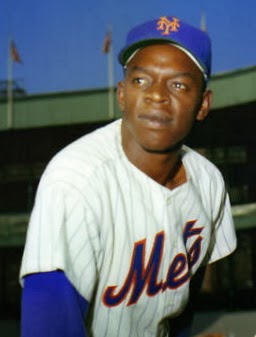
Al Jackson, in the Polo Grounds, where the Mets played their first two bizarro seasons.

The Mets, alas, didn’t do theirs. Not for lack of trying. They had a 3-2 lead in the middle of the fifth, but the Cardinals dropped a three-spot on them in the bottom of the inning and never looked back; in a game that included Gibson working four innings’ relief, the Cardinals won the game (11-5) and the pennant. At the last possible minute.

Yet somehow the Mets made the Cardinals earn it the hard way, starting with Jackson’s cool shutout. A 5’10” lefthander whose money pitches were a snappy curve ball and a shivering slider, Jackson was as athletic as the day was long and pitched stoutly despite being charged with heavy losses as a Met, and his teammates befriended and respected him.

Kranepool in particular befriended Jackson, the two socialising often, even playing basketball together in the off seasons to stay in shape, according to Newsday.

“You had to be a pretty good pitcher to lose that many games,’’ Kranepool said of Jackson, who was charged with twenty losses in each of 1962 and 1965 and pitched too often in hard luck . “He was in the games at the end because he did so many things well. He was a good fielder and good hitter. He didn’t throw that hard; his curveball was his best pitch. But he was such a nice guy. He really was. You can’t find a negative thing to say about Al Jackson.’’

His fellow Original Mets pitcher, Jay Hook, credited with the win in the Mets’ first-ever regular season victory, had the same admiration. “He had good control, No. 1,” Hook says. “I think he really knew how to pitch.”

Jackson was dealt to the Cardinals after the 1965 season for veteran third baseman Ken Boyer, who was coming to the end of a should-have-been Hall of Fame career. After two fine if unspectacular Cardinal seasons, including not pitching in the 1967 World Series, he was returned to the Mets to finish a trade for relief pitcher Jack Lamabe.

He worked effectively as a swingman in his second Met tour, but before he could be a full part of the 1969 miracle—he if any Original Met had earned the chance after having survived the worst of their earliest seasons of comic futility—the Reds bought him that June. By then a middle reliever, a role that didn’t necessarily suit him, Jackson didn’t pitch as well as previously, and when the Reds released him in 1970 he retired.

He became a pitching coach for about two decades, including with the Red Sox and the Orioles, then returned to the Mets to work as a minor league pitching instructor except for a brief spell on the parent club during Bobby Valentine’s managerial term.

Jackson was as well known for good humour as he was for his pitching ability and knowledge. He needed every ounce of that good humour he could muster, as Jimmy Breslin related unforgettably in Can’t Anybody Here Play This Game. Specifically, about the third inning in a 10 August 1962 game in Cincinnati’s Crosley Field.

This one left even the even-keeled Jackson—who’d pitch the longest game in major league history in terms of the game’s time (four hours and thirty-five minutes, pitching fifteen innings against the Phillies four days later)—wondering if he’d lost his marble. Singular.

The Mets were in a 3-0 hole when Jackson surrendered a leadoff double to Hall of Famer Frank Robinson. Wally Post grounded out right back to Jackson off the mound but Don Pavletich walked to set up first and second. After Robinson stole third, Jackson got Hank Foiles to whack into a sure double play starting at first base.

Marvelous Marv Throneberry fielded it cleanly. He had all the time on earth to start the play. He could go to second for the first out and take the relay; or, he could throw home for the first out and get the relay back. “Don’t think,” Crash Davis warned. “It’ll only hurt the ball club.” Throneberry thought. Then he decided to go home to start the double play. Except that his throw didn’t arrive quite at the moment Robinson did.

Then a walk to Vada Pinson loaded the pads for Don Blasingame. And Blasingame obeyed Jackson’s pitch, too, whacking a perfect double play grounder, this time to second base. Where Hot Rod Kanehl was so anxious to pick it up and get it started that he let the ball bounce right off his leg.

“Jackson,” Breslin wrote, “now has forced the Reds to hit into two certain double plays. For his efforts, he has two runs against him on the scoreboard, still only one man out, and a wonderful little touch of Southern vernacular dripping from his lips.”

Then with Reds starting pitcher Jim Maloney at the plate, Jackson wrestled him to 3-2 and, as he threw Maloney a sure ground ball pitch, the runners broke. And Maloney whacked the ball to Kanehl. This time, the Hot Rod picked it clean. And this time, he tossed the ball to Charley Neal playing shortstop. But since the runners broke on the pitch Blasingame was already safe at second, and Pavletich scored.

Again Jackson threw what he hoped would be a double play pitch. And Cincinnati shortstop Leo Cardenas obeyed orders, whacking it on the ground right to Neal in perfect position to finish the Area Code 6-4-2 dial. “But you were not going to get Charley Neal into a sucker game like this. No sir,” Breslin wrote. Neal fired to first. Out made. Fourth run of the inning scoring.

Then Eddie Kasko lined out to Kanehl for the side. Breslin swore Jackson must have set some sort of record for getting hitters to hit into consecutive double play balls whose pooches were screwed on the first leg.

Stengel decided sending Jackson back out for the fourth would do him irreparable damage, if not what came to be known as post-traumatic stress syndrome, so he sent Ray Daviault out to work the fourth. And, perhaps flummoxed himself over the third inning’s undoings, the Ol’ Perfesser forgot to tell Jackson, who went out to the mound to warm up without seeing Daviault coming in from the pen. The Crosley Field P.A. announcer announced the Mets’ new pitcher—Daviault.

Breslin swore Jackson stopped cold and made his own announcement: “Everybody here crazy.”

The wreck of the Pirates

2019-08-18 PittsburghPirates

The Pirates have more problems than just the reputation for headhunting earned by such brawls as this with the Reds on trade deadline day . . .

The iconic Roberto Clemente would have been 85 today. He’s probably playing a game in the Elysian Fields and, when getting news of his old club on earth today, shaking his head in dismay. Any way you look at it, and several have over the past couple of days, the Pirates are a mess.

Even winning three out of five from the Angels and the Cubs entering Sunday can’t turn this wreck of a leaky boat into the U.S.S. Constitution. The wreck of the Edmund Fitzgerald was nothing compared to the wreck of the Pittsburgh clubhouse. These Pirates couldn’t raid an Everglades airboat and get away with it.

No baseball team likes to lose. The Pirates’ 7-26 run since the All-Star break would harry in a hurry anyone to the rack of their regrets. But there’s no hard written, hard enforced rule that that kind of futility on the field has to equal a clubhouse carpeted by rubber wall to rubber wall eggshells, either.

And nobody seemed to know just how deeply troubled the Pirates may have been until a couple of days ago. When The Athletic‘s Rob Biertempfel published a piece headlined, “A pair of altercations between players and coaches highlights the Pirates’ fraying clubhouse.” I’m not entirely certain all hell has broken loose as a result, but consider.

The worst kept secret in the National League was the Pirates’ pitching staff riddled by injuries and inconsistencies. The second-worst has been the Pirates’ apparent indifference to the periodic scrums into which they get when their penchant for pitching inside and tight crosses the lines between inside tight and headhunting. But . . .

“While the problems with health and performance are well-chronicled,” Biertempfel wrote, “the clubhouse conflicts have not been as apparent, aside from the team’s announcements of a pair of suspensions in July for separate altercations involving coaches and two relievers, Keone Kela and Kyle Crick.

“The details of those incidents, many of which have not previously been reported, illustrate rifts caused by envy, charges of favoritism, and overt insubordination against manager Clint Hurdle and his staff.”

Not been previously reported? The Pittsburgh Post-Gazette, which covers the Pirates daily, almost looked willfully ignorant about it. In early August, the paper’s Jason Mackey did a run-down of the Pirates’ problems on the field that hit things squarely enough. But almost nothing in the paper has appeared to shine even a flicker on the team’s deeper issues beyond almost rote announcements of suspensions involving two relief pitchers and one of those pitchers, Keone Kela, denying profusely that he’s a clubhouse pain.

Notoriously, Kela got himself a ten-game suspension for instigating what ultimately became a wild trade deadline-night brawl when he threw at Derek Dietrich—over a pair of April home runs one of which landed in the Allegheny River—and admitted outright he wanted to decapitate the Cincinnati outfielder.

But over a week earlier Kela got into a tangle with performance coach Hector Morales. The team announced his two-day suspension “for violating team rules.” What wasn’t revealed at the time was manager Clint Hurdle having to intervene and Kela engaging Hurdle in a shouting match that Biertempfel and others say amounted to downright insubordination against the skipper.

“Clint wasn’t even in the vicinity to break up anything,” Kela told Mackey. “I was letting [Morales] know that we had some differences in terms of what we believe with [team] culture. Clint and I have never had a shouting match at each other. And honestly, if you can’t tell, I’m truthful. I don’t have anything to lie about.”

Kela missed two months this season with shoulder inflammation. Since his return he’s been one of the Pirates’ better relievers. But after the Dietrich incident people were reminded that Kela had a reputation for trouble with the Rangers, including but not limited to “confronting players and causing disruptions” after spring training 2017.

They seem to have included what the Fort Worth Star-Telegram described as “multiple heated exchanges with more established teammates.” When the Rangers sent Kela down to AAA Round Rock as that spring training ended, that paper said most Rangers players agreed with the move.

“The Rangers decided that Kela, projected to be a key member of their bullpen, should be sent to the minors in an effort to preserve clubhouse chemistry,” wrote the Star-Telegram‘s Jeff Wilson. “It is the first known punishment for Kela since he joined the Rangers, even though sources have indicated he has a track record of confronting players and causing disruptions in only two seasons in the majors.”

So why did the Pirates deal for Kela in 2018 at the former non-waiver trade deadline? They liked his arm and the idea of adding him to a promising bullpen, even though, as Biertempfel notes, “they knew he came with a history of clubhouse issues.” But after the blowup with Morales and the outrage over the brawl with the Reds, “sources with the Pirates told The Athletic that many players are wary of Kela because his demeanor can be so mercurial.”

A week after the Kela-Morales-Hurdle showdown, bullpen coach Euclides Rojas was suspended by the team over a confrontation with Crick. Apparently, Crick challenged Rojas over preferential treatment perceived to be given to closer Felipe Vasquez and Rojas ordered Crick to mind his own business. When they argued over the issue, Biertempfel wrote, “a player went to management and insisted that Rojas should get the same level of punishment as Kela had.”

You expect certain key performers to get a few breaks on the team, and Vasquez is both a veteran and a two-time All-Star. He “is not always on the field during the pregame period when other relievers are stretching and shagging flies,” Biertempfel wrote. “Earlier this season, Vázquez explained there are times when he is doing other things — such as getting a massage, working with a conditioning coach or taking a nap — to sharpen his performance during the pregame period.”

If Crick was annoyed over such preferential treatment, and he may not be alone, you might expect one of the Pirates’ veterans to step in and settle him down. But that’s the problem, Biertempfel wrote: “many sources say the Pirates are lacking leadership — the no-nonsense, active type that was brought by players such as [long gone] A.J. Burnett and David Freese, as well as the low-key, calming presence of veterans like [long gone] Andrew McCutchen and Josh Harrison.”

Early in the 2018 season, when former Nationals manager Dusty Baker was interviewed and the subject of the Nats’ reportedly skittish clubhouse came up, Baker said it flatly: “Jayson Werth. That’s who they miss in that clubhouse.” Werth at the time had signed with the Mariners as a free agent, after an offseason in which his agent may or may not have deflected several offers, but he retired that June.

The Nats prize veteran leadership, even if some such as Max Scherzer, Anthony Rendon, Ryan Zimmerman, and since-departed Bryce Harper often seemed more likely to lead by example rather than with a vocal, gently-but-firmly hands-on approach. Or, a rah-rah rousing. This year, however, the Nats’ clubhouse is one of the game’s more fun loving and cohesive. So are Harper’s Phillies. The cost-obsessed Pirates, of course, have unloaded several veterans in recent years on behalf of the ledger more than the field.

As the Nats once missed Werth, it’s entirely likely that the Pirates really miss McCutchen, whose skills may not be as acute as they were during his glory seasons in Pittsburgh but whose gentle style of off-field leadership might have gone a considerable distance in keeping the current waters undisturbed. He might even have kept the Pirates from adding such a known pot-stirrer as Kela in the first place. Might.

But there have been chronically losing teams who’ve found ways to band up and brace each other up in the lowest of hours. When the 1988 Orioles opened the season with a 21-game losing streak, players and manager alike took to gallows humour to keep their spirits from flying south. A new reporter on the Orioles beat coming aboard at the absolute depth of that streak? “Join the hostages,” Hall of Famer Cal Ripken, Jr. cracked to welcome him aboard.

Hall of Famer Frank Robinson, handed the bridge after Ripken’s father was fired earlier in the collapse, merely displayed similar wit and displayed a button handed him by a fan: “It’s been lovely, but I have to scream now.” Told of a local radio personality determined to stay on the air until the Orioles finally won a game, Robinson sympathised: “We’re gonna kill the poor guy.”

Hall of Famer Richie Ashburn finished his career as maybe the only conservatively decent player on the expansion, 1962 Mets—losers of 120 games, who managed somehow to avoid losing 21 straight at any point. (Their longest losing streak: seventeen.) Ashburn was most impressed by how the losing didn’t affect the morale of those Mets, made of veterans (mostly) and youth (somewhat) alike.

“Any losing team I’ve ever been on,” said Ashburn, who’d played with several as the 1950s Phillies faded following their unlikely 1950 pennant, “had several things going on. One, the players gave up. Or, they hated the manager. Or, they had no team spirit. Or, the fans turned into wolves. But there was none of this with the Mets . . . So we lose 120 games and there isn’t a gripe on the club. It was remarkable. You know, I can remember guys being mad even on a big winner.”

When the 1958 Yankees clinched their pennant on the road, the team flight home was ruined by a nasty incident in which relief star Ryne Duren, in his cups and celebrating the clinch, walked up and down the aisle of the plane planting big cigars between assorted Yankee lips. He came to Ralph Houk, third-string catcher-turned-coach, and his thanks for putting a cigar between Houk’s lips was to get his face smashed in.

An enterprising New York Post reporter named Leonard Shecter—the future editor of Jim Bouton’s Ball Four—was aware of the incident. Being chewed out for missing one story, Shecter mentioned the Duren-Houk incident. The Post verified it and ran with it. The Yankees were so furious that then-general manager George Weiss canceled the usual pennant-clinching party.

And God only knew the “Mustache Gang” Athletics of the early-to-mid 1970s ran roughshod over the league—and each other. And not necessarily in that order. Even with three Hall of Famers on the team. (Rollie Fingers, Catfish Hunter, Reggie Jackson.) Even managed by Dick Williams, a Hall of Fame manager who changed from the tyrant he was with the 1967-69 Red Sox to a far more laissez-faire skipper when he took the bridge of the Swingin’ A’s.

Wrote Bouton, in “I Managed Good But, Boy, Did They Play Bad”, Williams this time figured there was no point to rules if they weren’t making the team play better. He probably would have gotten his own lights punched out if he figured otherwise.

From what I know of the new Dick Williams and the bunch of guys on the 1972 Oakland team, they didn’t have many rules. Oh, maybe they weren’t allowed to punch each other in public. No punching a teammate, I suppose, in a nightclub. Fighting only allowed in the clubhouse. No screaming at each other when the wives are around. And don’t embarrass the manager to more than two wire services during any homestand.

. . . Which doesn’t mean the A’s won the championship just because they had long hair, or their manager had long hair, or their manager was permissive and let them do things their own way. That was maybe 10 or 15% of the reason. The other 85% was because they had a lot of good baseball players.

The Pirates don’t have a lot of good baseball players. They have a few good hitters who amount to a reasonably empty team .270 traditional batting average and a couple of decent pitchers who’ve kept them from worse than a team 4.99 ERA and 4.69 fielding-independent pitching rate. And owners to whom competing isn’t supposed to cost, you know, money—despite the franchise and its owners said to be worth $1 billion. Each.

Gallows humour? From the look of it, these Pirates have all the humour of a tax examiner. There’ll sooner be a real gallows on the PNC Park field than there’ll be even gallows humour in the Pirate clubhouse.

Kela, for one, thinks the Pirates’ dissension is all in the game. “It’s in any major sport,” he told Mackey. “When you’re playing at an elite level and you’re here to win, it’s a livelihood. You’re going to have disagreements because everyone has a viewpoint on how things should be done.”

Elite level? The only thing elite about these Pirates is that they can fight among themselves at the Swingin’ A’s level. They’re not good enough baseball players to get away with it for very long. If you see bolts of lightning hit PNC Park this afternoon, that’ll be Roberto Clemente telling his old organisation, “I am not amused.”

Lord, have mercy—no mercy rule

2019-08-17 MikeFord

Mike Ford had a ball pitching Thursday night—but his Yankee manager was anything but amused over using a position player to pitch.

Baseball Reference defines a blowout as a game won by five runs or more, which seems a particularly liberal way to define it. By that measurement, though, the Yankees—nestling quite nicely atop the American League East with a season-high ten-and-a-half-game advantage—are 20-11 in blowouts this season.

If  you define a blowout as a game won by a larger margin than five, say eight runs or more, the Yankees have won four such games and lost four such games this year. The latest of those: the 19-5 destruction laid upon them by the American League Central-contending Indians Thursday night.

By Baseball Reference‘s definition, the Indians are 22-16 in blowouts this year. But defining a blowout as an eight-run difference, the Tribe is 4-3. And the Yankees recovered nicely enough from the 19-5 beatdown to beat the Indians 3-2 Friday night.

Yankee manager Aaron Boone is still not amused over Thursday night’s thrashing. Or, what it compelled him to do the better to spare his actual bullpen in a lost cause.

He sent one of his non-pitchers, rookie first baseman/designated hitter Mike Ford, assuredly no relation to a certain Hall of Fame Yankee pitcher, for the final two innings of the massacre.

Rest assured, Boone wasn’t exactly thrilled that the Indians battered Ford for five runs in three consecutive plate appearances in the top of the eighth, on an RBI infield hit, a three-run homer, and a solo homer.

Rest assured further that Boone probably doesn’t want you to remind him that Ford somehow retired the Indians in order in the top of the ninth, half an inning after Gleyber Torres hit a one-out solo home run to close the Yankee deficit to a mere fourteen runs. Or that Ford isn’t the first and probably won’t be the last, rookie or otherwise, to take one for the team on the hill where he doesn’t normally work.

But rest assured, too, that Ford had far more fun on the mound than his skipper had having to put him there. Ford had a blast, even if he did get blasted in the eighth. Boone by comparison almost had kittens.

That blowout began the same weekend during which the Little League World Series will be played. Little League Baseball features a mercy rule: a six-inning game ends when one team leads by ten or more after four innings, or fifteen or more after three innings. Boone would kinda sorta like to see the Show implement a comparable rule.

“If you get to this point after seven innings or whatever,” Boone told a news conference Friday, “there might be something to that, some merit to that and worth exploring. Because it’s not fun to have to put in a position player in that kind of situation.”

Try asking the position player himself. Ask Pablo Sandoval how much fun it wasn’t to put him in that situation against the Reds in May. With his Giants on the wrong end of what finished as a 12-4 blowout, Kung Fu Panda ran, hit, and pitched his way into the record book.

Sandoval stole third in the third and hit a three-run homer in the sixth. With the game too lost a cause for Giants manager Bruce Bochy to even think about kidding himself, he let Sandoval pitch the eighth. And he didn’t get murdered, either.

Kung Fu Pitcher plunked his first batter, got a fly out, and then lured an Area Code 6-4-3 for the side. He faced three hitters, got three outs, and didn’t let one Red cross the plate against him. The fact that he resembled a Venezuelan Jumbo Brown only heightened the entertainment value.

The fact that he became the second Giant ever to steal a base, hit a home run, and pitch a shutout inning in the same game—Hall of Famer Christy Mathewson did it in 1905; that he was a pitcher and threw a complete game shutout at the Reds seems a mere technicality—was gravy.

But the entertainment value sometimes works the other way, too. On Thursday night the Mets in Atlanta started blowing out the Braves early and often enough to have a 10-3 lead after seven innings. Think of the fun the Braves would have missed, never mind the aggravation the Mets and their faithful would have missed, if the Braves could have evoked the kind of mercy rule Boone kinda sorta wants to see.

Think of the optics, too, in a pair of division leaders invoking mercy rules when they’re on the wrong end of an occasional big blowout. Try to imagine the great white shark telling the bluefish to pick on someone his own size.

As I write the Yankees and the National League West-leading Dodgers share baseball’s best record thus far, 84-42. Baseball Reference‘s blowout definition has the Dodgers with a 33-10 blowout record this year. My less liberal blowout definition shows the Dodgers with a 5-4 blowout record.

For the sound enough reason that managers don’t want to waste their bullpens in apparent lost causes, you won’t see position players on the mound unless their teams look to be getting blown out big time. A five-run deficit isn’t as likely to prompt a manager to reach for his bench to pitch; an eleven-run deficit is something else entirely.

One fine day last year, the Cubs faced a fourteen-run deficit in the sixth inning against the Cardinals. So manager Joe Maddon, unwilling to subject Randy Rosario, Steve Cishek, Justin Wilson, Pedro (Razor) Strop, or Carl Edwards to any further misuse or abuse in an apparent lost cause, turned to three position players—Tommy LaStella, Victor Caratini, and Ian Happ—to just get them through to live to play another day.

The good news: Happ pitched a scoreless ninth with only one hit off him. The bad news: Before that, LaStella got the final out of the top of the sixth but surrendered a leadoff homer in the seventh before pitching scoreless the rest of the inning. And Caratini, a catcher by trade who knows a little something about pitching, shook off a leadoff single to get two swift ground outs before surrendering a two-run homer and then retiring the side.

There’s no record of Maddon calling for anything resembling a mercy rule.

Nor was there one known to have come from Mariners manager Scott Servais last month, when the Angels—playing their first home game since the unexpected death of pitcher Tyler Skaggs in Texas—not only threw a combined no-hitter at the Mariners but blew them out, 11-0, in a game so emotional all of baseball cast their eyes upon Angel Stadium and nobody accused the Angels of being bullies.

Some position players itch for the chance to pitch even once, to even one hitter. The Cubs’ All-Star third baseman Anthony Rizzo was such a player. He’d only hankered to pitch to even one major league hitter his entire career when, on the wrong end of a 7-1 loss, last 23 July, Maddon granted his wish.

Caratini started pitching the top of that ninth, surrendering a leadoff single and luring a double play. Then Maddon sent Rizzo to the mound. To pitch to Diamondbacks relief pitcher Jorge de la Rosa. The count actually went to 2-2 despite the slop-tossing Rizzo, before Rizzo threw de la Rosa something that approximated Rip Sewell’s once-famous eephus pitch, and de la Rosa flied out to center.

Despite the likelihood of the Cubs finishing the loss they started, Wrigley Field went nutshit the moment de la Rosa’s fly landed in center fielder Happ’s glove and Rizzo began walking off the mound with an even bigger boyish grin on his phiz than he normally flashes in moments of joy.

In 2016, a Cub catcher named David Ross, on the threshold of retirement after a fine career, made up for an error in Game Seven of the World Series by hitting one over the center field fence an inning later. It was the final major league hit and homer in his final major league at-bat for a man whose first major league home run was hit against a position player in a blowout. Grandpa Rossy may be the only major league player to hold that distinction.

On 20 September 2002, rookie Ross’s Dodgers entered the top of the ninth blowing the Diamondbacks out 18-0. Ross took over for Paul Lo Duca behind the plate in the seventh and came up to bat in the ninth. Diamondbacks first baseman Mark Grace, who wasn’t in the starting lineup, volunteered to take one for the team and manager Bob Brenly assented.

With two unexpected fly outs to open that inning, Ross checked in at the plate against Grace. He hit Grace’s first float ball over the left field fence. “His first major league home run, and he hits it off Mark Grace,” Grace cracked after the game ended 19-1, “I feel sorry for that kid.”

What was then known as Bank One Ballpark shook with unexpected amusement over the sight of Grace on the mound. He got big laughs on both sides of the field and from the stands when, at one point, pitching from the stretch, he performed a dead-on impersonation of veteran reliever Mike Fetters, a portly fellow with the countenance of a grizzly bear suffering indigestion when taking a sign from his catcher.

The crowd didn’t even seem to mind one bit that Ross piled onto that severe a blowout with a shot into the seats.

“Position player pitching opportunities raise the likelihood for weird baseball stuff,” wrote MLB.com’s Jake Mintz, “without significantly reducing the potential for close and competitive game action.”

Position players also aren’t likely to even think about busting moves on the mound such as trying to throw ungodly fastballs or big sweeping curve balls. They know how to stay within their selves and their limitations. Boone may be admirable to worry about injuries, but position players on the mound are actually brainier than that.

If you’re looking to make and keep baseball fun again, well, who says it isn’t fun to see the big boys humbled by a real blowout now and then? Who says it isn’t fun to see even Yankee position players having to take one for the team now and then?

Apparently, Boone isn’t amused. There are times you’d think the greatest comedians in history couldn’t amuse the Yankees. Let a Yankee position player take the mound on the wrong end of a blowout and actually have a little mad fun with it, and don’t be shocked if he’s fined for conduct unbecoming a Yankee, the poor guy.

Let’s not let those sourpusses from the south Bronx spoil our fun. Lord have mercy, the Show doesn’t need a mercy rule. It needs more fun potential.


Ultimate destruction

2019-08-16 BryceHarper

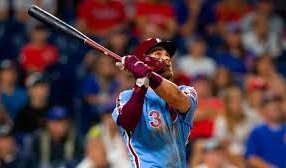
Hitting the salami that ate the Cubs.

Forget the proverbial meal and stewardess. What Bryce Harper hit in the bottom of the ninth in Philadelphia Thursday night should have had astronauts on board.

A game-ending grand slam hit that vapourises a three-run deficit is called colloquially the ultimate grand slam. There are now 29 such salamis in major league history. Harper’s made “ultimate” seem like an understatement.

One night after he led the Phillies to a blowout of the Cubs with a pair of bombs, with neither team nor the Citizens Bank Park aware of a dangerous standoff between a narcotics suspect that wounded six Philadelphia police officers on the north side, Harper continued defying the 2019 narrative calling his season an absolute bust.

He also defied the ugly 1980s-throwback uniforms the Phillies wore Thursday night. The powder-blue threads with pipings down the sleeves, the sides, and the pant leg sides, the that’s-so-80s P logo with the supposed-to-be baseball seam curve inside the loop, with the maroon trim and caps that looked more like caked dried blood than true maroon.

Well, maybe he didn’t there. Hall of Famer Mike Schmidt hit 583 major league home runs in those threads. Most of his home runs were conversation pieces, too. But even the greatest all-around third baseman ever to play major league baseball never did what Harper did Thursday night.

With the bases loaded, one out, and two Phillies runs already home to close a deficit to 5-3, Harper launched a Derek Holland service into the second deck past the right field foul pole. He stood in the box for a moment, holding his bat downward in front of him, watching the ball fly away.

Some accuse him of just standing and admiring the shot. If they’re right, so what. Show me any one of them who’d say they wouldn’t stop to admire it if and when they might hit such a blast, and I’ll show you people who’d flunk a polygraph before the first question is placed in front of them.

From the batter’s box standpoint, though, it looked more as though Harper needed to be dead last certain the ball would stay fair, since it flew straight over the foul line to begin before it tailed away to the left and landed fair about seven rows up that second deck.

Then he shot around the bases like the Road Runner giving Wile E. Coyote the famous bottle cork-popping tongue razz before hitting the jets and going birdius supersonicus absurdius, right into the crowd of Phillies that waited to mob him as though he were the fifth member of the Beatles.

About the only thing to fear when Harper hit the jets was a possibility of his passing Rhys Hoskins running home from first base ahead of him. Except that Harper’s linger in the batter’s box enabled all three Phillie runners to put enough distance behind them that Harper could afford going beep-beep! and tearing up the ground behind his backwash.

Until that point, Harper spent his Thursday evening getting hit by a Yu Darvish pitch and stealing second only to be stranded in the bottom of the first, striking out to end the bottom of the third, striking out to open the top of the sixth, and hitting a runner-advancing ground out in the bottom of the eight.

Darvish had one of the best outings of his rocky Cubs tenure, striking out ten, and holding a nifty 5-0 lead before Cubs manager Joe Maddon decided it was time to open the bullpen gates. With the Cubs—now tied with the Cardinals for the National League Central lead, and not always looking like division contenders even in their wins of late—having an injury-added-to-insult bullpen that sometimes gets mistaken for those ill pens out of New York, Boston, Washington, and Atlanta, to name a few.

The Phillies snuck one home in the bottom of the eighth on a base hit to right off Brad Wick, spoiling the Cubs shutout, but concurrently spoiling the Phillie rally when Hoskins got himself thrown out trying to score behind Quinn.

But then they chased Wick in the bottom of the ninth, with a little help from Cubs shortstop David Bote—playing there with regular Javier Baez out ill—committing a  throwing error on Cesar Hernandez’s one-out grounder. Scott Kingery singled promptly to set up first and second and pinch hitter Brad Miller promptly singled Hernandez home to set up first and third.

Out came Wick, in came Holland. Into right center went Roman Quinn’s single sending Kingery home, and down to first to load the pads went Hoskins after he was hit by a Holland pitch on 1-2. Here came Harper. There went the ball game. Cubs radio host Julie DiCaro tweeted, “#cubs group therapy tonight.”

“Before I went to the plate, I touched my heart and I was thinking to myself: ‘Why am I not jittery? Why am I not excited?’ But that’s just how I am,” said Harper, whose off-the-charts hitting in some two hundred high leverage situations all season long puts the lie to his starting his mammoth new thirteen-year contract as a high-priced dud.

“I go up there, and each at-bat is the same,” he continued. “I don’t think about bases loaded. I try to get a pitch I can drive and hopefully good things happen. I love those moments. I love those opportunities. I think it helped me a lot from a young age going through those emotions and having those opportunities at 8, 9, 10 years old in big-time games going to different states and cities playing for a lot of teams.

“I just love it. It’s a lot of fun,” he added. “These fans do expect that, and I expect to do that for them on a nightly basis. And if I don’t, they’ll let me know, and I like that too.”

Harper’s blast also meant that, since his premiere in 2012, he’s second only to Atlanta’s Josh Donaldson (seven) for game-ending home runs in the Show. It also left him with seven bombs and fifteen steaks in his past twelve games.

He chopped a Holland sinker foul to open. He fouled off another sinker. He laid off a changeup missing outside by a hair. He chopped another sinker foul. Then he chopped Holland’s and the Cubs’ heads off, when the Chicago lefthander tried yet another sinker and it sailed up to the plate, in the middle and a little inside.

“Knowing his sinker was his best pitch,” Harper said, “(I) kind of cheated the best I could on the inside part of the plate and was able to keep it fair.”

“You have to give credit to where it’s due,” Holland said. “Tip your hat to him.”

It left the Cubs feeling more than just a little abused after being swept in Philadelphia. They’ve felt that way a lot on the road this season. “With the road struggles, being able to win a game here would have been nice,” said Anthony Rizzo, who went two-for-five with a run scored and two driven in Thursday night. “But we didn’t. It’s definitely tough at this part of the season, as opposed to April and May when this happens.”

Darvish continued shaking off his earlier-season struggles to add to a string that now features 26 consecutive innings pitched without surrendering a single walk. He had no problem with manager Joe Maddon lifting him after seven, either. “After the fourth inning I started losing my mechanics,” Darvish admitted. “I think it was a good decision . . . The numbers show good, but I don’t feel that good.”

Nobody in Cubs fatigues or in Cub Country felt that good after Harper shot the moon in the bottom of the ninth. “That one is going to leave a mark,” Maddon said. Leave a mark? More like it blew a hole through the Cubs, whose 23-38 road record to date portends disaster if they reach the postseason. And who have twenty road games yet to play the rest of the season.

With one swing Harper finished yanking the Phillies to a game behind for the second National League wild card. It hasn’t been all fun, fun, fun for these phun-loving Phillies this year, either. But as Thursday night starting pitcher Drew Smyly said, “I think everyone who watches baseball expects him to do that every time he’s up. He’s fun to watch.”

Except when he’s having his fun at your expense.


“Hi. We’re the Mets. And we’re crisis junkies.”

2019-08-15 PeteAlonso

Pete Alonso opened the Mets’ Thursday night assault in the first by tying Cody Bellinger’s NL rookie home run record . . . and the Mets still found ways to come close to blowing a game in which they scored ten runs early enough.

If they can’t find Crisis Addiction Anonymous anywhere, and a quick Google search won’t show such a group, the Mets need to create one. Post haste.

Their crisis addiction is going to kill them, or at least knock them right back out of the postseason into which they shook, rattled, rolled, clawed, climbed, and sometimes stumbled their way back after the All-Star break.

They need to stand chastened before those who come to the first meeting of CAA and say it loud. And humble.

Hi. We’re the Mets. And we’re crisis junkies.

Forget about winning at the last minute when they win. If Thursday night in Atlanta is evidence, they can’t resist putting up 6-0 leads in the first inning, expanding them to 10-3 after seven innings, then letting the other guys knock on the door of overthrowing them.

Knock on the door? The Mets were practically ready to let the Braves bust the door down and ransack them, before Edwin Diaz struck Ender Inciarte after walking Brian McCann, ending the game at long enough last. With the Mets lucky to bank a 10-8 win.

It says something when a team slaps sixteen hits before five full innings are in the vault, 23 hits on the night, and still gets to within two runs of blowing it in the end.

It says something when two Mets collect five or more hits in a game together for the first time in franchise history and they still get on the threshold of losing.

It says something when Pete Alonso goes five-for-five with six runs batted in including a top-of-the-first splash hit, Amed Rosario goes five-for-six with four runs scored and one driven in in the leadoff spot, Rosario misses the cycle only by one home run, and the Mets still get to within a suture of losing.

It says something when every member of the Mets’ starting lineup including starting pitcher Marcus Stroman gets one base hit at minimum, and a little over half that starting lineup scores a run at minimum, and the Braves could still find ways to get thatclose to plowing through the Mets’ front door at the last minute.

They had enough to prove after losing the first two of this three-game set, making for three straight losses and the sudden, slightly sinking feeling that their white-hot post All-Star break performance looked like nothing more than a pleasant dream. From which they were going to be awakened by the cacophonous alarm clock that too often jolts the crisis addicted home to reality’s terror.

They opened with a few bangs and ended with more than a few whimpers Thursday night. Lucky for them the Mets get to spend the weekend having their way (you hope) with a collection of Royals very different from the ones to whom they fell four World Series ago.

With Jeff McNeil recovering from a hamstring tweak Rosario took the leadoff spot in the order. He wrung Braves starter Julio Teheran—historically a Met nemesis but this season a lot less than that—to an eighth pitch and hammered it off the right field wall, past a slightly misjudging Matt Joyce, for an opening triple. The National League East-leading Braves must have thought that was just an introductory aberration.

But Joe Panik promptly dropped a line single into short center field to send Rosario home. And up stepped Alonso, with a few things to prove, including shaking off a Wednesday night oh-fer at the plate and a rookie fielding mistake—scrambling for a ball that pretty much belonged to the second baseman—that turned a near-certain double play shot into the continuation of a Braves uprising and win.

Now Alonso looked at a fast ball for a strike. Then Teheran threw him a second straight heater right down the middle and just under dead center in the zone. And Alonso drove the meatball into the fountain behind the center field fence. Tying him with Cody Bellinger for the National League’s rookie bomb record at 39.

All the Mets had to do from there was not overthink, the way Callaway had Wednesday night, when he hooked his effective starter Steven Matz despite a 2-1 lead and Matz retiring fourteen consecutive Braves.

All they had to do from that explosive top of the first intro was what Rosario, Panik, and Alonso didn’t do—step up to the plate trying to kill to death Teheran and any Braves bull they might lure from the pen.

And all Stroman had to do was stay on his game of inducing contact for outs while rehorsing the control for which he’s normally noted but which hasn’t been consistent since he was traded to the Mets before this year’s new single mid-year trading deadline.

So much for those ideas. Stroman wasted two immediate outs in the bottom of the first by walking Freddie Freeman and Josh Donaldson back to back, before Brian McCann caught Panik helpless playing deep, Panik picking the grounder off cleanly in short right center but too far to catch any runner for the side, even if he could hold Freeman from going home on the play. Then Stroman reached for something a little bit extra and struck Ender Inciarte out swinging to strand the ducks on the pond.

Hi, we’re the Mets. And we’re crisis junkies.

Both sides probably anticipated an early enough reach to their beleaguered enough bullpens, after the Mets wrung 32 pitches from Teheran and the Braves, 33 out of Stroman.

Juan Lagares struck out to open the second but Stroman himself beat out an infield hit. And Rosario sent him home a high line triple to left just eluding a diving Ronald Acuna, Jr., who probably should be named an honourary Navy frogman for the diving he did several times Thursday night.

Then Panik (8-for-12 with men on second or beyond as a week-old Met to that point) and Alonso walked back-to-back on eight pitches before Teheran walked Rosario home on a five-pitch walk to Michael Conforto. And Wilson Ramos, who hit into thirteen double plays entering Thursday night, didn’t give Teheran what he surely wanted, only because Teheran couldn’t throw a ball down enough to dial the area code. And on a full-count eighth-pitch-of-sequence Ramos lined Panik home with a base hit to right.

Lucky Mets, they got into the Braves’ pen first, leaving Teheran to the shortest start of his career to date and forcing Braves manager Brian Snitker to reach for his long man Josh Tomlin. And Tomlin got the double play ball from J.D. Davis that Teheran couldn’t get from the slower-legged Ramos. But now the Braves were in a 6-0 hole.

Seven and a half left, you could hear Mets fans muttering. When’s the implosion this time?

Todd Frazier hit Tomlin’s third pitch of the top of the third over the left field fence. Tomlin eluded further trouble by shaking off a followup single and a sacrifice bunt to strike out a slightly anxious Rosario swinging at pitches away and get Panik to loft a foul pop outside the shallow left field line for the side, but the Mets had a 7-0 boot right next to the Braves’ necks before three full innings were banked.

But Stroman walked Acuna to open the bottom of the third and wild pitched him to second while working to Ozzie Albies. Albies grounded sharply to Rosario at short, but Rosario threw a strike over Acuna’s bent-over body that tore through Alonso’s mitt web for first and third, saddling Alonso with an unfair error charge. And, with further faltering control, Stroman walked Freeman to load the pads for Donaldson.

Then Donaldson grounded to short with Frazier over from third to spear it and throw Freeman out at second, but Donaldson just beat the throw on to first while Acuna scored. And then the Mets patched through the Area Code 6-4-3 for the side on McCann’s grounder to short. For these Mets against those Braves, that’s a thin escape even with a six-run advantage.

It was easier to escape the bottom of the fourth after Joyce hit a two-out breaking ball over the right field wall when Stroman got Tomlin to fly out to right. And, to pad the lead back to seven when Alonso cued a two-out, two-run single through the middle infield.

It was just as easy to escape the bottom of the fifth, after Freeman followed Albies’s one-out line single to left by dialing a very sleek Area Code 3-6-1. It was just as simple for Stroman to shake off Donaldson’s leadoff blast in the bottom of the sixth by getting McCann to ground out sharply to Alonso unassisted at first. It was—

Uh, oh. Callaway reached into the bullpen. Stroman wasn’t a perfect model of control all night long but he still had the game in hand and, at 96 pitches, might yet get through the sixth alive. But Callaway reached for Luis Avilan with lefthanded hitting Inciarte due up.

Is it going to happen now? muttered Mets fans under their breaths. To say it aloud might just bring disaster down in advance.

But Inciarte lined one that Davis nearly lost in the lights before picking the ball up on the descent and making the near shoestring catch. Then Johan Camargo lined a single just beyond Rosario ambling out from shortstop, but Joyce skied one the other way to left for which Davis ran like a racehorse before sliding into the catch across the foul line for the side.

And, somehow, a 9-3 Mets lead after six full still didn’t quite seem safe.

Rosario nailed his fourth hit of the night, a leadoff double opening the top of the seventh, with Acuna again making a bold dive but coming up short enough. Panik grounded Rosario to third, and Snitker lifted Tomlin for former Met Anthony Swarzak. And Alonso hit Swarzak’s first pitch to left for his sixth RBI on the night.

Now a 10-3 Met lead didn’t quite seem safe, either.

Callaway brought in Brad Brach for the bottom of the seventh. And Brach struck out pinch hitter Adam Duvall and Acuna before getting Albies to line out to center for a blink-of-an-eye inning. And Brach’s successor Drew Gagnon had to shake off Freeman’s leadoff bomb into the Mets bullpen and a tough two-out infield hit to finish the bottom of the eighth.

Then Luke Jackson, talented enough but too often prone to send Braves fans hollering for the crash carts lately, got through the top of the ninth by turning a pair of singles by Alonso leading off and Ramos (after Michael Conforto struck out) into an inning-ending Area Code 5-6-3.

But what the hey? 10-4, Mets after eight full? Do we dare hope? whispered Met fans desperately.

We hereby invoke Berra’s Law, whispered Braves fans, in and away from Sun Trust, and probably without a single jolted nerve or slurring tongue.

Gagnon looked good enough recovering from Freeman’s mash, and Callaway by now trusted the rest of his bullpen little enough, not to mention not wanting to put Seth Lugo to work a second straight night after Lugo suffered the hard way Wednesday, that he let Gagnon stay in to work the ninth.

OK, how’s it going to happen? Met fans shuddered.

It happened with pinch hitter Rafael Ortega singling to right on 0-2. With late left field insertion Adam Duvall replacing him at first on a force out. With Acuna sending one into the Mets’ bullpen in left. With Freeman following a pop out to third with a shot into the left field seats. With Donaldson following that with a shot over the right center field fence.

And, with Callaway left to little enough choice but to bring in Diaz, who hadn’t pitched since the Nationals tore a pair of runs out of him in last Sunday’s loss. Who promptly did pretty much what the Mets expected him to do all year long. Before a combination of questionable deployments, and perhaps his own somewhat shot confidence, dissipated him to the point that he’d inspired speculation this week that he might either be sent to AAA to reconfigure himself or demoted to the lowest leverage situations possible.

It seemed a shame that Diaz had to bail his team and his skipper out like this now. And after he walked McCann unintentionally on four straight inside services, Diaz followed ball one to Inciarte with two called strikes before getting him swinging on a slider that dove almost the way Acuna did in the outfield.

Almost the way the Mets dove after they dropped a very unlikely seven-run lead onto the Braves’ cooler heads. The Braves looked better losing by a pair than the Mets turned out to look winning at all, by a pair or otherwise.

The Mets still look like baseball’s hottest team since the All-Star break, 22-9, but that’s on paper only now.

“We went through two teams that are very good. We went .500 against them,” said Callaway in glass half full mode. “Now we’ve got to go into Kansas City and continue to play well, and try to win some games there. Go back home, we’ve got some tough opponents.” Say what you will about him otherwise, but Callaway does have a periodic gift for understatement.

Not that the Braves have things all that simple, either. The Dodgers hit Atlanta for a three-game set Friday night. The National League’s two best teams in a likely postseason prelude. But there’s the creepy feeling that you might like the Braves’ survival chances better than you might like the Mets’.

Because only these Mets can leave you feeling like a win in which they score ten runs still resembles a loss. And only they can leave you feeling like a mere two games back in the wild card hunt feels like twenty.

Hi. We’re the Mets. And we’re crisis junkies.