Strasburg: Retirement official, and should be a hard lesson

Stephen Strasburg

Let’s hope Stephen Strasburg’s often brilliant, often injured, postseason-deadly career helps start solving pitching injuries the right way.

Allow me to begin by reaching for a magazine article. It’s one I wish would be read by those on social media or elsewhere where baseball is discussed and debated, particularly those who continue to kvetch about today’s pitchers being “babied” or “unable and unwilling to go the distance,” the way the real men did in the Good Old Days.

“[I]t’s a sad truth,” the writer began, “that, in recent years, and with increasing (and alarming) frequency, big winners have stopped winning with the abruptness of a stalled motor.”

. . . The principal reason why baseball has a sore pitching arm is that pitchers work harder today than ever before. Years ago, the baseball was a muffin, and pitchers paced themselves without fear of the big home run. Only when a runner reached second did the pitcher have to throw his best. And when he threw his best he was throwing at a larger strike zone.

Today the accent in baseball is on the score, big and quick. The ball is built for distance. Bats have the streamlined look . . . Fences are, if anything, closer. Anybody can hit a home run. No lead is safe, for five-run innings appear in box scores almost every day. So today’s pitcher must bear down all the time.

“Get out there and throw as hard as you can as long as you can,” the manager tells his starter. “If you get tired, we’ll bring in Pete from the bullpen.”

This approach to the game is murder on good pitchers, for if they last the full game, as they so often do, their arms undergo a severe strain.

“The pitching motion is a peculiar muscular activity,” said a team doctor to the writer. “It places an abnormal strain on the arm. Every time a man pitches hard, tendon fibers in his shoulder tear apart. It takes about three days for them to repair. That’s why pitchers can only work every fourth day, as a rule. When a pitcher throws too hard, or if he throws awkwardly—for instance, if he slips on the mound—the tear is apt to be bigger, causing a sore arm.”

“. . . [P]itchers are wearing out faster than ever, at a time when more pitchers than ever are being used, the search for new talent never ends,” the writer went on to say. “There are some baseball men who think that eventually pitchers will work only three innings at a time . . . In that same vein, others feel sure that the use of the relief man will be explored to such an extent that 20-game winners . . .will become extinct.”

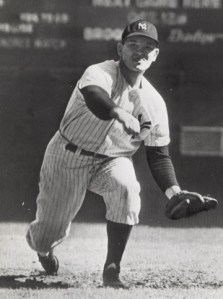
The writer’s name was Walter Bingham. The magazine was Sports Illustrated, with the Yankees’ 1958 World Series MVP (and baseball’s third one-across-the-board Cy Young Award winner) Bob Turley on the cover. The issue was 4 May 1959. The team doctor Bingham quoted was Turley’s on the Yankees, Dr. Sidney Gaynor. 

This weekend past, the Major League Baseball Players Association and MLB swapped barbs over the current crowd of pitcher injuries. The timing couldn’t have been more grave: Stephen Strasburg, brought down by thoracic outlet syndrome, finally formalised his long-enough-known retirement after ten full seasons and shards of three to come.

The MLBPA accused MLB of shoving and shortening the pitch clock to the detriment of pitchers’ health. MLB counter-accused the MLBPA of “ignor[ing] the empirical evidence and much more significant long-term trend, over multiple decades, of velocity and spin increases that are highly correlated with arm injuries.” MLBPA chief Tony Clark put his name on their statement. No name appeared on MLB’s.

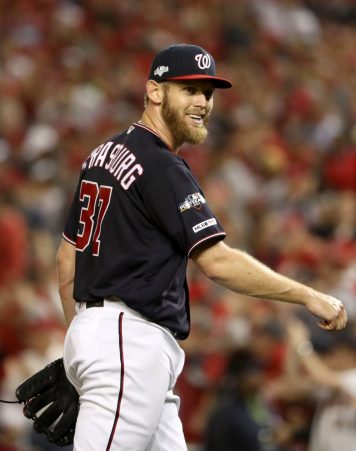
Strasburg’s TOS may have been a direct result of his longtime inverted-W arm-and-elbow positioning, both elbows above the shoulders as he cocked to throw, position which strains elbows and shoulders at once. I noted when discussing his original retirement decision, by way of longtime baseball analyst Allen Barra, that the inverted W’s arrival coincided with the little-by-little disappearance of the full windup from the pitching repertoire.

The full windup, Barra wrote in 2011, “took advantage of the momentum of [a pitcher’s] whole body to give velocity to the pitch.”

In recent decades, with pitchers more concerned about holding runners on base, the windup has largely gone the way of the two-dollar hot dog. The Inverted W is the result of a pitcher trying to add speed or finesse on a pitch by forcing the delivery—in other words, his arm working against his body instead of with it.

Sixty-five years after Bingham observed a major league pitching injury epidemic, ESPN’s Jeff Passan writes that, yes, pitchers have and will always get hurt, “but at the highest levels the causes have morphed from longer-term overuse injuries to shorter-burst, higher-intensity, muscles-and-ligaments-can’t-handle-it ones.”

Teams incentivize pitchers to throw in a way that many experts believe is the root cause of the game’s injury issues. As much as velocity correlates with injuries, it does so similarly with productivity. Throw harder, perform better. It’s a fact. It’s also bad for the health of pitchers — and the game.

At the same time, it’s not the only factor. The fact that the union wants more information on the pitch clock should matter to MLB. Even if the league did bargain for unilateral control over on-field rules changes during negotiations with the MLBPA, it can’t ignore what players continue to begrudge. This isn’t idle bellyaching. Pitchers want to understand why the extra two seconds shaved off the clock this year were so imperative. And why they aren’t entitled to one or two timeouts a game when they feel discomfort—a nerve sending a shock of pain up their arm, a muscle spasming and in need of a break. And why there still isn’t an accepted grip agent to help with balls they believe remain inconsistently manufactured. All issues of health.

If MLB wants evidence on its side, it should hark back to Bingham and toward Passan. If the MLBPA really cares about the pitching department of its membership, so should they. If both sides want to see fewer pitching injuries and longer pitching careers, they should hark especially to Keith Law, writing in The Inside Game four years ago:

Nolan Ryan is the ultimate survivor, the survivor ne plus ultra, the übersurvivor when it comes to survivorship bias . . . He is, however, an outlier, a great exception—not one that proves the rule, but one that causes many people to discard the rule. Most pitchers can’t handle the workloads that Ryan did; they would break down and suffer a major injury to their elbow or shoulder, or they would simply become less effective as a result of the heavy usage, and thus receive fewer opportunities to pitch going forward. Teams did try to give pitchers more work for decades, well into the 2000s, but you don’t know the names of those pitchers because they didn’t survive: they broke down, or pitched worse, or some combination of the above.

[The] pitching deity known as Charles “Old Hoss” Radbourn started 73 games for the Providence Grays in 1884 and threw 678.2 innings, but survived to pitch another seven years beyond that. The game itself has changed dramatically in the last few decades, with pitchers throwing harder than ever, and hitters bigger and stronger than ever, but those outliers were even outliers in their own times—and they should not distract us from what we see from looking at all pitchers, not just the ones we remember.

. . . And stop saying “Nolan Ryan” like it’s some mic drop.

I saw one social media bonehead refer to Strasburg as “an orchid.” Charitably, that could be taken to refer to his early Tommy John surgery and to both cervical neck impingement and shoulder inflammation in 2018. Then, carpal tunnel syndrome in his pitching hand in 2020 followed by TOS surgery.

Maybe we should start saying “Stephen Strasburg” like it’s some mic drop.

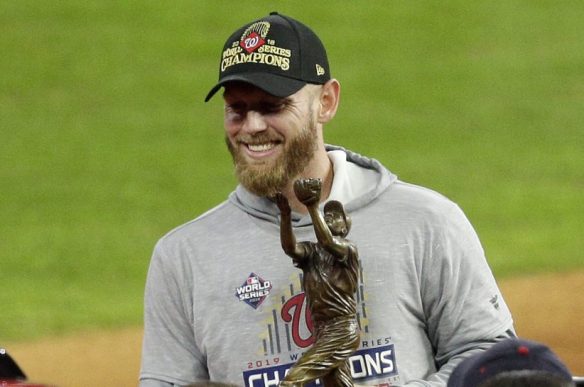
He retires (as it should have been, no controversy) with no reduction in the annual average value of what’s left of that mammoth contract he signed not long after his 2019 World Series triumph. That Series MVP he won crowned a career in which he was so often brilliant and in which he was downright deadly come the postseason: 1.46 lifetime postseason ERA; 2.07 lifetime postseason fielding-independent pitching.

“Although I will always wish there were more games to be pitched,” Strasburg said in his formal announcement, “I find comfort knowing I left it all out there for the only team I’ve known.” He left more out there than even he might think.

Let’s hope he enjoys his second act of life while his career, among too many ended similarly, helps more than a few people start wising up. And, for further openers, maybe being allowed or encouraged to start winding up all over again.

No más for Stras

Stephen Strasburg

Now-retiring Stephen Strasburg has much to be proud of, and his career has much to teach future pitchers and coaches about mechanical issues.

There was no pleasure for me when I wrote, in June, that since Stephen Strasburg underwent throacic outlet syndrome surgery he’d pitched only once, a year before I wrote. And, that it was more than likely that his career was really over.

Strasburg’s attempts to rehabilitate since that surgery haven’t worked. The 2019 World Series MVP tried everything, all the way to limiting his workouts to his lower body but discovering they strained his upper body thanks to nerve damage. Two months ago he hoped to accept it if his body told him not to even think about the mound again.

He’s accepted it. The word came forth Thursday that Strasburg’s calling it a career, with only a formal September announcement to come.

The news hit the Internet running when we’d barely processed fully that Shohei Ohtani suffered a second ulnar collateral ligament tear in his pitching arm. If Ohtani undergoes a second Tommy John surgery, he has a better chance of returning to the mound at all. Assuming his continuation as the Angels’ designated hitter doesn’t cause even more damage before he might undergo the operation.

Strasburg’s eventual fate may have been far more cut-and-dried, for all the man’s determination to return after assorted injuries. The root was his pitching style, the inverted-W positioning of his arms, with both elbows above his shoulders as he cocked to throw a pitch. The positioning strains elbow and shoulder alike.

In Strasburg’s and others’ cases, it’s numbered career days even if they can’t really pinpoint the likely end. It’s also a comparatively recent phenomenon. The inverted-W positioning, Clearing the Bases author Allen Barra observed in 2011, began coming into play when the full windup began disappearing from the pitching repertoire.

Whenever you ask how the like of Hall of Famers Warren Spahn and Juan Marichal could pitch 250+ innings a season without arm or shoulder trouble, Barra says, the answers are several (including that they just might have been outliers) but the primary just might be the full windup. (In Marichal’s case, he had about sixteen different ones, not to mention about a dozen different leg kicks including his fabled Rockettes-high kick.)

[It] took advantage of the momentum of their whole body to give velocity to the pitch. In recent decades, with pitchers more concerned about holding runners on base, the windup has largely gone the way of the two-dollar hot dog. The Inverted W is the result of a pitcher trying to add speed or finesse on a pitch by forcing the delivery—in other words, his arm working against his body instead of with it.

Strasburg almost never pitched with a full windup. The most he’d show in the way of any kind of windup would be lifting his hands to just below his chin, before turning to throw and cocking into that inverted-W before throwing. WIth his landing leg’s foot planted ahead of, not with the throw.

The no-windup delivery by itself isn’t dangerous. Don Larsen pitched his perfect game in the 1956 World Series using a no-windup delivery, hands set at the letters before throwing. But Larsen also didn’t have the inverted-W. His pitching elbow didn’t come above his shoulder, his arm was “up and ready,” above his head releasing the ball, as his left foot landed.

A no- or little-windup delivery with the inverted-W, alas, is something else entirely. That inverted-W plus 2003 overwork contributed the bulk of the injury trouble that turned Mark Prior’s pitching career from phenomenal to science experiment. (There were a few other injuries, of course.) But I bet you don’t remember a Hall of Famer whose career ended because of it.

Don Drysdale

Don Drysdale—the inverted-W put paid to the Hall of Famer’s career in 1969 with a dissipated rotator cuff.

Don Drysdale had the inverted-W. He pitched longer with it than you might reasonably expect, even through previous shoulder pains. The year after he broke Walter Johnson’s consecutive shutout-innings record, Drysdale’s rotator cuff dissipated and ended his career in a time when surgery on the cuff didn’t exist.

Barra wrote that Joba Chamberlain was the Yankees’ Strasburg, the single hardest throwing righthander the Yankee system had produced in decades. He also observed that, with all the Yankee tinkering upon the much-hyped, talented Chamberlain, they missed the biggest hindrance he’d developed, the inverted-W cock-and-throw style.

The issue with the inverted-W isn’t just the elbow and shoulder straining. It’s a timing issue, too. As analyst Chris O’Leary (the aforementioned “up and ready” was his descriptive phrase) has written, “[T]he position isn’t damaging in and of itself.”

However, by coming to this position, [a pitcher] is ensuring that his pitching arm will not be in the proper position at the moment his shoulders start to turn. As with pitchers with other timing problems like rushing, because his pitching arm is so late, he will dramatically increase the stress on both his elbow and shoulder.”

That’s “late” as in a pitcher’s front, landing foot planting before his arm is back around throwing the pitch, not as he throws it.

Strasburg may have been extremely fortunate to return from Tommy John surgery as a successful pitcher. But his mechanics and the timing issues they can cause, even if he modified them somewhat by the time of the 2019 postseason (he’d long fixed an issue with his pivot foot, training it to be fully parallel to the rubber), may have been destined to take him out at last with a shoulder compromised so severely that he couldn’t even pick his daughters up for fatherly hugs and affection.

That’s more than enough to make a man think that, no matter how much he loves the thrill of competition and the spoils of success, there comes the moment when it’s just not worth pursuing it further. Ask Hall of Famer-in-waiting Joe Mauer, who finally retired because of what concussions did not just to his career but to his ability to be the husband and father he prefers to be.

They’ll still have to talk about how to handle the rest of Strasburg’s uninsured mega-contract, the one he signed after coming away as that 2019 Series MVP and exercising his opt-out clause, only to click his spikes three times saying “there’s no place like home!” and getting the deal. He didn’t want to leave Washington, and God plus His servant Walter Johnson know Washington didn’t want him to leave, either.

He didn’t ask for his body to keep him from pitching and earning the dollars to come, no matter how treacherous his pitching mechanics proved. No professional athlete does. The mind overcomes the body’s basics only so often, and no two bodies are exactly alike. Strasburg’s kept him from posting the Hall of Fame case his talent and performances when healthy suggested. Now it sends him to retirement at 35.

The Nats couldn’t insure Strasburg’s post-2019 deal without paying ferociously high premiums. If Strasburg had retired without injury, he’d have left the remainder on the table. But with TOS putting paid to his career the Nats will pay out the remaining $150 million on the deal, including some deferred payments that will keep paying the righthander through 2029.

If you consider the jumpstart his original arrival gave the Nats for credibility, the deadly postseason resume (1.46 ERA; 2.07 fielding-independent pitching; 0.94 walks/hits per inning pitched; 11.5 strikeouts per nine innings), that 2019 Series MVP pushing the Nats toward the finish line and into the Promised Land, the franchise strikeout leadership, Strasburg has earned every dollar.

Maybe the real miracle was that Strasburg could and did pitch so well as long as he did. A young man that talented, who could and did deliver some big moments in a career that was good, often great, sometimes beyond these dimensions, has to say goodbye not because age caught up to him but because his body said, “Halt right there, brah” and meant it this time.

It took Strasburg long enough to let his pleasure in the game show through his usually stoic countenance, in large part because the early hype might have suffocated him. But he went from baseball’s No. 1 draft pick to a World Series MVP before he was finished. That’s something in which to take pride and joy.

Almost as much pride and joy as we hope Strasburg enjoys raising his family and living whatever second act in life that he chooses to live.

Strasburg Agonistes

Stephen Strasburg

The proud and happy MVP of the 2019 World Series may face career-over now.

Stephen Strasburg’s father moved to northern Virginia to be closer to his son. Three weeks after Strasburg got a stress-reaction diagnosis, his father died. The son, an only child, cleaned the father’s apartment out last fall and discovered the old man kept a library of newspapers and magazines chroncling his baseball career.

There it was. From Strasburg’s days as San Diego State’s most-hyped major league draft prospect to his early Nationals splash, all the way to his triumph winning the 2019 World Series’ Most Valuable Player award. And all the injury-addled points around and in between following his early-career Tommy John surgery.

“Time has gone so, so fast,” he told Washington Post writer Jesse Dougherty. “A lot of guys that you played with have moved on and they’re in the next chapter of their lives. It’s crazy to think about how short baseball careers can be.” Crazy and, in Strasburg’s case, sobering and saddening.

A month after that Series triumph, Strasburg got his fondest wish. In essence, and I said as much at the time, he clicked his spiked heels three times and pleaded, “There’s no place like home! There’s no place like home!” He got his wish, a seven-year, $245 million contract extension making him a Nat for life. It’s what he didn’t wish for that has Strasburg at a sad crossroads now.

He didn’t wish not to pitch on. But since undergoing thoracic outlet syndrome surgery, Strasburg has pitched only once, last June, before hitting the injured list again, Dougherty observed, with a stress reaction in two ribs. That was well enough after Strasburg underwent carpal tunnel syndrome surgery—and learned the hard way that that was a mere pilot fish for TOS.

If you look at Strasburg now, even at age 34, he still looks as though he could go out and give you seven innings. But he only looks that way. Underneath, his arm and shoulder remain a mess. There’s the very real chance that all the surgery on earth won’t let Strasburg return to the mound again. Ever.

And it’s not for lack of trying. Dougherty has recorded Strasburg’s efforts to rehabilitate, all the way down to limiting his workouts to his lower body only to discover those, too, strain his upper body because of nerve damage. Last fall, Strasburg still hoped to get well enough to pitch again. By now he may be hoping just to accept it if his body finally tells him pitching again isn’t an option.

The Nats have had little beyond trouble since that stupefying World Series triumph. Now they’ve got a bigger pile of it above and beyond their 25-33 record this year and their sitting at the bottom of the National League East heap. Strasburg’s been shut down entirely since late April with severe nerve damage. This may be the prelude to shutting down his pitching career entirely.

The Nats are on the hook for the rest of Strasburg’s contract after they couldn’t insure it.  Dougherty reports that sources close to the Nats say they might not have spent atop Strasburg’s extension to insure the deal if they could have found an insurer willing to work with Strasburg’s injury history. Naturally, the jerk brigades can be expected to say Strasburg went from World Series hero to common thief.

You can’t convince them, try though you might, that even a young man whose pitching career has been marked as much by injuries as by triumphs on the mound doesn’t sign a nine-figure deal expecting to make only eight major league appearances in the time since he signed. Injuries may come with the territory of professional sports, but you can’t name one professional athlete who goes to the park thinking he’d really love to turn his arm and shoulder into a science experiment.

Strasburg’s had enough trouble in his career, whether his injuries or whether misperceptions about him as a man. For the longest time his stoic public demeanor caused people to mistake him for being a jackass. Behind it, he had to learn how to pitch with his mind when his body eroded his fastball somewhat. He took the misperceptions head on in 2019, letting his teammates loosen him up, loosening himself up more with the writers who covered the team.

Stephen Strasburg

It took Strasburg a long time to let joy in his work show before the public, but show it he did as he triumphed in the 2019 Series.

TOS happens when blood vessels and/or nerves between your collarbone and your first rib compress, causing shoulder and neck pain and finger numbness. The surgery for it cuts somewhat invasively into the shoulder and the back. The surgeon removes a cervical rib and a pair of small scalene muscles.

Can pitchers return from it successfully? The known results are a mixed bag. When now-retired former Mets pitching star Matt Harvey underwent the procedure in 2016, FanGraphs writer Craig Edwards took a deep dive. For every Bill Singer or Kenny Rogers or Aaron Cook who can pitch a long enough time after the surgery, there’s a Harvey, a Josh Beckett, a Chris Carpenter, a Phil Hughes, a Noah Lowry who can’t.

“Counting on a pitcher who has been through this injury is a terrifying proposition . . . until we have a better track record of pitchers returning from thoracic outlet syndrome, it will keep its reputation as one of the worst arm injuries that a pitcher could suffer,” wrote Beyond the Box Score‘s Nick Lampe a year before Harvey’s surgery. Post-TOS pitchers might or might not lose velocity on their pitches but they’re very likely to lose pitch command.

If they signed delicious contract extensions before turning up with the condition, they’re going to be targeted as thieves by witless fans and careless writers who prefer gorging on the red meat of a fat contract going upside down to digging deep and seeing whether something physical might be the real cause. As if injuries somehow equal moral turpitude or mortal sin.

Don’t let the injuries or the jerks obscure that, when he could pitch, Strasburg was often remarkable, often enough great, and deadly in the postseason: he has a lifetime 1.06 postseason ERA and a 2.07 postseason fielding-independent pitching rate. His bold pitching in Game Six of the ’19 World Series made possible the Nats’ survival to the seventh game they won surrealistically.

When he stood tallest as the 2019 Series MVP, Strasburg spoke soberly in the midst of the Nats’ celebrations, even as he’d finally learned to loosen up enough to let his teammates hug him and make him show his joy. “When you have the ups and downs, I think you can learn just as much from the downs as you can the up,” he began.

I’ve learned that I’m a perfectionist. I’ve learned that I’m a control freak. And in this game it’s very hard to be perfect. It’s very hard to control things. But the one thing that you can control is your approach and how you handle your business off the field. And when you go out there and compete, it’s just about execution. And you put in all the work in the offseason, in between starts, to go out there and try and be the best version of yourself. And that’s something you can control every time.

Until or unless your body says not so fast, Buster. Yet again. This time, his body may be telling Strasburg it’s time to think about the rest of his life, as a husband, a father, a man. There shouldn’t be a juror on earth—in Washington or elsewhere—who’d vote against him if he does.

Starters-as-relievers postseason? As new as Lysol.

Walter Johnson

Hall of Famer Walter Johnson—a starter used in relief to help win the 1924 World Series.

Baseball’s capacity to amuse is almost as profound as the game’s ability to inspire. It’s amusing to see the gnashing of teeth and the wringing of hands over this postseason’s phalanx of starting pitchers who had to yield to their bullpens for assorted reasons. You’d almost think someone was trying to legislate the pitching star out of baseball.

If someone is, they simply weren’t watching the games or hearing the crowds. They also have a rather troublesome ignorance of baseball history. And maybe, too, a continuing bias against relief pitching.

Sure, we love to see and remember the greatest starters of our times. I grew up watching the Hall of Fame like of Jim Bunning, Steve Carlton, Don Drysdale, Whitey Ford, Bob Gibson, Catfish Hunter, Sandy Koufax, Juan Marichal, Jim Palmer, Tom Seaver.

But I also remember seeing and feeling the thrills and kicks when the bullpen like of Dick Radatz came into a game. Hell, Radatz was practically the only reason to bother with the 1963-65 Red Sox. He was big, beefy, intimidating-looking (not for nothing was his nickname The Monster), and looked as though he was about to eat the opposing hitters for lunch.

Until his shoulder deserted him (overwork, plus [speculated] taking someone’s advice trying to add a slider to his howitzer fastballs) some time in 1965, Radatz was as big a pitching star as any starting virtuoso. Even if he did come in for the ninth of the 1964 All-Star Game and surrender a walkoff bomb to then-Phillies star Johnny Callison.

There were more relief aces than you might remember in Radatz’s time. Ted Abernathy, for a few seasons, anyway. Lindy McDaniel. Elroy Face. Eddie Fisher. Stu Miller. Ron Perranoski. Pedro Ramos, at least for the final weeks of that staggering Yankee stretch drive to snatch the 1964 American League pennant. Phil (The Vulture) Regan. Larry Sherry (the 1959 World Series MVP). Hoyt Wilhelm (the first Hall of Fame relief pitcher). Al Worthington.

You might care to note that, whether you’re paying attention now or paid attention then, four of those relievers had top-five Most Valuable Player finishes: McDaniel (1960) and Radatz (1963) each had a fifth-place finish; Perranoski (1964) and Fisher (1965) each had a fourth-place finish.

Think about that for a moment: In four of those seasons there were MVP voters who thought a quartet of relief pitchers might have been among the most valuable players in baseball. Now, those voters then considered won-lost records; those guys were credited with double-digit wins, and a few of them probably got their wins after blowing leads but hanging in while their teams managed to eke or bang out the wins late.

(Face, of course, was an 18-game “winner” in 1959, still a record for relief pitchers, never mind that he also had nineteen save opportunities—applied retroactively—and blew nine of those. In fact, according to Cooperstown Cred, one of the major reasons Chicago Tribune scribe Jerome Holtzman came up with the dubious “save” stat was his feeling that Face’s won-lost record actually over-stated his real value.)

But still.

Were you really watching when AJ Minter and Tyler Matzek clamped the vault door shut on the Dodgers in Game Six of the National League Championship Series? The noise in Truist Park when that pair threw four scoreless relief innings, helping the Braves punch their tickets to the World Series, could have drowned a heavy metal concert out.

Especially when Matzek walked right into a small fire his immediate predecessor Luke Jackson left behind. With eight pitches, Jackson surrendered a leadoff double, a walk, and an RBI double setting up second and third. With eight more pitches, Matzek struck out the side—including future Hall of Famer Albert Pujols and fellow former MVP Mookie Betts.

When Matzek got the Mookie Monster swinging to finish that escape act—if you can go from crossing the high wire to breaking your way out of the chains in the tank in one inning, Matzek did—the Truist crowd went from nuclear to Crab Nebula.

There’s been no better moment of absolute pressure relief pitching than that in this postseason. So far. Who knows what the World Series will bring, above and beyond Yordan and Eddie Tonight? Whatever it brings, come on, baby, don’t fear the reliever. (Unless you have to hit against him.) Or, for that matter, the starter-as-reliever.

You say the starter-as-reliever is just another nefarious creation of today that’s ruining pitchers and pitching? It didn’t exactly come up roses for Max Scherzer this time, of course. But it hasn’t crossed a lot of minds, either, that maybe a 37-year-old man who threw a heavier workload in September than he had any month all season might have been bound for a dead arm by the time he had to say no to starting NLCS Game Six.

But it wasn’t exactly a new thing, either. Not. even. close.

Go back to the 1924 World Series, Game Seven, for openers. When Washington Senators manager Bucky Harris not only delivered what we call a bullpen game to win that Series but secured the Old Nats’ shot at it by bringing (and the crowd went wild, too) Hall of Fame starting pitcher Walter Johnson in from the bullpen for what proved four innings’ shutout relief.

When Casey Stengel managed the Yankees, his five straight pennants and World Series rings out of the chute came in no small measure because he was audacious enough to use a starter in relief. You may have heard of him: Allie Reynolds.

The Ol’ Perfesser used Reynolds as both a starter and reliever in several of those World Series. (Including in the ninth of Game Four, 1950 Series, when Stengel brought him in to get the final out of the Yankee sweep—after rookie Ford allowed the potential tying run to reach.)

Allie Reynolds

Allie Reynolds—Casey Stengel loved using his terrific starter in relief when it mattered most. Especially in a few World Series.

Reynolds also spent 1951 throwing two no-hitters and making six relief appearances on the regular season. Pay careful attention now: Reynolds, his Hall of Fame catcher Yogi Berra, and St. Louis Browns starter Ned Garver—credited with 20 wins for the hapless Brownies—tied for the most first-place votes in that year’s American League Most Valuable Player Award voting. (Yogi won the award by way of his superiority in the secondary votes.)

And, even with the stat applied retroactively, Allie Reynolds—who started 71 percent of his games and relieved in 29 percent of them—is tied for the third-most relief saves in World Series history, behind The Mariano and Hall of Famer Rollie Fingers.

Starters as relievers? Unprecedented and the End of the Grand Old Game As We Knew It? Please.

Smokey Joe Wood, 1912 World Series Game Eight. (Two scoreless after coming in in the eight; surrendered the tying run, bailed out by “Snodgrass’s Muff” in the tenth inning.) Hall of Famer Grover Cleveland Alexander, Game Seven 1926 Series. (The fabled bases-loaded, inning-ending strikeout of Hall of Famer Tony Lazzeri.)

Hank Borowy, 1945 Series. (Four scoreless relief innings, Game Six.) Harry Brecheen, 1946 Series. (Credited with his third win of the set in Game Seven—in relief.) Bob Turley. (Won the ’58 Series MVP winning one start and making two relief appearances including the Game Seven-winning seven-inning gig.)

Hall of Famer Bert Blyleven, Game Five 1979 Series. (Four innings shutout relief in a Pirate must-win.) Four Royals starters in relief in the 1985 World Series. Sid Fernandez, Game Seven, 1986 World Series. (Four strikeouts in two and a third’s shutdown relief enabling room for a Mets comeback win.)

Orel Hershiser, 1988 NLCS. (A save in Game Four.) Hall of Famer Randy Johnson, Game Seven 2001 Series. (An inning and a third shutout relief preceding Luis Gonzalez walking it off for the winning Diamondbacks.)

Madison Bumgarner

Starter-as-reliever: MadBum, Game Seven, 2014 World Series.

Madison Bumgarner, Game Seven 2014 Series. (Five scoreless in relief for the Giants’ third Series rings in five years.) Charlie Morton and Clayton Kershaw, Game Seven 2017 Series.

Nathan Eovaldi, 2018 Series. (The Game Three extras, six virtuoso before Max Muncy ended it with an eighteenth-inning home run.) Chris Sale, 2018 Series. (The final three Game Five outs for the Red Sox triumph.) Stephen Strasburg, 2019 NL wild card game. (Three scoreless in relief.) Max the Knife, Game Five, this year’s NLDS.

The only reason any of those ballpark crowds wouldn’t have gone nuts was because the deeds were done by the visiting pitchers. (Game Five, this year’s NLDS between the age-old-rival Dodgers and Giants in San Francisco, a notable exception.)

And if starters-as-relievers looks like a more contemporary phenomenon, it may well be because they’ve played more postseason games as the years went passing by.

Well, it was amusing to see the teeth gnashing and hand wringing over the starters-as-relievers this time around—for a little while. The problem is that it comes from lack of self-informing, willfully or otherwise. It’s not funny anymore to see some stubborn “purist” or “traditionalist”—in the stands, in front of television, or in the press—blow his or her gasket first and do their homework later.

There’s no place like home

2019-12-10 StephenStrasburg

Stephen Strasburg makes himself a Nat for life.

The temptation is overwhelming. So for once let’s give in to temptation. Stephen Strasburg, essentially, closed his eyes, clicked the heels of his spiked shoes, and chanted the mantra, “There’s no place like home! There’s no place like home!” And made himself a Washington National for life. Which was the probable outcome, after all, when he first bought a home in the D.C. region and then finished 2019 as the world champions’ World Series MVP.

That, as no few commentators observed in the immediate wake of Monday’s news, is what happens when a pitcher learns within the earliest days of his major league baseball life that he happens to wear the uniform of a team that actually cares about him as a human as well as a pitcher in the long term and not the short range. Enough to withstand a small but incinerating storm of criticism for acting upon it.

That’s what Strasburg learned, not without a little kicking and a little whispering (he doesn’t exactly scream), between 2010 and 2012. When he first hit the old disabled list (known nowadays as the injured list) in July 2010 with a stiff shoulder, hit it again after being in too-obvious pain in the fifth inning of an August start, then underwent Tommy John surgery and missed the rest of that plus the entire 2011 season. When former pitcher-turned-broadcaster Rob Dibble, then a Nats talker, said on the air that Strasburg just needed to suck it up and not call in the cavalry to save his butt every time he felt a little ache, the uproar cost Dibble his job. And helped save Strasburg’s career.

There were none so blind as those who couldn’t and wouldn’t see that there’s no such thing as one size fitting every last pitcher who takes the mound, and that there’s no such thing concurrently as every last pitcher experiencing pain in the limb that earns his keep equaling crystal over iron. It only took baseball thought a century to grok that pitching careers lasting two decades or just beyond were aberrations and not pre-ordained actualities, that you couldn’t and shouldn’t, really, expect every highly talented arm to endure just because some were so fortunate.

Strasburg underwent a surgery named for a man who’d been a quality pitcher for twelve seasons prior to undergoing the first such procedure and twelve more to follow, but a man who wasn’t exactly renowned around the game for throwing like a human howitzer, either. When he returned for 2012, the Nationals elected not to allow their prize, a well-hyped, high-priced product of San Diego State in the first place, to overdo it despite any personal inclination, his first full season back. And once again the hoopla, this time accusing the Nats practically of tanking it on behalf of preserving the crystal, never mind that their 2012 and 2013 shortfalls had nothing to do with the Strasburg Plan.

Strasburg didn’t implode the Nats in Game Five of the 2012 division series, when they followed a 6-0 lead taken in the first two innings by trying to hit six-run homers with every other swing of the bat or by trying to throw three strikes with every pitch from the mound. It wasn’t Strasburg who told the 2013 Nats they could survive without lefthanded relief. He didn’t tell anyone that Bryce Harper could survive trying to make himself the second coming of Pistol Pete Reiser in the outfield just because today’s fences are only slightly more forgiving than the concrete wall in old Ebbets Field, or that the Nats could survive him and other key men (Jayson Werth, Wilson Ramos) on the DL with little substantial reserves on which to call in their absence. And Strasburg wasn’t the genius who told that year’s Nats the starting rotation could take the mound believing nothing better than that they had to throw shutouts just to break even.

There were none so dumb as those who spoke beyond their competence, either. The reports of the Nats’ competitive death were more than slightly exaggerated, and so were those saying their absolute World Series-winning window got slammed shut on their fingers. It took a few years, of course, but there’s something to be said for long-term planning and executing, hiccups (there were plenty enough) to one side, and today the Nats sit as world champions, in large portion because of the 31-year-old righthander who’s graduated through long, hard, smartly managed work into a near-perfect number two starter and a postseason menace.

Set that to one side, however, and listen to those in the know who knew that in his heart of hearts, however tempting might have been the offers that would lure him back to within immediate reach of his San Diego roots (the Dodgers and the Angels were thought to have eyes upon him), Strasburg didn’t want to be anywhere but in Washington. Crunching the numbers is fun and revelatory, especially when you divine as The Athletic‘s Jayson Stark has: “I have to wonder if we should be looking at the actual “value” of this deal by dividing $245 million by seven. That’s because Strasburg was already guaranteed four years, $100 million before he opted out of his last contract. So he actually got three years, $145 million out of the opt-out. That comes to $48.333 million a year. How ’bout that AAV!”

Strasburg didn’t exactly behave after the World Series like a young man eager to hit the road, Jack, as Sports Illustrated‘s Stephanie Apstein records: “The Nationals knew something else: Strasburg wanted this done. During negotiations, he asked for the team to open the ballpark every day so he could work out. So when general manager Mike Rizzo and managing principal owner Mark Lerner identified Strasburg as their top priority this offseason, they decided to act like it. They began discussing a potential deal as the 2019 season closed, and they talked in earnest after Strasburg officially opted out on Nov. 2. That urgency appealed to Strasburg, if not exactly to his agent.”

You can accuse Scott Boras of many things, plausibility be damned as it so often is when his name arises, but not caring about his clients above and beyond the commission dollars they earn him for his efforts isn’t one of those charges. (One of the most plain stupid arguments around Boras essentially denies that this is in fact what agents do, assume the heavy lifting of negotiating for their clients on a properly open job market, which in Hollywood and other entertainment worlds is thought right and proper but in professional sports is thought somehow unseemly if not criminal.)

“To establish a legacy and wear the curly W for his career was something that was very important to [Strasburg],” Boras told Apstein. “And I think it was because he knew that people in this organization cared deeply about him and always cared about his interests and the interests of his family.” Meaning that, for all those moments when Strasburg wasn’t entirely happy about the old Plan, as Apstein puts it, “[S]omewhere along the way, he began to feel grateful that his bosses took the long view. His heart was here, but so was his arm, thanks to those weeks on the bench.”

Now the hardest part will be making sure Strasburg’s long, slow arising up from the stoic presence he was for so long continues. Little by little he learned to loosen up in the dugout and finally couldn’t resist getting drawn into the revelries upon this or that moment’s triumphs. The smiles now far more frequent from his fully bearded phiz can provide backup power in the event of a Nationals Park blackout. As illustrated on Twitter—by the Nats themselves, tweeting the news of his signing not with a look at him on the mound but a look at him hitting and celebrating a mammoth three-run homer against the Braves—Stras gotta dance, too.

Boras isn’t entirely altruistic, of course, and he knows bloody well enough that Strasburg now off the market means his other high-profile pitching client Gerrit Cole stands to make out even more like the proverbial bandit, possibly this week during the winter meetings electrified Monday by the Strasburg heel click, if not by some time in early January. If nothing else Strasburg now prompts the Yankees and the Angels—both of whom are known to be all-in on Cole, both of whom are now bereft of a plausible backup in Strasburg—to remake and remodel the numbers enough that Cole lacking Strasburg’s full track record, quite (Cole’s lifetime ERA: 3.22; Strasburg: 3.17; Cole’s lifetime fielding-independent pitching: 3.06; Strasburg: 2.96), could yet make for spring training a $300 million man.

While you ponder what it all means for Anthony Rendon, in the wake of the Nats saying they could afford either Strasburg or Rendon but not quite both, it’s not yet to rule out that Rendon and the Nats might yet decide it’s worth whatever it takes either or both sides to keep him in Nationals Park, too. The Rangers appear to be in position with Rendon as the Angels and Dodgers, possibly, were with Strasburg before Monday, a homecoming option for the Houston native and a nebula for the Rangers moving into a new climate controlled ballpark and needing such a nebula to help the on-field product and the gate counts. And the Nats still have a bullpen to repair behind Daniel Hudson and Sean Doolittle, which repairs aren’t exactly prone to year-end clearance sales.

Rendon may yet remember that, a year ago, the Nats said publicly they weren’t going to break the proverbial bank for Bryce Harper because among other things they wanted to keep Rendon in the family. (We’ve learned long since that that wasn’t quite the complete story.) And Boras, his agent, too, also has one habit one wishes were known far more broadly than it is, which the Harper talks with the Phillies last winter disclosed: when his client prefers to talk to the incumbent or prospective employer himself, the agent obeys when, as Harper did talking to the Phillies, he’s told politely to keep his big trap shut.

There remains the prospect, perhaps taking his cue from Strasburg, perhaps thinking entirely without that factor, perhaps an equal division between the two, that Rendon, too, will click the heels of his spiked shoes and intone, without once referring to his native Texas, “There’s no place like home! There’s no place like home!”