The Polar Bear of Baltimore

Pete Alonso

The Polar Bear gets his wings in Baltimore.

Those running baseball front offices will never lack for pressure. But there are always those among them who inflict the pressure upon themselves. Sometimes the intentions are noble. Sometimes the foresight is far. Sometimes the vision is blurry. Sometimes the blur becomes blindness.

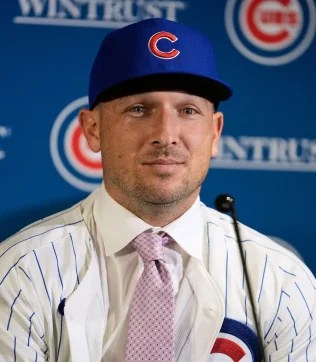
Today’s Oriole fans have the unexpected luxury of believing their team’s president Mike Elias means business, when he says he was looking to take the Orioles’s promising lineup over the top and signing Pete Alonso was the means to that end.

Today’s Met fans have what they think is the too-familiar lack of luxury in believing their team’s president David Stearns is either talking through his head gear or blowing smoke, when he says the Mets were wary of going as far ahead in time with Alonso as the Orioles ultimately did.

Those Met fans, who’ve made a dark art out of pronouncing a season lost after a single bad inning on Opening Day, can’t fathom how a first baseman who’s still a young enough man, and has been one of their team’s most consistent power hitters since his 2019 arrival, became un-affordable beyond three years and unworthy of even receiving an offer this time around.

Stearns hasn’t kept his wish to upgrade the Mets defensively a state secret. The unfortunate flip side of Alonso’s batting prowess has been his fielding lack of it. As good as he is on the double play, as excellent as he is at snatching throws in the dirt, Alonso has slightly negative run prevention plus below-league average range factors.

The Orioles seem to be counting on Alonso’s formidable bat making up for the fielding shortfalls. The Mets seemed unwilling to continue taking that chance no matter how many home runs, no matter how many extra base hits, no matter that Alonso nudged Darryl Strawberry to one side as the franchise’s all-time home run hitter.

Alonso wasn’t the first free agent Stearns allowed to change addresses. The day before the Orioles landed him, relief ace Edwin Diaz elected to sign with the Dodgers. Three years and $96 million—and the largest average annual value for a reliever yet—wasn’t a figure the Mets couldn’t equal if they were thinking in three-year increments as seemed to be the case with Alonso.

So what made the bullpen bellwether return west? Part of it might have been Stearns signing bounceback relief candidate Devin Williams, with whom he was familiar from their time in Milwaukee. Part of it, too, and perhaps especially, might have been their coaching overhaul following the season included Jeremy Hefner, a pitching coach Diaz liked and respected.

The 2025 Mets had pitching issues that had nothing much to do with Hefner. But Diaz took his dismissal to mean the Mets suddenly got unserious about something dear to his heart.

“I spent seven years in New York,” the righthander said after he signed with the Dodgers. “They treated me really good. They treated me great. I chose the Dodgers because they are a winning organization. I’m looking to win, and I think they have everything to win. Picking the Dodgers was pretty easy.” Owitch.

And Alonso? He was both a fan favourite and an undisputed team leader, on the field and off it, known as much for his charitable acts as his bat and his fun-loving leadership style. But he spurned a significant extension offer a few years ago, and he re-upped with the Mets last winter in the face of a thinner market, taking two years with an opt-out after 2025. He exercised it after a big bounceback season and found a more accommodating new market.

Never underrate the power of betting on yourself and winning big even if it’s moving from the Grand Central Parkway to Cal Ripken Way.

“I’ve really enjoyed playing in New York,” said the Polar Bear, whose Oriole introduction included a large stuffed white polar bear on the table to his right and a brief struggle to button up his new Orioles jersey properly. He took number 25 only because his long-familiar number 20 has been long, long retired by the Orioles in honour of Hall of Famer Frank Robinson.

“I’m very gracious for that opportunity,” continued Alonso, who may have landed himself the Yogi Berra Malapropriety Award with that phrasing. “There’s some amazing people over there. Whether it be the locker room staff, clubbies, it was phenomenal. I really enjoyed my time. But this right here, this organization, this city, I’m so proud to call it home.” Double owitch.

“Losing franchise stalwarts Díaz and Alonso on back-to-back days is something a Mets fan might have expected from the Wilpon ownership—only with some ridiculous positive spin on how the team will be better for it,” said The Athletic‘s Ken Rosenthal.

Now, fans might wonder if Fred and Jeff Wilpon are practicing voodoo on David Stearns and owner Steve Cohen.

Stearns and Cohen have not said much of anything. That’s to be expected as they start to clean up the mess they’ve created, the baseball equivalent of a flooded kitchen floor. But they had better provide some answers quickly, and with actions, not words.

Maybe reuniting with Stearns gives Williams a clean shot at a big bounceback following a testy 2025 in Yankee pinstripes. Maybe bringing aging, injury-recovering Marcus Semien aboard—at the cost of another fan favourite, Brandon Nimmo, going to the Rangers—helps the Mets begin the defensive remaking Stearns has sung as a mantra. Maybe adding Jorge Polanco on a two-year deal helps likewise, especially since Polanco can play first as well as second with some pop at the plate. (He hit 26 homers last year.)

Alonso solves a huge portion of half the Orioles’s issues. They need pitching upgrades and  the best Alonso can do about that is help give that staff runs to work with. But they’re getting a class act who seems unable to wait to have a clubhouse impact as well as a scoreboard one.

“How I’m going to help is share my experience, and pretty much share whatever has helped me kind of step and rise to the occasion,” said Alonso, who has a sterling postseason resumé including an intergalactic moment or two. “I want to be an open book, pretty much to everyone in the clubhouse. For me, I take pride in that. Not only do I love performing, but ultimately I love forging great relationships and being a great teammate.”

That sounds like just the kind of guy the Mets should have wanted to keep.

Published originally at Sports Central.

The long, slow Mets deflation

Juan Soto

Juan Soto—Not his fault.

A choke? Not exactly. More like the Mets stuck a pin in their $340 million blimp, somehow,  and it deflated slowly enough, agonisingly enough. The team that started the season as the best and most expensive in Show finished . . .

No, they didn’t go from the top of the mountain all the way to the rocks at the bottom. They did finish second in the National League East. On the surface, that doesn’t look anywhere near resembling terrible. Know how many teams would jump from the top of the Flatiron Building if it meant finishing second for a change?

Why, over yonder in the American League Central, the Tigers could have been called going down harder. On 12 June they had an eight-game division lead over the next in line. At one point, the Guardians were 15.5 games out of first place in the group.

Then the Tigers deflated painfully themselves to settle for a wild card while the Guards dug, clawed, gnawed, and shoved their way back to take a division that once looked like the Tigers’ exclusive possession. But since the Tigers get to meet the Guards in a wild card set, the magnifying glass is over the Mets.

And how.

How on earth did a team finish play on 12 June and sit 21 games over .500, with a Show-best 45-24 record, and five games ahead of the eventual NL East champion Phillies, but go from there to play .408 ball the rest of the way?

How did that come to include a 10-15 September that featured an eight-game losing streak and a season-ending weekend in which they looked as though they’d signed surrender papers instead of commitments to fight for their very baseball lives?

Juan Soto regrouped after early inconsistency to get within two thefts of posting a 40-40 season and finish the year leading the National League in on-base percentage. Francisco Lindor posted a second 30-30 season in three years. Pete Alonso Alonsoed (38 home runs and leading the league in doubles with 41). But . . .

“A few players thought [manager Carlos] Mendoza’s communication was not as sharp as it could be,” said The Athletic‘s Tim Britton and Will Sammon.

Others suggested that he showed some unnecessary panic early in the season when he kept shuffling roles for different players. That will be part of the conversation this winter.

“I really think he’s done everything in his power,” another club source said. “In this market, you want that type of leader: somebody who is steady and going to be honest.”

That doesn’t mean Mendoza’s coaching staff is safe. The Mets’ defense was a season-long issue. While the offense put up good overall numbers, it operated far too often in boom-and-bust cycles. The pitching staff never put it together in the second half, with many of its purportedly reliable arms underperforming.

Let’s not wait ’till next year. They’ll have all winter to solve the coaching staff, the booming-and-busting, the pitching inconsistencies, and the defense that would guarantee a war over five minutes after it begins—with the Mets on the wrong side. How should we begin to outline the manner in which this year’s blimp deflated?

* When Kodai Senga, one of the best pitchers in the game for the season’s first month and a half, exited his 12 June start with a hamstring injury incurred covering first base, was brought back just before the All-Star break instead of getting that one extra minor league rehab start, and looked nothing like that early-season ace from there, ending up in Triple-A to get himself straightened out?

* When the Rays swept them in early June, which didn’t look that ominous—the Mets were 4.5 in front of the National League East and owned that 45-25 record going in—until you saw the bullpen’s meltdown over the set, and began to get the awful feeling that it wouldn’t be the last time the pen would prove the cobras’ own mongooses? (C’mon, Mr. Webster, make it official and let us use mongeese as the plural!)

* When they rumbled into Pittburgh, where the sunken Pirates were two months past forcing manager Derek Shelton to walk the plank, and got themselves swept by the Pirates in three straight, outscored 30-4 in the set, letting the Pirates drop at least nine runs per game against them during—without Pirates ace/should-be National League Cy Young Award winner Paul Skenes facing them even for a third of an inning?

* When they lost two out of three to the Reds coming out of the All-Star Break, with the 2-1 lead they gifted back-in-the-rotation Sean Manaea squandered by one reliever whose Show debut was just a month earlier but wouldn’t turn up in a Met uniform again? When the Mets won the third game but those first two losses all but handed the Reds the wild-card tiebreaker?

* When relief ace Edwin Díaz’s otherwise stellar season (the finish: 1.63 ERA; 228 FIP; 0.88 WHIP) was rudely interrupted when the Brewers’ Isaac Collins blasted a game-ending home run 10 August, sending the Mets back to New York with their second of a pair of seven-game losing streaks?

* When the Mets turned to Nolan McLean in Philadelphia for his fifth career start, the young man responded with a one-run/5.2 inning performance that would have been enough for the Mets to win . . . if only they could have found a way to score even once? Leading to a Philadelphia sweep and any lingering hope of the Mets reclaiming the NL East they once owned in the trash compactor?

* When the Mets finally gave Jacob deGrom substantial run support in Citi Field—forgetting that deGrom now pitches for the other guys, the Rangers in this case, who’d drop another loss on them the following day for a season-longest eight-game losing streak?

* When the dead-last Nationals beat them 3-2 in the final Mets home game of the year, abetted by a pair of acrobatic fielding plays (robbing Brett Baty of extra bases; swiping a home run from Francisco Alvarez that would have tied the game) by Nats center fielder Jacob Wilson?

* When the Marlins channeled their 2006/2007 ancestors and told the Mets, “Not so fast, boys,” with the Mets needing to scale the Fish on Saturday, the Reds already losing to the Brewers, to nail the third wild card?

* When the non-Díaz bullpen surrendered four in the fourth, forcing manager Mendoza to bring Díaz in early to bind up the wounds?

* When the Mets ended up stranding ten runners, Pete Alonso hit a bases-loaded cruise missle stopped cold by Miami left fielder Javier Sanoja, and the Mets finished 2025 0-70 for the year whenever the other guys led after eight innings? (The number of Mets ninth-inning comebacks this year: zero. The number in 2024, when they got to the League Championship Series: eight.)

“There’s no other way to sugarcoat it,” said Alonso, who didn’t wait too long to let it be known he intended to opt out of his two-year deal and test his market, while leaving a door open wide enough for a reasonable-length deal with the Mets. “Super-talented team and we didn’t even get to October.”

In a sane major league game in which the leagues were aligned and divided reasonably, in which no such thing as regular-season interleague play existed, in which no team earned the right to postseason play unless its fannies were parked in first place at season’s end, the Mets wouldn’t be half the topic they are now.

In a sane baseball world, we wouldn’t have just gone through another wild race of thrills, chills, and spills, on behalf of seeing who’s fighting to the last breath (or rolling over dead trying) to finish . . . in second place.

“Sane” and “Mets” rarely fit comfortably in the same sentence. But this was one of those Met seasons about which you could say it’s liable to get them thrown out of the nut hut.

The Mets finally support Jacob deGrom

Jacob deGrom

These meatheads couldn’t get me even three runs a start even if I offered to pay for them to bribe the other teams into taking dives. Now they get me six, and I’m supposed to be trying to beat them? Just. So. Mets.—What Jacob deGrom could have been forgiven for thinking before he went to work against his old team on Friday night.

Having been a Met fan since the day they were born, I’ve seen enough cringe to last three lifetimes and two Hall of Fame careers. Enough so that I’ve earned the stripes required to tell today’s Met-fans-come-lately (say, strictly this century) that even the Mets deserve not to be written off entirely for a season over one bad inning . . . in April.

Friday night almost changed my mind.

When Jacob deGrom was the best Mets pitcher this century, winning two Cy Young Awards on merits that (among other things) should have shattered the myth of the pitcher “win,” he did it despite getting an average of 3.3 runs to work with per inning pitched in his starts. He could have taken the Mets to court and sued for non-support, and no judge would have remanded him to the nut farm.

“So are you still asking why we’re ignoring wins?” The Athletic‘s Jayson Stark asked, then answered. “[T]here isn’t a single entry on the state sheet that tells us less about how this man has pitched than the entry that most people used to check first. That’s why.”

“Jacob deGrom’s issue wasn’t that he ‘didn’t know how to win’.” It was that he didn’t know how to not be on the 2018 New York Mets,” wrote Anthony Castrovince, in A Fan’s Guide to Baseball Analytics. That was deGrom’s issue in 2019, as well.

So. After more injury miseries and one change of address, deGrom finally showed up in Citi Field Friday night. The Mets thanked him for his distinguished previous service with a video presentation that had the righthander very appreciative. “It was really cool,” he said after the game. “Like I said before, this is where it all started. And then coming back here, I thought it was going to be a very special day. So thankful to the Mets for playing that. And you know, like I said, these fans were great to me when I was here. And you know, that was a really nice thing they did.”

What a difference three years makes. The Mets got deGrom six runs to work with before the first inning was over. There was just one little problem with that, before you start thinking about old times’ sake. They gave him the runs to work with before he even had to take the mound.

DeGrom pitches for the Rangers now. (More injury miseries kept him from pitching more than nine games for the Rangers between 2023-24.) It’s not that he would have objected to getting six runs for a cushion before he even had to go to his office, but you couldn’t blame the man if he allowed himself even one moment to think: These meatheads couldn’t get me even three runs even if I offered to pay for them to bribe the other teams into taking dives. Now they get me six, and I’m supposed to be trying to beat them? Just. So. Mets.

Of course, deGrom could have laughed like Figaro that he might not have wept. The Rangers hit the plate against young Mets starter Jonah Tong, a pitcher with promise getting perhaps a too-early education in shaking it off and starting over. That’s after his first major league start found him sitting prettily enough with twelve runs to work with after two innings. (Against the Mighty Marlins, 29 August, en route the Mets’ 19-9 Fish fry.)

Now, in his third major league start, Tong started by walking Josh Smith, striking Wyatt Langford out, walking Joc Pederson, and getting Jake (Whata) Burger to fly out to center field, pushing Smith to third. Two out, two on. And then . . . and then . . .

And then along came Jung. Josh Jung, lining a single to right to send Smith home and Pederson to third. Then came Alejandro Osuna to poke a first-pitch single into shallow enough left to sent Pederson home. Then came a walk to Jonah Heim to load the pads for Cody Freeman to shoot a 2-2 fastball into right for a two-run single. Then came a full-count fastball for Michael Helman to line down the left field line for a two-run double. And then came Huascar Brazoban to lure Smith into flying out for the side.

The Mets did manage to pry three runs out of their old buddy in the bottom of the third, when Francisco Alvarez greeted him with a home run to open, then a single and a double turned to Juan Soto and Pete Alonso going back-to-back with sacrifice flies. The Rangers made it 8-3 to stay when Dylan Moore yanked a two-run homer off Mets reliever Gregory Soto in the top of the seventh, before deGrom’s evening ended.

DeGrom sports a neat 2.82 ERA and a staggering 0.92 walks/hits per inning pitched rate this season. Neat enough for a guy who turned 37 while we blinked in his absence. A guy who enjoyed getting another chance to pitch in front of Mets fans once again. “[T]he fans were great to me tonight,” he said of the ovation he got pregame and after his evening looked over. [He pitched seven strong.] They were great to me when I was here. So I always enjoyed taking them out in front of this crowd. So tonight was just as special.”

But getting six runs to work with from the Mets right off before pitching against them, deGrom must have felt unable to decide whether to call for a glass of champagne or the Looney Limousine.

Davey Johnson, RIP: “Forward thinker with old-school soul”

Davey Johnson

Davey Johnson at a 2016 reunion of his 1986 Mets. L to R: Keith Hernandez (1B), Jesse Orosco (RP), Ray Knight (3B), Lee Mazzilli (OF-PH), Johnson. They made the Deltas of Animal House resemble monks.

In 2012, on the threshold of managing the Nationals to their first National League East title after they moved from Montreal, Davey Johnson had mortality very much on his mind, after his one-time Mets player and lifelong friend Gary Carter lost a battle with brain cancer.

Johnson had seen Carter the previous winter and played golf with him at Carter’s charity event for needy children. When The Kid died, Johnson couldn’t bring himself to attend the funeral. “He would want me to be doing what I loved and not crying over him,” Washington Post writer Adam Kilgore remembers Johnson saying. “I don’t want nobody crying over me, either. It’s that simple. It may be callous, but I don’t look at it that way.”

The man who bookended both Mets World Series championships—he flied out to Cleon Jones to finish the 1969 Miracle Mets triumph, and managed the (shall we say) swashbuckling 1986 Mets to a World Series title—died Friday at 82.

Perhaps former Nats general manager Mike Rizzo described him best, in a Saturday text message to Kilgore: “Davey was a tough guy with a caring heart. One of the great baseball minds of all-time. A forward thinker with an old-school soul.”

During his playing days, Johnson took computer courses as a Johns Hopkins University graduate student and used what he learned to develop best possible baseball lineups. Offering one to his irascible manager Earl Weaver, who spurned it, Johnson said, “I don’t know whether to tell Earl, but the sixth-worst lineup was the one we used most of the time [in 1968].”

When he became a manager in the Mets’ system and then for the Mets themselves, Johnson brought such thinking plus his computer into his clubhouse and dugout. It’s entirely likely that he pushed the door open to sabermetrics as an active game tool and not just a postmortem analysis. He looked for the matchups and took the concurrent measure of his players at once.

But he wouldn’t let you call him one of the smartest of the game’s Smart Guys. “I never thought I was smart,” he said in 2017. “But I love to figure out problems. Through my stubbornness and relentlessness, I get to the end.” Bless him, he had to learn the hard way that the end had more than the meaning he had in mind.

“I treated my players like men,” he once said of his Mets, whom he led out of a dark age through a pair of hard pennant races and second-place finishes before they went the 1986 distance. “As long as they won for me on the field, I didn’t give a flying [fornicate] what they did otherwise.”

Not even when they celebrated a too-hard-won 1986 National League Championship Series by trashing their United Airlines charter DC-10 with partying that made the Gas House Gang and Animal House’s Deltas resemble conclaves of monks.

Maybe Johnson really was a forward thinker with an old-school heart. He treated like men a team with too many players behaving off the field as though their second adolescence came or their first hadn’t ended yet. Such straighter arrows as Hall of Fame catcher Carter plus infielders Howard Johnson, Ray Knight, and Tim Teufel, and outfielder Mookie Wilson, were the exceptions.

“He was just a player’s manager,” said Wilson upon Johnson’s passing. “He made it fun to go to the field. He laid down the law when needed, but other times he just let us play.” Then, and right to the end of his tenure on the Nationals’s bridge, Johnson liked to tell his players, “You win games. I lose them.”

Little by little, general manager Frank Cashen got less enchanted with his team and his laissez-faire manager. No two more opposite minds could ever have come through the Oriole system to bring the Mets to the Promised Land. And almost as swiftly as they got there, Cashen began letting his most characteristic players escape.

“Maybe we’ve made too many trades for guys who are used to getting their asses kicked,” said Dwight Gooden, the pitching star first made human by ill-advised work to fix what wasn’t broken in spring training 1986 and then a long war with substance abuse, to Jeff Pearlman for The Bad Guys Won. The guys who used to snap . . . they’re gone.”

Some also thought Cashen’s gradual dismantling of the team that should have ruled the earth or at least the National League for the rest of the decade took a toll on and the edge off Johnson’s once-formidable in-game cleverness. (He was known to be less than enthusiastic about several trades instigated by either Cashen or his then right-hand man Joe McIlvane.)

Once a second base star with the Orioles who also set a record for home runs in a season by a second baseman as a Brave, Johnson faced the proverbial firing squad in early 1990. It wouldn’t be the last time he brought a team to the Promised Land or its threshold only to be shoved to one side.

He took the Reds to the first-ever National League Central title after the post-1994 strike realignment—despite being told early that season it would be his last on that bridge. Capricious owner Marge Schott apparently didn’t like that he’d lived with his wife before she became his wife.

Then the Orioles made a dream come true and hired Johnson to manage them. Season one: 1996 American League wild card. Season two: The 1997 AL East. Neither brought him a World Series title. The wild card led to an American League Championship Series loss. (The outstanding memory: Jeffrey Maier making sure Derek Jeter’s long drive wouldn’t be caught for a homer-robbing out.) The division title led to another ALCS loss (to the Indians).

Johnson and Orioles owner Peter Angelos weren’t exactly soul mates. Angelos steamed all 1997 when Johnson fined Hall of Fame second baseman Roberto Alomar for missing a team function and ordered the fine to be paid to the charity for which Mrs. Johnson worked as a fundraiser. Johnson admitted soon enough that that was a mistake. (Alomar paid the fine to another charity.) Angelos wanted Johnson to say publicly he’d been “reckless.”

The manager declined, politely but firmly. Then, after the Orioles postseason ended, Johnson waited for Angelos to tell him, ok, you won the division again, that’s enough to let bygones be bygones. “Last week, Johnson called the Oriole owner,” wrote the Washington Post‘s Thomas Boswell, on 6 November 1997.

They talked. And yelled at each other some, too. Aired their differences. Johnson hoped it would help. That’s how it works in the clubhouse. You got a problem with me? Spit it out. Then work it out.

Johnson took a chance on Angelos. When challenged, maybe he’d respond like a big leaguer. Sometimes, after the venting is finished, a friendship develops—even a strong one. Sometimes you just agree to disagree and keep on fussing, like Earl Weaver and Jim Palmer. Either way, you respect each other and pull in the same direction.

Instead, all Johnson heard from Baltimore was silence. So, Johnson had his answer. Angelos wanted Johnson to resign as manager. If the Orioles fired him, they’d have to pay Johnson $750,000 next season . . .

. . . Nobody wants to be where they are not wanted. Especially if they are wanted almost everywhere else. “I’ll make it easy for him,” Johnson said. He wrote to Angelos: “I offer my resignation.”

On the same day Johnson was named American League manager of the year by the baseball writers, his resignation was accepted by Angelos.

Taking the high road helped make sure Angelos wouldn’t try to renege on the $750,000 he still owed Johnson for 1998. You think Angelos appreciated that high road? Not a chance. As with departed Orioles broadcast mainstay Jon Miller, Johnson “asked to be treated with the respect—in contractual terms—that his performance merited.”

In response, Angelos orchestrated the exodus of each. After Miller left, Angelos claimed Miller wanted to leave, contrary to appearances and Miller’s amazed protestations. Yesterday, Angelos said of Johnson, “It seems to me he wanted to move on.” By way of comment, let it be noted that Angelos has one of the rare law firms in which there are no partners. It’s just his name on the door.

Davey Johnson

Once a star second baseman in Baltimore, Johnson presses a point as a successful Orioles manager—who ran afoul of owner Peter Angelos, as Angelos made sure only too many did.

Johnson didn’t remain unemployed for long. (Neither, of course, did Jon Miller.) The Dodgers brought him to the bridge for 1999. He had his first losing season as a manager (though he won his 1,000th game in the job), then turned the Dodgers around in 2000 but fell short of the division title. Back to the firing squad. Again.

He then managed American and (one year) Netherlands teams in international competition before being hired into the Nationals front office. When manager Jim Riggleman decided to quit in June 2011, Johnson was named his eventual successor. He took them to a third-place NL East finish, their best since moving to Washington from Montreal, then led them to the NL East title in 2012 but a division series loss to the defending world champion Cardinals.

That didn’t keep his players from respecting him. Johnson must have come a very long way from the years when a laissez-faire approach to managing men eventually blew up in his face. I could be wrong, but I don’t remember any of his Cincinnati, Baltimore, Los Angeles, or Washington teams accused of trashing jumbo jets, for openers.

“If you come out here and you play hard and really work your tail off,” said his Rookie of the Year winner Bryce Harper during that season, “he’s going to like that. He plays it hard and he plays it right. That’s the type of manager you want.”

“Davey was an unbelievable baseball man but an ever better person,” said longtime Nats mainstay Ryan Zimmerman in a text to Kilgore. “I learned so much from him about how to carry myself on and off the field. No chance my career would have been the same without his guidance. He will be deeply missed by so many.”

On and off the field. Make note.

Johnson did win his second Manager of the Year award guiding the 2012 Nats. He’s one of seven to win it in each league; his distinguished company: Tony La Russa, Lou Piniella,  Buck Showalter, Jim Leyland, Bob Melvin, and Joe Maddon. After a second-place 2013—made slightly worse than it looked when he opened the season saying it looked like a World Series-or-bust year to be—Johnson elected to retire.

“In one respect,” Boswell wrote after his Oriole departure, “he’s different than almost every other manager of his generation. He doesn’t come to ownership with hat in hand. He doesn’t act like he’s lucky to be a big league manager and could never get any other job half so grand. He’s an educated, broadly accomplished man. And he carries himself that way. It has cost him.”

Johnson learned compromise as he aged, both in the game and away from it. So did a few of his former players who once butted heads with him or otherwise made him resemble Emperor Nero fiddling while Flushing flushed. (Darryl Strawberry, with whom Johnson had a relationship often described as “testy,” came to believe Johnson was the greatest manager he ever played for.)

Maybe tragedy had something to do with it, too. Johnson’s daughter, Andrea, once a nationally-ranked surfer but a diagnosed schizophrenic, died of septic shock in 2005; his stepson, Jake, died of pneumonia in 2011. (He also has a stepdaughter, Ellie.) Even the most impregnable man can be wounded. Even men who win two World Series as an Orioles second baseman and one managing the wildest and craziest Mets team of the 1980s.

May the forward-looking old-schooler be escorted to a happy reunion with his daughter, stepson, host of teammates, and Kid Carter in the Elysian Fields.

The continuing ballad of Billy the Kid

Billy Wagner

Billy Wagner stood 5’10” . . . but to the hitters facing him, he must have looked and felt 10’5″.

When Billy Wagner called it a career after a short tour with the Braves, he spoke like a man who wasn’t worried about whether he’d make or endure on a Hall of Fame ballot. “I’m not going to change anyone’s mind about whether I’m a Hall of Famer,” the longtime relief pitcher said. “People are either going to like me or hate me, and I can’t change their minds. Besides, life is about a lot more than this game.”

That was fifteen years ago. Tomorrow should reveal that enough voting members of the Baseball Writers Association of America have changed their minds. Wagner’s first Hall ballot showed him with 10.5 percent of the vote. At this writing, his final appearance on the BBWAA ballot should usher him into Cooperstown with at least 85 percent of the vote, well above the minimum needed.

Thus would Billy the Kid stand on the induction stage with outfielder Ichiro Suzuki (bank on it: he’ll become the first unanimous election among position players on their first Hall ballot), CC Sabathia (another first ballot lock, though a hair over seven points less than Ichiro), and Carlos Beltrán. (80.3 percent.*)

Almost a week ago, Wagner wasn’t sounding as sanguine as he did upon his retirement from the mound. “You’re sitting here and you can’t control [the outcome],” he told The Athletic‘s Tyler Kepner by phone. “It’s tough. I hate it. It’s just not been a very fun experience, especially when it comes down to your tenth and final ballot. It’s not going to be pleasant. It’s a grind, but in a couple of days, this will be over—one way or the other, good or bad.”

That wouldn’t necessarily be true. Wagner could and likely would make an appearance on a future ballot of the Hall’s Contemporary Baseball Era (Players) Committee, perhaps as soon as next December. But it looks as though nobody has to worry about that anymore. Wagner, especially.

Last week you’d have had to go the extra hundred miles to convince him. Last year, he waited and waited only to fall short by five votes. When Kepner asked Wagner if that compared to being spurned for a prom date with his buddies watching live and millions more watching on television, he couldn’t resist laughing. Then, he calmed down again and answered soberly.

“My gosh. You’ve got thirty kids looking at you,” he began.

I’m emotional, I don’t want to be emotional, so I’m fighting it back like, “Well, you know, it’s great.” You’re saying all the things you need to say, but it was awful. So the ballot comes out, they take all their stuff and leave—and you’re still going through practice. There’s no, “Hey guys, we’re going to take a five-minute break here.” You couldn’t do anything. That was rough. I was so embarrassed.

If the current indicators hold, and I’m not sure how you can tumble from 85 percent of the vote to falling beneath the 73 percent line without some very suspect eleventh-hour activity, the man who stood 5’10” as a human being but about 10’5″ to the batters he faced pitching for the Astros, the Phillies, the Mets, the Red Sox, and the Braves, is about to become anything but embarrassed.

Which is more than you can say for those batters over the sixteen-year career that ended in 2010. You might wish to become the proverbial fly on the wall if those batters could round up for a seminar called, “How Not to Hit Billy Wagner—Because You Can’t.” The beginning of Wagner’s Hall of Fame case, and possibly the end, too, is this: Opposing hitters could only hit .187 against him.

.187.

Not even The Mariano himself kept hitters that sharply out of luck. Wagner’s .187 batting average against him will become the lowest BAA of any Hall of Fame relief pitcher. Lower than Rivera and Trevor Hoffman (.211 each), lower than Hoyt Wilhelm (.213), lower than Dennis Eckersley (.225), lower than Goose Gossage (.228), lower than Bruce Sutter (.230), lower than Rollie Fingers (.232), lower than Lee Smith (.235).

Among that group, too, are a mere four who pitched in the most hitter friendly of times: Smith (in the final third of his career), Hoffman, Rivera, and Billy the Kid. That, I’ve written before and don’t mind repeating, should make you wonder what the record would have been if Wagner could have avoided assorted injuries including a late-career Tommy John surgery.

And before you take up carping yet again over his comparatively small number of innings pitched, try to keep these in mind: 1) It wasn’t his idea to finish with 903 innings pitched. 2)  His lifetime walks/hits per inning pitchd (WHIP) rate, as Kepner pointed out, is lower than any pitcher with 900+ innings in the century between the final game of Hall of Famer Addie Joss and Hall of Famer-to-be Wagner. Including The Mariano and Trevor Time.

If it’s numbers you still wish, how about these: The best strikeouts per nine rate (11.92) in baseball history. The best ERA (2.31) by any lefthander in the live ball era (1920 forward). The lowest opposition OPS (.558) in that same century between Joss’s and Wagner’s final games.

All of which are rather surrrealistic for a fellow whose hardscrabble childhood (and “hardscrabble” is phrasing things politely about a kid for whom peanut butter on a cracker was dinner often enough when he was growing up) including driving himself to throw lefthanded because two right elbow fractures made throwing his natural righthanded impossible.

That’s about as close to a self-made Hall of Famer as you can get.

“You’re not supposed to get too high or too low,” Wagner told Kepner about The Wait, “but you just sit with a big pit in your stomach right now, wondering where this thing’s going to go. You’re constantly fighting the buildup to that moment.” Finally, it looks as though Billy the Kid’s going to win his final fight.

——————————————————-

* Seemingly, Beltrán is about to be told about his Astrogate co-masterminding, “All is forgiven.” As if the writers didn’t hear, didn’t see, or chose to ignore, how Astrogate co-exposer Evan Drellich (in Winning Fixes Everything) zinged Beltrán for his post-suspension apology, the one in which he said he wished he’d asked more questions about what the 2017 Astro Intelligence Agency was doing.

Beltrán was as powerful a clubhouse presence as there was on the 2017 Astros, begging the question, what was stopping him from asking those questions? (Emphasis added.)

—————————————————–

This essay was first published at Sports Central.