NLCS Game Five: A Mets blowout and a Dodgers gambit

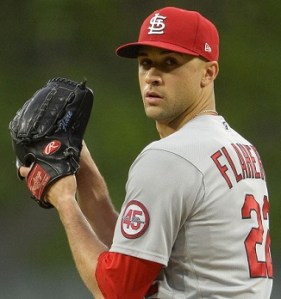
Jack Flaherty

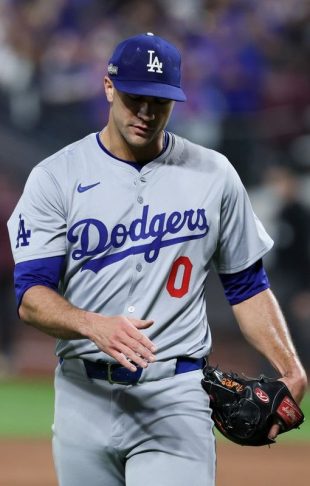
On a day he didn’t have it, Dodgers righthander Jack Flaherty had to take eight (runs in three innings) for the team while the Mets blew them out in NLCS Game Five, so as not to compromise manager Dave Roberts’ Game Six bullpen game plan.

If the Mets deliver what some still think is near impossible, and snatch the National League pennant right out from under the Dodgers, don’t be terribly shocked if the number one question on the lips of Dodger fans and others will be, “Why did Dave Roberts leave Jack Flaherty in to take a three-inning, eight-run beating in Game Five?”

The most likely answer—considering the Mets would go on to finish what they started and blow the Dodgers out 12-6, thus sparing their elimination for another day—is Game Six.

In a National League Championship Series during which each team has won its games by blowout, Game Five may yet secure a place among the least conscionably allowed pitcher abuse by any manager. Ever. Abuse nobody could have seen coming. Could they?

Hadn’t Flaherty, a comeback kid of sorts starting with the Tigers before his trade to the Dodgers at this year’s deadline, pinned the Mets with seven shutout innings in Game One en route the Dodgers finishing with a 9-0 opening thrashing?

Yes, he had. But in Game Five he didn’t have it. His fastball wasn’t terribly fast, his breaking balls could have been court-martialed for insubordination, and the Mets were only too willing to wait him out, wait for the balls coming into the meat of the strike zone or close enough, and pounce.

Now the 29-year-old righthander went from virtuoso extension of Dodger pitching’s consecutive scoreless inning streak this postseason to a piñata in five days. But Roberts didn’t want to reach into his bullpen unless he absolutely had to with a likely bullpen game looming for the Dodgers in Game Six.

Their starting pitching has been so compromised that bullpen games became necessary survival for them. Roberts is counting on his Game Six bullpen game to win the pennant for him. He knows these Mets aren’t quite pushovers, but he has to take the chance that, somehow, his bullpen bulls can help him win a pennant and save Walker Buehler to open a World Series.

The manager had better be right, because what the Mets did to Flaherty Friday could have been called human rights violations. They only began with surrendering a one-out, three-run homer to Pete Alonso in the bottom of the first.

Flaherty shook a leadoff double by Starling Marte off to get three straight second inning outs. But then came the third. Then came back-to-back walks (Alonso, Jesse Winker) to open. Then came Marte doubling into left field to send them both home. Two outs later, Marte came home on Francsco Alvarez’s single, Francisco Lindor tripled Alvarez home, and Brandon Nimmo singled Lindor home.

Leaving things 8-1 Mets—Kiké Hernandez scoring on David Peterson’s wild pitch in the top of the inning seemed almost an excuse-us run for a good while—and leaving Flaherty the fourth pitcher in postseason history to get himself torn for eight or more runs in a game  that would have meant a series clinch for his team. (The others: Hall of Famers Walter Johnson [Game Seven, 1925 World Series] and Tom Glavine [Game Six, 1992 NLCS], and Charles Nagy [Game Five, 1999 American League division series].)

On a day Dodgers center fielder Andy Pages homered twice (solo in the fourth, three-run bomb in the fifth), you could remove Flaherty’s eight-run bequest and the Dodgers would have won the game and clinched the pennant with a 6-4 tally. Flaherty didn’t look like his best self early enough, but this was as unconscionable as it could get.

Roberts even hinted postgame that Flaherty was dealing with a health issue. He didn’t specify what, and Flaherty hadn’t discussed it at this writing. He’s dealt with injuries enough in his career—repeated shoulder injuries, an oblique injury—which helped reduce him from a Cardinals super pitcher to a kind of journeyman who shows flashes of his old mound brio and pitches as much on heart as stuff.

That the Dodgers don’t need. Not after everything else bedeviling their starting pitchers this year.

The Mets, of course, are showing how easy it isn’t to kill them this time around. Even if their bullpen isn’t as strong or consistent as the Dodgers. Blow them out one day, get blown out by them the next. With the set returning to Los Angeles, the Mets face yet another arduous test, even if they do find ways to pick, peck, pounce, and pound the Dodgers’ Game Six bullpen parade.

That test, if they make it, is called Game Seven, in hostile territory.

But wouldn’t it be nice to see one or two NLCS games that won’t become blowouts? They’re fun when the team for whom you root does the blowing out, but a good hair raiser has its place as well. Just so long as the hair isn’t raised because of sloppy or shaky play.

ALDS Game Two: From blowout to squeaker

Mitch Garver

Mitch Garver’s third-inning grand slam proved the difference maker as the Orioles turned an  early blowout into a squeaker of a win for the Rangers Sunday.

Until this weekend, the last time the Orioles were swept in a series was in May, by the Blue Jays. During the regular season, the Orioles were a .642 team on the road. Now, they’re on the threshold of an American League division series sweep, but they’re counting on that traveling mojo to overthrow a Rangers team that won’t be overthrown without a fight.

Not after the Orioles turned a 9-2 blowout in the making into an 11-8 squeaker in Game Two Sunday. Not after the Orioles couldn’t do better than Aaron Hicks’s three-run homer with one out in the bottom of the ninth. Not after the Rangers battered them for nine runs in the first three innings, including and especially Mitch Garver’s grand slam in the third.

Not after the Oriole bullpen was so deeply deployed following a Game One loss that saw theirs ranks pressed into duty after four and two thirds. Today’s travel day from Baltimore to Arlington may not necessarily give them relief. Not facing a Rangers team that hasn’t played at home in a fortnight but hit 53 home runs more at home than on the road during the season.

“We just came up a little bit short today, but that built a lot of momentum going into the next game,” said Orioles leftfielder Austin Hays after Game Two. “Nobody laid down. We didn’t give away any at-bats. We continued to fight. We were able to get into their bullpen and work on those guys a little bit. I feel good moving forward, but we know we’ve got our work cut out for us.”

That’s a polite way to put it. They played .500 ball against the Rangers in six regular season games, but they blew their home field advantage to open this division series. A team that hasn’t seen home in a fortnight can be presumed hungry to put an end to this set as soon as possible, by any means necessary.

The Rangers proved that when they started Garver, a backup catcher who played in only half the regular season games, and sent him out for his first postseason appearance this time around. In a game the Orioles opened with a 2-0 lead after one full inning, but the Rangers slapped rookie Orioles starting pitcher Grayson Rodriguez silly with a five-run second, Garver checked in at the plate with one out followed by three straight walks.

Orioles reliever Bryan Baker left the pillows loaded for his relief, Jacob Webb. On 3-1 Webb elevated a fastball, and Garver elevated it six rows into the left field seats.

Rangers manager Bruce Bochy—who came out of retirement to shepherd the Rangers after all those years and those three World Series rings managing the Giants—said pregame that it was “just time to get [Garver] out there.” Garver may have given the boss the most expensive thank-you present of the postseason thus far.

“He’s got big power,” Bochy said postgame, “and that’s big at that point in the game. Really was the difference in the game.”

So were the eleven walks handed out by eight Orioles pitchers, including a postseason record five to Rangers shortstop Corey Seager. So were the mere three hits in thirteen Oriole plate appearances with runners in scoring position, which explains a lot about how the Orioles actually out-hit the Rangers (fourteen hits to eleven; .973 to .891 game OPS) but fell three short in the end.

Also in too-vivid contrast were the fruits of each team’s trade deadline moves. Or, in the Orioles’ case, lack thereof. The Rangers moved to bring future Hall of Famer Max Scherzer into the fold but also added starter Jordan Montgomery and reliever Chris Stratton in a deal with the Cardinals.

The Orioles moved to bring another Cardinal pitcher, Jack Flaherty, aboard at the deadline. But Flaherty, once a glittering Cardinal comer, hasn’t been the same pitcher since a 2021 oblique injury and a 2022 shoulder injury. He pitched his way out of the Oriole rotation and now looks to be the long man out of the bullpen.

He got a shot at showing what he could do in that role when it looked as though it would be just mop-up work Sunday. The good news: He surrendered only one run (on Garver’s double play grounder in the fifth) in two innings’ work. The bad news: He contributed to the Oriole walking parade with three of his own, including two in the fifth.

Some say the Orioles standing practically pat at the trade deadline instead of going for any kind of impact deal may yet come back to bite them right out of the postseason, especially after their own pitching depletion (losing top starter John Means and closer Félix Bautista especially) late in the season. Others fear the Orioles were more concerned with their usual penny pinching plus censoring a lead broadcaster over a positive graphic the team itself fashioned for a broadcast.

Montgomery handled the Orioles well following the two-run first, at least until he surrendered a pair in the fourth on an RBI single (Jorge Mateo) and a sacrifice fly (Ryan Mountcastle.) But when Orioles rookie star Gunnar Henderson greeted him with a full-count leadoff home run and Hicks followed with a base hit, Montgomery’s day ended and the ordinarily wobbly Ranger bullpen took over.

That bullpen kept the Orioles quiet until the bottom of the ninth, when Brock Burke handed Henderson a one-out walk and Hays singled him to second. Bochy reached then for José Leclerc, and Hicks—the erstwhile Yankee who never really found his best footing in the Bronx—reached for a one-strike service and drove it into the right field seats.

It was a little vindication for Hicks the day after he blew a hit-and-run sign in the Game One ninth, leaving Henderson a dead duck on the pond when he was thrown out at second, before Leclerc finished the 3-2 Rangers win. After his up-and-down Yankee life, Hicks looked like an Oriole blessing after he signed in May following his Yankee release. After Sunday, he looked like an Oriole hope once again.

An Oriole hope is just what Baltimore needs now. But Ranger hopes won’t exactly play to an empty house come Tuesday. At the end of the former, survival. At the end of the latter, a chance to play for the pennant.

When sucking it up sucks

Jack Flaherty

If you’re ailing, speak up. You might save yourself some worse injury grief—even immediately.

The one pitcher the Cardinals could not afford to lose, especially missing two other key starting pitchers, is lost to them now. For who knows how long. It raises a dilemna almost as old as baseball itself: Who’s responsible for knowing or revealing when a player, any player, is injured enough to remove him before further damage is done?

Jack Flaherty admitted he started feeling tight in his side while pitching in the bottom of the fifth in his hometown Dodger Stadium Monday evening. But his turn in the batting order was due up in the top of the sixth and—right after Justin Williams led off with a home run to cut the Dodger lead to 2-1—he went out to the plate.

Flaherty swung on 0-1 at an outer-edge service from Dodger righthander Trevor Bauer, foul ticked it, and grimaced noticeably during the swing before hopping around the plate area in discomfort. He remained at the plate to finish the turn, taking a low ball one and then a called strike three. Then Cardinals manager Mike Shildt removed him from the game.

Now Flaherty’s on the ten-day injured list with a no-doubt oblique strain, and the Cardinals expect him to miss more time than that. With fellow key starters Miles Mikolas and Dakota Hudson already on the list—and baseball suffering quite the injury epidemic already this season—this is exactly what the Cardinals don’t need.

The question before the house—provoked in part by a social media debate into which I fell after noting Flaherty gone to the ten-day injured list Tuesday but likely to be out longer—is this: Should Shildt have been aware his man was ailing and either a) pinch-hit for him right off the bat in the sixth; or, b) removed him at once following the fateful swing to let another hitter finish the turn?

You might think the manager’s job includes awareness of his pitcher’s condition in the moment. Sometimes that awareness causes managers unwarranted grief, as Tampa Bay’s Kevin Cash can tell you from Game Six of last year’s World Series. But often as not that awareness does the manager a big favour when he has all his other marbles in the right place.

Should Shildt himself have noticed Flaherty feeling tight in the bottom of the fifth? Open to debate. Should he have seen Flaherty in obvious discomfort swinging on that foul tick and pulled him on the spot for a pinch swinger to finish the plate appearance? Open to debate likewise.

It’s not unprecedented for a batter to be pulled for assorted reasons during a plate appearance and for a pinch hitter to finish the turn. But there’s a missing link between the fifth and the sixth: Flaherty himself, and whether he thought to speak up and admit he wasn’t feeling quite right.

The Cardinals’ most valuable pitcher probably had no business at the plate or staying in the game to get there in the first place. If last year’s universal designated hitter had been made permanent from this year forward, as it most assuredly should have been, Flaherty wouldn’t have even had to worry about checking in at the plate.

Maybe in that instance, the tightness he felt in the fifth would have eased up with a half-inning off for good behaviour and allowed him to pitch one more inning—this time, with a one-run lead. Maybe.

Shildt had an option on his bench if he wanted it, lefthanded swinger Matt Carpenter. Carpenter hasn’t been the hitter he once was for about three seasons, now, but he would have been a hitter at all. He’s not historically the most dangerous man at the plate with two strikes, but he does have ninety hits including 23 home runs lifetime when hitting with two strikes on him.

With the bases empty, nobody out, and the Cardinals back to within a run of the Dodgers after Williams’s leadoff blast, do you really want a pitcher—a breed that’s hitting a whopping .109 with a glandular .146 on-base percentage and a swollen .141 slugging percentage—at the plate to start turning a one-run deficit into a tie game at minimum? (Sit down and shut up, Old Fart Contingency.)

No, you wouldn’t, if you could help it. Flaherty himself is no big bopper at the plate. Not hitting .185 this season, he isn’t.

Talking during a post-game press conference, Flaherty admitted he doesn’t like coming out of games on his own volition if he can help it. Bulldogging pitchers earn plenty of gold stars. But they like other players also bulldog themselves into bigger trouble when they don’t give their bodies the benefit of the doubt.

The injury you try playing or pitching through today can and too often does turn into the one that knocks you out for a lot longer than you’d like. Depending on the time of the season, it also might help cost your team a postseason shot. With twelve players on the IL before Flaherty joined them, and a bullpen faltering (and overtaxed) too often already, the Cardinals could afford to have him among the missing about as much as a cobra can afford dinner, dancing, and a hotel reservation with a mongoose.

Even in today’s baseball there remains a cultural dilemna. Speak up when you’re hurting, there’ll still be those who look at you as a softie, maybe whisper thus half behind your back. Clam up when you’re hurting, they’ll call you a bulldog now but curse the day you were born when you’ve been disabled awhile with a far more severe problem and they find themselves in the pennant race’s rear view mirrors.

The old school managers weren’t always the most empathetic lot when it came to injuries, either. Maybe none was more notorious than Leo Durocher, whose problems blowing the 1969 National League East title including demanding his Cubs speak up when ailing—then denouncing them as “quitters” whenever they did speak up.

When Fred Hutchinson managed the Reds before his death of cancer in 1964, he once lifted his ace-in-the-making Jim Maloney—despite Maloney working on a potential no-hitter—beause he spotted Maloney in forearm discomfort. “When you have an arm like that,” Hutch told reporters post-game, “you don’t take chances.”

His successors Dick Sisler and especially Dave Bristol treated injuries as mortal sins, especially involving pitchers. “If he can just get the ball to the plate, he’s not hurting,” Bristol was once quoted as saying. Hutchinson was a former pitcher who knew better. Bristol was a former minor league infielder who pitched now and then, and his brains went to sleep on him. Maloney developed rest-of-career shoulder trouble after Hutchinson was gone and a concurrent unfair reputation as a crybaby when he did speak out now and then about his continuously barking shoulder.

Remember when another former Reds pitcher, reliever Rob Dibble, snarked his way out of a Nationals broadcasting job for zapping young Stephen Strasburg coming out of a game with what seemed forearm issues at the moment? “Suck it up, kid. This is your profession,” Dibble huffed. “You chose to be a baseball player. You can’t have the cavalry come in and save your butt every time you feel a little stiff shoulder, sore elbow . . . stop crying, go out there and pitch. Period.”

Turned out Strasburg had more than just a forearm issue—he faced Tommy John surgery. He’s had injury issues throughout his career; until last year, he pitched damn well when healthy. Including when he stood as the 2019 World Series MVP. Dibble should have known even better than Hutchinson actually did—he’d missed the entire 1994 season after shoulder surgery and was gone within two years. Suck it up, kid.

Sandy Koufax sucked it up in 1965-66, after learning his pitching elbow was arthritic. He’d already gone from no great shakes through 1960 to off the charts from 1961-64. In 65-66, he went from off the charts to the tenth dimension aided by a medical regimen that could have killed him if the workload (699 innings over those two seasons) didn’t.

Then—gone. Koufax decided sucking it up, even to win two of his three Cy Young Awards, back-to-back pennants, and a World Series, wasn’t worth living what he feared would be a compromised life. Good for him. It ensured his baseball immortality. And, it let him make a liar out of F. Scott Fitzgerald and the author’s maxim about the lack of second acts in American life.

(It also spared us the sight of a Hall of Famer in decline, letting Koufax leave at 30 frozen forever as a young lancer who turned plate appearances into battles against the unarmed.)

By the way, Shildt eventually did call upon Carpenter to pinch hit Monday, an inning later. Except that Dodger manager Dave Roberts promptly lifted Bauer and compelled Shildt to pull Carpenter back, when Roberts brought in lefthander Victor Gonzalez, in favour of righthanded hitting Lane Thomas. Gonzalez struck Thomas out for the side.

An inning earlier, perhaps Roberts would have let Bauer work his way through. As it was, after Flaherty finished his standing plate appearance before leaving the game entirely, Tommy Edman reached on an infield throwing error and Dylan Carlson hit one over the center field fence to give the Cardinals their only lead of the game.

Maybe if Carpenter had pinch hit to finish Flaherty’s plate appearance, he might have tagged a hit or reached otherwise (he’s walked fourteen times this year and still has a good enough eye at the plate to keep doing it) and instead enabled a 4-2 score after five and a half inning. (The Cardinals went on to lose, 9-4.)

From every account and appearance, Shildt is not an insensitive man. He’s had his moments of snark and foolishness, but they’ve been few enough so far. Right now, he’s in a pennant race in which he’d love to stay all the way. He can’t afford to let his wounded stay quiet before they go from ailing to disaster.

Unless you believe as I do that the universal DH is an idea whose permanent time is overdue enough, Flaherty didn’t get injured doing something he shouldn’t have been doing. He got hurt on the job doing his job. As one Twitter respondent said to me, it sucks that he got hurt but that’s part of the game.

Indeed. Not just to pitchers, either: Fernando Tatis, Jr. took an early exit in the sixth Tuesday night when he felt tightness in the same area, too. The Padres are keeping him day-by-day to be safe. Young as he is, Tatis probably knows any compulsion to suck it up risks making things more painful.

If Flaherty felt compelled to keep quiet about his side tightness after the bottom of the fifth Monday, Shildt might consider talking to him and the rest of his players. He could tell them it does themselves or the club no good to stay quiet when hurting.

“Talk up and sit down now, rather than hit disaster down the stretch. You’re not less of a man for being injured, but you’d be less of a man if it went from bad enough to worse.” That’s what Shildt could and should tell his Cardinals. That’s what Jayce Tingler might want to tell his Padres, too. That’s what any manager should want to tell his team.

Enough is way beyond enough, already

Jack Flaherty

Flaherty in discomfort after fouling off an outer-edge pitch in the sixth Monday. He grimaced with gritted teeth as he swung—and could face IL time with an oblique strain.

Bad enough: Someone had to drag it out of Jacob deGrom that his freshly-ended stay on the Mets’ injured list came because he strained his side while . . . swinging the bat. Worse, now: Jack Flaherty could miss a start at minimum for the Cardinals now that he’s got an apparent rib cage injury after he dinged it . . . swinging the bat.

As if the overall futility of pitchers swinging at the plate isn’t enough reason to implement the universal designated hitter. (Anyone who says deGrom with his .450 hitting average isn’t an outlier is either blind or willfully ignorant.) The injury risk isn’t just someone’s equally perverse fantasy.

Flaherty was pitching well enough against the Dodgers Monday evening when he batted against Trevor Bauer in the top of the sixth. He swung with a slight lunge at an outer-edge pitch on 0-1 and fouled it off, a clenched-teeth grimace very visible on his face as he swung. Then he hopped around the plate area in plain discomfort.

Cardinals manager Mike Shildt took no chances. After Flaherty struck out looking, Shildt lifted him from the game at once. With a 2.90 ERA, a 9.7 strikeout-per-nine-inning rate, and a 1.03 walks/hits per inning pitched rate, Flaherty is the one Cardinals starting pitcher above all whom Shildt cannot afford to lose for any length of time.

The good news was the Cardinals dropping a three-spot on Bauer in the inning: Justin Williams leading off with a home run off the right field foul pole; then, after Tommy Edman reached on a throwing error, Dylan Carlson hitting one over the center field fence.

The bad news was the Dodgers jumping the Cardinals bullpen for four in the bottom of the sixth to re-take the lead. Max Muncy’s one-out double against reliever Ryan Helsley was followed a base hit later by another Cardinal reliever, Genesis Cabrera, walking Cody Bellinger to load the pads, then walking Will Smith to re-tie the game at three, striking Gavin Lux out looking, but surrendering a three-run double on the fifteenth pitch to Chris Taylor before . . .

Well, now. What was that Thomas Boswell wrote two years ago about getting tired of watching rallies killed by the cop-out of pitching around competent number eight hitters to strike out the opposing pitcher? Cabrera put Dodger second baseman Zach McKinstry aboard and then struck Bauer himself out for the side. “In the AL,” Boswell wrote then, “you must pitch your way out of a jam, not ‘pitch around’ your way out of it.”

Flaherty’s batting injury threw a stone into Shildt’s gears. The righthander working in front of a hometown crowd had surrendered two runs on back-to-back solo bombs but checked in at the sixth-inning plate after wiping out eight straight Dodgers including one string of five straight strikeouts. Then Flaherty went from cruise control to road hazard with one swing.

Barring unforeseen circumstances there was no way the manager wanted to go that early to the bullpen that leads the entire Show with 120 walks this season. They’ve also walked more batters with the bases loaded (fifteen) than they’ve surrendered hits (fourteen) with ducks on the pond.

“I felt a little tightness, and it was more just felt we should check it out more than anything,” said Flaherty during a post-game press conference. “A little bit of tightness I felt, and thought it was something to bring up. More just to be safe . . . I’m sitting here just fine. I’ll get up out of this chair just fine. I’m moving around all right. I don’t ever leave games. I don’t ever come out of games. It was just something just wanted to check out.”

That’s his story, and he’s sticking to it, never mind that averaging five and two thirds innings per start this year he comes out of games, all right, just never during a working inning. He felt the little bit of tightness first while pitching the fifth. Then after swinging on that foul tick it looked like enough that Shildt decided enough was enough.

“The tightness is in the torso,” wrote the St. Louis Post-Dispatch‘s Derrick Goold, “and the concern will be that Flaherty has an injury to the oblique that could lead to a lengthy absence. He was being re-evaluated late Monday night, and it’s likely the team will have scans taken of his torso.”

If those scans show further damage than just a little tightness, it’s disaster for the Cardinals as well as for Flaherty. They’re in second place and half a game behind the Cubs in the NL Central despite the Cubs leading the Show with their current injured list population.

We’re not exactly talking about one of the great hitting pitchers here, either. Flaherty’s hitting average is .125 this season. Jacob deGrom he ain’t. Not on the mound, of course, as good as he is out there, but especially not at the plate.

The entire Cardinal pitching staff is hitting .070 this season to date. The team is fifteenth in Show for runs scored and runs allowed, but you might see them a little higher for runs scored if they didn’t have to waste plate appearances with those .070-hitting pitchers.

DeGrom’s Mets are rock bottom in the entire Show for runs allowed. They’re also at rock bottom for runs scored, alas. Think they might have a few more runs on the board if their pitchers didn’t have to drag their happy hides to the plate? The Mets’ pitchers are hitting .167 as of this morning’s stats. Remove deGrom and it wouldn’t be that high by a long shot.

You tell me which is more important to the Mets or any team—a .450-hitting pitcher who’s a too-obvious outlier among his breed? Or, a pitcher whose 0.71 ERA (with a 1.08 fielding-independent pitching rate) could hold up all season long and leave him in a league of his own? (DeGrom isn’t shown atop the leaderboards for ERA and FIP only because—with the Mets having played only 46 games, plus his IL turn—he’s pitched only 51 innings so far; or, just shy of seven innings a start.)

Commissioner Nero decided last year’s universal DH wouldn’t be this year’s at minimum. The issue will return to the table when the current collective bargaining agreement expires after this season. Some say the days of NL pitchers hitting will end there. Some say not quite yet. Those days deserve to end permanently at last.

From the end of the 20th Century’s first decade through the end of the 21st Century’s first decade, pitchers overall have hit .155. They’ve made Willy Miranda resemble Willie Mays. Do Nero and the chump contingent insisting that pitchers taking turns at the plate means “real” baseball need more evidence on behalf of ending the National League’s “traditional” refusal of the designated hitter? (Which really amounts to refusing an idea that was first hatched by one of its own owners before the turn of the 20th Century.)

Try just two items to start:

* Continuing regular-season interleague play makes a further mockery of that NL “tradition,” since pitchers have to bat when such games are played in the NL team’s park but NL pitchers get a breather at the plate when the games are played in the AL parks.

(Incidentally, 2020’s pan-damn-ically inspired irregular season was the first time the leagues tied in regular-season interleague play. Since the interleague virus was introduced in 1997, the American League has fanned the National League’s behind: 3,315-3,047. The National League has led in interleague play only four times since 1997 and not once since 2003.)

* This season’s slash line at the plate for all Show pitchers as of this morning is .108/.145/ .140. The slash line for National League pitchers at the plate as of this morning: .107/.145/.137. Now, remove deGrom from the picture—the NL’s pitchers would be hitting .101.

Go ahead, call for continuing to send outlier deGrom to the plate for a lousy six-point hike in the pitchers’ overall hitting average. In a year where nobody can really decide what to think about offense and how declined it is in the first place.

In a year when deGrom has spent time on the injured list because of a plate appearance,  Flaherty is now in danger of spending likewise because of one, and Diamondbacks pitcher Zac Gallen is missing “weeks” due to an ulnar collateral ligament strain he first incurred during late spring training . . . taking batting practise.

You want to continue risking pitcher health through non-pitching injury? You really want to continue watching pitchers not named Jacob deGrom (or even further-outlying Shohei Ohtani—who doesn’t bat on his pitching days normally and damn well shouldn’t) wasting precious outs at the plate? You really want to keep watching rallies die when the opposing pitcher pitches around your good number eight batter to strike your pitcher’s ass out?

Be my guest. If “traditionalists” don’t care about exposing themselves as baseball bigots by rejecting real evidence on behalf of lamely-excused prejudice, neither do I.

———————————-

Situation update: Jack Flaherty did indeed hit the ten-day injured list Tuesday—with an oblique strain that may keep him out more than ten days or “just a couple of weeks.” Was it worth it for a foul tick followed by a called strikeout?

Opening Day: Snow fooling

There was nothing wrong with your television set. Do not attempt to adjust the picture. The snow took control of the transmission when Miguel Cabrera hit this Opening Day home run . . .

Just because the expected Opening Day marquee battle between Jacob deGrom (Mets) and Max Scherzer (Nationals) had to be postponed (COVID-positive Nats players and a team staffer to quarantine), that didn’t mean Wednesday was going to lack for the good, the bad, and the bizarre. This is baseball. Where anything can happen—and usually does.

Especially if Opening Day is also April Fool’s Day. The part that wasn’t a gag—fans in the stands again, at long enough last. The sound was glorious, even if reduced from most normal capacities thanks to the continuing if only slightly receding pan-damn-ic.

Comerica Park should have been playing “Winter Wonderland” Wednesday. The Tigers’ aging star Miguel Cabrera shouldn’t be blamed if he was singing “Let it Snow, Let It Snow, Let It Snow.” Especially when he more than a little hard on the Bieber, turning on the Indian ace’s rising snowball, hitting a two-run homer, and . . . sliding into second base, unable to tell through the snow that the ball flew out.

I don’t know if the Coors Field public address people had it cued up, but they could and should have sounded “Don’t Pass Me By” after Dodger first baseman Cody Bellinger hit an RBI single . . . off Rockies left fielder Raimel Tapia’s glove and over the left field fence. The problem: Justin (Who Was That Unmasked Man) Turner not seeing the ball reach the seats and retreating to first, compelling Bellinger to pass him on the basepath.

Oops. On a day the Rockies thumped Clayton Kershaw and managed to squeeze a win out after doing what Rockies usually do in the off-season—in this case, unloading their franchise player and all but reveling in front office dissembly and mission abandonment—Turner was the gift that . . . added insult to injury for the defending World Series winners.

The sleeper star in waiting in Blue Jays silks might have thought about singing an ancient  T. Rex number called “The Slider.” Gerrit Cole’s was just too juicy for Teoscar Hernandez to resist in the sixth. He sent it into earth orbit or 437 feet and into the left field bleachers at Yankee Stadium—whichever came first. Who needed Bo Bichette and Vladimir Guerrero, Jr.?

Just one thing was wrong. Hernandez needs to work on his bat flips. He didn’t have one. A blast like that was just begging for him to go Willson Contreras. Hernandez just ambled up the base line carrying his bat, then kind of nudged it away to the grass. He’s young, with plenty of time to learn, though. And his blast tied the game the Jays went on to win, 3-2.

Which is the score by which the Phillies beat the Braves in ten innings—after Bryce Harper began the inning as the free cookie on second base, took third on J.T. (Nothing Is) Realmuto’s ground out, waited patiently as Didi Gregorius was handed first on the house, then came home with the winner when Jean Segura sliced a single to left.

The game got to the tenth in the first place because Phillies manager Joe Girardi decided he wasn’t quite ready to trust the National League’s leading arsonists with taking over from certified innings-eater Aaron Nola with a 2-0 lead in the seventh. The Braves were far more ready to trust Pablo Sandoval—erstwhile Giant, one-time World Series hero, all-time poster child for Slim Slow—to pinch hit for Max Fried’s relief Tyler Matzek with a man on.

. . . and slid into second unable to tell at first whether the ball or the snow cleared the fence.

Kung Fu Panda turned out to be more than ready to hit Nola’s 0-2, slightly down and slightly in fastball into the right field seats. Girardi is many things but a crystal ball operator isn’t one of them. If he had been, he could have lifted Nola safe and sound because the Phillies’ bullpen apparently forgot to refill the gasoline cans for a change. Not even a bases-loaded jam in the eighth could keep Archie Bradley, Jose Alvarado, Hector Neris and Conner Brogdon from keeping the Braves scoreless over the final three and a third.

Does Philadelphia believe in miracles? Don’t ask too quickly, folks. Remember: this is the baseball town in which a typical wedding concludes with the minister pronouncing the newly-married couple husband and wife—then addressing the gathering with, “You may now boo the bride.” As much as I hate to drop a cliche so worn you see more holes there than in an oil field, the Phillies have 161 games left to play. Ruh-roh.

That was last year’s pan-damn-ically irregular season: Twins center fielder Byron Buxton, who sometimes evokes Willie Mays when he’s not on the injured list, walked twice all year long. This was Opening Day: Buxton should have had “Cadillac Walk” as his entrance music—he walked twice. He also blasted a two-run homer to the rear end of American Family Field in the seventh and had his arm calibrated so well that the Brewers didn’t dare to even think about running wild on him.

Buxton’s blast made it 5-3, Twins. Proving that no good deed goes unpunished, the Twins undid their own sweet selves with a badly timed error, making room for a ninth-inning, three-run, game-tying comeback that turned into a 6-5 Brewers win on—wait for it!—a chopped ground out that left just enough room for Lorenzo Cain to score the winner from third. (A transplanted Minnesotan of my acquaintance thinks, only, “That’s so Twins!”)

The Twins were saved from Opening April Fool’s Day ignominy by the Reds, alas. The Cardinals spotted Jack Flaherty a six-run lead in the first—abusing Reds starter Luis Castillo with an RBI infield hit, a bad error by Reds third baseman Eugenio Suarez playing shortstop, and Dylan Carlson ringing a three-run homer off the foul pole—before he had to throw a single competitive pitch in the game.

Flaherty didn’t quite have his A game. A C+ might be more like it. Lucky for him and the bullpen that the Cardinals felt in the mood to abuse the Reds the rest of the way: An RBI single and a run home on a wild pitch plus a two-run homer in the fifth, and it didn’t matter if the Cardinal arms let the Reds have all six of those first-inning runs back. Let the Cardinals’ song for the day be “The Eleven,” as in the 11-6 final.

The bad news for the Angels opening at home against the White Sox: the lineup struck out ten times. The good news: only four of them came in the final six innings. Meanwhile, they beat the White Sox 4-3 like pests instead of power drivers: walking here, working counts there, game-tying single here (Justin Upton), solo homer (Max Stassi) there, RBI single (Mike Trout) and RBI ground out (Albert Pujols) yonder, the bullpen keeping the White Sox quiet the final three.

Not to mention the Still Best Player in the Game ending his Opening Day with a .750 on-base percentage: that RBI single plus a pair of well-worked walks in four plate appearances. Trout could also point proudly to something not usually associated with the Angels the last couple of years: they didn’t let the game get away early, and they nailed it late with a two-run eighth and a shutdown ninth by reliever Raisel Iglesias.

Unfortunately, time will tell if a triumph like that proves an April Fool’s joke that wasn’t half as funny as Miguel Cabrera’s home run slide.

But here’s no joke: There were 222 hits on Opening Day and a mere 35 percent of them went for extra bases, including a measly thirteen percent being home runs, while fifteen percent of the day’s hits were infield hits. The games produced a .311 batting average on balls in play. There were even nineteen tries at grand theft base and 79 percent of them succeeded.

Maybe the rumours of the all-around game’s death are more than slightly exaggerated for now. When there’s a slightly higher percentage of infield hits than home runs on a day, the small ballers should take their victories where they can find them. But you wonder if Cabrera will inspire more than a few players to think it’s time to work on their home run slides.