The sounds of silence, ushered in by a lie

MLB lockout

Today was supposed to see pitchers and catchers reporting to start spring training. There went that idea, thanks to the owners and their Pinocchio. (CBS Sports photo.)

Say what you will about the Major League Baseball Players Association, but they haven’t pleaded poverty yet at all, never mind with the thought that they could say it without their noses growing. On the day pitchers and catchers would have reported to spring training but for the owners’ lockout, a five-day old lie by commissioner Rob Manfred still rattles through baseball’s sounds of silence.

George Burns once said of his logically illogical wife Gracie Allen, “All I had to do was ask, ‘Gracie, how’s your brother,’ and she talked for 38 years.” All you have to do is ask a question, and Manfred will talk out of so many corners of his mouth you’ll suspect it resembles a martial arts throwing star, while his nose grows long enough to cross the Verrazano Narrows Bridge.

Last Thursday, as an owners meeting concluded, somebody asked Manfred whether owning a baseball team was a sound investment. All Commissioner Pinocchio had to do was speak what’s not exactly a badly kept secret. He chose to play the poverty card, as the owners often enough have done during baseball labour disputes. This time, however, the joker in the deck isn’t very funny

“If you look at the purchase price of franchises,” Manfred began, citing what he’d been told by investment bankers without identifying just whom, “the cash that’s put in during the period of ownership and then what they’ve sold for, historically, the return on those investments is below what you’d get in the stock market, what you’d expect to get in the stock market, with a lot more risk.”

Hello, darkness, my old friend.

Commissioner Pinocchio knows very well that baseball franchises, even those mired out of the races and even those accused plausibly of tanking, increase in value as investments up to ten percent annually. Yahoo! Sports writer Hannah Keyser wasn’t going to let him get away with that kind of lie.

“Let’s get something out of the way: The owners cried poor during the negotiations to start the pandemic-suspended season in 2020 to justify demands that the players take a pay cut,” Keyser began.

And although the owners have been quieter about it during the current collective bargaining negotiations, the implicit entrenched position is the same — on the broadest scale, they don’t want to make all the economic concessions that the union is asking for and one of the reasons they’re citing is that they can scarcely afford it.

That’s why Manfred said what he did. It’s not that he’s stupid (he’s just hoping you are) or confused. It’s strategic. To concede on the record that the current economic system is working fabulously for owners—and increasingly so in recent years—would be chum to a union that’s angry, energized and determined to push the pendulum in the other direction.

Baseball and other sports teams’ owners, according to ProPublica, whom Keyser cited, and who managed to get IRS records to probe, “frequently report incomes for their teams that are millions below their real-world earnings, according to the tax records, previously leaked team financial records, and interviews with experts.” Tax code provisions and creative amortization use, Keyser noted, “allows owners to negate gains or claim losses, substantially reducing their tax obligations and saving them millions of dollars.”

If you still believe baseball’s owners are really going broke, that Antarctican beach club for sale is now a couple of hundred thousand less expensive. They want to continue playing the poverty card despite it being about as legitimate as Astrogate? Here’s what the players should say in return: nothing. Not one proposal, not one further concession, not even a syllable, until the owners open their books completely, honestly, and without further smoke blowing, sand throwing, or shuck jiving.

It wasn’t the players who elected to strike over the owners’ three-card monte games this time. There wasn’t any legitimate reason for the owners to lock the players out after the CBA expired instead of letting the game carry forth while they sat down to honest negotiations.

Fair play: the players aren’t exactly without dubious issues. Their proposal for a mere twelve-team postseason instead of the owners’ reputed push for a fourteen-team postseason is still an idea whose time should be put out of its misery. The already-expanded postseason has diluted championship meaning and created saturation to the point where the World Series becomes a burden to watch for too many fans, not the penultimate baseball pleasure.

The seeming sounds of silence thus far on Manfred’s shameful insistence that minor league spring campers remain unpaid because the “life skills” they gain is more important than earning their keep is deafening.

So are the continuing sounds of silence on redressing what their late union leader Michael Weiner only began to redress, the now-525 pre-1980, short-career major leaguers denied pensions in the 1980 re-alignment. Weiner plus then-commissioner Bud Selig gained those players $625 per 43 games’ major league roster time, up to $10,000 a year, in 2011.

The bad news further is that they can’t pass those monies on to their families should they pass away before collecting their final such dollars. Nor did they receive any cost-of-living adjustment in the last CBA. No less than Marvin Miller himself subsequently said the 1980 pension freeze-out for them was his biggest regret. Weiner at least began a proper redress.

But when Commissioner Pinocchio and his employers the owners look you in the eye and claim owning a baseball team isn’t profitable, you should be very tempted to demand polygraphs, if not sobriety tests.

“Do you know how else I know Manfred isn’t telling the truth?” Keyser asks, before answering. “Because if he were, he wouldn’t be a very good commissioner. If it was true, he would be failing in his de facto fiduciary duty to the owners. Say what you will about Bud Selig, but under his commissionership, team valuations skyrocketed. He made being a baseball owner into a very lucrative proposition. So Manfred is saying that during his reign, that has ceased to be the case. Or he’s lying.”

Once upon a time, a Brooklyn Dodgers pitcher caught by his wife en flagrante with a woman other than said wife ran down the stairs, pointed upward to where he’d been caught, and said, “It wasn’t me!” It’s not exactly unrealistic to suggest the owners and their wooden puppet are that kind of honest.

Jeremy Giambi, RIP: What broke him?

The Flip

Jeremy Giambi’s brief major league career was defined too powerfully by The Flip, but he was an on-base machine in Oakland until he was traded under dubious circimstances.

Sad enough that Jeremy Giambi was reported dead at 47 two days ago. Sadder still was the Los Angeles County coroner affirming what Giambi’s former Athletics teammate Barry Zito hinted in a text message to San Francisco Chronicle writer Susan Slusser.

Giambi, Zito texted, “was an incredibly loving human being with a very soft heart and it was evident to us as his teammates that he had some deeper battles going on. I hope this can be a wake up call for people out there to not go at it alone and for families and friends to trust their intuition [w]hen they feel somebody close to them needs help. God bless Jeremy and his family in this difficult time.”

At his best, Giambi was an on-base machine with a little power and a preternatural ability to wear pitchers out comparable to his brother, Jason. He wasn’t particularly swift afoot and he was defensively challenged, but in two and a third full seasons in Oakland he posted a .369 on-base percentage, including .391 in 2001, his seond and last full season there.

The bad news was that year’s American League division series and Giambi getting nailed at the plate famously, when the Yankees’ Hall of Fame shortstop Derek Jeter executed The Flip, running down from his cutoff position and across the lower infield, over the foul line, to grab an errant throw toward the plate and back-flip to catcher Jorge Posada to get Giambi a second before his foot hit the plate.

Giambi would have tied the game at one each if he’d scored. Depending upon the angle you see, there are those who argue he might actually have been safe on the play. But the play cemented Jeter’s image as a game-changer and thwarted the A’s from tying the game at one each at minimum. (The Yankees went on to win, 1-0.)

For years to follow Giambi was questioned over going home standing up instead of sliding on the play. (A’s catcher Ramon Hernandez could be seen raising and lowering his hands adjacent to the play, the signal for urging a runner to slide.) Most likely he—and maybe everybody else in the Oakland Coliseum—didn’t see Jeter coming at all, never mind having a prayer of getting him out.

As I write I’ve seen no published indication that the play, the aftermath, and even the questioning affected Giambi in any negative way. The 2001 A’s manager, Art Howe, told Slusser on Wednesday, “I know how hard Jeremy played every single day. I know our fans remember him for that non-slide, but I think it’s a shame anyone even thinks about that. He was a good kid, he was well liked, and he gave me everything.”

A’s GM-turned-president Billy Beane now remembers Giambi as “a fun guy, a good guy, and an underrated player, particularly an underrated hitter. He was quite frankly an important piece of probably the best team we’ve had since I’ve been here, that 2001 team.”

This is now, but that was then, as Michael Lewis recorded in Moneyball: The Art of Winning an Unfair Game: Beane sent three-eighths of his starting lineup “and a passel of pitchers” out of town by 23 May 2002, including Giambi, after Beane became “erratic” in his behaviour and steaming mad with his front office and the team’s coaches following a mid-month sweep by the Blue Jays in Toronto.

Just before the Toronto series the team had been in Boston, where Jeremy Giambi had made the mistake of being spotted by a newspaper reporter at a strip club. Jeremy, it should be said, already had a bit of a reputation. Before spring training he’d been caught with marijuana by the Las Vegas police. Reports from coaches trickled in that Jeremy drank too much on team flights. When the reports from Boston reached Billy Beane, Jeremy ceased to be an on-base machine and efficient offensive weapon. He became a twenty-seven-year-old professional baseball player having too much fun on a losing team. In a silent rage, Billy called around the league to see who would take Jeremy off his hands. He didn’t care what he got in return. Actually, that wasn’t quite true: what he needed in return was something to tell the press. “We traded Jeremy for X because we think X will give us help on defense,” or some such nonsense. The Phillies offered John Mabry. Billy hardly knew who Mabry was.

. . . After he’d done the deal, he told reporters that he traded Jeremy Giambi because he was “concerned he was too one-dimensional” and that John Mabry would supply help on defense. He then leaned on Art Howe to keep Mabry out of the lineup. And Art, occasionally, ignored him. And Mabry started to swat home runs and game-winning hits at a rate he had never before swatted them in his entire professional career. And the Oakland A’s began to win.

The 2002 A’s were 20-25 before the Giambi-for-Mabry trade, including losing fourteen out of their prior seventeen games. Giambi was hardly to blame; at the time of the trade, he was hitting .274 with a .390 on-base percentage and a .471 slugging percentage. Two months after the trade, the A’s stood at 60-46.

Maybe Beane really wanted to send the message that even a .390 on-base percentage was expendable if he was the same fellow in losing as he was in winning.

Maybe Giambi didn’t go into black-band mourning after losses often enough for Beane’s taste. Maybe Beane didn’t grok that it doesn’t always do any favours to insist you must sink into a vale of tears following a loss. Maybe he forgot it’s often best to just shake off the loss because you get to play another day, another season, after all.

“Everyone,” Lewis noted, called Beane a genius for seeing Mabry’s heretofore hidden abilities, never mind that the deal was anything but comparable to a lab experiment: “It felt more as if the scientist, infuriated that the results of his careful experiment weren’t coming out as they were meant to, waded into his lab and began busting test tubes.”

Giambi with the 2002 Phillies hit a mere .244 but posted a .435 on-base percentage and—with twelve homers and ten doubles among his 38 hits—a .538 slugging percentage. Mabry’s line with the 2002 A’s: .275/.322/.523, with eleven home runs and thirteen doubles among his 53 hits. But Mabry went 0-for-2 in the 2002 postseason while Giambi and the Phillies didn’t quite make it there.

Both men moved on after that season, the Phillies trading Giambi to the Red Sox and Mabry signing with the Mariners as a free agent. Giambi incurred injuries and was finished as a major leaguer after 2003. He was the first incumbent or former major leaguer to cop to using actual/alleged performance-enhancing substances, but 52 homers in six major league seasons (17 per 162 games, average) doesn’t exactly make a case for their doing him any favours.

(That Vegas pot bust—at a McCarran Airport checkpoint while he was traveling to Phoenix —ended up a big nothingburger: Giambi’s pot was confiscated, he was issued a simple citation, and released to continue his travel.)

Who knows whether some heretofore undetected combination of criticism over The Flip and the true reason behind his trade out of Oakland didn’t start puncturing part of the younger Giambi’s psyche?

The former’s easily discarded; Giambi wasn’t the 2001 division series goat, and Jeter was a division series hero coming from nowhere to make an unlikely play. Giambi said in a 2020 interview that “maybe I should have slid” but he didn’t necessarily commit to that thought even two decades later.

Those are things we can’t analyze. Obviously, I think about it. I don’t dwell on it, but I think about it. I think that’s part of our competitive nature. I mean, we were going to win a World Series. I know that was the first round, but we always felt like we had to go through the Yankees, and if you got through the Yankees, you had a pretty good chance, at that time. They were the team to beat.

The trade issue may or not be discarded or defined so easily just yet.

Who knows, either, whether it was too difficult not being able to post anything close to his older brother’s major league numbers and compensation? (Tainted or not, Jason Giambi per 162 games hit almost twice as many homers, and finished his career with 388 more home runs and $130 million more career earnings.)

We don’t, yet. Nor do we know what in his post baseball life piled onto the issues his former teammate Barry Zito—himself a haunted man as a pitcher in both grand success and bewildering failure—referenced.

For now, we know only that an apparently likeable, fun-loving fellow with an apparent heart of gold saw fit to end his life with a gunshot into his chest. Whatever drove Jeremy Giambi to end his life, may the Lord have mercy upon his apparently haunted soul and grant him peace.

Hallelujah! Welcome the universal DH

William Chase Temple

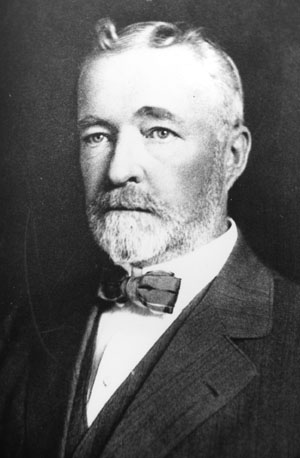
The news that the DH will now become universal makes today the day William Chase Temple—the owner of the 1891 Pirates who first conceived the idea—dreamed of.

If this is true, we can only say thank God for small favours. The last thing on earth we should do is nominate Rob Manfred for a Nobel Prize. But if he’s not kidding, and the designated hitter will come to stay in the National League, he and his employers who’ve locked players out since December began deserve a single cheer. But only that.

There’s plenty to be said for the better-late-than-never side of the argument, of course. There’s just as much to be said for the what-the-hell-took-you-so-long side of it. Writing as one of the formerly stubborn, who long insisted that I’d rather have seen revival of the AMC Gremlin than the DH in the National League, I can’t decide either right now.

But it’s about time. It’s long overdue. And I’ll be a nice guy about it and say, yes, better late than never.

No longer will we have to watch the suffocating majority of pitchers swinging pool-noodle bats at the plate accompanied by the very outside prayer than one of them might poke a base hit—if he gets lucky. You tantrum-throwing “traditionalists” can just sit in the corner. Pitchers who could hit were, are, and would always be outliers.

I’m going there one more time. This is the batting average of pitchers overall from the end of the dead ball era’s final decade to the end of last season: .162. As a class, they’re the most guaranteed out in baseball. At the plate, they make Mark Belanger resemble Mookie Betts.

“Gotcha!” the “traditionalist” hollers when I mention Belanger. Meaning, what’s the big deal about pitchers hitting below the Mendoza Line if there might be a Belanger in the lineup, too?

Here’s the big deal: Mark Belanger only got to play eighteen seasons of major league baseball because he was a human Electrolux who remains the second most prolific run-saving shortstop in baseball history behind Hall of Famer Ozzie Smith. The number one reason Belanger isn’t in the Hall of Fame is because he couldn’t hit even if it meant sparing his families’ lives from kidnappers.

The “traditionalist” who tells you so what, we’ve had how many middle infielders hitting that feebly, should be told one guy at or below the Mendoza Line in the lineup is pushing it already, but two for the sake of a “tradition” that should have gone the way of the Gremlin long before the Gremlin hit the road in the first place is malpractise.

I’m going here one more time, too. The DH wasn’t just a figment of a warped American League owner’s imagination. Almost a century before Charlie Finley persuaded then-commissioner Bowie Kuhn to let the American League give it a shot, Pirates owner William Chase Temple hatched the idea—after the key pitchers on his 1891 Pirates hit a collective .165.

The only reason Temple’s brainchild didn’t get signed into league law by his fellow NL owners was an incoming owner, Chris von der Ahe, bringing the original St. Louis Browns into the league after the collapse of the ancient American Association, reneging on a previous yes to vote no and deny the needed majority.

Now, concurrently, National League fans will no longer have to sit on edge because a pitcher at the plate might send himself to the injured list either swinging the bat or running the bases, doing what he’s not being paid to do primarily. Neither will they have to sit on edge over a rally in the making because the pitcher’s spot is due at the plate and that rally’s life expectancy might be zero.

Yes, I’m going there one more time, too, “there” being the wisdom of now-retired Thomas Boswell: “It’s fun to see Max Scherzer slap a single to right field and run it out as if he thinks he’s Ty Cobb. But I’ll sacrifice that pleasure to get rid of the thousands of rallies I’ve seen killed when an inning ends with one pitcher working around a competent No. 8 hitter so he can then strike out the other pitcher. When you get in a jam in the AL, you must pitch your way out of it, not ‘pitch around’ your way out of it.”

You think Boswell was nuts? That very situation happened in the bottom of the second in Atlanta, during Game Three of last year’s World Series. Braves catcher Travis d’Arnaud stood on second with a two-out double. The Astros ordered their starting pitcher Luis (Rock-a-Bye Samba) Garcia to signal Braves shortstop Dansby Swanson—a decent hitter—to first with a free pass . . . because due up behind Swanson was Braves starter Ian Anderson and his .54 cent regular-season batting average.

I’m sure you were (or will be, if you missed it) shocked, shocked, that Garcia struck Anderson out to end the threat and the inning. The Braves won the game 2-0 on a combined two-hit shutout. They might have had a shot at a precious third run if Anderson hadn’t had to hit in the second but a more competent bat was in the lineup as the DH in the National League park.

Last year’s pitchers batted a whopping .110 with a .150 on-base percentage. Scherzer, he who loves to run out his once-in-a-very-blue-moon base hits as if he thinks he’s Ty Cobb, went above and beyond contributing his fair share: Max the Knife went 0-for-2021.

Let’s just make sure, first, that Manfred and the owners aren’t going to pull a fast one and tie the universal DH to the suggested—and patently insane—idea of demanding a team surrender its DH if it has to lift its starting pitcher before pitching a minimum number of innings. Suppose the poor sap gets murdered early. Do you really want to force him to stay until he meets his minimum, because you can’t afford to lose your DH’s bat, and risk sinking your team so deep that the ocean floor will look like the ceiling?

Now, let me just say these, so you don’t persist in thinking I’ve gone totally and completely insane or been taken over by an invasion of a body snatcher:

Yes, it was fun learning as a kid that Hall of Fame pitcher Warren Spahn surrendered the first of Hall of Famer Willie Mays’s 660 lifetime home runs (in 1951) and the first (in 1962) of only two homers Hall of Fame pitcher Sandy Koufax would ever hit.

Yes, it was fun watching Jim (Mudcat) Grant park one in the seats during the 1965 World Series, it was fun watching Tony Cloninger smack two grand salamis in a single game in 1966, and it was fun watching Madison Bumgarner hit a pair out on one Opening Day.

Yes, it was hilarious fun watching Bartolo Colon hit one out in San Diego . . . in his 247th lifetime plate appearance during the seventeenth season of his major league career. It was even funnier watching Colon run it out knowing he’d lose a footrace againt a trash truck on two flat rear tires.

It’s always fun watching the outliers. But rather than watch them while seeing the suffocating majority of their peers swinging bats that might as well have been made by Ronzoni, I’d rather listen to one of them speaking wisely about the long, long, long-established reality.

“I’m always late to the on-deck circle, just because I need to unplug for a minute,” Braves pitcher Charlie Morton (lifetime batting average: .127) told the New York Times last fall, “and I like to worry about the job that I have to do on the mound. That’s what I’m paid to do, that’s what I’m prepared to do, spend the vast majority of my time doing. They’re paying guys lots of money and guys are working their tails off trying to be good hitters, and I’m up there taking at-bats.”

And I, like Boswell, would rather surrender the pleasure of the outliers to the greater pleasure of seeing pitchers preserved for the job they were signed to do in the first place, no longer slaughtering rallies or sending themselves to the injured list doing what they as a class have never been able to do since P.T. Barnum opened his first circus.

When the Army Air Force was broken away into a stand-alone military service in 1947, the Air Force Association’s magazine proclaimed it “The Day Billy Mitchell Dreamed Of,” referring to the pilot whose stubborn and too-often-verbally defiant advocacy for air power as the wave of the future got him court-martialed and rousted out of the Army two decades earlier.

Manfred declaring the designated hitter will be universal starting this season, whenever the season may begin, could be called likewise “The Day William Chase Temple Dreamed Of.”

Bauer isn’t quite off the hook at last

Trevor Bauer

He may not face prospects of prison, but Trevor Bauer—shown in the visitors’ dugout at San Francisco’s Oracle Park—isn’t quite off the whole hook yet.

Please note very carefully the language of the Los Angeles County District Attorney’s Office when announcing Trevor Bauer won’t face criminal charges in the sexual assault/domestic violence case that cost him half the 2021 season. “After a thorough review of all the available evidence,” the statement says, “including the civil restraining order proceedings, witness statements and the physical evidence, the People are unable to prove the relevant charges beyond a reasonable doubt.”

Those words mean Bauer simply won’t face a criminal prosecution, never mind that he doesn’t face the prospect of time behind bars. Those words don’t say the evidence is false as much as they say getting a criminal conviction at trial would be tougher than hitting an outside slider over the center field fence. But Bauer isn’t off the hook entirely, so far as the law and the courts are concerned.

He’s off the criminal hook, but the victim who obtained a temporary restraining order against him last June could still decide to hit back with a civil lawsuit. Such has happened in cases far more grave. Over a quarter century ago, a botched criminal murder trial didn’t prevent the family of one of O.J. Simpson’s victims from suing him and winning.

So far as Major League Baseball is concerned, Bauer could still face serious discipline from commissioner Rob Manfred, who isn’t bound by a lack of criminal charges from exercising baseball’s domestic violence policies and punishments. Neither are the Dodgers.

They may have said formally that they won’t comment publicly until MLB’s investigation is done, but it doesn’t mean they can’t cut ties with him when it’s done. They can terminate Bauer’s deal if he “fail[ed], refuse[d] or neglect[ed] to conform his personal conduct to the standards of good citizenship and good sportsmanship or to keep himself in first-class physical condition or to obey the club’s training rules.”

When Los Angeles County Superior Court Judge Dianna Gould-Saltman lifted the original temporary restraining order, last August, you may remember, she ruled that Bauer’s victim was “not ambiguous about wanting rough sex in [their] . . . first encounter and wanting rougher sex in the second encounter.” But the victim was anything except ambiguous when testifying in court that she drew a line, in effect, between agreed-upon rough sex and unwanted assault.

I say again that you wish only that Gould-Saltman explained how the victim was supposed to keep making her boundaries clear, or to stop Bauer from crossing them further, when she was in dreamland after Bauer choked her unconscious with her own hair in the first place.

Bauer’s legal beagles mulcted inconsistencies from her then that spoke, as former NBC Sports analyst Craig Calcaterra wrote for Cup of Coffee at the time, “to secondary and surrounding matters—how she reacted to the assault—and not at all to the assault itself . . . What Bauer’s attorneys did not do at all was discredit the central claim that he assaulted her in horrible ways.”

Maybe that makes it harder for the accuser to recover any money from him in a civil suit. Maybe that makes a prosecutor less likely to bring a criminal claim against Bauer for fear of the case being difficult. But the central truth of this entire affair—the stuff that Major League Baseball will look to regarding Bauer’s behavior, irrespective of whether charges are brought—points pretty clearly to Bauer doing exactly what his accuser said he did. Everything else is secondary.

After 12 hours of testimony, his accuser said, under oath, “I did not consent to bruises all over my body that sent me to the hospital and having that done to me while I was unconscious.” There was zero evidence presented which explained how those bruises appeared in a way that was benign or refuted the idea that the woman was unconscious when Bauer inflicted them. That, in my mind, is all that matters.

While baseball nation grappled with the Bauer ramifications, the Nationals found themselves facing a domestic violence issue when infielder Starlin Castro faced domestic violence charges but wasn’t yet suspended or even placed on “administrative leave.” Nats general manager Mike Rizzo made it as plain as a line single when talking to reporters then: “The process is the process. You asked the question, ‘Do I plan on having Starlin Castro back?’ and I said I do not plan on having him back.”

Rizzo even held a meeting with his players and laid down the law: “it’s unacceptable and it’s zero tolerance here and I don’t care how good of a player you are, it’s zero tolerance and we’re just not going to put up with it.” And they didn’t. The moment Castro was hit with a thirty-day suspension, the Nats said publicly they’d release him the moment his suspension ended. On 3 September they made good on that promise.

Nobody says the Dodgers are thrilled over Bauer’s misbehaviours, but it’s hard to forget team president Stan Kasten telling reporters what he advised manager Dave Roberts after Bauer was put on the first of his renewed administrative leaves last July: “I told him they’re going to talk about Trevor Bauer. Just say, ‘Can we please talk about foreign substances?'” That got nothing but a terrible look for the Dodgers and a public rebuke from Manfred.

The Dodgers haven’t yet said whether domestic violence is zero tolerance, they’re just not going to put up with it, they do not plan on having Bauer back, and as soon as they know whether Bauer will receive a full MLB suspension—whether it’s retroactive to time served on administrative leave or new time to serve—they’ll prepare his release for the moment the suspension officially expires.

Maybe it was easier for the Nats because Castro was almost at the end of a two-year deal when he got drydocked. Bauer is in the middle of a three-year deal, signed when the worst the Dodgers knew of him was that he was a mere misogynist. The Dodgers are on the hook for $32 million in 2022 and 2023 each, unless Bauer opts out at the end of the 2022 season and elects free agency. But Rizzo still looked far more decisive, and sounded far more emphatic, than the Dodgers have done so far.

“[Y]ou’ve heard me say it a million times, that [we prefer] you read about our guys in the Sports section and not the other sections,” Rizzo said amidst the Castro flap. “And this time we failed. I’m responsible for the players that I put on our roster and on the field.” That’s called owning it emphatically, and doing something about it decisively.

Businesses with or without public transmission can and do discipline employees often enough over off-the-job misconduct that won’t necessarily put them behind bars and isn’t half as grotesque, never mind abusive and injurious. There’s no such thing as an absolute, God-given “right” to particular employment in a particular business or profession.

A predilection for consensual rough sex is one thing. Each to his and her own. But punching an unconsious woman in the poontang and bruising her enough to require hospital attention, while she’s in no position to say yes, no, stop, or don’t-even-think-about-it, isn’t just unaligned to being a good citizen or sportsman. It’s unaligned to being human.

If cheaters don’t belong in Cooperstown . . .

Babe Ruth

“That’s a plug! This bat’s corked!”—Dave Henderson, handling one of Babe Ruth’s bats in a traveling exhibit. Soooooo . . . in the interest of keeping “cheaters” out of the Hall of Fame, do we purge the Sultan of Swat, hmmmm?

The evidence means nothing. There’s still a crowd fuming that that “cheater” David Ortiz was elected to the Hall of Fame on Tursday. Enough of that crowd fumes concurrently that “cheaters” have no place in the Hall of Fame.

Enough of them probably don’t remember, if they ever knew, sportswriting legend Heywood Broun pronouncing in 1923, in the New York World, “The tradition of professional baseball always has been agreeably free of chivalry. The rule is, ‘Do anything you can get away with’.”

Let’s take them up on the idea. Let’s start removing cheaters and their actual or alleged abetters from the Hall of Fame. Since I don’t want to be accused of even the thinnest strain of bias, I’m going to run down the list of defendants in alphabetical order.

Is everybody ready? Let’s play ball.

Richie Ashburn—The Shibe Park grounds crew did Ashburn a favour in the 1950s: sculpting the third base foul line into a kind of ridge to prevent Ashburn’s deft rolling bunts up that line from rolling over it into foul territory. Now, we don’t know if this was Ashburn’s idea or theirs, but . . .

Mr. Putt Putt’s out of the Hall of Fame on cheating grounds. If he didn’t suggest it, we’ll call this the Ashburn Rule: guilt by association, whether allowing it or enabling it in fact or by attempt. Just the way so many PED puffers snort often enough that those who played in the PED era are automatically guilty just for playing in it, regardless of whether they actually indulged.

Leo Durocher—Masterminded the from-the-center-field-clubhouse, hand-held telescopic sign-stealing scheme that helped his New York Giants come from thirteen games down to forcing a pennant playoff they won at home. (Fair disclosure: When Durocher asked his players who wanted the pilfered intelligence, Hall of Famers Monte Irvin and Willie Mays demurred.)

The Giants stole the pennant! The Giants stole the pennant! Therefore, loose the Lip from the Hall of Fame.

Bob Feller—The pitching great brought a little souvenir home from World War II: a hand-held spyglass. His 1948 Indians took it into the scoreboard to steal signs down the stretch and may have been stealing signs that way during the World Series they won against the Boston Braves. (First baseman Eddie Robinson blew the whistle in his memoir, Lucky Me.)

So wouldn’t you now agree? Rapid Robert should be rousted out of the Hall rapidly for providing the inappropriate apparatus.

Whitey Ford—In the later years of his career, and by his own subsequent admissions, the brainy Yankee lefthander became a sort-of Rube Goldberg of pitching subterfuge: mud balls (“Ford could make a mud ball drop, sail, break in, break out, and sing ‘When Irish Eyes are Smiling’,” Jim Bouton wrote of it in Ball Four), ring balls (“It was like I had my own tool bench out there,” Ford once said of the wedding ring he used to scrape balls), buckle balls. (When the ring was caught, Ford had catcher Elston Howard scrape balls on his shin guard buckles before returning them to Ford. “The buckle ball,” Bouton wrote, “sang two arias from Aida‘.”)

The Chairman of the Board is hereby deposed. From Cooperstown, at least.

Charlie Gehringer and Hank Greenberg—Their 1940 Tigers cheated their way to a pennant, using the scope from pitcher Tommy Bridges’s hunting rifle to steal signs from the outfield seats and relay them to hitters. Greenberg eventually admitted the scheme in his memoir. “I loved that. I was the greatest hitter in the world when I knew what was coming,” he once said.

Hammer down upon your heads, Mechanical Man and Hammerin’ Hank.

Rogers Hornsby—In 1962, when there seemed a move from baseball government to crack down on sign stealing, Hornsby published an article in True defending sign-stealing through scoreboards . . . which opened by denouncing then-White Sox relief pitcher Al Worthington after Worthington quit the team rather than abide by its scoreboard sign-stealing scheme.

“In my book,” wrote Hornsby, “he was a baseball misfit—he didn’t like cheating . . . I’ve been in pro baseball since 1914 and I’ve cheated or watched someone on my team cheat. You’ve got to cheat.” Hit the road, Rajah.

Connie Mack—Mack was on the 1910-1914 Philadelphia Athletics bridge while they had a novel for the times sign-stealing plot: someone standing atop a tall building beyond the ballpark fences wielding a telescope to steal signs and turning a flag one way or the other depending on the pitch to be signaled to the batter.

Nobody knows for dead last certain whether the Tall Tactician sanctioned the signs. Nor can it be proven (I think) that that had as much of a hand as pure economics in Mack’s first notorious fire sale. But . . . the Ashburn Rule is hereby invoked, and Mr. McGillicuddy shall henceforth be disappeared.

Gaylord Perry

“I just tend to leave a lotta evidence lyin’ around.”—Gaylord Perry.

Gaylord (It’s a Hard Slider) Perry—Even now you don’t even have to run down his record. Even if he was frisked like a street hustler but only once or twice arraigned. Just say the old gunkballer’s  name. Visions of sugar-plum K-Y jelly dance in and out of your head. Not to mention that little routine of brushing the bill of his cap, the sides of (what remained of) his hair, maybe a couple of taps on the front of his jersey, just to make batters think he was lubing up.

That ain’t peanuts, Mr. Peanut Farmer. Even if all you ever did was want them to think you had something naughty on the ball (and I can be convinced Perry’s real secret was psychological warfare), that’s a sub-clause Ashburn Rule purge for you. That’s the way the witch hunt hunts.

Frank Robinson—A member of the 1961 pennant-winning Reds whose erstwhile pitcher Jay Hook helped blow the whistle, sort of, on their ’61 scoreboard-based sign stealings during the same spring Hornsby flapped his flippers in defense of cheating. We don’t know if Robinson took stolen signs, but under the Ashburn Rule, the Judge is hereby judged unworthy of  Cooperstown. (Since Robinson is thought to be one of the creators of baseball’s clubhouse kangaroo courts, this seems even more appropriate, no?)

Babe Ruth—During 1983, the Louisville Slugger people sent a traveling exhibit of historic bats around major league clubhouses. Dave Henderson, then with the Mariners, spotted one of Ruth’s bats and saw something odd but familiar at the end of the barrel: the round end didn’t quite match the barrel’s wood. “That’s a plug!” Henderson hollered.  “This bat’s corked!” (The Babe was also once caught using a trick bat—four different wood pieces glued together—prompting American League president Ban Johnson to ban “trick bats” from game usage.)

As I see it, nothing could be more typical of Ruth than to use a corked bat if he could get by with it. Ruth tested the limits of the rules constantly; this was what made him who he was. He refused to be ordinary; he refused to accept that the rules applied to him, until it was clear that they did.

Bill James, in The New Bill James Historical Baseball Abstract.

Sorry, Bambino. You might have been a corker in real life, but in baseball that pulls the cork on your Hall of Fame departure.

Casey Stengel—Watching his Yankee lefthander Eddie Lopat dueling Brooklyn Dodgers lefthander Preacher Roe in a World Series game, Stengel marveled: “Those two fellas certainly make baseball look like a simple game, don’t they? It makes you wonder. You pay all that money to great big fellas with a lot of muscles and straight stomachs who go up there and start swinging. And [Lopat and Roe] give ’em a little of this and a little of that and swindle ’em.”

A little of this and a little of that? Swindle? Code for illicit pitches, which both pitchers were suspected of throwing. Suspicion isn’t evidence? We don’t know about Lopat, but when Roe retired he promptly owned up in a magazine article. Roger Kahn in The Boys of Summer called Roe the “master of the discreet spitball.”

We’re going after the big fish on this fishing expedition. If we can bar mere suspects using actual/alleged performance-enhancing substances from the Hall of Fame, who says we can’t strip a manager admiring a contest between a couple of spitball suspects, either? Oops. The Ol’ Perfesser is stripped of his tenure.

Don Sutton—“Sutton has set such a fine example of defiance,” longtime Orioles pitching coach Ray Miller once told Thomas Boswell, “that some day I expect to see a pitcher walk out to the mound with a utility belt on—you know, file, chisel, screwdriver, glue. He’ll throw a ball to the plate with bolts attached to it.” We’ll use the file, chisel, and screwdriver to unglue Sutton’s Hall of Fame plaque, instead.

Earl Weaver—Once, with his pitcher Ross (Skuzz) Grimsley in a jam, Weaver counseled Grimsley: “If you know how to cheat, now’s the time.” That should be enough to have Weaver—oft ejected by indignant umpires (“That little [expletive] called me names that would get a man killed in other places, and that was on days I didn’t throw him out,” Steve Palermo once said of him)—ejected from Cooperstown under the Ashburn Rule.

See what I mean? And those are just some of the ones we know.

But what to do with the freshly-purged actual or alleged cheaters, or with those who merely abetted or encouraged? We can’t just pretend their careers didn’t exist. We can’t just pretend they had as much to do with baseball history as I have to do with quantum physics. We’ve hunted down the witches, now which are the stakes on which we burn them?

Let’s re-mount their plaques in another otherwise isolated hamlet somewhere. We’ll nickname it Blooperstown. Ashburn’s plaque will be re-written in baseline chalk. Durocher’s, Feller’s, Gehringer’s, Greenberg’s, Mack’s, and Robinson’s will have little telescopes attached. Ford’s name will be re-written in mud. Hornsby’s will be re-written in Morse code. Perry’s will have a tube of K-Y jelly attached. We’ll re-mount Ruth on a cork board. Sutton’s can include a Black and Decker drill, since he once bragged he was accused so often he should get a Black and Decker commercial out of it. We still have to decide on Weaver, though.

We’ll re-inscribe their plaques in gold. Fool’s gold. In honour of the fools who think it’s that simple to consecrate a Hall of Fame filled with nothing but altar boys, boy scouts, choir boys, and monks.

And, we’ll re-mount them in George Frazier Hall, named for the one-time Yankee pitcher who responded to accusations of using foreign substances, with righteous indignation, “I don’t use foreign substances. Everything I use is made in the U.S. of A.”