Some complaints, far more gratitude

Willie Mays‘Tis the season to kvetch, complain, and fume. At least, on baseball social media. Spend enough time there and you’d think the glass can’t possibly be half empty because the water isn’t up that high in the first place.

Show me a team that makes a good or at least impressive move, I’ll show you half or more of their fan base predicting the End of Their World As They Wish They Knew It. You don’t want to know what those people think if their team makes a dubious move. (Though none have called for retroactive abortions or executions. Yet.)

Show me a team that hasn’t hoisted a World Series trophy since the second Reagan or the first Bush administrations, I’ll show you fans who think any success they’ve had since can only be mistakes—and the World Series trophies they did hoist were figments of their imagination.

(Of course, show me a Yankee fan who no longer believes his or her team is entitled to reach the postseason every season, and I’ll show you a million Yankee fans who think that individual needs to burn in effigy, boil in oil, cop a squat in the electric chair, and lose his or her head in the guillotine—all at the hands of the late George Steinbrenner.)

I get it. I’ve gotten it for a very long time. Some people can never be satisfied. Including and especially baseball’s incumbent commissioner who thinks that, when his mission isn’t making sure the good of the game means making money for its owners, his mission is making damn sure baseball appeals almost solely to those fans at the ballpark to whom a ballgame is just an occasional disruption to their cell phone lives.

Listen up, Commissioner Pepperwinkle. I didn’t mind the larger bases. I learned to live with the pitch clock as it was in 2023. But shortening the clock up even more? You didn’t see enough pitchers’ adjustments resulting in a few too many injuries in a time when throwing hard still supercedes throwing with brains and real strike zone knowledge a little too often?

And I’m long fed up with your incessant expansion of the postseason to the point where championship means applesauce. You’re thrilled that baseball’s eighth-best team of 2023 beat its twelfth-best in the World Series? I don’t mind the Washington Senators of Texas winning the Series at all. What I do mind is a system that tells baseball’s six best teams not so fast, you ain’t getting near the championship rounds until you prove yourself against the top also-rans all over again.

Sandy KoufaxI miss real pennant races. I don’t like watching stretch drives dominated by the thrills and chills of watching teams fighting to the last breath to finish a season . . . in second or third place. I hope against hope that you, Pepperwinkle, mean business about expansion with two more teams. I hope someone pounds into your skull that that should be followed by two major leagues with two eight-team conferences of two divisions each.

Then, I hope that same someone pounds into your head that regular-season interleague play has graduated from nuisance to horror. That the free cookie on second base to start each extra half-inning has graduated from bad joke to unacceptable. That the real problem with times of games was and remains excessive broadcast commercials. That all the above means you’re not off the hook just because you gave in to reality and made the designated hitter universal at long enough last.

And, the next time a witless team administration censors a broadcaster over a factoid the team itself provided him, you’d better have a lot more than a deafening silence with which to answer that.

Now, having unburdened myself of all the above, would anybody object to my showing more than a little gratitude? I’m 68 years old. I’ve been a baseball fan since the 1961 World Series and, especially, the 1962 Mets. And I can complain about a lot of what I’ve seen over those years.

I can complain about the disgraceful bids to stain Roger Maris’s and Henry Aaron’s pursuit and passings of the Sacred Babe (single season and career, respectively) as all-time home run hitters. The Yankee double switch that dumped Yogi Berra after managing them to a pennant in his first year trying. The disgrace of putting deceased Cub second baseman Ken Hubb’s photograph on living Cub pitcher Dick Ellsworth’s 1966 baseball card. The Year of the Pitcher.

The dessication of the Hall of Fame thanks to the cronyism of the old Veterans Commmittee when Frankie Frisch and Bill Terry ran it like an ongoing Old-Timers’ Day of their old Giants and Cardinals buds. The hijacking of the second Washington Senators to Texas. Ten Cent Beer Night. Disco Demolition Night.

Henry AaronBowie Kuhn’s insane blockage of Charlie Finley’s fire sale to include a hard cap on player sales that helped, not hindered salary inflation and hindered, not helped less-endowed teams from surviving while rebuilding. The 1980 pension realignment that froze all pre-1980 short-career major league players out of full pension and health benefits.

The drug scandals of the 1980s and the Wild West Era of actual/alleged performance-enhancing substances. Pete Rose vs. Rule 21(d). George Steinbrenner vs. a) common baseball sense and b) Dave Winfield. The Wave and the Tomahawk Chop. The mid-to-late 1980s collusion. The owners imposing one of their own as commissioner and pushing the players into the 1994 strike. Álex Rodríguez trying to sue his way out of discipline for his Biogenesis involvement—and baseball government’s parallel shenanigans tainting the probe anyway.

Underqualified Harold Baines and Jack Morris elected to the Hall of Fame while eminently qualified Dick Allen and Lou Whitaker still await their Era Committee review and overdue election, Allen posthumously. Tanking. Astrogate. Domestic violence cases. The pending hijack of the Athletics from Oakland to Las Vegas, eyes wide shut.

Yes, I have had a truckload to complain about in my baseball loving lifetime. But I also have about two planeloads about which to feel grateful for having seen.

I’ve seen Arriba, the Big Hurt, Big Papi, the Big Unit, the Bird, Blue Moon, two Bulldogs (Jim Bouton, Greg Maddux), Capital Punishment, two Cha-Chas (Orlando Cepeda, Keith Hernandez), one Choo Choo, the Chairman of the Board, the Commerce Comet, Crash, Ding Dong Bell, Dr. K, Dr. Strangeglove, El Tiante, the Express, the Franchise, the Greek God of Walks, Hoot, the Hoover, the Human Rain Delay, Jack the Ripper, the Kid, the Kingfish, Kitty, Knucksie, Kong, La Maquina, the Left Arm of God, the Man of Steal, Marvelous Marv, Mr. Cub, Mr. October, Mr. November, Mr. Padre, the Monster, Moose, Oil Can, Pops, the Rock, the Say Hey Kid, the Spaceman, Stretch, Sudden Sam, Sugar Bear, Sweet Music, Vincent Van Go, the Vulture, the Wild Thing, and the Wizard of Oz. Among others.

I’ve seen the Cinderella Red Sox, El Birdos, the Miracle Mets, the Swingin’ A’s, the Big Red Machine, the Pittsburgh Lumber Company, the Bronx Zoo, Harvey’s Wallbangers, the Hum Babies, the Nasty Boys, the Philthy Phillies, the Idiots, and the Baby Sharks.

I saw Mike Trout do things unseen since the Mantle-Mays era and secure a Hall of Fame berth before his body began to betray him little by little. I’ve seen Shohei Ohtani on the mound and at the plate, a one-man avatar of the old saying, “Good pitching beats good hitting—and vice versa.” (You wonder, once in awhile, what would happen if Ohtani the pitcher could ever face Ohtani the hitter.)

Ozzie SmithI saw Curt Flood fire the Second Shot Heard ‘Round the World one not-so-foggy Christmas Eve and Andy Messersmith finish what Flood started.

I saw Casey Stengel keep the heat off the infant Mets he managed while the organisation built itself into something beyond baseball’s greatest traveling comedy. I saw managers stolid (Walter Alston), smart (Bruce Bochy, Davey Johnson, Tony La Russa), snarky (Tommy Lasorda, Earl Weaver), self-defeatingly short-sighted (Billy Martin), and sadistic (Leo Durocher). I saw teams trying to win one for an ill-fated manager (the 1964 Reds, as Fred Hutchinson was dying of cancer) and teams actually winning one despite their manager. (The 1980 Phillies, under Dallas Green’s whiplash.) I saw courageous grace under the fire of insidious disease from Michael Weiner (executive director, Major League Baseball Players Association, refusing to let brain cancer dull his love of the game) and see it from Sarah Langs (ALS impacts her body, but not that acute, instructive, engaging mind).

I saw Jackie Robinson dream aloud of the day he might look to see a black manager in a major league dugout. I saw baseball’s first black manager (Frank Robinson) inserting himself into the lineup by popular demand in his first game managed—and hitting one out his first time up. I saw baseball’s third black manager to win a World Series (Dusty Baker) after taking over a scandal-shredded team of Astros and leading them straight, no chaser to the Promised Land.

World Series that transcended time and place and even history: the 1963 and 1965 Dodgers, the 1966 Orioles, the 1967 Cardinals, the 1968 Tigers, the 1969 Mets, the 1971 Pirates, the 1975 Reds and Red Sox, the 1979 “Fam-I-Lee” Pirates, the 1985 Royals, 1986 Mets, the 1990 Reds, the 2002 Angels, the 2004 Red Sox (the aforementioned Idiots), the 2011 Cardinals, the 2014 Giants, the 2016 Cubs and Indians, the 2019 Nationals.

Carlton Fisk’s body-English Game Six walkoff World Series home run. The pennant winners hit by Chris Chambliss (a walkoff), Aaron Boone (2003 ALCS), and José Altuve (2019 ALCS). David Freese sending a Series to a Game Seven with a leadoff eleventh-inning blast. Joe Carter winning the 1993 Series with a bomb.

Nolan Ryan, Rickey HendersonPoignant farewells. Sandy Koufax’s retirement press conference. (On my eleventh birthday, no less.) Mickey Mantle’s Yankee Stadium farewell. Willie Mays’s farewell at Shea Stadium. (Willie, say goodbye to America.) Brooks Robinson’s at old Memorial Stadium. (Around here, people don’t name candy bars after Brooks Robinson—they name their children after him.) Tom Seaver’s at Shea. (He ran from the microphone to the mound and took bows from all four possible sides of the park.) Mike Schmidt’s mid-season goodbye press conference.

Hall of Fame speeches admonitory (Ted Williams throwing the gauntlet down on recognising and honouring Negro Leagues greats “who are not here only because they weren’t given the chance”), amiable (Yogi Berra), appreciative (Ozzie Smith, living and self-reflecting the dream), appalling (Earl Averill zapping the Hall over how long it took for him to be elected), and athwart all precedent. (The invaluable Roger Angell, the first non-daily beat writer elected as a Spink  Award Hall of Famer.)

Voices of the game in the broadcast booths running the spread from shameless homers (Ken Harrelson, Bob Prince, Ron Santo, John Sterling) to smooth operators (Curt Gowdy, Tim McCarver, Lindsey Nelson), spiritual billy goats gruff (Harry Caray), and spirits beyond these dimensions. (Vin Scully.) Writers who gave it genuine literature: Angell, Dave Anderson, Ira Berkow, Thomas Boswell, Jim Bouton, Jim Brosnan, Alison Gordon, Bill James, Pat Jordan, Roger Kahn, Ring Lardner, Jane Leavy, Jim Murray, Joe Posnanski, Shirley Povich, Damon Runyon, Claire Smith, Red Smith, Jayson Stark, George Vecsey, George F. Will.
Mike PiazzaKoufax proving practise makes perfect. (His fourth no-hitter in each of four straight seasons: a perfect game.) Aaron yanking the Sacred Babe to one side while making chumps out of the racists who tried to intimidate him and of his own team trying to demean him by placing the box office ahead of proper competition.

The Express striking the Man of Steal out to reach 5,000 career punchouts. The long-since-tainted 1998 single-season home run chase. (We loved it, until we didn’t.) Aaron Judge nudging Maris to one side as the American League’s single-season home run king. Albert Pujols delivering the only farewell tour that matters: no pomp, circumstance, or conscious tributaries, just hitting 71 percent of his 24 homers that year in the season’s final two months.

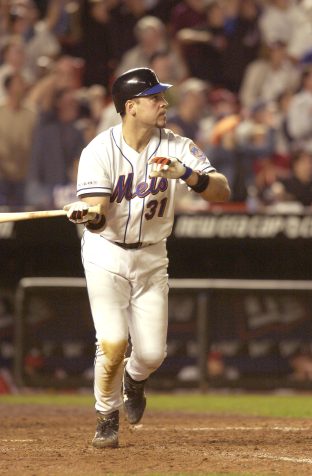
Mike Piazza sending a 9/11 shocked and staggered New York and nation into a rip-roaring frenzy when, late in the Mets’ first home game after baseball resumed following a break, he sent one banging off a television camera scaffold behind Shea Stadium’s left center field fence.

Even this year’s World Series, for all the flawed foundation of the postseason that led to it. Scratching the Rangers off the list of franchises lacking even one World Series trophy, it’s possible to believe that, in my lifetime, I may yet see World Series trophies hoisted by teams from Colorado, Milwaukee, San Diego, Seattle, and Tampa Bay.

Ballparks in which I’ve sat watching games. The Polo Grounds and Shea Stadium. Old Rosenblatt Stadium in Omaha, when the team was the Royals’ Triple-A farm. Wrigley Field. Lackawanna County Stadium. (Pennsylvania, when the Triple-A team was the Scranton-Wilkes Barre Red Barons and a Phillies affiliate.) Tiger Stadium. Camden Yards. Angel Stadium. Dodger Stadium. Cashman Field. (When Las Vegas’s Triple-A team was a Dodgers, then Blue Jays, then Mets affiliate.) Las Vegas Ballpark. (For the Triple-A Aviators.)

If all the foregoing says nothing else, it ought to say the good still outweighs the bad by at least as far and wide a distance as that by which the Rangers once baked four and twenty  Orioles in a 30-3 pie, in August 2007. It also says, as I’ve said often enough in these pages, that in baseball anything can happen—and usually does.

Peter Seidler, RIP: “He saw the cup as three-quarters full”

Yu Darvish

Padres pitcher Yu Darvish arrives with flowers at the Petco Park memorial for Peter Seidler last Tuesday.

There have been exceptions to the axiom that no fan ever buys a ticket to a major league baseball game to see a team’s owner. One of them died last week, two days before his fellow owners voted foolishly to allow John Fisher’s hijack of the Athletics from Oakland to Las Vegas.

Fisher’s one of those owners whom fans would pay to demand he sell his team, in their more polite moments of fury. Yankee fans of the 1980s didn’t go that far but they didn’t mind having chances to let George Steinbrenner have it over his Mad Hatter-meets-the-King-of-Hearts style in that decade.

Conversely, fans loved seeking Bill Veeck out (and he, them) when he owned the Guardians (known as the Indians in his day), the St. Louis Browns, and the White Sox twice. So did Mets fans seeking out their original owner, Joan Payson; so have Met fans with current owner Steve Cohen. And so did Padres fans with Peter Seidler, who died last Tuesday at 63.

What Seidler had in common with Veeck, Payson, and Cohen was that he loved baseball genuinely and wasn’t afraid to wear it on his sleeve. He was known to walk around Petco Park with a baseball in his hand and a readiness to talk his love of the game at the slightest inspiration. Padres fans were known to wear team jerseys with his name on it as often as they wore those of various Padres players past and present.

Ground Floor Murals, a San Diego outfit known for having done mural tributes to various Padres players, wasted no time in hoisting one in Seidler’s memory last Tuesday evening on a wall in San Diego’s Little Italy section.

“Baseball is a social institution, and it always has been,” he said in a 2021 interview. “I believe to this day it’s America’s pastime, and the impact that the San Diego Padres can have on the city and county of San Diego is something like no other business can have. And that was important to me.”

He was talking about what provoked him to buy the Padres in the first place, in 2011, when by his own admission he was bored while undergoing treatment for non-Hodgkins lymphoma (a disease he’d beat twice) and discovering the team was for sale. He went to his first game at Petco Park. The simple allure of the ballpark joined his knowledge that San Diego had yet to party over a major sports championship.

Seidler was one of the grandchildren of legendary Dodgers owner Walter O’Malley but one who made his own way and fortune as a private equity investor. He joined his uncle, former Dodger successor owner Peter O’Malley, and his longtime friend Ron Fowler to buy the Padres, becoming its managing partner in 2020.

Peter Seidler

The Ground Floor Murals tribute to Seidler that first appeared last Tuesday night.

Seidler was known to be warm, gentle, and kind. Among other things, he was known equally around San Diego for his efforts on behalf of the homeless, which he believed was a problem that shouldn’t be left to government alone. He backed that belief by creating the Tuesday Group and getting involved with the Lucky Duck Foundation that reaches to homeless youth.

“Peter was probably the most positive person I knew,” Fowler told The Athletic‘s Dennis Lin after Seidler’s death.

To say he saw the cup as half-full is probably a misstatement. I think he saw it close to three-quarters full. He saw the possibilities, the upside in everything. He always said things could be fixed or “this will happen.” He just was extremely positive with how he looked at people, problems, everything. He always saw the good. I think that was the way he was in relationships, that’s the way he was in business, and obviously it served him well.

“How many baseball owners,” asked one owner, the Brewers’ Mark Attanasio, believed to be Seidler’s closest friend among the owners, “can you say are gentle?”

Like his counterpart in Philadelphia, John Middleton, Seidler had neither shame nor remorse in actually investing in his baseball team. Among a very dubious fraternity that seems more than ever to believe baseball’s common good equals making money for them, Seidler, like Middleton, really did believe there was honour in actually trying to win and keep winning.

“A lot of people thought that that San Diego would never be a baseball city,” Attanasio told USA Today‘s Bob Nightengale. “It’s a military town. It’s a beach town. He made baseball more than relevant. He brought passion to that fanbase, and that’s as loud a crowd as you will ever hear.”

Nobody pretends Seidler didn’t have a few trips and tumbles toward that goal. The Padres got as far as last year’s National League Championship Series but lost in five games to Middleton’s Phillies. They’ve gone to two postseasons in four seasons since Seidler became their managing partner.

He wasn’t afraid to take the big swing whether it delivered big or imploded big. For every Manny Machado to whom he showed the glandular dollars there was an Eric Hosmer to whom he showed the dollars but got an aged shell for his trouble. He committed big to shortstop Xander Bogaerts, pitchers Yu Darvish and Joe Musgrove, and infielder/outfielder Fernando Tatis, Jr.

But he didn’t deliver weekly fusillades demanding a World Series or bust like yesterday, either, before or after he ascended to the number one ownership slot. He didn’t demand summary executions monthly over bad spells or decisions on the field.

So James Shields turned out to be less than his old and overstated Big Game James reputation? So Hosmer turned out to be old before his time? No sweat. Seidler just picked himself up, dusted himself off, started all over again.

So the Padres faltered last June, recovered slightly in July, faltered again in August, then put on a September stretch to a) be proud of; and, b) miss the postseason by a few hairs? Nobody doubts that Seidler would have done whatever seemed needing to be done to fix that. Even if it meant potentially dealing rather than extending Juan Soto. Even if it meant letting Blake Snell, this year’s National League Cy Young Award winner, test his free agency market before possibly thinking of trying to re-up him for another tour.

When the owners locked the players out in 2021-22, the eventual five year collective bargaining renewal wasn’t good enough for Seidler: he actually wanted a ten-year deal.

Seidler’s death prompted an outpouring from Padres fans and from all around baseball, including a memorial set up at once outside Petco Park. Among the visitors to that memorial were several Padres players including Darvish, who probably spoke for most of Seidler’s players when he Xtweeted after the news broke:

My heart hurts with the unfortunate news of Peter Seidler’s passing. I’m sure everyone that knew him would agree with me when I say Peter was a truly wonderful human being, and being in his presence was always a blessing. He was a teacher of life, and taught me countless lessons form the all the interactions we had. May his beautiful soul rest in peace.

Would Seidler have voted against Fisher’s hijack of the A’s to Las Vegas after too many years of playing Oakland for fools? Would he have stood athwart his fellow owners (even Anastasio and Middleton) in standing athwart Fisher yelling “Stop!” while reminding them how they were forgetting baseball as a social institution and doing their level best to destroy what remained of that status?

We’ll never know now. Just as we don’t know why Middleton and Cohen—and maybe Attanasio, plus one or two other owners to whom the game’s good really does mean far more than just making money for it—threw their hands up, and let Fisher get away with gutting his team and without the usual relocation fee (waived by Commissioner Pepperwinkle) and with continuing to remain heavily enough on their revenue-sharing teat.

What we do know is that Seidler wanted his Padres to stand with and up to any of the other real or alleged big boys in baseball, and for his team and their fans not to back down to anyone for affection and achievement. The Padres didn’t win the World Series while he was alive and operating, but Seidler did whatever was needed to make sure it wasn’t for lack of trying.

As long as he ran the Padres, there was always the chance that somehow, some way, Seidler’s example might yet affect enough of his fellow owners that they might, maybe, begin to think of baseball once more as far more than just a moneycatcher, far more than just a rude interruption to turns on the cell phones. Might. Maybe.

Viva Las VegA’s?

The Sphere

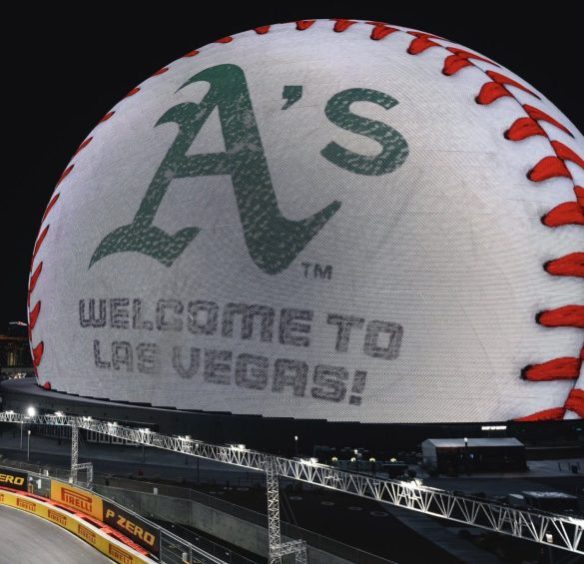
Oakland A’s fans may not be the only ones hoping this blast around Las Vegas’s Sphere proves to be baseball’s version of Dewey Defeats Truman.

Ladies and gentlemen, your Las Vegas Athletics of Oakland. At least, they will be as of 2028, now that baseball’s owners voted unanimously to allow John Fisher to hijack the A’s from a city who loved them but whose leaders, for assorted reasons, refused to let Fisher strongarm them into a new development with a ballpark thrown in for good measure.

I write as a baseball analyst and as a lifelong fan. Would I love to see major league baseball in Las Vegas, where I’ve lived since 2007? You might as well ask if I’d love to discover a million tax free dollars at my front door. But I’m hard pressed for now to know which about the A’s situation is worse.

Is it Fisher discovering not every Oakland muckety-muck had turnips for brains and wouldn’t just build him that development and hand it to him on a platinum serving tray? Is it that the A’s now get to turture Oakland a few more years before they’re actually ready and able make the move?

Is it Las Vegas’s and Nevada’s powers that be jumping eyes wide shut into handing Fisher $380 million worth of the funding for a projected billion dollar-plus ballpark adjacent to The Strip, funding that’s liable to hike when the usual unanticipated cost overruns cost Nevada taxpayers more than the billion the A’s are “expected to arrange?”

The only thing possibly standing in the way of finishing the Fisher hijack is a Nevada pollitical action committee whose interest is public education forcing Nevada’s $380 million to a public November 2024 vote. “Were that to happen,” write The Athletic‘s Evan Drellich and Melissa Lockard, “and were the public to subsequently vote against providing the money, the move could be, at the least, delayed.”

Dare to dream. Well, the Oakland fan group the Last Dive Bar does. “So what’s to say this Vegas [move] is going to be this glaring success?” asked Last Dive Bar member Bryan Johansen of Lockard—right before answering.

They have what they didn’t have all those times (in previous attempts to move) in that they have the support of the commissioner to move and they have a city that just says, yeah, do whatever you want here. But it’s still Fisher and he still has to do that work, and he still has to put a shovel in the ground. And to today, he hasn’t been able to accomplish that, so there’s still a glimmer of hope that he’s not going to be successful and will be forced to either sell or work something out in Oakland.

The A’s have been in Oakland three years longer than they spent in their native Philadelphia. RingCentral Coliseum, the home they’ve known since moving there from Kansas City in 1968, has been a living, neglected wreck for what now seems eons. And Oakland was willing to give a $375 million commitment to a new A’s stadium if only Fisher and his trained parrot David Kaval left things at that.

But Fisher and Kaval insisted on pushing the $12 billion Howard Terminal development project with a ballpark thrown in for good measure. Oops. Now the A’s, which have been allowed to devolve into the American League’s first among known basket cases, stand likely to be turned into a game-wide hate object thanks to an owner about whom decriptions as ten-thumbed might be polite.

“But what could have worked better?” asks Deadspin‘s Sam Fels, who answers almost promptly:

The tiniest ballpark in the tiniest market in a climate inhospitable for getting to the park or sitting outside? Or a gleaming new [Oakland] park right downtown that included far more of a footprint for Fisher and revenue streams in the nation’s tenth biggest market, in one of the wealthiest areas in the country? Isn’t it just possible, with all of that, that the A’s might have become the big market team that the Bay Area suggests they should be? Well, not under Fisher’s ditch-focused guidance, but under someone with a few neurons that fire at the same time? Did anyone think the Giants were a big market team before they moved into their palace in downtown San Francisco?

The alleged Las Vegas plan is to build a retractable roof ballpark where the Tropicana now sits. That still counts on that which cannot always be counted upon, travelers silly enough to hit Vegas at the peak of summer’s notoriously dry roasting heat, to see a team in which they normally have no rooting interest.

Las Vegas without such travelers has sports fans to burn. (No pun intended.) Baseball fans are more numerous than outsiders might suspect. They could in theory jam the future ballpark and still not do it enough—not with a ballpark said to be planned for 30,000-35,000 seats—to compel Fisher to do anything much more than entertain thoughts of selling the team.

But they might have done it for a new expansion team. Oops. Commissioner Pepperwinkle and his minions seem to believe Vegas needs an “established” team—whether or not it’s the (ahem) white elephant into which Fisher turned the A’s—instead of something splashy new. Never mind that Vegas has lived as much and maybe a little more on the splashy new as the tried and true.

Thoughts of Fisher selling the team have been prime on A’s fans for about as long as Fisher’s owned them. This past season merely amplified those thoughts with the prominent and rousing “Sell the Team!” chants among those A’s fans who still refused to let RingCentral’s wreckage deter them. The very thought of Fisher selling to one who cares about the team may have been what Disney legend Annette Funicello called the dream that’s a wish the heart makes.

Whether the buyer will be someone who actually believes a baseball team should be built to compete and win as best as possible to win is impossible to predict for now. So is whether such a buyer will be willing to take the A’s as far off the larger revenue sharing teat as possible, considering Fisher having to keep them on it isn’t really going to make him true friends among the owners who approved his hijack.

This is not Walter O’Malley being squeezed out of Brooklyn by a capricious, tyrannical city and state building czar determined never again to allow privately owned sports facilities built on New York land. This is the latest in a long run of baseball owners with the wherewithal but not the will to build entirely out of their own pockets without one. thin. dime. of public money factoring in.

It’s also the latest in a long run of municipalities who think there’s nothing wrong with fleecing their constituencies on behalf of creating or luring major league sports teams that don’t always prove to be saviours of local economies without the locals or the visitors paying through their noses, bellies, and any other passages possible.

Not to mention the latest in a too-long run of the A’s looking to get out of their dilapidated digs but finding the wrong ways to do it, or the wrong opponents to cross. Wanting to escape that was one thing. Going deliberately into the tank after the pan-damn-ic season while still trying to fleece their home city was something else entirely.

As The Soul of Baseball author Joe Posnanski writes in Esquire, “They seemed on their way to San Jose at one point—the city wanted the team so badly that they actually sued Major League Baseball—but the Giants’ said that San Jose belongs to them and blocked the move. After that, the city of Oakland and the State of California put almost $800 million on the table in infrastructure, tax kickbacks, and various other goodies.

“This hasn’t proven to be enough . . . Fisher believes he can get more, that he needs more, that he deserves more.”

The Sphere, that big, $2.3 billion dollar Las Vegas ball of animated light on the outside and overpriced concert and other event seating on the inside, which may be liable to lure more people watching the outside than listening and watching on the inside, couldn’t wait to blast the news on the outside.

A’s fans in Oakland, who have suffered two lifetimes’ betrayals and refuse to surrender without a fight, may not be the only ones hoping that’ll end up equaling Dewey Defeats Truman.

Underhanded Counselling?

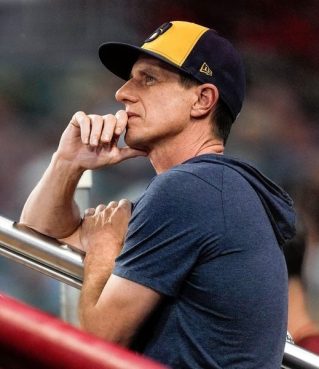
Craig Counsell

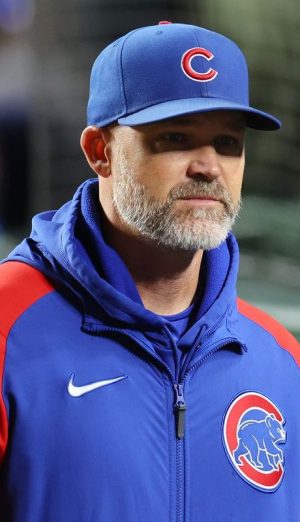
No, the Cubs did not poach Counsell from the Brewers. What they did to David Ross, however . . .

Would you blame David Ross if you discover he feels like the husband who was thrown over with little to no warning because the wife decided something better was available? OK, that’s not really a fair analogy. Grandpa Rossy is seven years younger than Craig Counsell. But considering the Cubs’ treatment, he might as well be seven years older.

But something isn’t passing the proverbial smell test about Counsell’s hiring and Ross’s firing.

First, let’s clear this one at once. The Cubs didn’t poach Counsell. Not from the Brewers or from anyone else. Counsell’s contract expired first. He didn’t exactly lack for interest once it became known he intended to test his own managerial market. But test it he did, as a proper free agent.

Now, that said, the manner in which the Ross firing and Counsell hiring were done was a weak look. Team president Jed Hoyer had a deal done with Counsell before flying to Ross’s Florida home to meet and execute Ross, the guy from whom Hoyer said he wasn’t really looking to move on. The headline on The Athletic‘s Patrick Mooney’s take said it with jarring simplicity: “David Ross’s downfall as Cubs manager? He isn’t Craig Counsell.”

Just like Rick Renteria wasn’t Joe Maddon. Just like, as things turned out, Maddon—on whom the Cubs “soured” almost too swiftly when they faded from World Series drought busters to also rans—wasn’t Ross, who’d been one of his more valuable role players for that almost surrealistic 2016 World Series run but received a front-office grooming for the bridge to follow after his retirement.

Maddon also proved not to be Counsell. It was Counsell’s Brewers who chased Maddon’s Cubs down in 2018, possibly putting Maddon onto a very warm seat the heat from which swelled a year later—when the Cubs fell from contention, had a chance to knock the Cardinals out of the races, but got swept by the Cardinals in Wrigley Field in their final home set of the year.

Hopefully, someone in the Cubs’ orbit has tipped Counsell to watch his back in case the Cubs’ administration decides, somewhere along the road, no matter what success that administration allows him to have, that he’s not whomever they’d like to romance and marry in due course.

Especially if, as they did with Ross, the Cubs announce he’s their guy in public only to romance a purported upgrade behind closed doors. Especially if they announce Counsell’s their guy despite a season being ended at the hands of Counsell’s now-former team. With the way the Cubs are administered, nothing’s impossible, including infamy.

This isn’t the single most suspicious fire-and-hire I’ve seen in a lifetime of baseball watching. Nothing compares to the shameful Yankee double switch of 1964. They canned an undermined Yogi Berra the day after the Cardinals beat his Yankees in the World Series. Then, they hired Johnny Keane, the skipper who’d just beaten him in that Series.

We learned only later that then-Yankee GM Ralph Houk had every intention of dumping Yogi after the season, no matter what, even backchanneling during the season to gauge Keane’s interest in the Yankee job, if the Cardinals were ready to let him go before their own pennant race comeback and triumph.

At least Ross didn’t get it the way the Mets once dumped an embattled Willie Randolph, either. Feeling fire under his hindquarters over the Mets’ blowing a seven-game National League East lead in September 2007, Randolph and his Mets opened 2008 34-35 and he was fired—after managing a doubleheader split in New York, then flying coast-to-coast to Anaheim to manage a win over the Angels, and getting fired . . . at 3:11 a.m.

As a manager, Ross was better than some, perhaps not as good as others. He earned his players’ trust even as the Cubs administration allowed a championship team to dissipate and a seeming team of also-rans to replace it. Yet he steered them deftly through the 2020 pan-damn-ic and into that surrealistic postseason. And his Cubs played hard in 2022, especially after the All-Star break, and despite the front office fire-selling at that year’s trade deadline.

In 2023, a Cubs team not supposed to compete competed. They pulled themselves to .500 by 27 July, then to 78-67 on 11 September. But from there they collapsed to going 5-12 to finish the season. They’d ended August taking two of three from Counsell’s Brewers but ended the season losing two of three to them.

Counsell’s NL Central-winning Brewers returned to first in the NL Central to stay on 3 August and probably secured it with a nine-game winning streak during that month’s second half, though going 8-4 to finish the regular season didn’t hurt. Then they got swept right out of the wild card series by the eventual NL pennant-winning Diamondbacks.

Except for pan-damn-ically short 2020, Counsell had only one losing season on the Brewers’ bridge. They reached nine postseasons and one National League Championship Series under his command. And Counsell earned respect for managing those runs despite the Brewers not exactly being or behaving like more than a small-market team.

When his contract with the Brewers expired, many were the speculative stories sending Counsell to a very different Mets organisation, under still-new ownership and now administered by the man who hired him in Milwaukee in the first place, David Stearns. Counsell built a reputation as a communicative players’ manager in tune with the game’s analytic side and in synch with the human side.

David Ross

So much for being “their guy” . . .

I saw some speculation that Counsell leveraged the apparent Mets interest in him to carve a large contract out of whomever might win his favour at all. But I also saw smarter observations that the Wisconsin-reared and rooted Counsell—the winningest manager in Brewers history—didn’t want to stray far from home in any job change.

He got what he wanted and more, the Cubs signing him for five years and $40 million to steer their Ricketty ship. That alone may do wonders on future markets for steadily successful managers who are usually expected to work for comparative peanuts and be bosses to players who could buy and sell them for the equivalent of a year’s worth of sales taxes.

The Cubs may not fall into big bidding wars for this winter’s free agency class, but they’re expected to be active enough to fortify a team that looked like a rising team often enough in 2023. Cub fans know only too well how swiftly expectations can turn, of course, but let’s leave it be for now.

I would repeat my earlier counsel to Counsell: watch your back—and not just from Brewers crowds ready to hammer you the first time you lead the Cubs to Milwaukee for a series. The next rising managerial star might turn Cub eyes toward him at the first sign of availability, too. And it may not matter whether or not you continue building a resume that might include managing the Cubs to another World Series title, either.

It took Ross—a World Series hero as a role player on the 2016 Cubs, who hit his final major league home run during that staggering Game Seven—several days to speak out about his execution. Telling Talahassee Democrat writer Jim Henry that anger is poison to him, Ross preferred gratitude:

There was a lot of people who worked really hard alongside me. … I am really thankful for the four years I got, coming from zero coaching experience to getting the chance to manage such a great organization that has impacted my life in a great way. There’s great people there. I really don’t have a whole lot negative to say, to be honest.

I get mad from time to time but I have a lot to be thankful for.

Few men and women pick up and dust off from their unexpected purgings with that kind of grace. The Cubs should consider themselves fortunate that Grandpa Rossy didn’t elect to stay away from future team commemorations as long as the incumbent ownership and administration is in place. As with the case of a certain Yankee legend, nobody might blame him if he did.

“They think you’re supposed to win running away”

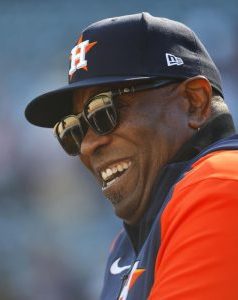
Dusty Baker

“After awhile, you just get tired of answering questions.”—Dusty Baker.

The Yardbarker headline says, “Dusty Baker blames surprising source for retirement.” Then, citing his interview with The Steam Room podcast hosts Ernie Johnson and Charles Barkley, they note the “surprising source” is “bloggers and tweeters” Baker deemed unfair. Baker is not necessarily wrong.

“We had a lot of success here, Ernie and Charles, and then the last couple of months here weren’t very pleasant, because we weren’t ten games ahead,” Baker said of his Astros, whom he managed to a seventh American League Championship Series game this year and in pan-damn-ic short 2020, plus a 2021 World Series loss in six but a 2022 World Series ring—also in six.

You spoil people. They think you’re supposed to win this every year running away and it’s not like that. Every year’s different.

There was a whole bunch of criticism from 30-year-olds and bloggers and tweeters that I’m not doing this and I don’t know that, and I told my wife, ‘You know, I’m kind of tired of this and tired of the scrutiny and if I could go manage and show up at say 6:30 for a 7 o’clock game and leave 30 minutes after the game, don’t do the (pregame and postgame interviews), I could manage for another four or five years.’ You know what I mean? After a while, you just get tired of answering questions.

God and His servant Casey Stengel only know success can soil and spoil. In certain ways, the 74-year-old Baker and his Astros were actually fortunate. Their run of sustained success is comparatively recent. Astro fans actually have time to reconsider, reflect, and remind themselves that sustained success may not always live long. Their own franchise history might be a fine place to start.

They might look to those longtime American League ogres who carried slightly more than half a century worth of pennants and slightly more than a quarter century worth of World Series titles into the current century. Yankee fans are nothing if not spoiled rotten enough to believe a) the World Series is illegitimate without the Yankees in it; and, b) they are as entitled to Yankee success as the Yankees themselves.

They might look to the National League West owners, too. Those Dodgers who’ve won ten of the past eleven NL West races, including eight straight before 2021 and the past two consecutive, and who had considerable success in the second half of the 20th Century. Starting with winning six pennants (including two pair of back-to-back flags) and Brooklyn’s only World Series in eleven years; continuing with four pennants and three World Series rings within their first nine years in Los Angeles.

Dodger fans are almost as spoiled as Yankee fans these days. And, almost as frustrated. They may not yet think a World Series is illegitimate without the Dodgers in it, but they can’t fathom any more than the team itself how the Dodgers could win ten of eleven NL West titles with only one pennant and Series ring to show for it.

If Baker (once a Dodger player himself) thinks bloggers and tweeters were rough on his Astros this year, he may not have seen how rough they were on the Yankees and the Dodgers. That roughness almost makes any hammerings on the Astros for not running away with the AL West this year seem like love taps.

Baker also may not have seen how much rougher than that were lots of blogging and tweeting fans of other teams upon whom atomic expectations fell at the season’s beginning but upon whom atomic deflations fell almost as fast. Met fans of the past several years have come to believe a season lost upon one bad inning—in April, never mind when big moves became big falls.

Don’t get me started on Cub and Red Sox fans, even if the former finally broke its long World Series drought almost eight years ago and the latter have more World Series rings this century (four) than anyone else. Or Cardinal fans, priding themselves as the best in the game but guilty of unnecessary roughness when the Redbirds finished at the bottom of the weak-enough NL Central this year after a decade of nine first or second place finishes in eleven seasons. Or Braves fans, respoiled by recent success after the comparative drought following that protracted NL East ownership of the 1990s-early Aughts.

Baseball is about rooting and caring, but too many fans take protracted defeat and failed high expectations personally. There may never again be the Yankees’ 20th Century dominance. God willing, the Yankees today won’t succumb to the temptation too many of their fans still ask: What would George do? More fan bases than just the Yankees’ base see lack of success and wish their teams had that kind of owner. Not so fast, folks.

There may take several if not many years before the next small dynasty comes out to play. Nobody guarantees that a solid club of Rangers who just won the World Series in five thrilling games can do it again, and again, and again, consecutively or at least consistently. Nobody guarantees the Astros’ success run will continue indefinitely.

The advent of the blogosphere and social media makes fan frustration seem about a thousand times more intense than when all we had was the morning paper, the evening news sports reports, and assorted retrospective books by which to go. Interviewers asking foolish or even stupid questions didn’t begin with Xtwitter.

Brutal fan attacks didn’t end with the letters to the editor sections. Death threats, even, didn’t end when Roger Maris (single season) and Hall of Famer Henry Aaron (career) finished knocking the Sacred Babe to one side in the arguable two most hallowed pages of the record books.

Baker’s hardly the only manager who ever got fed up with the witless who come forth worse than whatever mis-step they’re criticising. He may be the first to retire over it. Some of us think we should consider ourselves fortunate if certain players don’t retire when the social media universe attacks them without knowing the possible wherefores behind what they’re attacking.

Questioning mediocrity is one thing. But when once-glittering star players decline when they’re not exactly old men just yet, the social mediaverse seems to prefer hammering first and asking questions later. Even when it sees those players among the walking wounded on the injured list, the social mediaverse is only too prepared to dismiss them as fragile goldbricks still.

Go ahead and say Baker finally couldn’t stand the heat so he walked out of the kitchen at last, if it makes you feel good. But ask yourselves, honestly, how many of you would really be willing to go to work when it’s before five-figure audiences in a ballpark and seven figure audiences watching television, listening to radio, watching online, Xtweeting as they watch, or all the above.

That’s what I thought.