Death threats be not proud, continued

Don Denkinger

MLB umpire Don Denkinger needed FBI protection after threats on his life over his 1985 World Series mishap. In the social media era, it wouldn’t take just radio people blasting his address and phone number around the world for further such threats.

What does it tell you, when almost the first thing on the mind of a professional athlete who loses a contest isn’t what a tough loss it was but how many death wishes or death threats are liable to show up in his or her direction on social media? It ought to tell you how brain damaged too many sports fans are.

Shelby Rogers got waxed in straight sets by Britain’s Emma Raducanu in round four of tennis’s U.S. Open Monday afternoon. The 28-year-old told a press conference after the match she expected “nine million” social media death threats afterward. That’d teach her to draw the spotlight after she flattened number one-ranked Ashleigh Barry in the third round.

“Obviously we appreciate the spotlight in those moments,” Rogers told the conference, “but then you have [losing to Raducanu] today and I’m going to have nine million death threats and whatnot. It’s very much polarizing, one extreme to the other very quickly.”

She wasn’t alone. Former Open winner Sloane Stephens lost this time, Angelique Kerber beating her in three sets after she took the first set. Stephens says her Instagram account was flooded with a few thousand abusive messages some of which went from mere swearing and racial insults (she is black) to downright threats of death and sexual abuse.

“This isn’t talked about enough,” Stephens posted, “but it really freaking sucks.”

It really freaking should be talked about more than enough. I’ve done it. I don’t want to minimise what Rogers and Stephens now deal with, but baseball and other sports people have put up with that kind of vile nonsense for decades. Just not so instantly as today.

Long before there was such a thing as social media, hapless umpire Don Denkinger found himself on the wrong end of a harassment campaign after his blown call in the ninth inning of 1985 World Series Game Six helped cost the Cardinals a win they should have been two, not three outs from consummating.

Back then, about the worst that could happen beyond snarky newspaper columns was a radio disc jockey obtaining and airing your home address and telephone number. Two St. Louis disc jockeys did just that to Denkinger. He received death threats by mail for a couple of years to follow and, at one point, needed MLB to ask the FBI for help.

The fact that the Cardinals still had three defensive outs to play to nail that Series, or still had a seventh game to play if they lost Game Six, escaped the slime contingent. Denkinger being rotated to calling balls and strikes for Game Seven didn’t mean the Cardinals should implode in that game escaped them, too.

At least Denkinger waited until after that Series for the full brunt of his mishap to happen. Phillies reliever Mitch Williams had no such fortune in the 1993 Series. Thanks to a few death threats from enough indignant Phillies fans, the hyperactive lefthander spent a sleepless night or two with a shotgun in his lap after blowing a Series save . . . in Game Four.

Williams went on to throw the pitch Joe Carter belted to win that Series in the bottom of the ninth in Game Six, of course. His stand-up post-game performance may have saved his life otherwise. But he shouldn’t have had to spend a night cradling his weapon instead of his wife.

I’ve said it until I’m blue in the keyboard. Don’t ask what would have happened if Denkinger, Williams, and members of the long, sad roll of sports “goats”—the Bill Buckners, Ralph Brancas, Gary Andersons, Roberto Baggios, Wrong-Way Marshalls, Fred Merkles, and Andres Escobars—had had their moments of horror in the social media era.

Horror, or death: Colombia’s goalkeeper Escobars inadvertently put the ball into his own net in soccer’s 1994 World Cup tournament. That night, he was out with friends when a car pulled up, an argument broke out, and he was shot to death.

Denkinger at least had FBI help until the idiocy passed. What defense or protection do you have against social media, even if you leave it? Rogers says she doesn’t like social media but she’s forced to make a presence there because of her sport’s marketing. Maybe her sport and all sports need to re-think that a little.

Mets relief pitcher Edwin Diaz walked himself into trouble and a Mets loss in Washington Monday. All that did was throttle the Mets’ pennant race recovery a little. It didn’t blow up the subway during rush hour.

Diaz is known as much for his mound struggles as his mound triumphs. Maybe that protects him from death threats. Or maybe we don’t know that he’s received them, or how many he’s received. The Mets’ administration seems to care more about their players replying to the boo birds than whether the boo birds might graduate to threatening their players’ lives.

Remember Indians reliever Nick Wittgren—battered for five runs in the ninth, his wife and family subject to social media death threats. Wittgren said it was said that such is now the pro sports norm—and that 90 percent of players he knows personally have received them. If you need me to tell you what’s wrong with that picture, you have problems I’m not qualified to solve.

Social media contends with the shouting-“fire”-in-the-movie-house dilemna. It thrives on free speech, but it also has to draw certain lines that, often as not, refuse to be drawn organically. The sports goat business stopped being funny a long time ago. The sports death threat business needs to be put out of business even faster, if possible.

The law says you can’t threaten the lives of the president of the United States or any public official. The law also says you can’t send threatening snail or e-mail to someone. A professional gambler faces five years in federal prison for Instagram threats he sent the lives of players in a 2019 game the Rays lost to the White Sox in extra innings.

It shouldn’t stop there. Twitter, Instagram, and other social media platforms should think seriously about not just banning such scum contingent from their platforms but arranging such charges against as many of them as possible regardless of whether or not they have money on the table.

Games are not life and death. The fate of what’s left of the free world doesn’t hang in their balance. Mortal men and women in an entertainment try their best and fail. It doesn’t make them cowards, chokers, or moral degenerates when someone on the other side is just that hair’s breadth better in the biggest of the big moments.

Yet people are prepared to perform massacres upon the defeated in sports while letting far more grave misbehaviour die on the proverbial vine. This is above and beyond mere fan passions. It shouldn’t be enabled.

You wish for openers that people were at least as outraged over New York’s mishandlings of the pan-damn-ic (it took a sexual harassment scandal to do what that malfeasance didn’t and rid the statehouse of Andrew Cuomo) as they might be over Shelby Rogers losing a shot at winning the U.S. Open, or the Mets losing a shot at the postseason.
Marvin and Ted, a love story revisited

Marvin Miller, Joe Torre

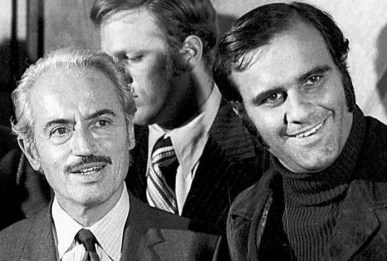
Marvin Miller (left) with then-Cardinals catcher-turned-third baseman Joe Torre at a 1972 press conference.

Yes, Marvin Miller decided before his death that being elected to the Hall of Fame was no longer worth it. Not even if it was no less than his due. “At the age of 91,” he said, “I can do without farce.”

But there’ll be a nice synergy in Miller and catcher Ted Simmons being inducted into Cooperstown Wednesday, along with two more from last year’s class, Derek Jeter and Larry Walker. Miller and Simmons were joined in an unlikely way early in Simmons’s career.

The pan-damn-ic then told the new Hall of Famers, “Wait ’till next year.” Wherever he reposes in the Elysian Fields, perhaps Miller has bumped into Charlie Watts, the lifelong drummer for a band that once sang, “You can’t always get what you want/but if you try sometimes, you just might find/you get what you need.”

What Miller and Simmons needed from the last-convened Modern Era Committee in 2019 was twelve votes minimum. Miller got the twelve, one shy of Simmons’s thirteen. Both men deserved Hall of Fame plaques long enough before they finally got them. And one inadvertently provided the other with invaluable intelligence.

At age 22 Simmons found himself the Cardinals’ regular catcher entering spring training 1972. Self-aware enough, Simmons decided his emergence should be worth more than a $6,000 raise. He refused to sign a new contract that would pay him one penny less than $30,000. The Cardinals’ general manager, Bing Devine, said not so fast, son, holding the team’s offer to somewhere in the lower $20,000s.

That was while Curt Flood’s reserve clause challenge awaited its day in the Supreme Court. (Flood, alas, would lose there, but he’d kick open a door that refused to be shut again.) Simmons started the reason without a signed new contract. The Cardinals renewed him automatically as the rules of the time allowed.

Everyone in baseball trained their eyes upon the sophomore catcher who belied the usual athletic stereotypes. (Among other things, Simmons would serve active and knowledgeable time on the board of a St. Louis art museum in due course.) They also trained their eyes on the reserve clause abused so long by the owners to bind their players like chattel, until they damn well felt like selling, trading, or releasing them.

Simmons played his way onto the National League’s 1972 All-Star team as its backup catcher. Once he went to Atlanta for the game, Devine rang his hotel phone post haste. Would Simmons kindly accept a mere $75,000—as in, the $30,000 he wanted for 1972 in the first place, plus $45,000 for 1973?

Miller watched Simmons a little nervously, too, knowing the kid pondered taking it to court himself. He understood completely when Simmons accepted Devine’s new proposal. But Simmons handed Miller intelligence you couldn’t buy even on the black market: Those  owners would rather have handed a barely-seasoned kid $75,000 than let any arbitrator get a look at the reserve clause even long distance through a telescope.

Miller had once been a United Steelworkers of America economist. After a players committee including two Hall of Famers (pitchers Robin Roberts and Jim Bunning) and two respected other veterans (pitcher Bob Friend, outfielder Harvey Kuenn) chose him to run their embryonic union, Miller won the rest of the players over by being just who he was—a brain, not a bludgeon. It didn’t hurt that Miller instilled an open-door policy: “It’s your union,” he insisted.

Miller didn’t follow the stereotypical union playbook, either. He may have kept the players’ eyes on the ultimate prize, but he knew and convinced them reasonably that it had to be done step by step, from pension and clubhouse issues forward. Even as he told them, as often as need be, “You are the game. Without you, there is no game.”

His two signature triumphs came almost by accident. The first was when then-Athletics owner Charlie Finley reneged on a contracted-for insurance payment to Hall of Fame pitcher Catfish Hunter. Hunter filed a grievance and won. He also became subject of a game-wide bidding war that reached the millions and ended with him taking the third-most lucrative offer put in front of him.

Why only the third? Because the Yankees (whose representative Clyde Kluttz was the former A’s scout who signed Hunter for the A’s in the first place) were willing to divide the dollars Hunter’s way, right down to a certain amount put into an annuity to guarantee his children’s education. It was still enough to make Hunter a rich man on a fair, open market.

But Hunter was a single, isolated case. His triumph didn’t mean the end of the reserve era just yet. To do that, it took then-Dodgers general manager Al Campanis making contract talks far too personal for pitcher Andy Messersmith’s taste in spring training 1975. Messersmith promptly refused to talk to anyone below team president Peter O’Malley. He also refused to sign any contract that didn’t include a no-trade clause.

The Dodgers merely harrumphed that they’d never given no-trade clauses before and they weren’t about to start now. Messersmith said, essentially, that he’d rather be caught naked in a barracuda school than let the Al Campanises dictate his baseball future. He, too, refused to sign a 1975 contract. The Dodgers, too, renewed him automatically under the old rules.

Messersmith pitched on and pitched very well. (He’d lead the National League in starts, complete games, and innings pitched, while throwing seven shutouts and finishing second with a 2.29 ERA.) He withstood the snark of both indignant, ignorant fans and indignant, artery-hardened sportswriters.

“Every time he took the ball,” Simmons once said, “everybody in management wanted him to fail and everybody from the players wanted him to succeed.” Just as long as they didn’t have to bat against him. (The National League’s hitters batted a mere .213 against Messersmith in 1975.)

By that August, Messersmith found himself receiving two things: continuing Dodger offers for then-glandular dollars, and an education from Miller about the reserve clause itself. He was also the only active player left that season who hadn’t signed a 1975 contract. By September, the Dodgers offered him a pot of $540,000 for three years including 1975. “Where’s that no-trade clause?” Messersmith retorted, essentially. Without it, he wouldn’t budge.

When Peter came up with the dough, I was adamant. The money was incredible, but they wouldn’t bring the no-trade to the table. I’d gotten stimulated by Marvin and Dick [Moss, the players’ union’s general counsel]. Now I understood the significance of what this was all about. I was tired of players having no power and no rights.

Ted Simmons

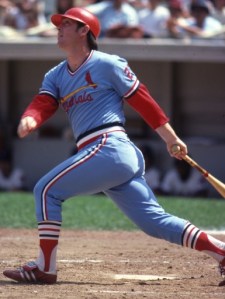
Now a Hall of Fame catcher, Ted Simmons as a Cardinal helped Miller build his leverage against the old reserve clause abuse.

That August, too, Messersmith agreed to file a grievance seeking his free agency if he remained unsigned. The season ended; Messersmith’s stout pitching alone couldn’t keep the Dodgers from finishing second in the National League West. He filed the grievance.

(Arm-and-shoulder-troubled pitcher Dave McNally, technically unsigned but intending to stay retired after leaving the Expos in June, agreed to join the grievance in August, upon Miller’s persuasion—as insurance, in case the Dodger dollars finally seduced Messersmith, who refused to be seduced by dollars alone.)

The owners had no essential argument better than “this is the way we’ve always done it.” The evidence in the grievance included a newspaper article, in which penurious Twins owner Calvin Griffith basically admitted proper reserve clause application allowed a player’s free agency after one contracted season and a second team option season and no more.

Messersmith won. (The owners promptly fired arbitrator Peter Seitz.) The Lords of the Realm author John Helyar described Simmons as “choked up” when he said, “Curt Flood stood up for us. [Catfish] Hunter showed what was out there. Andy showed us the way. Andy made it happen for us all.”

Miller was smart enough not to demand immediate free agency for all. Even he recognised teams had certain rights in players they developed, even as he insisted baseball players deserved the same rights as any other American—from the greenest labourer to the most seasoned executive—to test their value on a fair, open job market when no longer under contract.

It did far more for the good of the game than the artery-hardened hysterics of 1975 would have had you believe, especially when they mourned the death of “competitive balance.” Pace Mark Twain, the rumours of that death would prove greatly exaggerated. More teams have won the World Series since the Messersmith triumph than won the Series before it.

It’s not the players’ fault that the owners since have tried everything in their power, and sometimes beyond it, to try putting them back into their “places.” (The 1980s collusion, anyone? Isolated front-office executives willingly handing the gold to players who’d barely proven themselves worth copper? The 1994 strike born of the owners insisting the players stop them before they overspent/mis-spent/mal-spent again? Tanking?)

And they said free agency would destroy the undestroyable game. If you’d asked former commissioner Fay Vincent about that, he’d tell you what he told ESPN’s Jerry Crasnick in 2009: Blaming Miller for “destroying” baseball was “like blaming Thomas Edison for putting the candle industry out of business,” which didn’t happen, either.

Perhaps the only thing more astonishing than the owners’ post-Messersmith chicaneries was the years passing by with the idea of Miller in the Hall of Fame not so popular with his former clients (he left the union in 1982) as his work on their behalf. No less than Hall of Famer Reggie Jackson said the Hall of Fame should be for players only. You wonder what he thought when the Hall inducted Effa Manley—co-owner of the Negro National League’s Newark Eagles—as a pioneer in 2006.

“Instead of pointing to the sky,” the late Jim Bouton told Crasnick, referring to gestures often made by players crossing the plate after hitting home runs, “today’s players should be pointing to Marvin Miller.” As also to Curt Flood, Ted Simmons, Catfish Hunter, Andy Messersmith, and others who collaborated to do the once unthinkable.

Simmons himself went on to enjoy a career that should have gotten him elected to Cooperstown. His peak value matches that of the average Hall of Fame catcher. He went one and done in his only year’s eligibility on the Baseball Writers Association of America’s Hall ballot. Exactly why never really seemed clear. If he was a better hitter than catcher, the metrics simple and complex alike still show him the number eleven catcher ever to strap it on.

Maybe it was residual ill will over Simmons’s late-career tangle with Whitey Herzog. (Herzog traded him to the Brewers citing defensive shortcomings, after he declined moving to another field position. Yet Herzog eventually became a member of the Modern Era Committee that finally elected Simmons.) Maybe they had a problem marrying baseball’s most honorific museum to an art museum board member.

Miller died in 2012 with only one other regret: not having been able to convince the MLBPA to revisit the 1980 pension realignment that froze players with short careers prior to 1980 out of the pension plan. Players since 1980 need only 43 days major league time to receive a pension and one day to receive health benefits.

The only thing the frozen-out have received since comes from a 2011 deal between then-commissioner Bud Selig and then-MLBPA leader Michael Weiner: $625 per quarter for every 43 days’ major league service time for up to four years. Before you say that’s something, at least, be reminded that they can’t pass those dollars to their loved ones if they pass before the final dollars are collected.

The MLBPA leadership since Miller’s departure has little to no known desire anywhere in its ranks to redress that or anything else involving the pension freeze-out. Attrition has reduced the number of affected players from over 1,100 to just over 600. Would anyone with leverage in the game now think to resolve Miller’s regret?

“Nobody has picked it up,” former Twins pitcher Tom Johnson, one of the affected, told me last December. “Don Fehr [Miller’s successor] didn’t pick it up, [present MLBPA director] Tony Clark hasn’t picked it up, nobody has picked it up and cared about it. I wish they’d go back and listen to that.”

Listening was one of Miller’s strong suits. “It took forever for each of us to get in,” Simmons has said. “He was the real deal. During my career, Marvin was the Players Association. He was an incredible man who was very special to me specifically. It’s an honor to be inducted with him. It’s bittersweet for his family but I’m lucky I can arrive in the flesh.”

Simmons has also said he hoped restoring the Hall inductions would be a stride in the right direction of returning life to something resembling normalcy. Surely he knows that “normalcy” doesn’t always mean without hiccups or pratfalls, both of which baseball has had in abundance for too long.

Portions of this essay have been published previously.

Thumbs up!

Kevin Pillar

Kevin Pillar, one of the Mets’ Thumb Bunch, after slicing ninth-inning grand salami at the Nats’ expense Sunday afternoon.

That was last weekend: A few Mets decided to give what-for to Citi Field’s boo birds of August unhappiness. They flipped the script. If they were going to get booed for coming up short no matter the effort, by God they were going to give the fans thumbs down when they came up hit, pitch, play roses.

The racket was such a ruckus—or, should that be the ruckus was such a racket—that nobody paid much attention to the August-challenged Mess winning two straight from the retooling-on-the-fly Nationals. They were too busy reading beleaguered team president Sandy Alderson’s fan-their-behinds retort to care.

This is the end of this weekend: Including that previous Saturday and Sunday, the Thumb Bunch have won seven of eight, kicked themselves back into enough of the thick of the National League East they’d lost gruesomely enough during most of August, and out-scored the opposition 41-26 while they were at it.

Who cares if it came against the Nats and the equally also-ran Marlins? The Mets looked so badly like a team that couldn’t get next to a win if they paid by the run that the worst editions of the St. Louis Browns would have looked like pennant contenders against them.

Now, they’ve finished this weekend-to-weekend raiding with a 13-6 Sunday dismantling of the Nats that included a jaw-dropping six-run top of the ninth. In which the three major members of the Thumb Bunch were very much the major players. “If there’s a higher power looking over the Mets,” said broadcaster Gary Cohen, “He or She has an infinite sense of humor.”

He or She must have, since the Mets got close enough to letting the game escape in the first place. A four-run top of the first turned into a 4-3 squeaker in the bottom of the inning. A 6-3 lead after four and a half turned into a six-all tie in the bottom of the fifth. Mets catcher Patrick Mazeika’s sacrifice fly sending Javy Baez home with the bases loaded in the eighth broke the tie.

These are still the Mess, aren’t they? They’re still virtuosi at wasting leads and putting the crash carts on triple red alert, no?

They were until Francisco Lindor faced Nats reliever Austin Voth to open the top of the ninth. Lindor saw only one pitch, a spicy meatball right down the middle, and drove it over the center field fence. A two-run lead’s better than one, right? Even with Juan Soto looming as the third man due up in the bottom of the ninth, right?

Pete Alonso wasn’t taking chances. He followed Lindor’s launch with a double to the back of left field. Michael Conforto singled Alonso home and took second on a throw in. Baez finished a 4-for-4 afternoon by singling Conforto to third. Jeff McNeil wrung himself a four-pitch walk to load the pillows. Up stepped Kevin Pillar, to hold his lumber on two out of the strike zone before fouling away a pair off the middle.

Then Voth threw Pillar a low fastball. And Pillar drove it high and into the seats above the Mets bullpen. It may yet stand as the biggest slice of grand salami with mustard on their season to date. All this on an afternoon when Lindor went 1-for-2 with a pair of walks and two runs scored, Baez scored three times in addition to his four-fer, and Pillar went 2-for-4.

Some teams crumple under the lash of controversy, whether the controversy is real, alleged, ginned up, or imagined. Others discover it’s better than a diet of pitches over the middle of the plate for a royal feast.

The 1972-74 Athletics throve on internal friction; the 1977-78 Yankees didn’t earn the nickname the Bronx Zoo because they were tame and allergic to nuclear-level back-page 72-point headlines. The 1986 Mets made St. Louis’s mythological Gas House Gang resemble an Amish picnic. This year’s Astros seem to be using the noisily lingering hostilities over Astrogate as feud for thought—and thump.

This year’s Mets won’t inspire what those A’s inspired Jim Bouton to remember (in “I Managed Good But, Boy, Did They Play Bad!”)—“[T]hey didn’t have many rules. Oh, maybe they weren’t allowed to punch each other in public. No punching a teammate, I suppose, in a nightclub. Fighting only allowed in the clubhouse. No screaming at each other when the wives are around. And don’t embarrass the manager to more than two wire services during any homestand.” (Today, of course, we’d say “to more than two Web  reporters.”)

This year’s Mets may or many not have any player ready to say of them what third base virtuoso Graig Nettles said of his time (sentence?) in the Bronx Zoo: “Some kids want to join the circus when they grow up. Others want to be big league baseball players. I feel lucky. When I came to the Yankees, I got to do both.”

Unless I’m very wrong, and I hope I am, there isn’t a Met in the bunch now who’ll look back two decades later and remember this team the way ’86 Mets pitcher Bob Ojeda would remember that team, who broke an entire airplane celebrating their National League Championship Series triumph: “We were a bunch of vile [fornicators].”

These Mets may not be quite what Nettles’ Yankees became, but there were times this year when you thought the Mets couldn’t decide whether they were re-making E.R. . . . or Monty Python’s The Meaning of Life.

They play one more against the Nats on Labour Day, then take a trip for three more against the Marlins. Then, they come home to face the Yankees, the Cardinals, and the Phillies. Before you remind them that those three aggregations aren’t exactly pushovers—even if the Yankees have just lost five of eight—ponder the point that momentum comes from unlikely places.

Even from places in which turning thumbs down after splendid plays to retaliate against the boo birds becomes the molehill turned by the hysterical into the Himalayas.

Five straight for the Thumb Bunch

Jeurys Familia, Pete Alonso

Jeurys Familia and Pete Alonso have a victory handshake after the Mess (er, Mets) won their fifth straight Friday night—with plenty of help from the Thumb Bunch.

Almost a full week ago, the Mets were likely to be number one on a baseball fan’s hate parade. You know, you can’t have those ornery spoiled brats giving thumbs down when doing things right to the fans who spent most of August booing their heads off during what seemed, once and for all, like a classically surreal Met implosion.

You could only imagine the curses and hexes fans wanted to place on their heads for their dissing the people who pay their goddam salaries. Never mind that fans alone, or even predominantly, haven’t really paid baseball players’ salaries in decades.

But the Mets looked so vividly like 2021 baseball’s biggest self-inflicted trainwreck last month that you could still be forgiven for expecting a complete collapse. Maybe even firing squads in the clubhouse and guillotines outside the ballpark.

The hell with Pete Alonso’s happy talk channeling his inner Tug McGraw. Maybe Alonso didn’t use the specific phrase “ya gotta believe,” and McGraw in 1973 deployed it sarcastically after a lame rah-rah clubhouse speech by then-Mets lord M. Donald Grant. But when he said, “If you don’t believe in yourself, then who else is going to believe,” around 10 August, things only got worse instead of better.

Maybe Alonso really was onto something after all. Because look who’s won five straight including the two games last weekend that brought the thumbs-downing to a boil before the weekend ended. Look who’s even figured out a way to blow a lead in the ninth to force extra innings and then won the game in the extras, anyway.

Never mind that the streak’s come at the expense of two other sputtering teams, the Nationals and the Marlins. The way the Mets looked for most of August, they could have lost handily to a lineup of nine arthritic maids, a pitching staff of five one-armed janitors, a bullpen of seven legless movers, and a bench of six quadriplegics.

But ever since the down-thumbing suddenly caught the attention of the rest of the world, the Mets have outscored the opposition 27-13. And on Friday night, they took a precarious 2-0 lead to the bottom of the ninth, watched Edwin Diaz surrender a leadoff home run (to Juan Soto) and an RBI double (to Riley Adams) to tie . . . and pried four unanswered runs out of the Nats in the top of the tenth to win, 6-4.

Let’s not kid ourselves just yet. The Mets get to abuse the Nats in Washington for four more games this weekend, then they get to fly to Miami to inflict a little more use, misuse, and abuse of the Marlins. After that? They come home to host three clubs who can be called many things without pushovers being one of them: the Yankees, the Cardinals, and the Phillies.

There’s something to be said for gaining momentum even at the expense of the also-rans. And the Mets did claw their way back to .500 and to a mere four games out of first in the National League East.

Sure, they got some help from the Fish flattening the second-place Phillies 10-3 Friday night. Sure, they got some help from the Rockies eking out a 4-3 win over the first-place Braves. But a team that started August leading the division by three, and almost ended the month trailing by eight the night before the current streak began, has a few reasons to be happier.

Happier, but not quite to the delirious level just yet?

But let’s not spoil the fun. OK? Not the day after ancient Rich Hill pitched like a young man over six scoreless innings. Not the day after everyone in the Mets bullpen not named Diaz pitched three innings of one-hit, scoreless baseball.

Not after Diaz shook off those tying runs—and a scary collision between tying runner Andrew Stevenson and Mets catcher Chance Sisco that knocked Sisco out of the game at once—by ironing up and using a strikeout (of Carter Kieboom) and a ground out (by Luis Garcia) to strand the potential winning Nats run.

Not the day after Javier Baez, one of the Thumb Bunch, poked a one-out double down the right field line in the top of the second and came home almost at once when Michael Conforto—who’d gone from extension lock to question mark with a season’s worth of struggling—ricocheted a single off Nats starter Sean Nolin’s shoulder to send him there.

Not the day after Alonso, Mr. Belief, squared Nats starter Sean Nolin up on the first two-out, one-on pitch in the top of the third and yanked it as far down the right field line as he could for the RBI triple.

Not the day after Alonso drove Francisco Lindor—another of the Thumb Bunch, now deployed as the free cookie on second to open the New York tenth—home with a line single into the right center field gap.

Not the day after a third Thumb Buncher, Kevin Pillar, followed a free pass to Conforto by ripping a liner all the way down the left field line, sending Alonso and Conforto home as if they were escaping for their lives, Conforto following Alonso with an Olympic-level dive across the back of the plate.

Not the day after pinch hitter J.D. Davis was handed another free pass and Jonathan Villar cashed in at once by singling Pillar home for the fourth Met run of the tenth.

Not the day after Jeurys Familia returned to a once-familiar role, closing it out with a leadoff punchout and a pair of swift ground outs in the bottom of the tenth.

“As you can imagine,” Alonso the Believer said post-game, “it’s great. It’s awesome to rip off (five) in a row. [But] we just have to win every possible game that we can. Regardless of the standings, we can only control what we can control. There’s ebbs and flows in the season and right now we’re just looking to finish strong.”

“The whole thing is just the creativity as the game is kind of presenting what it is showing you as a pitcher, as a conductor,” Hill said post-game of his own solid outing. “You saw a variation of a lot of different things out of my mechanics tonight. It wasn’t necessarily just a traditional leg lift and a pitch and the timing was all the same. Trying to disrupt the timing is the whole art of pitching.”

So Hill isn’t as succinct as Hall of Famer Warren Spahn. (Hitting is timing, pitching is destroying timing.) But he sure pitched and sounded just as smart. Especially facing the heart of the Nats order three times, bringing them up empty, and surrendering only three hits overall during his six splendid.

Maybe the Nats helped the Mets’ cause by some rather uncharacteristic basepath mistakes. But if pitching is disrupting or destroying timing, then winning in large enough part is making the other guys pay for their mistakes. Usually, this year, the Mets have paid through the nose (and any other orifice) for theirs.

Enjoy it while it lasts. However long it lasts. Seeing the August Mess come back to life for even five games was still a pleasure. They might (underline that) even have a few more surprises in store when they come home from their current trip to the division swamps.

“Every game is really huge at this point of the year,” Alonso said. Stick to that attitude, Mets.

Great Scott! You thought it couldn’t get worse?

Zack Scott

Zack Scott speaking to reporters earlier this year. Waking up stewed in White Plains isn’t the best look for an acting GM already in a seat hot enough to pass for the electric chair.

Did you think the boo birds and the boneheads fuming over the Baez-Lindor-Pillar thumbs-down to fans would suddenly look upon that nostalgically? Wasn’t it a kick when Lindor and Jeff McNeil had a presidential-level debate over . . . whether that was a rat or a raccoon on the Citi Fields grounds?

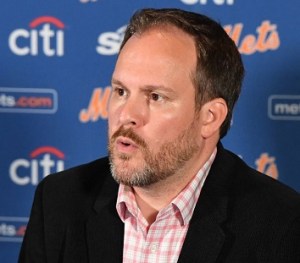
Don’t be shocked if that’s exactly what they’re feeling, after the Mets’ acting general manager Zack Scott drove and then parked himself right into a drunk driving charge early Tuesday morning.

This is what we know: White Plains (New York) police found Scott asleep in his car near a federal court house. Scott spurned a breathalyzer but flunked a field sobriety test. Apparently, he got tanked up in the first place while attending a charity fundraiser at Mets owner Steve Cohen’s Connecticut spread not far from there.

Already I’ve seen social media slugs demanding Cohen’s head on a plate over Scott’s inebriation. Guess what. If I’m at a party at your place, the booze is flowing freely enough, and I get that bombed out of my trees, that’s on me for not knowing my limits. You didn’t hold me hostage refusing to release me until I made Jim Morrison resemble a Prohibitionist.

Scott was already on a hot seat close enough to the electric chair, when the only thing he did to fortify the injury-addled Mets at the trade deadline was to bring aboard all-but-washed-up veteran pitcher Rich Hill and the slick-fielding but too-free-swinging Baez. (Where was Cohen—who called out the Mets’ undisciplined hitting, albeit kindly and gently—when Scott made the Baez deal?)

“But the Braves quietly got much better at the deadline,” writes Mike Vaccaro of the New York Post. The Phillies upgraded. So, of course, did the Giants and Dodgers and, let us not forget, the Yankees. Maybe [Mets [resident] Sandy Alderson can shoulder some of the blame; Alderson, an old target of Met-fan angst, probably deserves as much.”

Scott also threw his wounded under the proverbial bus, saying it was pretty much their fault for getting hurt and not getting with whatever the Mets’ health program is. He was blissfully unaware that such a call-out meant his own administration looks like a group of nincompoops playing Operation and pronouncing themselves credentialed medical experts.

Which one of them kept getting buzzed removing the funny bone?

Most likely, Scott would have been gone after the season ends. He might have been moved into a benign advisory role before his rude awakening in White Plains. Now the Mets can’t afford even to put him in charge of a Citi Field cleaning crew.

Alderson still has some splainin’ to do, though, about why he was so hot to pursue the known misogynist Trevor Bauer so hard last winter. The most narrow escape of Alderson’s career was losing out to the Dodgers on Bauer—who turned out to be too much more than a mere misogynist, as he now awaits whether a district attorney will file sexual assault charges against him and he won’t likely pitch again in 2021 . . . or beyond.

The Mets under .500 and five and a half games back in both the National League East and the National League wild card chase—that’s what a 9-19 August did to them in an eleven-game free-fall out of the NL East leadership—may actually be their smallest problem. The toxicity in the organisation needs to be cleaned out.

Waking up stewed in front of the federal court in White Plains is entirely on Scott. But so are a few other things that indicate it’s time for Cohen—who’s had, mostly, the patience of Job in his first year owning the Mets—to flip the switch on the Hoover and clean the Mets’ house. Beat, sweep, and clean it out.

It begins with Alderson, alas. For all his distinguished baseball service past, including a term in the commissioner’s office, the Mets’ president has earned impeachment and removal. The articles against him only begin with that fan-their-behinds statement about the thumbs-downers that he probably carried in his pocket for a couple of weeks before the idiot brigades going cray-cray last Sunday gave him his excuse.

They continue with having hired and elevated Scott in the first place—after former Mets GM Jared Porter had to be purged over his hot-pursuit unwanted sexting aimed at a Cubs employee when Porter ran that team’s scouting apparatus. At that time, it looked as though the Mets were caught with their proverbial pants down, but now it looks as though Alderson’s facility for due diligence abandoned him long enough ago.

Because Alderson is also the Mets’ chieftain who hired Mickey Callaway to manage them, then endured two seasons in which Callaway was in deeper over his own head than a submarine beneath the ocean surface. And that proved the least of Callaway’s issues.

Alderson learned the hard way—when the Angels first suspended, then fired him as their subsequent pitching coach, and baseball government banned him through the end of 2022—that Callaway had a too-pronounced penchant for texting, sexting, sharing shirtless images, and pushing for hot dates with unwilling media women, one of whom called his predatory style baseball’s worst-kept secret.

“What exactly is the Mets’ definition of due diligence when pursuing players and executives?” asks The Athletic‘s Ken Rosenthal with appropriate snark. “Seeing whether they can spell their names correctly?”

How the hell did Alderson—who built three straight pennant winners and one world champion in Oakland, then called the old umpires union’s chief Richie Phillips’s bluff and accepted mass umpire resignations after the umps balked over one MLB attempt to mandate umpire accountability—devolve to this?

And what the hell was Scott not thinking, considering, as Rosenthal writes, that after “the Callaway and Porter fiascos, he needed to conduct himself impeccably.”

For this toxic cleanup, Cohen’s going to need the Hoover, the Roto-Rooter, truckloads of Raid, and a hazmat team.