
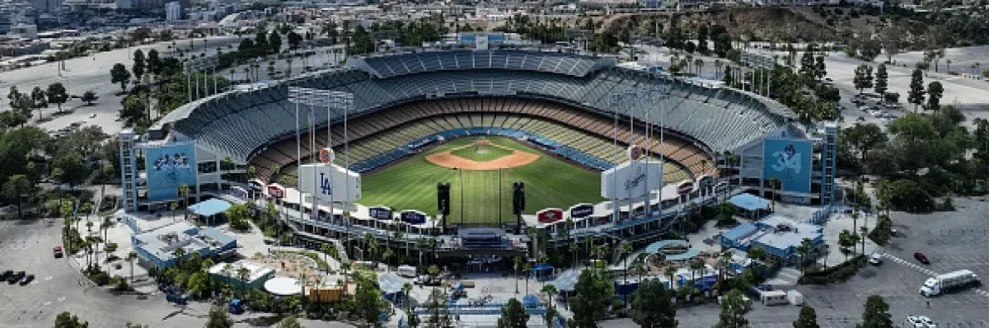
Contrary to reputedly popular opinion, this is not the home of the root of all baseball evil.
The initial proposals between the owners and the Major League Baseball Players Association were delivered last week. They’re probably going to end up looking like anything but how they were presented. But it couldn’t hurt to look at them in earnest, anyway. And, the battle begins. Sort of.
The owners’s introductory proposal includes a first-year salary cap of $245.3 million and a salary floor of $171.2 million, plus a 50-50 revenue split. The players association’s initial proposal, which came forth a day before the owners’s opening, includes revenue sharing guaranteeing smaller-market teams minimum $240 million a year, a $150 million “competitive integrity tax” (a kind of soft salary floor) and raising the luxury tax threshold to $300 million, also known as a “soft” cap.)
“To put the state of negotiations in baseball terms, we’re still in the first inning,” wrote The Athletic‘s Ken Rosenthal in response. “Actually, that might be overstating it. The teams are not even in their respective clubhouses yet. I’m not even sure they’ve left their hotels.”
That sounds about right so far. Especially if you consider someone’s already trying to play a little three-card monte. A TwitterXer named The Captain’s Blog offered a breakdown:
1) What is revenue? With the cap threshold tied to a percentage of revenue, this becomes a paramount question. Based on the initial proposal, MLB owners are seeking to define revenue narrowly. So, for example, pro rated revenue from businesses like YES and Legends Hospitality would be excluded from the Yankees’ ledger. So too with Battery Atlanta revenue for the Braves, and the Chavez Ravine Joint Venture for the Dodgers. MLB owners own lots of businesses that are highly leveraged to their baseball teams, and all of these revenues, though bolstered by the existence of the team, will be excluded from player compensation.
2) What is payroll? Is it cash or cap? In the NFL, this question creates massive disparities between what teams actually spend and what their cap hit is on paper. The MLB proposal, which reportedly is based on AAV, would be similar to the NFL. In other words, it would be highly manipulative and misleading, and not truly oriented toward “fairness”. It would also disadvantage the players by misaligning actually money paid out to current revenue. As an illustration, MLB 2025 total [average annual value] was $6.06 [billion], where as actual final payrolls (cash paid out) were $5.3 [billion].
What hasn’t been said just yet, but will probably need to be said as the process ambles forward, is what nobody seems to want to hear: big spending doesn’t guarantee smothering success, or even minimal success.
You’d think that would be a given. But it isn’t. Good luck trying to convince a crowd bellowing about the big bad Dodgers and their big bad bankrolls that the real reason they won back-to-back World Series and had concurrent ownership of the National League West was that they also had a sound organisation.
From what’s left of the farm systems the Manfred Regime gutted to the player development personnel, from the major league front office to the coaching staff, and, oh, yes, the players whom they knew might cohere into a unit no matter how many bazillions any or all of them brought home after taxes. The Dodgers know what they’re doing over, under, sideways, down.
It’s been said only too often, but it seems we’ll have to say it again. Spend with (and for) brains, you have the Dodgers. Spend without (and against) brains, you have the Mets. That’s only two examples, but they ought to tell you much.
Remember: An owners’ lockout will cost the owners fortunes worth of lost ticket sales and ballpark concessions. Remember, too, that MLB wants to renegotiate its media rights for 2029 and past that: “If the sport looks unstable,” says attorney and Three Inning Fan podcaster Kelley Franco, going from there, “MLB won’t have any leverage to get a good deal on that.” That, she says, means motivation for the owners to come to an agreement with the players,
Reality: Baseball’s media viewership is up. Attendance is likewise. Shutting the sport down for 2027 could mean a longer recovery period than the owners-provoked 1994 strike.
Here’s a piece of leverage the players could seize for themselves: demand that all thirty ownerships open their books for review by legitimately independent auditors. Auditors with no incoming agendae beyond giving the books an honest examination and giving both sides the truth, the whole truth, nothing but the truth, about who really can’t afford to build solid organisations versus who’s throwing fork-you-balls.
(Sidebar to the owners: If there’s an ownership group among you who really can’t afford to build or rebuild a solid baseball organisation, isn’t it in your better interest to ease that ownership out and see the team in question sold to an ownership that actually would like to see the organisation return to honest competitiveness again?)
Further reality, which isn’t exactly news unless you’ve been partying like it’s 1926: Unless its to demand certain malpractising owners sell their teams, fans don’t buy their tickets to see their teams’s owners.

